2027 Best Computer Vision Courses With Projects

Co-Founder and Chief Data Scientist
Many professionals seek to pivot into computer vision but struggle to find courses that combine theory with real-world applications. Without practical projects, understanding complex concepts and demonstrating skills to employers becomes difficult. This gap often slows career transitions, especially for those from unrelated fields. Accessible, project-based learning paths can ease this challenge by providing hands-on experience and a clear skill-building roadmap. This article highlights the best computer vision courses featuring integrated projects. It aims to guide readers toward flexible, accredited programs that support effective upskilling and successful entry into the Artificial Intelligence industry.
Key Things You Should Know
- Top computer vision courses in 2026 emphasize hands-on projects, with 75% of offerings integrating real-world datasets to enhance practical skills.
- Course content increasingly covers deep learning frameworks such as TensorFlow and PyTorch, reflecting industry demand for expertise in model training and deployment.
- Job market data from 2024 indicates a 40% growth in roles requiring computer vision knowledge, making specialized courses crucial for career advancement.
Advance Your Career with AI Online Courses
Artificial Intelligence: Implications for Business Strategy
This program provides an introduction to Artificial Intelligence and their implications for business strategy. Earn an official digital certificate.

Oxford Artificial Intelligence Programme
Explore this Oxford Artificial Intelligence programme offered in a flexible learning environment and explore topics like machine learning, automation, and robotics.

Implementing Agentic AI: Building Your Organizational Playbook
This online MIT Agentic AI course offers a practical approach to deploying AI agents in your organization, including a custom playbook. 3 weeks, exclusive launch price.

AI Adoption: Driving Business Value and Impact
This online MIT AI Adoption: Driving Business Value and Impact offers practical frameworks to close the gap between AI potential and business reality.

Artificial Intelligence in Pharma and Biotech
Discover the applications and limitations of artificial intelligence in pharma and biotech with this MIT online short course.

What is computer vision and why should you learn it through project-based courses?
Computer vision fundamentals with practical projects provide an essential foundation for mastering this AI subfield by combining theory with hands-on experience. Project-based computer vision learning benefits include deepening understanding through real-world applications such as facial recognition, autonomous vehicles, and medical image analysis. Building projects like object detection or face recognition helps learners tackle challenges like image annotation, model training, and ethical considerations.
These projects develop problem-solving skills by requiring debugging, handling large datasets, and integrating feedback loops. Such practical experience not only enhances resumes but also prepares candidates for technical interviews where demonstrating tangible project work is vital.
Job demand in computer vision is rising rapidly, with computer and information research scientists projected to grow 26% from 2023 to 2033 in the U.S., driven by automation needs across sectors including healthcare, retail, security, and automotive. This makes investment in computer vision skills timely and valuable.
For those curious about broader AI career paths beyond computer vision, exploring what is applied artificial intelligence offers insight into diverse opportunities in this dynamic field.
Advance Your Career with AI Online Courses
Artificial Intelligence: Implications for Business Strategy
This program provides an introduction to Artificial Intelligence and their implications for business strategy. Earn an official digital certificate.
Oxford Artificial Intelligence Programme
Explore this Oxford Artificial Intelligence programme offered in a flexible learning environment and explore topics like machine learning, automation, and robotics.
Implementing Agentic AI: Building Your Organizational Playbook
This online MIT Agentic AI course offers a practical approach to deploying AI agents in your organization, including a custom playbook. 3 weeks, exclusive launch price.
What are the best computer vision courses with hands-on projects available online and on campus?
Top computer vision courses with practical projects are vital for building expertise in this fast-evolving field. Among the best computer vision courses with practical projects available online, Coursera's Deep Learning Specialization by Andrew Ng stands out, covering convolutional neural networks alongside projects like image classification and object detection. Udacity's Computer Vision Nanodegree offers hands-on experience with real-world applications, including facial keypoint detection and autonomous vehicle perception pipelines. edX features university-backed programs like Harvard's Computer Vision course, emphasizing coding assignments and capstone projects designed for skill development.
For those seeking the top online and campus computer vision training programs, universities such as Stanford and MIT provide rigorous courses with lab work and collaborative projects. Stanford's CS231n, for example, involves extensive project work including image segmentation and generative models, preparing students for both research and industry roles. Many programs incorporate GPU-accelerated labs to simulate professional workflows, helping students master practical challenges.
Data from the AI job market indicates strong demand for candidates with hands-on experience: employers posted nearly three times more AI-related roles recently compared to a few years ago, signaling the importance of demonstrable project experience. Recommended strategies for choosing courses include verifying multiple hands-on assignments, relevance to current AI frameworks like TensorFlow or PyTorch, and exposure to diverse datasets such as medical imaging and autonomous driving. Programs that provide iterative feedback on projects help build both proficiency and confidence.
Prospective students seeking to further diversify their STEM qualifications might also consider a mechanical engineer degree to complement their AI skillset.
How do online computer vision courses compare to campus-based programs for practical learning?
Online computer vision courses often provide superior practical learning outcomes compared to campus programs. Their flexible, project-focused structure allows students to work with diverse, real-world datasets including those from autonomous vehicles, facial recognition, and medical imaging. These courses integrate Python programming and OpenCV for hands-on coding exercises, aligning well with the reality that Python is the dominant AI and machine learning language, used by 69.8% of developers in the Stack Overflow Developer Survey 2024. This emphasis on industry-standard tools makes online courses highly effective for building relevant skills.
Campus-based programs, on the other hand, sometimes lag in adapting to cutting-edge technologies and often feature theoretical curricula with less immediate application. While they offer in-person mentorship and lab access, their projects typically rely on limited or simulated datasets. For prospective students weighing online computer vision courses versus campus programs for hands-on experience, understanding these differences is crucial.
Key advantages of online programs include:
- Access to varied, large-scale datasets and rapidly updated content reflecting industry trends.
- Direct application of Python and OpenCV tools in real-time scenarios.
- Emphasis on experiential, project-driven learning.
For students seeking to deepen applied skills in artificial intelligence fields, online courses frequently surpass campus options. However, campus programs remain valuable for structured learning and academic networking. Combining both approaches can enhance both practical competence and theoretical knowledge. Prospective students can explore AI PhD programs to find advanced educational paths that balance these strengths.
What prerequisites and technical skills do you need before starting computer vision courses?
A strong foundation in programming and mathematics is essential for computer vision course prerequisites for beginners. Python proficiency is particularly important, as it's the dominant language used in frameworks like OpenCV, TensorFlow, and PyTorch. Familiarity with image processing libraries and data manipulation tools enhances both learning and project execution.
Technical skills required for computer vision training include solid knowledge of linear algebra-such as matrices and vectors-for image transformations. Calculus, especially concepts like differentiation and integration, underpins the understanding of optimization algorithms used in model training. Additionally, probability and statistics help interpret model performance and manage prediction uncertainty.
Experience with basic machine learning concepts, including supervised and unsupervised learning, model evaluation metrics, and data preprocessing, accelerates mastery of advanced computer vision methods. For those new to machine learning, introductory courses are highly recommended prior to deeper computer vision studies.
Access to appropriate hardware and awareness of computational demands are critical. Training deep learning models often requires extensive GPU resources. According to Stanford's AI Index, although costs have fallen, it remains expensive. Many students plan for cloud computing or use efficient techniques like transfer learning to overcome these challenges.
Additional skills that boost success include understanding neural network architectures, convolutional operations, and dataset management. Project-based learning that integrates these areas strengthens readiness. Prospective learners should assess their skills systematically-from coding and math to machine learning fundamentals-to optimize their progress. Those interested in exploring security alongside AI may consider cyber security courses as a complementary option.
What core topics and tools are covered in computer vision curricula with real-world projects?
Computer vision curricula emphasize essential skills like image processing, feature extraction, object detection, and image segmentation. Students apply algorithms such as convolutional neural networks (CNNs) and transfer learning to enhance model accuracy. Training covers dataset management, annotation, and data augmentation to create models that perform well across varied environments.
Common tools include Python libraries like OpenCV for image manipulation, TensorFlow and PyTorch for developing deep learning models, and Jupyter Notebooks for interactive experimentation. Cloud platforms such as Google Colab and AWS are frequently used to enable scalable projects and teamwork.
Hands-on projects often involve building facial recognition systems, autonomous vehicle vision modules, medical imaging diagnostics, or augmented reality applications. These experiences equip students with practical problem-solving skills, including handling noisy data and optimizing inference speed for edge devices. Utilizing real-world datasets like ImageNet or COCO helps simulate industry challenges.
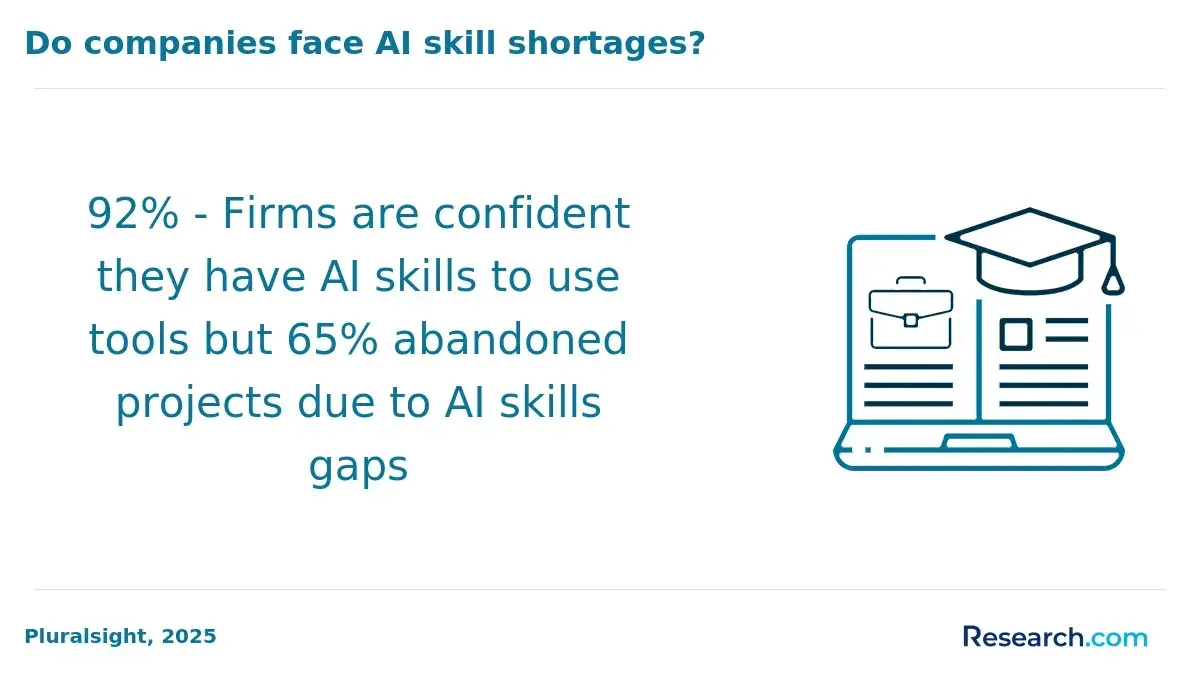
Employers increasingly seek candidates adept at delivering complete computer vision solutions; a recent IBM Global AI Adoption Index reported that 75% of companies struggled to fill AI talent roles. Prospective students should focus on courses blending comprehensive tool training with projects addressing real-world issues such as object tracking and anomaly detection.
This approach prepares graduates to meet dynamic employer demands while mastering both foundational techniques and practical deployment.
How long do computer vision courses usually take and what do they cost in the U.S.?
Computer vision courses in the U.S. vary widely in length and cost, often designed to fit different student needs and schedules. Shorter, intensive courses typically last 4 to 12 weeks, while more comprehensive professional certificates may extend up to 6 months. Many offerings from platforms like Coursera target working professionals by combining project-based learning with a manageable weekly commitment of 5 to 8 hours, helping students strengthen practical skills alongside other responsibilities.
Tuition fees range significantly depending on course type and provider. Free introductory courses sometimes include optional paid certificates priced between $39 and $99. More advanced professional certificates usually cost between $400 and $1,200, especially when featuring multiple hands-on projects and mentorship. University-affiliated certificates or degree programs may demand $2,000 to $5,000 or more for deeper, credentialed learning experiences.
- Project-based courses require extra time for assignments, reinforcing coding and model-building skills.
- Coursera, with over 142 million learners, remains a leading platform offering scalable computer vision education and certification.
When selecting a program, students should weigh their skill level, career objectives, and availability. Career changers should favor courses with verified certificates and extensive project work to improve job prospects. This broad range of durations and prices allows learners to find the right fit for their ambitions and budgets.
How can you verify accreditation and choose reputable U.S. institutions for computer vision study?
Verify accreditation by confirming that the institution is recognized by the U.S. Department of Education or the Council for Higher Education Accreditation (CHEA). Regional accreditation is preferred as it ensures curriculum quality, faculty qualifications, and institutional resources meet national standards. Be cautious of institutions with only national or programmatic accreditation unless they are well-regarded in computer vision or Artificial Intelligence fields.
Look for reputable U.S. universities offering computer vision courses within established computer science or engineering departments. Schools like Stanford, MIT, and Carnegie Mellon lead in AI research and provide reliable academic programs. Public universities with strong STEM departments and industry collaborations also offer valuable opportunities.
Evaluate programs based on practical, hands-on projects that tackle real-world challenges like data labeling and annotation. Industry sources such as Scale AI indicate that up to 80% of AI project time is dedicated to data preparation rather than model training. Courses incorporating this experience better prepare students for industry needs.
Check faculty credentials and published research to ensure engagement with current computer vision developments. Review alumni success and employer partnerships to assess career support.
Prefer institutions offering certifications or degrees explicitly focused on computer vision or applied AI, rather than generic data science or machine learning programs. Transparency in curriculum, clear learning objectives, and accessible student services are key markers of reputable programs.
- Verify accreditation status with U.S. Department of Education or CHEA
- Choose programs affiliated with recognized universities with strong STEM departments
- Focus on courses offering practical, data preparation experience
- Assess faculty research and alumni career outcomes
- Select programs targeting specialized AI disciplines
What careers can project-based computer vision training prepare you for in the U.S. job market?
Project-based training in computer vision equips candidates for in-demand roles within the U.S. job market, such as computer vision engineers who create algorithms to analyze images and videos for uses including autonomous vehicles and facial recognition. These positions demand skills in machine learning frameworks and real-time data processing.
Research scientist roles in computer vision support advancements in industries like healthcare-improving diagnostic imaging-and manufacturing, by developing automated quality inspection systems. These jobs often require strong research capabilities and innovation in creating novel models to tackle complex vision challenges.
Hands-on experience is essential for industry-specific careers, often involving projects that mimic real-world conditions. For instance, retail and e-commerce companies seek specialists for automated checkout solutions and visual recommendation engines. In agriculture, computer vision is applied to enhance crop monitoring and yield forecasting.
The median annual wage for computer and information research scientists, including computer vision professionals, was $145,080 according to the U.S. Bureau of Labor Statistics. This reflects the high value of skills honed through applied project work.
Key areas of expertise include image processing, deep learning architectures, and data annotation. Knowledge of embedded systems and edge computing further boosts employability in robotics and IoT sectors. Employers prioritize portfolios that showcase real project results over theory alone.
- Proficiency in machine learning frameworks
- Experience with real-time data processing
- Strong research and modeling skills
- Applied project portfolios
What salaries, advancement opportunities, and job outlook can computer vision professionals expect?
Computer vision professionals in the U.S. enjoy strong salary prospects, particularly in technology centers such as Silicon Valley and New York. Entry-level positions typically start around $85,000 annually, while mid-career engineers working on advanced projects like autonomous vehicles or medical imaging often earn between $120,000 and $140,000. Senior and leadership roles, including principal scientists and research specialists, can command salaries exceeding $180,000.
Career growth commonly progresses from junior engineer to senior engineer and then to team lead or principal scientist. Many professionals transition into product management or AI strategy roles, leveraging a blend of technical and business expertise. Staying current with skills in deep learning, neural networks, and real-time image processing is essential for advancement and is supported by education that includes hands-on project experience.
The job outlook in this field is favorable. According to the Bureau of Labor Statistics, computer and information research scientist roles are projected to grow 19% through 2030, much faster than average for all occupations. Demand remains strong in healthcare technology, automotive, security, and retail sectors, especially for candidates proficient in deploying scalable computer vision applications.
- Entry-level salaries range from $85,000 to $100,000
- Senior roles pay between $120,000 and $150,000+
- Leadership and specialized research roles can exceed $180,000
Which certifications, portfolios, and capstone projects strengthen your computer vision career prospects?
Certifications, portfolios, and capstone projects are essential to advancing a career in computer vision. Certifications from trusted providers like Coursera, Udacity, and edX validate skills in convolutional neural networks, object detection, and image segmentation. These credentials confirm a candidate's knowledge and readiness for industry challenges.
Creating a portfolio with diverse, hands-on projects helps turn theoretical learning into practical experience. Examples include facial recognition systems, autonomous vehicle perception, and medical image analysis. Detailed explanations of methods, datasets, and performance demonstrate problem-solving abilities that employers seek.
Capstone projects showcase comprehensive skills through real-world applications. Collaborative, end-to-end projects-from data collection to deployment-highlight technical depth and innovation. Choosing projects with clear business impact, such as retail surveillance or defect detection, aligns your work with market needs.
With 42% of enterprises deploying AI solutions, according to the McKinsey State of AI report, demand for applied expertise is growing rapidly. Combining recognized certifications, a well-curated portfolio, and impactful capstone work prepares candidates to meet technical challenges and support business goals.
Focusing on these elements effectively addresses employers' concerns about skill validation and practical experience, making candidates more competitive in the evolving AI job market.
Other Things You Should Know About Artificial Intelligence
In 2027, some leading computer vision courses with hands-on projects are "Deep Learning for Computer Vision" on Coursera, Udacity's "Computer Vision Nanodegree," and "Applied AI with DeepLearning" on edX. These courses integrate practical projects such as developing facial recognition systems and object detection models, offering a robust understanding of computer vision technologies.
Projects in artificial intelligence courses often include image and speech recognition, natural language processing, predictive analytics, and autonomous systems. These hands-on projects allow students to apply theoretical concepts in practical scenarios such as developing chatbots or implementing recommendation engines.
While some foundational knowledge of programming, especially in Python, is highly recommended, many courses offer introductory content to help beginners catch up. However, consistent practice and a willingness to learn coding are essential to fully benefit from AI coursework and projects.
Data is fundamental to artificial intelligence, serving as the basis for training models to recognize patterns and make predictions. Quality and quantity of data directly impact the effectiveness of AI algorithms, making data preprocessing and management critical components of AI education.
References
- Understanding the Key Steps in a Computer Vision Project | Ultralytics Docs https://docs.ultralytics.com/guides/steps-of-a-cv-project
- The Best Online Course for Learning Computer Vision in 2025 - PyImageSearch https://pyimagesearch.com/the-best-online-course-for-learning-computer-vision-in-2025/
- How to Get Computer Vision Engineer Jobs (2025) https://www.peopleinai.com/blog/computer-vision-engineer-jobs
- Computer Vision Course | Production CV Systems | PyTorch & TensorFlow — AI Tech Institute https://www.aitechinstitute.com.au/computer-vision-at-scale
- Computer Vision Lab Program Page | WQU.edu https://www.wqu.edu/computer-vision-lab
- 11 Computer Vision Projects to Master Real-World Applications | DigitalOcean https://www.digitalocean.com/resources/articles/computer-vision-projects
- Best Computer Vision Course Online with Certification https://www.projectpro.io/course/computer-vision-course-online
- Best computer vision courses for 2022 | SuperAnnotate https://www.superannotate.com/blog/best-computer-vision-courses
- How to Verify a US Partner School's Accreditation Before Committing https://www.amerigoeducation.com/news/how-to-verify-a-us-partner-schools-accreditation-before-committing
- Computer Vision Technology Costs: Key Factors & Use Cases https://www.it-jim.com/blog/computer-vision-costs/