2027 Best Generative AI Courses for Business Analysts

Co-Founder and Chief Data Scientist
Business analysts face increasing pressure to leverage generative AI to enhance decision-making and automate routine tasks. However, many struggle with identifying relevant courses that offer practical skills without requiring a prior tech background. This gap hinders their ability to stay competitive as firms adopt AI-driven tools rapidly. Flexible, accessible education tailored to non-technical professionals is essential for successful career pivots into AI-related roles.
This article explores the best generative AI courses designed specifically for business analysts, focusing on accredited programs that combine flexibility with real-world applications to accelerate professional growth and competency in this evolving field.
Key Things You Should Know
- Generative AI courses for business analysts in 2026 focus on practical skills integrating AI tools into data analysis and decision-making, reflecting a 45% industry growth in AI adoption since 2024.
- Most top programs emphasize ethical AI use, ensuring analysts understand bias mitigation and transparent model deployment-critical as 60% of companies face AI governance challenges.
- New curricula blend machine learning fundamentals with domain-specific case studies, helping analysts increase productivity by up to 30% through automated insights extraction.
Advance Your Career with AI Online Courses
Artificial Intelligence: Implications for Business Strategy
This program provides an introduction to Artificial Intelligence and their implications for business strategy. Earn an official digital certificate.

Oxford Artificial Intelligence Programme
Explore this Oxford Artificial Intelligence programme offered in a flexible learning environment and explore topics like machine learning, automation, and robotics.

Implementing Agentic AI: Building Your Organizational Playbook
This online MIT Agentic AI course offers a practical approach to deploying AI agents in your organization, including a custom playbook. 3 weeks, exclusive launch price.

AI Adoption: Driving Business Value and Impact
This online MIT AI Adoption: Driving Business Value and Impact offers practical frameworks to close the gap between AI potential and business reality.

Artificial Intelligence in Pharma and Biotech
Discover the applications and limitations of artificial intelligence in pharma and biotech with this MIT online short course.

What is a generative AI course for business analysts and who should enroll?
A generative AI training for business analysts offers focused education on using generative artificial intelligence tools to improve data interpretation, predictive modeling, and decision-making. These courses prioritize practical skills like natural language processing, machine learning model deployment, and data synthesis, enabling analysts to leverage AI-generated insights for solving business challenges and enhancing strategic planning.
With the growing emphasis on AI in the workplace, business analyst generative AI course benefits include staying competitive and relevant. The World Economic Forum estimates that 86% of employers will be transformed by AI and information-processing technologies by 2030, underscoring the urgency for AI literacy as a core competency. Professionals lacking this expertise risk falling behind in roles that demand enhanced data-driven decision-making.
Ideal candidates for such courses include:
- Current business analysts integrating AI-driven analytics into daily workflows
- Recent graduates in business, economics, or IT exploring specialization paths
- Managers and consultants relying on data insights but without formal AI training
- IT professionals transitioning to roles bridging technology and business strategy
Many programs provide hands-on experience with industry tools like GPT models and AI-powered business intelligence platforms. This practical training helps learners automate reporting, refine scenario planning, and improve customer segmentation using AI. Students develop the skills to turn AI outputs into actionable business recommendations and enhance their career potential, including understanding applied artificial intelligence salary trends.
Advance Your Career with AI Online Courses
Artificial Intelligence: Implications for Business Strategy
This program provides an introduction to Artificial Intelligence and their implications for business strategy. Earn an official digital certificate.
Oxford Artificial Intelligence Programme
Explore this Oxford Artificial Intelligence programme offered in a flexible learning environment and explore topics like machine learning, automation, and robotics.
Implementing Agentic AI: Building Your Organizational Playbook
This online MIT Agentic AI course offers a practical approach to deploying AI agents in your organization, including a custom playbook. 3 weeks, exclusive launch price.
How can generative AI skills enhance a business analyst's career and job prospects?
Generative AI skills for business analyst career growth empower professionals to extract actionable insights from large data sets using automation and advanced modeling. Analysts with generative AI expertise can build predictive models, generate natural language reports, and simulate complex scenarios efficiently, reducing manual work while improving decision-making quality. These capabilities are crucial in data-driven roles where speed and accuracy matter.
Expertise in generative AI improves business analyst job prospects by accelerating processes like customer segmentation, risk assessment, and financial forecasting. For instance, analysts can rapidly prototype new product concepts or automate trend analyses, enabling faster strategy development and agile responses to market changes.
A survey by Microsoft and LinkedIn's Work Trend Index found 66% of leaders would not hire candidates lacking AI skills, regardless of experience, highlighting the increasing demand for such competencies. Employers prioritize analysts who can seamlessly integrate AI-generated insights within business contexts, making AI proficiency a powerful advantage.
Business analysts aiming to boost their careers should pursue courses covering AI fundamentals, generative models, and industry applications. Skills in Python, GPT-4, and AI-driven analytics dashboards enhance employability. For those interested in advancing their education, a range of AI degrees provide practical training and knowledge to bridge technical expertise with strategic business value.
What are the best generative AI course options for business analysts in the U.S.?
Top generative AI course options for business analysts in the U.S. focus on practical skills in data interpretation, model deployment, and domain-specific applications. Programs like MIT's Professional Certificate in Machine Learning & Artificial Intelligence and Stanford's AI for Business offer intensive curricula that align with business analyst roles by emphasizing generative model usage for decision support and automation. Coursera's Generative AI specialization, developed by leading universities, provides accessible yet robust training on foundational and advanced concepts-including natural language generation and AI-driven forecasting.
Among the best generative AI courses for business analysts in the U.S., those with hands-on projects stand out. These courses often teach integration of generative AI tools such as GPT and DALL·E into workflow automation and customer insights analysis, delivering immediate career value. Udacity's AI Business Analyst Nanodegree combines applied machine learning with business intelligence, targeting professionals seeking swift upskilling in AI-driven roles.
Demand for AI proficiency is strong, as reflected in PwC's Global AI Jobs Barometer 2024, which reports a 56% wage premium for workers with AI skills, up from 25% in 2023. This wage premium underscores the market's recognition of generative AI expertise for business analysts.
When selecting among top generative AI training programs for U.S. business analysts, prioritize those with certifications recognized by industry and updated content on AI ethics, data governance, and compliance. Programs offering community support and expert mentorship also enhance learning outcomes. For those budgeting education costs, resources such as cyber security online degree cost comparisons may offer insight into managing expenses across tech fields.
What topics and tools are typically covered in generative AI courses for business analysts?
Generative AI courses for business analysts focus on essential topics and tools that enable professionals to leverage AI-driven insights effectively. Key topics in generative AI courses for business analysis include generative AI principles, natural language processing (NLP), and machine learning fundamentals specifically designed for business needs. Emphasis is placed on data preparation and management, teaching students how to cleanse and structure data for the best AI-driven results.
Instruction often covers generative AI tools for business analysts like OpenAI's GPT models, Google's Vertex AI, and AI-enhanced platforms such as Microsoft Power BI. These tools help automate reporting, generate forecasts, and extract insights from complex and unstructured datasets, streamlining decision-making processes.
Advanced course content regularly includes fine-tuning custom AI models, prompt engineering, ethical AI use, and interpreting AI-generated data to support actionable business strategies. Practical exercises simulate real-world applications, such as automating customer feedback analysis, optimizing marketing content, and improving research and development workflows with generative AI.
With McKinsey projecting generative AI could add $2.6 to $4.4 trillion annually to the global economy-impacting marketing, software engineering, customer operations, and R&D-these programs prepare analysts for challenges like bias mitigation, system integration, and privacy compliance. For those interested in related technology fields, consider exploring electrical engineering programs online for veterans.
How do online generative AI programs compare with campus-based options for business analysts?
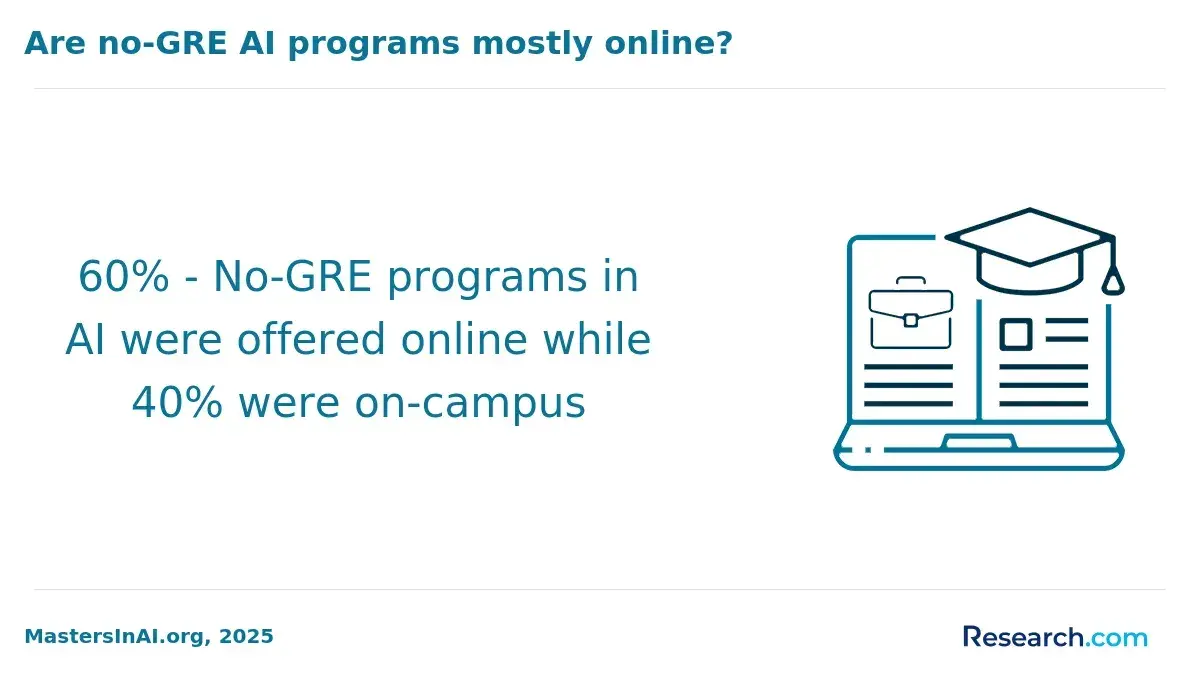
Online generative AI programs provide significant advantages for business analysts compared to campus-based options, especially in flexibility, accessibility, and practical skills development. These courses often feature modular, self-paced learning that aligns with immediate business needs, allowing professionals to adopt new AI capabilities alongside their work. Campus programs, by contrast, typically follow fixed schedules and emphasize theory, which can delay hands-on application amid fast-changing AI advancements.
Many online platforms focus on real-world generative AI workflows, incorporating case studies and current industry tools. For example, IBM's global survey highlights that 40% of the workforce needs reskilling due to AI and automation, making practical training critical. This emphasis ensures analysts acquire relevant skills quickly.
Campus education can offer deeper theoretical foundations and networking but often lacks the agility to update content rapidly. Online courses adapt faster to innovations like large language models and AI-driven decision-making. They also remove geographical and financial barriers, expanding access for working professionals and recent graduates.
When choosing between online and campus formats, consider:
- Time flexibility and learning pace
- Curriculum relevance to current AI tools
- Cost and accessibility
- Hands-on practice opportunities
- Networking and peer collaboration
What prerequisites and admission requirements do generative AI programs for business analysts have?
Generative AI programs targeting business analysts typically require a solid foundation in data analysis, statistics, and programming skills, especially in Python or R. These languages are essential for working with AI frameworks and manipulating data efficiently. Most programs expect applicants to have completed coursework or gained experience in machine learning fundamentals or data science principles to help grasp AI applications within business contexts.
Admission criteria often include holding a bachelor's degree in business, computer science, information systems, or related fields. In some instances, relevant work experience in business intelligence or analysis can serve as a substitute for formal education. Certain advanced courses may also require familiarity with cloud computing platforms or databases, given their importance in deploying AI models.
Applicants might face interviews or assessments to evaluate technical aptitude and problem-solving abilities, ensuring they are prepared for rigorous training. It is common to see prerequisite demands for knowledge in calculus or linear algebra, critical for understanding many generative AI algorithms. Some programs offer preparatory modules to bridge these knowledge gaps.
Based on a GitHub study, developers using tools like Copilot completed tasks 55% faster, highlighting the productivity benefits of AI skills in business projects. Candidates with strong quantitative backgrounds and programming expertise are best positioned to maximize these gains.
How long do generative AI courses for business analysts take and what do they cost?
Generative AI courses for business analysts vary widely in duration and format, often ranging from a few weeks to several months. Many programs offer flexible options, such as intensive bootcamps lasting 4 to 8 weeks or part-time formats extending up to 6 months, designed to accommodate working professionals. Short online courses typically demand 20 to 40 hours total, providing foundational skills in generative AI tools for business analytics applications.
Costs fluctuate based on the provider, course depth, and accreditation. Entry-level online courses usually cost under $500 and cover basic AI concepts relevant to data analysis. Mid-tier certificate programs often range between $1,000 and $3,000. Executive-level education, such as London Business School's Business Analytics with Generative AI course priced at £2,305 (around $2,800), reflects their specialized curriculum and brand prestige.
Prospective students should weigh trade-offs between course length, depth, and cost. Shorter courses offer rapid skill acquisition but may lack comprehensive mentoring, while longer, premium options include practical projects and networking advantages crucial for career impact.
U.S.-based professionals benefit from choosing courses with modular content, focusing on areas like process automation or predictive analytics, allowing tailored learning aligned with specific career goals.
How can prospective students evaluate accreditation and quality in generative AI programs?
When selecting generative AI programs tailored for business analysts, prioritize accreditation and program quality. Confirm that the institution holds accreditation from recognized U.S. regional accreditors such as Middle States, NEASC, or WASC to ensure academic rigor and eligibility for federal financial aid. Evaluate whether the AI curriculum is designed with business analysis applications in mind rather than broad, generic AI topics. For example, LinkedIn Learning's AI for Business Analysis courses demonstrate a structured focus on role-specific skills relevant to this field.
Review instructors' credentials and real-world experience in AI within business analytics. Programs led by professionals with certifications like CBAP (Certified Business Analysis Professional) combined with AI expertise provide more authoritative instruction. Also, check for partnerships or endorsements from reputable AI or business organizations, which add practical validation.
Assess course outcomes and learner feedback by focusing on measurable skills such as predictive analytics, natural language processing integration, and automation of business processes. Graduate placement rates in roles requiring generative AI competence are important quality indicators. Avoid programs that lack transparent curriculum updates or ignore current AI trends.
Choose programs offering hands-on projects, case studies, or simulations utilizing AI tools specific to business analysis workflows. This practical experience is crucial for effectively applying AI solutions to complex business challenges.
What salaries, roles, and industries can business analysts expect after generative AI training?
Business analysts trained in generative AI gain access to growing salary prospects and a variety of evolving roles across industries. Entry-level salaries start near $75,000 annually, while experienced professionals with specialized AI skills often earn over $120,000. Senior positions like AI strategy analyst or AI business consultant can exceed $140,000, reflecting high demand for expertise that integrates AI into core decision-making processes.
Key roles include AI-powered data analyst, automation specialist, and AI implementation manager. These require a blend of traditional analytical abilities and proficiency with generative AI tools, enabling contributions to projects such as AI-driven market forecasting, customer insight generation, and process automation.
Industries with noteworthy demand for these skills encompass finance, healthcare, retail, and technology. For instance, financial institutions apply AI business analysts to improve risk management models, while healthcare providers use them to enhance patient data interpretation and personalized services.
Top-tier institutions, including Harvard and MIT Sloan, offer AI-for-business credentials that combine AI knowledge with strategic business acumen. These credentials boost employability by demonstrating a comprehensive understanding of both technology and business strategy.
Training programs should cover generative AI algorithms, ethical considerations, legacy system integration, and how to communicate AI insights to non-technical stakeholders. Mastering these areas supports handling challenges like model explainability and strategic AI adoption across sectors.
Which certificates or professional credentials in generative AI are most valuable for business analysts?
Professional credentials in generative AI for business analysts emphasize practical skills that improve project outcomes and streamline business processes. Certificates like those offered by Techcanvass focus on creating actionable deliverables such as user stories, acceptance criteria, and identifying automation opportunities within workflows, reflecting a shift from theoretical knowledge to hands-on expertise.
Effective programs teach how to:
- Draft detailed user stories and acceptance criteria based on generative AI outputs
- Map AI-driven automation opportunities to enhance efficiency across departments
- Collaborate with data scientists and developers using AI terminology and workflows
- Assess AI model impacts on business processes and adjust project scopes accordingly
Credentials that include case studies and project work prepare business analysts to manage AI integrations and communicate requirements clearly to technical teams. Hands-on labs or capstone projects are vital to demonstrate the ability to apply generative AI concepts in real client scenarios, beyond simply passing exams.
Certifications developed with input from leading AI organizations or business analyst groups add credibility by aligning with industry standards and reflecting the latest generative AI advancements relevant for future roles.
Other Things You Should Know About Artificial Intelligence
In 2027, top generative AI courses for business analysts include options from Coursera, specifically courses like "Generative AI for Business Strategy" by Wharton. EdX offers "AI Applications in Business" by MIT. For focused learning, Udacity’s "AI for Business Analysts" program provides an industry-relevant curriculum.
Artificial intelligence automates routine data processing tasks, enabling business analysts to focus more on strategic insights and problem-solving. It also enhances data-driven decision-making by providing advanced analytical tools, making analysts' roles more dynamic and technology-oriented.
Yes, many artificially intelligent courses designed for business analysts focus on fundamental concepts without requiring advanced programming skills. These courses often emphasize practical applications, enabling non-technical professionals to leverage AI tools and interpret AI-driven results effectively.
Business analysts may encounter challenges such as data quality issues, lack of clear AI governance policies, and resistance to change within organizations. Understanding AI limitations, ensuring proper training, and fostering cross-functional collaboration can help mitigate these obstacles.
References
- List https://www.datacamp.com/blog/complete-guide-to-business-analyst-salaries
- AI Business Analyst Course | Get Future Ready with AI skills https://techcanvass.com/Courses/AI-Certification-for-Business-Analysts
- The role of quality assurance agencies in regulating the use of generative artificial intelligence in the higher education system https://www.eua.eu/publications/conference-papers/the-role-of-quality-assurance-agencies-in-regulating-the-use-of-generative-artificial-intelligence-in-the-higher-education-system.html
- Business Analytics with Generative AI - Online | London Business School https://www.london.edu/lbs-online/business-analytics-with-generative-ai
- What Business Analysis Jobs Are Available? | Knowledge Train https://www.knowledgetrain.co.uk/business-analysis/business-analyst-course/jobs-in-business-analysis
- AI for general business analysts https://community.deeplearning.ai/t/ai-for-general-business-analysts/673573
- How Generative AI is Reshaping the Business Analyst Role https://vforceinfotech.com/blog/understanding-how-generative-ai-impacts-the-business-analyst-role/
- Generative AI for Business Analysis https://www.pluralsight.com/courses/generative-ai-business-analysis
- Top 7 artificial intelligence courses 2025: Comparison of the best online programs https://xd-i.com/en/data-en/ai-courses/
- Generative AI Course for Business Analysts | PM-Partners https://www.pm-partners.com.au/course/generative-ai-for-business-analysts/