2027 Grand Canyon University Online Master's in Instructional Design: Cost, Curriculum, Admissions, and Career Outcomes

Co-Founder and Chief Data Scientist
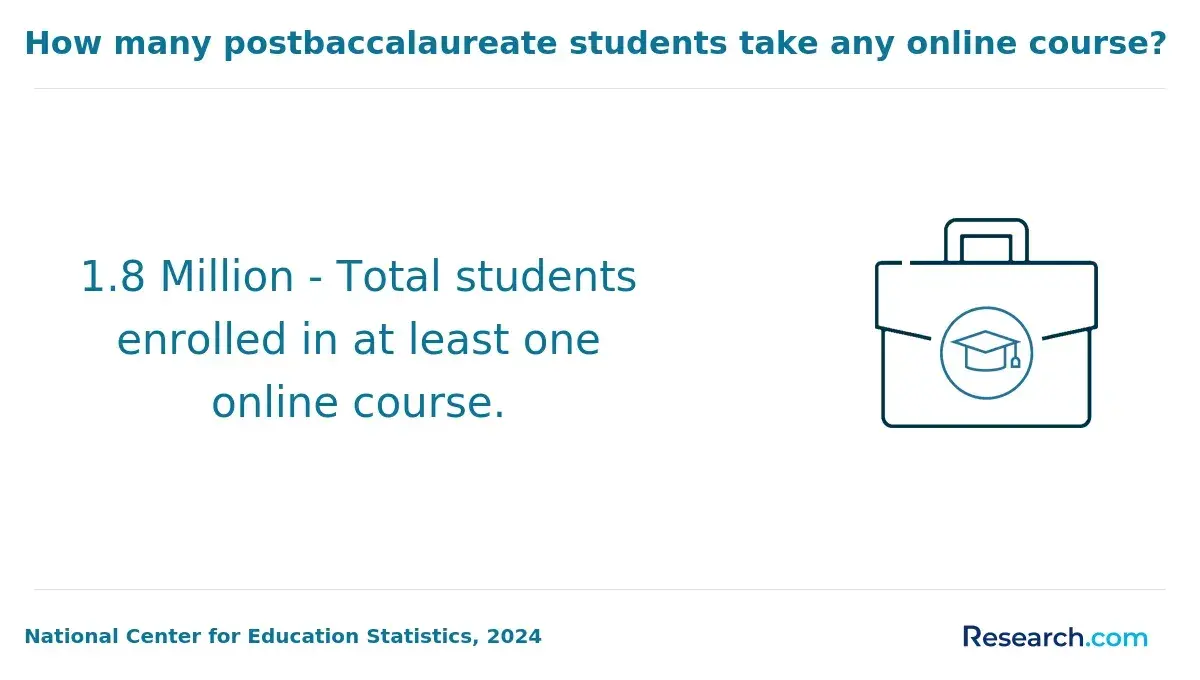
Evaluating the online master's in instructional design at Grand Canyon University requires attention to how the program matches one's academic background, career goals, and learning preferences. As adult learners make up over 40 percent of all higher education enrollments, according to the National Center for Education Statistics, flexibility and practical application have become critical factors in program selection.
This reflects a growing need for courses that balance rigorous theory with skills directly relevant to evolving instructional roles. Understanding admissions criteria, curriculum structure, and career outcomes is essential in determining if this program supports long-term employability and career advancement. This article examines these elements to guide informed decisions.
Key Points About Grand Canyon University's Master's in Instructional Design Program
- A 60% acceptance rate reflects a moderately selective admission process, meaning prospective students should prepare to demonstrate relevant experience or credentials to gain entry.
- The program's $37,212 total tuition cost requires careful financial planning, as this investment must be weighed against potential salary gains and career progression in instructional design roles.
- Alumni outcomes indicate employer recognition across sectors, suggesting the credential can support career advancement, but success often depends on combining the degree with practical skills and networking.
What can students expect from Grand Canyon University's online Master's in Instructional Design curriculum?
Students pursuing Grand Canyon University's online Master's in Instructional Design engage in a curriculum structured to reflect widely recognized standards across the United States, yet tailored to emphasize the practical challenges faced by professionals in the field.
For instance, when designing a training module for a corporate client with diverse learner backgrounds, students must synthesize theory with real-world constraints such as technology access and learner engagement strategies. The curriculum focus areas in Grand Canyon University instructional design program cover key dimensions of this profession.
Here are three critical components:
- Instructional Design Principles: This course grounds students in foundational theories of how people learn and retention techniques. Mastery here enables them to create content that is both accessible and effective across multiple learning environments, which is essential for workforce readiness.
- Technology Integration and Multimedia Design: Focused on practical application, this coursework requires students to develop proficiency with digital tools and software. These technical skills are indispensable as employers increasingly demand designers capable of producing interactive and engaging e-learning solutions.
- Project Management and Leadership: These classes prepare students for coordinating instructional projects and managing teams within educational or corporate settings. Understanding administrative and organizational aspects positions graduates to take on leadership roles beyond purely creative tasks.
The program's incorporation of research methods and hands-on case studies ensures candidates do not merely absorb concepts but learn to navigate the complexities of learner-centered design workflows. This multifaceted approach aligns with the demands of varied roles such as curriculum developers and e-learning specialists.
For students weighing their options against other accelerated options like 1 year masters, assessing how well the curriculum integrates theory with applied skills will be central to determining its practical value in a competitive job market.
What are Grand Canyon University's admission requirements for online Master's in Instructional Design program?
Admission to Grand Canyon University's online master's in instructional design is selective and requires more than just submitting basic application materials. The program expects applicants to demonstrate their academic competencies and foundational skills relevant for graduate-level study.
For example, a candidate with significant professional experience in education may still need to prove academic readiness through transcripts and formal evaluations, reflecting employer expectations that graduates possess both practical skills and scholarly rigor.
Below are key requirements applicants typically must meet:
- Academic Transcripts: Applicants must provide official records showing a secondary school diploma and completion of a college-preparatory curriculum. This ensures a baseline level of academic preparation necessary for success in graduate studies.
- Competency Demonstration: Grand Canyon University requires formal evidence of relevant abilities, which can include prior academic achievements or applicable work experience. This helps verify readiness beyond GPA metrics alone.
- English Proficiency: Non-native English speakers must submit TOEFL scores to demonstrate language proficiency. This requirement aligns with real-world communication demands in instructional design roles that require clear, effective content delivery.
- Test Scores and Recommendations: While some assessments like Wonderlic or WISC-III tests and letters of recommendation are suggested, they are not mandatory. Their optional status allows candidates to strengthen their applications but does not create barriers.
- Credit for Experience: The program values life experiences and advanced placement credits, enabling students to leverage prior learning and potentially shorten their path through the degree.
Is it difficult to get admitted to Grand Canyon University's online Master's in Instructional Design program?
Admission to master's programs in instructional design generally reflects a competitive but accessible landscape, driven by increasing demand for digital learning expertise. Many programs balance selectivity with a need to fill expanding cohorts, making the application process a test of both academic baseline qualifications and relevant professional experience.
At Grand Canyon University, the Online Master's in Instructional Design aligns with this trend, with a reported acceptance rate of 60%, admitting nearly 29,000 out of approximately 48,000 applicants annually. This level of selectivity indicates moderate difficulty—neither overly restrictive nor broadly open—which means applicants should meet standardized academic indicators such as SAT verbal scores between 540 and 620, math scores from 518 to 555, or ACT results ranging from 19 to 99. These thresholds suggest consistent academic expectations paired with the realities of a competitive applicant pool.
One graduate recalled feeling uncertain about meeting the admissions criteria until reviewing her academic records and relevant work history carefully. Balancing job responsibilities while organizing transcripts and test scores felt like a hurdle, but she found that thorough preparation alleviated much of the stress. "I wasn't sure if the numbers were competitive enough," she noted, "but focusing on how my instructional experience fit within the application helped me follow through without second-guessing the process."
This experience underscores the importance of strategic preparation rather than relying solely on numeric criteria when applying to online instructional design master's programs.
What is the cost of attending an online Master's in Instructional Design program at Grand Canyon University?
Tuition and fees for the instructional design master's program at Grand Canyon University total about $17,450 annually, with additional estimated expenses like books and supplies costing around $1,100. While room and board are typically associated with on-campus study, GCU includes these in its overall cost calculation, which brings the total annual expense near $37,212.
For online students, the absence of technology fees and a flat tuition rate regardless of residency state simplifies budgeting, but added personal expenses can still influence the overall investment.
Compared to the average tuition range of $20,000 to $25,000 for similar programs nationally, Grand Canyon University's core tuition fees offer competitive value. However, prospective students should weigh the relatively modest base tuition against the fully loaded cost of attendance and assess whether this aligns with their financial capacity and career returns. Employers in instructional design often prioritize demonstrable skills and portfolio work as much as the program's price tag, making cost-effective decisions critical.
Estimating the true cost of Grand Canyon University's Online Master's in Instructional Design requires understanding both direct and indirect expenses, especially since online learners may avoid some traditional campus costs but still encounter unique resource needs. Transparent pricing can aid this evaluation, but it is essential for students to anticipate potential hidden costs and funding limitations that impact time to completion and workforce re-entry.
Students evaluating the tuition fees for instructional design Master's program at Grand Canyon University should also consider alternative online degree options that balance cost with curriculum quality. For a broader perspective on accessible pathways, resources like the online degree landscape offer valuable context on pricing and program structure relevant to decision-making.
Are there financial aid options for online Master's in Instructional Design students at Grand Canyon University?
Securing financial aid for an online master's in instructional design at Grand Canyon University involves navigating a mix of institutional and external funding sources, each with implications for students balancing costs against career timelines. While nearly all students receive some aid, the level and form of support can vary widely, affecting whether learners incur debt or rely on employer sponsorship.
Understanding these options helps prospective students assess the true net cost and long-term ROI of the program. The following outlines key funding mechanisms worth considering:
- Institutional Scholarships: Offered exclusively to graduate students at Grand Canyon University, these scholarships can significantly reduce tuition costs. Eligibility often depends on academic merit or enrollment status, with award amounts varying by individual circumstances and availability.
- Federal Aid Programs: Pell Grants and federal loans require FAFSA application and income verification. While Pell Grants typically favor undergraduate students, graduate candidates may be eligible for subsidized and unsubsidized loans, adding financial flexibility though increasing debt obligations.
- Corporate Reimbursement: Employees at companies with tuition assistance agreements may have eligibility for reimbursement, reducing upfront expenses but often contingent on continued employment and job performance benchmarks.
- Military Benefits: Veterans and active-duty personnel can access education benefits through programs supported by Grand Canyon University, often covering a substantial portion of costs and easing financial burden in exchange for prior service.
- Payment Plans and Institutional Aid: Flexible payment schedules allow students to spread out tuition payments over time, complementing other aid sources while minimizing reliance on high-interest loans or credit cards.
What learning resources are available to online Master's in Instructional Design students at Grand Canyon University?
The scope and quality of learning resources can directly affect a student's ability to engage deeply with instructional design concepts and meet employer expectations post-graduation. At Grand Canyon University, resources are structured to bridge the gap between theoretical knowledge and practical skills—key for navigating the diverse and evolving demands of instructional design roles in corporate, educational, and technology sectors.
For example, consistent access to technical support and academic advising reduces common barriers faced by remote learners, enabling steady progress without derailing due to logistical or administrative hurdles.
This integrated support system aids in making informed decisions about course paths and career focus areas, which can influence employability given the multidisciplinary nature of the field.
Below are some critical resources available to students.
- Digital Learning Platform: A centralized learning management system offers seamless access to multimedia lectures, discussion boards, and assignment submissions. It supports varied learning styles and facilitates continuous interaction with peers and instructors.
- Technical Support Services: Dedicated technical assistance helps students resolve platform and accessibility issues promptly, ensuring minimal disruption—an essential factor for maintaining steady course completion in an online setting.
- Academic Advising: Personalized guidance assists students in selecting courses aligned with their career goals and understanding degree requirements. Advisors also help navigate academic policies and connect students with faculty experts to deepen subject matter comprehension.
- Tutoring and Writing Assistance: Targeted academic support, including tutoring and help with research and writing, is available to enhance students' mastery of content and boost the quality of their assignments and projects.
- Career Services and Networking: Workshops on resume building, interview preparation, and job search strategies complement mentorship opportunities and access to alumni networks, which are crucial for securing internships and employment in the competitive instructional design landscape.
Does Grand Canyon University's online Master's in Instructional Design program have in-person clinicals or practicums?
In-person clinicals or practicum requirements, common in many education or healthcare master's programs, serve as vital hands-on training for students entering those fields. However, many instructional design programs avoid these traditional formats given the digital and often remote nature of the work. In this context, Grand Canyon University's online master's in instructional design clinical requirements reflect a broader industry trend favoring flexible, project-based practical experiences over on-site obligations.
Unlike programs that mandate in-person practicum opportunities at Grand Canyon University's master's instructional design, this program does not require any physical attendance for clinicals or practicum hours. Instead, it integrates practical experience through virtual simulations and project assignments designed to simulate real-world instructional design scenarios.
This approach allows students to cultivate essential skills accessible from any location, accommodating working professionals and those unable to participate in traditional on-site practicums.
This model may influence employability and workforce readiness differently than programs with hands-on clinical experiences. While graduates gain applicable skills through portfolio development and case studies, hiring managers in sectors emphasizing face-to-face client interaction might weigh this factor. Nonetheless, the program's design aligns with growing demand for remote instructional designers in corporate and educational environments.
Students seeking more traditional, in-person practicums might explore other options among top online universities.
What careers can graduates of online Master's in Instructional Design at Grand Canyon University secure?
The marketability of graduates from Grand Canyon University's online master's in instructional design hinges on their ability to transform educational and training environments across sectors. Employers increasingly prioritize candidates who can integrate technology and learning science to improve outcomes, especially in Arizona's evolving education and corporate landscapes.
Evaluating the program's value involves how well graduates translate acquired skills into sustainable roles amid growing demand for online and workplace training solutions. Practical career options for graduates include:
- Instructional Designer: These professionals focus on crafting tailored learning experiences by applying design frameworks and multimedia tools. Typically, they coordinate with educators and stakeholders to develop content that meets diverse learner needs, with salaries reflecting mid-level design and development roles.
- E-Learning Developer: Specializing in digital courseware creation, they embed interactive assessments and platforms for seamless online instruction. This role requires technical proficiency and offers competitive compensation aligned with digital learning trends.
- Curriculum Specialist: Responsible for evaluating and refining instructional content to align with academic standards and organizational goals, curriculum specialists often command roles within educational institutions or corporate learning departments.
- Training Coordinator: Managing logistics and delivery of educational programs, these coordinators ensure effective implementation and assessment of workforce training sessions, particularly in dynamic organizational settings.
Consequently, job prospects for online master's in instructional design graduates from Grand Canyon University reflect steady opportunities, though those seeking specialized digital development skills may encounter stronger employer demand. For prospective students assessing programs, understanding these paths clarifies how instructional design credentials align with evolving labor market needs.
For careful comparison and extended program options, exploring resources on online self paced college courses can provide additional perspective.
What is the salary outlook for online Master's in Instructional Design graduates?
Earnings for graduates holding an online master's in instructional design tend to align closely with median salaries for related education and training fields rather than exceeding them substantially. For those considering the master's in instructional design graduate salary outlook in Arizona, immediate post-graduation earnings reflect typical entry points in education-focused roles, where median alumni salaries hover in the low $30,000 range. This suggests a tradeoff where early-career financial compensation is moderate and heavily influenced by sector and specialization.
Data for average earnings for Grand Canyon University instructional design master's graduates suggest figures near $32,000 to $35,000, consistent with communication, media studies, and special education disciplines. However, a broader baseline median alumni salary across multiple degrees trends higher, around $42,000, reflecting demand in organizational training and educational technology niches.
Professionals leveraging digital learning and corporate training skills may achieve salaries closer to those in business-related fields, which range from $45,000 to $47,000, illustrating the importance of aligning skills with industry opportunity.
Prospective students should evaluate this financial context carefully, recognizing that program value depends on positioning within competitive labor markets and potential employer expectations. When choosing between various degree paths, exploring areas like competency based masters may offer alternative routes to advance marketable skills without the typical salary constraints seen in some instructional design careers.
How do you know if Grand Canyon University's online Master's in Instructional Design program is the right choice for you?
Assessing whether Grand Canyon University's online master's in instructional design aligns with your personal and professional objectives requires more than reviewing program descriptions. The decision hinges on how well the curriculum, delivery method, and support systems match your current life circumstances and future career plans.
Below are key criteria to consider as you weigh this choice.
- Curriculum Practicality and Focus: Evaluate if the program offers applied learning opportunities like capstone projects that mirror workplace challenges. This matters because employers increasingly prioritize candidates who demonstrate hands-on problem-solving skills beyond theoretical knowledge.
- Delivery Flexibility: Consider your schedule and preferred learning style. If balancing work and family commitments is essential, asynchronous courses with robust online engagement tools can offer necessary flexibility without sacrificing interaction.
- Career Relevance and Mobility: Assess whether the skill sets taught are applicable across sectors such as education, corporate training, and technology. Programs emphasizing broadly transferable instructional design competencies improve adaptability to shifting job markets.
- Community and Support Structures: Look for opportunities for peer collaboration and dedicated academic advising tailored to instructional design paths. Such support influences both learning outcomes and professional networking prospects.
A recent graduate shared that she initially hesitated because many programs claimed flexibility, but few matched her need to study after work hours without losing contact with peers and instructors. She found Grand Canyon University's online platform met this balance well, allowing her to apply what she learned immediately in her corporate training role.
Still, the decision was made only after confirming the program's practical approach aligned with her goal of transitioning into more strategic instructional design positions within tech companies.
What Graduates Say About Grand Canyon University's Master's in Instructional Design Program
- David: "During my time at Grand Canyon University, I appreciated how the Master's in Instructional Design program emphasized real-world application over theory. The coursework pushed me to build a professional portfolio, which has been essential since many employers value demonstrated skills more than just the degree. While I initially faced stiff competition for entry-level roles, the flexibility of the program allowed me to complete internships remotely, gaining practical experience that directly influenced my job offers."
- Anika: "Studying at Grand Canyon University taught me valuable instructional design principles, but the real eye-opener was understanding the hiring landscape post-graduation. The Master's in Instructional Design program gave me tools to pivot careers, yet I quickly realized that without additional certifications or specialized skills, salary growth and advancement were somewhat limited in my region. That said, the ability to work remotely and the program's adaptable schedule helped me transition smoothly while balancing family commitments."
- Adam: "The Master's in Instructional Design program at Grand Canyon University was challenging but rewarding. It expanded my knowledge about learner analytics and technology integration, which made me more competitive for roles focused on digital curriculum development. However, I found that the workplace demands practical experience as much as education, so I made sure to secure an internship during the program to bridge that gap. This approach has given me confidence when competing for roles that required hands-on project work."
Other Things You Should Know About Degrees
Grand Canyon University offers an online Master's in Instructional Design adaptable for working professionals. The program features asynchronous courses, allowing students to manage their learning schedule around personal and professional commitments, ensuring flexibility and convenience.
While the program is online and does not require in-person practicums, it integrates project-based assignments that simulate real-world instructional design scenarios. This approach builds practical skills but may not fully replace direct workplace immersion or internships. Prospective students who lack prior hands-on experience should consider supplementing the program with external internships or freelance projects to strengthen their portfolio for employers.
Graduating from Grand Canyon University's master's in instructional design offers a credible credential recognized by many employers, especially within education and corporate training sectors. However, the degree alone may not guarantee job placement; candidates with practical experience or certifications in tools like Articulate or Adobe Captivate tend to be more competitive. Therefore, students should invest time in mastering relevant software alongside their studies to enhance employability.
If gaining a deep foundation and strategic expertise in instructional design is the goal, the master's program provides a more comprehensive and recognized credential than shorter certificate courses. However, certificate programs may offer quicker entry into the workforce and focus on specific technical skills. For those balancing career advancement with time constraints, starting with a certificate and later pursuing the master's can be a practical pathway, but committing to the master's upfront maximizes long-term growth potential.
References
- Higher Education Services https://www.gce.com/
- M.Ed. in Instructional Design and Educational Technology | ACE https://ace.edu/degree-programs/masters-degrees/masters-education/master-of-education-in-instructional-design-and-educational-technology/
- GCU Dept. of Welcome Programs https://gcuwelcome.org/resources
- Best Master's Degrees in Instructional Design https://bestaccreditedcolleges.org/degrees/masters-degrees-in-instructional-design.html
- 10 Best Instructional Design Master's Degree Programs In 2025 https://blog.cathy-moore.com/instructional-design-masters-degree-programs/
- Beyond a Textbook Example: Full Sail’s Instructional Design Master’s Program Offers Innovative Solutions for Educators - The Hub https://hub.fullsail.edu/articles/beyond-a-textbook-example-full-sails-instructional-design-masters-program-offers-innovative-solutions-for-educators
- Grand Canyon University - GradSchoolHub.com https://www.gradschoolhub.com/colleges/grand-canyon-university/
- GCU K12 Resources | Canyon PD https://www.canyonpd.com/gcu-k12-education-resources/
- How To Choose The Right Instructional Design Master’s Program https://elearningindustry.com/choose-right-instructional-design-masters-program