2027 Mobile App Development Degree Completion Programs for Working Adults
Audited and Verified:
Our Editorial and Data Verification Process
Research.com uses government datasets, official education statistics and primary institutional information to support its career and degree guides. Our review process checks factual accuracy, occupational definitions, source dates and the requirements associated with the credentials discussed.
How This Article Was Fact-Checked
Our editorial team verifies salary estimates, employment projections, education requirements and program information against original data providers and official organizations. Salary figures are checked against the relevant occupational definitions and reporting periods. Information about licensure, accreditation and required in-person training is reviewed separately.
Fact-checked and verified on:

Co-Founder and Chief Data Scientist
Working adults seeking a mobile app development degree encounter distinct challenges: balancing job demands, family duties, and education expenses calls for programs built around flexibility and acknowledgment of prior learning. Top-tier degree completion programs distinguish themselves by providing accredited curricula, transparent credit transfer rules, and part-time or online schedules suited to adult learners.
Graduates report an average salary gain of 22% within two years, showing strong ROI and career mobility across tech hubs nationwide. This article examines how to spot completion programs that satisfy accreditation standards, maximize credit for experience, secure financial aid, and match professional goals for lasting career growth.
Key Things to Know About Mobile App Development Degree Completion Programs for Working Adults
- Maximize credit for prior learning by submitting military or professional training evaluations-ACE credit recommendations for veterans boost transferability in many programs.
- Choose programs accredited by ABET or recognized by major employers-such validation ensures licensure compatibility and industry relevance.
- Working adults often qualify for federal aid and employer tuition assistance-combining these reduces out-of-pocket costs in mobile app development degree completion.
What Are Mobile App Development Degree Completion Programs, and Who Are They Designed For?
Degree completion programs in mobile app development provide customized academic routes for adults who hold prior college credit but do not have a bachelor's degree in the field. Unlike traditional four-year or graduate programs, these options stress accelerated pacing and flexible scheduling, frequently offering evening, weekend, or online courses built to fit the busy lives of working adults.
Key features that distinguish accredited mobile app development degree completion programs for career advancement include:
- Accelerated Pacing: These courses progress quickly, helping students complete their degrees sooner than in conventional programs.
- Credit-for-Prior-Learning: Many accept military training, workplace experience, and earlier college credits to cut time and cost.
- Flexible Scheduling: Choices such as online classes and hybrid formats suit professional and personal duties.
- Accreditation and Quality: Programs satisfy regional accreditation standards and match curricula to industry expectations, ensuring employer recognition.
The main audiences mobile app development degree completion programs serve include adults with some college seeking to finish degrees, military veterans with ACE-credited technical training, working professionals pursuing credential-gated promotions, and career changers needing a new credential.
- Adults With Some College: Those returning to studies with a practical, focused path to complete their degrees.
- Military Veterans: Using ACE-credited training and coursework toward a recognized degree.
- Working Professionals: Pursuing formal credentials to advance careers.
- Career Changers: Entering the mobile app development field with a comprehensive credential.
Organizations such as the National Student Clearinghouse, the American Association of State Colleges and Universities (AASCU), and the Lumina Foundation validate these programs as vital adult learner pathways, emphasizing their role in raising degree attainment among nontraditional students. Prospective students should closely assess programs for how they maximize credit transfer, sustain industry relevance, offer financial aid, and hold employer recognition, ensuring alignment with their goals and financial circumstances.
For working adults exploring accelerated academic routes, considering options like online EdD programs can provide insights into flexible and expedited degree completion models applicable to mobile app development degree completion programs for working adults.
How Do Mobile App Development Degree Completion Programs Differ From Traditional On-Campus Degree Programs?
Mobile app development degree completion programs vary greatly from conventional campus-based degrees in ways that matter most to working adults. Such flexible routes serve busy schedules and life obligations while maintaining academic standards.
- Scheduling Formats: Completion programs usually provide evening, weekend, online, or hybrid classes, boosting accessibility. By contrast, traditional degrees mostly follow set weekday schedules with required on-campus attendance.
- Pacing Options: These programs frequently offer accelerated cohorts or self-paced enrollment, giving students more control over their advancement. Traditional undergraduate courses generally stick to semester timelines with uniform pacing for everyone.
- Residency Requirements: Degree completion tracks reduce on-campus residency, and many permit fully online coursework or limited campus visits. Traditional programs demand extended residency and full-time enrollment.
- Asynchronous Coursework: A large share of coursework in completion programs is asynchronous, enabling students to study at convenient times, unlike traditional programs that depend heavily on synchronous lectures and scheduled class times.
- Start Dates and Advising: Multiple or rolling start dates plus streamlined advising make enrollment and progression easier, whereas traditional models use a fixed academic calendar with more formal advising.
- Credit Transfer Flexibility: Completion programs focus on accepting prior learning credits, including military training, professional certifications, and earlier college coursework, which helps working adults transition faster. Traditional degrees often maintain stricter credit policies.
- Enrollment Trends: Data from the National Center for Education Statistics and IPEDS show strong growth in degree completion enrollment among adult learners, reflecting the growing appeal of these programs as an alternative to the full-time residential model over the past decade.
- Credential Equivalence and Student Experience: The awarded degree, such as a Bachelor of Science or Bachelor of Arts in Mobile App Development, is generally the same, but the completion program's learning path differs. It greatly reduces interruptions to employment and family life, producing a substantially different student experience.
For those weighing the differences between online and traditional mobile app development degrees, these features are essential to consider. They assist prospective students in maximizing credit for prior learning, finding accredited programs recognized by employers and licensure bodies, and obtaining financial aid intended for working adults. Investigating options such as an online MSW or mobile app development degree completion program can offer flexible pathways suited to career changers, military veterans with ACE credits, and mid-career professionals pursuing credential-gated promotions.
What Prior Credits and Experiences Count Toward a Mobile App Development Degree Completion Program?
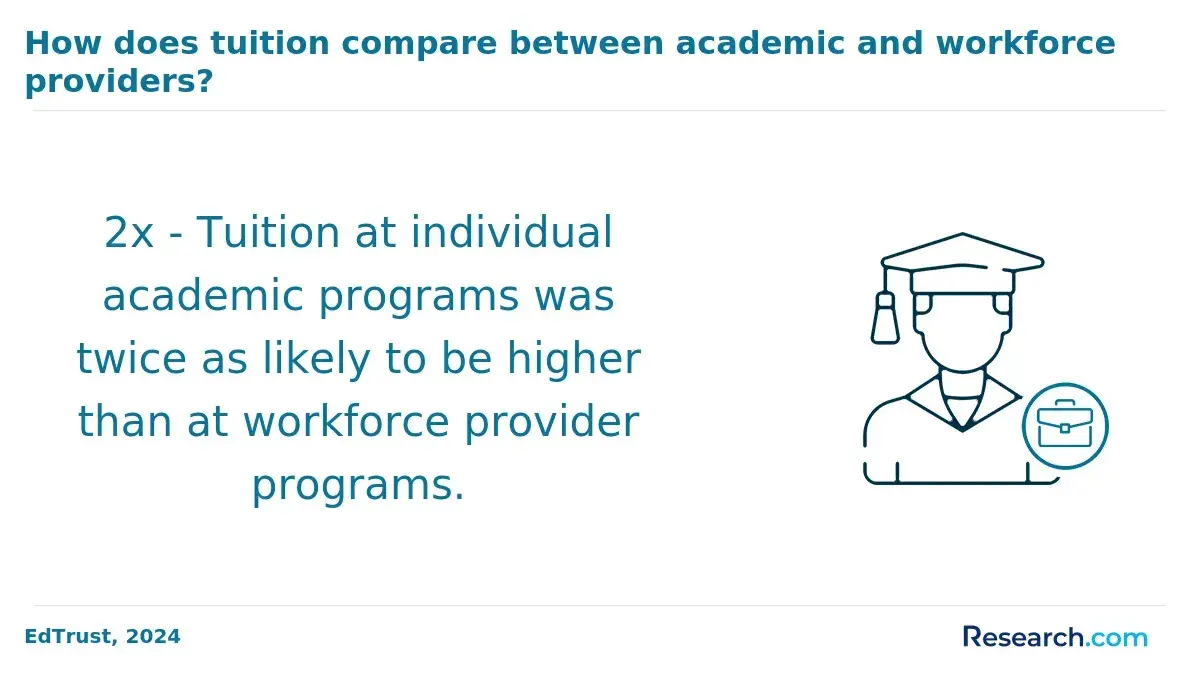
Mobile app development degree completion programs frequently accept multiple types of prior learning credit, letting students speed up their progress and lower costs. Transfer credits from regionally accredited institutions are broadly recognized, though acceptance hinges on how closely earlier coursework aligns with mobile app development requirements. Military training credits assessed via the American Council on Education (ACE) registry are generally honored for veterans and active-duty members, reflecting pertinent technical and leadership abilities.
- Professional Certifications: Credentials tied to programming or software platforms might count toward credit if accompanied by work experience documentation.
- Prior Learning Assessment (PLA): This pathway allows students to submit portfolios that demonstrate workplace learning, while institutions evaluate skills acquired outside conventional classes.
- Credit-by-Examination: Exams such as CLEP and DSST can satisfy general education or elective credits by demonstrating college-level knowledge.
Credit transfer policies differ by institution and depend heavily on the original institution's accreditation, with regional accreditation usually ensuring smoother acceptance. Prospective students ought to request official transcripts early and pursue a pre-enrollment credit evaluation to clarify which credits count before enrolling. Based on CAEL research, adults using PLA can save about 30% of their time to degree and cut tuition expenses by hundreds or thousands of dollars.
Be cautious of programs that deny ACE-approved military credits or set arbitrary transfer limits without clear academic justification. Guidelines from the American Association of Collegiate Registrars and Admissions Officers (AACRAO) offer a solid standard for fair credit transfer practices that students should prioritize.
A professional who successfully completed a mobile app development degree shared that navigating credit evaluation was at first overwhelming: "I wasn't sure which of my certifications and military credits would count." Yet after working with the registrar's office and submitting a detailed portfolio, he felt empowered. "Seeing my real-world experience convert into credit spared me months of coursework that felt redundant, allowing me to focus on learning new, relevant skills for my career change."
Minimum GPA requirements for mobile app development completion programs usually range from 2.0 to 2.5 on a 4.0 scale, acting as a standard admission benchmark based on earlier college work. Still, certain institutions provide conditional acceptance for applicants below that threshold, combining enrollment with focused academic support like tutoring or probationary terms. Others, particularly those serving working adults and military veterans, use open admissions, prioritizing documented professional experience over conventional academic measures.
GPA often works alongside other admission factors such as years of professional experience, recommendations, and personal statements, creating a holistic review process common in programs accredited by the Higher Learning Commission and similar regional bodies. This broad approach helps accommodate varied backgrounds while upholding academic readiness.
- Holistic Admission: Combines GPA with professional credentials and evaluative materials to assess candidates thoroughly.
- Academic Forgiveness Policies: Some colleges recalculate GPA after periods of non-enrollment, giving returning adults who previously struggled academically a fresh start.
- Pre-Admission Evaluation: Asking each program for a formal assessment clarifies how prior coursework aligns with admission criteria, saving time and setting realistic expectations.
Working adults pursuing degree completion can also investigate pathways that acknowledge their experience through programs comparable to an online PhD organizational leadership track, which likewise balances academic standards with professional expertise.
Degree completion programs in mobile app development aim to serve adults working full-time schedules of 40 hours or more by providing flexible course formats like evening cohorts, weekend intensives, fully asynchronous online lessons, and hybrid models. These options let students balance their studies with professional and family obligations while causing minimal disruption. Usually, such programs suggest a term credit load of 6 to 9 credits, helping students keep steady progress without feeling overwhelmed.
Many completion programs use a cohort learning model, in which students begin and advance through the curriculum together as a fixed group. This structure strengthens accountability, builds peer support, and offers a predictable timetable, elements that are vital for working adults who need to plan academic commitments months ahead. Research from the National Student Clearinghouse Research Center shows that adults in cohort-based mobile app development completion programs achieve higher persistence and graduation rates than those in traditional enrollment models, highlighting the effectiveness of this structured design.
Prospective students should ask about key policies to ensure a successful program fit:
- Course Cancellation: How often courses are cancelled and the institution's policies can greatly affect timely graduation.
- Make-Up Provisions: Options available to handle work conflicts without falling behind in coursework.
- Student Success Advisors: Access to dedicated advisors who help with scheduling difficulties and maintaining academic progress.
A professional who built her career after completing a mobile app development degree shared that balancing work and study was intimidating at first, particularly coordinating assignments around client deadlines. She appreciated the consistent group schedule and peer support the cohort model offered, describing it as "a commitment that held me accountable." The chance to attend weekend intensives provided crucial flexibility during busy periods, while her success advisor's guidance made handling unexpected work conflicts manageable. Looking back on her experience, she observed that the program's structure was "not merely convenient, it was essential for balancing my career growth with family life."
Mobile app development degree completion programs increasingly rely on flexible delivery methods to serve working adults balancing career and personal responsibilities. According to the National Center for Education Statistics, in 2023 more than 60% of adult learners in computer-related completions enrolled in fully online courses, while the Online Learning Consortium reports that hybrid programs now represent nearly a quarter of technology enrollments. The COVID-19 pandemic sped up these changes by pushing schools to enhance online teaching quality across disciplines, including mobile app development.
Key delivery formats consist of:
- Synchronous Online: Live video classes encourage real-time interaction and accountability, best for students who like structured schedules but may face commuting difficulties.
- Asynchronous Online: Self-paced lectures and assignments provide maximum flexibility, well suited to learners who handle irregular work hours or live far from campuses.
- Hybrid Models: A mix of online coursework with required in-person sessions delivers hands-on learning without a full campus presence, though it requires occasional travel.
Selecting the right format means balancing convenience, discipline, and engagement according to personal and professional needs. Prospective students should evaluate programs using important quality markers such as faculty qualifications equal to on-campus instructors, low student-to-faculty ratios to ensure attention, availability of virtual academic support services, and institutional accreditation that matches or exceeds campus standards.
When speaking with enrollment advisors, ask about credit transfer policies for prior military or professional learning, scheduling flexibility for live versus recorded sessions, and career services such as internships or networking opportunities. With online technology degree completions rising over 50% since 2021, choosing a delivery approach that fits one's learning style and life circumstances is vital for mobile app development degree success.
Completion time for a mobile app development degree completion program differs widely depending on prior credits, enrollment status, and program structure. Students who enter with around 60 credits, commonly two years of foundational coursework, can expect two to three years of part- or full-time study. Those holding 90 or more credits, including extensive community college work or related study, might finish in as little as one year through accelerated tracks, though typical part-time progress often takes 18 to 24 months.
- Credit Transfer and Prior Learning Assessment: Major cuts in degree time result from credit earned through transfer or PLA, particularly recognized military training, professional certifications, or portfolio credit, which can speed progress by several semesters.
- Enrollment Status: Full-time, part-time, or accelerated pacing directly influences completion speed. Working adults often select part-time study for balance, which generally lengthens time-to-degree.
- Program Requirements: Fixed-duration components such as internships, capstones, or fieldwork often create minimum time barriers that cannot be shortened even with academic progress.
- Financial Considerations: Faster completion reduces total tuition and opportunity costs by cutting time away from full employment, allowing earlier entry into higher salary brackets typical of mobile app development careers.
- Realistic Time Estimates: Prospective students should ask for documented averages specific to their credit profile instead of relying on advertised minimum timelines, which often reflect best-case scenarios.
Given varied scheduling formats and credit policies, adults seeking a mobile app development degree must weigh these variables carefully, maximizing prior learning credit, confirming program accreditation and employer recognition, and evaluating financial aid opportunities, to find the best fit for their professional goals and life circumstances.
Regional vs. National Accreditation: Regional accreditation, granted by bodies such as the Higher Learning Commission (HLC), the Middle States Commission on Higher Education, and the Southern Association of Colleges and Schools Commission on Colleges (SACSCOC), holds the highest status for mobile app development degree program accreditation standards. Employers, graduate schools, and the federal student aid system widely recognize this accreditation. National accreditation agencies such as the Distance Education Accrediting Commission (DEAC) tend to carry less prestige and often create obstacles for students trying to transfer credits or pursue advanced degrees. Selecting regionally accredited mobile app development completion programs ensures stronger program credibility and access to financial aid.
Programmatic Accreditation: Certain programs may also hold specialized accreditation from organizations focused on technology or business disciplines. For instance, ABET accredits engineering and technology programs, while business components may be accredited by ACBSP or AACSB, both respected in their fields. Although less common in strict mobile app development curricula, programmatic accreditation can improve hiring prospects and graduate school admissions by signaling adherence to rigorous educational standards.
Risks: Be cautious of degree completion programs offered by institutions that only hold national accreditation or claim approval from unrecognized agencies, as these present reputational risks and limit career advancement. Students encounter financial risks if credits do not transfer or federal aid is unavailable, which is especially important for working adults balancing cost considerations.
Verification: Prospective students should independently confirm any program's accreditation through the U.S. Department of Education's Database of Accredited Postsecondary Institutions and Programs (DAPIP). Depending solely on marketing materials can be misleading and risky.
Individuals seeking relevant credentials may also investigate related fields, for example, marriage and family therapy online programs accredited, which show how proper accreditation influences career outcomes across various disciplines.
Costs for mobile app development degree completion programs differ greatly by institution type and extra fees. Public regional universities usually charge between $300 and $600 per credit hour for in-state students, whereas private nonprofits range from $700 to $1,200 per credit. For-profit institutions may exceed $1,000 per credit hour. Additional expenses such as mandatory fees, technology costs, materials, and residency requirements often add several hundred dollars per term. Certain programs offer short on-site intensives priced between $500 and $2,000 depending on location and duration.
Working adults pursuing mobile app development degree completion program tuition costs can access several financial aid options suited to their needs: Pell Grants assist part-time and full-time adult learners who demonstrate financial need. Employer Tuition Reimbursement frequently covers partial or full coursework costs if programs are accredited and professionally relevant. Military-affiliated students can use GI Bill benefits or MyCAA assistance, specifically designed for technical fields like mobile app development, and many institutions offer scholarships aimed at non-traditional students.
Tax benefits can also lower out-of-pocket expenses. The Lifetime Learning Credit gives eligible taxpayers a credit on qualified education costs, while employer-provided educational assistance under IRS Section 127 may provide tax-free tuition benefits. Consulting a tax professional is advised for personalized guidance based on individual income and filing status.
To assess total expenses across mobile app development degree completion programs, working adults should consider transferred credits, employer reimbursements, and net tuition after aid, because sticker prices often overstate actual costs for those using prior learning assessments, military training credits, or workplace benefits. For more flexible options, consider 6 week courses with certificates that can speed credential completion.
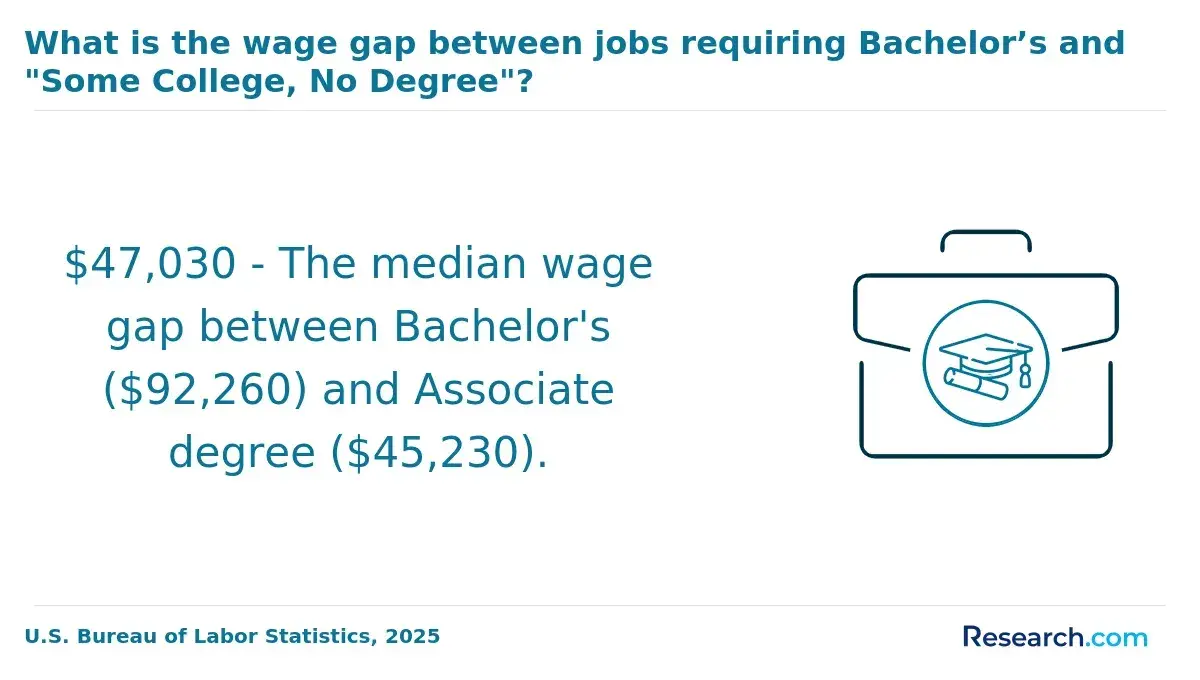
Earning a bachelor's degree in Mobile App Development gives working adults concrete career advantages supported by data from sources like College Scorecard and the Bureau of Labor Statistics. Graduates typically earn 15% to 25% more than peers who have some college but no degree, reflecting a notable salary advantage. Promotion prospects grow because many employers require a completed bachelor's credential for leadership and management roles within app development and related IT fields.
- Earnings Premium: Degree holders generally receive higher wages than those without a completed degree but with some technical credits.
- Promotion Eligibility: Mid-career professionals often obtain access to positions requiring formal qualifications, including project management and senior developer roles.
- Credential-Gated Roles: Certain specialized titles demand bachelor-level education as a hiring baseline, particularly positions involving software architecture or team leadership.
- Career Advancement While Employed: Unlike new graduates, working adults use prior experience combined with their degree to qualify for higher-level roles right after completion.
- Job Security: Employers prefer degree holders, resulting in lower unemployment and greater career stability in the mobile development sector.
- Graduate Program Access: A completed bachelor's degree meets prerequisite requirements for advanced education such as master's or certification programs.
Prospective students should prioritize accredited Mobile App Development degree completion programs recognized by employers and relevant licensing bodies. Maximizing prior learning credit, especially military or ACE-credited training, can shorten time to degree and lower tuition costs. Assessing program schedules, transfer policies, and financial aid availability helps ensure alignment with professional goals and life commitments. Confirming that a chosen credential satisfies specific promotion, licensure, or graduate admission requirements ensures the degree is a strategic investment rather than a generic credential.
Employer hiring surveys from organizations such as the Society for Human Resource Management (SHRM) and the National Association of Colleges and Employers (NACE) show that the accreditation status of the awarding institution, rather than the degree's pathway or extent of prior learning assessment (PLA), is the main factor employers consider. Mobile App Development degrees earned through adult completion programs carry the same weight as traditional degrees when issued by accredited schools, since diplomas seldom indicate the mode of completion.
Job candidates should stress the validity of their credential and how the program's structure aided their professional growth, particularly when discussing their education during interviews. Presenting completion programs as examples of discipline and real-world skill application can boost a candidate's appeal.
- Accreditation: Degrees from regionally or nationally accredited institutions with recognized mobile app development curricula receive broad employer acceptance.
- Diploma Uniformity: Credentials usually do not distinguish completion program graduates from traditional ones, lowering potential stigma.
- Professional Experience: Private-sector employers value proven skills, relevant work history, and strong references over degree completion formats.
- Regulated Fields: Federal positions under OPM standards, or professions regulated by licensure boards, may require proof of degree acceptance.
- Prospective students in these sectors should confirm credential recognition with human resources or licensing bodies before enrollment.
- Resume Strategy: Emphasize balancing work, life, and education, focusing on competencies and accelerated learning benefits.
What Graduates Say About Mobile App Development Degree Completion Programs for Working Adults
- Tristan: "Completing the mobile app development degree program was a turning point for me, as its flexible scheduling formats genuinely accommodated my full-time job and family commitments without sacrificing academic rigor. What stood out most was the program's commitment to strong accreditation standards, which gave me confidence in the quality of education I was receiving. For anyone balancing multiple responsibilities, these structural features make a huge difference in successfully earning your degree."
- Jesiah: "Looking back on my experience, I value how seamless credit transfer policies set this mobile app development completion program apart from others I considered. It let me use previous coursework and speed up my path to graduation without redundant classes. Also, the cost considerations were transparent and reasonable, making it a practical choice for working adults seeking to advance their careers without excessive financial strain."
- Christopher: "From a career-focused perspective, the outcomes provided by this mobile app development degree distinguish it from generic undergraduate alternatives, and graduates are well-prepared for in-demand roles with current skills. The program's structure, emphasizing real-world application alongside academic theory, truly helped me transition smoothly into the tech industry. For professionals evaluating whether this credential aligns with their goals and lifestyle, understanding these key distinctions is crucial."
Other Things You Should Know About Mobile App Development Degrees
Mobile app development degree completion programs built for working adults usually offer customized support services like academic advising, career counseling, and tech help desks. Such programs often supply flexible tutoring schedules and online resources to fit varied work hours. Many also provide access to job placement assistance and internship opportunities specific to the mobile app development industry.
Yes, many mobile app development degree completion programs maintain articulation agreements or transfer policies that let earned credits count toward graduate programs. This can ease the path to a master's degree in computer science or software engineering. Still, it is important to verify credit transferability with both the completion program and the graduate institution in advance.
Yes. Many 2027 degree completion programs require a capstone during the final term, typically worth 3 to 6 credits. Students create a working app, document design and testing, and present the project to faculty or industry reviewers as a graduation requirement.
- Mobile Development Concentration https://www.fullsail.edu/degrees/mobile-development-bachelor-degree-program
- Education App Development Cost - The Ultimate Guide https://dev-story.com/blog/education-app-development-cost/
- Online Degree vs. Traditional: Choosing the Right Path https://beal.edu/online-degree-vs-traditional/
- Mobile App Development: A Beginner’s Guide https://granvillecollege.ca/guide-to-mobile-app-development/
- Mobile Application Development https://www.ucsc-extension.edu/specializations/mobile-application-development
- How many employers actually verify college degrees... | Fishbowl https://www.fishbowlapp.com/post/how-many-employers-actually-verify-college-degrees-what-would-stop-me-from-claiming-a-degree-from-a-now-closed-college
- Best Mobile Development Master's Degree Programs, Jobs, and Salaries https://careerkarma.com/blog/mobile-development-masters-degrees/
- Mobile App Development https://www.paradisevalley.edu/degrees-certificates/computer-and-information-technology/mobile-app-development-5193-ccl
- How Long Does It Take to Make an App? Explore Our Guide https://andersenlab.com/blueprint/mobile-application-development-timeframes
- Top 5 Career Paths for Mobile App Developers - ABM College Canada https://www.abmcollege.com/blog/top-5-career-paths-for-mobile-app-developers