2027 Spanish Career Outcomes by Degree Level Report: Pay, Employment, and Advancement Patterns

Co-Founder and Chief Data Scientist
Deciding whether to pursue an associate, bachelor's, or graduate degree in Spanish involves navigating significant differences in career outcomes, yet reliable data to clarify these distinctions remains limited.
A 2024 national workforce analysis shows that Spanish degree holders with advanced credentials experience notably higher employment stability and access to leadership roles, reflecting employer preferences evolving alongside demand for bilingual professionals in healthcare, education, and international business.
Understanding how degree level influences pay, job placement, and upward mobility can prevent costly education choices that stall career progress. This article examines Spanish career outcomes by degree level, providing actionable insights into pay, employment prospects, and advancement trends to inform strategic decision-making.
Key Things to Know About Spanish Career Outcomes by Degree Level
- The majority of employers require a bachelor's degree for entry-level Spanish roles, reflecting a baseline credential expectation that narrows immediate job-market access for associate degree holders.
- Master's and doctoral credentials often correlate with advancement into specialized translation or academic positions, but the longer time and financial investment can delay salary growth compared to early workforce entry.
- Certificate programs provide practical skill boosts with quicker completion, benefiting candidates seeking rapid credentialing; however, these often lack long-term career mobility compared to degree pathways.
- What Career Outcomes Can Students Expect From Each Spanish Degree Level? Career Outcomes by Degree
- How Much Do Spanish Graduates Earn by Degree Level? Salary by Degree Level
- Which Spanish Degree Level Offers the Strongest Employment Prospects? Best Degrees for Employment
- What Entry-Level Jobs Can You Get With a Spanish Degree? Entry-Level Career Opportunities
- How Do Spanish Degree Levels Affect Career Advancement and Promotion Opportunities? Career Growth by Degree
- Is a Spanish Degree Worth It Based on Salary, Employment, and ROI? Salary, ROI, and Value
- How Do Associate, Bachelor's, Master's, and Doctoral Spanish Degrees Compare? Comparing Degree Levels
- Which Industries and Employers Hire Spanish Graduates by Degree Level? Which Industries and Employers Hire Spanish Graduates by Degree Level?
- What Skills, Credentials, and Experience Improve Spanish Career Outcomes? What Skills, Credentials, and Experience Improve Spanish Career Outcomes?
- Which Spanish Degree Level Is Best for Your Career Goals? Choosing the Right Degree
What Career Outcomes Can Students Expect From Each Spanish Degree Level?
Choosing a Spanish credential level fundamentally shapes immediate employment access and long-term career mobility.
Certificate holders may quickly enter roles such as translators or bilingual support staff, but often face limited upward mobility given employer preferences for formal degrees in competitive fields.
In contrast, associate degrees offer stable opportunities in bilingual assisting or healthcare interpreting, particularly amid increasing demand across healthcare systems. However, advancing beyond technical roles typically requires further study or targeted certifications.
Bachelor's degree graduates in Spanish benefit from expanded language mastery and cultural fluency that unlock diverse paths including education and international relations; their credentials receive stronger recognition for mid-level client-facing or management roles, aligning with documented growth in occupations valuing bilingual skills.
Graduate-level degrees bring enhanced specialization and leadership readiness, with master's and doctoral holders frequently occupying senior interpreter, academic, or policy positions that demand rigorous language scholarship and applied expertise.
For adult learners or transfer students weighing these options, navigating credit transfers and aligning program outcomes with employer expectations is critical-a strategy supported by exploring resources such as online SLP master's programs that reflect similar credentialing dynamics.
How Much Do Spanish Graduates Earn by Degree Level?
In assessing earnings for Spanish graduates, degree level is a significant but not exclusive factor influencing income and career pathways. Associate degree holders often find themselves in entry-level bilingual roles with median salaries around $40,000 to $45,000, yet these positions frequently limit upward mobility without additional credentials or experience.
Conversely, those with bachelor's degrees can access a broader job market-including education, translation, and government roles-with salaries typically ranging from $55,000 to $65,000, benefitting from greater employer recognition of linguistic and cultural expertise.
However, pay scales vary widely by geography and sector: metropolitan areas with dense Spanish-speaking populations generally offer stronger compensation, which may justify the added investment in time and tuition for higher degrees.
Advancing to master's or doctoral credentials can increase median earnings by 15-20% or more, especially in specialized fields like academia, advanced translation, or international relations. Still, these gains come with tradeoffs related to program length, transfer credit acceptance, and upfront cost, which may not suit all adult learners or working professionals balancing job and family commitments.
Employment stability also improves with degree level; bachelor's and graduate degree holders face unemployment rates near 3-4%, compared to 6-7% for those with certificates. Practical career planning involves weighing these factors alongside local labor market conditions, employer certification preferences, and the potential delay in income while pursuing further study.
One recent graduate wrestled with whether enrolling in a master's program would justify postponing full-time work, especially after comparing salary data with local job offers requiring only a bachelor's degree. Conversations with potential employers revealed a preference for candidates holding specific translation certifications regardless of advanced academic degrees, prompting a reconsideration of professional development paths.
For this student, the decision hinged less on abstract pay figures and more on understanding how degree credentials interact with transferable skills, credentials, and real-world hiring criteria in the regional job market.
Which Spanish Degree Level Offers the Strongest Employment Prospects?
Employers increasingly prioritize candidates with bachelor's or master's degrees in Spanish due to the broader communicative fluency, cultural insight, and critical thinking these programs cultivate. For example, a bachelor's degree holder entering a regional government role may see more immediate job stability and higher starting salaries compared to someone with only an associate degree working in entry-level bilingual support.
The U.S. Bureau of Labor Statistics reports that bachelor's degree graduates in language fields have about a 15% higher employment rate within the first year post-graduation, highlighting real market advantages tied to more comprehensive credentials. Meanwhile, certificates and associate degrees often serve as quicker routes into the workforce but usually funnel graduates into positions with limited advancement and lower pay.
Master's degrees paired with specialized certifications or relevant experience tend to open doors to leadership, education administration, international business, or advanced translation roles that require deeper subject mastery and practical application. Doctoral programs, while more niche and academically focused, prepare candidates for research or faculty positions but come with prolonged job search periods and smaller labor markets.
Regional demand variability and internship experience further influence hiring likelihood, making it critical for students to weigh whether investing additional time in graduate studies will substantially enhance career mobility versus entering the workforce sooner. Ultimately, the decision balances immediate employment needs against long-term field specialization and credential inflation affecting entry thresholds in Spanish-related professions.
What Entry-Level Jobs Can You Get With a Spanish Degree?
Entry-level positions for students with a Spanish degree often require more than language skills alone, as employers look for communication proficiency paired with cultural awareness and practical experience. Bachelor's degree graduates typically secure roles in bilingual customer service, administrative support, or community outreach within organizations serving Spanish-speaking clients, which emphasize adaptability and problem-solving over direct translation work.
For roles centered on language application such as translators or interpreters, additional certification-like credentials from professional bodies-is generally necessary, reflecting heightened employer standards and influencing initial job accessibility and future advancement.
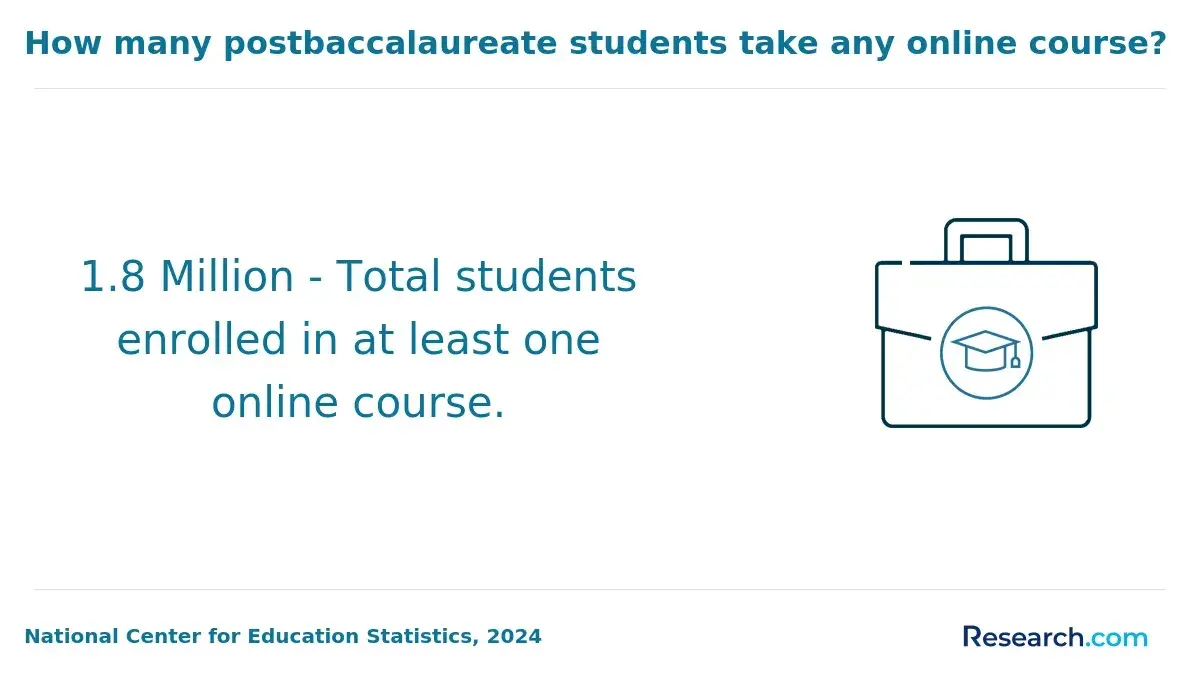
National Center for Education Statistics data from 2024 highlights that candidates holding a master's degree in Spanish or related fields are more competitive for specialized educational roles or linguistic research positions, which often require internships or practicum experience to bridge academic study with real-world tasks.
Given that many employers in social services and healthcare prioritize candidates with hands-on experience, students should carefully weigh opportunities to build relevant skills alongside their academic programs. This caution also extends to remote work availability, which remains limited in language-dependent fields due to the interactive and sensitive nature of these jobs.
When evaluating Spanish entry-level career opportunities, understanding the tradeoffs between degree levels and certifications is critical, especially as early specialization in niche areas like medical or legal interpretation can lead to more stable roles and clearer pathways for upward mobility.
Prospective students may find value in supplementing their language training with targeted internships or credentials rather than relying solely on degree completion. For those considering interdisciplinary or less conventional tracks, exploring options beyond language-including programs such as game design degrees-can also provide diversified skill sets relevant in a competitive job market.
How Do Spanish Degree Levels Affect Career Advancement and Promotion Opportunities?
Holding a bachelor's or advanced degree in Spanish frequently unlocks faster access to supervisory and leadership roles compared to associate degrees or certificates. Workforce data from the 2024 National Center for Education Statistics indicates mid-career promotions typically occur within five to seven years for degree holders at the bachelor's level or higher.
This reflects employer preferences in industries like multinational corporations, where project management and policy advisory positions routinely require at least a bachelor's degree, often combined with additional certifications or language proficiency assessments.
Conversely, associate degree holders, especially in sectors like education or government, often encounter slower upward mobility due to licensure and credentialing requirements tied to higher degree thresholds, leading to extended periods of lateral employment rather than advancement.
For adult learners and professionals weighing options, leveraging transfer-credit pathways from associate to bachelor's can meaningfully improve promotion prospects, though accumulated work experience remains a critical complement that can shift leadership readiness independent of formal credentials.
Promotion timing and eligibility vary significantly between public and private sectors. While private industries may reward linguistic and cross-cultural skills with leadership opportunities earlier, public roles often demand credential renewal and licensure that slow progression for lower-degree holders.
Students with prior college credits or work experience must consider that advancing to a bachelor's or graduate degree entails longer-term investment but offers broader access to specialized and decision-making roles. Ultimately, deeper credentialing in Spanish correlates not with guaranteed advancement but with meeting explicit employer requirements for supervisory responsibility, professional credibility, and eligibility for competitive leadership tracks.
A working professional pursuing a bachelor's degree in Spanish carefully considered her decision, initially hesitant due to balancing a full-time job and family. Despite her fluency and years of on-the-job experience, she recognized that without the bachelor's credential, eligibility for a supervisory role in her global logistics firm remained unlikely.
She concluded that advancing academically was essential not only to satisfy formal promotion criteria but also to gain confidence applying for higher-level positions that demanded documented expertise beyond workplace familiarity. This pragmatic approach to evaluating credential impact helped her navigate institutional expectations and align career goals realistically.
Is a Spanish Degree Worth It Based on Salary, Employment, and ROI?
Salary potential and employment stability for Spanish degree holders vary significantly based on degree level, geographic location, and supplemental qualifications.
Bachelor's degree recipients often encounter a mixed labor market where fluency alone may not secure employment aligned with their studies. This can lead to underemployment or roles outside the language field, reducing immediate return on investment.
For working adults or transfer students, time-to-completion and opportunity costs-lost wages during study-are critical factors that influence whether pursuing or finishing a bachelor's in Spanish is financially prudent, especially given the moderate early-career salary relative to average student debt.
Graduate-level Spanish degrees tend to open better-compensated and more stable positions in education administration, linguistics, or international relations, but require additional years of study and higher costs. For military-affiliated students or part-time enrollees, leveraging transfer credits and institutional flexibility can significantly improve the degree's financial feasibility and labor market responsiveness.
Employment growth remains steady but localized, often depending on regional demand in states with large Spanish-speaking populations. Students aligning with realistic labor demands and augmenting language skills with certifications are better positioned for advancement and salary gains, an approach supported by workforce data on Spanish degree salary and employment outcomes in the United States.
Those exploring interdisciplinary options may also consider the social media marketing major as a complementary skill set to enhance marketability and diversify career pathways.
How Do Associate, Bachelor's, Master's, and Doctoral Spanish Degrees Compare?
Choosing between associate, bachelor's, master's, and doctoral degrees in Spanish requires a clear understanding of how each credential affects employment prospects, role eligibility, and career mobility. For example, an associate degree primarily enables entry-level roles in support or administrative functions but generally limits upward mobility and earnings growth, with employment rates near 65% in the year post-graduation according to the National Center for Education Statistics.
In contrast, a bachelor's degree expands opportunities significantly, qualifying graduates for licensed teaching, interpreting positions, and governmental roles, while also facilitating credit transfer for further academic pursuit. The tradeoff here often involves balancing the cost and duration of study against tangible eligibility for a wider job market and foundational career-licensure requirements.
Master's degrees cater to those targeting specialized or leadership roles, such as advanced translation, cultural consultancy, or higher education instruction, where demand is projected to grow by about 10% over the next decade. This level demands longer time commitments and potentially higher debt, but it offers access to more stable employment and institutional leadership paths rarely accessible to lower degree holders.
Doctoral studies, meanwhile, align with academic research or policy development careers, requiring significant specialization and greater resilience to completion challenges; here, employment rates post-doctorate approach 85%. However, the narrow scope of doctoral roles means that pursuing this path is typically beneficial only for individuals committed to university faculty or research leadership, rather than broader labor market flexibility.
Deciding where to stop or continue depends critically on one's career intentions and tolerance for time and financial investment. Those aiming at immediate workforce entry with modest skill applications may find the associate level sufficient, while bachelor's degrees offer a pragmatic balance of employability and credentialing for licensure and further study.
The enhanced stability and leadership readiness of master's programs come with cost and duration tradeoffs that warrant careful consideration, whereas doctoral programs should be pursued primarily by candidates whose career trajectories necessitate deep specialization and academic or high-level research engagement.
Which Industries and Employers Hire Spanish Graduates by Degree Level?
Employment prospects for Spanish graduates differ sharply by degree level, influencing access to industries and employer types. Associate degree holders frequently enter entry-level, supportive roles in sectors like education support, government outreach, and customer service, where bilingual communication skills are valued but advancement is often limited without further credentials.
For example, an associate graduate might work as a translation assistant for a local nonprofit, yet will likely face a ceiling in pay and supervisory responsibilities compared to bachelor's degree holders who commonly secure positions in school districts, multinational firms, or public agencies as bilingual educators or program coordinators.
National Center for Education Statistics data indicates that employers in both public and private sectors expect not only language fluency but cultural competency and often additional certifications for these roles, affecting hiring and promotional decisions.
Master's and doctoral graduates typically transition into specialized, leadership, or research-oriented roles, where advanced analytical abilities and policy knowledge become essential. Master's degree holders often manage bilingual teams or oversee international collaborations in higher education, government, or NGOs, while doctoral graduates are frequently preferred for tenure-track academic positions and high-level policy advisory roles.
Certificate holders tend to serve niche markets such as certified court interpreters or medical translators, where licensure and targeted technical skills weigh heavily in hiring, though salary levels are generally lower than those with advanced degrees.
According to Emsi labor market analysis, these variations underscore a significant tradeoff: continuing education expands industry and leadership opportunities but requires greater time and financial investment, whereas stopping at undergraduate or certificate levels offers quicker workforce entry but restricts advancement and specialization.
What Skills, Credentials, and Experience Improve Spanish Career Outcomes?
Fluency in advanced Spanish combined with intercultural communication skills acts as a decisive differentiator for employment opportunities, particularly at the bachelor's and graduate degree levels where employers prize nuanced cultural competence.
For working professionals and transfer students, stacking credentials such as teaching certifications or translation qualifications can unlock positions often inaccessible with a degree alone, reflecting tangible employer preferences reported by bodies like the American Translators Association. However, the tradeoff lies in balancing academic rigor against these targeted credentials to avoid credential inflation while maintaining practical relevance.
Applied experience, including internships and sector-specific apprenticeships, emerges as a critical multiplier for employment access and promotion readiness among Spanish degree holders.
National Center for Education Statistics (NCES) data underscores that graduates who pursue internships demonstrate 25% faster job placement, a vital consideration for adult learners balancing work and study.
These experiential components provide portfolio evidence and leadership exposure-key factors in advancing beyond entry-level roles in diverse settings such as education or cross-cultural business environments. Developing such tangible skills often outweighs completing additional purely academic credits, highlighting the importance of strategic experiential learning within Spanish career advancement skills and credentials.
Licensure pathways and soft skills development are particularly influential for those targeting education or interpretation roles, where state or national certification requirements establish mandatory professional baselines. The interplay between formal credentials and real-world capabilities shapes mobility and long-term growth prospects, especially for military-affiliated students or career switchers.
Those considering specialization should also weigh the cost-benefit of expanding credentials versus targeted experiential learning, including assessing options like the cheapest online photography degree as a cross-disciplinary example of market-responsive credentialing that can supplement Spanish career outcomes by diversifying portfolios and broadening employer appeal.
Which Spanish Degree Level Is Best for Your Career Goals?
Selecting the best Spanish degree level for specific career outcomes hinges on balancing education depth with employability constraints. Associate degrees primarily serve entry roles such as bilingual customer service, but these positions generally offer limited advancement and tend to have lower employment stability.
In contrast, bachelor's degrees significantly improve labor market access and upward mobility, with data showing nearly a 15% higher employment rate within five years, making them a practical pivot point for working adults and transfer students aiming for mid-level roles requiring cultural competence and applied linguistics skills.
Master's and doctoral degrees enable entrance into specialized, often regulated, fields like certified translation, research, or academic careers but involve greater tuition costs, longer completion timelines, and increased debt risk.
These advanced credentials are crucial when leadership or niche expertise is required but may not suit those prioritizing minimal opportunity cost or flexible part-time progression. For military-affiliated learners or those evaluating transfer credit strategies, understanding these tradeoffs is key to aligning educational investment with career ambitions in the context of broader workforce demands and employer expectations.
Ultimately, informed decisions about Spanish degree level must also weigh potential needs for additional certifications or further graduate study to unlock specialized roles. Learners should integrate this perspective into comparisons of program outcomes, such as those offered in photography programs online for veterans, where flexibility and credential alignment are equally critical.
This approach ensures that the chosen pathway supports both practical advancement and long-term career resilience within competitive labor markets driven by evolving language and cultural expertise needs.
References
- What is the difference between Associate degree and Bachelor degree? - CIS University https://www.cis-spain.com/en/blog/what-is-the-difference-between-associate-degree-and-bachelor-degree/
- Top Career Paths You Can Explore With a Spanish Degree | UT Permian Basin Online https://online.utpb.edu/about-us/articles/spanish/top-career-paths-you-can-explore-with-a-spanish-degree
- Does College Pay Off? A Comprehensive Return On Investment Analysis - FREOPP https://freopp.org/whitepapers/does-college-pay-off-a-comprehensive-return-on-investment-analysis/
- The Advantages of Learning Spanish That Will Boost Your Career https://www.htlinternationalschool.com/2025/11/21/the-advantages-of-learning-spanish-that-will-boost-your-career/
- Why you should pursue a Spanish degree https://www.cune.edu/news/why-you-should-pursue-spanish-degree
- Best Jobs for Bilingual Spanish Speakers - LTI Blog https://www.languagetesting.com/blog/best-jobs-for-bilingual-spanish-speakers/
- Highest Paying Degrees in Spain - Study in Spain https://studying-in-spain.com/plan-your-studies/highest-paying-degrees-in-spain/
- Is College Worth it? | Return on Investment Analysis of College Degree https://educationdata.org/college-degree-roi
- How to Learn Spanish for Work in Spain: Language Skills for UK Job Seekers - Language Trainers UK Blog https://www.languagetrainers.co.uk/blog/how-to-learn-spanish-for-work-in-spain/
Other Things You Should Know About Spanish
The scope of coursework intensifies notably from associate to bachelor's and beyond, affecting both language depth and cultural competence. Associate degrees often focus on foundational communication skills, which can limit fluency in professional or technical settings.
Bachelor's programs typically incorporate specialized electives and cultural studies, making graduates more adaptable in varied workplace contexts. For students prioritizing immediate application of language in careers, a bachelor's degree or higher is usually more effective for attaining the nuanced skills employers expect.
Part-time or hybrid Spanish degree programs offer flexibility but often extend the completion timeline, delaying entry into higher-paying positions that require advanced qualifications. While this may suit working adults balancing job demands, the extended duration can slow momentum in language mastery and reduce early networking opportunities critical for career advancement.
Full-time study accelerates skill acquisition and typically places students on a faster track toward roles requiring deeper expertise, which employers tend to value for managerial or specialized positions.
Employers often differentiate candidates not only by degree level but also by the institution's reputation and focus on language immersion or applied studies. For example, a bachelor's degree from a program known for strong cultural immersion and practical internships signals readiness for real-world engagement more than equivalent credit hours from a less specialized school.
Postgraduate degrees carry expectations of advanced research or teaching abilities, but candidates from rigorous, well-regarded programs stand out more clearly, influencing hiring and promotion decisions.
For careers emphasizing bilingual communication in sectors like business, healthcare, or public service, investing in advanced degrees such as a master's or doctorate may offer diminishing returns compared to practical experience and certification. Employers often prioritize demonstrated communication skills, cultural competency, and real-world application over research credentials.
Students targeting these roles should weigh whether additional degrees align with the demand for applied fluency or if enhanced language certifications and hands-on experience might yield better career outcomes.