2027 Spanish Degree Oversupply or Undersupply? Student Volume vs Employer Demand

Co-Founder and Chief Data Scientist
A student considering a Spanish degree in 2024 faces a complex decision: Is the investment justified by the availability of relevant jobs? Recent data from the National Center for Education Statistics shows a 12% increase in Spanish degree conferrals over the past five years, compared to a 3% growth in bilingual professional roles requiring Spanish fluency.
This disparity suggests potential oversupply in some regions, increasing competition for language-focused positions in education, translation, and international business. Meanwhile, employers report skill mismatches related to cultural competence and technical expertise, making hiring decisions more complicated.
This article examines student volumes, employer demand, job growth, geographic shifts, and skill gaps to provide clarity on the sustainability of Spanish degree career prospects.
Key Things to Know About Spanish Graduate Supply and Employer Demand
- Spanish graduate completions grew 12% since 2022, outpacing entry-level bilingual job openings' 4% rise, indicating heightened competition that may extend job search durations and increase credential stacking.
- Employer surveys highlight a demand gap favoring Spanish speakers with specialized legal or medical translation skills, revealing a niche oversupply of generalist graduates versus undersupply in targeted sectors.
- Geographic demand is concentrated in urban and border regions, meaning graduates outside these areas face limited opportunities, pressuring relocation decisions and raising non-tuition access costs for practical experience.
- Is There an Oversupply or Undersupply of Spanish Graduates? Graduate Oversupply or Shortage
- How is Spanish Degree Enrollment Changing? Degree Enrollment Trends
- How Many Spanish Graduates Enter the Workforce Each Year? Annual Graduate Workforce Entry
- Does Job Growth Support the Rising Supply of Spanish Graduates? Job Growth Versus Supply
- How Competitive is the Entry-Level Market for Spanish Graduates? Entry-Level Market Competition
- Which Industries Have the Greatest Demand for Spanish Graduates? Top Hiring Industries
- Where are Spanish Graduates Most in Demand? Top Geographic Demand
- Which Spanish Specializations and Degree Levels Face the Strongest Demand? Which Spanish Specializations and Degree Levels Face the Strongest Demand?
- Are Employer Skill Gaps Affecting Demand for Spanish Graduates? Are Employer Skill Gaps Affecting Demand for Spanish Graduates?
- What is the Future Supply-and-Demand Outlook for Spanish Graduates? Future Supply-Demand Outlook
Is There an Oversupply or Undersupply of Spanish Graduates?
The relationship between the supply of Spanish degree graduates and employer demand in the United States reveals neither a clear oversupply nor a straightforward undersupply when examined nationally. With roughly 15,000 bachelor's completions annually, the overall volume aligns moderately with job openings, especially in fields like education, healthcare, and government.
However, this balance conceals regional discrepancies. For example, states with larger Hispanic populations such as California and Texas exhibit stronger demand for bilingual professionals, resulting in tighter job markets. In contrast, graduates in areas with fewer Spanish speakers face increased competition for fewer roles.
This geographic variation underscores how student volume comparisons against job availability must account for regional labor market conditions rather than relying on aggregate national totals.
In many cases, a simple graduate-to-job ratio does not capture the credential and skill mismatches shaping employment outcomes. Entry-level candidates with only bachelor's degrees often encounter more competitive hiring environments, as many employers increasingly seek advanced degrees, certifications, or practical experience in addition to fluency.
In niche sectors such as diplomatic services or international business, there is a demonstrable shortage of highly qualified Spanish speakers, contrasting with saturation in translation-related roles where applicants frequently exceed vacancies. This dynamic means prospective students and professionals must carefully weigh specialization and credential pathways against local and industry-specific demand trends.
Those blending Spanish proficiency with complementary skills tend to position themselves advantageously, reflecting evolving employer expectations rather than simple headcounts.
Understanding Spanish degree labor market balance in the United States requires consideration of nuanced supply-demand mismatches shaped by regional demographics, credential requirements, and shifting occupational growth. Stakeholders ignoring these complexities risk misinterpreting the outlook for Spanish graduates.
Incorporating insights into credential value and geographic demand can better guide career planning, especially when aligned with data on the highest paying bachelor degrees where language skills intersect with other in-demand competencies. Ultimately, balancing student volume with evolving employer needs necessitates a multidimensional approach rather than reliance on simplistic measures of graduate counts versus job openings.
How is Spanish Degree Enrollment Changing?
Recent shifts in Spanish degree enrollment reveal a complex realignment rather than a straightforward surplus or shortage of graduates relative to job market demand. Undergraduate programs have seen a moderate decline in student numbers over the last five years, partly due to broader decreases in humanities enrollment as STEM and business attract more candidates.
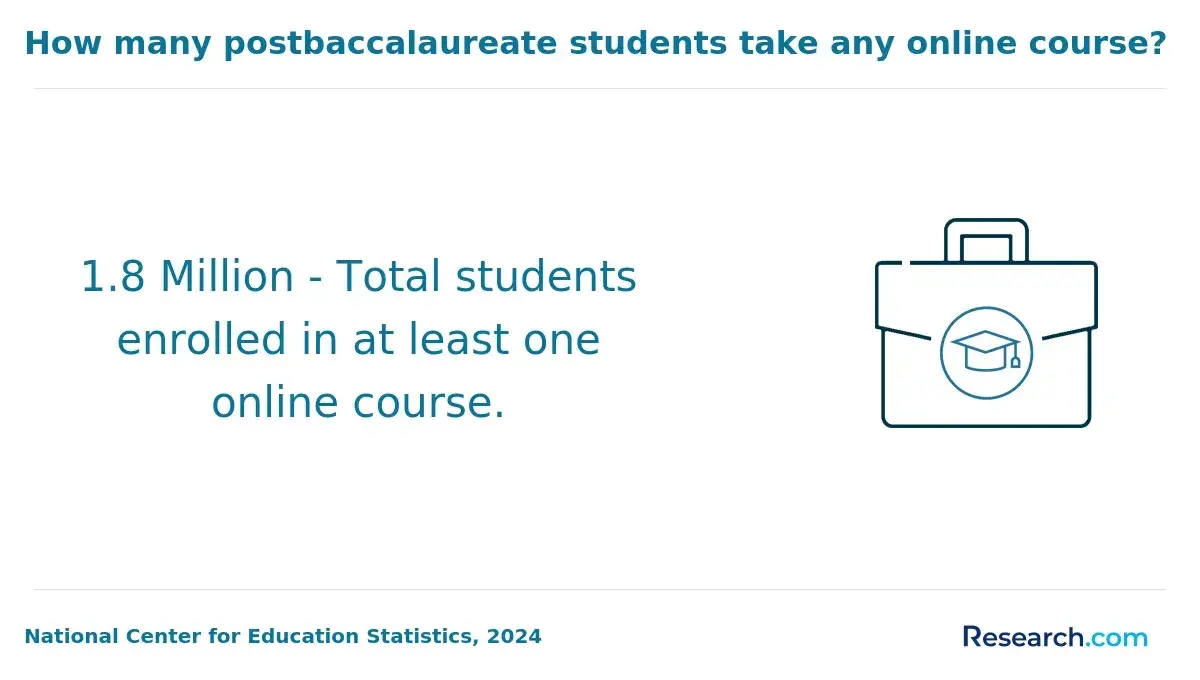
Meanwhile, master's level Spanish programs are experiencing modest growth, notably driven by an 8% increase in online enrollment in the 2023-2024 academic year, which expands access for working adults and distance learners.
This redistribution suggests entrance-level job competition might ease slightly, but demand for advanced credentials is increasing among employers valuing specialized linguistic and cultural expertise, particularly in regions with substantial Hispanic populations where community college and university enrollment remains relatively resilient.
Employers evaluating supply often misinterpret national totals, overlooking how regional demographic shifts and delivery modes affect local labor markets differently. For example, Texas and California report growing Hispanic student proportions, which might translate to localized oversaturation or, conversely, unmet needs in areas lacking graduate-level specialists.
The contrast between shrinking undergraduate cohorts and expanding graduate numbers implies future applicants with master's degrees will face intensified competition for niche roles requiring nuanced competencies. Such oversights can lead students or workforce planners to overestimate immediate employment prospects based on raw degree counts, ignoring the subtleties of credential stratification and employer expectations in the language services sector.
A current master's student observed that while undergraduate Spanish classes have visibly shrunk on campus, the online graduate program grew noticeably, attracting a more diverse age range and professional background. She noted peers enrolling through remote formats often balanced work and family commitments, valuing flexible schedules, but some questioned if increasing applicant numbers indicated tougher future job competition rather than a straightforward boon.
This uncertainty reflects a broader dilemma: growth in one credential area does not always equate to stronger labor market absorption, particularly when geographic and specialization factors significantly shape opportunity.
How Many Spanish Graduates Enter the Workforce Each Year?
Evaluating whether the annual output of Spanish graduates aligns with employer demand requires more than raw graduation numbers alone. Data from recognized sources like NCES and IPEDS show that roughly 9,000 to 10,000 students earn bachelor's degrees in Spanish-related fields yearly, yet this figure does not directly translate into labor market supply.
Graduates vary by degree level, specialization, and timing-many do not enter language-focused roles immediately or at all, opting instead for positions where Spanish skills are helpful but not central. Consequently, counting degree completions without considering workforce entry patterns can mislead stakeholders about true hiring pressure or opportunity gaps in language-specific occupations.
Employment opportunities for Spanish graduates tend to cluster in sectors such as education, government, healthcare, and translation, where proficiency is a formal requirement. However, labor force data indicate only about 30% to 40% of these graduates take positions explicitly demanding Spanish language competence.
This creates a nuanced dynamic: the supply of graduates often exceeds the pool of language-centered vacancies, leading to heightened competition and a premium on supplemental qualifications like certifications or specialized experience.
Regional variation and employer expectations further complicate this landscape, meaning not every graduate competes for the same jobs, and replacement demand alongside new positions shapes ongoing hiring needs rather than simple annual graduation totals.
Understanding these factors reveals that student volume metrics alone cannot determine oversupply or undersupply without contextualizing actual job market absorption. Overestimating demand risks underpreparing graduates for competitive realities, while underestimating it may overlook emerging opportunities in fields increasingly valuing bilingual skills.
Reliable workforce measurement depends on integrating detailed enrollment and completion statistics from agencies with labor market analyses that track occupational entry, sector-specific requirements, and temporal job flows. This approach offers the most practical foundation for education providers, students, and employers navigating the evolving terrain of Spanish language-related employment.
Does Job Growth Support the Rising Supply of Spanish Graduates?
Despite steady growth in roles requiring Spanish language skills, the 2024 labor market shows that job openings do not fully keep pace with the rising supply of Spanish degree graduates in the United States. Replacement demand from retirements and turnover composes much of hiring activity, meaning many new positions do not represent actual job growth.
This discrepancy intensifies competition, particularly for entry-level candidates who lack additional marketable skills or certifications. For example, a recent Spanish graduate focusing solely on language fluency may struggle to find a position unless combined with a specialization like business or healthcare, especially outside regions with strong Hispanic populations or international trade hubs where demand is more robust.
Employer preference for candidates demonstrating proven professional experience or supplementary credentials adds another layer of challenge that mere degree completion does not guarantee employment. While overall job growth for Spanish-related roles hovers around 3% annually according to Lightcast's analysis, this rate is insufficient to absorb the volume of new graduates entering the labor market each year.
Prospective students should be cautious about interpreting steady job growth as a straightforward signal of ample opportunity, as many Spanish graduate jobs require navigating underemployment risk or geographic mobility.
For those weighing educational investments, pairing Spanish proficiency with other competencies may improve outcomes more than relying on language skills alone, a point underscored by the competitive realities reported in recent workforce data. Those interested in programs that integrate language with professional development might consider options including the cheapest online master's in counseling to diversify employability.
How Competitive is the Entry-Level Market for Spanish Graduates?
The entry-level job market for Spanish degree holders in 2024 reflects a nuanced balance rather than straightforward oversupply or undersupply. While the number of graduates continues to expand modestly, employer demand is more selective, focused on candidates who bring complementary skills beyond language fluency.
This dynamic creates a competitive landscape where sheer graduate volume meets specialized hiring needs, often influenced by geographic and sectoral factors. Understanding these forces helps clarify why some graduates secure roles more easily while others face extended searches. Key elements driving this competitiveness include:
- Graduate Volume: The steady growth in Spanish degree recipients increases applicant pools, particularly in metropolitan areas with large bilingual populations, intensifying competition for roles strictly emphasizing language fluency.
- Experience Expectations: Employers typically require internships, practicum hours, or dual qualifications; candidates lacking practical experience often struggle to gain traction despite strong linguistic skills.
- Industry Demand Variation: Sectors like healthcare, education, government, and international business consistently seek Spanish speakers, but openings remain limited relative to graduate numbers, requiring graduates to target industries strategically.
- Skill Complementarity: The hiring premium for bilingual candidates rises significantly when paired with additional competencies such as data analysis, digital communication, or translation specialization, distinguishing applicants in a crowded field.
- Geographic Concentration: Urban centers exhibit more roles but also dense applicant saturation; graduates in less populated regions may find fewer openings yet less direct competition.
- Remote and Hybrid Work: Increasing remote opportunities broaden applicant reach, accelerating competition beyond local constraints and emphasizing adaptable skill sets.
- Hiring Rates and Data Trends: National Association of Colleges and Employers data for 2024 shows bilingual candidates have a modest overall hiring advantage, but that margin narrows without sector-specific skills or experience.
One recent graduate described applying nearly fifty positions across education and public service sectors within a major city, noting repeatedly that roles required experience in interpretation or teaching beyond language proficiency. Despite high qualifications, the crowded applicant pools and preference for multi-skilled candidates led to several interview rejections.
Eventually, they shifted focus to regional healthcare administration roles where bilingualism paired with practical training was in higher demand, enabling a cautious but promising entry into the workforce. This experience underscores the necessity of targeted skill-building and geographic flexibility for Spanish graduates navigating an uneven job market.
Which Industries Have the Greatest Demand for Spanish Graduates?
Employer demand for Spanish graduates concentrates where bilingual communication intersects with specialized industry needs and demographic realities. High job volume does not always translate into accessible or sustainable employment; understanding sector-specific dynamics helps clarify where graduates can realistically apply their skills.
For example, a graduate weighing options between healthcare and international business must consider that healthcare offers more entry-level bilingual roles with stable growth but often requires certifications, while international business demands additional technical qualifications and is more competitive yet lucrative. Below is an outline of sectors showing the strongest demand for Spanish graduates, reflecting the practical tradeoffs in job quantity, competition, and credentialing.
- Healthcare: Growing Hispanic populations and legal mandates for health equity drive demand for bilingual personnel in hospitals, clinics, and public health agencies. Entry-level roles include medical interpreters and patient advocates, with advancement linked to clinical or social work credentials. Employers prioritize fluency combined with cultural competence and relevant certifications.
- Education: K-12, community colleges, and universities seek Spanish-fluent educators, especially in bilingual and ESL programs. Demand is regionally varied, tied to Hispanic demographics, with roles from teaching assistants to tenured faculty. Bilingual teaching licenses and pedagogical specialization enhance employability.
- Government Services: Federal, state, and local agencies engaged in immigration, social services, and outreach favor bilingual staff to serve multilingual constituencies. These positions often require degrees or certifications relevant to public administration and social work, with moderate turnover but competitive entry.
- International Business: Spanish proficiency supplements roles in finance, marketing, and logistics focused on Latin American markets. These jobs demand additional business acumen, certifications, or experience, with relatively fewer openings concentrated in metropolitan hubs. Fluency offers strategic advantage but not standalone qualification.
- Nonprofit and Social Advocacy: Organizations working with Hispanic communities use Spanish graduates for outreach, program coordination, and client services. These roles prioritize cultural knowledge and communication but often have limited funding and higher competition.
The broad scope across these industries illustrates that Spanish language job demand in key industries varies notably by region, employer size, and sector complexity. Graduates must assess realistic post-degree opportunities in light of regional market data and required complementary skills, rather than assuming uniform availability of roles.
For those interested in entrepreneurial ventures combining language skills with business strategy, pursuing an MBA for entrepreneurs may enhance marketability and open diverse paths beyond traditional positions.
Top sectors hiring Spanish degree graduates in the US remain those integrating linguistic proficiency with relevant disciplinary credentials and experience, underscoring the importance of strategic educational and career planning tailored to nuanced market demands.
Where are Spanish Graduates Most in Demand?
National demand statistics for Spanish graduates often mask significant regional disparities shaped by demographic patterns and sectoral concentrations. For example, while large metropolitan areas like Los Angeles and Miami exhibit substantial demand due to dense bilingual populations and diversified industries, these markets also tend to have higher applicant volumes and cost-of-living pressures, which can narrow practical job opportunities.
Graduates entering saturated urban centers may face steep competition despite abundant postings, whereas emerging Sun Belt states such as Arizona or North Carolina reveal pockets of acute shortages where bilingual skills are more scarce and thus potentially more valued, albeit with fewer overall positions.
The healthcare sector consistently drives demand for Spanish speakers, particularly in patient-facing roles requiring cultural competence, yet this can vary by region depending on the local healthcare infrastructure and government support.
Education and nonprofit employment similarly depend on state funding levels and demographic shifts, meaning that graduates in states with stable or declining Hispanic populations may encounter limited prospects despite program availability.
Remote work arrangements are growing but often concentrate on specialized digital roles, making the combination of Spanish fluency with additional competencies like health administration or program management a decisive factor affecting employability and market fit.
Effective decision-making for prospective and current Spanish graduates requires balancing raw job counts against real-world factors such as employer density, workforce pipeline saturation, and regional economic conditions. Simply relocating to a large market may not guarantee better outcomes due to intense competition and cost barriers, whereas targeting areas with strategic sector growth and less candidate overcrowding offers a clearer pathway to sustained employment.
According to recent data from Lightcast and the U.S. Bureau of Labor Statistics, regions demonstrating growth in bilingual service needs often coincide with expanding Hispanic communities and investment in social services, which should guide choices grounded in practical labor-market realities rather than headline figures alone.
Which Spanish Specializations and Degree Levels Face the Strongest Demand?
Employer demand for Spanish degree holders is concentrated in specialized skill sets and credential levels rather than evenly spread across all graduates. Data from the U.S. Bureau of Labor Statistics and LinkedIn Workforce Insights for 2024 reveal that positions requiring advanced language proficiency paired with industry-specific expertise show the strongest hiring activity.
For example, a graduate with a master's in Spanish and certified medical translation skills faces distinctly better job prospects than a bachelor's-level generalist without additional qualifications. This reflects ongoing shortages in critical sectors and the premium placed on applied competencies.
Key areas of concentrated demand include the following:
- Certified Translators and Interpreters: Demand is highest for candidates with formal certification in legal or medical translation, where accuracy and cultural competence are essential. Employers in healthcare and law sectors prioritize these credentials to meet compliance and communication needs.
- Spanish Teachers with Licensure: Secondary education teachers holding state certification remain in steady demand, driven by bilingual education policies and regional demographic shifts increasing student populations requiring Spanish instruction.
- Bilingual Business Professionals: Combining Spanish fluency with business acumen creates competitive profiles for roles in international trade, customer relations, and global marketing, especially in urban centers and export-driven industries.
- Graduate-Level Specializations: Candidates with advanced academic credentials plus practical skills in fields like education administration, healthcare communication, or international affairs are preferred for specialized roles demanding both language mastery and sector knowledge.
- Healthcare Interpreters with Language Proficiency: Increasing demand across healthcare systems has created shortages of bilingual staff capable of bridging language gaps, making this a critical growth niche for Spanish degree holders with relevant certifications.
These concentrated demand points illustrate the operational reality that holding a Spanish degree alone rarely ensures competitive employment. Instead, specialization and occupationally relevant credentials frequently differentiate candidates in a labor market characterized by a mix of oversupply in generalist undergraduate holders and undersupply in niche, certified practitioners.
Are Employer Skill Gaps Affecting Demand for Spanish Graduates?
Labor market realities indicate that the challenge is not a true shortage of Spanish graduates but a scarcity of candidates whose qualifications match employer expectations for multifaceted roles. Employers frequently screen for Spanish graduates who supplement language skills with applied experience in industry tools, digital proficiency, or certifications relevant to sectors such as healthcare, finance, or law.
For example, a healthcare provider seeking bilingual staff may reject strong language candidates lacking familiarity with medical terminology or health data systems. Such nuanced expectations create a labor-market dynamic where many positions remain unfilled despite a surplus of graduates, distorting perceptions of oversupply or undersupply within the Spanish graduate pool.
In this context, employer demand for Spanish language graduates often reflects hybrid skill requirements rather than standalone language fluency, complicating hiring decisions across regions and entry-level roles. Graduates who pair their degrees with structured internships, project work, or complementary certifications enhance their competitiveness and alignment with workforce needs.
This emphasizes practical tradeoffs for prospective students: investing solely in language proficiency risks limiting opportunities, whereas integrating cross-disciplinary skills can improve employability significantly. Those considering technical or analytical expansions might explore pathways such as online math degree programs to bolster quantitative and analytical competencies alongside language mastery.
Understanding Spanish graduate skill gap analysis reveals that employers prioritize adaptable candidates demonstrating cross-cultural communication, digital literacy, and sector-specific knowledge to close hard-to-fill roles. Skill mismatches can deepen recruitment challenges even when graduate volumes are high, affecting labor-market competition and altering hiring trends.
Due to these complexities, educators and career-focused professionals should guide students toward integrated curricula and experiential learning that reflect these operational demands rather than assuming language skills alone suffice.
What is the Future Supply-and-Demand Outlook for Spanish Graduates?
Targeted job searches focusing on well-defined entry-level roles and geographic regions with stronger bilingual demand significantly outperform broad, unfocused applications. Spanish graduates frequently face oversupply in traditional fields like teaching and interpretation, where competition outpaces openings according to recent labor market trends.
For example, a graduate concentrating on interpretation positions nationwide might miss better opportunities in tech localization or community healthcare within states that have sizeable Hispanic populations. Prioritizing industries and tailoring resumes to reflect employer language and competencies-highlighting projects or digital literacy alongside language skills-enhances relevance and interview potential in a competitive market.
Successful candidates allocate efforts toward roles with clear alignment between their skills and job requirements, informed by up-to-date market research rather than volume-based strategies. Application timing and credible evidence of job readiness also contribute to higher interview conversion, though no tactic alone guarantees employment.
The projected job market trends for Spanish language professionals indicate that integrating specialized skills such as cross-border trade compliance or healthcare communication improves employability. This reflects broader shifts where many employers emphasize interdisciplinary competence over language proficiency alone, underscoring the importance of strategic job targeting in a crowded field.
For students considering complementary credentials, programs such as a 1-year MPA online offer avenues to bolster credentials with practical skills relevant to governance and business sectors that increasingly value bilingual professionals. Navigating the future demand for Spanish degree graduates in the US thus requires informed decision-making based on nuanced market signals and realistic appraisal of supply-demand dynamics rather than generic application volume approaches.
References
- Top Career Paths You Can Explore With a Spanish Degree | UT Permian Basin Online https://online.utpb.edu/about-us/articles/spanish/top-career-paths-you-can-explore-with-a-spanish-degree
- Overeducated yet underskilled: graduate labour market ... https://www.pse-journal.hr/en/archive/overeducated-yet-underskilled-graduate-labour-market-mismatch-in-morocco-and-serbia_14376/
- Labor market insertion of university graduates https://www.u-ranking.es/labour-insertion
- Calling all parties: Oversupply of graduates might hinder economic growth - AIESEC | Blog https://blog.aiesec.org/oversupply-graduates-might-hinder-economic-growth/
- Why Learning Spanish Could Elevate Your Resume Above the Rest https://protrain.edu/why-learning-spanish-could-elevate-your-resume-above-the-rest/
- Leveraging Spain’s momentum to sustain growth and income convergence – ECOSCOPE https://oecdecoscope.blog/2025/12/18/leveraging-spains-momentum-to-sustain-growth-and-income-convergence/
- The Spanish Job Market in 2026: High Demand Sectors for EU Citizens https://www.bluselection.com/blog/2026/02/most-high-demand-jobs-in-spain-and-how-to-find-one
- Outlook for the Spanish economy 2025-2026: Where will the demand for managerial talent be? https://saltortalent.com/outlook-for-the-spanish-economy-2025-2026-where-will-the-demand-for-managerial-talent-be/
Other Things You Should Know About Spanish
Practical experience significantly influences employability for Spanish degree holders because many employers prioritize demonstrated language application over theoretical knowledge alone. Internships, study abroad programs, or work in bilingual environments boost real-world skills, cultural competence, and adaptability-attributes that pure classroom instruction may not fully develop.
Students should prioritize programs offering integrated experiential learning or seek out opportunities independently to bridge the gap between academic proficiency and workplace readiness.
Given the comparative saturation of Spanish graduates relative to available language-focused roles, pairing Spanish with complementary disciplines such as international relations, education, or business often improves employment outcomes. This combination aligns language skills with sector-specific expertise, addressing employer desires for multifaceted candidates.
Prospective students should weigh program duration and workload when deciding on dual studies, balancing breadth of skills against depth in Spanish to optimize long-term career adaptability.
Programs with immersive, high-intensity language training tend to produce graduates with stronger fluency and cultural literacy, which employers value for translation, interpretation, or communication roles.
Conversely, programs focusing more on literature or cultural studies without rigorous speaking and writing components may limit practical employability in language-critical positions. Applicants should analyze curriculum structure carefully and favor programs emphasizing balanced language skills development for greater workforce alignment.
Advanced roles often require deeper linguistic competence and specialized knowledge, making graduate degrees more competitive in fields like translation, diplomacy, or academia. However, the additional time and financial investment require careful consideration, as many entry-level positions accept strong undergraduate Spanish skills supplemented by experience.
Students aiming for specialized or high-responsibility roles should prioritize graduate studies, while those targeting broader bilingual employment might find undergraduate credentials sufficient if paired with relevant experience.