2027 Global Security Degree Oversupply or Undersupply? Student Volume vs Employer Demand

Co-Founder and Chief Data Scientist
Facing a decision to invest time and resources in a global security degree requires clarity on workforce realities. In 2024, U. S. institutions produced approximately 4,200 graduates in global security-related fields, yet the Department of Labor projects only about 3,500 relevant job openings nationwide annually. This gap suggests potential oversupply in some regions, intensifying competition and risking underemployment for recent graduates.
Meanwhile, employers increasingly seek candidates with hybrid skills, blending technical expertise and geopolitical insight, complicating hiring decisions. Regional disparities further skew opportunities, with urban centers demanding diverse competencies while others face stagnant job growth.
This article compares student volume with real-time employer demand, job growth, industry needs, regional conditions, and skill gaps to evaluate the field's sustainability and competitive pressures.
Key Things to Know About Global Security Graduate Supply and Employer Demand
- Rising graduate completions outpace job openings by 15% in metropolitan areas, intensifying entry-level competition and forcing candidates to acquire costly certifications for differentiation.
- Employers prioritize specialization in cybersecurity within global security roles, causing a mismatch as 40% of graduates lack focused technical skills, limiting immediate workforce integration.
- Regional employer demand strongly favors coasts while inland programs flood markets with graduates, creating geographic imbalances that delay employment and increase relocation pressures for timely career entry.
- Key Things to Know About Global Security Graduate Supply and Employer Demand Key Things to Know About Global Security Graduate Supply and Employer Demand
- Is There an Oversupply or Undersupply of Global Security Graduates? Graduate Oversupply or Shortage
- How is Global Security Degree Enrollment Changing? Degree Enrollment Trends
- How Many Global Security Graduates Enter the Workforce Each Year? Annual Graduate Workforce Entry
- Does Job Growth Support the Rising Supply of Global Security Graduates? Job Growth Versus Supply
- How Competitive is the Entry-Level Market for Global Security Graduates? Entry-Level Market Competition
- Which Industries Have the Greatest Demand for Global Security Graduates? Top Hiring Industries
- Where are Global Security Graduates Most in Demand? Top Geographic Demand
- Which Global Security Specializations and Degree Levels Face the Strongest Demand? Which Global Security Specializations and Degree Levels Face the Strongest Demand?
- Are Employer Skill Gaps Affecting Demand for Global Security Graduates? Are Employer Skill Gaps Affecting Demand for Global Security Graduates?
- What is the Future Supply-and-Demand Outlook for Global Security Graduates? Future Supply-Demand Outlook
Is There an Oversupply or Undersupply of Global Security Graduates?
Specialization within global security degrees further complicates market alignment. Fields like cybersecurity benefit from persistent employer shortages driven by evolving technological threats and gaps in highly skilled practitioners, resulting in relatively low competition per job opening. In contrast, broader security management or policy-focused graduate outputs exceed immediate demand, pushing some candidates into higher competition for fewer roles and emphasizing the premium placed on practical experience and certifications. These nuances underscore that while national graduate counts may suggest equilibrium, detailed labor market data reveals mismatches influenced by credential specificity, local industry strength, and dynamic employer preferences, which should guide prospective students' and current degree holders' strategic decisions regarding their careers.
Interpreting the United States global security degree graduate demand versus job market supply trends requires recognizing that enrollment increases alone do not guarantee proportional hiring growth, especially at entry-level tiers where applicant volumes can be three to five times the number of openings. Employers' emphasis on interdisciplinary skills and adaptability often further skews straightforward graduate-to-job ratios. As programs evolve, students interested in positioning themselves optimally may benefit from resources like the best DNP programs online as a model for how credential pathways can adjust to shifting market needs. Ultimately, understanding these industry complexities aids in making informed choices that balance supply realities with actionable career positioning.
How is Global Security Degree Enrollment Changing?
Enrollment growth in global security degree programs is unevenly distributed across credential levels and delivery formats, influencing both graduate competition and employer absorption capacity. While bachelor's programs have seen modest increases driven by cybersecurity and risk management interests, certificate and associate programs show stagnation or slight decline, suggesting a student shift toward more comprehensive four-year degrees that align better with employer demands. Online education now accounts for nearly 40% of enrollment, expanding access but raising valid questions about the depth of practical training and employer confidence in graduates' readiness. Importantly, regional labor markets may not reflect national enrollment increases evenly, with certain specializations already approaching saturation, underscoring the risk of interpreting aggregate data as a simple indicator of opportunity or shortage.
Demographic diversification within global security enrollments is progressing slowly compared to other STEM fields, which constrains workforce inclusivity and talent pipeline robustness. Graduate-level participation is growing cautiously, possibly reflecting heightened employer expectations for advanced credentials in specialized roles. Economic and institutional factors, including the scalability of online programs and changing perceptions of degree utility, further complicate supply projections. Misreading these nuanced patterns risks producing graduates who face intense local competition or mismatched skill demands, especially in regions where demand lags behind growing cohorts. For workforce planners and students alike, aligning educational choices with specific employer needs and geographic realities remains crucial.
A current master's student noted that cohort sizes increased notably over the last two years as the program expanded online, attracting more diverse applicants but also increasing competition for limited internships. The student appreciated expanded course options but expressed uncertainty whether this enrollment surge reflects stronger job prospects or signals an incoming oversupply. While the broader access reassured some peers hesitant about relocating, several grew concerned about standing out in a larger pool of candidates with similar skills and qualifications, highlighting the tension between enrollment growth and employment clarity in this field.
How Many Global Security Graduates Enter the Workforce Each Year?
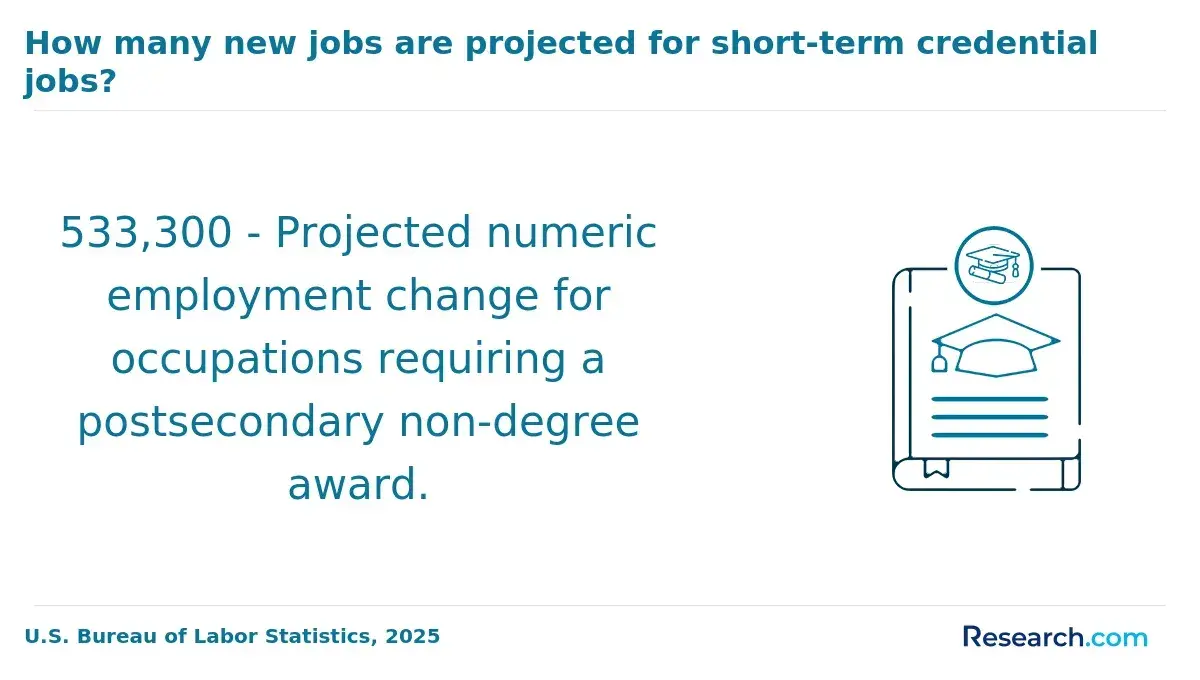
Assessing whether global security graduates are oversupplied or undersupplied based solely on annual degree completions overlooks significant nuances in workforce dynamics. Data from the National Center for Education Statistics and IPEDS indicate about 4,500 to 5,000 graduates with relevant majors enter the market annually, but not all target the same employment niche or enter the workforce immediately. Factors such as additional security clearances, certifications, and employer preferences for military or field experience mean a portion of these graduates either delay entering global security roles or shift to peripheral sectors like private cybersecurity or emergency management, which complicates direct supply-demand matching.
Labor market demand varies considerably by region, agency, and subfield, with metropolitan and federal employers showing higher hiring capacity, while competition from graduates in related disciplines-such as computer science-further influences recruitment patterns. Studies show only 60 to 70 percent of graduates secure jobs explicitly tied to global security within a year, illustrating that raw graduation numbers do not equate to immediate or uniform placement. Misinterpreting these figures risks misjudging workforce readiness and program effectiveness, especially when internship and cooperative education opportunities, heavily weighted by some programs, strongly affect employment outcomes and reflect employer-driven skill requirements more than degree counts alone.
Does Job Growth Support the Rising Supply of Global Security Graduates?
Despite projected growth in occupations tied to global security, employer demand is not uniformly keeping pace with the rising number of graduates entering the field. Although jobs for security analysts and cybersecurity specialists are expected to grow between 5% and 7% over the next decade, many openings require more than a degree alone-specialized skills, certifications, and geographic flexibility often determine whether graduates secure employment. For example, a recent graduate with a bachelor's in global security may face stiff competition unless they pursue additional credentials or relocate to high-demand regions, where saturation is often less severe but entry barriers can be higher.
Data highlights a steady increase in global security graduate output, with degree completions rising about 8% since 2020, surpassing some subfield employment growth rates. Replacement demand offers some offset but rarely changes the fundamental supply-demand balance, especially as many employers raise the bar to favor candidates with advanced degrees or niche expertise. This dynamic means that while acute talent shortages exist in cybersecurity, traditional roles demand greater differentiation, and misreading these trends can lead to underemployment or stalled job searches. Prospective students and practitioners must weigh these factors carefully, just as those exploring health administration master programs assess workforce alignment in their sectors.
How Competitive is the Entry-Level Market for Global Security Graduates?
Entry-level openings for global security graduates in 2024 reflect a complex hiring environment shaped by more than just supply and demand. While the number of graduates continues to grow, job creation has not kept pace uniformly across sectors and regions. Employers increasingly seek candidates with hands-on experience or certifications beyond academic credentials, limiting opportunities for those entering the field directly from college. These dynamics result in elevated competition, especially where geographic clustering and specialization requirements narrow hiring pools. Below are key factors influencing the level of competition and employability prospects for new graduates.
- Graduate Volume Imbalance: The number of global security graduates has surpassed growth in entry-level job openings, creating an oversupply in many markets. Candidates should assess local demand and industry hiring trends to identify where competition will be fiercest.
- Experience Preferences: Many positions require relevant internships, co-op roles, or exposure to specific security technologies. Lack of practical experience is a significant barrier for recent graduates, affecting callbacks and interview opportunities.
- Sector-Specific Demand: Hiring varies widely across industries; for example, government agencies may have steadier demand compared to corporate security firms impacted by economic fluctuations. Graduates benefit from targeting sectors with consistent workforce needs.
- Geographic Concentration: Job availability is uneven, with major metropolitan areas often experiencing denser competition. Graduates willing to relocate or explore less saturated regions may find more openings.
- Specialization Impact: Candidates with niche expertise-such as cybersecurity or compliance-might face less competition but require advanced skills. Generalist graduates often compete in larger, more crowded applicant pools.
- Remote Work Dynamics: The increase of remote and hybrid roles expands geographic competition, as employers widen candidate searches beyond local areas. Applicants must stand out through proven skills and clear remote-work readiness.
- Skill Demonstrations: Employers favor candidates who demonstrate applied abilities through certifications or portfolio projects. Graduates should cultivate tangible evidence of competencies to differentiate themselves.
One recent graduate shared an insightful example: After completing a global security program, they encountered a crowded application environment with many postings requiring prior internships. Despite strong academic performance, interviews repeatedly emphasized hands-on skills they lacked. To navigate this, the graduate shifted focus to regional firms outside major cities and pursued certifications aligned with compliance frameworks, improving their competitiveness. This strategy came with tradeoffs-accepting a lower starting salary and extending the job search timeline-but ultimately led to a relevant role. Their experience illustrates how early-career success depends not only on degree completion but on strategic adaptation to market signals and employer expectations.
Which Industries Have the Greatest Demand for Global Security Graduates?
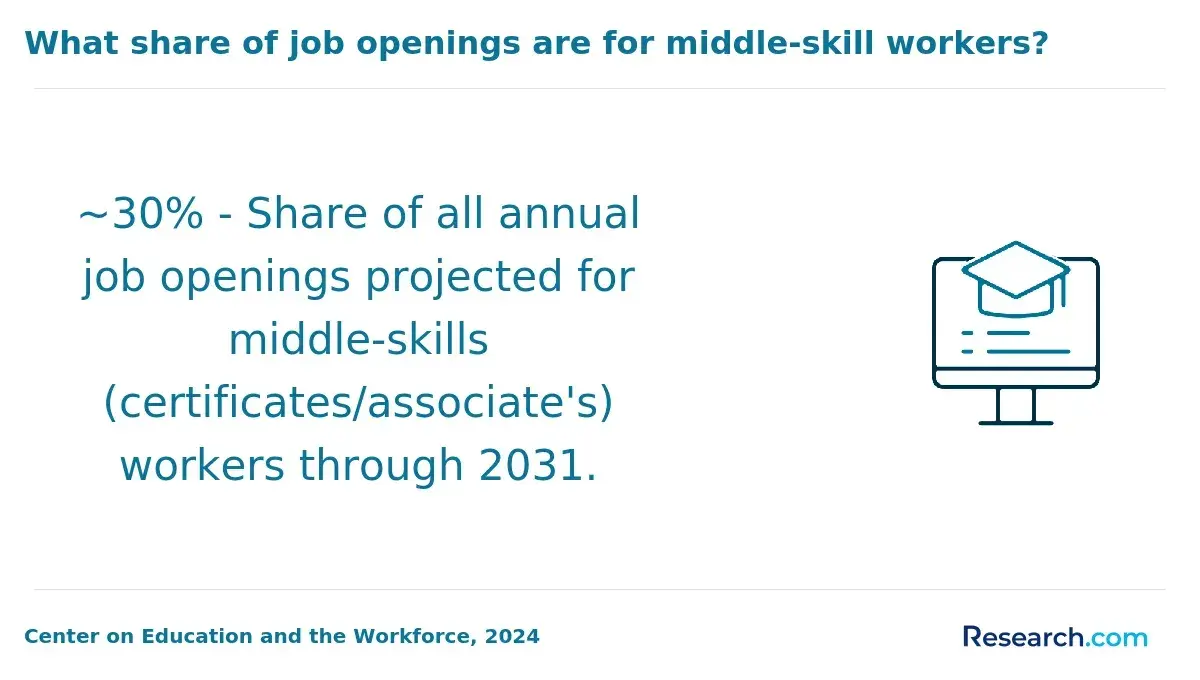
Employer demand for global security graduates is strongest where geopolitical pressures intersect with rapid digitalization and critical service protection. This reflects a labor market that prizes specialized skills in cyber defense, intelligence, and infrastructure resilience, rather than broad security knowledge alone. Graduates comparing regional job growth for global security degree holders should weigh the balance between job volume and competition alongside credential requirements and advancement pathways. Consider a graduate weighing opportunities in cybersecurity versus government agencies: cybersecurity offers larger hiring volumes but higher technical skill thresholds and frequent certifications, while government roles often provide more stable but regionally concentrated openings in intelligence and counterterrorism.
The following industries currently generate the strongest employer demand for global security graduates:
- Cybersecurity Sector: This industry's rapid expansion is driven by increasingly sophisticated cyber threats and digital transformation across all sectors. Roles range from entry-level cyber analyst to senior incident responders, with employers prioritizing certifications such as CISSP and hands-on threat analysis experience.
- Government and Defense: Demand here is fueled by heightened geopolitical tensions and national security priorities. Positions often require knowledge of policy dynamics and intelligence gathering, with state workforce data from California and Virginia underscoring consistent hiring trends.
- Critical Infrastructure Protection: The need to secure utilities, transportation, and energy systems against physical and cyber risks is growing. Employers seek graduates skilled in risk assessment and resilience planning, reflecting a blend of technical and operational expertise.
- Financial Services and Healthcare: These sectors emphasize safeguarding data and operational continuity amid high-value information flows. Global security roles often involve regulatory compliance and incident response preparedness, demanding specialized analytical capabilities.
- Private Corporate Security: Although hiring volume is lower, this field focuses on asset protection and internal threat management, demanding experience in investigations and compliance but often facing more competitive applicant pools.
Overall, those assessing industries with highest demand for global security graduates must align skill development and certifications strategically to improve employability and mitigate oversupply risks in slower-growth fields. For professionals seeking accelerated pathways, programs like a 1 year PMHNP program illustrate the importance of targeted, efficient credentialing within specialized domains.
Where are Global Security Graduates Most in Demand?
National employment statistics for global security graduates obscure regional dynamics where demand varies sharply due to local industry structure, employer concentration, and workforce pipelines. For instance, Washington, D.C. metropolitan area remains a focal point, driven by federal agencies and defense contractors requiring candidates with specialized security clearance and policy expertise. However, the intense competition combined with high living costs and cyclical government hiring budgets means graduates considering this market must weigh potential underemployment or extended job searches against the benefits of proximity to influential employers.
Conversely, technology hubs like the San Francisco Bay Area offer robust openings in cybersecurity roles focused on protecting digital assets but also pose challenges with saturated applicant pools and skyrocketing housing expenses. In contrast, regions such as Houston and Chicago indicate more niche demand tied to energy security and corporate risk management, often providing less competition and better alignment for graduates with targeted industry experience. Employers in these secondary markets sometimes face localized talent shortages, yet the availability of remote work has slightly mitigated geographic constraints, shifting emphasis toward specific skill sets rather than location alone.
The practical takeaway for global security graduates and educators is that job volume alone is a misleading metric without contextualizing factors like specialization focus, regional employer diversity, and labor market fluidity. For example, a graduate anchored in cyber risk analysis might find greater sustained opportunity by relocating to tech-centric cities despite higher costs, whereas those oriented toward policy analysis or governmental roles should target federal hubs, accepting more competition but benefiting from concentrated career progression paths. Lightcast data from 2024 highlights this uneven landscape, reinforcing the need for intentional geographic and industry targeting aligned with realistic expectations about applicant competition, cost of living, and employer demands.
Which Global Security Specializations and Degree Levels Face the Strongest Demand?
Demand for expertise in global security specializations is concentrated in specific skill sets and degree levels rather than spread evenly across the field. Employers focus heavily on critical areas where technical capabilities and strategic insight intersect, particularly as organizations respond to escalating digital and geopolitical threats. For instance, a graduate with a bachelor's in cybersecurity and hands-on technical experience may find broader entry-level opportunities than a master's-level risk management specialist competing for fewer mid-tier roles. Recognizing these nuances helps candidates align their education with realistic workforce dynamics. Below are key specialization and degree-level combinations with the strongest labor-market demand:
- Cybersecurity Bachelor's: Practical, technical training in cybersecurity is in high demand to counteract rising cyber threats. Many employers prioritize real-world experience and certifications over advanced degrees for operational roles in both public and private sectors.
- Intelligence Analysis Bachelor's and Master's: Positions tied to government agencies often require at least a bachelor's degree plus security clearance, with master's degrees enhancing competitiveness for analytic and strategic roles in defense contracting.
- Risk Management Master's: Mid-career professionals with master's credentials are sought for leadership roles shaping policy and operations, particularly in homeland security and critical infrastructure sectors.
- Doctoral Degrees in Academic/Research Roles: PhD holders are usually limited to academic, research, or senior advisory positions, representing a small segment of global security employment but contributing to knowledge development.
- Emerging AI and Data Analytics Specializations: Employers increasingly value candidates blending technical expertise with security knowledge to address sophisticated threats via AI applications and advanced data analysis.
- Entry-Level Bachelor's in Homeland Security: Bachelor's graduates with practical experience compete for foundational roles in operational and emergency management functions, where demand is steady but less robust.
U.S. Bureau of Labor Statistics data shows cybersecurity employment growing faster than average, underscoring the acute demand in that technical specialization. Understanding these specific demand patterns assists prospective students and professionals in making informed educational and career decisions.
Are Employer Skill Gaps Affecting Demand for Global Security Graduates?
The challenge in the US labor market is not a simple oversupply or undersupply of global security graduates, but rather employer skill gaps that affect demand. Employers prioritize candidates who offer a blend of technical expertise, operational experience with cybersecurity tools, and strong communication skills-attributes that many graduates currently lack despite rising graduate numbers. In practical hiring scenarios, recruiters often bypass candidates with theoretical knowledge but limited real-world application, resulting in open roles even when graduate volume appears sufficient. This dynamic complicates the narrative of critical skill shortages in North American global security employment, highlighting that curriculum misalignment and varying certification standards suppress effective demand more than the raw output of graduates.
Positions in global security frequently require interdisciplinary proficiencies across technology, policy, and compliance, areas where graduates are not uniformly prepared, leading to persistent hiring difficulties. These skill mismatches mean that job availability does not always translate to accessible opportunities, particularly in regions facing localized undersupply or specialized operational needs. For prospective students and degree holders, carefully evaluating program offerings to include internships, applied projects, and targeted skill development is essential to reducing this gap. Exploring educational tracks with integrated experiential learning-similar in focus and intensity to rigorous 3 year PharmD programs-can improve employability and better position graduates in a competitive, evolving labor market.
What is the Future Supply-and-Demand Outlook for Global Security Graduates?
Targeted job searches consistently yield better results than indiscriminate applications, as graduates who focus on precise entry-level roles aligned with their skills and qualifications avoid wasted effort and position themselves more competitively. For example, a global security graduate who narrows applications to federal agencies or multinational firms in high-demand regions can leverage employer-specific terminology on their resume, emphasize relevant certifications, and showcase practical project experience to meet specific job requirements. Conversely, submitting many generic applications to a broad range of positions often leads to lower response rates, as recruiters quickly filter out candidates lacking tailored qualifications or locality preferences, underscoring the operational benefit of deep market research and strategic role targeting within regional employment growth trends in global security careers.
Understanding future supply and demand projections for global security graduates highlights that competition is particularly fierce at entry levels due to overlapping qualifications from related fields like cybersecurity and international affairs. Graduates improve interview rates by timing applications strategically alongside hiring cycles, investing in networking within sectors demonstrating growth, and providing concrete evidence of job readiness beyond academic transcripts. Allocating effort toward industries and locations with stronger demand, rather than pursuing volume applications, addresses the field's uneven supply-demand balance and aligns with employer preferences for candidates demonstrating adaptability, technical skills, and policy analysis capabilities. For those exploring education paths, options like easiest counseling degrees illustrate how program complexity variations can affect graduate preparedness and marketability.
References
- Cyber Security Job Market Update – What’s Behind the Growing Demand for Mid-Level Professionals? | Barclay Simpson https://www.barclaysimpson.com/cyber-security-job-market-update-whats-behind-the-growing-demand-for-mid-level-professionals/
- Overstretched and undersupplied: Can the US afford its global security blanket? https://www.atlanticcouncil.org/blogs/new-atlanticist/overstretched-and-undersupplied-can-the-us-afford-its-global-security-blanket/
- Cyber security skills in the UK labour market 2024 https://www.gov.uk/government/publications/cyber-security-skills-in-the-uk-labour-market-2024/cyber-security-skills-in-the-uk-labour-market-2024
- Cybersecurity talent shortage: not the lack of people, but the lack of the right people https://ventureinsecurity.net/p/cybersecurity-talent-shortage-not
- Cybersecurity Job Demand: Current Trends and Future Outlook https://destcert.com/resources/cybersecurity-job-demand/
- Private Security Market | Global Market Analysis Report - 2035 https://www.futuremarketinsights.com/reports/private-security-market
- Compare Types of Cybersecurity Degrees | CyberDegrees.org https://www.cyberdegrees.org/listings/
- Will Cyber Security Be in Demand in the Future? https://birminghamconsulting.net/blog/will-cyber-security-be-in-demand-in-the-future/
- Cybersecurity Supply And Demand Heat Map https://www.cyberseek.org/heatmap.html
- Security Market Size, Share & Trends Forecast to 2034 https://www.imarcgroup.com/security-market
Other Things You Should Know About Global Security
Students must recognize that a narrow specialization can boost immediate employability in specific sectors like cybersecurity or intelligence analysis but may limit flexibility in a shifting job market. Employers often seek candidates with adaptable skills who can navigate evolving threats, so programs blending foundational global security knowledge with elective specializations generally offer better long-term career resilience. Prioritizing programs that balance core competencies with sector-specific expertise helps mitigate risks associated with oversupply in narrowly focused disciplines.
The intensity and real-world exposure embedded in global security programs significantly impact employment prospects. Heavy coursework combined with hands-on internships not only strengthens practical skill development but also signals to employers a candidate's readiness for complex roles. Graduates from programs lacking such components often face steeper competition, as employer demand increasingly favors demonstrated experience over theoretical knowledge alone.
Technical ability alone is rarely sufficient; employers place high value on communication, critical thinking, and decision-making skills. Graduates who neglect these soft skills during their education often find themselves at a disadvantage despite academic achievement. Programs that integrate teamwork, leadership development, and scenario-based training better align graduate capabilities with employer expectations, thereby improving market fit and reducing risks of underemployment.
Obtaining a degree from lesser-known institutions can increase challenges in competitive job markets, especially when employer scrutiny on graduate quality is rising amid potential oversupply. However, this can be offset by proactive engagement in internships, certifications, and networking. For students without access to top-tier programs, prioritizing experiential learning and skill validation is essential to counterbalance the reputational disadvantage and enhance employability.