2027 Global Security Degree Outlook Through 2030: Enrollment, Salary, and Hiring Projections

Co-Founder and Chief Data Scientist
Deciding whether to pursue or advance a global security degree requires more than considering job growth alone. For example, a 2024 report highlights a 12% projected increase in employment for security analysts, yet enrollment in related programs rose 18% the same year, signaling potential graduate oversupply. Regional imbalances further complicate decisions, as demand concentrates in metropolitan hubs while rural prospects lag.
Moreover, evolving credential requirements and technology integration shift employer expectations, making some degrees less competitive. Evaluating salary trends without accounting for sector-specific variation also risks misleading conclusions. This article will examine global security enrollment, salary patterns, hiring projections, industry demand, geographic opportunity, and emerging workforce changes through 2030 to help readers make better-informed education and career decisions.
Key Things to Know About the Global Security Degree Outlook Through 2030
- Global security enrollment has risen 12% since 2024, reflecting higher student interest but also signaling increased graduate competition; prospective students should weigh supply growth against selective employer demand.
- Employers report a 15% rise in automation-related tasks reducing entry roles, focusing hiring on candidates with AI and cyber specialization, which reshapes workforce needs and necessitates advanced skill acquisition.
- Regional demand varies sharply, with North America showing stable growth while other markets face budget constraints, impacting timing and cost-effectiveness of degree investment for students in less funded areas.
- Key Things to Know About the Global Security Degree Outlook Through 2030 Key Things to Know About the Global Security Degree Outlook Through 2030
- How is Global Security Degree Enrollment Expected to Change Through 2030? Enrollment Trends Through 2030
- How Many Global Security Graduates Will Enter the Workforce by 2030? Graduate Workforce Entry Projections
- What Are the Hiring Projections for Global Security Graduates Through 2030? Hiring Projections Through 2030
- Which Global Security Careers Will Experience the Most Job Growth? Fastest-Growing Career Paths
- What Is the Salary Outlook for Global Security Graduates Through 2030? Salary Outlook Through 2030
- Which Industries Will Hire the Most Global Security Graduates by 2030? Top Hiring Industries
- Where Will Demand for Global Security Graduates Be Strongest? Strongest Geographic Demand
- Which Global Security Specializations Will Be Most in Demand by 2030? Which Global Security Specializations Will Be Most in Demand by 2030?
- How Will AI and Technology Affect Global Security Careers Through 2030? How Will AI and Technology Affect Global Security Careers Through 2030?
- Is a Global Security Degree Worth Pursuing Based on 2030 Projections? Degree Value Through 2030
How is Global Security Degree Enrollment Expected to Change Through 2030?
Enrollment trends in global security degree programs through 2030 will be shaped largely by the interplay between labor-market demand and institutional capacity. While interest is growing steadily, driven by heightened geopolitical tensions and evolving cyber threats, the expansion of program offerings-particularly through online modalities-is uneven across regions. Urban and well-established institutions are likely to see increased class sizes and admission competition, which could pressure program quality and limit specialization options.
Conversely, rural and smaller programs may face stagnant or declining enrollments, raising the risk of program cuts and fewer graduate pathways in those areas. These dynamics suggest that prospective students must weigh the availability and focus of programs carefully, as the supply of graduates could either saturate certain job markets or leave critical expertise in short supply depending on geographic and delivery format factors.
Regional variations will also influence projected growth in global security program enrollment by region, reflecting differing local demands and educational ecosystem strengths. For example, programs in regions with robust connections to government agencies or private sector security firms tend to attract more students and offer enhanced internship opportunities that align with employer preferences for practical skills.
At the graduate level, enrollment may be more sensitive to shifting funding patterns and economic conditions, which could impact the depth of advanced specialization. Given these constraints, students seeking efficient pathways might consider options like the fastest DNP program online as a comparison in decision efficiency, emphasizing the value of balancing time, cost, and practical training when planning educational investments within the broad security field.
How Many Global Security Graduates Will Enter the Workforce by 2030?
The number of global security graduates projected to enter the workforce by 2030 must be interpreted with caution, as graduation rates alone do not equate to immediate or guaranteed employment in relevant fields. Current data from the National Center for Education Statistics indicates a steady growth in degree completions, with approximately 15,000 bachelor's graduates in 2024 expected to rise near 23,000 by 2030.
However, this increase coincides with a competitive job market where many candidates pursue additional certifications, advanced degrees, or non-security roles to differentiate themselves. Employers frequently prioritize applicants with hands-on experience, security clearances, or interdisciplinary expertise, which means raw graduate volume only partially reflects labor demand and absorption capacity.
Workforce entry among global security graduates will also be affected by demographic shifts, varying program quality, and fluctuating industry needs, especially in government versus private sectors. Many graduates delay full workforce participation for postgraduate education or transition into tangential positions, reducing immediate market pressure despite growing degree numbers.
The Bureau of Labor Statistics forecasts an 8% growth rate for related jobs through 2030, signaling robust opportunity yet tempered by budgetary limits and evolving technology demands that may narrow paths in certain specializations. Critical decision-making for students and career planners involves weighing not just available programs, but how their credentials align with dynamic employer priorities and the nuanced realities of labor absorption across regions and sectors.
A recent graduate completing a master's in global security described entering the job market amid mounting numbers of peers aiming for limited intelligence and cybersecurity analyst roles. Although confident in technical training, this individual faced stiff competition from candidates holding advanced clearances and relevant internships, pushing them to accept a contract position outside government initially. Their experience underscores a growing trend where expanding graduate pipelines increase competition, requiring strategic positioning, patience, and sometimes lateral moves to establish long-term career footing as the 2030 horizon approaches.
What Are the Hiring Projections for Global Security Graduates Through 2030?
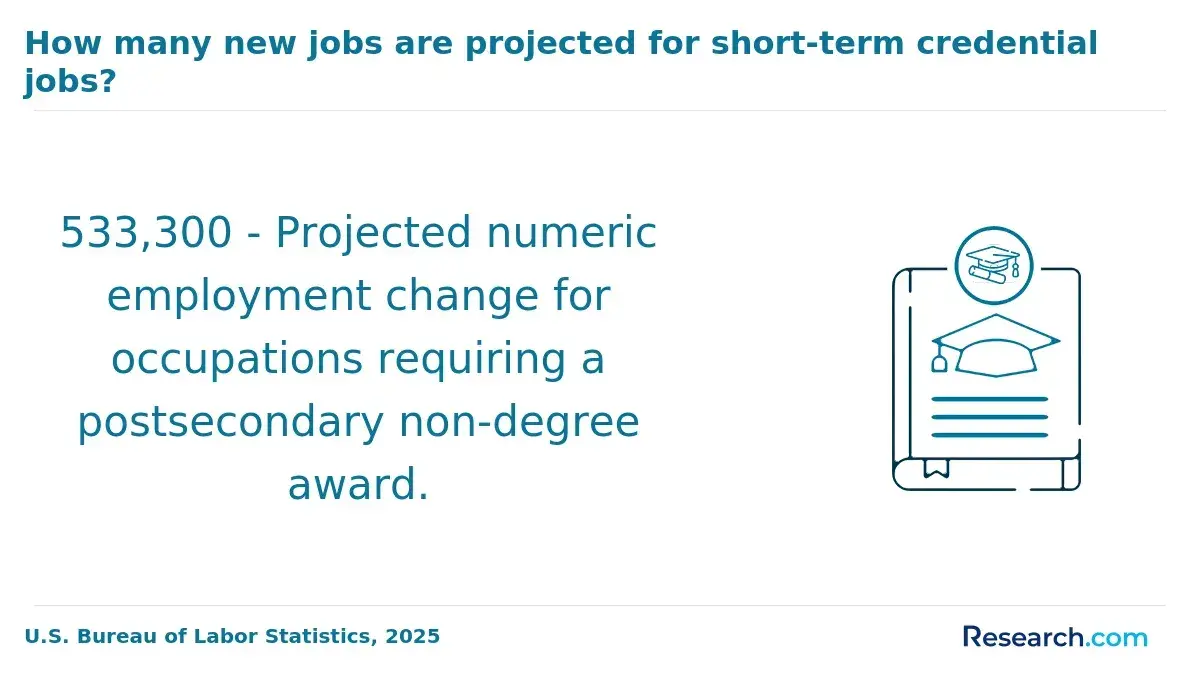
Projected demand for global security graduates through 2030 appears steady but moderate, shaped by fluctuating geopolitical dynamics and technology integration rather than robust expansion. Data from the U.S. Bureau of Labor Statistics indicates about a 6% annual growth rate for roles like information security analysts and intelligence specialists, translating to roughly 20,000 new openings annually in the U.S. This figure, however, combines growth with replacement needs, underscoring that actual new job creation is more limited, and competition for entry-level positions remains intense, especially where candidates lack specialized certifications or internships.
The landscape varies regionally and across sectors, with government positions staying dominant but private industries such as finance, healthcare, and critical infrastructure increasingly absorbing global security professionals. For instance, a graduate focusing solely on traditional intelligence may find fewer opportunities outside major metropolitan centers compared to those blending cybersecurity skills with data analytics.
Moreover, evolving employer expectations now prioritize hybrid competencies-combining technical acumen with strategic policy understanding-highlighting the risk of relying heavily on generalized workforce projections without tailoring skill development to sector-specific demands. Students and current degree holders should recognize that the moderate growth rates mask nuanced entry barriers: practical experience and interdisciplinary knowledge significantly influence employability.
Those augmenting global security education with programming, machine learning fundamentals, or international relations insights may navigate shifting hiring priorities more successfully. Educators and workforce strategists face the challenge of integrating these cross-domain capabilities to produce graduates aligned with evolving market realities rather than static occupational forecasts.
Which Global Security Careers Will Experience the Most Job Growth?
Projected growth in global security professions through 2030 highlights a distinct advantage for specialized roles tied to cybersecurity, intelligence analysis, and emergency management. Information security analysts lead with an anticipated increase well above 30%, driven by rising cybersecurity threats and infrastructure protection needs. However, prospective students should weigh this impressive percentage against total job openings and the intensive technical certifications, hands-on skills, and sometimes security clearances required.
Intelligence analysts and emergency management directors exhibit more moderate growth rates-around 9% and 8%, respectively-with steady opportunities reflecting ongoing investment in geopolitical risk and crisis response. While growth percentages are informative, these positions often involve established workforce replacement and regional variability, underscoring the importance of practical experience and adaptability for entering these fields.
Comparing the highest paying global security jobs by region reveals that salary trajectories and employer expectations can fluctuate considerably, meaning that viable employment may hinge on location and specialization. Students aligning their education with workforce realities should also consider alternative pathways in related fields, such as healthcare, where demand is robust and stable.
For example, those weighing a Global Security degree might examine parallel sectors by reviewing data like the PhD in nursing salary, which reflects broader economic trends and regional job market dynamics. Balancing such insights against personal aptitude and certification demands is essential for an informed, long-term career decision in global security.
What Is the Salary Outlook for Global Security Graduates Through 2030?
Salary projections for global security graduates through 2030 must be viewed alongside inflation trends, shifts in labor market demand, evolving credential expectations, and changes in occupational roles. Nominal wage increases near 3% to 4% annually, as indicated by the U.S. Bureau of Labor Statistics, roughly mirror broader economic growth but may not outpace cost-of-living rises in many urban centers.
Employers increasingly reward specialized capabilities and adaptability to emerging threats, making credentials and sector choices critical determinants of compensation trajectories. The following key factors illustrate how these dynamics will shape salary outcomes for global security degree holders.
- Specialization Impact: Graduates with expertise in cybersecurity, intelligence analysis, or risk management generally command higher wages. Fields such as cyber threat analysis and homeland security show stronger salary growth, particularly when paired with professional certifications and technical skills enhancing employability.
- Geographic Variability: Urban areas with heightened security concerns or more federal agencies tend to offer premium salaries. Conversely, regional markets with fewer security infrastructure investments typically provide lower starting wages, creating significant location-driven disparities.
- Experience and Career Stage: Starting salaries cluster around $50,000 to $65,000, but mid-career professionals who build specialized skills and leadership capacity can see compensation approach or exceed $110,000. Incremental advancements without upskilling tend to yield slower wage growth.
- Technological Advancements: Rapid development in digital security tools raises employer demand for graduates who combine security knowledge with IT proficiency, including language or data analysis skills, reinforcing the premium placed on technical adaptability.
- Public vs. Private Sector Dynamics: Federal and specialized private sector roles usually offer higher wages and greater job security compared to non-federal government or generalist positions, reflecting differences in funding, risk profiles, and operational scope.
- Credential Inflation: Increasingly, employers expect certifications and advanced degrees to differentiate candidates. Possessing recognized credentials may not guarantee top pay but is often essential to enter competitive, higher-paying roles.
- Economic and Political Factors: Geopolitical risks and public safety priorities directly affect public and private sector hiring budgets and salary offers, causing fluctuations in demand for global security professionals over time.
A recent graduate entering the workforce encountered the practical challenges of these trends firsthand. Although offered a starting salary close to $52,000 in a mid-sized metropolitan area, the candidate found the pay constrained relative to local living costs and industry benchmarks. During negotiations, a willingness to accept a slightly lower initial offer was weighed against benefits and opportunities for certification support.
The decision involved balancing immediate financial needs with expectations of future specialization-driven raises, illustrating how new professionals must navigate salary realities pragmatically, factoring both regional market nuances and the value of targeted upskilling for long-term earnings growth.
Which Industries Will Hire the Most Global Security Graduates by 2030?
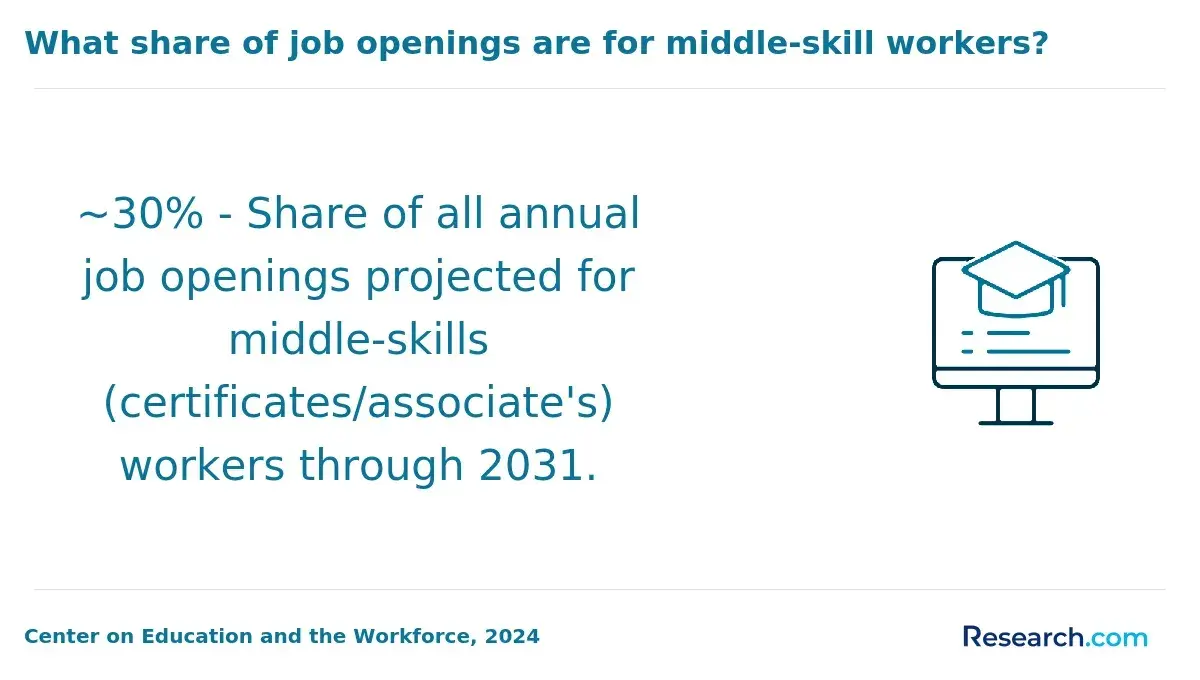
Industries anticipating the strongest demand for global security graduates through 2030 are influenced by dynamic factors such as workforce replacement cycles, escalating technological complexity, and tighter regulatory environments. Employers seek professionals who not only understand foundational security principles but also adapt to evolving threat landscapes and policy shifts.
For example, graduates entering federal agencies should prepare for roles requiring security clearances and interdisciplinary coordination across cyber and physical domains. The outlook is shaped less by volume alone and more by the interplay of specialized skills and sector-specific challenges.
The top industries hiring global security graduates in North America illustrate this nuanced demand:
- Federal Government Security: Sustained by national defense and intelligence priorities, this sector relies heavily on graduates with clearances and expertise in cybersecurity, counterterrorism, and infrastructure protection. Roles often emphasize resilience planning and digital risk mitigation.
- Financial Services Cybersecurity: Escalating cybercrime drives banks and insurers to bolster defenses. Graduates with a blend of cyber defense capabilities and knowledge of regulatory compliance, including risk management, find competitive positions here.
- Healthcare Security: Expanding efforts to secure patient data under regulations like HIPAA create demand for professionals skilled in both digital and physical security, requiring adaptability across multidisciplinary challenges and emerging healthcare technologies.
- Critical Infrastructure & Energy: Utilities and transportation sectors seek talent proficient in threat assessment and emergency response, often valuing experience in resilience planning amid growing vulnerability concerns.
- Law Enforcement & Private Security: While still important employers, these fields are growing modestly and tend to require additional certifications or hands-on experience beyond academic credentials.
Understanding global security graduate employment trends across U.S. sectors shows that meaningful career access depends on tailored skills and credentials aligned with sector-specific demands rather than a uniform job market. Professionals considering advanced study should evaluate specialization paths carefully. In health-related fields, for instance, graduating with an online PhD in healthcare management can expand opportunities in organizational leadership and policy compliance, complementing technical security expertise.
Where Will Demand for Global Security Graduates Be Strongest?
Demand for global security graduates will be highly concentrated in metropolitan hubs where government, military, and technology sectors intersect, with marked variation by region and specialty. For example, the Washington D.C. area remains a prime market due to its dense federal agency presence and defense contractors, but these high-demand jobs come with intense applicant competition and a high cost of living that can diminish net compensation.
In contrast, West Coast tech centers such as Silicon Valley prioritize specialists in cybersecurity and compliance, driven by rapid growth in cloud services and IoT platforms, yet candidates must weigh whether accelerated wage growth in these niches offsets the increasingly saturated local talent pools. Outside traditional federal and tech strongholds, markets in Texas and Florida illustrate how regional hazards and industry diversity shape opportunity.
Rapid expansion in emergency management and infrastructure protection in these states is fueled by climate-related risks, which creates localized demand for graduates who combine operational resilience with private-sector insight. However, these roles often require more specialized credentials and experience, and while salaries may lag behind coastal centers, the lower living costs and less crowded applicant pools may provide a more accessible path for entry-level professionals.
Global security professionals targeting international roles or emerging markets should account for diverse qualification standards and variable salary structures, particularly in Asia and the Middle East, where demand is rising but institutional expectations differ. According to the U.S. Bureau of Labor Statistics (2024), sectors like cyber threat intelligence and risk management are projected to outpace general growth, reflecting industry shifts toward data-driven and AI-enhanced security solutions. This evolving landscape places premium value on practical experience and credentials over broad degrees.
Which Global Security Specializations Will Be Most in Demand by 2030?
The clearest indicator of specialization demand within global security programs through 2030 lies in where technological integration meets evolving threat landscapes. Cyber security roles dominate due to the exponential increase in attacks across public and private sectors, requiring not only traditional IT security skills but also continuous adaptation to emerging threats. Prospective students choosing between cyber security and intelligence analysis must weigh the broader applicability of coding and network defense skills against the growing intersection of data science with human analytical judgment.
Such interdisciplinary expertise enhances employability but also requires commitment to both technical and policy-driven learning. Infrastructure protection, while less prominently highlighted in labor statistics, offers steady opportunities tied to critical systems' resilience, a necessity as cyber-physical vulnerabilities gain attention. Meanwhile, fields like counterterrorism and diplomatic security remain subject to geopolitical flux and funding variability, posing a higher risk for job stability, though they hold distinct appeal for those targeting government or international roles.
According to U.S. Bureau of Labor Statistics data, information security analyst positions are projected to grow over 30%, reflecting the outsized labor market for cyber-related specialists. Below are key specializations to consider when evaluating the balance between employment growth, skill requirements, and long-term adaptability.
- Cyber Security and Information Assurance:Strong growth driven by rising cyber threats makes this specialization a core entry point. Employers prioritize skills in threat detection, incident response, and risk mitigation, often combined with certifications and hands-on technical experience.
- Intelligence Analysis with Data Science Integration:Demand grows for analysts capable of blending traditional intelligence methods with AI-based analytics. This hybrid skill set supports roles in government and private sectors requiring nuanced interpretation of complex datasets.
- Critical Infrastructure Protection and Resilience:The increasing interconnection of grids, transport, and communication networks drives steady demand for specialists who assess systemic vulnerabilities and develop risk reduction strategies.
- Counterterrorism and Diplomatic Security (Variable Demand):Jobs in this area fluctuate with geopolitical tensions and government budget priorities, offering niche expertise but also requiring career flexibility and alignment with public sector cycles.
- Risk Assessment and Compliance:Compliance with emerging global security regulations and risk frameworks creates opportunities for professionals skilled in policy interpretation, audit, and enforcement across multiple industries.
- Security Technology Development:Emerging roles focus on designing and deploying security-focused technologies, integrating hardware and software solutions, appealing to candidates with engineering or computer science backgrounds.
How Will AI and Technology Affect Global Security Careers Through 2030?
Artificial intelligence and automation are reshaping global security careers primarily by augmenting and redefining traditional responsibilities rather than simply automating tasks away. Entry-level positions centered on routine monitoring and manual data analysis face decline, as employers increasingly demand candidates with skills in AI model development, cybersecurity, and system integration. For example, a security analyst who once focused on manual threat detection must now interpret AI-generated insights, requiring ongoing technical education and cross-disciplinary proficiency.
Failure to adapt risks obsolescence amid rising expectations for practical AI application and digital infrastructure protection. The evolving landscape of AI impact on global security career demand means students and professionals must critically evaluate programs for applied coursework and certifications emphasizing machine learning, cybersecurity, and real-world tools.
Hiring practices reflect a premium on hybrid specialists who combine domain expertise with data analytics, underscoring a shift toward roles involving ethical oversight, communication, and strategic analysis over routine tasks. Salary projections support this trend, showing 15-20% increases for those with AI fluency, though these gains carry the tradeoff of increased performance demands and continuous upskilling.
Emerging technologies transforming global security jobs also encourage educational pathways that integrate interdisciplinary skills rather than rely solely on traditional degrees. Enrollment patterns suggest growing interest in programs blending security studies with advanced tech training, similar to how healthcare students consider accelerated options, such as the shortest RN to BSN program, for faster, targeted credentialing that aligns with workforce needs.
Is a Global Security Degree Worth Pursuing Based on 2030 Projections?
Projected hiring demand for a global security degree through 2030 suggests moderate growth driven primarily by expanding cybersecurity needs and geopolitical turbulence. However, this growth-estimated at about 8% according to the U.S. Bureau of Labor Statistics-is uneven across sectors and locations, meaning graduates focused solely on public sector intelligence or risk management roles may face more volatility in funding and job stability.
A prospective student balancing tuition cost against career flexibility should consider how specialization in cybersecurity or intelligence analysis typically commands higher salaries, often exceeding six figures for experienced professionals, whereas entry-level roles may start near $50,000. This variability reflects important real-world tradeoffs, especially for those weighing degree completion time and access to internships, which are increasingly critical in competitive hiring markets.
Enrollment trends indicate a gradual but cautious interest in global security programs compared to more established majors, impacting both networking opportunities and hiring saturation. For individuals evaluating global security degree career prospects in North America, the decision should factor in the potential for oversupply in certain niches and the need for continuous skill upgrading in the private sector.
Salary and hiring outlook for global security graduates 2030 also vary considerably by geography and employer type, so alignment with market demands is essential. Students exploring related fields might also examine emerging credentials, such as those offered by online health information management programs CAHIIM-accredited, where healthcare's expanding role intersects with security imperatives.
References
- Cybersecurity Job Market Statistics and Trends [2026] https://app.stationx.net/articles/cybersecurity-job-market-statistics
- Cyber security market set to reach $500 billion by 2030 https://g6s-security.co.uk/cyber-security-market-set-to-reach-500-billion-by-2030/
- Security Analyst Salary and Career Outlook | Locations and Industries https://www.cyberdegrees.org/careers/security-analyst/career-and-salary/
- Top Professions by 2030: Which Roles Will Dominate the Market? https://alte.edu.ge/en/jobs-of-the-future-which-roles-will-be-most-in-demand-by-2030
- AI Scenarios 2030: Helping policymakers plan for the future of AI https://www.gov.uk/government/publications/ai-scenarios-2030-helping-policymakers-plan-for-the-future-of-ai/ai-scenarios-2030-helping-policymakers-plan-for-the-future-of-ai
- 10 in-demand careers for the future https://www.vu.edu.au/about-vu/news-events/vu-blog/10-in-demand-careers-for-the-future
- Cybersecurity 2025 2030: The Talent Gap Is Your Biggest Opportunity https://www.ipsr.org/blog/cybersecurity-the-talent-gap-is-your-biggest-opportunity
- $75K-$200K: Cybersecurity Salary Guide by Role (2026) https://unihackers.com/blog/cybersecurity-salary-guide-2026
- 5 Emerging Tech Careers 2030 for International Graduates https://internationalcollege-online.uk/index.php/news/details/186
- The future of work: Emerging job trends and the impact of AI (2025-2030) | EIT Deep Tech Talent Initiative https://www.eitdeeptechtalent.eu/news-and-events/news-archive/the-future-of-work-emerging-job-trends-and-the-impact-of-ai-2025-2030/
Other Things You Should Know About Global Security
Students face a critical tradeoff between enrolling in narrowly focused programs, such as cybersecurity or counterterrorism, and broader global security degrees that cover diverse topics. Specialized tracks may offer deeper immediate job readiness in a specific niche but risk narrowing long-term adaptability as employer demands shift. Conversely, broad programs provide flexibility but often require supplemental training or certifications to meet employer expectations for technical depth. Those prioritizing sustained career agility should favor comprehensive curricula that incorporate both theoretical frameworks and applied technical skills.
The rigorous coursework inherent in many global security programs can limit students' bandwidth for internships, research projects, and relevant certifications, all of which employers increasingly expect. Prospective students should assess programs for built-in experiential learning opportunities rather than assuming post-graduation catch-up will suffice. Prioritizing programs with integrated practica or partnerships that facilitate hands-on experience reduces risk of a credentials gap that can hinder hiring prospects and salary negotiations.
Despite growing acceptance of online degrees in many fields, hiring managers in global security often differentiate based on program reputation, structure, and demonstrated practical application. Programs that are predominantly online without applied components may be perceived as less competitive, particularly for intelligence or defense sector roles requiring teamwork and real-time problem-solving skills. Choosing a program that offers hybrid options or mandates in-person sessions can mitigate skepticism and better align to employer preferences.
Salary variability in global security often reflects geographic cost of living, government versus private sector roles, and the strategic importance of the employer. Graduates should weigh higher pay against job security, advancement potential, and workload demands. For many, accepting a moderate salary within a stable agency with clear growth pathways may yield better long-term career outcomes than chasing initial high pay in volatile private firms. Prioritizing employers with transparent training and promotion frameworks is advisable over immediate compensation alone.