2027 Environmental Engineering Student Debt Report: Borrowing, Monthly Payments, and Repayment Risk

Co-Founder and Chief Data Scientist
Environmental engineering programs often demand extended study due to accreditation standards and fieldwork requirements, influencing borrowing behaviors distinct from other disciplines. Licensing and internship obligations can prolong time to degree completion, increasing tuition and living costs. These factors contribute to varied borrowing levels and shape repayment outcomes unique to environmental engineering graduates. The field's salary variability and evolving workforce demand create uneven monthly payment capacities, affecting default and repayment risk.
A growing share of nontraditional students entering environmental engineering suggests shifting educational accessibility and workforce preparation trends. This report examines these borrowing patterns, payment expectations, and repayment challenges within the environmental engineering context.
Key Things to Know About Environmental Engineering Student Debt
- Environmental engineering student debt often involves elevated borrowing duration due to prerequisite STEM coursework, increasing cumulative interest and extending repayment timelines compared to other disciplines.
- Employers in environmental sectors tend to prioritize technical internships over degree pedigree, so excessive debt without relevant experience may weaken hiring prospects and wage negotiation leverage.
- A 2024 study found 38% of environmental engineering graduates face delayed loan payments, signaling potential industry volatility impacting early-career income stability and repayment risk management.
- Key Things to Know About Environmental Engineering Student Debt Key Things to Know About Environmental Engineering Student Debt
- How Much Student Loan Debt Do Environmental Engineering Graduates Typically Have at Graduation? Average Studen Loan Debt
- What Factors Have the Biggest Impact on Environmental Engineering Student Loan Debt? Student Debt Key Factors
- What Is the Average Monthly Student Loan Payment for Environmental Engineering Graduates? Average Monthly Payment
- How Do Repayment Rates Compare Between Public and Private Institutions? Public vs. Private Institution Repayment Rates
- Do Online Environmental Engineering Graduates Have Different Repayment Outcomes Than Campus-Based Students? Online vs. On-Campus Student Loan Repayment
- Which Industries Provide the Best Financial Return Relative to Borrowing Costs? Which Industries Provide the Best Financial Return Relative to Borrowing Costs?
- Does Student Debt Affect Which Jobs Environmental Engineering Graduates Accept? Does Student Debt Affect Which Jobs Environmental Engineering Graduates Accept?
- What Factors Increase Student Loan Repayment Risk for Environmental Engineering Graduates? Loan Repayment Risk Factors
- How Can Environmental Engineering Students Reduce Student Loan Debt While Earning Their Degree? Tips to Reduce Student Debt
- How Should Prospective Students Evaluate Borrowing Risk Before Enrolling? Evaluating Student Debt Risk
How Much Student Loan Debt Do Environmental Engineering Graduates Typically Have at Graduation?
Data from recent 2024 sources, including the National Center for Education Statistics, indicate that the average student loan debt for environmental engineering graduates typically falls between $25,000 and $40,000 at the point of graduation. This range reflects aggregate borrowing patterns for students completing bachelor's degrees, with amounts skewed by institutional type and geographic factors.
Those ratios align broadly with borrowing trends for STEM fields, though environmental engineering students often accumulate somewhat less debt than peers in more expensive disciplines like biomedical engineering. Understanding the average student loan debt for environmental engineering graduates requires consideration of how tuition costs, financial aid availability, and enrollment choices interact to shape these outcomes.
Variability in typical borrowing amounts for environmental engineering students at graduation is influenced heavily by whether the institution is public or private, and if the student qualifies for in-state tuition rates. Public universities offer lower cost options and more state-based aid, which can reduce debt load substantially compared to private or out-of-state attendees who face higher tuition expenses.
Additionally, part-time enrollment, extended study periods often linked to cooperative education or internships, and the pursuit of graduate credentials can drive cumulative borrowing closer to or beyond $50,000. Scholarships, grants, and institutional aid mitigate some costs but do not entirely eliminate these disparities across program lengths and institutional contexts.
Debt levels in this range have critical implications for repayment stress and financial stability after graduation. While environmental engineering graduates generally have access to steady employment opportunities, graduates with higher student loan debt may find monthly payments challenging, especially those living in lower cost-of-living areas with less competitive entry-level salaries.
Income-driven repayment plans offer some flexibility but may extend long-term repayment horizons and influence career decisions such as public sector work or further education. Prospective students should assess borrowing needs alongside expected debt service burdens, and some may explore alternative pathways like the best associate degree in 6 months online options to reduce initial financial exposure.
What Factors Have the Biggest Impact on Environmental Engineering Student Loan Debt?
Student loan debt levels for environmental engineering students emerge from a complex interplay between institutional pricing structures and individual financial circumstances. Debt accrual is rarely attributable to a single cause; instead, multiple factors such as program duration, institution type, financial aid accessibility, and living costs collectively shape borrowing behavior. Understanding these drivers offers clearer insight into why debt amounts vary so widely across students and enrollment choices. Recognizing these influences is crucial for grasping the long-term repayment obligations and financial risks tied to environmental engineering degrees.
- Program Length and Degree Level: The duration of studies significantly affects loan amounts since bachelor's degrees typically span four years, while many environmental engineering students extend borrowing by pursuing master's degrees. According to data from the National Center for Education Statistics, students with master's degrees in engineering disciplines carry about 25% higher average debt compared to those with only bachelor's degrees, largely due to added tuition and living expenses during extended enrollment.
- Institution Type and Tuition Pricing: Public versus private institutional costs drive major disparities in borrowing. Public universities generally offer lower tuition rates, especially for in-state students, reducing borrowing needs. In contrast, private or out-of-state institutions can charge roughly double the tuition, pushing students toward higher loan amounts. The College Board's 2024 report shows an average annual net price near $40,000 for private nonprofit colleges compared to about $20,000 at public four-year schools, sharply increasing debt burdens for private college attendees.
- Financial Aid Availability and Merit Support: Limited access to grants and scholarships compels students to rely more heavily on loans. Environmental engineering programs without substantial departmental funding or cooperative education opportunities often leave students with fewer offsets to tuition and living costs, amplifying borrowing. Aid scarcity compounds ceiling effects where even small increases in award rates can meaningfully reduce student loan debt formation.
- Living Expenses and Program Structure: Costs associated with housing, transportation, and day-to-day living, especially in high-cost urban settings, substantially augment student debt. Moreover, program designs requiring multiple internships, co-op placements, or thesis work elevate these indirect expenses. Even when tuition remains steady, these factors drive up total borrowing by increasing students' non-tuition financial needs.
- Enrollment Patterns and Financial Behavior: Choices around full-time versus part-time enrollment, the pursuit of additional certifications, and dependency on loans rather than work-study all influence cumulative debt levels. Students who enroll longer due to part-time status or engage in less paid work relative to expenses typically accumulate more debt. This dynamic interacts closely with institutional aid and living cost factors to shape loan volume.
Graduates must also consider average monthly payments for environmental engineering graduates in managing long-term loan obligations. These payments reflect cumulative borrowing weighted by interest and repayment terms, underscoring the importance of informed borrowing aligned with expected entry salaries and career progression trajectories. For students weighing financing options, evaluating the total cost-from-institution-factors to personal financial strategies-offers more actionable insight than raw tuition numbers alone. Additionally, prospective students exploring programs unrelated to their immediate field might examine alternatives such as an online game design degree, where price structures and borrowing patterns differ substantially.
What Is the Average Monthly Student Loan Payment for Environmental Engineering Graduates?
Recent data from the U.S. Department of Education and Federal Reserve indicates that environmental engineering graduates generally face monthly student loan payments ranging between $250 and $400. This range reflects an average debt load typically falling between $25,000 and $50,000, influenced by whether students attended public in-state universities or private institutions, as well as whether they pursued graduate studies.
Variations in borrowing amount and repayment terms contribute substantially to this payment spread, with many graduates navigating moderate monthly costs compared to other engineering disciplines. Such figures provide a benchmark but mask important underlying differences shaped by individual financial choices and institutional factors.
Monthly payment differences largely hinge on the total principal borrowed, repayment plan types, and salary variations within the environmental engineering sector. Standard 10-year repayment plans yield higher payments but reduce interest accrued over time, whereas income-driven plans can drop monthly dues below $200, especially for those with lower starting salaries or working in non-profit or academic roles.
Interest accumulation during deferment or forbearance further enlarges total repayment burdens, often extending financial strain well beyond entry-level income periods. Salary disparities-from approximately $60,000 to $75,000 at career start-also impact borrowers' ability to manage payment amounts relative to disposable income and long-term financial stability.
An environmental engineering graduate described their experience during the admissions process as fraught with uncertainty, stemming from the rolling admissions timeline. They hesitated to finalize enrollment while awaiting financial aid decisions and loan counseling, fearing commitment without clear clarity on repayment implications. This delay compressed their preparation time but ultimately led to a more informed financial plan upon entering the workforce, demonstrating how timing and strategic decision-making in admissions can directly affect post-graduation loan management outcomes.
How Do Repayment Rates Compare Between Public and Private Institutions?
Recent Department of Education data from 2024 reveals that graduates from public universities in Environmental Engineering demonstrate moderately higher federal student loan repayment rates within three years compared to their private institution peers. Approximately 52% of public program graduates make significant repayment progress in this timeframe, while figures for private program alumni hover near 46%. This gap signals meaningful differences in how borrowers from these sectors manage debt early in their careers, reflecting underlying financial and labor market dynamics rather than institutional reputation alone.
These repayment disparities largely stem from variations in educational costs, borrowing behavior, and post-graduation earnings. Public universities typically offer lower tuition, resulting in smaller loan balances that reduce repayment burdens for many students. Meanwhile, stable early-career salaries reported by public Environmental Engineering graduates support more consistent loan servicing. Private programs often entail higher borrowing and potentially smaller cohorts with less standardized employment outcomes, which can complicate repayment trajectories. Additionally, public institutions tend to provide more extensive loan counseling and financial literacy resources tailored to STEM graduates, improving borrower readiness and repayment discipline.
Such differences in repayment performance have broader consequences beyond immediate loan servicing. Graduates facing lower repayment stress possess enhanced financial mobility and are less likely to defer payments or default, factors critical to long-term wealth building and career flexibility. These repayment trends inform perceptions of program value, shaping accountability frameworks that increasingly weigh student outcomes alongside academic offerings. For prospective and current Environmental Engineering students, understanding how borrowing levels, income potential, and institutional supports converge to influence repayment outcomes is essential for making informed educational investments aligned with realistic financial commitments.
Do Online Environmental Engineering Graduates Have Different Repayment Outcomes Than Campus-Based Students?
Recent data from authoritative sources such as the National Center for Education Statistics in 2024 highlight a consistent repayment performance gap between environmental engineering graduates from public and private institutions. On average, students completing degrees at public universities exhibit a three-year default rate near 5.2%, compared to approximately 7.8% for their counterparts at private institutions.
These figures reflect broader patterns in student loan repayment outcomes observed across higher education but become particularly pronounced when focusing on environmental engineering programs. Such variations underscore nuanced financial dynamics rather than simple institutional distinctions, particularly for borrowers navigating postgraduation debt obligations in this specialized field.
These repayment disparities are significantly influenced by structural factors including tuition costs, borrowing levels, and graduate earnings. Public institutions generally offer lower tuition rates, resulting in reduced average debt burdens for environmental engineering students, which in turn facilitates more manageable repayment schedules. Conversely, private universities, especially those with for-profit affiliations, often charge higher prices and may extend less generous financial aid, driving higher borrowing that can outpace starting salaries in this field.
Employment outcomes and institutional prestige also matter: graduates from well-regarded public programs tend to secure positions with government agencies or established consulting firms, whose compensation and career stability support more consistent debt servicing. In this context, students weighing campus-based versus online environmental engineering student debt repayment should consider how these economic and labor market realities mediate individual repayment behavior.
These repayment trends carry wider implications for financial stress and long-term economic mobility among environmental engineering graduates. Higher default rates at private institutions may signal greater repayment strain, which can limit graduates' ability to build wealth or invest in advanced credentials crucial for career progression. Additionally, these outcomes reflect institutional accountability and the perceived value of degree programs within the labor market.
Prospective students must therefore critically assess how institutional attributes, program quality, and career placement services interact with borrowing levels to shape real-world debt management challenges, especially given the income variability seen across online and campus formats. This perspective complements insights from other fields, including the nuanced cost-benefit considerations evident in areas like PsyD online programs.
Which Industries Provide the Best Financial Return Relative to Borrowing Costs?
Financial return for environmental engineering graduates varies notably across industries, shaped by how starting salaries and income progression measure against typical student debt amounts. Rather than focusing solely on base pay, evaluating the real value of an industry involves understanding its career trajectory speed, hiring stability, and benefits structures that influence loan repayment capacity. The balance between salary growth and borrowing burden provides a clearer picture of which sectors best offset student debt over time.
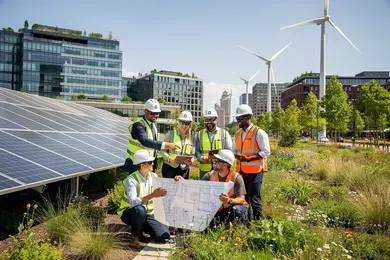
- Renewable Energy: This sector delivers some of the most favorable returns due to beginning pay about 15-20% above the environmental engineering average, with median early-career salaries often exceeding $80,000. The rapid demand growth and project-based roles in solar and wind energy support quicker salary increases, making it easier for graduates to manage and repay borrowing accrued during their studies.
- Water Resource Management: Median salaries near $75,000 align well with common student debt levels between $30,000 and $40,000, enabling manageable monthly payments that typically stay below 10% of income. Stability in public and private water infrastructure projects ensures consistent hiring, offering reliable career ladders that improve long-term financial outcomes relative to borrowing.
- Environmental Consulting: Firms specializing in regulatory compliance and remediation frequently provide signing bonuses and defined advancement pathways, which accelerate income growth. While initial pay may modestly trail renewable energy roles, these companies often emphasize career mobility and incentive programs that help reduce debt servicing periods.
- Government Agencies and Nonprofits: Although initial salaries in this category tend to be lower, predictable pay scales and generous benefits packages contribute to steady income growth over time. Such financial predictability can ease repayment pressures, particularly for graduates with moderate debt, even if the short-term ROI appears less robust than in private industry.
- Construction and Manufacturing: These sectors generally display more variability in income and fewer structured benefits tied to loan repayment. The less predictable salary growth and often cyclical hiring patterns increase financial risk relative to student borrowing, potentially prolonging debt repayment and increasing overall borrowing cost burdens.
Does Student Debt Affect Which Jobs Environmental Engineering Graduates Accept?
Student debt markedly shapes the initial employment choices of environmental engineering graduates by steering them toward positions with higher immediate compensation to manage repayment requirements. Since monthly loan obligations reduce disposable income, graduates often prioritize salaries that can cover debt service quickly over roles with potentially stronger alignment to their values or career interests.
According to a 2024 survey by the National Association of Colleges and Employers (NACE), 62% of environmental engineering graduates reported that their loan burdens influenced the jobs they accepted after graduation. This focus on financial stability drives many graduates to favor private sector positions with higher pay rather than public or nonprofit roles where salaries may be lower but opportunities for environmental impact are greater. Such decisions reflect a balancing act between managing debt-induced financial pressure and pursuing long-term career satisfaction.
Behavioral and structural differences become apparent between graduates with varying debt levels, affecting industry choices, geographic mobility, and career trajectory flexibility. Graduates carrying heavy debt loads are more constrained in relocating for work due to cost-of-living concerns combined with repayment commitments, a trend underscored by a 2024 U.S. Department of Education report showing these individuals are 25% less likely to move for employment within two years of graduation.
High-debt graduates also tend to pursue jobs offering signing bonuses or immediate financial incentives to ease repayment burdens, often at the expense of specialized training or advanced certifications that require upfront investment of time and money. Consequently, the short-term imperative to secure sufficient income can delay or limit engagement with sectors or positions that foster sustainable professional growth, influencing both income trajectories and job satisfaction over the early career span.
One recent environmental engineering graduate shared how student debt complicated their job search timing and strategy. After a prolonged admissions process with several rolling deadlines, they hesitated to accept an offer from a sustainability-focused nonprofit because the salary was below what they needed to meet monthly loan payments. The uncertainty compelled them to keep applying elsewhere, eventually accepting a higher-paying private sector role that aligned less closely with their environmental goals but provided immediate financial relief. This experience revealed how student debt pressures can not only limit geographic and industry flexibility but also inject significant stress into early career decisions, often forcing compromises between financial necessity and professional aspirations.
What Factors Increase Student Loan Repayment Risk for Environmental Engineering Graduates?
Repayment risk among environmental engineering graduates arises from the complex interplay between borrowing levels and the stability of post-graduation earnings. The risk is not determined by a single factor but by how multiple financial, academic, and labor market conditions converge. Understanding these dynamics is crucial for assessing why some graduates face greater repayment challenges than others. The practical realities of fluctuating salaries, sector-specific employment opportunities, and loan structures all weigh heavily on repayment outcomes.
Factors contributing to higher student loan repayment risk among environmental engineering graduates include:
- High Debt Burdens Relative to Income: Environmental engineering programs can involve substantial borrowing, especially when covering tuition and living expenses. Since entry-level salaries in this field often do not scale proportionally with debt levels, graduates carrying large balances encounter heightened financial strain, impairing their capacity for timely loan payments.
- Employment Sector and Wage Variability: Graduates employed in public sector or non-profit roles typically earn less than their private sector counterparts. These wage disparities reduce repayment buffers and increase vulnerability, particularly when combined with rigid loan repayment schedules and accruing interest.
- Regional Job Market Concentration: Geographic clustering of environmental engineering jobs means that graduates in economically lagging or less industrialized areas may face longer job searches or lower-paying positions. This uneven regional demand exacerbates repayment challenges by limiting income growth opportunities.
- Additional Education and Delayed Income Growth: Pursuing graduate degrees or certifications can extend the time before entering higher-paying roles, increasing accumulated principal and interest. Without corresponding income jumps, this prolongs repayment durations and resists debt reduction.
- Lack of Awareness of Flexible Repayment Options: Many graduates are unfamiliar with income-driven repayment plans or deferment options, which can mitigate default risk. This gap in financial literacy often results in premature defaults despite available relief mechanisms.
According to a 2024 report from the U.S. Department of Education, roughly 28% of environmental engineering graduates with student loans exhibited repayment distress within five years of workforce entry, underscoring these structural repayment vulnerabilities. The impact of program format and demographic differences on environmental engineering student debt repayment further complicates these risk patterns, highlighting the importance of nuanced, field-specific financial strategies.
For prospective students considering financing their education, exploring flexible options like the easiest MBA online or other complementary credentials may provide alternative pathways to income stability and diversified career opportunities.
How Can Environmental Engineering Students Reduce Student Loan Debt While Earning Their Degree?
Reducing student loan debt while earning an environmental engineering degree requires proactive financial planning, academic efficiency, and strategic use of institutional resources. Managing borrowing effectively hinges on making enrollment choices that balance cost with quality and leveraging available aid without extending time to degree unnecessarily. Understanding how employers value practical experience alongside classroom credentials can also guide decisions that impact long-term borrowing and repayment burden.
Environmental engineering student loan repayment strategies emphasize several practical approaches:
- Prioritize In-State or Public Institutions: Choosing a public university or an in-state program significantly reduces tuition expenses compared to private colleges. Data from the National Center for Education Statistics (2024) shows public institutions charge nearly 60% less tuition on average for engineering majors, directly lowering required borrowing.
- Engage in Relevant Internships or Part-Time Work: Paid internships aligned with environmental engineering not only help cover living costs but also improve employability and initial salary, which can accelerate loan repayment. The U.S. Bureau of Labor Statistics associates internship experience with higher starting salaries, making this a valuable investment.
- Seek STEM-Specific Scholarships and Grants: Targeted financial aid for STEM fields can reduce debt significantly, with reports indicating an average $8,000 debt reduction per recipient. Applying early and maintaining eligibility increases chances of securing these funds.
- Consider Accelerated or Dual-Degree Programs Cautiously: Completing degrees more quickly limits time paying tuition and living expenses but may constrain financial aid options and increase academic workload, requiring careful assessment of personal capacity and aid availability.
- Utilize Institutional Financial Counseling and Work-Study Options: Many programs offer tailored advising to optimize aid packages and integrate work-study roles, balancing academic demands with income generation without excessive borrowing.
- Plan Academic Pathways to Avoid Excess Credits: Efficient course scheduling reduces extended enrollment, which directly cuts cumulative tuition costs and reduces reliance on debt.
- Explore Related Degree Options Where Applicable: For some students, degrees like a geographic information systems degree may offer lower total costs and strong employment prospects in environmental sectors, providing an alternative approach to managing education expenses.
Taking a comprehensive approach that integrates these strategies enables students to minimize borrowing while preserving the rigor and relevance essential for environmental engineering careers. Focusing on real-world tradeoffs and institutional resources aligns debt management with long-term professional outcomes.
How Should Prospective Students Evaluate Borrowing Risk Before Enrolling?
Evaluating borrowing risk before enrolling in an environmental engineering program is critical for understanding the long-term financial impact of the degree. Borrowing risk hinges on balancing total anticipated debt against realistic post-graduation earnings and repayment capacity. Prospective students should adopt a systematic approach to assess whether the investment in education aligns with their financial goals and employment prospects.
- Average Starting Salaries and Employment Rates: Investigate median starting salaries and local job markets for environmental engineering graduates. This informs whether expected income can realistically support loan repayment without undue financial strain.
- Total Debt Accumulation: Consider the cumulative loan amount likely to be borrowed, including tuition and living expenses, since higher debt increases repayment challenges over time.
- Loan Terms and Repayment Flexibility: Favor federal loans with income-driven repayment plans, which offer safeguards if initial earnings are lower than projected or employment is delayed.
- Program Duration and Cost Structure: Longer programs or those with higher fees and living costs increase borrowing exposure, affecting total debt and monthly payment amounts.
- Graduation and Job Placement Rates: Programs with higher completion and employment placement rates reduce the risk of default by improving chances of timely repayment.
- Debt-to-Income Ratio Analysis: Calculate likely monthly loan payments as a percentage of expected gross income, ideally keeping payments below 15% to maintain sustainable finances.
- Scenario Planning for Financial Stress: Assess how repayment obligations hold up under delayed employment or underemployment scenarios, since environmental engineering job availability varies across sectors.
According to a 2024 Department of Education report, about 35% of environmental engineering graduates hold debt over $30,000, emphasizing the need for careful risk evaluation. Integrating these factors enables prospective students to gauge if their chosen program represents a manageable financial commitment relative to realistic earnings and career stability.
References
- Repaying your student loan https://www.gov.uk/repaying-your-student-loan/what-you-pay
- Effects of Student Loan Debt on Economy [2026]: Data Analysis https://educationdata.org/student-loan-debt-economic-impact
- What is the typical debt load for graduates of four-year public universities - APLU https://www.aplu.org/our-work/4-policy-and-advocacy/publicuvalues/student-debt/
- Does College Pay Off? A Comprehensive Return On Investment Analysis - FREOPP https://freopp.org/whitepapers/does-college-pay-off-a-comprehensive-return-on-investment-analysis/
- Major decisions: Graduates' earnings growth and debt repayment - The Hamilton Project https://www.hamiltonproject.org/publication/paper/major-decisions-graduates-earnings-growth-and-debt-repayment/
- The Impact of Student Debt on the Low-Wage Workforce https://workrisenetwork.org/working-knowledge/impact-student-debt-low-wage-workforce
- Borrowers Discuss the Challenges of Student Loan Repayment https://www.pew.org/en/research-and-analysis/reports/2020/05/borrowers-discuss-the-challenges-of-student-loan-repayment
- What would make England’s student loan system fairer? https://theconversation.com/what-would-make-englands-student-loan-system-fairer-277672
- Engineering Student Loan Refinance Options | ELFI https://www.elfi.com/student-loan-refinancing-for-engineers/
- Debt Overload https://www.nspe.org/career-growth/pe-magazine/september-2013/debt-overload
Other Things You Should Know About Environmental Engineering
Graduate specializations like water resource management or environmental remediation often lead to different employment sectors with varied salary ranges. Those entering public sector or non-profit roles might face slower debt repayment due to lower starting salaries compared to private sector consulting firms. Prioritizing a specialization aligned with higher-paying industries can significantly ease monthly payment burdens and reduce long-term repayment risk.
While paid internships improve immediate cash flow and reduce dependency on loans, unpaid or low-paid internships in highly specialized or emerging environmental niches can enhance job prospects and lead to higher salaries early in a career. For students with high borrowing levels, balancing both-securing paid work while gaining relevant experience-is ideal to minimize borrowing and maintain employability in competitive sectors.
Graduates in regions with fewer environmental engineering jobs may experience underemployment or take on unrelated work, increasing repayment risk and extending their debt horizon. Students should weigh borrowing carefully if they intend to remain in such areas or consider flexible education options that allow relocation. Geographic mobility often correlates with quicker repayment and lower default risks in this field.
Programs with strong employer ties and recognized credentials tend to provide graduates with higher starting salaries and more stable job placements. Investing in a well-regarded program can justify higher borrowing by improving earnings potential and repayment capacity. Conversely, students in lower-profile programs should be more conservative with debt and proactively seek networking and skill-building opportunities to offset potential salary disadvantages.