2027 Electrical Engineering Degree Oversupply or Undersupply? Student Volume vs Employer Demand

Co-Founder and Chief Data Scientist
A recent National Association of Colleges and Employers (NACE) report shows a 6% annual rise in electrical engineering graduates, while U. S. Bureau of Labor Statistics projects only 3% job growth in related roles through 2031. This disparity suggests potential oversupply in certain regions, intensifying competition for specialized engineering positions.
Graduates without advanced skills or geographic flexibility may face underemployment or prolonged job searches. Employers increasingly seek candidates with expertise in emerging technologies like renewable energy and AI integration, complicating the alignment of current degree programs with market needs.
This article compares electrical engineering student volume with employer demand, job growth, industry trends, regional factors, and skill gaps to assess career sustainability or rising competition.
Key Things to Know About Electrical Engineering Graduate Supply and Employer Demand
- Graduate numbers in electrical engineering increased 12% nationally by 2024, but uneven geographic distribution leads to saturated job markets in urban tech hubs, creating significant competition for entry-level roles.
- Employer demand favors specialized skills in power systems and embedded software, causing a skill mismatch as many graduates lack these high-demand proficiencies, limiting hiring despite overall job growth projections.
- Extended degree completion times and rising tuition costs delay workforce entry, pressuring students to weigh financial and timing tradeoffs when pursuing advanced credentials versus immediate employment opportunities.
- Key Things to Know About Electrical Engineering Graduate Supply and Employer Demand Key Things to Know About Electrical Engineering Graduate Supply and Employer Demand
- Is There an Oversupply or Undersupply of Electrical Engineering Graduates? Graduate Oversupply or Shortage
- How is Electrical Engineering Degree Enrollment Changing? Degree Enrollment Trends
- How Many Electrical Engineering Graduates Enter the Workforce Each Year? Annual Graduate Workforce Entry
- Does Job Growth Support the Rising Supply of Electrical Engineering Graduates? Job Growth Versus Supply
- How Competitive is the Entry-Level Market for Electrical Engineering Graduates? Entry-Level Market Competition
- Which Industries Have the Greatest Demand for Electrical Engineering Graduates? Top Hiring Industries
- Where are Electrical Engineering Graduates Most in Demand? Top Geographic Demand
- Which Electrical Engineering Specializations and Degree Levels Face the Strongest Demand? Which Electrical Engineering Specializations and Degree Levels Face the Strongest Demand?
- Are Employer Skill Gaps Affecting Demand for Electrical Engineering Graduates? Are Employer Skill Gaps Affecting Demand for Electrical Engineering Graduates?
- What is the Future Supply-and-Demand Outlook for Electrical Engineering Graduates? Future Supply-Demand Outlook
Is There an Oversupply or Undersupply of Electrical Engineering Graduates?
This regional variation means prospective students must weigh local market conditions and employer expectations carefully, recognizing that relocating or developing niche skills can mitigate competition and improve employability despite seemingly stable aggregate numbers.
Growth in enrollment numbers and the steady stream of bachelor's degree completions do not fully address employer preferences for advanced credentials and practical experience, especially in research-intensive and development-heavy positions. The mismatch between supply and demand becomes more pronounced for master's and doctoral graduates, where limited output coincides with rising demand for specialized expertise.
Additionally, dynamic industry trends and emerging technology fields influence hiring patterns, cautioning against simplistic graduate-to-job ratios and underlining the value of continuous skill development. Interested individuals might consider programs focused on emerging tech areas, such as an AI online degree, to stay competitive and relevant.
Analyzing electrical engineering graduate supply and demand analysis reveals that while overall growth matches hiring needs, individual outcomes depend heavily on specialization, location, and industry dynamics.
Labor market fluctuations make it essential for educators and students to align curriculum and career planning with evolving employer needs rather than relying on national averages. This nuanced view encourages targeted skill acquisition and geographic flexibility to navigate competition effectively, avoiding misconceptions of universal oversupply or shortages.
How is Electrical Engineering Degree Enrollment Changing?
Enrollment growth in electrical engineering degree programs is steady but nuanced, with rising numbers more evident in associate and master's programs than at the bachelor's level. This trend suggests a cautious easing of graduate supply pressures rather than widespread oversaturation, particularly given the specialized skills demanded by employers in emerging fields like power electronics and embedded systems.
Expanding hybrid and limited online options offer flexibility but do not dramatically increase overall capacity due to the discipline's hands-on nature, meaning regional labor markets may still face localized competition despite national enrollment gains. Misinterpreting aggregate enrollment figures risks overlooking these market complexities; for example, a surge in graduate certificates or master's degrees may intensify competition within niche specialties without saturating broader employment opportunities.
Demographic advancements have slightly diversified electrical engineering programs, but the slower pace of change means pipelines remain less varied than other STEM fields, influencing both the talent pool and employer recruitment strategies.
Career decision-making increasingly hinges on how programs align with evolving industry needs rather than sheer enrollment volume, reinforcing the importance of practical training and experience over credential inflation. U.S. government sources report a measured increase in electrical engineering graduate completions in 2024, reflecting this balance between supply and demand.
Consequently, students and workforce planners should evaluate enrollment trends in the context of skill specificity, local market conditions, and degree format rather than relying solely on headline growth statistics.
A current master's student recalled that their cohort was noticeably larger than previous years', fueled partly by working professionals seeking upskilling amid industry changes. They appreciated the hybrid program's flexibility but also observed that lab sections remained capped, limiting the total number of new entrants.
While the influx of classmates initially raised concerns about job competition post-graduation, ongoing conversations with advisors highlighted that specialized expertise and relevant internship experience carried greater weight than cohort size alone. This student's experience underscored the critical challenge of interpreting enrollment growth patterns as either opportunity or threat without deeper insight into market demands and program delivery realities.
How Many Electrical Engineering Graduates Enter the Workforce Each Year?
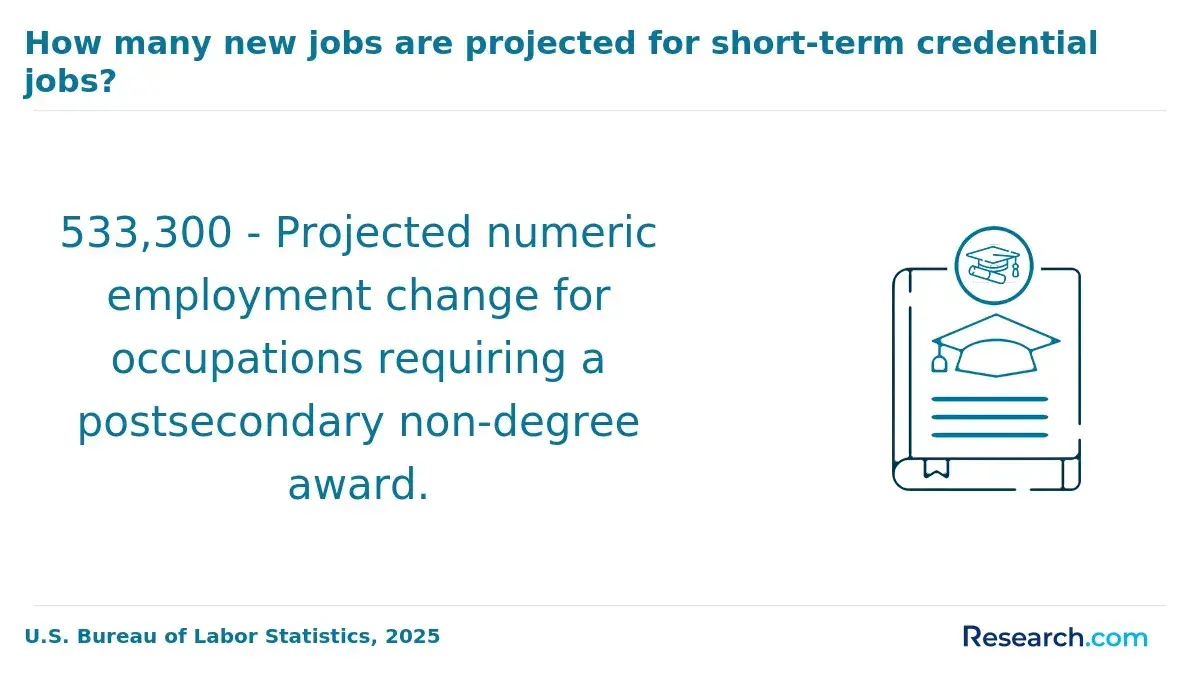
The annual number of electrical engineering graduates is an important metric but insufficient on its own to determine workforce oversupply or undersupply. Data from the National Center for Education Statistics and the Integrated Postsecondary Education Data System show roughly 15,000 to 18,000 bachelor's degrees are awarded each year in 2024, but only about 70% to 80% of these graduates enter related technical roles within the first year.
This distinction matters because a sizable share pursue advanced education, alternate careers, or face delayed employment, meaning the pool of candidates actively competing for electrical engineering positions is smaller and more variable than raw degree counts indicate.
Employers typically consider regional demand, specialization alignment, and practical experience when hiring, which generates uneven competition across job markets. For example, graduates concentrated in urban tech centers may find more immediate opportunities than those in less industrialized regions despite similar credential volumes.
Furthermore, replacement demand due to retirements and industry growth impacts hiring alongside new graduate supply. Misinterpreting graduate output as direct labor supply risks skewing workforce planning and policy, as the dynamic interplay of hiring cycles, economic conditions, and multi-disciplinary skill preferences shapes actual workforce absorption beyond mere graduation statistics.
Does Job Growth Support the Rising Supply of Electrical Engineering Graduates?
Projected job growth for electrical engineering roles, as reported by the U.S. Bureau of Labor Statistics, indicates stable yet limited expansion that does not fully match the rising volume of graduates from undergraduate and graduate programs. Although the overall 7% growth rate suggests demand, this figure conflates replacement needs, often exceeding 40% of vacancies-with true new job openings, thereby narrowing opportunities for entry-level candidates.
Many employers prefer applicants with specialized skills or advanced degrees, which intensifies competition and challenges for those holding only a bachelor's degree, particularly in high-tech regions like Silicon Valley where graduate supply outpaces openings.
The imbalance between supply and demand varies significantly across regions and industry sectors. Areas with less pronounced technology hubs may offer unmet demand but struggle to attract qualified talent, while graduates often face the tradeoff of accepting roles outside their primary field or pursuing additional credentials to remain competitive.
This dynamic reinforces practical concerns about underemployment and the need for realistic career planning. Prospective students should weigh the risks of oversupply against areas experiencing sustained demand or retirements, considering that slower-growing fields might present more stable pathways despite modest growth.
Careful evaluation of workforce trends and degree outcomes is essential, especially for those deciding on advanced study options or career pivots. Balancing educational investment with market realities is critical, and for those considering alternative routes, options like an online masters psychology degree may offer diversified opportunities outside the traditional electrical engineering labor market.
Understanding the nuances behind U.S. electrical engineering job growth trends and the demand for entry-level electrical engineering graduates helps avoid misjudgments that can limit long-term employability and advancement.
How Competitive is the Entry-Level Market for Electrical Engineering Graduates?
The entry-level market for electrical engineering graduates in 2024 presents a nuanced competitive landscape shaped by a complex interaction of graduate supply, job availability, and evolving employer expectations. While employment growth aligns with national averages at about 7% over the next decade, demand is unevenly distributed across regions and industry sectors.
Employers increasingly prioritize candidates with hands-on experience and specialized skills in emerging technologies, limiting opportunities for recent graduates without such credentials. This results in localized supply surpluses, especially in urban areas with high graduate output but fewer relevant openings.
Below are key factors influencing job competition for new graduates:
- Applicant Volume: The total number of graduates entering the market in a given region can exceed available positions, particularly near large universities. Graduates should assess local hiring trends and consider expanding job searches geographically to avoid saturated markets.
- Experience Requirements: Most entry-level roles now favor candidates demonstrating internships or cooperative education. Without documented practical work, graduates face steeper hurdles, making early hands-on projects critical.
- Industry Demand Variability: Employment needs differ widely by sector, with renewable energy, IoT, and embedded systems showing higher growth. Graduates lacking these specialized skills may find fewer openings aligned with their expertise.
- Regional Disparities: Cities with dense graduate populations sometimes exhibit underemployment due to limited job absorption capacity, pushing some graduates to seek roles in less competitive or emerging markets.
- Technical Specialization: Candidates with knowledge beyond core curricula, such as software integration or advanced hardware design, enjoy better prospects. The mismatch between generalist degrees and employer demands contributes to competition.
- Remote-Work Competition: The rise of remote positions increases applicant pools beyond local boundaries, intensifying competition but also broadening opportunities for those willing to adapt.
- Demonstrated Skills: Proficiency in relevant tools and certifications strengthens candidacy. Graduates should validate their expertise through projects or credentials aligned with industry needs.
A recent electrical engineering graduate shared how her initial job search was hindered by a crowded local market emphasizing prior internship experience, which she had limited access to. After several screening rejections from companies focused on embedded systems, she redirected efforts to smaller firms in emerging tech sectors outside her metro area.
This strategic pivot, combined with targeted upskilling in IoT protocols, eventually led to interviews and an offer. Her experience underscores how geographic flexibility and niche skill development can offset oversupply in traditional job centers.
Which Industries Have the Greatest Demand for Electrical Engineering Graduates?
Demand for electrical engineering graduates concentrates in sectors where technological innovation, infrastructure modernization, and regulatory priorities intersect, shaping employer needs. Graduates who assess job volume against competition should consider not only the number of openings but also the specificity of required skills and advancement pathways.
For example, those with expertise in power electronics might find more opportunities in renewable energy but face intense technical challenges and regional job clustering. In contrast, candidates targeting telecommunications could expect steadier roles, though rapid technological shifts demand continuous updating of skills.
The following sectors invite the greatest demand nationwide for electrical engineering graduates, reflecting these complex dynamics:
- Technology Hardware: Driven by semiconductor advances and consumer electronics innovation, this sector provides numerous entry-level roles in circuit design and chip fabrication. Employers often prioritize embedded systems knowledge and mastery of CAD tools. The engineering workforce faces high competition but benefits from strong funding and rapid technological progress.
- Renewable Energy: Jobs here surge as utilities and private firms expand solar, wind, and energy storage projects. Power systems engineering and grid integration skills are essential. While demand grows, roles may cluster geographically and require adaptability to regulatory changes, influencing long-term career trajectories.
- Telecommunications: The 5G rollout and fiber optics expansion create steady hiring demand for experts in signal processing and network hardware. Firms seek engineers balancing innovation speed with deployment cost efficiency. Job availability is broad but requires continuous learning of evolving communication protocols.
- Defense and Aerospace: Specialized roles emphasize embedded controls, avionics, and radar systems requiring security clearances and rigorous reliability standards. Demand is stable and well-funded but often tied to government budgets and project cycles, impacting job security and advancement.
- Automotive and Industrial Manufacturing: These sectors hire electrical engineers primarily for automation and embedded control systems. Demand is more cyclical and regionally variable, with employers valuing interdisciplinary collaboration and software proficiency alongside hardware expertise.
Those evaluating top sectors hiring electrical engineering graduates nationwide should balance enthusiasm for emerging technologies with realistic assessment of market volatility and skill alignment. Graduates with complementary skills-such as software competence-enhance their employability across sectors. Professionals also benefit from monitoring labor market trends that shift employer expectations over time.
For comparison, individuals interested in fields tangential to electrical engineering might explore programs in clinical mental health counseling, where demand dynamics and skill sets differ markedly from technical engineering disciplines.
Where are Electrical Engineering Graduates Most in Demand?
National employment figures for electrical engineering graduates often obscure significant regional disparities driven by industrial clusters and employer concentration. Metropolitan areas with dense networks of aerospace, semiconductor, and advanced manufacturing firms-such as those in California and Massachusetts-offer substantially more positions, but also tend to feature heightened competition and higher living costs.
Graduates from states with smaller or stagnant technology sectors might face limited openings and prolonged job searches unless they pursue relocation or develop niche expertise aligned with local industry demands.
For instance, a graduate based in a less diversified region may struggle to find relevant roles without moving to hubs where demand aligns more strongly with emerging technologies in power integration or AI hardware. However, relocating involves tradeoffs, including cost-of-living adjustments and potential commutes.
Remote work options remain uneven in electrical engineering fields, often favoring more specialized or senior roles. Consequently, job volume alone does not fully indicate opportunity value; proximity to employer clusters, local talent shortages, and alignment with cutting-edge sectors critically influence employability and career trajectory.
Data from recent labor market analyses highlight that states like Texas and North Carolina, while less costly than Silicon Valley, maintain robust employer demand across various industries, providing balance between opportunity and affordability.
Regions with large graduate outputs but fewer innovation-focused companies, by contrast, risk creating oversupplied local markets that prolong entry into the workforce. Prospective engineers should weigh these factors carefully, emphasizing targeted skills development and geographic flexibility rather than relying solely on surface-level job availability statistics.
Which Electrical Engineering Specializations and Degree Levels Face the Strongest Demand?
Employer demand within electrical engineering is far from uniform, often concentrating around specialized skills and higher-level credentials rather than broadly across all graduates. Recent labor market analyses from the U.S. Bureau of Labor Statistics and Lightcast emphasize that while bachelor's degree holders form the largest candidate pool, competition for roles is intense, particularly in generalist or entry-level positions.
Conversely, candidates with advanced degrees or in-demand specializations encounter less saturation and more selective opportunities. For example, an embedded systems graduate with a master's degree focused on IoT hardware will typically face fewer competitors and access more innovative roles than a bachelor's graduate in basic circuit design.
Evidence shows that positions requiring graduate credentials, especially in R&D or sectors like aerospace and semiconductors, consistently attract less applicant volume relative to job openings.
Below are key specialization and credential combinations reflecting the strongest employer demand:
- Power Systems Engineering: There is elevated demand driven by the modernization of power grids and renewable energy integration. Employers seek engineers with expertise in sustainable energy technologies and smart grid frameworks, often requiring practical experience in energy management and regulatory standards.
- Renewable Energy Technologies: As utilities expand clean energy infrastructure, demand grows for engineers skilled in solar, wind, and battery systems design. These roles favor candidates familiar with environmental impact assessments and energy policy compliance.
- Communications and Network Engineering: Focus on 5G and emerging 6G deployment sustains steady hiring. Specialists proficient in wireless system design, network integration, and RF engineering are preferred, especially those with practical knowledge of evolving industry standards.
- Embedded Systems and IoT Hardware Design: Expansion of autonomous devices and IoT applications fuels openings for engineers proficient in low-level programming, real-time controls, and hardware-software integration, typically requiring graduate-level skills or equivalent experience.
- Master's-Level R&D Roles: Advanced degrees are strongly valued in research-intensive fields, including semiconductor development and aerospace engineering. Candidates with graduate certificates or master's degrees have a competitive edge in innovation-driven positions with less applicant competition.
Are Employer Skill Gaps Affecting Demand for Electrical Engineering Graduates?
Reported gaps in electrical engineering skills generally reflect a shortage of candidates meeting evolving employer criteria rather than a simple undersupply of graduates. Many recent graduates hold core electrical engineering knowledge but lack applied experience in coding, cybersecurity, or AI integration-skills increasingly needed alongside traditional technical competencies.
For example, a company seeking an engineer who can both design circuits and integrate embedded software may leave positions open despite abundant graduates, highlighting how regional skill shortages in electrical engineering talent create hiring bottlenecks that distort supply-demand perceptions.
Employers increasingly evaluate electrical engineering graduates based on cross-disciplinary expertise, certifications, and practical exposure through internships or projects, rather than solely on degree completion. This dynamic intensifies competition in entry-level hiring and can falsely signal oversupply in regions with high graduate volume but skill mismatches.
Prospective students and degree holders benefit from selecting programs aligned with industry trends, prioritizing hands-on experience and relevant specialization to improve employability. Access to alternative pathways, such as non profit university options, may also provide flexible routes to bridge these demand gaps.
Understanding key technical skills gaps in electrical engineering graduate hiring enables more nuanced decision-making about workforce entry and program selection. Graduates who develop communication skills, team collaboration, and familiarity with industry tools align better with employer expectations, mitigating persistent vacancy issues even where graduate supply seems sufficient.
Hence, the labor market does not uniformly reflect a shortage or oversupply but rather varying degrees of credential and skill mismatches across industries and locations that impact practical employability outcomes.
What is the Future Supply-and-Demand Outlook for Electrical Engineering Graduates?
Graduates who focus their job search on specific entry-level electrical engineering positions aligned with their skills and regional demand typically outperform those submitting high volumes of generalized applications. For example, a graduate specializing in renewable energy may face fewer competitors and better prospects in states with expanding clean energy projects compared to posting indiscriminately nationwide.
Prioritizing industries and locations where employer demand matches graduate supply helps allocate effort efficiently, while tailoring resumes to mirror employer language and showcasing relevant projects can significantly improve interview conversion rates. Understanding market timing, networking effectively, and demonstrating practical readiness through internships or targeted experience further differentiate candidates in competitive metropolitan areas where graduate oversupply often exists.
National data on future supply and demand trends for electrical engineering graduates in the United States underscore the importance of nuanced job targeting amid regional imbalances. Many entry-level openings increasingly require specialized skills such as embedded systems or power systems design; graduates with only broad electrical engineering backgrounds may struggle without complementary capabilities.
Strategic emphasis on high-growth sectors and precise job titles can optimize search outcomes, avoiding the dilution of effort that comes with unfocused applications. In this context, prospective professionals should weigh the value of credentials aligned with specific market needs, akin to decisions faced by those exploring tracks like ALA accredited MLS programs in other disciplines, where specialization guides employability.
References
- Does electrical engineering have an image problem? https://electronica.de/en/industry-portal/detail/does-electrical-engineering-have-an-image-problem.html
- VDE Sees Recovery in the Job Market for Electrical Engineers https://www.vde.com/en/press/press-releases/recovery-in-job-market-for-electrical-engineers
- Electrical Engineering Talent Shortages | K2 Staffing https://k2staffinginc.com/electrical-engineering-talent-shortages-how-recruiters-bridge-the-gap/
- Electrical Engineering Jobs: A Complete Career Guide 2026 https://www.stonebridge.uk.com/blog/engineering/electrical-engineering-jobs-or/
- How is the job market for Electrical and Electronics Enginee... https://forum.etechnophiles.com/basic-electronics-theoretical-questions/how-is-the-job-market-for-electrical-and-electronics-engineering-graduates-in-the-future/
- The Electrical Engineer Shortage Is Structural: Why Hiring Can't Fix It (2026 Data) https://www.quilter.ai/blog/hardware-engineers-shortage-2026
- What Prevents Many EE Students from “Making It” to ... https://www.allaboutcircuits.com/news/what-prevents-many-ee-students-from-making-it-to-professional-careers/
- VDE: Demand for Electrical Engineers Is Rising Significantly Again https://www.industrial-production.de/economy---business/vde--demand-for-electrical-engineers-is-rising-significantly-again.htm
- Polish Graduate tracking system - articles https://ela.nauka.gov.pl/en/labor-market/gender_employment_gap
Other Things You Should Know About Electrical Engineering
Electrical engineering programs are known for their rigorous coursework and demanding workloads, which can influence both the time to graduation and stress levels. Prospective students must consider whether they are prepared for a challenging learning environment that emphasizes strong math, physics, and hands-on problem-solving skills. While the workload is justified by the depth of knowledge required by employers, those unprepared for this intensity may struggle academically, which can limit their job options. Prioritizing programs with a balanced structure that also offer practical internships can help bridge the gap between theory and employability.
Not all electrical engineering degrees carry the same weight in the eyes of employers, especially when the market is saturating with graduates. Candidates from less-recognized or regionally focused programs may face tougher competition and limited networking opportunities, which often play a larger role than the degree itself. Therefore, students should prioritize program reputation and industry partnerships, knowing these factors significantly impact internship opportunities, recruiter attention, and early-career mobility.
While a broad foundational education in electrical engineering provides flexibility, early specialization can better align graduates with specific employer needs, such as power systems, embedded systems, or telecommunications. Specializing may reduce job search competition by matching niche skill demands but risks locking students into narrower career paths, which could become obsolete with technological shifts. A strategic recommendation is to secure a broad foundation first, then pursue specialized certificates or projects to maintain adaptability without sacrificing market relevance.
With increasing numbers of electrical engineering graduates entering the workforce, possessing a degree alone is often insufficient to distinguish candidates. Employers increasingly value practical experience, such as internships, co-ops, or applied research, alongside supplemental certifications in emerging technologies like IoT or machine learning. Students and recent graduates should therefore invest time in gaining hands-on expertise or targeted credentials to improve hiring prospects and access better roles, especially when outright job availability is constrained by supply.