2027 Educational Leadership Degree Oversupply or Undersupply? Student Volume vs Employer Demand

Co-Founder and Chief Data Scientist
This article compares student volume with employer demand, job growth, regional factors, and skill requirements to clarify career sustainability in educational leadership.
Key Things to Know About Educational Leadership Graduate Supply and Employer Demand
- Graduate output in educational leadership programs increased 12% since 2022, intensifying entry-level competition and requiring candidates to differentiate via specialized skills to secure scarce leadership roles.
- Employer surveys from 2024 show district demand concentrates heavily on candidates with experience in equity and data-driven decision-making, revealing a misalignment with many new graduates lacking these prioritized competencies.
- Regional job growth disparities compel students to weigh cost and relocation challenges seriously, as oversupply in urban centers contrasts with persistent leadership shortages in rural districts, impacting career timing and access.
- Key Things to Know About Educational Leadership Graduate Supply and Employer Demand Key Things to Know About Educational Leadership Graduate Supply and Employer Demand
- Is There an Oversupply or Undersupply of Educational Leadership Graduates? Graduate Oversupply or Shortage
- How is Educational Leadership Degree Enrollment Changing? Degree Enrollment Trends
- How Many Educational Leadership Graduates Enter the Workforce Each Year? Annual Graduate Workforce Entry
- Does Job Growth Support the Rising Supply of Educational Leadership Graduates? Job Growth Versus Supply
- How Competitive is the Entry-Level Market for Educational Leadership Graduates? Entry-Level Market Competition
- Which Industries Have the Greatest Demand for Educational Leadership Graduates? Top Hiring Industries
- Where are Educational Leadership Graduates Most in Demand? Top Geographic Demand
- Which Educational Leadership Specializations and Degree Levels Face the Strongest Demand? Which Educational Leadership Specializations and Degree Levels Face the Strongest Demand?
- Are Employer Skill Gaps Affecting Demand for Educational Leadership Graduates? Are Employer Skill Gaps Affecting Demand for Educational Leadership Graduates?
- What is the Future Supply-and-Demand Outlook for Educational Leadership Graduates? Future Supply-Demand Outlook
Is There an Oversupply or Undersupply of Educational Leadership Graduates?
The current landscape for educational leadership graduate supply and demand analysis reveals a complex balance rather than a clear oversupply or undersupply. While the total number of graduates nationwide roughly matches employer demand, regional disparities create significant variation: states with expanding student populations like Texas and Florida face shortages, whereas some Northeastern and Midwestern areas experience surplus graduates competing for fewer openings. This challenges many graduates who are geographically immobile or lack alignment with high-demand specializations, underscoring that a simple graduate-to-job ratio often masks critical localized and skill-based market dynamics.
How is Educational Leadership Degree Enrollment Changing?
Enrollment trends in educational leadership graduate programs indicate a redistribution rather than a simple rise or fall, influencing competition and employer alignment unevenly. While master's enrollment appears to have plateaued, reflecting saturation in traditional campus offerings and cautious student interest, doctoral programs are growing modestly due to expanded interest in policy and higher education tracks.
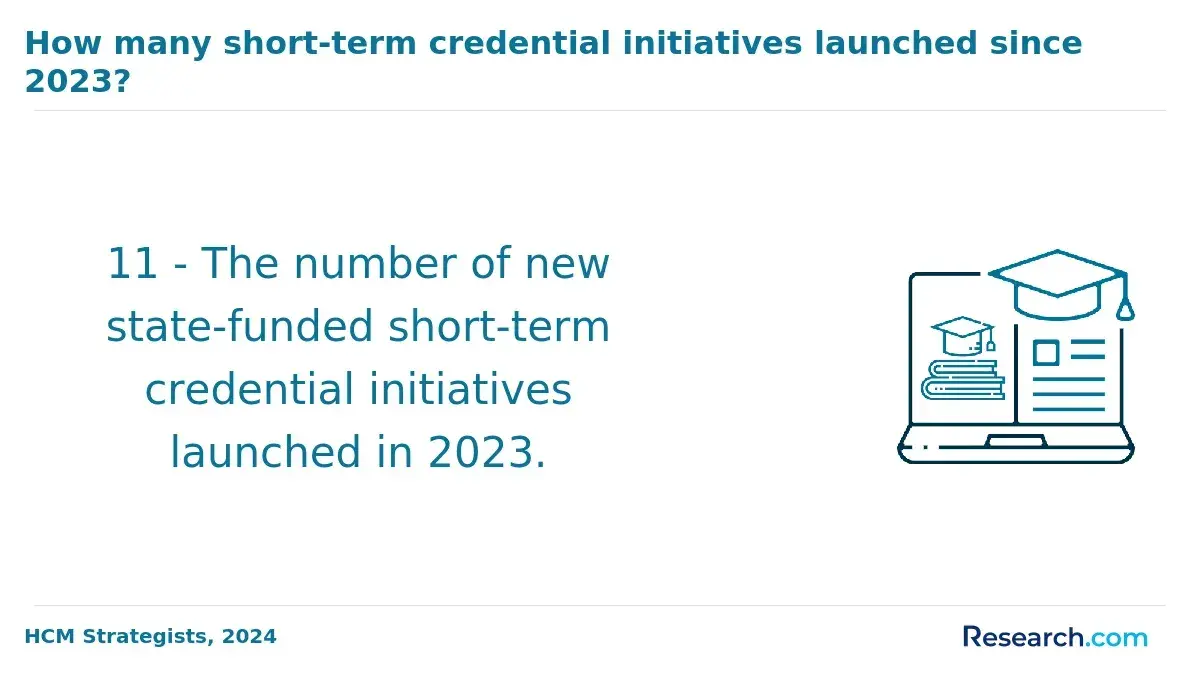
Concurrently, the surge in online formats—accounting for over 40% of new enrollments last year—has broadened accessibility but also introduced variability in perceived program rigor, complicating employer evaluation. These shifts suggest employment markets will encounter a segmented candidate pool where credentials alone are insufficient; practical experience and contextual alignment matter more, especially across rural or high-need districts where graduate supply remains poorly matched to demand.
Interpreting national enrollment totals without regard to geographic and modality nuances risks misjudging local opportunity, as regional employer needs and program saturation vary widely. For example, a district relying solely on aggregate supply data might underestimate competition in popular online tracks while overlooking shortages in specialized or practice-oriented leadership pipelines.
Economic conditions and evolving career interests, including a pivot from K-12 to broader administrative roles, further influence graduate flow and workforce absorption rates. Educational leadership candidates must weigh program type, delivery mode, and local labor conditions carefully, since rising enrollment in some segments does not guarantee stronger employment prospects and declines in others do not assure scarcity of qualified leaders.
A current student recounted noticing a marked increase in the online cohort compared to the traditional campus group within her educational leadership program, which felt both encouraging and uncertain. She observed that while more peers offered richer networking potential, the larger class size reduced individual attention and made competitive internships scarcer.
Simultaneously, a shrinking local campus presence raised questions about whether traditional program experiences would remain adequately valued by district employers. This ambiguity about whether enrollment expansion signals future opportunity or merely intensified competition underscores the need for prospective students to critically assess not just enrollment figures but how those figures intersect with their career goals and market realities.
How Many Educational Leadership Graduates Enter the Workforce Each Year?
The number of educational leadership graduates produced annually does not straightforwardly indicate whether the field faces oversupply or undersupply, as workforce entry patterns and job market dynamics significantly modulate this relationship. Data from the Integrated Postsecondary Education Data System in 2024 show about 15,000 master's and doctoral degrees awarded each year, yet only an estimated 60% to 70% of these graduates secure relevant leadership roles within a year. This discrepancy reflects variables such as graduates pursuing alternative career paths like policy or consulting, remaining in instructional roles longer, or geographic differences that affect hiring intensity.
Employer demand is influenced by budget cycles, retirements, and district-specific priorities, with around 10,000 to 11,000 leadership positions opening annually according to Bureau of Labor Statistics forecasts. However, these openings are not uniformly distributed, causing surpluses in some urban areas while rural districts experience shortages. Furthermore, competition intensifies when candidates lack practical leadership experience, underscoring that degree completion alone is rarely sufficient for immediate placement. Understanding these nuances helps prospective candidates and current degree holders align expectations with regional realities and the evolving skill requirements that shape actual employment opportunities.
Does Job Growth Support the Rising Supply of Educational Leadership Graduates?
The projected job growth for education administrators, while steady at about 6% over the next decade, according to the U.S. Bureau of Labor Statistics, does not fully accommodate the rising influx of educational leadership graduates. Many candidates face heightened competition, as the number of degree holders often exceeds new openings, especially entry-level roles where employer demand increasingly favors practical experience and specialized skills. A recent graduate with an advanced degree may still struggle to secure a position without targeted networking, relevant licensure, or geographic flexibility, highlighting the risk of underemployment despite the degree.
Replacement demand due to retirements partly offsets slow new job creation, maintaining some opportunities in certain regions, particularly in underserved or rural areas where shortages persist. However, labor market conditions vary widely, making it crucial for students and professionals to evaluate local demand and specialization relevance carefully. The growing supply of graduates often surpasses local hiring needs, intensifying competition and necessitating strategic career management informed by a nuanced understanding of employer expectations in educational leadership job growth trends.
Those considering advanced educational pathways may also weigh alternatives such as a masters in health administration, which reflects increasing demand across healthcare systems and may offer more consistent growth patterns. Balancing program selection with realistic workforce analysis, including long-term professional development and regional labor dynamics, is essential to align graduate outcomes with actual job market possibilities.
How Competitive is the Entry-Level Market for Educational Leadership Graduates?
Entry-level positions in educational leadership in 2024 present a mixed picture: while demand exists, it is often limited by a preference for experienced candidates, leading to significant competition among recent graduates. This tension arises not solely from a surplus of degree holders but also from slow job creation and notable skill mismatches employers expect in potential hires. For example, a recent graduate with a master's degree might find themselves applying repeatedly to roles requiring administrative or supervisory experience, necessitating lateral moves before advancing.
The key factors that define this competitive landscape include:
- Applicant Volume: Graduate output has increased steadily, but the number of advertised leadership roles grows more slowly, resulting in application ratios ranging from three to five candidates per position, as reported by the National Association of Colleges and Employers.
- Experience Requirements: Many entry-level jobs prefer candidates with prior administrative experience, raising the bar for fresh graduates and prompting some to accept teacher or coordinator roles as stepping stones.
- Industry and Regional Variability: Demand fluctuates across districts and states, with urban centers sometimes more saturated than rural or suburban areas, affecting hiring odds and necessitating geographic flexibility.
- Skills Mismatch: Employers increasingly prioritize competencies such as data-driven decision-making and community engagement, often leaving graduates without targeted training at a disadvantage.
- Job Creation Pace: Although education leadership job postings have modestly increased, growth has not matched graduate supply, constraining new hire opportunities.
- Specialization Impact: Graduates focusing on narrower leadership areas may find limited openings, amplifying competition compared to those with broader qualifications.
- Networking and Practical Experience: Demonstrated connections and internships improve visibility and credibility, frequently differentiating candidates in tightly contested pools.
A recent graduate described spending months applying across multiple districts while repeatedly encountering roles that required one to three years of leadership experience. After declining several teaching-based lateral positions to focus on leadership, they shifted focus to smaller suburban districts where competition was less intense. Despite initial discouragement during numerous callbacks without offers, this strategy improved their interview success, underscoring the necessity of regional and role flexibility amid a crowded applicant landscape.
Which Industries Have the Greatest Demand for Educational Leadership Graduates?
Demand for educational leadership graduates is unevenly distributed across sectors, largely reflecting economic structures, public funding priorities, and the distinct operational demands of education providers. The K-12 public education system remains the primary absorber of graduates due to ongoing leadership needs tied to instructional management, regulatory compliance, and community engagement. However, competition varies significantly outside this sector, where fewer openings and distinct skill requirements shape realistic career trajectories.
For example, a graduate weighing job volume against competition might find more openings in public schools but fierce competition in higher education roles, which often require specialized administrative or research skills. The nonprofit sector offers a less saturated path but typically accompanies tradeoffs in salary and job security. These dynamics highlight the importance of aligning skills and expectations with sector-specific realities rather than pursuing volume alone.
Below are core industries showing the strongest demand for educational leadership graduates based on regional hiring trends for educational leadership professionals:
- K-12 Public Education: This sector drives the largest employer demand due to expansive school districts requiring principals, district administrators, and program directors. Rapid policy changes and accountability mandates sustain leadership hiring, with credentials in instructional leadership and compliance favored.
- Higher Education Administration: Universities and colleges recruit for student affairs, academic program management, and research leadership. While openings are fewer, prestige and advanced degree requirements increase competition. Specialized experience in institutional research or accreditation often enhances employability.
- Nonprofit Educational Organizations: Growth in nonprofits focused on educational outreach and workforce development creates new leadership roles managing grants and programs. These positions prioritize flexibility and advocacy skills but offer lower pay and less stability compared to public education.
- Educational Technology Firms: Demand is niche and targets candidates combining leadership credentials with tech expertise or business knowledge. Roles often involve innovation management or training development with a premium on hybrid skill sets.
- Corporate Training Departments: Corporate settings require leadership in employee development programs, particularly where training intersects with business goals. Candidates with both educational leadership experience and corporate acumen are preferred.
Assessing the employment landscape for educational leadership graduates requires recognizing that sector stability, employment volume, competition levels, and salary expectations differ widely. Candidates should consider these factors alongside personal skills and regional labor-market conditions. For individuals balancing options, resources like the easiest online RN to BSN program market analysis provide models for weighing education path flexibility against labor demand trends in related fields, demonstrating the value of strategic program selection informed by reliable labor data.
Where are Educational Leadership Graduates Most in Demand?
National figures for educational leadership employment obscure significant regional disparities shaped by local education systems and demographic trends. Graduates targeting large urban districts—such as those in California or Texas—encounter higher job volumes, reflecting expansive student populations and ongoing administrative turnover. However, these markets also bring intense competition amplified by the cost of living and employer credentialing standards, so candidates relocating from less saturated areas must weigh economic tradeoffs against potential access to diverse leadership roles. In contrast, smaller or rural districts may present fewer openings but reduced applicant pools, potentially offering a strategic advantage despite lower pay scales and limited career mobility.
Urban districts with robust reform initiatives and expanding programs in equity and inclusion frequently prioritize candidates with advanced credentials and demonstrated cultural competency, introducing specialization as a significant factor in employability. Yet, some regions face an oversupply of graduates relative to available leadership positions, particularly where budgets constrain administrative hiring. This mismatch forces many graduates to consider geographic flexibility or pursue alternative leadership roles in postsecondary or private education sectors, which remain growth areas but vary widely by locale. Data from 2024 labor market reports confirm that this supply-demand imbalance is unevenly distributed—meaning that headline job counts alone do not reliably signal practical opportunity.
For educational leadership graduates, strategic location choices involve more than sheer employer demand; they require assessing the compatibility of local market dynamics with individual qualifications and career goals. Candidates in growing metro areas may find lucrative prospects but must navigate high living costs and competition, while those open to relocation might access leadership roles in underserved districts, albeit with narrower advancement pathways. Understanding these nuanced market factors helps graduates make informed decisions that extend beyond initial job availability toward sustainable workforce integration.
Which Educational Leadership Specializations and Degree Levels Face the Strongest Demand?
Demand for educational leadership degrees is unevenly distributed, with employer needs concentrating heavily in certain credentials and specialization areas rather than evenly across all graduates. For example, a master's degree holder pursuing principal licensure will typically find more near-term openings in K-12 administration compared to a doctoral graduate focused on higher education leadership, where positions are fewer and require extensive experience beyond the degree.
Labor market data from the U.S. Bureau of Labor Statistics and LinkedIn Workforce Insights show sustained demand for school administrators, but competition varies regionally due to budget constraints and hiring cycles. Specialized niches such as equity-focused leadership and technology integration present emerging advantages, aligning with district priorities emphasizing culturally responsive and data-driven decision-making.
Below is a detailed outline of the educational leadership degree and specialization areas with the strongest documented employer demand and practical hiring considerations:
- Master's-Level K-12 Administration: This sector experiences stable demand for principals and school administrators, driven by workforce shortages and mandatory licensure pathways. Hiring favors candidates with practical licensure and district familiarity.
- Doctoral Higher Education Leadership: Demand here is limited but concentrated in universities and policy roles. Positions often require extensive experience, emphasizing research, governance, and policy development skills.
- Equity and Inclusion Leadership: Increasing attention to diversity initiatives fuels openings for leaders specializing in culturally responsive practices, especially in districts prioritizing equity-driven reforms.
- Technology-Enhanced Leadership: Expertise in integrating digital tools and data analytics into instructional leadership is growing, meeting rising demands for technology-savvy administrators.
- Regional Demand Variability: Local budget cycles and state policies heavily influence the availability of positions, resulting in fluctuating competition despite overall demand.
- Instructional Leadership with Licensure: Strong preference exists for candidates with instructional leadership credentials linked directly to state principal certification requirements.
- Policy and Research Specialists with Doctorates: Fewer openings but higher prestige and potential for long-term career impact characterize roles focused on educational policy, funding, and organizational research.
Are Employer Skill Gaps Affecting Demand for Educational Leadership Graduates?
The perceived shortage of graduates in educational leadership often reflects not a true undersupply but a deficit in candidates possessing the specific technical, strategic, and practical skills employers require. For instance, vacancies in school district leadership may remain open because available graduates lack experience in data-driven decision-making, digital transformation initiatives, or managing cross-functional teams—competencies increasingly prioritized over formal credentials alone. This dynamic underscores how regional demand and credential mismatch for educational leadership graduates can distort hiring patterns, causing some employers to delay filling critical roles or pursue alternative staffing, despite a sizable labor pool.
Employers tend to evaluate graduates less on their degree title and more on applied expertise in equity-focused leadership, communication skills, and familiarity with evolving educational policies and technologies. Consequently, positions may go unfilled or face high turnover if candidates are not equipped to navigate complex, tech-enabled environments with measurable leadership outcomes. For prospective students and current degree holders, this means program selection, internship experiences, and targeted upskilling—sometimes comparable in importance to advancing in 3 year PharmD programs—can be decisive factors in improving alignment with real-world employer demand and avoiding competition pitfalls among regional or entry-level roles.
This supply-demand imbalance elucidates why employer skill gaps in educational leadership hiring remain a critical barrier to predictable employment trajectories. Recognizing these realities enables informed decision-making around credential acquisition and skill development strategies that better match employer expectations and reduce misperceptions of oversupply or undersupply in the workforce landscape.
What is the Future Supply-and-Demand Outlook for Educational Leadership Graduates?
Targeted job searches yield better outcomes for educational leadership graduates than unfocused mass applications because they allow candidates to align closely with employer needs. Graduates who narrow their focus to specific entry-level job titles and prioritize regions showing stronger demand, such as Sun Belt states experiencing school district growth, reduce competition and improve their chances.
In contrast, applying broadly without tailoring to employer language or market realities often results in prolonged job searches and low interview callbacks, especially given the modest 5% projected growth for school and educational administrators reported by the U.S. Bureau of Labor Statistics. Strategic resume customization and demonstrating relevant skills through concrete projects or prior experience better signal job readiness to employers prioritizing data literacy and equity-focused leadership.
Understanding educational leadership degree employment trends in the US helps graduates allocate effort effectively towards sectors and locations where their qualifications are most valued. Graduates might sacrifice geographic preferences or accept roles tangentially related to leadership if these offer direct pathways to advancement. Proper timing of applications, informed market research, and connecting skills explicitly to job requirements remain crucial variables in interview conversion rates.
With sustained graduate volumes outpacing job growth in many areas, those who invest in researching the labor market and focus on practical competencies outperform those relying solely on volume-based strategies. For a broader perspective on related fields, exploring different therapy degrees can provide insights into alternative or complementary career pathways for education professionals.
References
- New Research Points to a Looming Principal Shortage https://wallacefoundation.org/resource/articles/new-research-points-looming-principal-shortage
- Careers with a Doctorate in Educational Leadership | Neumann https://learn.neumann.edu/neuperspectives/careers-with-a-doctorate-in-educational-leadership
- Is the Skills Gap Real? Changes in Employer Skill Requirements During the Great Recession https://econofact.org/is-the-skills-gap-real-changes-in-employer-skill-requirements-during-the-great-recession
- How has Ed Leadership Changed? https://www.saintpeters.edu/academics/graduate-programs/education/how-has-ed-leadership-changed/
- An Overview of Specialization Options in Education Degrees https://www.euroeducation.net/articles/an-overview-of-specialization-options-in-education-degrees.htm
- M.Ed. in Educational Leadership | ACE https://ace.edu/degree-programs/masters-degrees/masters-education/master-of-education-in-educational-leadership/
- Reasons to Earn a Master’s Degree in Educational Leadership - Graduate Programs for Educators https://www.graduateprogram.org/blog/reasons-to-earn-a-masters-degree-in-educational-leadership/
- Executive Education Program Market | Global Market Analysis Report - 2036 https://www.futuremarketinsights.com/reports/executive-education-program-market
- Educational Leadership Degree Program: A Comprehensive Guide https://www.educationalleadershipdegree.com/blog/comprehensive-guide-to-pursuing-an-education-leadership-degree/
- College Graduate Skills Study - Workplace Intelligence https://workplaceintelligence.com/college-graduate-skills-study/
Other Things You Should Know About Educational Leadership
Longer educational leadership programs often include broader coursework and may offer internships or practicum experiences, which can increase readiness for complex leadership roles. However, not all extended programs guarantee quality hands-on training, so students should prioritize programs with demonstrated experiential components over just program duration. Employers in education tend to value demonstrated leadership capabilities and problem-solving skills, meaning real-world practicum experience often trumps purely theoretical learning.
Online and hybrid educational leadership programs offer flexibility but may lack the interactive networking and mentorship opportunities available in traditional settings. Students must consider whether a program's format will provide sufficient peer collaboration and access to experienced faculty who can connect them to local education systems. For those targeting leadership roles in community-specific contexts, face-to-face engagement can significantly improve chances to understand and meet local employer expectations.
Accreditation is crucial as it ensures the program meets established quality standards, which many employers require, especially for certification or licensure roles in educational administration. While a niche specialization can add marketability, it should not substitute for a program's overall reputation and compliance with regulatory requirements. Prospective students should first ensure accreditation aligns with their career goals and then choose specializations that offer practical leadership skills directly applicable to targeted hiring sectors.
Full-time, intensive programs generally allow faster completion but can limit concurrent work or leadership practice, which might delay the practical application of skills. Conversely, part-time or modular formats extend time-to-degree but enable students to remain employed and apply emerging knowledge immediately. Students must evaluate their current work-life balance and career timeline goals, balancing shorter program completion against opportunities to integrate education with active leadership roles.