2027 Educational Leadership Degree Growth by State: Where Interest Is Rising the Fastest

Co-Founder and Chief Data Scientist
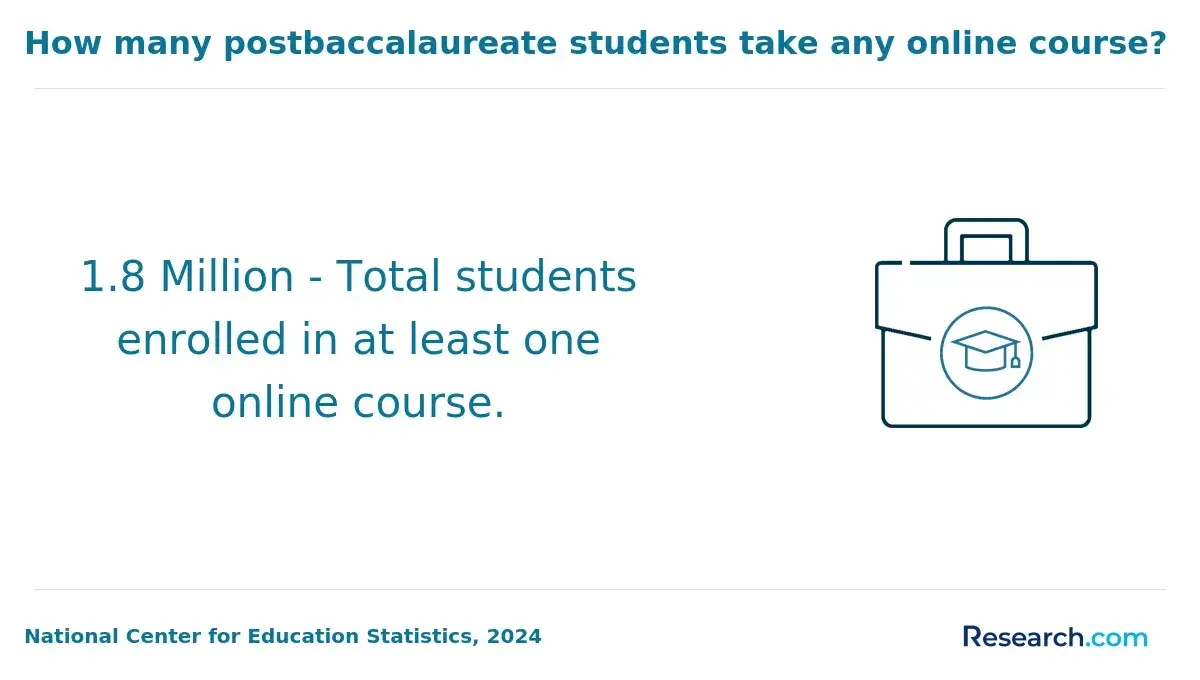
States with surging enrollments in educational leadership degrees often reflect distinct economic shifts and regulatory changes that reshape local education workforces. For example, regions experiencing rapid population growth drive demand for administrators to manage expanding school systems, while others see increased interest tied to updated licensure requirements or efforts to diversify leadership pipelines. A 2024 report from the National Center for Education Statistics highlights a nearly 15% nationwide increase in online enrollment for education-related graduate programs, underscoring how flexibility influences where and when candidates pursue advanced credentials. Understanding these state-specific dynamics equips prospective students to align program choices with evolving career opportunities.
Key Things to Know About the State Where Educational Leadership Degree Interest Is Rising the Fastest
- States like Texas see enrollment surges due to relaxed licensure reciprocity, enabling graduates to switch districts more easily; this flexibility requires students to weigh potential delays in certification against career mobility benefits.
- Florida's growing demand for school administrators amid teacher shortages pressures employers to prioritize candidates with leadership degrees, raising competition and evolving expectations for practical administrative expertise.
- California's expansion of online educational leadership programs, highlighted by a 2024 National Center for Education Statistics report, reduces cost and timing barriers, attracting working adults but possibly diluting in-person networking opportunities crucial for career advancement.
- Which States Are Seeing the Fastest Growth in Educational Leadership Degree Enrollment? States Seeing the Fastest Growth in Enrollment
- What Does Enrollment Growth in Educational Leadership Programs Actually Tell Prospective Students? Interpreting Enrollment Growth
- How Do Regional Job Market Conditions Drive Educational Leadership Degree Demand by State? Role of Regional Job Market Conditions
- Which States Have Added the Most New Educational Leadership Degree Programs in the Last Five Years? States That Have Added the Most Programs
- How Has the Rise of Online Education Changed Which States Lead in Educational Leadership Program Interest? Role of Online Education in Increased Program Interest
- What Demographic Trends Are Fueling Educational Leadership Degree Growth in Specific States? Demographic Trends Fueling Growth
- How Do State Funding Levels for Educational Leadership Services Influence Degree Program Growth? Role of State Funding Levels
- Which States Are Emerging as Unexpected Leaders in Educational Leadership Degree Interest? States Emerging as Unexpected Leaders in Growth
- How Does State Population Size Affect the Interpretation of Educational Leadership Degree Growth Data? Role of State Population Size
- What Role Do State Licensing Requirements Play in Driving or Suppressing Educational Leadership Enrollment? Role of State Licensing Requirements
Which States Are Seeing the Fastest Growth in Educational Leadership Degree Enrollment?
Enrollment growth in educational leadership degree programs across the United States increasingly reflects localized economic pressures and regulatory changes rather than a uniform national pattern. This uneven expansion affects employability and program design, particularly for graduates balancing the option of returning to school against immediate workforce needs. For example, professionals in states with recent statewide mandates raising qualification requirements find that pursuing advanced educational leadership degrees can be essential for career progression or job retention, while in other regions, practical experience might weigh more heavily. Using publicly available data such as IPEDS, the most dramatic increases in educational leadership degree enrollment over the past five years concentrate in diverse states, each shaped by distinct demographic and policy environments.
- Colorado: A surge driven largely by population growth in suburban school districts and new mandates demanding stronger leadership competencies for administrators creates a high-demand market for graduates but also intensifies competition among programs.
- North Carolina: Regional investments in education infrastructure and incentives for school leaders to obtain advanced degrees foster specialized programs, yet this can create tradeoffs where candidates must choose between program accessibility and alignment with licensure requirements.
- Florida: The state's enrollment growth is linked to a combination of demographic diversity and the increasing availability of flexible online educational leadership degrees catering to working adults, offering a balance between continuing employment and degree pursuit.
- Washington: Urban expansion near Seattle combined with stricter policies on school leader qualifications make the local job market particularly responsive to graduates' credentials, positioning programs there as critical pipelines for leadership roles.
- Kentucky: Workforce development initiatives concentrate on strengthening rural school leadership, presenting unique challenges and opportunities for students seeking programs that integrate community-specific leadership skills with broader educational standards.
Geographically, the fastest-growing educational leadership programs are distributed broadly rather than clustered in one region, emphasizing how state-level demographic trends and licensure policies govern enrollment momentum. Future sections will analyze the economic, regulatory, and institutional drivers underpinning these enrollment shifts, and why prospective students should closely evaluate how such momentum can influence both the quality of education and subsequent employment prospects. For professionals cautious about balancing work and study, exploring flexible formats like the 12 month DNP program online may offer insights into how accelerated, adaptable programs function in practice and their real-world outcomes.
What Does Enrollment Growth in Educational Leadership Programs Actually Tell Prospective Students?
Enrollment growth in educational leadership programs can mislead prospective students if taken at face value. A significant increase in numbers does not automatically translate into better educational quality or stronger career outcomes.
Raw enrollment figures primarily reflect demand but omit critical factors shaping student success and workforce relevance. To assess growth meaningfully, prospective students must examine additional metrics and their real-world implications. For instance, a program swelling enrollment through relaxed admission criteria may inflate figures without delivering viable career trajectories, unlike a program growing from solid labor market demand and high professional standards.
- Retention Rates: Sustained enrollment levels are worthless if students fail to persist; retention signals program support and student satisfaction.
- Graduation Rates: Timely degree completion correlates with effective curricula and smooth workforce entry.
- Job Placement Outcomes: Employers prioritize graduates who demonstrate relevant skills; strong placement data indicates alignment between programs and labor market needs.
- Licensure Pass Rates: High pass rates on professional licensure exams confirm preparation quality crucial for advancing in educational leadership careers.
- Enrollment Drivers: Growth stemming from genuine labor demand and academic reputation differs fundamentally from spikes driven by aggressive recruitment or lowered standards.
- Critical Evaluation: Treat enrollment growth as one signal among many, supplementing it with dialogue from current students and alumni to verify program claims.
How Do Regional Job Market Conditions Drive Educational Leadership Degree Demand by State?
Demand for educational leadership degrees is closely tied to distinct, state-level labor market realities, affecting where prospective students choose to enroll. Prosperous regions with expanding public sectors and healthcare systems consistently create job openings that incentivize entry into educational leadership roles. These factors influence not just enrollment but also practical training availability, as states with active workforce programs often provide richer practicum placements and clearer licensure pathways. A key tradeoff emerges for students weighing program location: states with robust growth in job openings may offer stronger post-graduation prospects but often come with more competitive entry and higher student expectations.
- California: Its vast education system and growing public workforce, supplemented by targeted incentives for leadership in underserved districts, sustain high demand for educational leadership graduates.
- Texas: Rapid demographic expansion and rising K-12 enrollments drive ongoing administrator hiring, while broader public service sector growth indirectly elevates demand for educational leaders adept at managing complex institutions.
- Florida: State hiring reforms and new public sector leadership vacancies, especially in urban areas, have stimulated enrollment increases in leadership programs.
- Washington: Combined growth in healthcare and public education fueled by government workforce initiatives offers abundant practicum opportunities and strong career entry points for degree holders.
- North Carolina: Investment in public education infrastructure and funding for leadership development are key drivers behind rising educational leadership degree enrollment.
Regional job market dynamics also shape crucial practical elements, such as availability of hands-on experience and negotiation leverage during hiring. Graduates navigating states with favorable workforce outlooks often find distinct advantages in salary discussions and position advancement. Therefore, students should conduct detailed research on local employment trends and licensure demands before selecting programs, aligning their choices with long-term market realities. Considering related fields, those interested in administration may also explore evolving healthcare leadership roles; comprehensive cost analysis tools, like those for masters in healthcare management, can provide useful comparison insights when balancing educational investment against expected career outcomes.
Which States Have Added the Most New Educational Leadership Degree Programs in the Last Five Years?
Recent expansion in educational leadership degree programs across several states illustrates how regional workforce demands and institutional strategy shape where and how these programs develop. Choosing among new launches, online track additions, and enrollment increases must be viewed through the lens of both market saturation and employer expectations for leadership candidates.
- Texas: Growth here reflects a direct response to public school workforce shortages, with many universities expanding online offerings and leveraging state grants aimed at improving leadership in struggling districts. This creates a wide array of program formats but also heightens competition for scholarship funding.
- Florida: Established programs primarily add flexible online options to attract working professionals and nontraditional students. Competitive institutional pressures and urgent regional shortages encourage specialization, though varying program quality requires careful scrutiny.
- Georgia: The combination of new private and public programs backed by targeted scholarships enhances student access to diverse specializations. However, prospective students must weigh expanded options against potential disparities in cost and institutional reputation.
- Ohio: Growth is steady and focused on incremental enrollment increases and hybrid models, addressing an aging administrator demographic and employer demand for leaders skilled in technology integration and equity initiatives.
- Washington: Both new programs and online expansions are driven by policies promoting diversity and certification flexibility. Tuition competition here offers students more choice but demands vigilance around cost versus curriculum rigor.
- Motivators for Growth: Strategic program launches tie closely to accreditation incentives, state grants aimed at workforce shortages, and competition among peer institutions, translating institutional priorities into expanded educational access.
- Student Implications: More programs equal diversified offerings and specialization options but also mean students face intensified financial aid competition and must conduct thorough cross-program comparisons within states.
- Market Realities: Program abundance does not guarantee equal employer recognition. Balancing the appeal of new or more numerous programs with practical market absorption and hiring preferences is essential for informed decision-making.
One graduate recalled the challenge of navigating rolling admissions amidst a surge of new programs in Texas. Initially hesitant due to contradictory timelines and delays from multiple schools expanding capacity, they found themselves juggling late application decisions against improving program offerings. "It felt like a moving target," they said, reflecting on how the competitive influx increased both opportunity and uncertainty. Ultimately, weighing flexible formats and financial aid packages side-by-side became critical to selecting a program that aligned with their career timeline and financial constraints, highlighting the importance of timing and persistence in this evolving state market.
How Has the Rise of Online Education Changed Which States Lead in Educational Leadership Program Interest?
The expansion of fully online educational leadership programs has fundamentally shifted which states attract the most student interest, breaking traditional patterns tied to proximity. Historically, many students enrolled only in programs they could attend in person without moving, linking enrollment strongly to regional availability. Today, states like Florida, Texas, and Arizona have leveraged online delivery, competitive tuition, and strong accreditation to become nationwide hubs, drawing significant out-of-state enrollment. This shift offers practical benefits, particularly for working professionals and career changers who require schedule flexibility and cannot easily relocate, expanding access beyond local or regional program limits.
However, the decoupling of physical location from enrollment introduces complexities tied to licensure and certification. Students must research state-specific regulations before committing to an out-of-state online program, as credential recognition for educational leadership roles remains regulated at the state level. Institutions in less populated states see gains in enrollment diversity and funding, but also face pressure to maintain outcome quality and relevance to multiple labor markets, not just their immediate region.
- Geographic Decoupling: Online education eliminates previous geographic enrollment constraints, allowing students nationwide to attend programs with reputable standings regardless of physical campus location.
- State Attractiveness: States with recognized accreditation and affordable tuition attract disproportionate out-of-state online students, forming centralized online educational leadership hubs.
- Student Access: Flexible scheduling and removal of relocation barriers benefit working adults and career switchers who might otherwise forgo graduate studies.
- Licensure Constraints: Despite expanded access, varying state licensure and certification requirements for educational leadership roles still influence program suitability and post-graduation employment mobility.
- Program Impact: Institutions must sustain rigorous standards and adapt curricula to meet diverse regional workforce demands while managing a geographically dispersed student base.
- Employability Considerations: Online graduates gain wider recognition but must ensure program alignment with regional workforce expectations to maximize career opportunities.
What Demographic Trends Are Fueling Educational Leadership Degree Growth in Specific States?
Enrollment growth in educational leadership degree programs closely reflects specific state demographic factors driving educational leadership growth that shape local school system needs and administrative staffing demands. For example, in states experiencing rapid K-12 enrollment expansion paired with rising cultural diversity, district leaders require more highly qualified administrators adept at managing complex student populations and regulatory compliance. This dynamic creates a practical tradeoff for prospective students: selecting a state with growing youth populations and immigrant inflows increases chances for long-term job stability, whereas aging states with declining school enrollment face limited leadership openings and program contraction. Such regional population trends boosting educational leadership enrollment must be evaluated alongside workforce realities and licensure nuances to guide sound career decisions.
- Population Aging: States like Michigan and Pennsylvania exhibiting significant aging populations with fewer school-age children see reduced demand for educational leadership roles, as declining K-12 enrollment dampens openings and program interest.
- Immigration Patterns: California, New York, and Nevada report rising enrollment fueled by immigrant populations requiring leaders skilled in equity initiatives, multilingual education, and culturally responsive policies, all supported by state-level demographic and workforce data.
- Urbanization: Regions including Georgia and Colorado with fast-growing metropolitan areas encounter heightened leadership complexity, demanding administrators capable of navigating resource allocation and diverse student needs amid urban education challenges.
- K-12 Enrollment Growth: Southern and Southwestern states with expanding student bodies create durable demand for educational leadership professionals, unlike states facing cyclical economic fluctuations, supporting more consistent program viability and employment prospects.
- Mental Health Diagnosis Rates: Pacific Northwest states, showing rising mental health diagnoses in school-age children, prompt increased leadership roles focused on integrating healthcare strategies within education, influencing degree program growth accordingly.
Because these demographic drivers intersect with state-level policies, funding frameworks, and certification requirements, they generate enrollment hotspots that national averages obscure. Students should prioritize states where these regional population and health trends align with sustained educational leadership demand rather than transient spikes. For professionals exploring pathways back to school, or geographically mobile students, analyzing state demographic trajectories provides critical context for evaluating program outcomes and workforce fit. Considering these demographic and systemic variables alongside specific credentialing and employment prerequisites guides more informed choices. For those comparing fields, access to comprehensive resources such as the online exercise science degree programs can offer insight into related growth patterns and workforce integration models supporting educational leadership roles.
How Do State Funding Levels for Educational Leadership Services Influence Degree Program Growth?
State funding levels exert a decisive influence on the expansion of educational leadership degree programs by shaping the local demand for qualified professionals and the stability of corresponding employment opportunities. States that allocate sufficient resources toward Medicaid reimbursements, block grants, mental health initiatives within schools, and community health centers create a predictable labor market that attracts students and program developers alike. This reliable funding supports program growth by signaling to institutions that graduates will have viable career paths, aligning academic offerings closely with regional workforce needs. Conversely, in states where funding is inconsistent or insufficient, degree programs tend to stagnate as graduates migrate toward states with stronger investment, draining local leadership capacity and discouraging institutional innovation.
- Funding Stability: Reliable state investments establish an employment environment conducive to expanding and evolving educational leadership curricula, directly influencing program size and quality.
- Employment Pipeline: Well-funded states generate sustained demand for school leaders, enabling programs to respond dynamically to staffing needs in public education and affiliated agencies.
- Graduate Retention: Underfunded states often encounter brain drain as alumni seek opportunities in better-supported regions, weakening local program reputation and growth potential.
- Legislative Influence: Monitoring recent state policy changes related to educational leadership funding offers prospective students insight into the long-term viability of career prospects within that state.
- Program Transparency: Inquiring about the percentage of graduates employed in-state after five years can help assess the practical career outcomes tied to specific programs.
A graduate recalled the challenge of navigating program admissions amid uncertain funding landscapes. They hesitated to commit early due to delayed budget announcements affecting scholarship availability and job outlook clarity. Their application timeline extended longer than anticipated, balancing multiple offers from differently funded states. This experience underscored the importance of tracking legislative developments and graduate employment trends before deciding, as they sought a program where financial backing promised a stable career pipeline rather than a purely academic credential.
Which States Are Emerging as Unexpected Leaders in Educational Leadership Degree Interest?
Several states not traditionally recognized for robust educational leadership degree programs are now emerging as unexpected leaders in enrollment growth. This shift often reflects nuanced policy reforms, targeted workforce investments, or regulatory changes fostering new pipelines for leadership roles in education. However, prospective students should weigh advantages like lower tuition and less competitive admissions against risks tied to temporary funding or evolving regional economic conditions.
- Arkansas: Recent expansion in accredited programs stems from strategic state investments aimed at rural school district leadership. Interstate licensing compacts have enhanced credential portability, attracting candidates from adjacent states. Despite steady enrollment growth, sustainability hinges on continued workforce funding beyond pandemic relief measures.
- Nebraska: Policy reforms simplifying licensure and university-K12 partnerships have increased program accessibility statewide. Moderate tuition and less competitive admissions create opportunities, though limited market size caps broader employer demand outside regional zones.
- West Virginia: Legislated initiatives to address a substantial retirement-driven vacancy rate in school leadership have accelerated enrollment. Enhanced pandemic grants support this surge, but long-term demand aligns with demographic stabilization rather than ongoing expansion.
- Mississippi: Growth reflects a combined effect of expanded offerings at historically Black colleges and universities and state-backed loan forgiveness for leaders in high-need districts. However, relatively low administrator salaries may restrict retention and upward mobility.
Such emerging states often feature less saturated admissions cycles and more affordable tuition, which appeals to geographically flexible students evaluating educational leadership degree growth by state. Yet, the viability of these programs for long-term career outcomes depends on economic realities and workforce demands in the local market.
For individuals considering a transition into leadership roles, especially those comparing timelines, note that accelerated programs have gained traction, mirroring trends in other fields like nursing. For example, one year nurse practitioner programs illustrate how compressed study periods are increasingly valued-but these models require clear awareness of accreditation and licensing implications to avoid career bottlenecks.
How Does State Population Size Affect the Interpretation of Educational Leadership Degree Growth Data?
Interpreting educational leadership degree enrollment growth without considering state population size can mislead stakeholders about the true expansion of career opportunities. For instance, a large state producing 2,000 new educational leadership graduates annually may appear to have a thriving market, but relative to its population, the per-capita growth could be minimal. Conversely, a smaller state adding 300 graduates represents a more substantial increase per resident, indicating stronger demand and likely better employment prospects. This distinction between absolute growth and per-capita growth is critical in assessing the genuine vitality of the educational leadership job market across states.
Evaluating educational leadership degree enrollment growth by state population size helps identify areas where demand genuinely outpaces supply. States where the ratio of licensed professionals to population is below the national average typically offer less saturated markets, presenting stronger early-career hiring prospects and shorter job search durations. Prospective students and career changers must weigh these workforce saturation metrics alongside enrollment figures to avoid overestimating opportunities in more populous but saturated regions.
- Licensure Complexity: Rigorous exam and experience requirements in some states delay the influx of new graduates into the workforce, limiting immediate employment chances.
- Population Dynamics: States with stagnant or declining populations may see enrollment growth that does not translate into job market expansion, affecting long-term career stability.
- Workforce Saturation: Oversaturated markets increase competition for leadership roles, extending job searches even if enrollment growth appears strong.
- Regulatory Variability: Varied certification rules influence credential portability and employer preferences, shaping regional hiring trends.
For professionals exploring related fields, understanding such demographic and licensing nuances parallels trends seen in healthcare credential programs. For example, a range of online medical billing and coding certificate fast tracks illustrate how workforce demand and certification requirements interplay within sector-specific career pathways.
Ultimately, incorporating analyses of state demographic trends and educational leadership degree demand frames enrollment growth within meaningful workforce and economic contexts, helping candidates make informed decisions tailored to their mobility and career goals.
What Role Do State Licensing Requirements Play in Driving or Suppressing Educational Leadership Enrollment?
State licensing requirements significantly influence enrollment trends in educational leadership degree programs by directly shaping prospective students' perceptions of career feasibility and risk. For instance, a candidate comparing programs in two states may favor one with clearly defined, stable licensing criteria over another where requirements frequently shift or remain ambiguous. Such clarity reduces uncertainty about the time, cost, and administrative hurdles to full certification, making the pathway more attractive. Conversely, states with stringent or unpredictable licensure rules tend to suppress enrollment as potential students anticipate higher barriers to employment. Employers play a critical indirect role by valuing licensed candidates, with districts in regulated states often requiring or preferring educators who have navigated these licensure frameworks. This employer insistence fuels demand for graduates from programs attuned to specific licensure pathways, reinforcing enrollment growth in those states.
Moreover, this relationship establishes a feedback loop: well-structured licensure systems attract more candidates, which supports program expansion and advocacy for continued regulatory improvements. Such regulatory ecosystems also affect salary negotiations, as licensed educational administrators typically command higher wages-often ranging 10-20% above non-licensed peers-heightening the incentive to complete recognized pathways. For students juggling costs, timelines, and mobility, assessing the entire licensure pathway before enrollment is crucial since some states offer more manageable post-graduation certification processes. This comprehensive review ensures better career flexibility, reduces transferability risks, and aligns expectations with employer practices within targeted markets.
- Transparency: Clear and accessible licensing guidelines reduce uncertainty, encouraging more applicants to pursue educational leadership credentials within those states.
- Stringency: Highly stringent or constantly changing requirements may suppress enrollment by elevating perceived risk and complexity.
- Employer Influence: States where employers prioritize licensure create demand that drives enrollment growth in affiliated graduate programs.
- Feedback Loop: Robust licensure systems support program expansion, which in turn fosters regulatory improvements benefiting future candidates.
- Practical Advice: Prospective students should carefully review the entire licensure process in potential states, weighing ease of post-graduation certification relative to alternative locations to optimize career flexibility and outcomes.
References
- More bright spots for Catholic schools in America - NextSteps: Step Up For Students https://nextstepsblog.org/2026/03/more-bright-spots-for-catholic-schools-in-america/
- All Ed.D. in Educational Leadership Programs - EdDPrograms.org https://www.eddprograms.org/schools/educational-leadership/
- Demographic Changes Are More Than the Cliff: 5 Crucial Questions to Ask About Your Markets https://www.ruffalonl.com/blog/enrollment/demographic-changes-are-more-than-the-cliff/
- Two Decades of Change in Federal and State Higher Education Funding https://www.pew.org/en/research-and-analysis/issue-briefs/2019/10/two-decades-of-change-in-federal-and-state-higher-education-funding
- Educational Leadership Degree Program: A Comprehensive Guide https://www.educationalleadershipdegree.com/blog/comprehensive-guide-to-pursuing-an-education-leadership-degree/
- Data for Decision-Making: 7 Questions Colleges Should Ask https://www.educationdynamics.com/data-for-decision-making-7-questions-colleges-should-ask/
- Why Ed.D. is Becoming More Popular Than PhD for U.S. School Leaders - Acacia https://acacia.edu/blog/why-ed-d-is-becoming-more-popular-than-phd-for-u-s-school-leaders/
- Demographic Trends of PK-12 Teachers/Students and Higher Education Faculty/Student https://edprepmatters.aacte.org/demographic-trends-of-pk-12-teachers-students-and-higher-education-faculty-student/
- The Growth of Online Education Increases Opportunities https://changinghighered.com/growth-of-online-education/
- U.S. Population Trends and Educational Attainment - Race and Ethnicity in Higher Education https://www.equityinhighered.org/indicators/u-s-population-trends-and-educational-attainment/
Other Things You Should Know About Educational Leadership
Employers in states with rising interest in educational leadership degrees tend to prioritize candidates who demonstrate not only administrative competency but also skills in equity-driven leadership and data-informed decision-making. This shift reflects broader pressures on K-12 and higher education institutions to address achievement gaps and adapt to evolving accountability standards. Consequently, graduates who emerge from programs emphasizing practical leadership experience and community engagement are more competitive. Prospective students should analyze local employer expectations, as states with rapid growth often signal a redefined role for educational leaders that goes beyond traditional management.
Tuition affordability combined with the cost of living significantly influences enrollment patterns in states experiencing fast growth in educational leadership degrees. States offering competitive tuition rates alongside a lower cost of living can attract a broader pool of students, including working professionals balancing income loss during study periods. However, cheaper tuition often correlates with fewer program resources or less faculty expertise, impacting learning quality. Decision-makers should weigh cost savings against potential effects on program rigor and post-graduation job market positioning, particularly in states where educational leadership roles demand demonstrated leadership proficiency.
Rural and underserved states driving growth in educational leadership degrees frequently respond to chronic shortages by expanding flexible, hybrid, or online programs tailored to local needs. These programs often include practicums in rural schools or districts, aiming to prepare leaders who understand unique community challenges. While this localized approach improves workforce supply, it may limit exposure to diverse educational contexts, potentially affecting graduates' adaptability in urban or suburban districts. Prospective students interested in statewide career mobility should consider whether expanded programs incorporate varied field experiences or specialize narrowly in rural leadership challenges.