2027 Educational Leadership Degree Program Availability Report: Which States and Schools Offer the Most Options

Co-Founder and Chief Data Scientist
The availability of educational leadership degree programs reflects complex interactions between state education policies, workforce demands, and institutional capacity. States with expanded program offerings often respond to growing needs for qualified administrators amid shifting K-12 accountability standards and leadership reforms. According to the National Center for Education Statistics (NCES, 2024), administrative roles in public schools are projected to increase by 5% over the next decade, pressuring postsecondary institutions to diversify pathways. This expansion also signals varied approaches to leadership preparation, balancing theory with practicum to meet distinct regional challenges. This report examines where educational leadership options concentrate and what those patterns reveal about access, institutional priorities, and labor market alignment.
Key Benefits of States and Schools That Offer the Most Educational Leadership Degree Program Options
- States and schools with diverse educational leadership degree options often present complex curriculum choices, requiring students to weigh specialized tracks' relevance against broader leadership skills, affecting program fit and completion timelines.
- Employers increasingly favor candidates from institutions offering extensive educational leadership specializations, interpreting diverse program exposure as preparedness for multifaceted administrative challenges across various school settings.
- A 2024 National Center for Education report shows 38% enrollment growth in states with more program choices, indicating greater access but also potential cost variability, influencing applicants' financial and timing strategies for degree completion.
- Key Benefits of States and Schools That Offer the Most Educational Leadership Degree Program Options Key Benefits of States and Schools That Offer the Most Educational Leadership Degree Program Options
- Which States Offer the Most Educational Leadership Degree Programs? Top States
- Why Do Some States Have More Educational Leadership Programs Than Others? Why Do Some States Have More Educational Leadership Programs Than Others?
- Which Colleges Offer the Largest Number of Educational Leadership Degree Options? Top Schools
- How Do Online Programs Improve Access in States With Limited Options? Online Program Access
- How Much Does Educational Leadership Program Tuition Vary by State? How Much Does Educational Leadership Program Tuition Vary by State?
- How Does Educational Leadership Program Demand Affect Admissions Decisions? Program Demand
- How Do Educational Leadership Specialization Options Vary by Region? Specialization Options
- How Does Regional Employer Demand Affect Career Outcomes? Employer Demand
- What Factors Matter Most When Comparing Educational Leadership Programs Across States? Key Comparison Factors
- Which Regions May See the Fastest Growth in Educational Leadership Education? Fastest Growing Region
Which States Offer the Most Educational Leadership Degree Programs?
States with the most educational leadership degree programs typically have large populations combined with diverse and expansive higher education systems. This intersection creates fertile ground for a variety of program formats-from in-person to hybrid and fully online-allowing programs to meet the diverse professional and scheduling needs of prospective students. The geographic distribution of these programs often aligns with states that invest heavily in public university infrastructures and respond strategically to regional workforce demands.
These states tend to leverage their extensive networks of colleges and universities to offer a wider array of specializations within educational leadership, including areas like policy analysis, special education administration, and STEM education leadership. This institutional density not only supports curricular variety but also enhances graduates' alignment with local educational policy environments and administrative challenges.
- California: Boasting one of the nation's largest public university systems, California offers a broad spectrum of educational leadership programs integrated with sectors such as community educational development and educational policy. The state's large and diverse student population drives demand for various program delivery modes, expanding access and specialization opportunities that cater to multiple career pathways.
- Texas: Texas's vast higher education infrastructure supports numerous educational leadership offerings, frequently in tandem with STEM and special education programs. The state's growth in these fields reflects workforce needs, and its universities often provide hybrid and online formats, enhancing accessibility for working professionals throughout the region.
- New York: New York benefits from a dense concentration of research universities and urban educational systems requiring well-prepared administrators. Programs here often emphasize practical leadership skills geared toward K-12 and higher education management, aligning with robust regional demand for skilled educators and administrators.
States with this level of program availability provide prospective students with the advantage of choice related to curriculum focus, delivery format, and potential networking within regional education sectors. Such diversity is essential for those seeking specialized roles, especially when paired with the need to navigate state-specific credentialing requirements and varying cost factors. Recent labor analyses highlight growing gaps in qualified educational administrators nationwide, which underscore the importance of selecting programs closely aligned with current and projected employment landscapes.
For a detailed understanding of program cost factors relevant to educational pathways in leadership fields, consider reviewing data on the average cost of DNP program, which reflects broader trends in online degree affordability and accessibility.
Why Do Some States Have More Educational Leadership Programs Than Others?
Availability of educational leadership degree programs varies significantly across states due to differences in higher education infrastructure and regional demand for graduates. Larger states with robust populations and multiple established universities typically offer a wider array of program options, reflecting the scale and complexity of their educational systems. This regional concentration often aligns with labor market needs, where states with strong K-12 populations and diverse school districts require more qualified administrators. States with fewer institutions or smaller populations consequently provide fewer programs, shaping regional differences in educational leadership program availability.
The variation is driven by several interlinked factors including state funding priorities, university research and training capacity, and the presence of industry clusters demanding educational leaders. States that allocate substantial budgets to public higher education often sustain a broader spectrum of specialized programs, supported by universities with the resources to develop cutting-edge curriculum and partnerships. Employer demand for skilled educational leadership professionals in metropolitan areas encourages program expansion to meet workforce needs, while states with less economic support for higher education or weaker institutional capacity may consolidate offerings. For instance, data from the National Center for Education Statistics shows nearly 60% of educational leadership degrees are concentrated in ten states with well-funded university systems and dynamic educational markets, highlighting the influence of state factors influencing educational leadership degree offerings.
These disparities impact student access and program delivery models across regions, with states serving rural populations often emphasizing online or hybrid formats to overcome geographic barriers. As demand for leadership skills grows, the shift toward flexible program modalities accommodates broader candidate pools but also underscores uneven regional workforce development. Prospective students analyzing options should consider how regional economic and structural factors affect program availability and design, especially when comparing traditional in-person pathways to alternatives like the health information management degree online options that exemplify how sectors adapt educational delivery to local needs.
Which Colleges Offer the Largest Number of Educational Leadership Degree Options?
The range of educational leadership degree options available at a college is influenced more by the institution's size, academic resources, and research activity than by regional factors alone. Larger or research-intensive universities tend to offer a wider variety of specialized tracks, delivery methods, and degree levels. This happens because such institutions can leverage extensive faculty expertise, diversified departmental structures, and broader funding streams to support multiple program formats, including on-campus, hybrid, and fully online options.
- Flagship public research universities: These institutions possess significant research funding and faculty capacity, enabling them to develop educational leadership programs that span bachelor's to doctoral levels. For example, major state university systems offer multiple specialization areas such as K-12 administration, instructional leadership, and higher education leadership, supported by interdisciplinary collaboration and partnerships with local school districts.
- Comprehensive regional public universities: Often serving large student bodies within a state or region, these universities provide a breadth of degree pathways and flexible scheduling to meet diverse student and employer demands. Their scale allows for expansion into niche concentrations and post-master's certifications, responding to evolving workforce trends with agile curriculum adjustments.
- Large private research universities with education colleges: Though fewer in number, some private institutions with established research profiles maintain extensive educational leadership offerings by integrating data-driven decision-making and policy competencies across their programs. These universities often emphasize leadership preparation tied to real-world administrative experiences, thereby attracting students seeking comprehensive academic portfolios.
- Institutions employing online and hybrid delivery at scale: Universities that strategically invest in online infrastructure can broaden degree accessibility and program variety beyond local geographic constraints. By offering hybrid options and fully virtual cohorts, such institutions cater to working professionals needing flexible pathways while diversifying concentrations aligned with current educational leadership demands.
According to 2024 federal education data, flagship state universities consistently lead in the diversity and quantity of educational leadership degree options. This is due to their robust academic infrastructures and strategic alignment with employer expectations, including licensure eligibility and practical leadership skills development. Consequently, students aiming for maximum program variety and career adaptability often find these institutions best positioned to meet complex and evolving educational leadership workforce needs.
How Do Online Programs Improve Access in States With Limited Options?
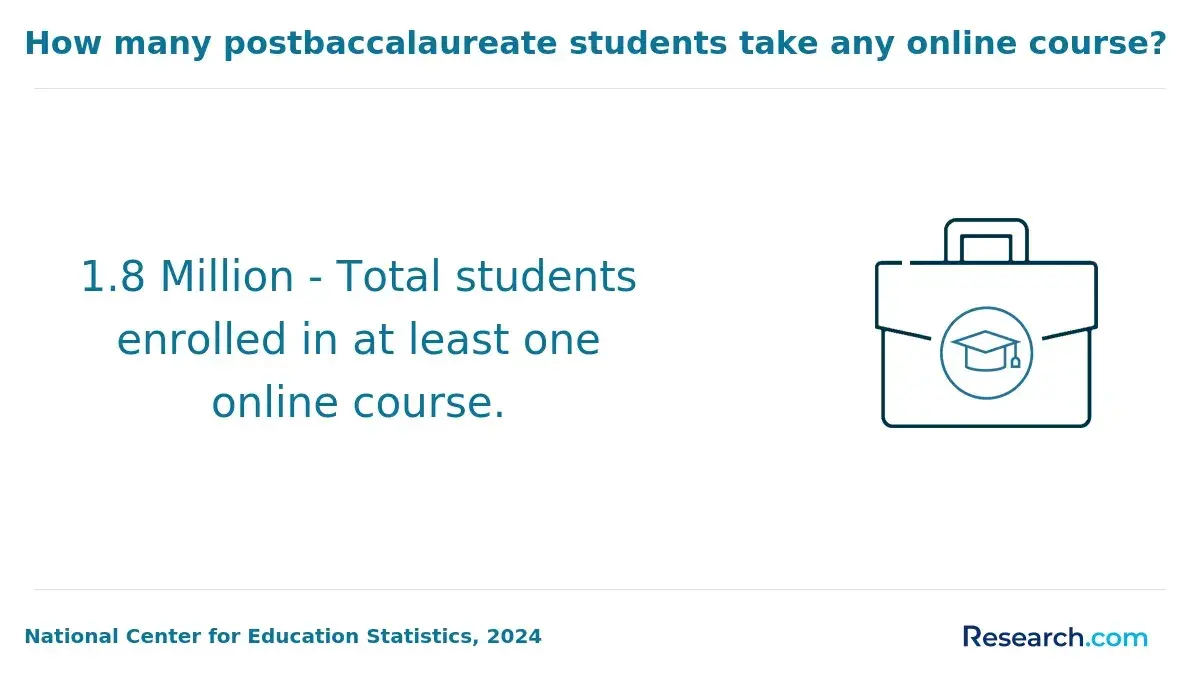
In states where on-campus educational leadership programs are scarce or nonexistent, online degree offerings serve as critical conduits for students seeking advanced leadership credentials. These programs break down longstanding geographic barriers, enabling candidates from rural or underserved regions to enroll without the burden of relocation or the need to commute long distances. According to the National Center for Education Statistics in 2024, more than 45% of graduate students in leadership-related fields pursue at least one online course, reflecting growing acceptance and reliance on virtual formats that effectively widen program accessibility. This expanded access not only diversifies the candidate pool but also addresses equity gaps in regions lacking traditional academic infrastructure.
The effectiveness of online educational leadership programs hinges on several operational factors. Asynchronous course designs permit learners to engage with material on flexible schedules, accommodating professionals balancing work and family commitments. Furthermore, cross-state enrollment opportunities reduce dependence on a limited number of brick-and-mortar institutions, allowing universities to scale their reach nationally rather than regionally. This geographic decoupling also encourages competition among institutions to improve program quality and variety, providing students with broader curricular options than typically available in their home states. The Department of Education's 2024 findings highlight a 38% enrollment increase in states with fewer than three physical educational leadership programs after online alternatives became available, underscoring these dynamics in practice.
Beyond individual access, the expansion of online programs reshapes regional workforce development by fostering a more mobile and diverse pool of educational leaders equipped to serve varying state contexts. This diffusion challenges traditional state-centric academic ecosystems by promoting interjurisdictional collaboration and knowledge exchange. However, it also introduces complexities around accreditation, state licensure, and alignment with local educational policies. Institutions and policymakers must navigate these intricacies to ensure that the benefits of expanded access through online delivery translate into tangible improvements in leadership capacity and student outcomes across heterogeneous educational environments.
One graduate recalled a prolonged decision-making process amid a rolling admissions cycle that typifies the uncertainty faced by many prospective students in states with limited choices. After initially preparing applications for several local programs, they hesitated when acceptance timelines stretched, unsure whether to commit to a distant online institution or wait for possible offers from physical campuses closer to home. The ability to enroll in an online offering ultimately provided a timely resolution, allowing them to begin coursework without delay. This experience highlights how online programs can serve as crucial fallback options that sustain educational progression when traditional pathways face scheduling or capacity constraints.
How Much Does Educational Leadership Program Tuition Vary by State?
Tuition for educational leadership degree programs varies significantly across U.S. states due to fundamental differences in state-level public funding, institutional types, and residency-based pricing models. Public universities generally subsidize in-state students more heavily, leading to substantially lower tuition for residents compared to out-of-state applicants. Private institutions, which rely primarily on tuition revenue rather than state appropriations, typically present higher and less variable prices irrespective of residency. These structural factors reflect how states prioritize higher education investment and shape the financial accessibility of educational leadership pathways within their borders, influencing where prospective students might find the best balance of quality and cost. Such divergence demonstrates that tuition disparities are rooted in complex education financing systems rather than arbitrary price-setting.
Current educational leadership program tuition ranges illustrate this variability clearly. For instance, in states with stronger higher education funding, like Florida and Texas, annual in-state public tuition for these programs often falls between $5,000 and $15,000, making them appealing options for cost-conscious students. By contrast, states such as California and New York, characterized by fewer public institutions or higher living costs, frequently see public out-of-state tuition exceed $25,000, with private institutions commonly starting tuition around $20,000 and rising markedly based on institutional prestige and specialization. These figures align with data from the U.S. Department of Education and NCES, showing how institutional funding models and regional economic conditions combine to produce distinct price tiers across the country, directly affecting student affordability and choices.
These tuition patterns have wider implications for student mobility and program selection. Variations in average cost of educational leadership degrees across U.S. regions create disparities in affordability that can limit access to certain programs based on residency and financial resources. Students weighing these options must consider how tuition influences total educational investment and long-term employability within the field. While higher tuition does not guarantee better outcomes, programs with extensive professional networks or recognized specialization may justify increased costs for some candidates. For those balancing cost constraints with career objectives, transparent comparison of state-level tuition structures and program availability is essential. Additionally, prospective students might explore alternatives like an ASN program online as a model for assessing flexible, cost-effective educational paths in other fields, underscoring the importance of aligning program choice with regional economic realities and funding frameworks.
How Does Educational Leadership Program Demand Affect Admissions Decisions?
Heightened demand for educational leadership programs frequently results in more stringent admissions practices, as institutions must carefully manage the balance between applicant volume and available cohort space. When more candidates apply, acceptance rates tend to drop, compelling programs to refine criteria beyond academic metrics to include leadership aptitude, relevant experience, and alignment with workforce needs. This selectivity is driven by the need to maintain program quality while handling growing applicant pools, ensuring graduates meet professional expectations for managing educational organizations.
The interaction between demand and admissions is heavily influenced by finite resources such as faculty capacity, physical infrastructure, and accreditation mandates that restrict maximum enrollment. Labor market signals further shape admissions priorities, with programs emphasizing competencies tied to district leadership roles or policy implementation to enhance graduate employability. These constraints force programs to calibrate acceptance thresholds carefully since overextension can affect educational rigor and regulatory compliance, making admissions decisions a strategic enrollment management tool rather than a simple evaluation of applicant merit.
As demand escalates, prospective students often must strengthen their preparatory profiles, focusing on practical leadership experiences and targeted academic preparation to remain competitive. This heightened competition can enhance program reputation but simultaneously narrow access for those lacking traditional qualifications or experience, potentially limiting diversity within the candidate pool. The dynamic tension between demand-driven selectivity and broad access underscores the challenge of sustaining both excellence and inclusivity in educational leadership pipelines.
Reflecting this complexity, a recent graduate recalls the stress of navigating rolling admissions amid surging applications at their institution. They delayed submitting transcripts while deciding whether to reapply to a less competitive program, uncertain how many seats would remain as spots filled rapidly in waves. Ultimately, the timing of their final submission aligned just right, but the experience underscored how shifting demand alters admissions timelines and necessitates strategic decision-making rather than mere paperwork completion.
How Do Educational Leadership Specialization Options Vary by Region?
Regional economic priorities and industry concentrations heavily shape the specialization options available within Educational Leadership degree programs. Areas with dense urban school districts, such as the Northeast and West Coast, tend to offer advanced tracks in superintendent preparation and policy analysis, reflecting higher demands for district-wide strategic leadership and education reform expertise. In contrast, the Midwest and Southern states emphasize practical leadership skills aligned with K-12 principal roles and instructional coordination, a focus driven by the prevalence of rural and suburban schools requiring adaptable administrators skilled in resource-constrained environments. According to data from the National Center for Education Statistics in 2024, over 45% of educational leadership programs nationwide concentrate on principal preparation or school management, with the Midwest and South accounting for more than half of these offerings, highlighting regional responses to workforce needs.
Variation in specialization also corresponds to dominant local industries and institutional strengths. States hosting major research universities, like California and Massachusetts, provide more options in higher education administration and organizational leadership, serving candidates targeting postsecondary or district-level roles that demand a research-informed approach. Employer partnerships and state certification frameworks further condition curriculum design, with areas expanding charter school networks promoting specializations in charter leadership and education innovation to meet emerging labor market requirements. These distinctions illustrate how program offerings are intertwined with regional educational ecosystems and policy climates, ensuring alignment with specific sector demands and state educational governance.
These regional differences in specialization have practical implications for students' program choice and career trajectories. The alignment of specializations with local labor markets can affect graduates' employability and mobility, as some skills and credentials hold greater relevance within certain states or contexts. Prospective students must weigh how geographic specialization profiles intersect with long-term career goals, recognizing that selecting programs from regions with diverse or advanced academic options may provide broader pathways in educational leadership. Ultimately, understanding these nuanced regional patterns supports more strategic educational and workforce planning rather than a one-size-fits-all approach to leadership preparation.
How Does Regional Employer Demand Affect Career Outcomes?
Regional employer demand critically shapes job availability and initial career trajectories for graduates of educational leadership degree programs. Areas with concentrated school districts, administrative centers, and education-focused organizations provide a denser array of leadership roles, translating to more accessible early employment and varied job functions. Conversely, regions with sparse educational infrastructure or declining populations pose tighter competition and fewer entry points for educational professionals. This geographic disparity in demand directly affects not only hiring volume but also the alignment between graduate supply and employer needs, making it a central factor in how regional employer demand influences career outcomes in educational leadership degree programs.
The relationship between local demand and career prospects is driven by several factors: industry concentration establishes specialized ecosystems where schools and districts frequently recruit from nearby academic programs, often fostering partnerships that streamline hiring. Wage competition in metropolitan areas like Texas and California drives salaries for educational administrators notably higher than rural counterparts, reflecting both cost-of-living differences and premium placed on leadership in expanding school systems. Moreover, metropolitan hubs foster professional development opportunities and faster promotion paths due to ongoing administrative turnover and program changes. These dynamics illustrate the impact of employer demand on career outcomes, highlighting how state-specific employer demand on educational leadership career opportunities varies based on local funding, institutional density, and regional economic conditions.
Broader implications include the strategic geographic mobility choices graduates must evaluate, balancing relocation costs against access to richer leadership markets. While some regions may accommodate remote administrative roles, on-the-ground presence often remains critical in educational leadership, further emphasizing regional demand's role in shaping long-term career trajectories. Prospective students might also consider allied fields with similar labor geographies for diversification, such as in healthcare administration or coding sectors where growth patterns differ; for example, exploring pathways like a certified professional coder can offer insights into demand-driven career considerations that parallel those in education leadership.
What Factors Matter Most When Comparing Educational Leadership Programs Across States?
Evaluating educational leadership program availability by state requires examining more than just which institutions offer degrees. State-level differences shape educational access, tuition costs, availability of specialized tracks, employer demand, and eventual career outcomes. Understanding these nuances is essential because regional disparities in program offerings and infrastructure directly impact affordability, learning experiences, and workforce alignment.
- Program accreditation and state licensing alignment: Accreditation ensures adherence to national quality standards critical for licensure eligibility. Variations in state certification requirements mean students must choose programs aligned with their target state's standards to avoid additional coursework or delays in credentialing.
- Curriculum specialization and concentration options: States differ in how many programs provide targeted tracks, such as K-12 administration versus higher education leadership. Access to these options influences how well a program prepares candidates for specific employment niches.
- Tuition affordability and funding structures: Public program tuition often varies widely by state residency status and funding models. These economic differences affect long-term debt and return on investment, especially since educational leadership candidates frequently combine study with ongoing employment.
- Program delivery formats and flexibility: States with more online or hybrid options expand access to working professionals. In 2024, 68% of candidates prioritized such flexibility, underscoring its role in balancing education with career demands.
- Graduate employment rates and regional employer demand: Concentrations of leadership programs correlate with faster placement in administrative roles. Geographic differences in school district needs and leadership vacancy rates influence post-graduate opportunities.
Many state-level infrastructures impact how educational leadership programs translate into practical career pathways. Prospective students and researchers should consider these regional education ecosystem factors to navigate the complex tradeoffs in comparing programs across different states.
While exploring options, it is also important to recognize complementary fields with similar workforce dynamics, such as marriage and family therapy masters programs online, which face parallel considerations around program availability and regional demand.
Which Regions May See the Fastest Growth in Educational Leadership Education?
Growth in educational leadership education closely ties to regions where employer demand, demographic pressures, and higher education investments intersect. Future program expansion typically reflects broader economic and workforce development trends rather than isolated academic factors. Regions experiencing rapid population increases, active university system growth, and workforce shortages in school administration tend to offer the most fertile ground for new and diversified educational leadership offerings.
- Southeast: The Southeast benefits from substantial K-12 enrollment growth, driven by rising birth rates and domestic migration. State-level reforms prioritize leadership development, while public university expansions increase the capacity to offer specialized programs. Many employers in this region emphasize skills in equity, data-driven decision-making, and community engagement, influencing program curricula.
- Southwest: Rapid urbanization and population growth, especially in states like Texas and Arizona, fuel demand for more educational leadership candidates. Institutional investments focus on flexible, district-responsive leadership models to address diverse student populations and operational challenges.
- Mountain West: Though smaller in scale, this region experiences steady expansions in higher education infrastructure alongside shifting demographics requiring leadership. Programs here increasingly integrate rural district needs and innovative organizational management.
- Midwest: Slower population growth results in more modest program increases, yet pockets of workforce retirements sustain ongoing demand. Programs often align tightly with local policy shifts and practical administrative skills prioritized by employers.
- Northeast: Growth is limited by stable or declining K-12 enrollments in many areas and constrained institutional capacity expansion. Programs tend to be fewer but often maintain strong specialization in policy and urban leadership responding to complex district dynamics.
References:
- The Future of Leadership in Education: 8 Trends to Watch in 2025 https://www.park.edu/blog/the-future-of-leadership-in-education-8-trends-to-watch-in-2025/
- Swiss Education Education | Swiss International University in Zurich - Bishkek - Dubai - Luzern - London - Riga and online https://www.swissuniversity.com/education
- East North Central Region - The Most Affordable Educational Leadership Administrator Prep Master’s Programs - Educational Leadership Degree https://www.educationalleadershipdegree.com/editors-choice/east-north-central-region-most-affordable-masters/
- Education Leadership Shifts: Focus on Stakeholders, Not Washington https://www.leadingwithlearning.org/post/education-leadership-shifts-focus-on-stakeholders-not-washington
- Emerging Markets and Explosive Growth in Education https://www.gsineducation.com/blog/emerging-markets-explosive-growth-best-regions-for-education-investment-in-2025
- 6 Best Career Opportunities in Educational Leadership https://www.manchester.ac.ae/blog-post/6-best-career-opportunities-in-educational-leadership
- Advancing Your Teaching Career with an MEd in Educational Leadership https://unima.ecampus.ac.mw/advancing-your-teaching-career-with-an-med-in-educational-leadership/
- What does existing research tell us about how to design school leadership training programs to have the greatest impact on student learning outcomes? https://edufinance.org/latest/blog/2024/how-to-design-effective-support-to-school-leadership-lessons-from-existing-research
- Online learning programs increase student access, engagement https://www.eschoolnews.com/digital-learning/2024/10/14/student-success-online-learning-programs/
- A Comparative Study of Educational Leadership Preparation Approaches with Emphasis on Standardization and Professionalism https://journal.cesir.ir/article_198006.html
Other Things You Should Know About Educational Leadership
The quantity of educational leadership programs in a state or school does not guarantee manageable workload or balanced pacing. Programs with a high volume of options often include accelerated or intensive tracks that demand significant time commitment, potentially conflicting with professional or personal responsibilities. Students should prioritize programs that align realistically with their availability and long-term career goals rather than simply selecting based on program variety, focusing on structures that allow steady progression without burnout.
In 2027, California, Texas, and New York offer the most educational leadership program options. Schools such as the University of California, the University of Texas, and Columbia University have broad curricula, providing extensive opportunities for aspiring educational leaders.
Greater program diversity can cause uneven employer recognition, particularly if many schools offer similar credentials but vary widely in rigor and specialization. Employers in education tend to favor candidates from programs with established reputations for producing practical leaders rather than sheer program quantity. Prospective students should weigh program outcomes and employer ties heavily, choosing options with proven track records over simply the broadest choice set to optimize hiring prospects.
Established programs often provide clearer career pipelines, networking advantages, and alumni support, but may lack the flexibility or innovative curricula found in newer programs offered in states with abundant options. Students valuing stability and employer recognition may prioritize older institutions, while those seeking customized or cutting-edge leadership skills might explore programs in states with numerous newer offerings, accepting higher risks around program maturity and support infrastructure.