2027 Aviation Management Degree Outlook Through 2030: Enrollment, Salary, and Hiring Projections

Co-Founder and Chief Data Scientist
Choosing whether to pursue or continue an aviation management degree demands careful consideration beyond headline job growth figures. Enrollment in related programs increased by over 7% in 2023, yet this surge risks saturating certain regions and specializations. Meanwhile, salary trends vary widely across subsectors, and some employers now prioritize advanced certifications or technology skills, complicating hiring prospects.
Relying solely on projected job openings can mask uneven demand shaped by globalization and evolving industry practices. This article analyzes aviation management enrollment, salary patterns, hiring forecasts, geographic opportunity, and workforce shifts through 2030, providing nuanced insights for informed education and career decisions.
Key Things to Know About the Aviation Management Degree Outlook Through 2030
- Steady enrollment growth of 4% annually reflects rising interest but signals increased graduate supply that may outpace niche managerial roles, requiring students to specialize or gain practical experience for competitive advantage.
- Employer surveys from 2024 emphasize demand for aviation management graduates with AI and automation expertise, indicating a workforce shift prioritizing tech-savvy candidates and reshaping traditional hiring criteria.
- Rising program costs and extended time-to-degree due to advanced specialization track requirements may delay entry into the workforce, affecting early-career earnings and necessitating careful financial planning.
- Key Things to Know About the Aviation Management Degree Outlook Through 2030 Key Things to Know
- How is Aviation Management Degree Enrollment Expected to Change Through 2030? Enrollment Trends Through 2030
- How Many Aviation Management Graduates Will Enter the Workforce by 2030? Graduate Workforce Entry Projections
- What Are the Hiring Projections for Aviation Management Graduates Through 2030? Hiring Projections Through 2030
- Which Aviation Management Careers Will Experience the Most Job Growth? Fastest-Growing Career Paths
- What Is the Salary Outlook for Aviation Management Graduates Through 2030? Salary Outlook Through 2030
- Which Industries Will Hire the Most Aviation Management Graduates by 2030? Top Hiring Industries
- Where Will Demand for Aviation Management Graduates Be Strongest? Strongest Geographic Demand
- Which Aviation Management Specializations Will Be Most in Demand by 2030? Specializations
- How Will AI and Technology Affect Aviation Management Careers Through 2030? AI and Technology Impact
- Is a Aviation Management Degree Worth Pursuing Based on 2030 Projections? Degree Value Through 2030
How is Aviation Management Degree Enrollment Expected to Change Through 2030?
Enrollment projections for aviation management degree programs through 2030 reflect a complex interplay of labor-market demand and institutional capacity, rather than uniform growth. While data from prominent sources like the National Center for Education Statistics and National Student Clearinghouse indicate annual growth rates between 3% and 5%, this expansion is concentrated in public universities with established programs that benefit from industry partnerships and robust practical training.
Smaller institutions or programs lacking specialization face enrollment pressure from competing STEM and technology fields, which may narrow the availability of aviation management offerings and intensify admission competition. This dynamic risks creating geographic and institutional disparities in graduate supply, forcing prospective students to weigh the tradeoff between program quality, specialization depth, and accessibility when deciding where and how to pursue aviation management credentials.
Shifting demographic profiles and evolving employer expectations also shape enrollment trends within aviation management degree enrollment trends in the United States. Employers increasingly demand graduates with interdisciplinary skills encompassing digital aviation systems, sustainability, and data analytics alongside core operational competence. This has prompted programs to adapt curricula, influencing how programs market themselves and recruit candidates interested in emerging aviation sectors like unmanned aerial vehicle management.
The balancing act between expanding enrollment to meet workforce shortages-particularly amid an aging management population-and avoiding oversaturation in certain specializations requires vigilance from educators and industry stakeholders alike. For certain students, exploring less traditional pathways or related degrees, such as a DNP program online, may offer alternative avenues to leverage growth in adjacent sectors.
How Many Aviation Management Graduates Will Enter the Workforce by 2030?
The number of aviation management graduates entering the workforce by 2030 depends on more than just enrollment and degree completion rates. While approximately 2,500 to 3,000 bachelor's degrees in aviation management are awarded annually, workforce entry is influenced by factors such as graduate decisions to pursue advanced education, shift to related fields, or delay employment. The Bureau of Labor Statistics projects a 7% growth in aviation-related management roles through 2030, roughly mirroring overall occupational growth; this suggests that job opportunities will align with but not significantly outpace the supply of new graduates.
Regional aviation hubs and sector-specific expansions may offer localized advantages, but graduates must also consider evolving demands for complementary skills like data analysis or supply chain expertise to remain competitive. In practice, the roughly 25,000 to 27,000 new aviation management graduates expected nationally between 2024 and 2030 will not evenly diffuse into the job market at a constant rate. Some will delay entry for internships or graduate studies, while others may find roles outside traditional aviation management domains.
For example, diploma holders without relevant hands-on experience might face stiffer competition from peers who combine technical knowledge with leadership capabilities. Labor market dynamics intertwined with automation and regulatory shifts indicate that employers will favor adaptable candidates who continuously update their skill sets, reducing straightforward absorption of graduates despite stable production numbers.
What Are the Hiring Projections for Aviation Management Graduates Through 2030?
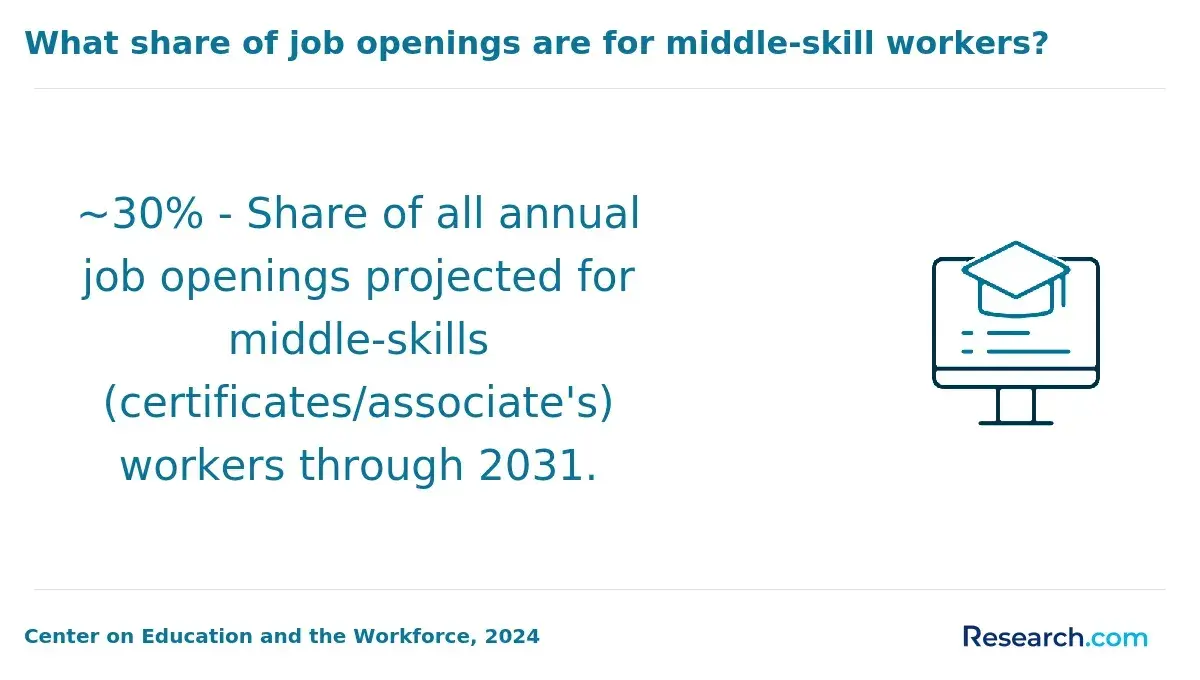
The demand for aviation management graduates through 2030 is moderate but subject to notable fluctuations tied to economic cycles and industry volatility. While the U.S. Bureau of Labor Statistics projects an annual employment growth rate near 6% for transportation management roles, including aviation operations, this overall increase does not guarantee smooth entry for new graduates.
Many openings stem from turnover rather than expansion, meaning geographic factors and local industry hubs significantly impact job accessibility; for example, graduates near major airline headquarters or busy airports may find more consistent opportunities compared to those in less concentrated regions. Successful candidates differentiate themselves by acquiring relevant certifications, practical experience through internships, and cross-disciplinary skills such as data analytics or regulatory knowledge.
Employers stress hands-on familiarity with operational complexities and the ability to navigate evolving compliance frameworks, which often elevates experienced candidates above recent graduates. Furthermore, although aviation management salaries remain competitive with comparable management roles, wage growth and job stability can vary widely by specialization and location, underscoring the importance of evaluating regional labor markets rather than relying solely on national projections.
Which Aviation Management Careers Will Experience the Most Job Growth?
Operational and managerial roles such as airline operations managers and airport managers are projected to experience employment growth between 8-10% through 2030, outpacing many transportation-related careers. These positions benefit from increased passenger traffic and cargo demands, requiring professionals adept at balancing regulatory compliance with complex logistical coordination. While air traffic controller opportunities also reflect growth, these fluctuate by region depending on infrastructure investments and evolving technology, highlighting the importance of technical skills alongside management expertise for job seekers.
Emerging niches-like sustainability coordinators and digital transformation specialists-offer promising entry points but currently represent a smaller share of job openings. Candidates who combine core aviation management competencies with data analytics and supply chain knowledge tend to have stronger hiring prospects. For students weighing degree programs, this means prioritizing curricula that integrate operational understanding with strategic planning and regulatory insight is critical for long-term employability within top aviation management job opportunities and salary trends. Real-world experience through internships or cooperative arrangements remains a valuable differentiator in a competitive field.
Given the variations in job volume versus percentage growth, prospective professionals should consider sector size and replacement demand when assessing workforce implications. Those focused on aviation management should especially note that although growth rates are favorable, regional differences and specialization requirements can impact entry and advancement. This nuanced perspective informs realistic decision-making and aligns with authoritative workforce data. For comparison, insights on healthcare roles such as medical coding salary trends reveal parallels in emphasizing specialized skills tied to emerging industry demands.
What Is the Salary Outlook for Aviation Management Graduates Through 2030?
Salary projections for aviation management graduates through 2030 require nuanced interpretation beyond headline figures. Wage growth will interact with inflation, fluctuating labor demand, evolving credential standards, and shifting occupational roles within the industry. The relatively modest 3-5% annual salary increase anticipates steady but uneven expansion shaped by regulatory changes and technological advancement.
Understanding these dynamics helps align expectations with the realities of airport operations, airline oversight, and emerging specialty niches. Key factors shaping compensation trends include the following:
- Economic Sensitivity: The aviation sector's exposure to global economic cycles and geopolitical events can create volatility in hiring and pay scales, especially for roles tied to passenger volume and freight logistics.
- Experience Progression: Salaries typically start between $50,000 and $65,000, rising sharply with 10-15 years of experience to $80,000-$110,000, particularly for those advancing to leadership or specialized technical roles like unmanned aerial systems.
- Regional Variation: Geographic location strongly influences salary ranges; major hubs and airports in high-cost metropolitan areas offer premium pay while rural or smaller regional markets often provide lower compensation.
- Credential Inflation: Continued education, certifications in aviation safety, or logistics management increasingly become prerequisites for advancement, signaling a need for ongoing professional development.
- Technology Adoption: Expertise in sustainable aviation technologies and automation is a growing differentiator contributing to higher remuneration in innovative segments.
- Employer Type: Wages tend to be higher at large commercial airlines and major airport authorities compared to smaller operators or regulatory agencies with constrained budgets.
Which Industries Will Hire the Most Aviation Management Graduates by 2030?
Projected hiring trends for aviation management graduates through 2030 reflect industry-specific dynamics shaped by workforce replacement, technological advancements, and regulatory evolution. As sectors adapt to rising passenger volumes, digitization, and sustainability pressures, the demand for graduates with a balanced mix of operational knowledge and soft skills will vary in scale and accessibility.
Strategic skill alignment and relevant practicum or internship experience become essential for navigating competitive hiring environments in the top US industries employing aviation management graduates. Below are key industries where hiring demand is expected to be strongest.
- Commercial Airlines: Continued recovery and growth in passenger travel necessitate expanded operational, compliance, and fleet management roles. Graduates with experience in scheduling, regulatory knowledge, and effective communication stand to secure entry-level or advancement positions amid evolving safety standards.
- Air Cargo and Logistics: E-commerce expansion and supply chain digitization drive demand for managers overseeing air freight operations and multimodal transport coordination. Skills in logistics optimization and data analytics improve access to roles handling distribution hubs and integrated networks.
- Aerospace Manufacturing: Though technical, this sector requires graduates focused on production oversight, quality assurance, and regulatory compliance. Familiarity with program management and cross-functional collaboration enhances employability in companies integrating manufacturing and service functions.
- Airport Management: Increasing passenger volumes and infrastructure modernization highlight the need for managers balancing safety, commercial, and administrative duties. Candidates with experience in customer service enhancement and regulatory navigation gain competitive advantages.
- Regulatory and Compliance Agencies: Heightened scrutiny of aviation safety and environmental impact expands roles in policy development, inspection, and enforcement. Graduates with detailed knowledge of FAA standards and environmental regulations find stable government or consultancy positions.
- Technology and Innovation Firms: Emerging aviation technologies including unmanned aerial systems and sustainable fuels generate new management needs. Adaptability and interdisciplinary skills in technology assessment and project coordination are vital for these forward-looking roles.
Within these trends, graduates must weigh specialization against adaptability, recognizing that workforce replacement needs and technological shifts may open roles unevenly across sectors. For example, a graduate targeting a role in cargo logistics should acquire hands-on internship experience with digital freight platforms to remain competitive. This approach reflects practical realities faced by many pursuing aviation management degrees, where evolving service demand demands proactive skill development.
For those considering interdisciplinary options, related fields such as healthcare management may offer parallel insights; resources like MBA healthcare programs illustrate how specialized yet adaptable credentials can shape career trajectories in dynamic sectors. Overall, understanding these nuanced hiring projections aids in informed decision-making for enrolling and credentialing choices aligned with realistic employment outcomes.
Where Will Demand for Aviation Management Graduates Be Strongest?
Demand for aviation management graduates is highly concentrated in metropolitan regions with substantial airline operations and logistics hubs, rather than spread evenly nationwide. For instance, areas such as Dallas-Fort Worth and Atlanta benefit from robust private and public aviation investments, which create a thicker market for specialized managerial roles but come with higher living costs and intensified applicant competition.
In contrast, smaller or less integrated markets might offer fewer openings, but often have lower credential barriers and cost-of-living advantages, posing a tradeoff between volume-driven opportunity and accessible entry points. Graduates targeting commercial airline settings versus emerging segments like sustainable aviation or urban air mobility must also weigh local ecosystem maturity and employer expectations. While commercial airline hubs demand proficiency in regulatory compliance and operational logistics, new sectors emphasize innovation and environmental strategy, often concentrated in regions with active research and technology clusters.
The national labor data highlights that while projected job growth is steady for traditional roles, applicants must navigate variable regional demand shaped by public infrastructure funding, workforce shortages, and industry partnerships, underscoring the practical necessity of aligning educational choices with targeted labor markets rather than national averages alone. Long-term adaptability also factors into the value of an aviation management degree, as evolving environmental policies and technological integration reshape role requirements.
Candidates who combine foundational operational expertise with skills in analytics and stakeholder coordination are positioned to meet employer needs across diverse settings, from air traffic control support to cargo logistics. However, geographic selection remains critical since metropolitan hubs not only lead in job quantity but also in complexity and credential expectations, making localized workforce planning essential for realistic career advancement through 2030.
Which Aviation Management Specializations Will Be Most in Demand by 2030?
Demand for aviation management specializations by 2030 will cluster around areas that blend core operational knowledge with advanced technological and regulatory competencies. Employment growth heavily favors professionals equipped to handle data analytics, environmental mandates, and evolving compliance challenges.
Students choosing specializations should weigh not only sector growth but skill portability and credential specificity; for instance, a focus on regulatory compliance may yield stable roles in government and urban air mobility but requires ongoing policy engagement, whereas analytics offers broader application but demands strong quantitative proficiency. The U.S. Bureau of Labor Statistics and Lightcast data predict that the most significant employer interest will align with sectors reflecting industry priorities such as decarbonization and operational resilience.
Key areas poised for growth include:
- Aviation Safety Management: This specialization centers on navigating complex regulatory frameworks and evolving safety standards, critical for roles involving drone operations and urban air mobility oversight; expertise in government protocols and certification processes will be essential.
- Operations Analytics: Combining aviation knowledge with data science skills, this area supports optimization in scheduling, fuel efficiency, and maintenance planning; employers increasingly seek managers capable of leveraging big data to reduce costs and improve system reliability.
- Sustainability Strategy: Green aviation initiatives and carbon management are transitioning from niche focuses to core business imperatives, requiring knowledge of emissions regulations and sustainable supply chain design to meet aggressive environmental targets.
- Logistics and Freight Management: The surge in e-commerce and global supply chains creates demand for specialists in multimodal transport, customs regulations, and cargo optimization, emphasizing practical coordination and compliance skills.
- Regulatory Compliance Expertise: Growing regulatory complexity across international and domestic sectors demands professionals who can interpret changing legislation, particularly as drone technology and urban air mobility expand, requiring advanced policy literacy.
Choosing among these options depends heavily on individual strengths and career goals. For example, a student strong in data analytics might prioritize operations analytics despite higher technical rigour, while another focused on lasting policy impact may favor regulatory compliance despite slower growth in some markets. Aligning specialization decisions with these demand signals enhances long-term employability without overstating guarantees.
How Will AI and Technology Affect Aviation Management Careers Through 2030?
Artificial intelligence and automation are more likely to augment and redefine common aviation management responsibilities rather than fully automate them through 2030. Routine scheduling, inventory control, and compliance tasks are increasingly handled by AI-enabled systems, shifting the workforce demand toward professionals who combine aviation domain knowledge with data analytics, cybersecurity awareness, and operational oversight of technological tools.
For example, an aviation manager directing fleet utilization will need to interpret predictive maintenance analytics and coordinate human and machine decision-making, stressing the tradeoff between efficiency gains and the risk of skill atrophy if upskilling is neglected. Employers will prioritize candidates with advanced certifications that blend AI application proficiency and traditional aviation expertise, making ongoing education a critical component of career resilience in this evolving landscape.
The AI impact on aviation management careers in the US highlights growing differentiation between entry-level roles, which may become more automation-dependent, and mid-to-senior positions requiring judgment, ethical oversight, and stakeholder communication. Students and professionals must assess program curricula for integrated AI fundamentals and applied technology projects to align with workforce expectations and avoid obsolescence.
This focus on interdisciplinary skills is essential as technological advancements shaping aviation management jobs through 2030 increase competition for positions demanding fluency with both emerging tools and regulatory realities. For practical salary and career comparison, individuals can benefit from consulting resources such as pharmacist salary data to understand sector-specific compensation dynamics driven by specialized knowledge.
Is a Aviation Management Degree Worth Pursuing Based on 2030 Projections?
Employment projections through 2030 for those with an aviation management degree indicate modest growth, around 5% according to the U.S. Bureau of Labor Statistics, which is below average for many fields. This reality suggests graduates may face a competitive job market where practical experience and relevant certifications are crucial, especially since entry-level roles at regional airlines or airports tend to offer limited salary growth initially. Students weighing the decision to pursue this degree should consider that certain paths, like corporate aviation or logistics management, might yield higher salaries but come with intensified competition and distinct industry expectations.
Salary trends for aviation management graduates reflect median starting pay typically between $50,000 and $60,000, rising to $85,000 or more with experience, based on data from the National Association of Colleges and Employers. These figures, however, often lag behind other management or engineering disciplines, which raises questions about long-term financial return on investment-particularly when factoring in tuition and the time to degree completion. The outlook for aviation management degree job market outlook 2030 thus favors candidates who supplement their studies with internships and certifications, given that many employers prioritize demonstrated competence over academic credentials alone.
Enrollment in aviation management programs has stabilized following early pandemic declines, reflecting steady demand but also the necessity for realistic expectations around career pathways. Prospective students should balance the degree's operational benefits against its potential limitations in workforce flexibility and income ceiling. For those comparing options in related fields, understanding the need for specialized credentials, as seen in disciplines like health information management, underscores the value of programs such as CAHIIM accredited health information management degree online, which highlight distinct career and salary prospects. These practical considerations should guide decision-making regarding the future salary trends for aviation management graduates.
References:
- Aviation Careers That Will Define The Industry In 2030 https://www.aviationbusinessme.com/analysis/aviation-careers-that-will-define-the-industry-in-2030
- Top 10 Career Paths in Aviation Beyond Pilots (And How to Get Started) https://mhcaviation.com/blog/top-10-career-paths-in-aviation-beyond-pilots-and-how-to-get-started
- What’s next in aviation? Top emerging roles https://www.aerotime.aero/articles/the-top-emerging-aviation-jobs-you-ahould-know-about-in-the-next-5-years
- Employment : Aviation: Benefits Beyond Borders https://aviationbenefits.org/economic-benefits/supporting-employment/
- Little-Known, High-Paying Careers in Aviation Management | Vaughn College https://www.vaughn.edu/blog/little-known-high-paying-careers-in-aviation-management/
- 8 Aviation Jobs Revolutionised By AI (And How Workers Can Adapt) https://wingswaytraining.com/8-aviation-jobs-revolutionised-by-ai/
- Which Aviation Skills Are Most in Demand Right Now? - Bostonair Group Ltd https://www.bostonairgroup.com/which-aviation-skills-are-most-in-demand-right-now/
- Aviation Management: Career Overview and 10 Jobs To Consider https://holmes.edu.au/blog/aviation-management-career-overview-and-10-jobs-to-consider
- Why Aviation Careers Will Surge by 2030 | FlyIAA https://www.flyiaa.aero/blogs/why-the-demand-for-aviation-professionals-is-set-to-soar-by-2030
- Aviation Management: Careers, Skills, and Opportunities https://www.acumen.aero/blogs/aviation-management-careers-skills-and-opportunities
Other Things You Should Know About Aviation Management
Program reputation often correlates with stronger industry connections and better hiring outcomes, but these programs may also impose more rigid schedules and higher costs. Flexible options like online or part-time programs increase accessibility but can limit networking opportunities and hands-on experiences that employers value. Prioritizing a program that balances recognized industry ties with manageable schedules is crucial, especially for those working while studying or seeking practical internships alongside coursework.
Aviation management degrees demand a solid grasp of both business fundamentals and the unique regulatory, operational, and safety concerns of the aviation industry. Students should anticipate a workload that integrates case studies, regulatory compliance, and technical logistics, requiring strong analytical and communication skills. Those unprepared for this dual focus may find the transition challenging, so selecting programs with clear learning outcomes and support for applied learning can directly impact employability.
Internships and practical experience substantially increase hiring prospects since most aviation employers prioritize candidates with demonstrated industry exposure. Programs lacking structured experiential opportunities may leave graduates at a disadvantage despite strong academic records. Prospective students should weigh the availability of internships and partnerships with airlines, airports, or aviation companies as a key factor, as these experiences often translate into direct job offers and clearer career pathways.
Salary ranges in aviation management vary widely by role, location, and organization size, with entry-level compensation often below other business fields. Relying solely on potential salaries without regard for geographic mobility, willingness to start in operational roles, or longer-term career growth can lead to unmet expectations. Students should prioritize programs that enhance broad management skills and industry adaptability, positioning them for advancement rather than focusing on initial salary alone.