2027 Which Neuroscience Degree Careers Offer the Best Return Without Graduate School?
Audited and Verified:
Our Editorial and Data Verification Process
Research.com uses government datasets, official education statistics and primary institutional information to support its career and degree guides. Our review process checks factual accuracy, occupational definitions, source dates and the requirements associated with the credentials discussed.
How This Article Was Fact-Checked
Our editorial team verifies salary estimates, employment projections, education requirements and program information against original data providers and official organizations. Salary figures are checked against the relevant occupational definitions and reporting periods. Information about licensure, accreditation and required in-person training is reviewed separately.
Fact-checked and verified on:

Co-Founder and Chief Data Scientist
Considering the steep cost of graduate education, many recent neuroscience graduates face a dilemma about whether to invest further in their studies or enter the workforce. With average student debt surpassing $37,000, pursuing graduate degrees can delay financial stability. Fortunately, several entry-level neuroscience careers offer competitive salaries and promising growth without requiring additional degrees.
These roles leverage bachelor's-level skills such as data analysis, laboratory techniques, and research support. This article explores which neuroscience degree careers provide the best return on investment for those aiming to maximize earnings and job opportunities without attending graduate school.
Key Benefits of Neuroscience Degree Careers That Offer the Best Return Without Graduate School
- EEG technicians and neurodiagnostic specialists perform critical brain activity monitoring in clinical environments, providing a stable career with competitive entry-level pay and opportunities for specialized certification without a master's degree.
- Pharmaceutical and medical device sales representatives utilize their understanding of neural systems to educate providers on specialized treatments, offering a high-return path with total compensation packages often exceeding $100,000.
- Clinical research coordinators manage complex trials and patient protocols within pharmaceutical or medical settings, with workforce data indicating that experienced professionals with a bachelor's degree can earn a median salary of approximately $64,000 to $82,000.
Which neuroscience careers offer the best return without graduate school?
Evaluating return on investment (ROI) in neuroscience careers without graduate school is essential for students prioritizing financial stability and career longevity. The U.S. Bureau of Labor Statistics notes that bachelor's degree holders in scientific fields often earn salaries well above the national median, underscoring the value of selecting high-return jobs.
Below are four neuroscience careers offering strong ROI through a balanced combination of salary potential, job security, and growth opportunities without graduate education.
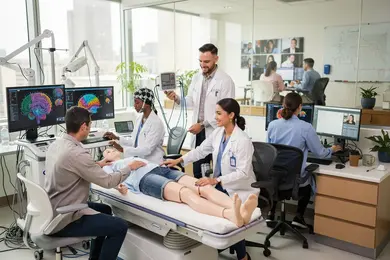
- Neurodiagnostic Technologist: These professionals conduct tests that monitor brain and nerve function, crucial for diagnosing neurological conditions. This role requires specialized training but typically only a bachelor's degree, delivering competitive wages and steady demand in medical facilities.
- Clinical Research Coordinator: Coordinators oversee clinical trials focused on brain health, blending scientific knowledge with organizational skills. The position provides exposure to cutting-edge research and career advancement without the need for graduate degrees, making it a prudent choice for those seeking high-return neuroscience jobs without graduate school.
- Biological Technician: Supporting neuroscientists in laboratories, biological technicians assist with experiments and data analysis. This role offers a reliable entry into research careers with opportunities for progression, representing one of the neuroscience careers with the best salary without graduate degree requirements.
- Pharmaceutical Sales Representative - Neuroscience Focus: Leveraging deep neuroscience understanding, these sales professionals communicate complex scientific concepts to healthcare providers. The career provides substantial commission-based income and advancement potential while requiring only a bachelor's degree.
Exploring practical paths that intersect solid scientific foundations and market demand can also include roles such as medical assistants, who benefit from earning potential and quick workforce entry. Prospective students interested in accelerated options might consider short medical assistant programs as complementary routes to launch or support their neuroscience career goals.
What are the highest-paying neuroscience jobs without a master's degree?
Evaluating high-paying neuroscience jobs available without pursuing a master's degree is vital for students aiming to maximize their return on investment in a bachelor's degree. According to the U.S. Bureau of Labor Statistics, several neuroscience-related roles offer median salaries exceeding $70,000 annually without requiring advanced education.
Below are some of the top-paying jobs in neuroscience that typically only require a bachelor's degree, offering solid financial prospects.
- Clinical Research Coordinator: These professionals oversee clinical trials focusing on neurological disorders and treatments, earning between $55,000 and $85,000 per year. Their expertise in managing complex trials drives competitive salaries in this critical neuroscience role.
- Neurodiagnostic Technologist: Specializing in diagnostic tests like EEGs and EMGs, these technologists help identify nervous system disorders. Salaries typically range from $60,000 to $90,000 annually due to the technical skills and responsibilities involved.
- Pharmaceutical Sales Representative: Focused on neuroscience products, these sales reps promote neurological drugs and treatments to healthcare providers, often earning between $70,000 and $100,000 per year including commissions. Their combined sales acumen and product knowledge support high compensation.
- Biological Technician: Working in neuroscience labs, biological technicians assist with research on neurological processes and drug development, earning $45,000 to $75,000 annually. Their hands-on contributions to research make them valuable team members.
- Medical and Health Services Manager: Entry-level managers in neuroscience clinics or departments earn between $65,000 and $90,000, coordinating services and ensuring compliance with healthcare regulations, which justifies their strong salaries.
Which industries offer high salaries without graduate school?
Selecting the right industry plays a significant role in achieving higher salaries for those with a bachelor's degree in neuroscience who do not pursue further education. Wage variations among industries can exceed 30%, highlighting the financial impact of career path decisions.
The following industries typically offer competitive compensation for neuroscience graduates based on market demand and relevant skill application.
- Pharmaceutical and Biotechnology: This sector values neuroscience expertise for drug research, clinical trials, and regulatory affairs. Due to the commercial importance of developing new therapies, salaries often fall between $60,000 and $90,000, reflecting the depth of specialized knowledge required.
- Healthcare Technology: Companies in this field focus on devices and software related to brain health and medical diagnostics. The blend of innovation and technical complexity supports salaries ranging from $55,000 to $85,000 for professionals applying neuroscience insights to product enhancement.
- Data Analysis and Consulting: Neuroscience graduates bring strong analytical and problem-solving skills to consulting firms and corporations across various industries. Competitive pay frequently exceeds $70,000, driven by the demand for data interpretation and strategic decision support.
- Government and Defense Research: Agencies engaged in cognitive or neurological studies employ neuroscience degree holders, offering starting salaries near $55,000. Alongside modest pay, these roles provide stability and comprehensive benefits, contributing to overall compensation value.
When asked about his experience navigating career options without pursuing graduate school, a neuroscience degree graduate shared the difficulties of identifying industries where his skills matched demand. "It was daunting at first because the path isn't always obvious," he explained. "I focused on sectors where I could see clear applications of my knowledge and that also offered room for growth."
He emphasized the importance of persistence in researching potential employers and networking, noting that "finding a role that truly valued my background felt rewarding, especially when the salary matched my expectations." This practical approach helped him secure a position aligned with both his expertise and financial goals.
Selecting entry-level neuroscience jobs with the best growth potential is essential for building a long-lasting career. The U.S. Bureau of Labor Statistics projects a 7% growth in biological and life sciences roles from 2022 to 2032, highlighting promising opportunities.
Below are several positions that offer strong upward mobility and skill development for early-career professionals.
- Research Assistant: This role provides hands-on experience with experimental methods and data analysis in academic or private laboratories. Research assistants develop expertise that often leads to senior research or lab management responsibilities.
- Clinical Trial Assistant: Supporting clinical studies furnishes knowledge of regulatory processes and patient coordination, which can eventually lead to project management or clinical research leadership roles.
- Neurodiagnostic Technician: Operating diagnostic equipment such as EEG machines helps professionals learn technical skills critical for specialization in clinical neurophysiology or leadership positions within healthcare.
- Medical Sales Representative (Neuro-focused): Engaging with neuroscience product sales hones communication and technical expertise that can evolve into strategic roles in product management and business development.
Focusing on such roles ensures growth through diverse neuroscience entry-level jobs with highest growth, providing a rewarding path without immediate graduate education. For those interested in advancing later, exploring online MSN to DNP programs can be a valuable option to enhance career prospects.
Building targeted skills can have a direct impact on earnings for neuroscience graduates who skip advanced degrees. Research indicates that about 70% of employers prioritize skill mastery over formal credentials, which has boosted wage premiums for those with sought-after abilities.
Below are key transferable skills that notably enhance salary potential in neuroscience-related roles.
- Data Interpretation and Analysis: Mastering the ability to analyze and interpret complex datasets using statistical tools is invaluable. This skill allows professionals to make informed decisions and extract meaningful insights from experimental or brain imaging data, increasing their indispensability in clinical and research settings.
- Programming and Automation: Proficiency in languages such as Python, MATLAB, or R equips neuroscience professionals to automate processes, perform simulations, and build models. This technical know-how enhances productivity and opens pathways to better-compensated roles requiring coding expertise.
- Clear Scientific Communication: Effectively conveying research outcomes through writing and presentations boosts collaboration and visibility. Strong communicators often influence funding and partnership opportunities, strengthening their career and earning growth.
- Analytical Thinking and Problem-Solving: Applying critical reasoning to design experiments and resolve technical issues drives innovation and operational improvements, qualities that employers reward financially.
- Project Coordination: Overseeing timelines, resources, and teams with organizational skill ensures successful project delivery, helping professionals stand out and command higher salaries.
When discussing which skills lift salary without a master's degree, a neuroscience professional shared that her early career struggles highlighted the importance of adaptability and learning on the job. "I initially felt overwhelmed by the technical requirements and deadlines, but focusing on sharpening my programming and communication skills made a tangible difference," she recalled.
Her ability to translate complex data into clear reports and streamline project tasks earned her recognition and more ambitious assignments. She emphasized that cultivating these competencies gradually but consistently helped her secure better opportunities and pay without returning to school.
Professional certifications offer a strategic alternative to graduate degrees in neuroscience by validating specialized skills and enhancing job market competitiveness. Industry data shows that certified individuals can earn up to 20% more than their uncertified counterparts, highlighting the potential for improved salary and career mobility.
Below are several key certifications that provide valuable credentials for neuroscience professionals seeking advancement without graduate-level education.
- Certified Clinical Research Professional (CCRP): This credential confirms expertise in clinical trial oversight and ethical research practices, vital for roles involving neuroscience clinical studies. It strengthens a professional's profile by demonstrating proficiency in navigating regulatory standards.
- Registered EEG Technologist (R. EEG T.): Specializing in electroencephalogram operation and analysis, this certification is important for diagnostic settings within neuroscience. Holding it can enhance prospects for technical positions and contribute to higher earning potential.
- Certified Neurofeedback Practitioner (CNP): Focused on administering neurofeedback therapies, this certification opens opportunities in mental health and rehabilitation contexts. It broadens employability by showcasing skills in non-invasive neurotherapeutic techniques.
- Data Science Certification: With data-driven research becoming central to neuroscience, certifications proving skills in programming and statistical analysis are increasingly valuable. They support roles in computational neuroscience and large-scale neurological data interpretation.
- Project Management Professional (PMP): Though not neuroscience-specific, PMP certification equips individuals with leadership and organizational capabilities crucial for managing neuroscience research projects and teams effectively.
Professional experience often plays a significant role in career advancement within neuroscience-related fields, with many employers prioritizing demonstrated skills, problem-solving abilities, and on-the-job learning over formal credentials. Practical experience can showcase a candidate's ability to handle complex tasks and immediately contribute to an organization without extensive training.
Roles such as clinical research coordination, pharmaceutical sales, and technical support for medical devices commonly reward proven performance and adaptability more than advanced degrees. Building a portfolio of real-world achievements and professional networks can open doors that might otherwise require graduate education.
However, relying solely on experience has its limits, particularly when pursuing higher-level positions that often mandate graduate degrees for licensure, certification, or credibility. Entry into leadership roles, academic appointments, or specialized research fields may be slower without formal education, as some employers set educational requirements as a baseline for advancement.
Experience tends to be most valuable in rapidly evolving industries or roles where hands-on problem-solving and interdisciplinary skills outweigh theoretical knowledge. Combining experience with formal education remains the most effective path for sustained growth in neuroscience careers demanding both expertise and credentials.
Professionals in neuroscience who stop their education after a bachelor's degree often weigh the career limitations without a graduate neuroscience degree against immediate workforce entry. According to the U.S. Bureau of Labor Statistics, individuals with graduate degrees in STEM fields-including neuroscience-earn roughly 20% more than those with only a bachelor's degree.
This earnings difference highlights the potential impact of skipping neuroscience graduate school on earning potential. The following points outline key challenges faced in this context.
Slower Career Advancement: Many senior positions in neuroscience research, clinical work, or pharmaceutical industries require advanced degrees. Without graduate education, career progression tends to be slower, limiting access to leadership or specialized decision-making roles.
Reduced Access to Specialized Roles: Technical roles like neuroimaging specialists or cognitive neuroscientists often demand graduate-level training. Bachelor's holders may struggle to compete effectively for these positions due to a lack of advanced coursework and research experience.
Competitive Hiring Environments: Job markets in neuroscience are highly competitive, with employers usually prioritizing candidates with graduate degrees. This creates challenges in securing desirable roles for those without advanced qualifications.
Limited Research Opportunities: Graduate programs provide essential training in experimental design, data analysis, and lab techniques. Bachelor's degree holders may have fewer chances to engage in meaningful research, thereby restricting professional growth and academic networking.
Income Potential Ceilings: Without graduate credentials, many neuroscience careers present income limits. Those seeking higher salary growth might need to consider additional education or alternative career paths. For related workforce information in other fields, students can also check medical coding salary.
Return on investment (ROI) in education balances the cost and time spent earning a degree with the financial and career benefits gained. For a neuroscience bachelor's degree, early-career median earnings in health and life sciences reach around $60,000 annually, demonstrating strong salary potential without further graduate study.
To identify neuroscience degree career paths with highest ROI, students should consider focused strategies that enhance earnings and advancement.
- Specialize in High-Demand Fields: Focus on neuroscience subfields like neuroinformatics, neurotechnology, or cognitive science that intersect with expanding sectors such as AI, biotech, and healthcare technology. These specializations often lead to higher salaries and better job market positioning.
- Develop Interdisciplinary Skills: Gaining expertise in data analysis, programming, or business complements neuroscience knowledge and increases employability. Such skills create opportunities in research analytics, medical device sales, and project management.
- Engage in Targeted Internships: Participating in internships or applied research projects within clinical or industry settings builds valuable experience and networks. These connections frequently translate into job offers and faster salary growth.
- Choose Employers with Advancement Opportunities: Seek organizations that invest in career development and provide clear growth paths. Companies in biotech and health technology tend to offer skill training and upward mobility, improving long-term ROI.
- Leverage Professional Networks: Building connections within neuroscience-related communities can expose you to mentorships and job openings that enhance career trajectory without additional schooling.
For those interested, exploring PharmD online programs can offer insights into related healthcare career paths with strong ROI potential. These strategies help students maximize their neuroscience degree ROI and identify strategies to increase earnings without graduate school in neuroscience.
Deciding to pursue graduate school in neuroscience depends greatly on individual career aspirations, industry demand, and the return on investment analysis. Data from the U.S. Bureau of Labor Statistics highlights that those with master's or doctoral degrees in neuroscience fields often earn 20-30% more than those holding only a bachelor's degree.
For many, the choice hinges on balancing the cost and time of advanced education against potential salary gains and career growth. Next, we explore specific cases where graduate studies offer meaningful advantages.
Graduate education tends to be essential for specialized roles such as neuroimaging experts or clinical trial coordinators, and it's often a prerequisite for leadership positions in healthcare or biotechnology companies. Careers requiring licensure, like clinical neuropsychology, or research-focused paths demanding extensive expertise in experimental design, also typically necessitate advanced degrees.
Evaluating the benefits of graduate school for neuroscience career advancement reveals that pursuing higher education is strategic for these targeted roles rather than general professional development. For those interested in direct entry to advanced degrees, exploring direct entry MSN programs may provide important opportunities.
What Graduates Say About Neuroscience Degree Careers That Offer the Best Return Without Graduate School
- Lawrence: "Choosing not to pursue a graduate degree in neuroscience was initially daunting, but it proved to be a rewarding decision. I focused on gaining hands-on experience through internships and certifications, which opened doors in the biotech sector. My degree equipped me with analytical skills that continue to drive my success as a research coordinator."
- Yitzchok: "Reflecting on my path, I realized that maximizing my neuroscience degree without graduate school meant leveraging interdisciplinary knowledge and networking extensively. I took targeted courses in data analysis and volunteered in clinical settings, which made me stand out to employers. This approach has allowed me to build a fulfilling career in medical technology sales."
- Cameron: "My neuroscience degree was instrumental in shaping my professional journey, even without further graduate studies. I committed to continuous learning by attending workshops and earning relevant industry certifications, which broadened my expertise. The critical thinking skills I developed have been invaluable in my role as a healthcare consultant."
Other Things You Should Know About Neuroscience Degrees
Employers in sectors like biotechnology firms, pharmaceutical companies, medical devices manufacturers, and research laboratories often hire neuroscience graduates without graduate degrees. Additionally, government agencies and hospitals may offer roles focused on laboratory support, clinical trials coordination, or data analysis for candidates holding only a bachelor's degree.
Yes, internships and co-op programs provide essential hands-on experience that can significantly enhance employability. Practical exposure to laboratory methods, data analysis software, and collaborative research projects helps graduates demonstrate job readiness to potential employers.
A foundational understanding of neuroscience principles enables graduates to grasp complex scientific content critical for drafting regulatory documents or medical communications. While these careers may not require graduate training, effective writing and familiarity with clinical trial processes are crucial skills to develop alongside a neuroscience degree.
Industry-recognized certifications in clinical research, data analysis, and medical technology improve hiring prospects for bachelor’s-level neuroscience graduates. Examples include the ACRP-CP or SOCRA certification for clinical research roles, and vendor credentials in Python or SQL for data-heavy jobs.
- 8 Exciting Neuroscience Careers to Explore - SpecialtyCare https://specialtycareus.com/8-exciting-neuroscience-careers-to-explore/
- Is a Neuroscience Degree Worth It? | Salary & ROI https://www.collegehelpguide.com/degrees/neuroscience/is-it-worth-it/
- Rejected from Neuroscience PhD programs. Is applying to Biomedical Sciences a better idea? - Graduate School - College Confidential Forums https://talk.collegeconfidential.com/t/rejected-from-neuroscience-phd-programs-is-applying-to-biomedical-sciences-a-better-idea/3638578
- Neuroscience for Change Certification https://apmg-international.com/product/neuroscience-change-certification
- Job Market - Federation of European Neuroscience Societies https://www.fens.org/careers/job-market