2027 Most Valuable Skills You Build in a Neuroscience Degree and Which Careers Use Them Most
Audited and Verified:
Our Editorial and Data Verification Process
Research.com uses government datasets, official education statistics and primary institutional information to support its career and degree guides. Our review process checks factual accuracy, occupational definitions, source dates and the requirements associated with the credentials discussed.
How This Article Was Fact-Checked
Our editorial team verifies salary estimates, employment projections, education requirements and program information against original data providers and official organizations. Salary figures are checked against the relevant occupational definitions and reporting periods. Information about licensure, accreditation and required in-person training is reviewed separately.
Fact-checked and verified on:

Co-Founder and Chief Data Scientist
What specific skills do neuroscience students truly gain, and which of these abilities translate into career success? Recent data shows that 68% of neuroscience graduates find employment in fields beyond traditional research within two years. This gap raises questions about the practical competencies fostered during study and their relevance in an evolving job market. Mastery of analytical techniques, programming for data analysis, and critical thinking are often more valuable than memorizing biological facts.
Understanding these skills can clarify career options and align education with employer expectations. This article explores the most valuable skills neuroscience degrees cultivate and highlights the careers that depend on them most.
Key Benefits of the Most Valuable Skills You Build in a Neuroscience Degree
- Critical analysis and research skills developed in a neuroscience degree enhance problem-solving abilities, making graduates 25% more likely to excel in data-driven roles across healthcare and technology sectors.
- Interdisciplinary knowledge from neuroscience promotes adaptability, allowing graduates to transition efficiently into careers in pharmaceuticals, AI development, and cognitive therapy.
- Long-term professional growth is supported by expertise in neuroplasticity and experimental design, skills valued in academia, biotech, clinical research, and innovation-driven industries.
What Are the Core Skills Taught in Neuroscience Programs?
Neuroscience programs focus on developing a foundation of core skills that enable students to navigate and analyze complex biological systems effectively. These skills prepare graduates to adapt and succeed in diverse professional environments where analytical thinking and precision are essential. In fact, over 70% of graduates in related fields have reported that the critical analytical skills gained during their studies directly enhanced their job performance.
Key core neuroscience skills developed in degree programs include:
- Scientific Reasoning: This skill involves forming hypotheses, designing experiments, evaluating evidence, and drawing logical conclusions. It trains students to approach problems methodically and make decisions grounded in empirical data.
- Quantitative Analysis: The ability to interpret numerical data and recognize meaningful patterns helps students make informed judgments. This skill supports evidence-based decision-making across various situations requiring analytical rigor.
- Critical Thinking: Students learn to rigorously assess information and question assumptions, fostering clarity and the evaluation of alternative perspectives. This mindset is essential for innovative problem-solving and effective reasoning.
- Technical Literacy in Complex Systems: Understanding how multiple biological components interact within networks offers a holistic perspective. This competence allows students to analyze system functionality comprehensively in both research and applied contexts.
- Effective Communication: Clearly articulating scientific concepts, whether in writing or presentations, is vital. This skill enhances collaboration and knowledge sharing among diverse audiences in professional settings.
Those interested in extending their expertise into other healthcare-related fields may also explore an online pharmacist degree, which similarly emphasizes both technical and transferable skills learned in neuroscience studies.
What Technical Skills Are Taught in Neuroscience Programs?
Neuroscience programs emphasize building technical competencies that transform complex academic theories into actionable skills. Over 70% of roles involving neuroscience and biological research demand strong digital literacy and neuroscience data analysis skills for career success, underscoring the practical importance of these fields. These skills are crucial for interpreting biological data and advancing brain science.
The key technical skills taught in neuroscience programs include:
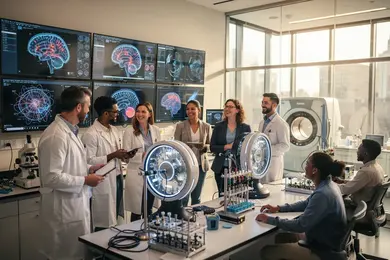
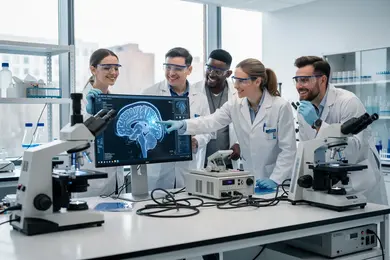
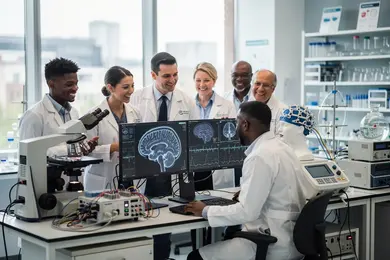
- Laboratory Techniques: These programs provide hands-on training with microscopes, electrophysiology rigs, and brain imaging devices. Mastering these tools allows students to investigate neural tissues and observe brain activity directly, forming the foundation of technical laboratory techniques learned in neuroscience programs.
- Data Analysis and Statistics: Students develop proficiency in software such as MATLAB, Python, or R, which enables effective handling and interpretation of large experimental or clinical datasets. This expertise in neuroscience data analysis skills for career success supports research accuracy and innovation.
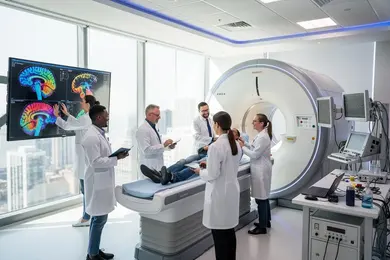
- Neuroimaging Methods: Instruction in MRI, fMRI, and PET technologies prepares students to analyze both anatomical and functional brain imaging. These methods are essential for research and clinical diagnostics that rely on precise visualization of brain function.
- Computational Modeling: Creating computer simulations to represent neural processes equips students to test hypotheses and enhance theoretical frameworks. This skill bridges biology with computational neuroscience, expanding research capabilities.
As neuroscience integrates more technology, students interested in advancing their education or exploring interdisciplinary fields might explore options like online MSN to DNP programs, which reflect trends toward digital proficiency in related healthcare pathways.
What Soft Skills Do Neuroscience Students Develop?
Neuroscience programs cultivate a variety of interpersonal and behavioral skills essential for success in both academic and professional settings. In fact, 89% of employers value teamwork highly when making hiring decisions, highlighting the importance of collaboration abilities. The following points outline key soft skills developed through neuroscience study.
- Clear Communication: Students refine their ability to convey intricate ideas understandably, whether through writing or speaking, which supports effective knowledge sharing and persuasion.
- Analytical Thinking: Rigorous evaluation and logical problem-solving become second nature, aiding students in navigating research challenges and complex situations.
- Collaborative Teamwork: By working in labs and study groups, students learn to cooperate respectfully, balancing responsibilities and embracing diverse perspectives.
- Efficient Time Management: Managing multiple assignments and deadlines trains students to prioritize tasks and maintain productivity under pressure.
- Adaptability: Exposure to evolving scientific concepts encourages flexibility and openness to change, enabling continuous learning and innovation.
- Active Listening: Engaging attentively in discussions fosters empathy and deeper understanding, strengthening peer and mentor relationships.
Reflecting on these skills, a neuroscience degree graduate shared that one of the most challenging moments was coordinating a group research project with differing viewpoints and tight deadlines. "It wasn't just about managing my schedule," he explained, "but really listening and adjusting my approach based on the team's feedback."
He found that overcoming frustration through patience and open communication ultimately enhanced group cohesion and produced better results. This experience highlighted the real-world value of collaboration and adaptability shaped by his educational journey.
By 2025, over half of the global workforce will need to reskill or upskill, underscoring how crucial versatile competencies are for career growth. Neuroscience degrees cultivate a wide range of transferable skills that enhance flexibility and adaptability across different industries. Below are some core skills developed through neuroscience studies that support cross-industry mobility.
- Critical Thinking and Analysis: Neuroscience programs sharpen the ability to assess complex information critically and solve problems systematically. This skill is essential for making informed decisions in diverse professional environments.
- Data Interpretation and Quantitative Reasoning: Handling and interpreting complex datasets builds strong quantitative skills. These abilities easily translate into roles requiring analytical rigor, such as in finance, market research, or data science.
- Effective Communication: Presenting scientific concepts clearly to varied audiences fosters communication skills that are vital in policy-making, education, and publication sectors.
- Attention to Detail: Precise observation and meticulous record-keeping during experiments develop observational skills important for quality assurance and regulatory compliance careers.
- Collaborative Problem Solving: Working in interdisciplinary teams encourages flexibility and cooperation, skills that apply broadly across many fields and enhance teamwork effectiveness.
Those curious about advancing in healthcare might also explore options like a doctor of nursing practice online to further develop complementary expertise.
About three-quarters of employers emphasize the need for advanced analytical capabilities in neuroscience roles, reflecting a growing gap between workforce skills and industry demands. As data complexity increases, the ability to interpret and manage this information becomes crucial for success in both research and applied settings.
Key skills in neuroscience today include:
- Data Analysis: Mastery of statistical and computational tools is vital for processing the massive datasets generated by brain research. This competency allows professionals to draw meaningful conclusions from diverse biological information, which is essential for innovation and evidence-based findings.
- Experimental Design: Crafting rigorous studies with well-defined hypotheses and controlled variables ensures research findings are reliable and replicable. Such methodological precision forms the backbone of credible neuroscience investigation.
- Neuroimaging Proficiency: Knowledge of MRI, fMRI, and PET technologies is increasingly important as these imaging techniques provide non-invasive insights into brain structure and function. The ability to analyze these images supports advancements in both clinical diagnosis and scientific exploration.
- Computational Modeling: Programming skills in languages like Python and MATLAB enable the creation of simulations that predict neural behavior. These technical abilities help to decode complex neural systems and drive forward computational neuroscience.
- Critical Thinking: Addressing multidimensional biological questions requires thorough evaluation of evidence and innovative problem-solving. Strong analytical reasoning fosters new perspectives in academic and professional neuroscience environments.
When speaking to a professional with a neuroscience degree about skills in demand, she reflected on her early career challenges balancing technical and conceptual demands. "I often found translating complex datasets into understandable outcomes was the biggest hurdle," she explained. This process involved long hours scripting custom analyses and refining interpretations, which initially felt overwhelming but ultimately sharpened her expertise.
She noted that patience and adaptability were key, emphasizing that developing proficiency in both computational tools and experimental logic made her a more confident researcher. Her experience illustrates how combining technical precision with creative problem-solving meets employers' expectations in today's neuroscience landscape.
Employers assessing entry-level neuroscience graduates focus on a balance of core knowledge and practical abilities that confirm readiness for professional environments. Surveys reveal that more than 70% of hiring managers prioritize problem-solving and data handling skills when choosing candidates in neuroscience roles. This highlights the need for graduates to apply theoretical concepts effectively in real-life situations.
Key competencies expected from entry-level neuroscience professionals include the following:
- Analytical Thinking: Candidates must demonstrate the capacity to evaluate complex scientific data critically, drawing clear and logical conclusions to support experimental or clinical outcomes. This skill is vital for interpreting results and guiding research directions.
- Laboratory Proficiency: Graduates should be skilled in fundamental lab techniques such as neuroimaging and electrophysiology, confidently using instruments and adhering to established protocols to ensure reliable data collection and experimental accuracy.
- Data Analysis: The ability to manage and interpret extensive datasets using statistical tools or programming languages is highly valued. Entry-level neuroscientists need to organize data carefully and detect significant patterns to inform scientific decisions.
- Communication Skills: Clear and concise communication, both written and verbal, is necessary for sharing research insights and collaborating effectively across diverse teams. Graduates should be able to translate complex information into understandable terms for various audiences.
- Problem-Solving: Employers seek individuals who can independently identify challenges during experiments and adapt methods accordingly. This involves developing practical solutions quickly in often fast-moving research settings.
A 2023 survey by the National Association of Colleges and Employers found that 72% of employers prioritize candidates with interdisciplinary skills like those cultivated in neuroscience programs, highlighting strong demand across diverse sectors. Neuroscience graduates possess analytical thinking, problem-solving, and data interpretation abilities that enhance adaptability in various fields. These competencies open doors to multiple career paths beyond traditional research roles.
Common career fields that leverage neuroscience skills include:
- Healthcare Professions: Roles such as neurologists, neurosurgeons, and neuropsychologists rely on neuroscience knowledge to understand brain function, guiding diagnosis and treatment of neurological disorders.
- Research and Pharmaceuticals: Research scientists and clinical trial coordinators use neuroscience expertise to develop therapies and increase drug efficacy within academic labs or pharmaceutical companies.
- Technology and AI Development: Neuroscience graduates contribute to artificial intelligence, brain-computer interface design, and cognitive computing by applying their understanding of neural systems to advance machine learning and user interfaces.
- Cognitive Psychology and Behavioral Science: Professionals analyze brain-behavior relationships to support mental health research, educational programs, and human factors studies.
- Policy and Science Communication: Knowledge of complex biological systems helps inform policy decisions and improve public education through clear science communication.
Certain neuroscience skills have a strong association with higher earning potential because they directly enhance an individual's ability to contribute to research and industry innovation. Employers recognize these skills as critical to advancing projects, which is reflected in compensation decisions. Salary premiums often correspond to the technical complexity and applicability of the skills in high-demand sectors.
Below are key neuroscience skills linked to increased salaries and their typical impacts:
- Data Analysis: Expertise in analyzing complex datasets using tools like MATLAB, Python, or R delivers a +10% to +20% salary premium. This skill is highly sought after in pharmaceutical and biotech companies where data-driven strategies fuel innovation.
- Neuroimaging Analysis: Proficiency in interpreting MRI, fMRI, and PET scans can add $5,000-$15,000 annually to a salary. This competence is vital in clinical research and medical device development, improving diagnostic and treatment capabilities.
- Programming Skills: Strong coding abilities for experimental design and automation result in a 10% to 25% salary boost. Employers value candidates who develop software to optimize data collection and analysis workflows.
- Machine Learning: Applying machine learning to neural data typically offers a 15% to 30% higher pay range. This expertise is increasingly important in fields like cognitive neuroscience, neuroinformatics, and AI applications.
- Scientific Communication: Grant writing and communication competencies can increase salaries by $3,000 to $10,000 per year, as securing research funding and disseminating results are essential in academic and industry roles.
Students exploring high-paying neuroscience career skills may also consider complementary education options, such as online radiology programs, to broaden their expertise and employment opportunities.
Internships play a vital role in neuroscience skill development by providing students with real-world neuroscience experience through internships that complements academic learning. These opportunities allow students to engage directly with experimental techniques, data collection, and analytical tools, translating theoretical knowledge into applied settings.
For example, hands-on involvement in laboratory protocols such as electrophysiology or neuroimaging exposes students to complex procedures not easily mastered in textbooks. Research shows that over 60% of neuroscience students who participate in internships report significant improvements in practical skills and overall job readiness.
Structured internship tasks and supervised practice help refine essential neuroscience competencies like critical thinking, problem-solving, and scientific communication. Working under experienced mentors, students receive immediate feedback, enhancing their understanding of intricate biological systems and experimental design.
Additionally, collaboration within multidisciplinary teams builds interpersonal skills and the ability to explain complex findings clearly. For students interested in expanding their educational options, exploring a kinesiology degree online can provide complementary pathways that integrate well with neuroscience training.
Clearly presenting neuroscience skills on a resume is crucial for showcasing your expertise and matching what employers seek. A well-organized skills section helps recruiters quickly grasp your strengths and their relevance to the position. Thoughtful presentation also reflects professionalism and attention to detail.
Consider these best practices when listing neuroscience skills:
- Structured Grouping: Organize related skills into categories such as laboratory techniques, data analysis, or cognitive assessments. Grouping enables a cleaner layout and aids employers in understanding your areas of proficiency at a glance.
- Concise Descriptions: Use brief, specific phrases that explain your hands-on experience. For example, stating "experienced in statistical modeling with software Y" conveys practical knowledge rather than vague claims.
- Clarity Over Jargon: Avoid overly technical language unless it is widely recognized in neuroscience fields. Clear terminology ensures your skills are accessible to diverse hiring audiences.
- Complementary Alignment: Ensure the skills you list correspond with your work history and academic projects. Consistency between sections builds a strong, coherent narrative about your qualifications.
- Consistent Formatting: Maintain uniform style and terminology throughout your resume. Consistency strengthens your professional image and highlights the depth of your neuroscience training.
What Graduates Say About the Most Valuable Skills You Build in a Neuroscience Degree
- Lawrence: "Completing my degree in neuroscience truly opened my eyes to the variety of skills one can develop, from critical thinking to sophisticated data analysis. The shift from undergraduate theory to graduate-level research challenged me to deepen my methodological expertise, which is invaluable in clinical and pharmaceutical careers. Today, I rely heavily on those foundational skills to innovate in neurotechnology development, a field that demands both precision and creativity."
- Yitzchok: "Studying neuroscience was a humbling journey that taught me to embrace complexity and uncertainty, especially when grappling with brain imaging techniques and neurophysiology experiments. What I found most rewarding was how these challenging skills translated directly into patient care and cognitive rehabilitation therapies, profoundly impacting lives. Reflecting on my career, the rigorous problem-solving training I gained has been crucial in healthcare settings where adaptability is key."
- Cameron: "From my perspective, a neuroscience degree cultivates not only technical proficiency but also an interdisciplinary mindset essential for research and academia. The toughest part was mastering computational modeling, which many overlook but is vital for understanding neural networks and advancing artificial intelligence. My career as a research scientist thrives on the blend of biology, programming, and critical analysis that neuroscience uniquely provides."
Other Things You Should Know About Neuroscience Degrees
In 2027, neuroscience skills enhance clinical work by providing a deep understanding of neural pathways and cognitive functions, crucial for patient assessments and treatment plans. They enable professionals to develop innovative approaches to neurological and psychiatric disorders, improving diagnostic accuracy and therapeutic strategies.
Yes, neuroscience provides foundational knowledge of neural systems that is critical for careers in neurotechnology and brain-computer interface development. Skills in data analysis, signal processing, and experimental design are especially relevant for designing devices and software intended to interact with or mimic neurological processes.
Most universities require a high school diploma with biology, chemistry, and mathematics. Competitive programs often expect calculus, a lab science sequence, and a minimum GPA around 3.0. Some also ask for a personal statement, letters of recommendation, and standardized test scores where still accepted.
Neuroscience training emphasizes critical thinking and troubleshooting experimental challenges, which are key in research positions. These problem-solving skills enable professionals to design rigorous studies, interpret unpredictable data, and refine methodologies to advance scientific understanding.
- How to Highlight Job Skills on a Resume – Association for Psychological Science – APS https://www.psychologicalscience.org/news/how-to-highlight-job-skills-on-a-resume.html
- Neuroscience CV example + guide and CV template https://standout-cv.com/cv-examples/science/neuroscience-cv
- The Neuroscience of Learning: improving the effectiveness of people skills training https://www.crossknowledge.com/blog/neuroscience-of-learning-people-skills-training/
- 1+ Neuroscientist Resume Examples [with Free Templates] https://www.tealhq.com/resume-examples/neuroscientist
- Five brain principles to train soft skills online https://www.anewspring.com/articles/how-to-train-soft-skills-online-use-the-power-of-these-5-scientific-brain-principles
- What Can You Do with a Neuroscience Degree? | Tiffin University https://www.tiffin.edu/news/what-can-you-do-with-a-neuroscience-degree/
- 8 Exciting Neuroscience Careers to Explore - SpecialtyCare https://specialtycareus.com/8-exciting-neuroscience-careers-to-explore/
- Neuroscience PhD Career Paths Beyond Academia https://www.industrycareerguide.com/blog/neuroscience-phd-career-paths
- Stanford Neuroscience Internship: A Comprehensive Guide https://ftp.bills.com.au/lunar-tips/stanford-neuroscience-internship-a-comprehensive-guide-1767647170
- Why I Majored in Neuroscience | Pomona College in Claremont, California - Pomona College https://www.pomona.edu/academics/departments/neuroscience/why-i-majored-neuroscience