2027 What Can You Do with a Forensic Accounting Master's Degree? Careers, Salaries & Growth

Co-Founder and Chief Data Scientist
Choosing a forensic accounting master's degree is a career investment, not just an academic decision. The field sits at the intersection of accounting, fraud investigation, litigation support, compliance, and data analysis, so the right program should prepare you for work that is technical, evidence-driven, and often legally sensitive.
The demand case is clear: financial fraud costs the global economy over $4 trillion annually, and in the U. S., the employment of forensic accountants is projected to grow 8% from 2022 to 2032, faster than the average for all occupations. Still, a graduate degree is not automatically the best path for every applicant. Cost, admission standards, certification plans, program format, and target industry all matter.
This guide explains what to expect from a forensic accounting master's program, including admissions requirements, GPA expectations, financing options, completion timelines, career paths, salaries, certifications, hiring industries, job outlook, and the skills graduates typically build.
Key Things to Know About What You Can Do with a Forensic Accounting Master's Degree
- Most forensic accounting master's programs require a bachelor's degree, offer flexible online or on-campus formats, and emphasize fraud detection, auditing, and legal frameworks for career readiness.
- Graduates typically enter roles such as forensic accountants or fraud examiners, with median starting salaries around $70,000 and strong demand in government, corporate, and legal sectors.
- Long-term salary growth can exceed 35% over a decade, especially when combined with certifications like CFE; comparing programs by cost, flexibility, and reputation is key for ROI.
What Are the Admission Requirements for a Forensic Accounting Master's Program?
Admission to a forensic accounting master's program usually depends on whether the applicant can handle graduate-level accounting, auditing, analytics, and investigative coursework. Schools may differ in selectivity, but most evaluate the same core evidence: prior education, academic performance, professional readiness, writing ability, and fit with the program.
- Relevant undergraduate degree: Many programs prefer applicants with a bachelor's degree in accounting, finance, business, or a closely related field. Applicants from other majors may still be considered, but they are often required to complete prerequisite coursework in accounting fundamentals, financial reporting, auditing, or business finance before beginning advanced classes.
- GPA threshold: A minimum undergraduate GPA is commonly around 3.0 on a 4.0 scale, although the exact standard varies by institution. A stronger GPA can help, but it is rarely the only factor in admission decisions.
- Standardized tests: Some schools request GRE or GMAT scores. Others have waived or made these exams optional recently, reflecting changes in admission trends post-COVID-19. Applicants should confirm whether a test score is required, optional, or recommended for scholarship consideration.
- Letters of recommendation: Programs commonly ask for two to three letters from professors, supervisors, or professional mentors. The strongest letters address analytical ability, ethics, attention to detail, communication, and readiness for graduate study.
- Personal statement: A statement of purpose should explain why the applicant wants to study forensic accounting, which career goals the degree supports, and how the program's curriculum fits those goals. Generic essays are a missed opportunity.
- Writing samples: Research-focused or investigation-heavy programs may ask for writing samples. A strong submission should show clear reasoning, evidence-based analysis, and the ability to explain complex information precisely.
- Field-specific prerequisites: Some programs require prior coursework in auditing, fraud examination, or statistics. International students typically must meet English proficiency standards like TOEFL or IELTS.
Employment for accountants and auditors, including forensic accounting specialists, is projected to grow 7% from 2022 to 2032, a rate faster than average for all occupations. Applicants comparing flexible graduate formats can also review how institutions structure remote advanced study through an online phd option, although a forensic accounting master's remains the more direct credential for this field.
What Is the Minimum GPA Requirement for a Forensic Accounting Master's Program?
The minimum GPA requirement for a forensic accounting master's program is typically between 2.75 and 3.0 on a 4.0 scale. A GPA in this range signals that the applicant has enough academic preparation for graduate work, but it does not guarantee admission. Competitive programs often weigh GPA alongside professional experience, prerequisite grades, recommendations, essays, and, when required, test scores.
- Typical GPA range: Most forensic accounting programs set the minimum cumulative GPA between 2.75 and 3.0. Applicants should also check whether the school reviews the overall GPA, the major GPA, the last 60 credits, or grades in accounting-related courses.
- Variation by institution: Prestigious or private institutions may enforce higher GPA standards, while public schools often provide more flexible admission criteria. Program capacity, applicant volume, and faculty expectations can also affect selectivity.
- Holistic admissions: Many programs use a comprehensive review process. A candidate with strong fraud investigation experience, CPA-track coursework, or excellent recommendations may remain competitive even if the GPA is not the strongest part of the file.
- Alternate pathways: Applicants below the minimum threshold may be able to apply conditionally, complete prerequisite courses, submit stronger test scores, or demonstrate recent academic success through graduate certificates or nondegree coursework.
- Labor market context: Employment in accounting fields, including forensic accounting, is projected to grow by 7% from 2022 to 2032, so programs are looking for applicants who can meet both academic standards and workplace expectations.
Students building toward graduate-level accounting study from an earlier academic stage may also compare flexible undergraduate options such as an associate degree in 6 months online, especially if they need a faster foundation before pursuing bachelor's and master's credentials.
How Much Does a Forensic Accounting Master's Degree Cost and How Can You Finance It?
The cost of a forensic accounting master's degree depends on tuition, fees, enrollment pace, program format, residency status, and whether the student continues working while enrolled. The most useful way to compare programs is to calculate total cost, not just tuition per credit.
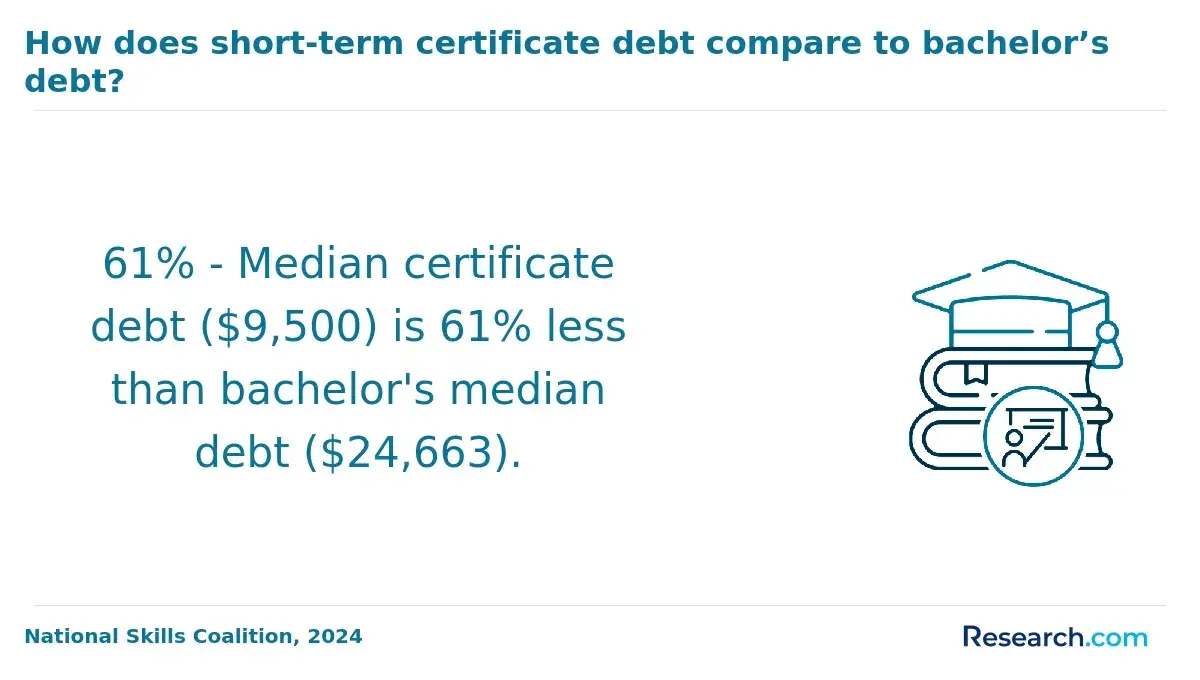
- Comprehensive cost breakdown: Tuition, mandatory fees, books, technology charges, housing, travel, and opportunity costs can vary substantially across institutions. Public universities generally have lower tuition, especially for in-state students, while private schools are more costly. Online programs may reduce commuting or relocation expenses, but students should still compare total program cost carefully.
- Available funding sources: Common financing options include scholarships, fellowships, graduate assistantships, employer tuition reimbursement, federal loans, and payment plans. Working students should ask employers whether fraud examination, compliance, audit, or accounting coursework qualifies for reimbursement.
- Debt reduction approaches: Students can reduce borrowing by applying early for departmental aid, choosing an in-state public institution, comparing accredited online programs, taking a manageable part-time course load while employed, or seeking assistantships that include tuition relief.
- Return on investment: ROI depends on the difference between program cost and expected career benefit. Median salaries for forensic accounting professionals vary from $70,000 to $90,000, depending on specialization. High-demand areas such as fraud examination or cybersecurity auditing may justify a higher upfront cost if the program has strong placement outcomes and relevant coursework.
- Admission and acceptance factors: Many programs apply holistic reviews with roughly 40% acceptance rates, so strong applications may also improve access to scholarships and assistantships.
A forensic accounting master's graduate described financing the degree through employer tuition reimbursement combined with several scholarships. The experience required careful scheduling and budgeting, but it reduced the amount borrowed and made the degree more manageable. The practical lesson is simple: apply for aid early, verify employer benefits before enrolling, and compare net cost after scholarships rather than relying on published tuition alone.
How Long Does It Take to Earn a Forensic Accounting Master's Degree?
A forensic accounting master's degree usually takes 1.5 to 2 years for full-time students and 3 or 4 years for part-time or online students. The actual timeline depends on course load, prerequisite needs, thesis requirements, internship expectations, and whether the program offers accelerated scheduling.
- Full-time enrollment: Students who enroll full time generally finish in 1.5 to 2 years. This path is best for those who can prioritize school and handle a heavier course load each term.
- Part-time and online programs: Working professionals often choose part-time or online formats and may complete the degree in 3 or 4 years. This slower pace can make the workload more realistic, especially for students balancing job responsibilities, family obligations, or certification preparation.
- Accelerated and combined pathways: Some institutions offer accelerated tracks or combined bachelor's/master's programs that let students begin graduate coursework early or complete courses in compressed terms.
- Transfer credits: Applicants with relevant prior graduate coursework may be able to transfer credits, although policies vary. Transfer approval can shorten the timeline, but schools typically limit the number and age of credits accepted.
- Thesis versus non-thesis tracks: A thesis or research-intensive option may add time because students must complete original research or a major written project. Non-thesis tracks usually emphasize applied coursework, case analysis, and professional practice.
- Internship or practicum requirements: Required internships, practicums, or capstone investigations can strengthen job readiness but may extend the program if placement hours are difficult to schedule.
Students comparing degree formats should evaluate both time and cost. Resources on affordable online business degree programs can help applicants think through tuition, flexibility, and budgeting when comparing business-related academic paths.
What Career Paths Are Available with a Forensic Accounting Master's Degree?
A forensic accounting master's degree can lead to roles in fraud investigation, litigation support, compliance, audit, risk management, financial analysis, and government enforcement. The degree is most valuable when paired with strong accounting fundamentals, investigative judgment, communication skills, and, for many roles, professional certification.
- Direct forensic roles: Graduates often pursue positions as forensic accountants, fraud examiners, investigative accountants, or litigation support analysts. These roles involve tracing transactions, evaluating records, identifying irregularities, preparing reports, and supporting legal or regulatory proceedings.
- Adjacent positions: The same skill set applies to internal audit, corporate compliance, risk management, anti-money laundering, financial controls, and forensic data analytics. These paths may appeal to students who want investigative work without focusing exclusively on courtroom-related cases.
- Sector variety: Employers include public accounting firms, consulting firms, corporations, law firms, insurance companies, nonprofit organizations, and government agencies such as the FBI and IRS.
- Leadership potential: With experience, graduates can move into supervisory or executive roles overseeing fraud risk programs, internal investigations, compliance departments, or forensic accounting practices.
- Industry demand: Banking, insurance, healthcare, government contracting, and regulated industries consistently need professionals who can detect fraud, document findings, and help organizations strengthen controls.
One graduate described the degree as especially useful because the coursework relied on real-world cases rather than abstract accounting problems. Early investigations felt overwhelming, but repeated practice with evidence review, financial reconstruction, and written findings made complex fraud scenarios easier to manage. That practical preparation helped the graduate transition into investigative teamwork more quickly.
What Is the Average Salary for Forensic Accounting Master's Degree Holders?
Salary for forensic accounting master's degree holders varies by role, experience, employer, sector, location, and credentials. A master's degree can strengthen a candidate's profile, but compensation usually rises most when the degree is combined with practical investigation experience, advanced technical skills, and certifications such as CPA or CFE.
- Starting salaries: Professionals entering forensic accounting with a master's degree generally see annual earnings between $60,000 and $75,000. Entry-level roles may be in government agencies, public accounting firms, consulting practices, or corporate finance departments.
- Mid-level earnings: After five to ten years, salaries often rise to $85,000-$110,000. At this stage, professionals may manage cases, lead portions of investigations, work with attorneys, or specialize in areas such as fraud analytics, valuation disputes, or regulatory compliance.
- Senior and executive pay: Experienced forensic accountants, managers, and leaders frequently earn from $120,000 up to $160,000 or beyond. Higher salaries are more common in major markets, specialized consulting firms, and roles with significant leadership responsibility.
- Location and employer influence: Pay tends to be higher in large cities such as New York, Los Angeles, and Washington, D.C., compared with rural areas. Private-sector positions may offer stronger bonuses and incentives, while government roles may provide stability and benefits.
- Master's degree salary advantage: Holding a master's in forensic accounting usually translates into 10% to 20% higher earnings compared to bachelor's degree holders, reflecting employer demand for advanced expertise.
- Total compensation: Base salary is only part of the picture. Bonuses, health coverage, retirement contributions, paid professional development, certification support, and, in some corporate or consulting environments, equity can meaningfully affect total compensation.
What Professional Certifications Complement a Forensic Accounting Master's Degree?
Professional certifications can make a forensic accounting master's degree more marketable because they signal verified competence, ethical standards, and ongoing professional development. The best credential depends on the student's target role: public accounting, fraud examination, litigation support, internal investigations, or compliance.
- Certified Public Accountant (CPA): This credential, awarded by state boards in the U.S., is highly regarded and often required in forensic accounting roles within public accounting firms and corporations. Candidates must complete 150 semester hours of education, pass the Uniform CPA Exam, and meet professional experience requirements. CPAs must maintain the license through continuing professional education (CPE) every one to three years.
- Certified Fraud Examiner (CFE): Offered by the Association of Certified Fraud Examiners (ACFE), the CFE focuses specifically on fraud detection, prevention, and investigation. Eligibility requires a blend of education and professional experience, and candidates must pass a four-part exam covering fraud-related topics. This certification is especially valued in law enforcement, consulting, and corporate risk management and requires annual continuing education.
- Certified Forensic Accountant (Cr.FA): Provided by the American Board of Forensic Accounting (ABFA), this certification validates expertise in forensic accounting principles. Candidates need relevant work experience and must pass an examination. Renewal is contingent on earning continuing education credits to stay current with industry standards and practices.
Students should map certification timing before choosing electives. For example, a CPA-track student may need specific accounting credits, while a CFE-focused student may prioritize fraud examination, ethics, interview techniques, and investigative reporting. Career changers and international students should pay particular attention to eligibility rules, which can vary by credential and jurisdiction. Applicants comparing cost-conscious graduate routes may also review cheapest online masters options while confirming that any selected program supports their certification goals.
What Are the Top Industries Hiring Forensic Accounting Master's Degree Graduates?
Forensic accounting master's graduates are hired wherever organizations need to detect financial misconduct, strengthen controls, support litigation, or comply with complex regulations. The strongest industry fit depends on whether the graduate prefers investigative work, advisory services, compliance operations, data analysis, or public-sector enforcement.
- Financial services: Banks, investment companies, credit unions, and other financial institutions use forensic accountants to detect fraud, monitor transactions, ensure regulatory compliance, and support legal proceedings. Common roles include fraud examiner, forensic auditor, compliance analyst, and anti-money laundering specialist. CFE and CPA credentials are highly valued.
- Government agencies: Agencies such as the FBI, IRS, state law enforcement offices, and regulatory bodies hire forensic accountants for criminal investigations, tax cases, public corruption matters, and enforcement actions. Digital investigation skills and familiarity with forensic technology can strengthen applications.
- Consulting and accounting firms: Consulting firms and accounting practices hire forensic specialists for dispute resolution, investigations, risk assessments, internal control reviews, and expert support. Strong report writing and client communication are especially important in this sector.
- Insurance sector: Insurance companies rely on forensic accounting to evaluate claims, investigate suspected fraud, quantify losses, and support litigation. Roles may focus on claim validation, fraud prevention, or financial damage analysis.
- Emerging technology fields: Cybersecurity and technology firms increasingly need professionals who can connect accounting knowledge with digital evidence. As digital fraud and cyber breaches expand, forensic accountants who understand data trails, systems, and financial records may have stronger opportunities.
- Career advancement tips: Students should target internships in the industries they want to enter, choose electives aligned with their preferred sector, and participate in professional organizations such as the Association of Certified Fraud Examiners. Coursework in fraud examination, regulatory frameworks, data analytics, and investigative reporting can improve readiness across industries.
What Are the Highest-Paying Jobs for Forensic Accounting Master's Degree Holders?
The highest-paying jobs for forensic accounting master's degree holders are usually senior, specialized, or leadership roles. Compensation tends to rise with experience, certifications, industry specialization, management responsibility, and the ability to handle complex investigations or litigation-sensitive financial analysis.
- Forensic Accountant: These professionals investigate financial inconsistencies and fraud, often for government agencies, law firms, accounting firms, or large corporations. Salaries range from $70,000 to $90,000 depending on experience. Strong analytical skills and certifications such as the Certified Fraud Examiner (CFE) can improve advancement potential.
- Fraud Examiner: Fraud examiners identify, investigate, and help prevent financial crimes within organizations. They earn between $65,000 and $85,000 and are commonly employed by banks, insurance companies, regulatory agencies, and corporate investigation teams. Data analysis skills and CFE or CPA credentials can strengthen job prospects.
- Financial Analyst - Forensic Services: These analysts review complex financial information tied to litigation, compliance, disputes, and investigations. They make between $80,000 and $110,000 and often work in consulting, legal advisory, or corporate risk settings. Financial modeling, forensic analytics, and advanced certifications are useful.
- Forensic Audit Manager: Forensic audit managers lead teams that investigate internal fraud, control weaknesses, and financial irregularities. They earn from $90,000 to $130,000, often after five or more years of experience. CPA or CFE designations are common, and employers may include major accounting firms and multinational corporations.
- Director of Forensic Accounting: Directors oversee forensic accounting departments, high-stakes investigations, client relationships, and investigative strategy. Salaries exceed $140,000, influenced by advanced degrees, multiple certifications, and extensive experience. High-paying roles are notably more available in financial hubs like New York and San Francisco.
What Is the Job Outlook and Employment Growth for Forensic Accounting Professionals?
The job outlook for forensic accounting professionals is stronger than the average for all occupations. The U.S. Bureau of Labor Statistics (BLS) expects jobs related to accountants and auditors, a common category for forensic accounting graduates, to grow about 7% from 2022 to 2032. This exceeds the average 5% growth forecast for all occupations.
- Rising financial regulations: Increased oversight in public and private sectors creates demand for professionals who can examine records, identify irregularities, and support compliance efforts.
- Technological advancement: Data analytics and digital forensic tools are changing how investigations are conducted. Forensic accountants who can work with large datasets and electronic evidence may be better positioned for growth.
- Globalization: International financial transactions can create complex fraud risks. Employers need professionals who understand cross-border issues, documentation standards, and financial patterns that may indicate misconduct.
- Automation impact: Automation may reduce some routine accounting tasks, but it also increases the value of professionals who can interpret anomalies, apply judgment, and explain findings in legal or executive settings.
Students who need a flexible foundation before graduate study can compare accounting programs online while checking whether each option supports later forensic accounting coursework, certification planning, and career goals.
What Skills and Competencies Does a Forensic Accounting Master's Program Develop?
A forensic accounting master's program develops the technical, analytical, legal, and communication skills needed to investigate financial activity and present findings clearly. The strongest programs combine accounting depth with applied casework, data analysis, ethics, and professional writing.
- Technical proficiency: Students build expertise in financial data analysis, auditing techniques, fraud detection, and investigative accounting. Many programs introduce specialized forensic tools and software such as IDEA and ACL.
- Research and legal knowledge: Coursework often covers evidence handling, legal procedures, regulatory frameworks, and research methods. These skills matter because forensic findings may be reviewed by attorneys, regulators, executives, or courts.
- Critical thinking: Students learn to evaluate complex financial scenarios, identify inconsistencies, test explanations, and separate ordinary errors from potential fraud indicators.
- Communication skills: Forensic accountants must translate technical findings into clear reports, presentations, and sometimes testimony. The ability to explain evidence without overstating conclusions is essential.
- Leadership and ethics: Graduate coursework often emphasizes ethical judgment, professional responsibility, and team leadership. These competencies are important in investigations where confidentiality, independence, and accuracy matter.
- Experiential learning: Internships, simulations, case studies, capstone projects, and collaborative investigations allow students to apply classroom concepts to realistic scenarios.
- Employer priorities: Recruiters consistently look for analytical ability, attention to detail, communication skills, professionalism, and comfort with both accounting records and investigative tools.
What Graduates Say About Their Forensic Accounting Master's Degree
- : "Applying to a forensic accounting master's program felt intimidating at first, but reviewing accredited institutions, official academic catalogs, and federal education resources helped me understand the requirements clearly. That preparation made the admission process more manageable and gave me confidence before classes began. — Kim"
- : "Comparing accredited forensic accounting master's programs forced me to be methodical. I checked accreditation carefully, studied the curriculum, and looked closely at degree requirements instead of relying on program descriptions alone. That process helped me choose a program that matched my career goals. — Russell"
- : "I was excited to pursue forensic accounting, but the application process had many details. Using official federal education resources and academic catalogs helped me evaluate institutions more professionally. Looking back, that research strengthened my ability to meet the program's expectations. — Jodie"
Other Things You Should Know About Forensic Accounting Degrees
A forensic accounting master's degree generally leads to higher earning potential compared to those with only a bachelor's degree. Graduates often see salary growth as they gain experience and apply specialized skills in fraud detection, litigation support, and financial analysis. Over time, earning potential can increase significantly, especially with additional certifications and leadership roles in organizations.
The Certified Fraud Examiner (CFE) is the most relevant credential for fraud investigations, and the Certified Public Accountant (CPA) adds strong value for litigation support and financial analysis. The CFE requires 40 continuing professional education credits every year to stay active.
In 2027, careers in forensic accounting are expected to grow as organizations increasingly focus on financial transparency and fraud detection. Advanced skills gained through a master's degree can enhance job prospects and lead to roles in law enforcement agencies, financial institutions, and consulting firms.
References
- Master's in Forensic Accounting - MS Degree Programs https://www.forensicscolleges.com/programs/forensic-accounting/masters
- Job Outlook for Forensic Accountants https://www.stevenson.edu/online/about-us/news/job-outlook-for-forensic-accountants/
- Master of Science in Forensic Accounting and Cybercrime https://www.neumann.edu/academics/grad/ms-forensic-accounting-and-cybercrime-online
- Forensic Accounting Career Paths, Skills & Salary Guide https://online.ewu.edu/degrees/business/mba/accounting/career-paths-salary-guide/
- Certified in Financial Forensics (CFF) | Accounting.com https://www.accounting.com/certifications/certified-financial-forensics/
- How to Become a Forensic Accountant https://www.allbusinessschools.com/specialties/how-to-become-a-forensic-accountant/
- Best of 2025: Online Master’s Programs in Forensic Accounting https://www.onlinemastersdegrees.org/best-programs/business/accounting/forensic-accounting/
- CRFAC® – Certified Forensic Accountant® Credentialing Program - American Board of Forensic Accounting https://abfa.us/certifications-designations/crfac-certified-forensic-accountant-credentialing-program/
- Forensic Accountant https://www.acfe.com/career/career-paths/career-path-accounting/career-path-detail-forensic-accountant
- Top 5 Forensic Accounting Careers - St. Thomas University https://www.stu.edu/news/top-5-forensic-accounting-careers/