2027 Telehealth Platforms vs Remote Patient Monitoring: Nursing Workflow Differences
Audited and Verified:
Our Editorial and Data Verification Process
Research.com uses government datasets, official education statistics and primary institutional information to support its career and degree guides. Our review process checks factual accuracy, occupational definitions, source dates and the requirements associated with the credentials discussed.
How This Article Was Fact-Checked
Our editorial team verifies salary estimates, employment projections, education requirements and program information against original data providers and official organizations. Salary figures are checked against the relevant occupational definitions and reporting periods. Information about licensure, accreditation and required in-person training is reviewed separately.
Fact-checked and verified on:

Co-Founder and Chief Data Scientist
A video visit and a stream of home blood-pressure readings can both reach a nurse through a screen, but they create different work. One centers on an encounter; the other requires a plan for reviewing data between encounters. For nursing students and nurses considering virtual care, that distinction affects clinical preparation, staffing expectations, and the jobs worth pursuing.
This guide compares the workflows, identifies the skills and credentials each requires, and shows when additional education is useful—and when employer training may be the better next step.
Key Things You Should Know
- Telehealth encounters usually organize nursing work around scheduled or on-demand patient contact; remote patient monitoring (RPM) adds recurring device-data review, exception handling, and follow-up between encounters.
- Neither a video platform nor an RPM dashboard changes a nurse's legal scope: RN practice still requires appropriate licensure, while an NP role requires separate advanced practice preparation and authorization.
- Before accepting an RPM job, ask who reviews alerts, during which hours, and under what escalation protocol; a device can collect readings continuously without a nurse monitoring them continuously.
What are the differences between telehealth platforms and remote patient monitoring for nurses?
Telehealth is a broad term for delivering care at a distance. A telehealth platform may support video visits, telephone encounters, secure messages, or virtual triage. RPM is a more specific service model: a patient uses a connected device to collect health information outside a traditional visit, and a care team reviews that information under an established workflow. An RPM program may use a telehealth platform for follow-up, so these are overlapping—not mutually exclusive—categories.
The comparison below focuses on what a nurse must do with information, rather than on a vendor's software features:
| Workflow feature | Telehealth encounter | Remote patient monitoring |
| Typical trigger | A scheduled visit, patient request, message, or triage call | A planned review, incoming reading, missing data, or configured alert |
| Primary information | Patient history, conversation, available images, and records | Device readings interpreted alongside symptoms, history, and care-plan context |
| Timing | Usually centered on an encounter, though messages may be asynchronous | Repeated review over days or weeks according to program coverage |
| Common nursing output | Assessment, education, documentation, and referral or escalation within scope | Data validation, trend review, outreach, documentation, and escalation under protocol |
For someone without an RN license, neither type of software is a shortcut into RN practice. A guide to nursing degrees without an RN background can help distinguish initial licensure programs from programs intended for already-licensed nurses.
How do telehealth and remote patient monitoring change nursing workflows?
In a telehealth encounter, the nurse typically verifies identity and location, establishes a usable connection, gathers information, assesses what can and cannot be evaluated remotely, documents the interaction, and arranges the next step. A limited camera view or inability to obtain vital signs may make an in-person evaluation necessary. The nurse should follow employer protocols rather than treating a remote encounter as a complete substitute for a hands-on examination.
RPM shifts more work between visits. A nurse may check whether a reading appears plausible, compare it with the patient's trend and documented plan, contact the patient for context, and route concerns to the authorized clinician. Missing transmissions also require a response plan: they may reflect connectivity, device-use problems, or disengagement, not necessarily a change in health status. Alerts need defined thresholds, coverage hours, backup staff, and escalation routes; otherwise, a dashboard can create work without a reliable safety process.
For an RN considering workflow improvement rather than a new license, online RN-to-BSN programs with applied assignments may offer opportunities to study documentation or care coordination. Confirm the actual assignments and any practice requirements with each school; an academic project does not replace employer-approved RPM training.
What nursing skills are required for telehealth and remote patient monitoring?
Both settings require clinical judgment, clear patient communication, accurate documentation, privacy awareness, and recognition of when remote information is insufficient. Telehealth particularly tests a nurse's ability to build rapport, assess symptoms through questions, teach patients without physical demonstration, and arrange appropriate escalation. RPM adds data literacy: recognizing trends without treating a single reading as a diagnosis, identifying possible device errors, and managing an alert queue without losing track of patients who have stopped transmitting.
Students should look for supervised practice with realistic scenarios, not just demonstrations of software. Useful exercises include conducting a structured virtual assessment, explaining device use in plain language, documenting an uncertain reading, and handing off a concern through the organization's approved process. Employers must still validate role-specific competence during orientation.
A professional changing careers should first determine whether the target job actually requires RN licensure. If it does, a direct-entry nursing master's program guide can help identify initial nursing preparation options; prior experience with technology or customer support does not itself authorize nursing assessment.
For most RN telehealth and RPM positions, the essential starting point is an RN-qualifying education pathway followed by licensure—not a degree labeled "telehealth." An ADN/ASN or prelicensure BSN can prepare a student for initial RN eligibility, subject to program and state requirements. An RN-to-BSN is for a nurse who already holds an RN license; it may strengthen population health, evidence appraisal, and care coordination knowledge but does not confer a new scope of practice.
An MSN in informatics, education, or leadership can fit a nurse who wants to design virtual-care workflows, train teams, or evaluate services. It is not automatically an NP program. A nurse seeking to diagnose and treat patients as an NP needs a qualifying population-focused APRN pathway and the applicable certification and state authorization. Experienced ADN-prepared RNs weighing graduate education can compare ADN-prepared RN graduate study options but should verify the award, entry requirements, and whether the specific track supports their intended role.
For a licensed RN whose goal is simply to move from bedside care into virtual triage or monitoring, relevant clinical experience, a supported transition, and employer training may be more direct than another degree.
Course titles vary, but the strongest preparation connects technology to decisions nurses actually make. Health assessment and clinical judgment help students recognize the limits of remote observations. Informatics addresses EHR documentation, data quality, decision support, and secure information handling. Population health and chronic condition management provide context for longitudinal monitoring, while communication coursework can strengthen remote teaching and care coordination.
Ask how a program evaluates these abilities. A case study requiring a student to interpret a series of readings, identify missing context, document uncertainty, and explain an escalation choice is more informative than a course catalog's brief mention of "digital health." For RNs considering a graduate informatics or leadership role, exploring less expensive MSN pathways after a BSN can be a starting point for comparing costs; inspect the actual curriculum before assuming it covers RPM operations.
Online coursework can be suitable for learning informatics, evidence appraisal, virtual communication, and workflow design. It does not remove the need for supervised clinical preparation in a prelicensure program or any required in-person activities. A program marketed as online may still require labs, simulations, campus visits, scheduled live sessions, or clinical placements near the student.
For an already-licensed nurse interested in leading a virtual care service, systems-focused DNP study options may be relevant to operational improvement rather than a new patient-care role. Verify the program's practice-hour, project, and attendance requirements; "online" and "without clinicals" should not be read as "without supervised practice requirements." If the goal is direct telehealth nursing, an employer's supervised orientation may be the more proportionate choice.
A virtual setting does not create a separate nationwide nursing license. Nurses need an active license and authorization appropriate to their role and the jurisdiction where the patient is located; applicable state law and any Nurse Licensure Compact privilege must be checked for the particular arrangement. Employers may also require identity verification, privacy training, documented competencies, and procedures for a patient who connects from another state.
RN licensure, national specialty certification, and APRN authorization are different things. A nurse providing NP-level virtual care needs qualifying APRN education, certification where required, and state authorization for that role and population focus. An existing NP considering a psychiatric specialty can investigate PMHNP certificate completion timelines, but a short advertised timeline does not establish eligibility or replace required supervised preparation. Confirm requirements with the program, certifying body, and relevant board of nursing.
Education time and cost depend chiefly on the credential a person already holds. A prelicensure associate pathway often takes about two academic years after any required prerequisites; a traditional BSN commonly takes about four years. RN-to-BSN completion may take roughly one to two years, while graduate timelines vary substantially by track, enrollment pace, and required practice experiences. These are planning estimates, not promises of completion.
Compare total cost rather than tuition alone: include fees, equipment, software, travel for required visits, clinical-placement expenses, examination and licensing charges, and earnings lost to scheduling changes. Published tuition is school- and cohort-specific, so a defensible price comparison requires written estimates for the same enrollment assumptions. An RN whose goal is NP-level virtual care can use nurse practitioner education on a budget to identify programs to investigate, then verify population focus, clinical arrangements, and total charges. An RN seeking a monitoring position that does not require APRN practice should compare those costs with employer-funded training first.
Relevant job titles include telehealth triage RN, virtual care RN, RPM care manager, remote chronic-care nurse, virtual nursing educator, and—in appropriately authorized roles—telehealth NP. Titles alone are unreliable: one "remote nurse" vacancy may involve scheduled video visits, while another expects a daily alert queue, outbound calls, and coordination across time zones.
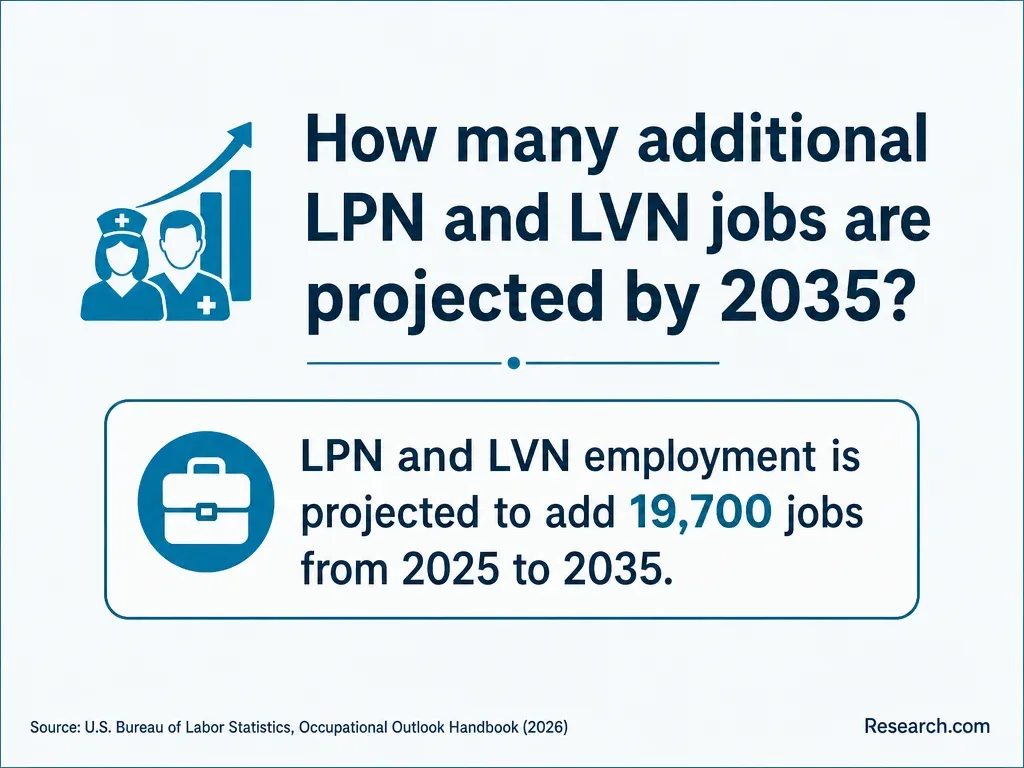
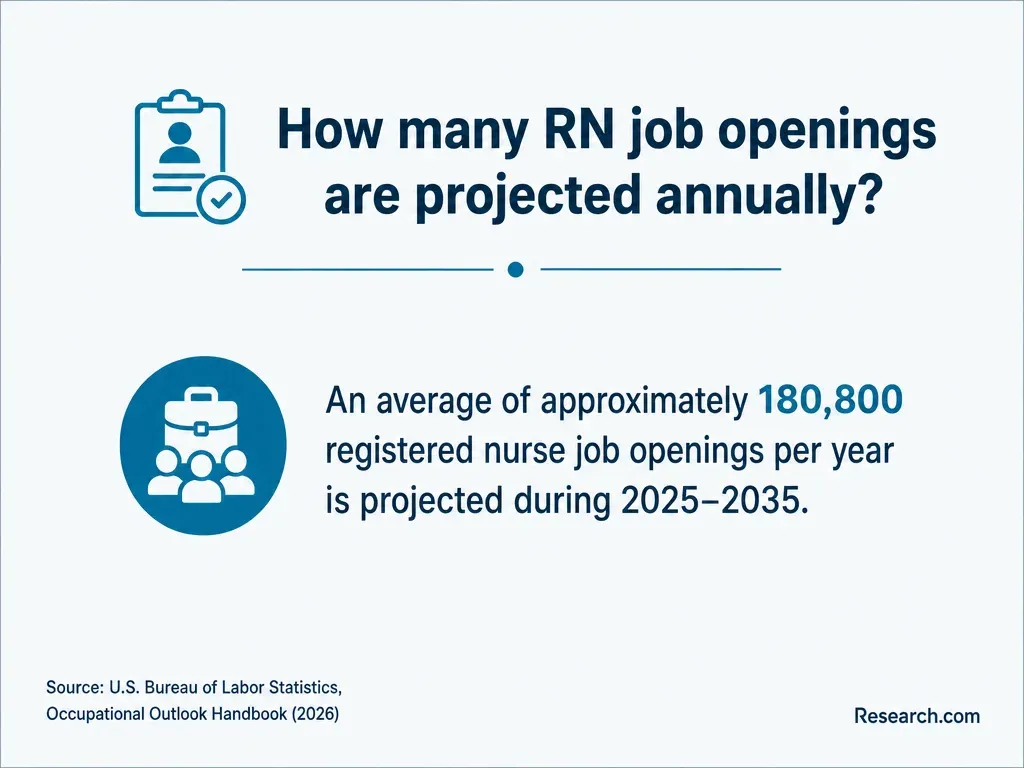
The U.S. Bureau of Labor Statistics reports wages and employment projections for occupations such as registered nurses and nurse practitioners, not a distinct "telehealth nurse" occupation. Those occupation-wide figures can provide context, but they cannot predict a virtual care offer. Compare the employer's posted pay range, location restrictions, shift coverage, patient volume, equipment support, and whether the position requires experienced clinical judgment. NP compensation and duties should not be used as a proxy for an RN monitoring job. Likewise, one-year family nurse practitioner pathways are relevant only to a nurse pursuing that separate advanced practice role—not a faster credential for RN telehealth work.
How can students choose an accredited nursing program for virtual care?
Start with the intended job and current license, then confirm that a program leads to the credential—or develops the capability—the job actually requires. For initial RN preparation, check the applicable state board's approval or recognition and the school's published NCLEX eligibility information. Separately verify institutional accreditation and, where relevant, nursing program accreditation such as ACEN or CCNE; these serve different purposes.
Before enrolling, ask the school to identify required on-site learning, who arranges clinical placements, whether students can complete requirements in their state, and how virtual assessment or monitoring skills are evaluated. Request a written total-cost estimate and recent outcomes for the specific program and cohort rather than relying on institution-wide marketing. If an already-licensed nurse is comparing a psychiatric advanced practice route, lower-tuition psychiatric nursing graduate programs are worth examining only after confirming PMHNP track eligibility and clinical-placement feasibility.
Finally, compare those answers with actual job postings. A program that teaches software concepts may be worthwhile for a systems role, but for a direct-care RN vacancy, recent relevant practice and a well-supported orientation may matter more than an additional credential.
Other Things You Should Know About Nursing
Participation and alternatives depend on the care plan and provider. The team should explain what monitoring involves, document the patient's decision, and arrange an appropriate alternative rather than assuming device use is mandatory.
The organization should have an accessibility process, such as an approved interpreter, an accessible platform, technical assistance, or another suitable care route. A nurse should not assume that a family member can replace a qualified interpreter.
The program should confirm that the replacement is assigned to the right patient, transmitting correctly, and supported by updated patient instructions. Device logistics and clinical review responsibilities should be clear.
Not necessarily. Employers set approved-device, network, privacy, and workspace requirements. Nurses should confirm those rules before accepting a remote position or accessing patient information.
- Introduction to telehealth and remote patient monitoring | hhs.gov https://telehealth.hhs.gov/providers/best-practice-guides/telehealth-and-remote-patient-monitoring
- Telehealth Policy and the Advanced Practice Nurse - PMC - NIH https://pmc.ncbi.nlm.nih.gov/articles/PMC10199742/
- Medicare Telemedicine Health Care Provider Fact Sheet | cms.gov https://www.cms.gov/newsroom/fact-sheets/medicare-telemedicine-health-care-provider-fact-sheet
- Telehealth Frequently Asked Questions - DHCS - CA.gov https://www.dhcs.ca.gov/providers-partners/telehealth-frequently-asked-questions/
- Remote Patient Monitoring Explained: What Practices Need to Know - ChartSpan https://www.chartspan.com/blog/remote-patient-monitoring-explained-what-practices-need-to-know/
- A Comprehensive Guide to Remote Patient Monitoring (RPM) | prevounce.com https://www.prevounce.com/a-comprehensive-guide-to-remote-patient-monitoring