2027 State Licensing Differences for Science Degree Graduates

Co-Founder and Chief Data Scientist
Graduates holding a science degree often face challenges when seeking professional licensure across different states. Requirements for licensure vary significantly, affecting eligibility, application procedures, and necessary examinations. For instance, some states mandate specific coursework or supervised experience, while others emphasize standardized tests or additional certifications. Understanding these distinctions is essential for graduates aiming to practice in multiple states or planning relocation. Without clear knowledge of state-specific criteria, applicants risk delays or rejections. This article examines the key differences in licensure processes for science degree holders across states and offers guidance to navigate these diverse requirements effectively.
Key Points About State Licensing Differences for Science Graduates
- Licensing requirements vary widely; some states require extensive supervised experience while others focus mainly on academic credentials and standardized exams.
- Applications are generally more challenging in states with multi-step verification and additional background checks, increasing wait times by up to 40% compared to others.
- Renewal processes differ, with several states mandating unique continuing education credits or professional development hours not recognized elsewhere.
What licenses or certifications are available to Science graduates?
The most widespread licensure for science graduates is the Certified Biological Scientist (CBS) credential, awarded by the American Institute of Biological Sciences (AIBS). This certification confirms expertise in biological fields and is widely recognized across many states. According to a report from the National Science Licensing Bureau, over 45,000 professionals currently hold the CBS credential, highlighting its strong acceptance and relevance in the science job market. State licensing differences for science degree graduates often hinge on such credentials, which may impact employment opportunities and regulatory compliance.
The licensing process for science graduates in the US can vary widely depending on the state and specialization. Beyond the CBS, other valuable licenses and certifications open up specialized career pathways. The following alternatives provide options for graduates seeking diverse niches within science.
These are some commonly pursued certifications and licenses:
- Certified Environmental Scientist (CES): Issued by the National Association of Environmental Professionals, this certification requires demonstrated knowledge in environmental science and is ideal for careers in regulation, consulting, and conservation sectors.
- Registered Science Technician (RST): Offered by the National Registry of Science Technicians, this credential focuses on lab and technical support roles, emphasizing practical skills and compliance in laboratory settings.
- Certified Science Educator (CSE): Provided by the National Science Teachers Association, this certification supports graduates specializing in science education, validating competence in teaching methods and curriculum design.
- Certified Clinical Research Professional (CCRP): Awarded by the Society of Clinical Research Associates, this certification is tailored for those involved in clinical trials, ensuring understanding of research protocols, ethics, and regulatory requirements.
- Professional Geologist (PG): Granted by the American Institute of Professional Geologists, this license recognizes expertise in geology and is often required for roles involving environmental assessments and resource management.
The specific science degree certification requirements by state can influence which credentials are preferred or mandated, making it important for graduates to research local mandates and industry demand. Many professionals also explore various certifications online to expand their qualifications and career options.
Is a professional license legally required or voluntary for Science graduates?
Licensing requirements for science graduates differ widely depending on the career and state. Certain professions, like environmental scientists, clinical laboratory technologists, and geologists, often must obtain a state license to practice legally, ensuring adherence to safety and regulatory standards. However, many roles in fields such as research and development do not mandate a formal license, with voluntary certification commonly preferred to demonstrate expertise and improve employability.
Working without a required license in regulated positions can lead to legal consequences, including fines or loss of job eligibility. Conversely, obtaining voluntary certification can offer competitive advantages by validating skills and dedication to professional standards, even if not legally compulsory.
When discussing licensure, a Science professional who graduated from an online bachelor's program shared his perspective: "Navigating licensure felt daunting at first, especially since requirements vary so much by location. I remember feeling unsure about whether to pursue certification since it wasn't mandatory for my field. Ultimately, earning a voluntary credential opened doors and helped me gain employer trust. The process involved extensive preparation and paperwork, but it was worth it for the confidence and opportunities it provided."
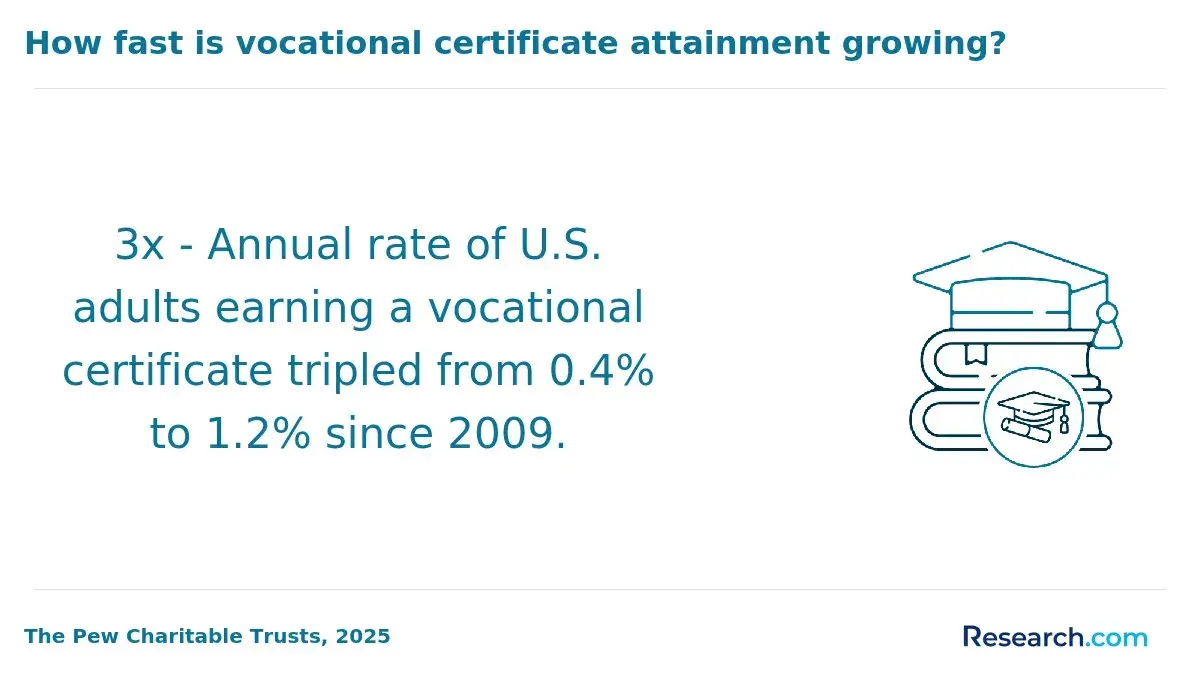
How do licensure requirements for Science careers differ by state?
Licensure requirements for science careers can vary significantly from state to state, impacting how graduates qualify for professional certification or licenses. These differences often involve documentation, education validation, and interview procedures. Below are some common variations seen across states:
- Educational Accreditation: Some states, like California, require candidates to hold degrees from regionally accredited or on-campus programs, while others, such as Texas, accept online degrees from accredited schools without additional scrutiny.
- Document Verification: States differ in how they verify transcripts; for example, New York often insists on notarized transcripts sent directly from the institution, whereas Florida accepts self-submitted copies accompanied by official seals.
- Examinations: Most states require passing a national or state-level exam, but the specific tests and passing standards can vary. Ohio, for instance, emphasizes clinical competency exams, while others focus more on written tests.
- Interviews and Recommendations: A few states, including Washington and Illinois, mandate letters of recommendation and conduct formal interviews to evaluate ethical standards, whereas many states do not require this step.
- Continuing Education: All states require ongoing education, but the number of hours and approved course types can differ, meaning license holders must stay aware of their state's criteria.
Obtaining a science degree is only the first step toward licensure, as state licensing boards require specific educational prerequisites that candidates must satisfy. These prerequisites differ significantly, making it essential to understand state-specific educational requirements for science licensure. Below are key components commonly evaluated by state boards.
- Bachelor's Degree: Most states require a bachelor's degree in a relevant science field from an accredited institution, but some states accept degrees in closely related disciplines, while others insist the degree explicitly references the licensed science specialty. For example, California may accept broader degrees, whereas Texas mandates more specific titles reflecting the field of science under licensure.
- Credit Hours: States typically require a minimum number of semester or quarter credit hours focused on science content, usually ranging from 120 to 150 credit hours. Some states set higher thresholds to ensure comprehensive preparation, with New York requiring more credit hours in core scientific disciplines compared to Florida.
- Accreditation Standards: Accreditation recognition can vary, with certain boards requiring degrees from regionally accredited schools only, while others consider national or programmatic accreditations. This affects candidates who earned their credentials from less commonly accepted institutions or international programs.
- Post-Baccalaureate Programs: Candidates whose degrees do not meet all state board criteria may be required to complete additional preparatory or post-baccalaureate coursework to align with state educational frameworks. States like Illinois often mandate these programs to bridge educational gaps for applicants.
- Education Verification: Some licensing boards conduct thorough transcript reviews and degree verifications, while others may require additional academic assessments to confirm that applicants meet minimum educational qualifications aligned with evolving standards.
Approximately 68% of state licensure boards have raised these educational prerequisites, underscoring their importance in meeting labor market expectations. For students considering licensure who want to explore affordable options for further education, resources for business management degree online may provide alternative pathways to satisfy some ancillary academic requirements. Exploring these options can complement the core science education necessary for successfully navigating the diverse state-specific educational qualifications needed for a science license by state.
While many science disciplines utilize standardized national exams for licensure, the administrative policies surrounding these tests, such as passing scores and retake limits, are governed independently by each state. This results in a complex landscape for candidates, with differing requirements impacting where and how they can obtain their licenses. Recent data shows that 42% of science licensure candidates encounter challenges due to these varied policies. The following outlines key areas where state-by-state science licensure exam requirements vary:
- Retake Limits: States differ widely in allowing exam retakes. For instance, California allows unlimited attempts within a five-year window, while Texas limits candidates to three retakes within two years. Such variation can greatly affect candidates' preparation and timeline for licensure.
- Passing Scores: Although the exams may be national, states set their own passing thresholds. New York requires a minimum of 75%, whereas Florida requires an 80% score to pass, reflecting differing expectations of competency for licensure.
- Exam Waivers: Some states, including Illinois and Georgia, permit waivers for certain exam sections based on prior education or relevant work experience, a flexibility not found in states like Alaska, which mandate full exam completion.
- Testing Windows: Scheduling varies; Colorado offers year-round testing availability, enabling flexibility, while Ohio restricts exams to two fixed annual periods, impacting candidates' planning.
Candidates should familiarize themselves with these variations to navigate the variations in science license application and renewal processes by state effectively. Those searching for flexible academic options complementary to licensure may find the cheapest online EdD programs helpful in advancing their qualifications.
Beyond completing academic coursework, obtaining licensure in science typically requires candidates to fulfill a set number of supervised clinical or field hours, which differ notably from one state to another. These variations reflect diverse regulatory frameworks and professional standards implemented across states.
Minimum experience requirements often range between 500 and 2,000 hours, with some states emphasizing more extensive practical training. For instance, California mandates up to 2,000 hours of supervised experience, while New York requires approximately 1,750 hours, reflecting their rigorous evaluation processes.
Conversely, states like Texas and Florida set lower thresholds, generally requiring between 500 and 750 hours. These discrepancies stem from how each state interprets adequate hands-on training, balancing clinical and research-based environments differently.
Changes in industry standards have led many states to increase their supervised experience requirements, prompting graduates to carefully review state-specific licensure regulations early on to ensure compliance and timely professional advancement.
Many state boards require science graduates to complete specific, localized coursework beyond the national curriculum, with about 68% of states enforcing mandatory accredited coursework for licensure. The requirements vary widely depending on the state and the scientific discipline. Below are some key coursework areas often required:
- Biology and Chemistry Fundamentals: Most states mandate courses in biology and chemistry as foundational topics to ensure graduates have essential knowledge of living organisms and chemical processes. For instance, California emphasizes rigorous accredited biology coursework, while some states allow board-approved certificate alternatives.
- Physics and Mathematics: These subjects are crucial for developing analytical and problem-solving skills applicable in many science careers. New York, for example, requires applicants to complete specific credits in physics and advanced mathematics to qualify for licensure.
- Specialized Environmental Science: In states with strong environmental regulations such as Oregon and Washington, specialized coursework in environmental science or related areas is often required to address local ecological concerns and regulatory standards.
- Laboratory and Technical Skills: Practical lab techniques and safety training are frequently mandated to prepare graduates for real-world scientific work. Requirements vary, with some states allowing portfolio reviews or continuing education credits as substitutes.
- Alternative Certification Acceptance: Approximately 22% of states permit professional development or continuing education certificates in lieu of traditional coursework, primarily for renewal or technician licenses.
For graduates exploring career options across state lines, verifying specific licensure prerequisites is crucial early in their education path. Those seeking the best colleges for social media marketing should also consider how local licensing requirements affect their chosen science disciplines.
The cost of applying for science licensure varies significantly by state, influencing how accessible this professional path is for new graduates. These differences affect budgeting and planning for obtaining the necessary credentials. Below is a snapshot of state-by-state costs for the science certification application:
- California: The application fee is approximately $150, covering the initial submission and required background checks to ensure compliance with professional standards.
- Texas: Applicants pay $100 for the application plus an additional $75 for the licensing exam, reflecting the combined effort of processing and competency evaluation.
- New York: Fees total around $200, which includes the certificate issuance and various compliance verifications essential for licensure maintenance.
- Florida: A $125 fee covers processing and verification of educational credentials, ensuring applicants meet the state's educational requirements.
- Ohio: The licensure fee is $85, one of the more affordable options, primarily covering administrative expenses involved with certification.
- Washington: Total costs are about $130, incorporating application processing and exam fees to assess qualifications.
- Massachusetts: Charges reach $180, reflecting comprehensive verification services and monitoring for license renewals.
According to a recent survey by the National Association of Professional Licensure Boards, 62% of science licensure applicants view fees as a major barrier, especially in states where application costs exceed $150. Awareness of these differences in application fees for science licensure by state can help prospective professionals prepare financially. For those considering educational pathways aligned with these licensure requirements, exploring options at a non profit university may offer flexible solutions.
Licensure reciprocity and interstate compact agreements refer to arrangements where states recognize professional licenses issued by one another, allowing professionals to practice across state lines without obtaining new licenses for each state. In the science sector, unlike some professions such as nursing or engineering, no dedicated nationwide compact or reciprocal agreement applies broadly to most science careers. This means science professionals generally face individual state licensing requirements, which often necessitate separate applications and approvals for each state they wish to work in.
Some states implement licensure by endorsement processes that can simplify transferring a science license. These typically require verification of the applicant's education, examination scores, and professional experience to assess equivalency with the new state's standards. If standards differ significantly, states may demand additional coursework or examinations before granting licensure. Although a few states participate in broader professional compacts that cover specific science-related roles, a universal compact specifically for the science sector does not currently exist.
The lack of standardized license reciprocity poses a substantial barrier for science professionals relocating between states. Approximately 47% of science workers who moved reported licensing requirements as a major obstacle to employment, underscoring the need for clearer pathways to support mobility. Without more consistent reciprocity, professionals must navigate complex and costly licensing procedures, potentially delaying career advancement and access to job opportunities nationwide.
Licensure renewal requirements for science degree holders commonly involve a renewal period of two to three years, accompanied by fees ranging from $50 to $150. Professionals must complete continuing education units (CEUs), typically between 20 and 40 hours per cycle, focusing on relevant scientific topics to maintain their credentials. Late renewal penalties can either be a flat fee or a percentage of the renewal cost, varying widely by state.
Certain states depart from these general guidelines by imposing unique conditions. For instance, California mandates 30 hours of approved coursework every two years and enforces severe consequences for late renewals, sometimes exceeding half of the original fee. Montana contrasts this with more extended renewal intervals lasting up to four years combined with lower fees and lighter CEU demands. These variations reflect differing regulatory priorities, influencing how professionals plan their ongoing education and administrative tasks.
When discussing licensure renewal differences, a Science professional who completed an online bachelor's degree shared that navigating the renewal landscape was unexpectedly complex. He noted, "I thought the process would be uniform nationwide, but the mix of fees, course requirements, and penalties caught me off guard." He described spending extra time researching specific state rules to avoid costly mistakes, adding that "renewal felt like balancing a second job, especially with unpredictable penalties if deadlines slip." This experience highlighted the practical impact of varied state standards on working Science graduates managing licensure while juggling careers and lifelong learning commitments.
What Graduates Say About the Licensing Process in the Science Industry
- Bryson: "Going through the licensure process in science was initially overwhelming due to the varying requirements from state to state. However, understanding these differences early helped me prepare adequately and reduced my stress considerably. Holding a certification has profoundly elevated my credibility and opened doors to advanced research opportunities that I couldn't have accessed otherwise."
- Tripp: "Reflecting on my journey, the path to licensure in science felt like a vital rite of passage that truly tested my commitment and knowledge. The statewide variations in testing and practical experience requirements made me appreciate the complexity and importance of regulation in this field. Ultimately, earning my license has not only boosted my confidence but also reinforced my dedication to ethical and innovative practice."
- Joshua: "The licensure experience in science is as much about personal growth as it is about meeting state mandates. I found that each state's unique criteria demanded careful research and planning, which sharpened my organizational skills. The professional advantage of certification is unmistakable-it has significantly increased my job prospects and professional network within the science community."
Other Things You Should Know About Science Degrees
Many states require background checks as part of the licensure application process for science professionals, especially those working in clinical or educational settings. These checks typically include fingerprinting to ensure there are no criminal records that could impact public safety. Requirements and procedures vary by state, so applicants should verify the regulations in their specific state licensing board.
Yes, most state science licensure boards require continuing education for science degree graduates to ensure they stay updated with industry standards and advancements. However, the specific number of hours and types of courses may vary by state, impacting renewals in 2027.
Licensure application processes for science careers vary in terms of submission format. While most states offer online portals for convenience, a few still require paper forms or supplemental mailed documents. It is essential for applicants to check their state board's preferred submission method to avoid delays.
Several states require a jurisprudence exam before granting science licensure, including Texas, California, and Florida for certain regulated science roles. The exam tests state laws, rules, and professional ethics, and is often taken after the national or technical licensing exam but before final approval.
- Become a Science Teacher | Science Teacher Certification https://www.americanboard.org/general-science/
- 6 Reasons to Get a Certificate or Diploma https://www.kangan.edu.au/study-with-us/our-blog/6-reasons-to-get-a-certificate-or-diploma
- 7 Reasons to Get Licensed or Certified in Your Field of Work https://rocketcert.com/rocket/blog/223-general/502-7-reasons-to-get-licensed-or-certified-in-your-field-of-work
- State Licensure https://www.ascp.org/boc/explore-credentials/state-licensure
- Get Ahead With Life Science Executive Certifications - Biotech Primer Inc. https://biotechprimer.com/get-ahead-with-life-science-executive-certifications/
- Continuing Education Requirements for RN Licensure Renewal by State | Vivian Community Hub https://www.vivian.com/community/healthcare-education/continuing-education-for-rn-licensure-renewal-by-state/
- Science & Environmental Board Exams Guide https://3d-universal.com/en/blogs/science-environmental-board-exams-guide.html
- Certification Guide for Young Professionals - Board for Global EHS Credentialing https://gobgc.org/professional-environmental-certifications-professionals/
- State License Continuing Education Course of Study - LabUniversity https://labuniversity.org/state-license-continuing-education-course-of-study/
- Professional Certification and Licensure: What's The Difference? - Gauge https://gaugeonline.com/professional-certification-and-licensure-whats-the-difference/