2027 Entry-Level Jobs With a Science Degree

Co-Founder and Chief Data Scientist
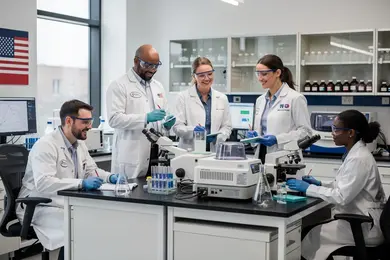
What job opportunities exist for graduates holding a science degree seeking entry-level careers? With over 40% of science degree holders entering the workforce within six months of graduation, beginner roles span industries such as healthcare, environmental consulting, and biotechnology.
Many employers look for candidates with foundational skills in data analysis, laboratory techniques, and scientific communication. While entry-level positions may not always match specialized expectations, they offer crucial experience and career growth potential. This article explores various entry-level jobs available to science graduates and provides insights into what to expect when starting a professional journey in the science field.
Key Benefits of Entry-Level Jobs With a Science Degree
- Entry-level jobs provide practical experience and industry-specific skill development crucial for science graduates entering competitive fields.
- These roles offer clear pathways for career advancement and long-term professional growth within scientific industries.
- Graduates can build valuable professional networks and enhance their resumes early, increasing employability in research and technical sectors.
What Entry-Level Jobs Can You Get With a Science Degree?
Nearly 65% of science graduates secure employment within six months of graduation, highlighting a strong demand for entry-level science jobs in the United States. These roles offer essential professional experience that supports long-term career advancement.
Below are common beginner-level career paths that help build practical expertise and industry knowledge.
- Laboratory Technician: Technicians assist with experiments, data recording, and maintaining laboratory equipment. This position develops hands-on skills in scientific procedures and data analysis, paving the way for specialized research or technical roles.
- Research Assistant: Research assistants support senior scientists by conducting literature reviews, preparing experiments, and managing data. This role fosters understanding of research methodologies and scientific communication, crucial for research and development careers.
- Environmental Consultant: Environmental consultants gather and analyze field data, prepare compliance reports, and work with clients on regulatory issues. This role builds expertise in environmental science applications and technical reporting, essential for policy or specialized environmental careers.
- Quality Control Analyst: Analysts test products, monitor manufacturing processes, and ensure compliance with quality standards. This job sharpens attention to detail and analytical skills needed in pharmaceuticals, food science, and manufacturing sectors.
- Science Educator or Outreach Coordinator: These roles involve communicating scientific concepts to diverse audiences at museums or community programs. They provide valuable experience in public engagement and education, laying groundwork for careers in advocacy or public relations.
For students considering the best careers for science degree graduates, exploring entry-level roles can provide foundational knowledge and professional networks. Those seeking guidance on the best degrees may find science fields offer diverse and promising pathways.
Which Industries Hire the Most Science Graduates?
Science graduates apply their analytical and technical skills across diverse sectors, with industries valuing their specialized knowledge to drive innovation and research. According to data from the U.S. National Science Foundation, about 40% of science graduates pursue careers in healthcare and social assistance, demonstrating where demand is strongest.
Below are some of the leading industries that commonly employ science degree holders.
- Healthcare: This sector hires graduates for roles such as laboratory technicians, clinical trial coordinators, and research assistants, driven by ongoing medical research, diagnostics, and pharmaceutical advancements.
- Environmental Science: The environmental sector recruits specialists for field research, environmental analysis, and regulatory compliance to support sustainability, conservation, and consulting efforts.
- Technology and Engineering: With a focus on innovation, this industry employs science graduates as quality control specialists, data analysts, and product developers who enhance technology solutions.
- Education: Teaching and academic support positions, including laboratory instructors and science tutors, allow graduates to contribute to science education at various levels.
- Government and Public Sector: Science graduates find opportunities in public health, research laboratories, and regulatory agencies such as the EPA and CDC to address societal challenges.
When discussing which industries hire the most science graduates, one graduate shared that navigating the job market felt overwhelming at first. He explained, "I discovered it wasn't just about qualifications but also about finding where my specific interests in biology and research aligned with employer needs."
He found that internships and volunteering helped him understand industry demands better. "Eventually, I landed a role at a public health agency, which felt like the perfect blend of my skills and passion. The process was challenging, but staying open to different industry options made all the difference."
Which Entry-Level Science Jobs Pay the Highest Salaries?
Entry-level salaries in the science field differ significantly depending on the specific occupation, industry, and technical requirements. Some positions offer notably higher starting pay due to their specialized knowledge and critical impact.
Below are several top-paying entry-level roles for science graduates.
- Pharmaceutical Scientist: These professionals work on drug development, testing, and ensuring regulatory compliance. Entry-level salaries typically range from $60,000 to $80,000, reflecting the technical expertise needed and their direct contribution to public health advancements.
- Data Scientist: Focusing on scientific datasets, these analysts turn complex information into useful insights. Starting pay often falls between $65,000 and $85,000, driven by their combined programming skills and analytical abilities that surpass many lab-based roles in value.
- Chemical Engineer: Entry-level chemical engineers earn about $65,000 to $85,000 by applying scientific knowledge to optimize processes and develop new materials. Their blend of science and practical engineering skills commands premium starting wages.
- Biomedical Engineer: Designing medical devices and systems, these engineers integrate science, health, and technology. Salaries for beginners generally range from $60,000 to $75,000, benefiting from the interdisciplinary nature of their work.
- Environmental Scientist: Working mainly in consulting or government, they analyze environmental issues and compliance matters. Entry-level pay spans from $50,000 to $70,000, supported by the growing demand for environmental expertise in regulatory contexts.
Employers reviewing entry-level science graduates look beyond academic credentials, focusing on practical skills that improve workplace performance. According to a 2023 survey by the National Association of Colleges and Employers, 78% of employers prioritize problem-solving and critical thinking.
Below are key qualifications for entry-level science jobs valued by employers.
- Analytical Thinking: The ability to interpret data, design experiments, and troubleshoot technical issues is essential. Employers seek graduates who apply logical reasoning to solve problems and make informed decisions in real-world scientific contexts.
- Communication Skills: Clear written and verbal communication is critical for explaining complex scientific concepts to diverse audiences. Effective communication fosters collaboration and ensures research findings are understood and actionable.
- Attention to Detail: Precision in measurements, documentation, and data recording is vital to maintain research accuracy and quality control. Employers expect meticulousness to prevent errors that could undermine scientific results.
- Teamwork and Adaptability: Working well in cross-disciplinary groups is common in science roles. Employers value graduates who can collaborate effectively and adjust to varying team dynamics and project needs.
- Technical Proficiency: Familiarity with software tools and laboratory technologies enhances immediate contribution to projects. For those interested in further educational opportunities, programs like the cheapest online school counseling programs (CACREP-accredited) may offer complementary skill sets.
Employers often prefer science graduates who have completed internships, as these experiences demonstrate practical skills and the ability to apply classroom knowledge in professional settings. Research shows that approximately 60% of science graduates with internship experience receive job offers, compared to just 36% without such experience.
This data underscores how internships can enhance a candidate's appeal in competitive entry-level hiring. Still, many graduates without internships secure positions by showcasing other strengths.
Candidates lacking internship experience can remain competitive by highlighting strong academic records, involvement in research projects, and transferable skills such as teamwork and communication. Employers also value relevant volunteer work or extracurricular activities that reflect initiative and dedication.
Hiring priorities differ widely among organizations and job roles, with some placing more emphasis on hands-on experience while others focus on educational achievement and potential. Understanding these variations helps graduates position themselves effectively when applying for science-related jobs.
Certifications add significant value to a science degree by showcasing specific skills and enhancing job applications. A 2023 study from the National Association of Colleges and Employers found that 67% of employers favored candidates with relevant certifications in early hiring decisions.
Below are key certifications that boost employability for entry-level science graduates.
- Certified Biological Specialist (CBS): This credential verifies competency in biological research methods and lab safety protocols. Employers appreciate this certification as it signals practical readiness for laboratory environments and adherence to safety standards.
- LabVIEW Certified Associate Developer (LCAD): Especially beneficial for physics or engineering science graduates, this certification confirms expertise in programming and automated measurement systems, indicating strong skills in instrumentation and data collection.
- Certified Environmental Scientist (CES): Targeted at environmental science graduates, it demonstrates an understanding of environmental legislation and impact evaluation, which helps candidates meet job requirements involving regulatory compliance and scientific documentation.
- Certified Clinical Research Professional (CCRP): Valued in clinical research fields, this certification assures employers the graduate is knowledgeable about trial regulations, ethics, and study administration, ensuring quality and compliance in medical research roles.
- Microsoft Certified: Data Analyst Associate: For graduates working with data visualization and analysis, this certifies the ability to use Microsoft Power BI effectively, making candidates attractive for roles involving data-driven scientific insights.
A professional with a science degree shared her experience navigating early career challenges. She recalled feeling uncertain which certifications would truly make a difference but found that pursuing a certification related to data analysis opened doors she hadn't expected.
"It wasn't just about adding a line to my resume," she explained; "the learning process boosted my confidence and made interviews less intimidating." She emphasized how the practical skills gained helped bridge the gap between academic theory and workplace expectations, ultimately smoothing the path to her first job.
Early preparation significantly boosts employability for science graduates. A National Association of Colleges and Employers (NACE) survey found that 91% of employers highly value candidates with work-ready skills developed before entering the workforce.
Here are key strategies students can use to build career readiness before graduation.
- Hands-On Experience: Engaging in research projects or academic labs provides practical skills and strengthens problem-solving abilities essential for scientific roles. This direct involvement simulates real-world environments and encourages critical thinking.
- Skill Development: Cultivating both technical skills, such as proficiency in data analysis and laboratory techniques, and soft skills like communication, teamwork, and time management enhances a student's appeal to employers and improves workplace adaptability.
- Networking Opportunities: Joining campus organizations and science clubs connects students with peers and professionals, fostering mentorship and industry insight that are crucial for career growth.
- Career Resources: Utilizing campus career centers for resume critiques, mock interviews, and job workshops helps students present themselves confidently and tailor applications to meet employer expectations.
By focusing on these areas, students create a strong foundation of experience and skills that make them competitive candidates ready to meet the demands of entry-level science positions.
The entry-level job market for science graduates remains highly competitive, with data from the National Science Foundation showing that approximately 78% of science degree holders secure employment within a year of graduation. This statistic highlights steady demand but also emphasizes the intense competition faced by graduates seeking entry-level positions.
Navigating this landscape requires understanding the various challenges involved in job hunting for recent science degree holders. Awareness of job market trends for recent science degree holders can better prepare candidates for what lies ahead.
One major factor shaping the competition is the large volume of applicants attracted to science-related fields, owing to their broad applicability and value. Employers often receive hundreds of applications for a single entry-level role, raising the bar for candidate selection.
Alongside applicant volume, employer expectations play a critical role, as organizations typically look for candidates with practical experience such as research projects, laboratory skills, or technical proficiency. Competition also varies depending on the role and sector, with some specialized areas being more competitive than others.
Graduates should consider supplementing their qualifications by exploring options like cyber security degrees to widen their career prospects in growing fields.
The rise of remote work has greatly expanded opportunities for entry-level positions available to those with a science degree. A 2023 FlexJobs report found that remote job listings grew by 35% year-over-year, reflecting a surge in early-career remote hiring.
This shift allows science graduates to access meaningful work without location barriers, making remote entry-level jobs for science graduates increasingly common. Below are some remote-friendly beginner roles aligned with science skills.
- Research Assistant: Supporting ongoing projects remotely, research assistants collect and analyze data, prepare reports, and manage digital resources. This role helps develop research skills and scientific literacy while enabling new graduates to gain relevant experience from home.
- Data Analyst: Working with datasets, data analysts use software tools to clean information, generate visualizations, and inform decision-making. In a remote setting, they collaborate virtually with teams, honing technical competencies valuable for early science careers.
- Environmental Consultant Assistant: Remote assistants help compile environmental reports, conduct literature reviews, and liaise with clients or agencies. This position fosters knowledge of environmental regulations and project management from a flexible work environment.
- Technical Writer: Creating manuals, summaries, or scientific documents, technical writers translate complex science concepts into clear language. This remote role enhances communication skills for graduates seeking to broaden their professional abilities.
For those exploring related education pathways, programs such as online MFT programs accredited provide flexible study options that complement work-from-home science degree positions and expand career possibilities.
Promotion speed for science graduates in entry-level jobs largely depends on individual performance, experience, and the organizational structure within their workplace. Industry data from 2023 reveals that about 45% of science degree holders achieve a promotion or career advancement within the first three years.
Typically, those who quickly build technical expertise and display adaptability can expect upward movement within two to four years after starting their careers. The promotion timeline for entry-level science jobs varies but tends to be faster in organizations with defined hierarchical pathways.
Several elements influence how quickly science graduates receive promotions, including the increasing complexity of job duties and consistent high performance on significant projects. Developing new skills and mastering emerging technologies relevant to the role also play essential roles in accelerating career advancement.
However, promotion timelines differ notably across employers and disciplines, with smaller organizations sometimes offering quicker but less formal advancement opportunities. For students interested in specialized fields, pursuing an MLIS degree can also impact career trajectory and promotion speed.
What Graduates Say About Entry-Level Jobs With a Science Degree
- Bryson: "Starting my career with a science degree, I quickly realized that being open to hybrid roles can significantly broaden your opportunities. When applying, I prioritized companies that valued work-life balance and offered mentorship programs. These entry-level jobs laid a strong foundation for my growth and helped me build a versatile skill set early on."
- Tripp: "Choosing my first job after graduation, I focused heavily on the impact the role would have on my career trajectory rather than just the paycheck. The hands-on experience in a fully onsite environment taught me how to collaborate effectively and exposed me to critical industry challenges. Reflecting back, those initial roles were crucial in shaping my professional confidence and ambition."
- Joshua: "As a recent science graduate, I was drawn towards remote entry-level positions because of their flexibility and the tech skills I could develop. I learned that weighing company culture and opportunities for continual learning are just as important as the job description itself. These early decisions greatly influenced my ability to transition smoothly into more specialized roles later."
Other Things You Should Know About Science Degrees
Entry-level positions for science graduates often take place in laboratories, research facilities, healthcare settings, or environmental organizations. Many roles require working with teams of scientists or technicians, while some may involve independent data collection and analysis. Understanding the specific work environment can help candidates prepare for daily job tasks and safety protocols.
In 2027, most entry-level science jobs are full-time positions, particularly in sectors like pharmaceuticals and environmental science. Part-time roles do exist but are less common and often found in research or educational settings.
Laboratory experience is very important for many entry-level science positions, as practical skills are often required to perform experiments, operate equipment, and record data accurately. Candidates with hands-on lab experience tend to be more competitive. However, some roles focus more on data analysis or fieldwork, where lab skills may be less critical.
Many entry-level science jobs require OSHA or lab-safety training before you start, especially in chemistry, biology, and environmental labs. Employers may also ask for CPR/first aid certification or HAZWOPER training for field roles involving hazardous materials.
- Tips and tricks to plan your career in science https://www.nature.com/articles/d41586-025-02889-w
- From Bench to Boardroom - Career Progression in the Life Sciences Industry https://www.genecoda.com/blog/from-bench-to-boardroom-career-progression-in-the-life-sciences-industry/
- Top Certifications and Courses to Boost Your STEM Career https://thecalculatedchemist.com/blogs/news/top-certifications-and-courses-to-boost-your-stem-career
- Top 11 Alternative Entry Level PhD Science Careers To Skip the PostDoc - The Grad Student Way http://thegradstudentway.com/blog/top-10-entry-level-phd-careers/
- Employability skills for science graduates: Insights from employers, educators and students https://www.learnsci.com/post/the-employability-skills-science-graduates-need-exploring-insights-from-employers-educators-and-students
- The skills employers seek https://www.emerging.fr/post/the-skills-employers-look-for-in-new-university-graduates
- Remote Part Time Science Jobs | Working Nomads https://www.workingnomads.com/remote-part-time-science-jobs
- Ten tips to prepare for a career in science and tech https://www.snexplores.org/article/ten-tips-prepare-career-science-and-tech
- Career Paths in Life Sciences: From Entry-Level to Executive. Carrières en sciences de la vie : un cheminement passionnant à tous les échelons. https://www.adecco.ca/en-ca/blog/career-paths-life-sciences-entry-level-executive/