2027 Return on Investment of an Online Innovation Bachelor's Degree: Salary vs Cost

Co-Founder and Chief Data Scientist
Consider a mid-career professional with a non-technical background aiming to break into the innovation sector without incurring overwhelming debt. The cost of online Innovation bachelor's degrees varies widely-yet salary premiums for graduates can justify the investment. Recent data shows that professionals with an Innovation bachelor's degree earn approximately 15% more than those without specialized credentials in the field.
This article analyzes the salary gains relative to program costs and explores factors affecting return on investment-helping readers make informed decisions about pursuing an online Innovation bachelor's degree to maximize career and financial outcomes.
Key Things to Know About the Return on Investment of an Online Innovation Bachelor's Degree
- Average tuition for online innovation bachelor's degrees ranges from $15,000 to $40,000, considerably lower than traditional on-campus programs, providing affordable access to high-impact skills.
- Graduates see a median salary increase of 20% to 35% within five years-salaries often exceeding $65,000 annually, reflecting strong market demand in tech-driven industries.
- Beyond financial gains, these programs enhance career advancement, job security, and professional development, equipping students with essential innovation management and problem-solving skills.
What Is the True Cost of Earning an Online Innovation Bachelor's Degree From Enrollment to Graduation?
When budgeting for an online innovation bachelor's degree, it is important to consider all expenses beyond basic tuition. These costs include technology fees, textbooks, proctoring fees, and other necessary course materials. Reliable data from IPEDS, university net price calculators, and the National Center for Education Statistics show that the average tuition and fees for online innovation degree programs can vary widely depending on the institution and available financial aid.
- Tuition Sticker Price: Published tuition rates usually range from $15,000 to $40,000 for the entire program. These sticker prices serve as a baseline but rarely represent the actual amount students ultimately pay after applying scholarships and grants.
- Net Price After Aid: The net price after aid is often 30% to 60% lower than the sticker price. Institutional aid frequently benefits working adults and first-generation students, significantly easing the financial burden.
- Technology and Fees: Additional mandatory fees are common, including technology access and online proctoring costs. Technology fees typically range between $200 and $800 annually, while proctoring fees can add $100 to $300 per course.
- Course Materials: Textbooks and digital resources may amount to $500 to $1,200 over the degree's duration. Some programs reduce this by offering bundled materials or open educational resources.
Considering these factors together, the total cost of earning an innovation degree online generally falls between $20,000 and $35,000. Prospective students can use this range as a realistic benchmark to evaluate their return on investment, comparing these expenses against potential salary gains sourced from labor statistics and education research. For a broader perspective on advancing education efficiently, explore the best one year masters programs.
How Does the Starting Salary for Innovation Bachelor's Degree Graduates Compare to the Total Cost of the Degree?
Graduates holding an online innovation bachelor's degree commonly enter roles such as business analysts, product managers, and project coordinators. According to the Bureau of Labor Statistics (BLS) Occupational Outlook Handbook, the median starting salary for innovation bachelor's graduates in the US generally ranges from $55,000 to $70,000 annually.
In comparison, the total cost to complete an online innovation degree varies significantly-ranging from approximately $20,000 in programs with low tuition and substantial financial aid to as much as $60,000 in higher-cost programs with minimal aid.
This cost versus salary return on investment for innovation degrees translates into real financial timelines: students in the best-case scenario may recover their degree expenses within four to five months of gross income, while those in higher-cost scenarios might take 10 to 13 months to break even. These payback periods highlight the immediate relationship between initial investment and entry-level earnings but do not fully capture the long-term value.
BLS data also suggests strong salary growth potential over a graduate's career. As experience and specialized skills increase, earnings often rise well beyond starting salaries, improving overall return on investment.
Additionally, benefits such as career advancement, job stability, and professional development contribute significant non-monetary value that should be part of any student's decision-making process.
- Median Starting Salaries: Entry-level innovation roles offer salaries between $55,000 and $70,000 annually, providing a solid income foundation immediately after graduation.
- Degree Cost Range: Online innovation bachelor's programs typically cost between $20,000 and $60,000 total, depending on institution and financial aid availability.
- Payback Period: Students in low-cost programs may recoup expenses within five months, while higher-cost cases require up to 13 months of salary to break even.
- Salary Growth Potential: Career earnings usually increase over time due to gained experience and skills, enhancing financial returns beyond starting salaries.
- Beyond Finances: Job security, promotion opportunities, and professional development add value beyond monetary compensation.
For a broader view of outcomes in various fields, including innovation, explore which degrees make the most money.
What Is the Average Return on Investment (ROI) for an Online Innovation Bachelor's Degree Over a 10-Year Career?
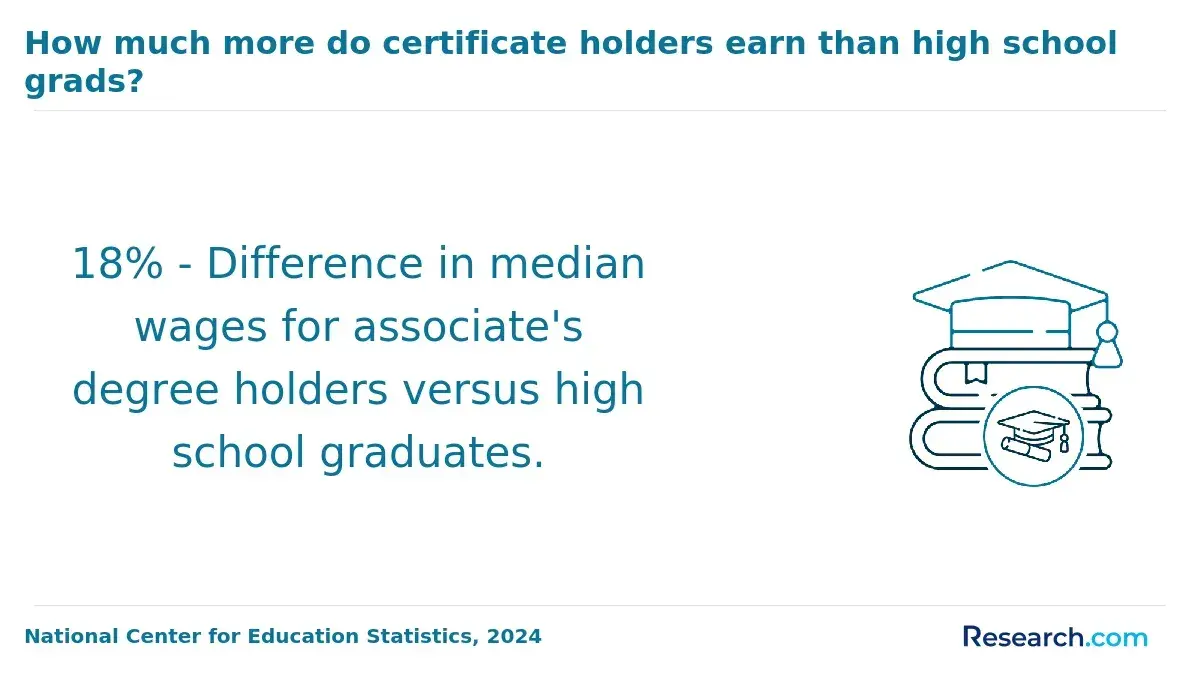
Return on investment (ROI) in higher education compares the total cost of obtaining a degree with the extra income earned over a decade in contrast to someone holding only a high school diploma or an associate degree in the same field. Data from Georgetown University's Center on Education and the Workforce and PayScale's College ROI Report show that, on average, a bachelor's degree delivers a positive and significant ROI, especially in fields tied to technological progress.
For example, using Bureau of Labor Statistics median wages for innovation careers, a graduate might start with an annual salary near $60,000, receiving approximate 3% raises each year. Over ten years, total earnings could reach around $675,000. Deducting typical online program costs between $40,000 and $60,000, the net gain compared to peers without a degree might be about $615,000 to $635,000, since those without degrees often begin around $40,000 and experience slower salary growth.
- Clear ROI Definition: ROI is calculated as the additional income earned over 10 years minus the full expense of the innovation degree, isolating the program's financial benefit.
- Cost vs Earnings: Tuition for online innovation degrees typically ranges from $40,000 to $60,000, allowing graduates to recoup their investment within a few years as salary premiums increase.
- Income Growth Assumptions: An assumed annual 3% raise accounts for career advancement and inflation in the innovation sector.
- Career Earnings Comparison: Over ten years, those with an innovation bachelor's earn about 50% more than counterparts with lower qualifications.
- National Bachelor's Degree Benchmark: The innovation degree's ROI exceeds the average return for all bachelor's degrees nationwide, reflecting strong demand for innovation-related skills.
One professional who pursued the online innovation bachelor's degree after carefully assessing the cost versus potential earnings described the decision as "a calculated leap." He explained that weighing the upfront tuition against long-term salary growth was crucial. "I wanted a program that balanced affordability with future opportunities," he said.
Despite challenges juggling work, studies, and family time, the flexibility of the online format made it manageable. He found that knowing the likely financial payoff helped maintain motivation through difficult stretches. "It wasn't just about immediate costs, but the doors it would open over my career," he reflected, emphasizing how important it was to view the degree as an investment-not just an expense.
How Do Online Innovation Program Tuition Rates Compare Across Public, Private, and For-Profit Institutions?
Tuition for online innovation bachelor’s degree programs varies widely depending on the type of institution, with public universities generally offering the most affordable rates and private schools charging higher premiums for added prestige and support.
While lower-cost options may seem appealing, students should also consider factors such as graduation rates, employer perception, and long-term career outcomes. Comparing both cost and value helps students make smarter financial decisions when choosing the right program.
Public Universities: These schools often provide the most budget-friendly tuition, especially for in-state students. Many now offer flat-rate online tuition, meaning both in-state and out-of-state students pay the same per credit hour fee. This approach adds predictability, which helps students manage costs better. Out-of-state tuition remains higher but is usually less expensive than private options.
Private Nonprofit Institutions: Tuition here is typically two to three times higher than at public universities. Despite steeper costs, these schools may extend generous financial aid. Graduates benefit from well-established alumni networks and greater prestige, which can open doors to career advancement and higher salary potential-important factors for evaluating online innovation bachelor's degree tuition comparison and overall return.
For-Profit Colleges: While often touting the lowest tuition rates among different institution types-which may attract those prioritizing immediate affordability-they generally report lower graduation rates. Additionally, employer skepticism regarding the rigor and credibility of these degrees can limit job prospects and salary growth. This challenges the notion that cheapest tuition always equals the best return on investment.
Students facing accounting degree or budgeting concerns should weigh these cost differences and outcomes carefully. Evaluating factors like graduation rates and employment success alongside tuition costs ensures a more informed decision about selecting an online innovation program that aligns with both financial constraints and career goals.
What Long-Term Salary Growth Can Innovation Bachelor's Degree Holders Expect Over a 20- to 30-Year Career?
Salary growth for individuals holding a bachelor's degree in innovation typically follows a steady upward curve influenced by experience and role advancement over a 20- to 30-year span. Early in their careers, graduates often see noticeable raises as they build essential skills and adapt to workplace demands. Entry-level salaries usually increase from about $50,000 to $65,000 within the first five years.
- Early Career Boost: Initial years bring rapid salary increases as professionals nurture practical experience, often raising their pay significantly compared to starting wages.
- Mid-Career Acceleration: Around a decade into their career, many transition into leadership or specialized positions like project manager or product development lead, with salaries climbing to approximately $85,000-$100,000, supported by survey data from PayScale and the American Community Survey.
- Senior Leadership Growth: More than 15 years in, professionals frequently assume strategic or managerial roles such as directors or innovation strategists, with annual earnings commonly exceeding $120,000, reflecting their advanced expertise and responsibilities.
- Cumulative Earnings Advantage: Over a full career, those with an innovation degree typically accumulate a lifetime earnings premium exceeding $700,000 compared to peers without a degree, according to combined BLS and wage survey analyses.
- Career Stability And Growth Opportunities: Beyond financial gains, degree holders benefit from enhanced job security and diverse professional development options, fostering sustained upward mobility in evolving sectors.
A professional who built her career after completing an online innovation bachelor's program shared that while juggling work and study posed challenges, it also enriched her problem-solving skills and confidence.
She emphasized the value of flexible learning formats that allowed her to progress without sacrificing income. Reflecting on her journey, she noted, "The degree opened doors to leadership roles I hadn't imagined." Her experience highlights how long-term growth is shaped not only by salary but by increased responsibility and the ability to seize new opportunities over time.
How Does the ROI of an Online Innovation Bachelor's Degree Compare to an Associate Degree or a Professional Certificate?
When comparing educational pathways, an online innovation bachelor’s degree requires a larger upfront investment than certificates or associate degrees but often delivers stronger long-term returns. Bachelor’s graduates typically earn higher salaries, gain access to leadership opportunities, and benefit from greater career flexibility over time. For students weighing affordability against future earning potential, understanding these trade-offs is key to choosing the credential that best supports their goals.
- Cost Comparison: The upfront expenses for an online innovation bachelor's degree typically range from $30,000 to $50,000, substantially higher than associate degrees, which generally cost between $10,000 and $15,000, or professional certificates available for a few thousand dollars. This price gap reflects variations in program length and depth.
- Salary Outcomes: Data from the Bureau of Labor Statistics show median annual wages for innovation-related bachelor's degree holders are about 40% greater than those for associate degree holders and up to 70% higher than for certificate earners. Earnings can fluctuate based on industry, role, and experience.
- Short-Term Investment Considerations: For individuals prioritizing quick entry into the workforce or managing limited finances, certificates and associate degrees often present the most accessible options. Certificates focus on specific skills, facilitating immediate employment or advancement in specialized positions. Associate degrees offer a balance of cost and completion time for foundational knowledge.
- Long-Term ROI Advantages: Bachelor's graduates typically have greater access to leadership roles, increased job stability, and broader career mobility. The comprehensive curriculum builds critical thinking and adaptability that enhance career longevity.
- Non-Financial Factors: Beyond salary, bachelor's degree programs cultivate project management and strategic innovation skills valued by employers. Higher-level credentials often improve job security and benefits, contributing to overall life quality.Employers may favor bachelor's holders for complex problem-solving and leadership capabilities.
Which Online Innovation Specializations or Concentrations Yield the Highest Earning Potential After Graduation?
Specializing within online Innovation bachelor's programs can significantly enhance earning potential, as shown by labor market data from the Bureau of Labor Statistics. Graduates who choose targeted concentrations typically see higher median salaries and faster returns on investment compared to generalist Innovation graduates.
- Technology Management: Often leading to careers as IT project or product managers, this specialization commands median salaries from $95,000 to $110,000-about 15-20% higher than generalists. Additional credentials like PMP certification may further boost salaries but add upfront costs.
- Entrepreneurship and New Venture Creation: Preparing students to start or run startups, median salaries start around $70,000 but vary widely. The role offers valuable non-financial returns, including equity opportunities and leadership experience. Continuing education in business law or finance may increase investment.
- Supply Chain and Operations Innovation: Graduates often become supply chain managers or operations analysts earning between $80,000 and $95,000. Certifications such as Six Sigma or Lean management improve job prospects but require more time and money.
- Health Innovation: Focused on healthcare technology, median salaries range from $90,000 to $105,000. Extra certification or licensure, like healthcare administration credentials, can raise costs and delay return on investment.
- Generalist Innovation Graduates: Without a specialization, graduates typically earn between $60,000 and $75,000, receiving a lower salary premium. Work experience or certifications may be needed to improve ROI.
Choosing the right specialization depends on your background and goals. Working professionals and career changers should weigh certification pathways and time-to-ROI carefully. Investing more initially can yield higher salaries and greater job security over time.
How Do Employer Tuition Reimbursement and Financial Aid Reduce the Net Cost of an Online Innovation Bachelor's Degree?
Employer tuition reimbursement programs can substantially reduce the out-of-pocket cost of an online innovation bachelor's degree by covering a major portion of tuition expenses. Under IRS Section 127, employers may provide up to $5,250 per year in tax-free tuition assistance, allowing employees to pursue degrees without increasing taxable income.
The Society for Human Resource Management (SHRM) reports that approximately 56% of U.S. employers offer tuition assistance, making this a widespread benefit for workers balancing education and career advancement.
Federal and institutional financial aid options complement employer tuition reimbursement by offering grants, scholarships, and subsidized loans. Grants and scholarships, often need-based, do not require repayment and significantly reduce net tuition costs.
Subsidized loans offer lower interest rates and deferred payments while enrolled, easing the financial burden. Together, these financial aid options create powerful tools to manage the overall cost of an online innovation bachelor's degree.
For students seeking employer tuition reimbursement programs for online innovation degrees, the combined impact can be transformative. Consider a student pursuing a 120-credit program with $30,000 total tuition. Employer reimbursement at the IRS tax-free maximum of $5,250 annually over four years covers $21,000. Adding a $6,000 federal Pell Grant and $3,000 in scholarships reduces their net out-of-pocket expense to nearly zero, minimizing debt and financial stress.
This approach maximizes return on investment by reducing upfront costs and debt, proving especially valuable to working professionals or first-generation college students aiming for career growth and job security. For those interested in related graduate studies, exploring child psychology masters programs online may offer additional career pathways.
- Employer Tuition Reimbursement: Employers frequently offer tuition assistance up to $5,250 per year, lowering direct education costs for employees pursuing degrees.
- IRS Section 127 Benefits: This regulation allows tuition reimbursement to be tax-free, enhancing the value of employer assistance without added taxable income.
- Financial Aid Opportunities: Grants, scholarships, and subsidized loans reduce net tuition costs, often without requiring repayment, reducing debt load.
- Combined Cost Reduction: Utilizing both employer benefits and financial aid can cut total tuition costs by 70% or more, making education affordable.
- Practical Example: A $30,000 tuition can be offset by employer reimbursement, Pell Grants, and scholarships, lowering net expenses to nearly zero and minimizing financial strain.
What Hidden Costs Should Students Factor Into the Total Investment of an Online Innovation Bachelor's Degree?
When assessing the return on investment (ROI) for an online innovation bachelor's degree, students often overlook several indirect costs affecting return on investment for online Innovation degrees beyond tuition.
These hidden fees can increase the total financial commitment significantly and delay the break-even timeline to recover expenses through higher salaries. This is particularly critical for first-generation college students, working professionals, and career changers balancing tight budgets.
College Board research shows that technology fees required to maintain online learning platforms generally range from $200 to $600 annually. Proctoring services, which are often mandatory for online exams, add $30 to $60 per assessment. Over a typical four-year program, these charges accumulate considerably, inflating overall expenses.
Graduation fees, often overlooked, include one-time costs between $100 and $300 to cover diploma processing and commencement activities. Additionally, some innovation programs require specialized software licenses or subscriptions, which can cost several hundred dollars per course. Active membership in innovation-related professional organizations adds annual fees from $100 to $250 but supports networking and career development opportunities.
These additional expenses can increase the total investment by 10% to 20% over advertised tuition fees. Prospective students should ask their chosen school for a comprehensive cost-of-attendance breakdown to factor in all hidden costs accurately. Evaluating the full cost versus verified salary data, such as from the Bureau of Labor Statistics and IPEDS, helps clarify long-term earning potential and ROI.
Prospective students seeking financial clarity might also explore related options like a library science degree online to compare affordability and outcomes.
- Technology Fees: Annual platform maintenance fees from $200 to $600 add steady costs beyond tuition, which first-generation and working students must account for in budgeting.
- Proctoring Costs: Exam monitoring fees of $30-$60 per test accumulate across multiple courses, increasing per-term expenses.
- Graduation Expenses: One-time payments between $100 and $300 cover diploma processing and ceremonies, often omitted in financial planning.
- Course Software Charges: Some innovation programs require costly software licenses or subscriptions, boosting per-course costs significantly.
- Professional Memberships: Annual fees from $100 to $250 contribute to ongoing career development expenses while expanding networking opportunities.
How Does the Accreditation Status of an Online Innovation Program Affect Graduate Salary and Employability?
Regional accreditation evaluates entire institutions and is widely respected by employers and graduate programs, while programmatic accreditation assesses specific fields. Degrees from regionally accredited schools carry more weight in hiring and salary negotiations because they reflect stronger academic standards and comprehensive quality.
Employer surveys by the National Association of Colleges and Employers (NACE) reveal over 70% of hiring managers favor candidates with degrees from regionally accredited institutions, associating them with greater skills and preparedness. Conversely, graduates from nationally accredited or unaccredited schools often face skepticism regarding their readiness, limiting their chances for competitive salaries and leadership roles.
Choosing a program without proper accreditation may restrict eligibility for professional licensure exams, graduate school admission, and jobs within government or healthcare sectors, which often require regional accreditation.
Prospective students should verify accreditation status through trusted sources such as the U.S. Department of Education's database or the Council for Higher Education Accreditation (CHEA) before enrolling to protect their investment.
- Regional vs. Programmatic Accreditation: Regional accreditation covers the whole institution, leading to broader recognition and stronger employer trust compared to programmatic accreditation, which is limited to certain disciplines.
- Employer Preferences: NACE data shows that most employers prioritize candidates holding degrees from regionally accredited schools, linking these credentials to higher competence and reliability.
- Licensure and Graduate Study: Credentials from non-accredited institutions may disqualify students from important licensure exams or advanced degree programs, hindering career progression.
- Job Opportunities in Public Sector and Healthcare: Many government and healthcare employers mandate degrees from regionally accredited schools, restricting jobs for graduates without these credentials.
- Verification of Accreditation: Checking official accreditation through the U.S. Department of Education or CHEA ensures the program supports better employment and salary outcomes.
What Entry-Level Job Titles and Salary Ranges Are Available to Graduates of Online Innovation Bachelor's Programs?
Graduates with online innovation bachelor's degrees often enter the workforce in roles offering varied starting salaries depending on the sector and job function. Below are eight common positions and their median entry-level salary ranges, drawn from data by the Bureau of Labor Statistics, NACE, and LinkedIn.
- Innovation Analyst: Median starting pay typically falls between $55,000 and $70,000. Technology and finance fields tend to provide the highest earnings. Skills in data analytics or design thinking certifications may enhance salary potential.
- Product Coordinator: Starting salaries range from $50,000 to $65,000, with healthcare and technology industries offering strong opportunities. Practical experience from internships often leads to higher pay brackets.
- Business Development Associate: Entry salaries usually span $48,000 to $62,000, with government and corporate finance sectors sometimes offering premium compensation based on negotiation or sales credentials.
- Project Coordinator: Typical pay begins around $45,000 and climbs to $60,000, especially in education and healthcare. Project management certifications like CAPM can speed salary growth.
- Market Research Assistant: Salaries start between $42,000 and $55,000. Technology and consumer goods companies generally pay the most. Proficiency with analytics tools can boost income.
- Innovation Consultant (Junior): Entry pay varies widely from $50,000 to $70,000, often higher in finance and tech. Specialized study tracks or internships improve job placement and compensation.
- Operations Analyst: Median salaries range from $48,000 to $63,000. Manufacturing and government agencies are leading employers. Certifications in supply chain or operations management add value.
- UX Designer (Entry Level): Starting pay typically ranges between $52,000 and $68,000, mainly in technology firms. Internship experience and strong portfolios centered on user-focused design enhance marketability.
Practical internships significantly influence quicker salary increases and improved job offers post-graduation. Certifications in project management, business analysis, or innovation methodologies often raise the starting salary ceiling. Graduates who specialize in finance or technology typically recover their educational investment faster due to higher entry salaries and more rapid advancement.
What Graduates Say About the Return on Investment of Their Online Innovation Bachelor's Degree
- Jason: "Choosing the online innovation bachelor's degree was a strategic decision for me after evaluating its ROI against the costs-affordability and flexibility made it stand out. Beyond financial gain, the program expanded my problem-solving skills and boosted my confidence in leading projects, which translated to better job security. Today, I'm in a leadership role that I believe would have taken much longer to achieve without this degree."
- Camilo: "Reflecting on my journey, the online innovation degree was more than just an investment in my career finances-it opened doors to new career advancement opportunities I hadn't imagined possible. The program's real-world applications sharpened my creativity and adaptability, invaluable traits that employers notice and reward. It's been a rewarding path that offered both professional growth and peace of mind about my job stability."
- Alexander: "Professional growth was my primary goal when enrolling in the online innovation bachelor's program, and the ROI has been clear in the years since. The cost was justified given the extensive network and resources the program provided, which accelerated my career development. Moreover, the confidence I gained by mastering innovative approaches has been an intangible yet vital return that supports my day-to-day work challenges."
Other Things You Should Know About Innovation Degrees
Most graduates of online Innovation bachelor's programs can expect to recover their tuition costs within five to seven years after entering the workforce. This timeline varies depending on the initial salary increase, which typically ranges from 10% to 30% compared to those with only a high school diploma. Students who attend lower-cost programs or who earn higher-paying roles in tech-driven industries may see a quicker return on investment.
Geographic location greatly influences salary outcomes for Innovation graduates. Urban areas with strong technology and startup ecosystems, such as Silicon Valley or New York, tend to offer higher salaries than rural or less economically diverse regions. Similarly, working in innovation-centric sectors like technology, product development, or consulting usually provides higher earnings compared to traditional manufacturing or administrative roles.
Employer surveys consistently highlight the value of Innovation bachelor's graduates for their problem-solving skills, adaptability, and ability to drive new processes. Labor market data confirms strong demand in sectors emphasizing digital transformation and entrepreneurship. Companies often prioritize candidates with Innovation degrees because they bring a mix of technical knowledge and strategic thinking that supports growth and change.
References
- 10 Highest-Paying MBA Specializations in 2026 (With Salary Data) - Paris School of Management (PSM) https://www.psm-paris.fr/en/10-highest-paying-mba-specializations-in-2026/
- ROI on degrees, certificates https://www.ccdaily.com/2024/10/roi-on-degrees-certificates/
- Uncovered: the Hidden Costs of University https://sites.exeter.ac.uk/students/2024/02/28/uncovered-the-hidden-costs-of-university/
- Which Bachelor's Degrees Lead to the Highest Salaries and Most In-Demand Fields https://www.investopedia.com/which-bachelor-s-degrees-lead-to-the-highest-salaries-and-most-in-demand-fields-11932411
- The importance of ROI in IT investments – how to make informed business decisions? - Adrian Stelmach https://adrianstelmach.com/en/the-importance-of-roi-in-it-investments-how-to-make-informed-business-decisions/
- The Hidden Costs of Paying for Higher Education https://www.futurityinvest.com.au/insights/futurity-blog/2025/02/11/the-hidden-costs-of-paying-for-higher-education
- The Real Bachelor’s Degree Earnings Story https://encoura.org/resources/wake-up-call/the-real-bachelors-degree-earnings-story
- Associate degrees and certificates are more valuable than you may think https://fordhaminstitute.org/national/commentary/associate-degrees-and-certificates-are-more-valuable-you-may-think
- 17 Highest Paying jobs for the future [2040] https://www.wearedevelopers.com/en/magazine/highest-paying-best-jobs-for-the-future
- Certificate vs. Degree: Pros, Cons, and Career Outcomes | National University https://www.nu.edu/blog/certificate-vs-degree/