2027 Prelicensure vs Postlicensure Nursing Education: Which Type of Program Are You Comparing?
Audited and Verified:
Our Editorial and Data Verification Process
Research.com uses government datasets, official education statistics and primary institutional information to support its career and degree guides. Our review process checks factual accuracy, occupational definitions, source dates and the requirements associated with the credentials discussed.
How This Article Was Fact-Checked
Our editorial team verifies salary estimates, employment projections, education requirements and program information against original data providers and official organizations. Salary figures are checked against the relevant occupational definitions and reporting periods. Information about licensure, accreditation and required in-person training is reviewed separately.
Fact-checked and verified on:

Co-Founder and Chief Data Scientist
A nursing program's degree name does not tell you whether it prepares you to become an RN or expects you to be one already. That distinction matters before you compare tuition, online classes, or career outcomes. This guide is for prospective nurses, career changers, and licensed RNs weighing their next educational step. It explains which pathways lead toward initial RN licensure, which build on an existing license, and what to verify before applying.
Key Things You Should Know
- Prelicensure RN programs prepare students to seek their first RN license; postlicensure programs generally require an existing RN license and do not replace initial RN preparation.
- Common initial RN routes include an associate degree, diploma, or prelicensure BSN; an associate program commonly takes about 2 years and a traditional BSN about 4 years, though prerequisites and individual schedules can change the total.
- Graduation, NCLEX-RN eligibility, state licensure, and employment are separate steps. Before comparing price or format, confirm the exact track's entry requirements, state approval, clinical arrangements, and intended credential.
What is the difference between prelicensure and postlicensure nursing education?
Prelicensure describes education intended to prepare someone who is not yet an RN for initial RN licensure. Postlicensure describes education undertaken after RN licensure, often to complete a degree or prepare for a different professional role. The distinction concerns the student's entry status and the track's purpose - not whether classes are online, advanced, or offered by a particular school.
An RN-to-BSN is postlicensure even though it awards a bachelor's degree: its nursing coursework builds on prior RN preparation. A traditional BSN is prelicensure if it prepares students for their first RN license. This is why licensed nurses exploring flexible BSN completion routes for licensed RNs should not compare them with prelicensure BSNs as if they served the same applicant.
Read the admissions page and the credential awarded together. "BSN," "MSN," and "online nursing" alone cannot establish whether an unlicensed applicant is eligible or whether the program leads toward an initial license.
Which nursing degree pathways lead to initial RN licensure?
The table separates common US entry routes by the qualification they award and the applicant they are designed to serve. Program names vary, so confirm that the specific track prepares graduates to seek RN licensure in the state where you intend to apply.
| Route | Typical applicant | Award and key distinction |
| ADN/ASN or nursing diploma | Applicant without an RN license | Associate degree or diploma with initial RN preparation; a diploma is not a college degree. |
| Traditional prelicensure BSN | Applicant without an RN license | Bachelor's degree incorporating initial RN preparation. |
| Accelerated prelicensure BSN | Applicant with a prior non-nursing bachelor's degree and required prerequisites | BSN through a more compressed nursing sequence; it does not waive clinical preparation. |
| Direct-entry graduate route for non-nurses | Applicant with a prior non-nursing degree who meets the program's prerequisites | Graduate-level route that includes initial RN preparation; the award and point at which students can seek RN licensure vary. |
For a career changer, previous coursework may satisfy some general education requirements, but a prior degree does not confer RN eligibility. Compare prerequisites, the first nursing credential awarded, and the point at which graduates can apply for licensure - not just the advertised degree level. Some entry-level MSN options for career changers have different credential sequences, so request the school's written pathway description.
What licensing requirements apply after completing a prelicensure nursing program?
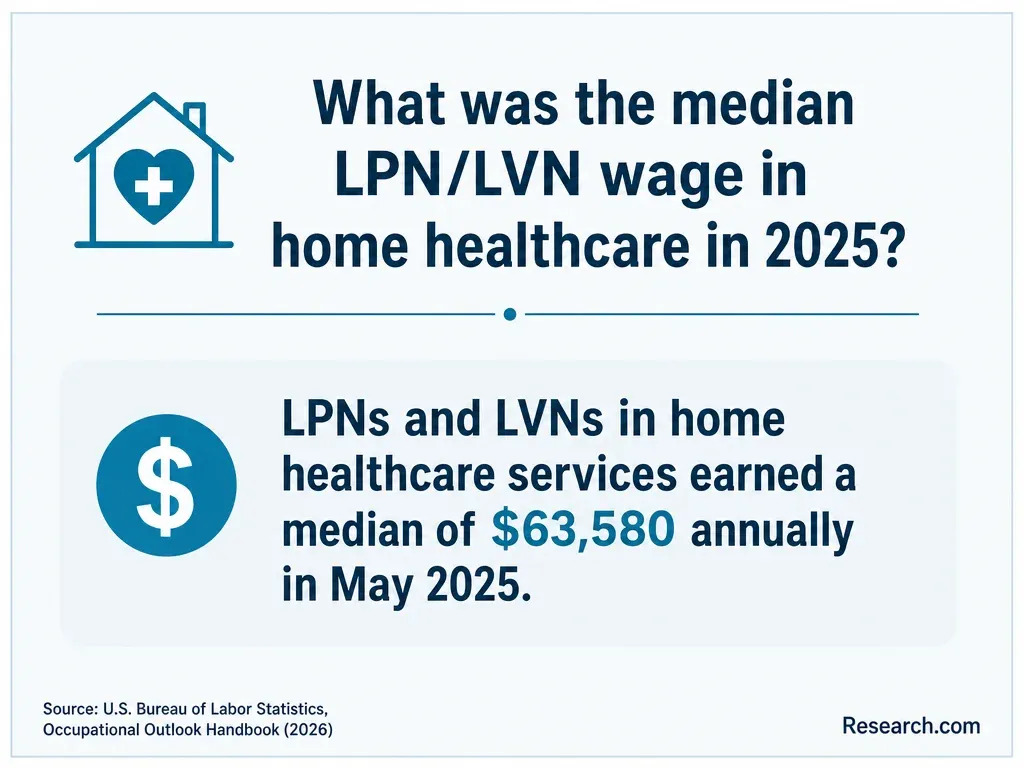
Completing an eligible program is a step toward RN licensure, not a license. The relevant state board of nursing determines individual eligibility; applicants generally must apply to the board, satisfy its documentation and background-check requirements, obtain authorization to test, and pass the NCLEX-RN. The board then makes the licensing decision. Requirements and procedures vary by state.
Confirm eligibility with the board for the state where you plan to seek your initial license, particularly if the school is elsewhere or the track is new. Passing the exam does not itself authorize practice before the required license is issued. An employer may also require orientation and demonstrated competencies after hiring.
Initial RN licensing should not be confused with later advanced practice authorization. For example, an RN considering planning a shorter post-master's FNP pathway must separately check the certificate's education, certification, and state APRN requirements; it is not an alternative to first becoming an RN.
Postlicensure study can serve different goals. An RN-to-BSN completes a bachelor's degree; an RN-to-MSN or BSN-to-MSN may support graduate preparation; and some MSN, DNP, or post-graduate certificate tracks prepare nurses for a defined advanced practice role. Other graduate tracks focus on education, leadership, informatics, or research and do not qualify graduates for NP practice merely because they award a graduate degree.
Choose backward from the intended job. An RN seeking a bachelor's credential may not need an MSN. An experienced RN seeking a targeted workplace skill may benefit more from employer training or continuing education than another degree. If a graduate degree is required for the goal, compare entry credentials, intermediate awards, and total charges across lower-cost online BSN-to-MSN degree routes rather than assuming every bridge saves time or money.
Online delivery usually describes where academic coursework occurs, not where all learning or assessment occurs. Prelicensure students should expect program-approved hands-on skills, simulation, and supervised clinical experiences. Postlicensure requirements differ: an RN-to-BSN may use projects or practice experiences, while an NP track has supervised clinical preparation tied to its role and population focus.
Compare actual weekly obligations: live class times, lab or campus visits, clinical shifts, travel, and who secures approved sites and preceptors. This matters especially if you work or provide care at home; asynchronous lectures do not make scheduled clinical experiences asynchronous. For example, family NP programs that help arrange clinical placements may offer different levels of assistance. Obtain the placement policy for your location in writing rather than assuming assistance guarantees a nearby site.
Prelicensure curricula commonly connect anatomy and physiology, pharmacology, assessment, and nursing care with skills practice, simulation, and supervised clinical learning. Students must learn to recognize changes in patient condition, communicate concerns, document care, and apply clinical judgment under appropriate supervision. Coursework and clinical sequences vary by program.
Postlicensure coursework depends on the goal. RN-to-BSN study may emphasize evidence appraisal, population health, and leadership; an educator track may address curriculum and teaching evaluation; an APRN track requires preparation aligned with its role and patient population. A practice-focused DNP can also include a substantial improvement project. When comparing DNP practice and project requirements, check what a program means by "without clinicals": that wording does not establish that it has no practice experiences or project obligations.
Prelicensure applicants may need specified science courses and labs, minimum grades, an entrance assessment, and clearance for clinical placement. A prior non-nursing degree can help with general education requirements, but schools decide course equivalencies, science-course age limits, and whether a student is admitted to the nursing major rather than only the institution.
Postlicensure applicants generally need the license appropriate to the track, plus any required degree, academic preparation, and experience. A post-graduate APRN certificate may require a relevant graduate credential and a program review of prior coursework and supervised preparation. Nurses planning an accelerated PMHNP certificate should ask whether their prior graduate preparation qualifies for that particular track; RN experience alone does not establish eligibility.
Before applying, send admissions your transcripts, license details if applicable, and the state where you intend to practice. Ask which prerequisites remain, whether clinical placement is available there, and whether any admission offer is conditional.
An ADN is often described as a roughly 2-year program and a traditional BSN as roughly 4 years, but prerequisite semesters, waiting periods, and course sequencing can extend the time to licensure. Accelerated BSNs compress the nursing sequence rather than eliminating it. RN-to-BSN and graduate timelines vary substantially with transferred credit, enrollment pace, and placement availability.
There is no reliable single price for "prelicensure" or "postlicensure" study. Compare a written, program-specific total that includes tuition and fees, required equipment and screenings, books, travel or lodging for clinical and campus requirements, and exam or licensing expenses when applicable. Account for reduced earnings if a demanding clinical schedule limits work. For graduate study, online NP tuition and fee considerations are only part of the calculation; placement-related travel and the cost of additional terms can change the total.
Check three different things. Institutional accreditation applies to the school. Nursing program accreditation, where applicable, applies to a specified nursing program or degree through an accreditor such as ACEN or CCNE. State board approval or recognition concerns the program's status for nursing education and potential licensure eligibility under that board's rules. None of these terms is a substitute for the others.
Verify the exact track and campus or delivery location, not just the school name. Ask the program and intended licensing board whether the track meets applicable educational requirements in your state. For an APRN goal, also check the requirements of the relevant certifying organization. Even when comparing budget-conscious PMHNP study options, a lower advertised tuition is useful only if the specific track fits your licensing, certification, and clinical-placement needs.
What careers, salaries, and job outlooks follow each nursing pathway?
A prelicensure pathway can lead to an RN career after the graduate obtains a license. Postlicensure education may help an RN meet requirements for particular positions or pursue an advanced role, but it does not guarantee promotion. Employers also consider experience, specialty onboarding, and demonstrated competence.
Compare pay using the occupation and location you actually intend to enter. The US Bureau of Labor Statistics reports wages and employment projections for occupations such as registered nurses and nurse practitioners - not salary guarantees for ADN, BSN, or MSN graduates. An occupation-wide median includes workers with different experience, employers, and settings; a local offer may differ substantially. Likewise, projected occupation growth does not establish demand for a particular graduate in a particular specialty.
For example, an RN considering fast-track psychiatric NP MSN study should compare the time and cost of role-specific education with certification and state APRN requirements, local openings, and the supervised experience needed to enter that role. The fastest academic route is not necessarily the fastest route to suitable employment.
Other Things You Should Know About Nursing
It is a pathway toward initial RN licensure, even though the student already holds an LPN/LVN license. Check the program's stated RN outcome rather than classifying it solely by whether the applicant has any nursing license.
Policies differ. Ask the program whether it requires an active, unencumbered license at admission and throughout enrollment, and resolve any licensing issue with the relevant state board.
Not automatically. The school must determine whether an experience meets its objectives, supervision, documentation, and approval rules. Employment and academic clinical hours are distinct unless the program formally accepts the arrangement.
If your goal is a specific skill or knowledge update and neither the role nor employer requires a new degree, targeted continuing education or employer training may be more direct. Confirm the requirement with the employer or credentialing body first.
- NCLEX Pass Rates - California Board of Registered Nursing https://www.rn.ca.gov/education/passrates.shtml
- Nursing Licensure Guide | Department of State https://www.pa.gov/agencies/dos/resources/professional-licensing-resources/licensure-processing-guides-and-timelines/nursing-guide
- What Is a Prelicensure Nursing Program: Your Path to Becoming an RN | Western Governors University https://www.wgu.edu/blog/what-is-prelicensure-nursing-programs-requirements2602.html
- Accreditation | University of Maryland School of Nursing https://www.nursing.umaryland.edu/about/accreditation/
- Licensure Requirements - Registered Nurse | ACC Catalog https://americancareercollege.edu/catalog/current/admissions-information/programs-preparing-graduates-for-a-field-requiring-licensure/registered-nurse-license
- Entry-Level Master of Science in Nursing | APU https://www.apu.edu/programs/entry-level-masters-in-nursing/
- Academic Programs | Joe C. Wen School of Nursing https://nursing.ucla.edu/admissions-programs/academic-programs
- Prelicensure BSN Frequently Asked Questions | Kean University https://www.kean.edu/prelicensure-bsn-frequently-asked-questions
- AACN Essentials FAQs | aacnnursing.org https://www.aacnnursing.org/essentials/tool-kit/faqs
- Board of Nursing Licensure Requirements | NCSBN https://www.ncsbn.org/nursing-regulation/education/board-of-nursing-licensure-requirements.page