2027 Online User Experience Master's Programs at Accredited U.S. Universities

Co-Founder and Chief Data Scientist
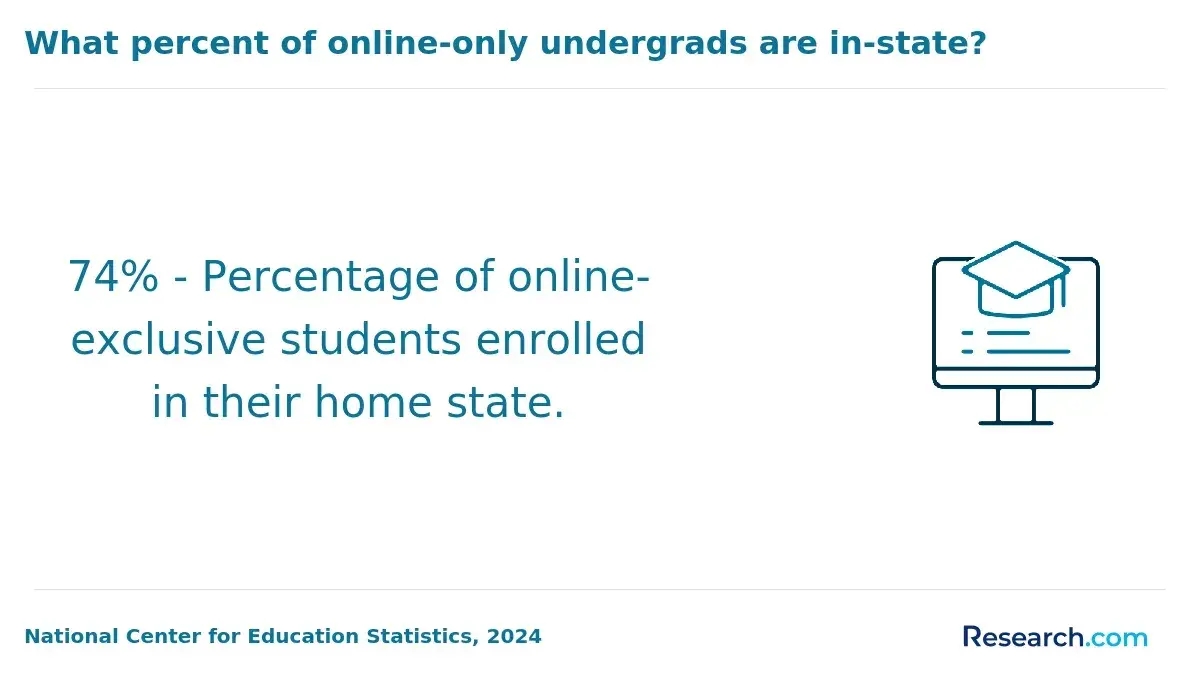
Choosing an online user experience master's program involves more than course content. Balancing admission prerequisites, tuition costs-including hidden fees-and flexible delivery methods directly impacts a student's ability to start and complete their degree on time. According to the National Center for Education Statistics, over 40% of graduate students in 2023 enrolled exclusively in online programs, signaling a shift toward digital learning that supports working adults and place-bound candidates. Understanding how program accreditation, financial aid availability, and career outcomes align with personal circumstances is essential for making a sound investment in both education and future employability.
Key Things to Know About Online User Experience Master's Programs at Accredited U.S. Universities
- Admission requirements often emphasize a professional portfolio over GPA, reflecting employer demand for practical skills; this shifts selection toward candidates with relevant experience, disadvantaging recent graduates without work samples.
- Most programs blend asynchronous with limited synchronous sessions, enabling flexible pacing but constraining networking opportunities that employers value in collaborative UX roles.
- Per-credit costs vary widely; given 2024 data from the National Center for Education Statistics show rising online enrollments among adult learners, cost efficiency becomes critical for career changers balancing time and tuition.
What Is the Overall Structure and Purpose of Online User Experience Master's Programs at Accredited U.S. Universities?
Online user experience master's programs at accredited U.S. universities serve a critical role in bridging the gap between evolving industry needs and accessible higher education. Their structure and purpose are carefully aligned to accommodate diverse student profiles, including working professionals seeking career transitions and first-generation graduate students navigating academic systems for the first time. These programs' accredited nature underpins a rigorous academic framework that, unlike some less formal training options, maintains strong employer confidence and eligibility for federal aid, which is a decisive factor for many evaluating overall educational investment.
- Program Structure: Online user experience master's programs generally require completion of 30 to 36 credit hours, balancing core theory with applied electives, and culminating in a capstone or thesis project designed to simulate real-world UX challenges. This ensures that graduates are not only conceptually prepared but also have practical artifacts showcasing their skills to prospective employers.
- Delivery Methods: These programs integrate asynchronous recorded lectures, live virtual discussions, interactive assignments, and collaborative group work through advanced learning management systems. This blend is vital for maintaining engagement and replicating the interplay of in-person teamwork in a decentralized, online environment, which mirrors the increasingly remote nature of UX roles in industry.
- Time-to-Degree: Recognizing the varied schedules of learners, most programs provide flexible part-time and full-time options, with typical completion timelines spanning from about 18 months to 3 years. This flexibility supports students who juggle employment or personal commitments, though choosing longer part-time formats can delay entry into higher-paying roles and affect return on investment.
- Accreditation Impact: Regional accreditation plays a non-negotiable role in signaling program quality and institutional legitimacy, impacting credit transferability and financial aid eligibility. Specialized UX program accreditation, where present, further demonstrates curriculum relevance and rigorous standards that employers increasingly value as the field matures and hiring criteria tighten.
- Distinctive Features: Online formats emphasize tools for digital collaboration and remote usability testing, reflecting current workforce trends toward distributed design teams. This focus equips students with competencies immediately applicable to virtual UX research and design environments, distinguishing them from graduates of traditional in-person programs lacking this emphasis.
Which Accrediting Bodies Recognize Online User Experience Master's Programs, and Why Does Accreditation Status Matter?
The accreditation of online user experience master's programs directly influences their practical value in career advancement and academic mobility. Selecting a program without appropriate accreditation can restrict transfer options, limit financial aid eligibility, and reduce recognition by employers or licensing bodies, creating tangible barriers in both education and the workforce.
Accreditation in this field primarily falls into two categories, each serving distinct functions but often complementing one another depending on career goals and specialization needs:
- Regional Accreditation: Granted by federally recognized agencies such as the Higher Learning Commission or WASC, regional accreditation applies to the entire institution. This broad endorsement validates academic quality, enabling credit transfer across accredited universities and qualifying students for federal financial aid, which is critical for managing tuition costs.
- Programmatic Accreditation: Less common but potentially crucial within user experience specializations intersecting with areas like design or psychology. Bodies such as the National Association of Schools of Art and Design (NASAD) provide this focused certification, signaling alignment with industry-specific standards vital for roles demanding niche expertise.
- Transferability and Recognition: Accreditation status often determines whether credits earned are accepted by other institutions and if degrees meet requirements for state licensing or credentialing. Non-accredited programs may yield degrees with limited portability and diminished professional credibility.
- Employer Acceptance: Many employers rigorously assess the accreditation of candidates' degrees, favoring credentials from programs with recognized endorsements. This scrutiny reflects the competitive job market and an emphasis on verified educational rigor.
- Due Diligence: Prospective students should confirm that targeted programs hold both the regional and, when applicable, the specific programmatic accreditations required by their intended employment sector and state regulations before prioritizing factors like cost, delivery format, or institutional reputation.
What Are the Admission Requirements for Online User Experience Master's Programs at Accredited U.S. Universities?
Admission requirements for online user experience master's programs at accredited U.S. universities reveal critical distinctions that impact applicant strategies and outcomes. Simply meeting baseline criteria rarely suffices, given employer expectations for evidence of readiness and adaptability. For instance, an applicant with a 3.0 GPA from an open-enrollment program may face steeper challenges competing for roles against graduates from more selective programs with higher median GPAs and relevant professional experience. Therefore, understanding institutional selectivity and how it shapes admission norms is essential for making informed choices and managing career expectations.
- Undergraduate GPA: Minimum GPA thresholds generally hover near 3.0, but programs with competitive admissions, often at private universities or selective publics, typically expect at least 3.3. This reflects the academic rigor employers associate with those institutions.
- Prerequisite Coursework: Core foundational knowledge in design, psychology, computer science, or human-computer interaction is widely required. Some programs permit enrolling without all prerequisites but may impose a steep learning curve or require remedial coursework.
- Letters of Recommendation: Usually two to three letters are necessary, emphasizing analytical thinking, creativity, and collaboration abilities valued in user experience roles.
- Personal Statements: These must clearly communicate motivations, relevant experience, and future goals, prioritizing narratives demonstrating problem-solving and flexibility over generic responses.
- Standardized Tests: The GRE requirement has diminished substantially, with many public and professionally oriented programs waiving it, though selective private institutions may retain it for holistic review.
- Professional Experience: While not universally required, one to three years in related roles notably strengthen applications, reflecting the preference of programs focused on career transition or applied learning.
- Institution Type Impact: Private and selective public universities admit fewer but more qualified candidates, signaling greater rigor. In contrast, open-access programs expand opportunities for non-traditional students or those with lower GPAs but may yield more varied career results.
- Competitiveness Versus Minimums: Meeting minimum criteria is only a starting point; applicants should research median admitted student profiles to realistically assess competitiveness.
- Non-Traditional Applicants: Those without direct undergraduate user experience backgrounds or changing careers can find programs embracing transferable skills and offering preparatory supports.
For professionals weighing these factors, especially with tuition investment in mind, comparing program admission nuances alongside outcomes is critical. Unlike some executive MBA options designed for established managers, such as those highlighted in the executive MBA landscape, user experience master's admissions foreground technical foundations and adaptability. This requires prospective students to take a strategic view beyond minimums, focusing on fit and long-term career relevance.
What Is the Minimum GPA Requirement for User Experience Master's Program Admission, and How Does Selectivity Correlate With Program Reputation?
Minimum undergraduate GPA requirements for admission to online User Experience master's programs tend to serve as baseline indicators of academic preparedness rather than definitive predictors of success or employability. While many accredited programs set a floor between 3.0 and 3.3 on a 4.0 scale, more selective institutions often require a higher threshold, typically around 3.5 or greater. This divide partially reflects program reputation and perceived rigor, yet a higher GPA requirement does not always translate into substantially better licensure outcomes or professional placements. Some open-enrollment programs demonstrate comparable graduate performance on certification exams and industry competencies through robust practical training and employer connections, underscoring factors beyond GPA that drive career advancement.
- Minimum GPA Range: Most programs expect applicants to hold an undergraduate GPA between 3.0 and 3.3, though certain prestigious universities raise this requirement to 3.5 or above. Applicants with substantial relevant experience may receive conditional consideration despite lower GPAs.
- Selectivity and Prestige: Elevated GPA requirements often correlate with enhanced institutional reputation, access to industry partnerships, and alumni networks, but do not guarantee superior education quality or career outcomes independently.
- Licensure and Outcomes: Graduates from selective and non-selective programs can achieve similar success on professional certification exams; educational content, curriculum design, and field applicability increasingly influence these results.
- Holistic Admissions: GPA is one component among many including work experience, recommendation quality, and personal statements; competitive applicants usually exceed minimum GPA thresholds, demonstrating comprehensive skill sets and leadership potential.
- Alternative Pathways: Individuals near or below GPA cutoffs may pursue conditional admission, post-baccalaureate coursework, or specialized certificates to strengthen credentials prior to full program entry.
An online User Experience master's graduate recalled navigating a rolling admissions cycle where initial GPA concerns delayed application progress. The applicant wrestled with whether to submit early with a borderline GPA or delay to enhance their portfolio and professional recommendations. The eventual acceptance decision arrived just days before the program start date, emphasizing the uncertainty applicants face and the practical advantage of preparing supplementary credentials or alternative admission routes while awaiting final decisions.
How Many Credit Hours Are Required to Complete an Online User Experience Master's Program, and How Does This Affect Total Cost and Time-to-Degree?
Online user experience master's programs at accredited U.S. universities often demand between 30 and 60+ credit hours, with variations driven by requirements such as thesis projects or practica. This credit breadth exceeds many other master's fields due to the program's multidisciplinary nature, encompassing research, design, human-computer interaction, and technical skill development.
The credit load directly influences total tuition since most programs price per credit hour. For example, a 36-credit program charging $800 per credit results in a $28,800 tuition, whereas a 54-credit program at the same rate approaches $43,000. Prospective students focusing solely on per-credit costs risk underestimating overall expenses if a higher credit threshold applies.
Time-to-degree for part-time enrollees expands with additional credits, potentially adding semesters that increase indirect costs like housing and lost income. This can delay workforce entry or salary improvements, intensifying the opportunity cost tied to program length.
Successful program selection requires evaluating total credit requirements alongside cost per credit, balancing financial investment against time commitments and curricular depth. This nuanced approach equips candidates to anticipate not only tuition expenses but also the extended temporal and economic implications of credit-intensive user experience master's pathways.
What Specializations and Concentrations Are Available in Online User Experience Master's Programs at Accredited Universities?
Choosing an online user experience master's program with the right specialization significantly shapes career trajectory and marketability. Specializations signal focused expertise to employers, which can be crucial when competing in competitive labor markets where practical skills and domain knowledge outweigh generalist credentials. For example, a professional pivoting from graphic design to UX research must prioritize programs offering concentrated training in research methodologies and data analysis over broader design-centric tracks.
Most accredited user experience master's degree programs in the U.S. structure concentrations in one of three ways: embedded tracks within the core curriculum, optional elective clusters, or add-on certificates. This structure affects total credit requirements and program length-embedded tracks typically integrate specializations without extending time-to-degree, whereas add-on certificates may increase both tuition costs and completion time.
Emerging and common specializations include interaction design, UX research, information architecture, service design, and usability testing, with some programs expanding into accessibility and healthcare UX, reflecting industry demand. According to recent labor market analyses, concentrations like UX research and information architecture command higher average salaries and broader job opportunities, especially in tech-centric urban areas and healthcare systems experiencing digital transformation.
When evaluating specializations, applicants must consider faculty expertise-whether instructors have practical experience in their concentration-and employer recognition, particularly from relevant professional licensing or certifications. This is critical for discerning students balancing tuition investment with long-term employability. Not all concentrations yield equal returns, and some add hidden financial or time burdens that may not align with career goals.
Those weighing options can benefit from resources such as the comprehensive review of accelerated business degree programs, which includes insights transferable to user experience master's program specializations and their labor market implications.
In summary, understanding how concentrations in accredited online user experience master's programs balance academic rigor, specialization depth, and practical workforce readiness is essential. This insight guides informed decisions aligned with evolving employer expectations and the realities of acquiring recognized, market-relevant expertise.
How Do Online User Experience Master's Programs at U.S. Universities Compare in Format-Synchronous, Asynchronous, and Hybrid Delivery?
Choosing between asynchronous, synchronous, and hybrid delivery formats in online user experience master's programs significantly shapes the learning experience, costs, and career outcomes. For working professionals balancing variable hours or family duties, asynchronous programs offer crucial flexibility by allowing access to coursework at any time. However, this autonomy can come with less immediate feedback and fewer opportunities for real-time collaboration, potentially slowing skill development valuable to employers prioritizing teamwork and dynamic problem-solving.
- Asynchronous: Students engage with pre-recorded lectures and assignments on their own schedule, minimizing conflicts with work or childcare but risking isolation and delayed instructor responses. These programs tend to have lower fees due to reduced live-teaching infrastructure.
- Synchronous: Requiring attendance at live online classes, this format fosters direct interaction, rapid feedback, and network building but demands consistent availability at set times, which may exclude those in different time zones or with unpredictable work shifts. The necessary technology and faculty resources can increase tuition costs.
- Hybrid: Combining asynchronous coursework with scheduled live sessions and occasional on-campus requirements, hybrids aim to balance flexibility with engagement. Yet, travel and lodging for in-person components add financial and logistical burdens. This format suits those who can invest extra time and resources for richer, hands-on collaboration and networking.
Prospective students should scrutinize each program's synchronous expectations, required campus visits, and the technological platforms used. A program marketed as "online" may still demand significant real-time participation or travel, factors that affect total cost and feasibility. Aligning format choice with personal commitments, learning preferences, and reliable internet access is essential to avoid disruptions and maximize educational value.
One graduate recalled hesitation during the rolling admissions cycle: offers fluctuated with limited transparency on cohort sizes and start dates, complicating decision timing. She delayed accepting asynchronous programs in favor of synchronous ones to secure live engagement but faced enrollment uncertainty. This experience underscores the strategic nuance required during application windows, balancing immediacy against preferred delivery structure and support availability.
What Is the Average Cost per Credit Hour for Online User Experience Master's Programs, and How Does It Differ Across Institution Types?
Cost per credit hour is a pivotal metric when evaluating online user experience master's programs, shaping both affordability and return on investment. For working professionals weighing a career transition, or recent graduates assessing offers, these figures influence program selection sharply-especially given the varying financial commitments linked to institutional types and residency. Public universities typically offer the most budget-conscious options, though hidden fees and out-of-state rates can quickly alter cost expectations.
- Public Universities: Average per-credit costs range from $400 to $700 for in-state students, typically doubling for out-of-state enrollees. State subsidies lower prices for residents, but program-specific fees and technology charges add complexity. Employers often recognize the rigor of these accredited programs, but candidates must anticipate potential budget variances tied to residency status.
- Private Nonprofit Institutions: These institutions charge roughly $900 to $1,200 per credit, often pairing tuition with bundled services like career advising that might justify higher upfront prices. However, prospective students should consider whether these value-enhancing features align with their specific career trajectory and financial capacity.
- Private For-Profit Schools: With per-credit pricing typically between $700 and $1,300, these schools offer flexible financing and aggressive aid packages. Yet, long-term employment outcomes and lender reputations warrant cautious vetting before committing.
- Residency And Fees: Public university costs heavily hinge on residency status, while mandatory fees-covering tech support, materials, or administrative costs-can inflate actual per-credit expenses substantially beyond sticker prices.
- Interpreting Sticker Prices: Published per-credit rates often mask net costs after factoring scholarships, grants, or employer tuition assistance. As such, sticker prices serve more as guides than exact totals.
- Holistic Cost Comparison: Because program credits, financial aid eligibility, and fee structures vary widely, per-credit cost should be treated as an initial benchmark. A nuanced evaluation including these variables is essential when planning total financial investment in an online User Experience master's degree.
Enrollment trends indicate that many applicants targeting online user experience master's degrees apply strategically during certain admissions cycles to maximize financial aid opportunities and fit education within work-life constraints. This timing behavior underscores the need for candidates to look beyond list prices and consider comprehensive budgeting approaches. For a closer look at options balancing speed and cost, prospective students might explore the quickest cheapest masters degree paths available in related fields.
The average cost per credit hour online User Experience master's programs demand nuanced interpretation given cost differences by institution type in online User Experience master's degrees. Decision-makers must weigh sticker price against practical realities such as residency factors, fees, expected financial aid, and career relevance to make informed enrollment choices.
How Do In-State and Out-of-State Tuition Policies Apply to Online User Experience Master's Programs, and Which Schools Offer Flat Residency-Neutral Rates?
Public universities traditionally charged higher tuition to out-of-state students, reflecting state taxpayer funding that subsidizes in-state education. For online user experience master's programs, this has often meant a significant cost premium for nonresidents, which can influence enrollment decisions and career transition feasibility for remote candidates. However, an evolving tuition landscape shows many institutions moving toward flat, residency-neutral pricing that acknowledges the boundary-free nature of digital learning and better supports workforce mobility and equitable access.
In practical terms, choosing a program with flat residency tuition rates for online user experience degrees can simplify financial planning and remove geographic barriers for working professionals or recent graduates balancing cost against return on investment. For example, a student relocating states for a career pivot might find stable costs advantageous compared to potentially double tuition fees elsewhere, which could strain budgets and delay enrollment.
- Evolving Tuition Models: Increasingly, public universities have shifted to uniform per-credit rates for online user experience master's programs, reducing financial disincentives for out-of-state learners and matching the broad national demand for online education.
- Flat-Rate Institutions: Regionally accredited public universities such as the University of Florida, Oregon State University, and Colorado State University Global Campus offer flat tuition rates regardless of residency, facilitating cost transparency and inclusivity for students nationwide.
- Differential Pricing: Conversely, some programs maintain distinct in-state and out-of-state tuition fees, potentially deterring out-of-state applicants due to significant cost differentials that rarely reflect labor market outcomes.
- Reciprocity Agreements: Tuition reduction mechanisms, enabled by regional compacts like WICHE, SREB, and the Midwest Student Exchange Program, may help qualifying out-of-state students access discounted tuition at member institutions.
- Advisory on Verification: Because institutional policies can fluctuate between academic years and program catalogs, students should verify current tuition structures and residency requirements directly with bursar or financial aid offices rather than relying solely on marketing pages.
The choice between differential and flat tuition rates intersects directly with career and budgeting realities, especially for the place-bound or first-generation graduate student navigating complex financial environments. Those evaluating online master's paths should also consider program quality, admission criteria, and career outcome relevance alongside tuition cost, using comprehensive resources like year long MBA programs research for comparative insight across flexible professional programs.
What Mandatory Fees and Hidden Costs Are Added to Tuition for Online User Experience Master's Programs?
Tuition figures reported for online user experience master's programs often understate the true financial investment because mandatory fees and hidden costs can quickly inflate total expenses. These ancillary costs vary widely by institution and program design but are especially pronounced for programs that incorporate practicum or fieldwork requirements, where liability and regulatory factors add complexity and cost. For working adults balancing financial and time investments, overlooking such fees risks underestimating debt load or cash flow needs, potentially affecting program completion decisions and workforce entry timing.
- Technology Fees: Charged each term to support digital platforms and IT services, often totaling several hundred dollars per semester beyond tuition.
- Program Fees: Cover specialized materials and tools necessary for hands-on user experience work, sometimes including proprietary software access or portfolio development.
- Student Services Fees: Fund extended support such as career counseling and tutoring; modest individually but cumulative over multiple semesters.
- Graduation Fees: One-time charge for diploma processing and commencement, generally $50 to several hundred dollars.
- Liability Insurance and Background Checks: Essential for programs with practicums, these expenses can vary substantially by state regulations and institutional policies, adding unanticipated costs.
- Proctoring Fees: Remote exam supervision fees incurred per assessment, not included in tuition.
- Required Software and Textbooks: Licensing and updated textbook purchases necessary for mastery of crucial design and research tools represent ongoing investments.
- Licensing Exam Preparation: While certification is not widespread, students aiming for formal credentials post-graduation may invest further in prep materials and courses.
Considering that user experience professionals' salaries often range broadly-with entry-level median wages justifying careful upfront cost analysis-prospective students should factor these additional fees into budget planning. Programs with the lowest per-credit tuition are not necessarily most affordable in total, and students benefit significantly from consulting recent alumni to understand the real out-of-pocket costs encountered.
What Graduates Say About Online User Experience Master's Programs at Accredited U.S. Universities
- Derrick: "Balancing a full-time job and family commitments made it difficult to consider a traditional program, so I opted for an online user experience master's to maintain flexibility. The decision paid off, especially since the curriculum emphasized portfolio development over licensure, which matched what employers really looked for during hiring. While I landed an internship that boosted my skills, I found that salary growth plateaued initially without additional certifications, so I'm planning to pursue those next."
- Arjun: "After switching careers from software engineering, I picked an online user experience master's to minimize debt and enter the field quickly. The program's workload was intense but manageable alongside my part-time internship, which helped me build a competitive portfolio. I learned firsthand that many hiring managers valued practical internship experience over formal degrees, which shaped how I positioned myself during job interviews and ultimately secured a mid-level remote role."
- Elias: "As someone who budgeted tightly, I chose an online user experience master's because it was more affordable and allowed me to work simultaneously. The program's focus on theoretical knowledge was strong, but I noticed a gap when competing for jobs with candidates who had more hands-on experience or specific certifications. This reality led me to pursue freelance projects post-graduation to develop a solid portfolio and improve my chances of advancing beyond entry-level roles."
Other Things You Should Know About User Experience Degrees
Career outcomes for graduates strongly depend on the program's focus area and practical engagement opportunities. Concentrations such as human-computer interaction, usability research, or UI design can lead to different employer demand and salary ranges. Programs that integrate a required or facilitated internship component tend to produce graduates with faster job placement and access to higher-tier roles, because real-world experience and professional networking play a critical role in the user experience field. Candidates without substantial internship experience may face longer job searches despite holding the same degree.
Employer recognition varies based on the university's reputation and the program's accreditation status. Degrees from regionally accredited, well-known public or private nonprofit institutions generally carry more weight than those from for-profit schools. Additionally, tech and design firms in innovation hubs tend to prioritize graduates with experience and portfolios over diploma origin, while traditional or government sectors may rely more on accreditation credentials. Evaluating how aligned a program's curriculum and projects are with current industry standards is essential to ensure employability.
Cost differences are significant but not always indicative of value. Public institutions usually offer lower tuition but may have larger class sizes and less personalized career support, which can impact job placement. Private nonprofit programs often provide more industry connections and hands-on mentorship but come at a premium price. For-profit universities can offer flexible scheduling but frequently lack the employer recognition and alumni networks that improve long-term career outcomes. Students prioritizing cost should still factor in the potential tradeoffs in career services and market reputation when selecting a program.
References
- Top UX Design Masters Programs to Elevate Your Career https://designlab.com/blog/top-ux-design-masters-programs
- AU PressâDigital Publications https://read.aupress.ca/read/the-finest-blend/section/d83f6e38-f51c-4825-9227-748dc7c008c3
- How Long Does It Take to Complete a Master’s Degree Program? https://www.calsouthern.edu/articles/how-long-is-a-masters-degree
- User Experience Design https://www.ccsdetroit.edu/academics/graduate-programs/user-experience-design/
- Máster en Experiencia de Usuario UX en Madrid | UDIT https://www.udit.es/en/official-online-masters-degree-in-ux-for-digital-products-and-services/
- User Experience Design (one year master) Autumn 2026 MU125 https://ju.se/en/study-at-ju/our-programmes/master-programmes/user-experience-design-one-year-master-autumn-2026-mu125.html
- Accreditation Explained: Guidelines for Global Verification https://www.motaword.com/blog/understanding-accreditation-how-to-verify-institutions-globally
- Best Online UX/UI Master’s Degree Programs, Jobs, and Salaries https://careerkarma.com/blog/best-online-ux-ui-design-masters-degrees/
- Hidden Costs in Online Degrees: What You Should Know Before Enrolling https://www.onlinecu.in/blog/cu/hidden-costs-to-consider-in-online-degrees
- The Ultimate Guide to Accreditation for Master’s Students https://www.onlinemastersdegrees.org/student-resources/graduate-school-accreditation/