
2027 Online Post-Master's PMHNP Certificates for Nurses in North Carolina: Admission and Clinical Planning
Audited and Verified:
Our Editorial and Data Verification Process
Research.com uses government datasets, official education statistics and primary institutional information to support its career and degree guides. Our review process checks factual accuracy, occupational definitions, source dates and the requirements associated with the credentials discussed.
How This Article Was Fact-Checked
Our editorial team verifies salary estimates, employment projections, education requirements and program information against original data providers and official organizations. Salary figures are checked against the relevant occupational definitions and reporting periods. Information about licensure, accreditation and required in-person training is reviewed separately.
Fact-checked and verified on:

Co-Founder and Chief Data Scientist
An online post-master's psychiatric-mental health nurse practitioner (PMHNP) certificate can help a North Carolina nurse move into a new advanced practice population focus, but online coursework does not eliminate supervised clinical training or state practice requirements.
This guide is for nurses who already hold a graduate nursing degree and need to assess whether their prior preparation qualifies them for a certificate. It explains the admission review, clinical-placement questions, certification pathway, and costs to verify before committing to a program.
Key Things You Should Know
- A post-master's PMHNP certificate is intended for graduate-prepared nurses; a prior MSN or DNP does not automatically satisfy its advanced-practice prerequisites.
- ANCC's PMHNP certification eligibility requires at least 500 faculty-supervised clinical hours in the PMHNP role and population focus; the receiving program determines how prior coursework and experience affect its curriculum.
- Before enrolling, confirm that the program accepts North Carolina students, can support approved local placements, prepares graduates for PMHNP certification, and meets North Carolina's separate approval-to-practice requirements.
What Is an Online Post-Master's PMHNP Certificate in North Carolina?
A post-master's PMHNP certificate is graduate nursing education for someone who already has an MSN or nursing doctorate and needs preparation for the psychiatric-mental health nurse practitioner role across the lifespan.
It is not a new master's degree, an initial RN program, or a license. "Online" generally describes course delivery; supervised patient care still occurs at approved clinical sites, and some programs require campus visits or live virtual sessions.
The most consequential distinction is the applicant's starting point. An FNP changing population focus may need a different plan from an MSN-prepared nurse educator who has never completed an APRN track.
An RN whose highest nursing qualification is a bachelor's degree generally needs a graduate PMHNP pathway instead. RN-to-BSN education for working registered nurses serves a different academic goal and does not itself provide PMHNP preparation.
What Are the Admission Requirements for Online PMHNP Certificates?
Programs commonly request an accredited graduate nursing degree, an active RN license, transcripts, a résumé, and evidence of prior advanced nursing coursework. Some require an existing APRN credential.
Others consider graduate-prepared RNs from non-APRN tracks. Admission policies may also address GPA, recommendations, interviews, clinical experience, and eligibility to complete placements in North Carolina.
Ask the program for a written gap analysis before relying on an advertised completion time. Faculty should review syllabi and transcripts for advanced pathophysiology, pharmacology, and health assessment; prior APRN population-focus courses; and documented supervised clinical experiences. Psychiatric RN employment is valuable preparation, but it does not automatically replace graduate PMHNP coursework or faculty-supervised hours.
If you do not yet hold the required graduate degree, compare complete graduate routes rather than applying to a certificate you cannot enter. For nurses starting with an associate degree, ADN-to-MSN bridge length and requirements provide a different starting point; you must still verify that the eventual track specifically prepares PMHNPs.
How Do North Carolina PMHNP Certificates Meet Licensing Requirements?
Three decisions occur separately. The school confirms completion of its PMHNP curriculum, the certifying organization determines examination eligibility and awards certification, and North Carolina decides whether the nurse may practice as an NP in the state. Graduating from a certificate program does not itself confer certification or approval to practice.
For the American Nurses Credentialing Center (ANCC) PMHNP credential, confirm the current eligibility rules directly with ANCC, including graduate PMHNP education, required APRN core content, and at least 500 faculty-supervised clinical hours in the role and population focus.
North Carolina's Board of Nursing and Medical Board jointly regulate NP approval to practice, including physician supervision and a collaborative practice agreement. Confirm current forms, license requirements, and prescribing rules with the boards before planning a start date.
Population focuses are not interchangeable: an FNP credential does not authorize its holder to present as a PMHNP. Online family NP certificate coursework comparisons can illustrate why an existing NP may need additional formal education to enter another focus, not merely experience with different patients.
Check institutional accreditation and the scope of nursing program accreditation separately. CCNE and ACEN are nursing accreditors, but a school's general accreditation statement does not establish that its particular post-graduate certificate falls within the accredited nursing program's scope. Ask the accreditor or school to identify the applicable listing and confirm that the PMHNP pathway supports certification eligibility.
Accreditation also differs from permission to enroll a North Carolina resident or arrange clinical training there. Have the school confirm its authorization and placement policies for your home state in writing.
A doctorate designed for a non-APRN function is not a substitute: advanced nursing leadership doctorates online may suit leadership goals, but they should not be mistaken for PMHNP clinical preparation.
PMHNP study typically combines psychiatric assessment and diagnosis, psychopharmacology, psychotherapy approaches, treatment planning, and management of mental health conditions across the lifespan.
Coursework should connect prescribing and clinical decisions with medical comorbidities, safety assessment, substance use, cultural responsiveness, and referral or collaboration when care exceeds the practitioner's competence or scope.
The receiving school may require its own advanced-practice core courses or accept documented equivalents after review. Compare the actual course sequence and supervised competencies, not just the certificate's title or total credits.
An accelerated family NP study option cannot be assumed to cover PMHNP-specific assessment, therapies, and clinical experiences, even when both pathways teach advanced pharmacology.
Online students generally complete supervised, direct patient care at approved sites rather than replacing rotations with virtual coursework. Placements should provide the patient populations and experiences needed for PMHNP competencies across the lifespan. A school may secure sites, offer leads, or require students to propose preceptors; these are materially different promises.
Before paying a deposit, establish who recruits and approves the site, verifies preceptor qualifications, negotiates any affiliation agreement, tracks hours, and evaluates performance. Ask what happens if a proposed North Carolina site declines an agreement or cannot provide sufficient patient exposure.
Your current psychiatric nursing job is not automatically an acceptable placement, and simulation or prior employment should not be counted as supervised PMHNP hours without the program's explicit approval.
Placement support is worth comparing in concrete terms. Resources on exploring FNP programs with preceptor coordination address another population focus, but the same distinction between guaranteed placement and assistance with a student-led search is useful when questioning PMHNP schools.
There is no dependable statewide price or completion time. A nurse with transferable APRN core courses may receive a different study plan from a graduate of a non-APRN MSN. Clinical-course sequencing, site availability, enrollment pace, and any required campus sessions can extend the calendar beyond the number of academic terms advertised.
Use each school's written plan to compare total cost, not tuition per credit alone. The comparison should include required credits at your assessed rate, institutional and clinical fees, books and technology, compliance checks, travel, certification and state application costs, and any reduced earnings while completing rotations.
Ask whether a delayed placement creates another term of tuition or fees. Lists of affordable PMHNP education pathways can identify schools to investigate, but their published prices may reflect degree tracks, different residency rates, or different credit loads than your certificate plan.
An online certificate can reduce routine travel to class and expand the schools a North Carolina nurse can consider. A campus-based option may offer more predictable in-person faculty contact or established regional clinical relationships. Neither format removes the need for approved supervised care, and neither guarantees a local preceptor.
Compare the weekly schedule rather than the marketing label: asynchronous assignments may coexist with fixed-time seminars, skills assessments, weekday clinical shifts, or required campus visits. If you work full time or provide family care, request a sample clinical-term calendar and the policy for reducing your course load. Online MSN-PMHNP completion timelines concern full master's pathways, so do not use them as a proxy for how quickly a post-master's student can finish.
After meeting certification and North Carolina approval-to-practice requirements, PMHNPs may assess and manage psychiatric conditions in outpatient clinics, hospitals, community services, and other settings.
Duties and prescribing authority depend on applicable law, the practice arrangement, employer privileges, and demonstrated competence. Certification alone is not an offer of employment or authorization to practice independently.
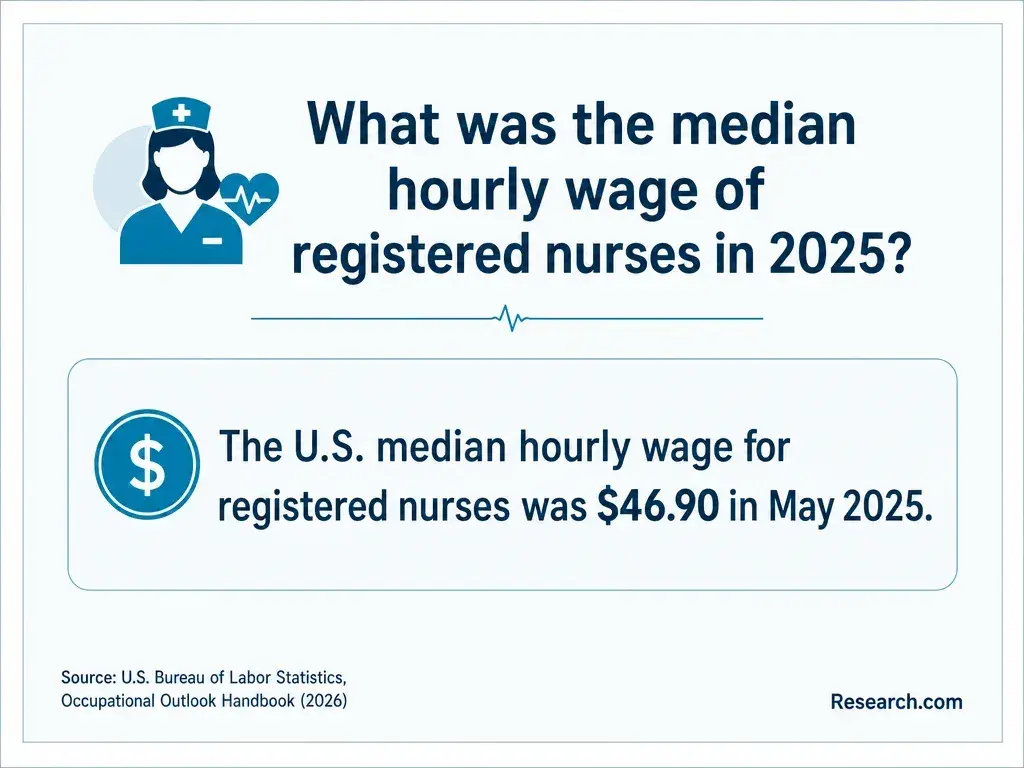
The U.S. Bureau of Labor Statistics reports wages and employment projections for nurse practitioners as an occupation, not a separate national PMHNP salary or a guaranteed return on a certificate. Use its latest nurse practitioner figures as broad labor-market context, then compare actual North Carolina offers by setting, experience, schedule, supervision arrangements, and benefits.
A shorter online DNP program may fit a separate doctoral goal, but a DNP is not automatically required for a PMHNP role; confirm the qualifications sought by your intended employers.
How Can You Choose a Reputable North Carolina PMHNP Certificate?
Shortlist programs only after confirming that they accept your license and graduate background and will support clinical education in North Carolina. Then compare the resulting individualized plans, rather than assuming two certificates with similar names require the same work.
Request these decisions in writing before enrollment:
- Which prior courses and supervised hours satisfy program requirements, and which PMHNP courses and experiences remain?
- Is the certificate within the applicable nursing accreditation scope, and how does the school document graduates' ANCC eligibility?
- Who is responsible for North Carolina clinical-site and preceptor recruitment, approval, agreements, and backup plans?
- What are the full costs, required in-person dates, clinical-term schedules, and consequences of a delayed placement?
Finally, check the current ANCC and North Carolina board requirements against the school's answers. Ease of admission is not evidence of readiness for clinical practice. Even a guide to DNP program admission accessibility addresses a different question from whether a particular PMHNP certificate fits your prior training and practice state.
Other Things You Should Know About Nursing Programs
Do not assume North Carolina approval covers the encounter. Check the patient's state licensing and telehealth rules, along with employer and prescribing requirements, before providing care.
Certification alone does not. Prescribing depends on state practice authority, the applicable collaborative arrangement, required registrations, and employer privileges.
Psychotherapy is part of PMHNP preparation and may be part of a job, but actual duties vary by setting, training, competence, and employer expectations.
The school-issued certificate records completed education; the professional credential is separate. Check ANCC's current certification-renewal rules and North Carolina's continuing requirements for ongoing practice.
- Facilitating Well-Rounded Clinical Experience for Psychiatric Nurse Practitioner Students | nih.gov https://pmc.ncbi.nlm.nih.gov/articles/PMC9760220/
- Post-Graduate Certificates -PMHNP - UNCG School of Nursing https://nursing.uncg.edu/academic-programs/post-graduate-certificates/
- Course Equivalency & Credit Substitution (Graduate Programs) | Current Students https://students.nursing.uw.edu/policies/policy-1-8-course-equivalency-credit-substitution-graduate-programs/
- Online PMHNP Post-Master's Certificate | Walden University https://www.waldenu.edu/online-certificates-programs/nursing-post-masters/psychiatric-mental-health-nurse-practitioner-post-masters
- APRN Program | College of Nursing | Nova Southeastern University https://nursing.nova.edu/degrees/masters/msn/aprn/certificates.html
- DNP Admissions | Vanderbilt University School of Nursing https://nursing.vanderbilt.edu/admissions/dnp/
- Clinical Collaborations | Nell Hodgson Woodruff School of Nursing https://www.nursing.emory.edu/degrees-programs/simulation-and-clinical-experience/clinical-collaborations


