2027 Online Pharmacy Technology Associate Degree Programs That Do Not Require SAT or ACT Scores

Co-Founder and Chief Data Scientist
Many pharmacy technology applicants are ready for college-level training but do not have SAT or ACT scores to submit. That is increasingly normal, especially in career-focused associate programs that rely more on transcripts, placement, prerequisites, and advising.
The U. S. Bureau of Labor Statistics projects pharmacy technician employment to grow 7% from 2023 to 2033, which keeps demand strong for accessible training pathways. This guide explains how online, test-optional Pharmacy Technology associate programs work, how schools review applicants, and how to apply with confidence even without standardized test scores.
Key Things to Know About Pharmacy Technology Associate Degrees Without Testing Requirements
- Online Pharmacy Technology associate programs commonly use high school transcripts, GED completion, placement exams, prerequisite grades, and advising instead of SAT or ACT scores, especially at community colleges and career-focused institutions.
- Pharmacy technician roles are not the same as pharmacist roles; the BLS reports a May 2024 median annual wage of $43,460 for pharmacy technicians, while pharmacist careers require doctoral-level pharmacy education and licensure.
- The strongest no-test-score applicants verify program accreditation or employer alignment, confirm state pharmacy technician requirements, and prepare for math, science, background check, drug screening, and clinical or externship expectations before enrolling.
Are test-optional or test-free programs common for online Pharmacy Technology associate degrees?
Yes, test-optional and test-free admission is common in the associate-degree space, but the exact policy depends on the institution. Many community colleges and open-admission colleges do not use SAT or ACT scores as a main admission requirement for associate programs. Instead, they admit students based on a high school diploma, GED, homeschool completion, prior college credit, or an adult-learner pathway.
For Pharmacy Technology, this approach makes practical sense. Programs need to know whether you can handle medication calculations, medical terminology, anatomy basics, pharmacy law, and professional communication. A general college entrance exam is less directly useful than your transcript, placement level, and readiness for math-heavy coursework.
The table below explains the most common no-test-score admission models and how they affect Pharmacy Technology applicants.
| Admission model | What it usually means | Best fit for | What to verify |
| Test-optional | You may submit SAT or ACT scores, but they are not required for admission review. | Students with solid grades but weak, missing, or outdated test scores. | Whether scores are still required for placement, scholarships, or honors pathways. |
| Test-free | The school does not consider SAT or ACT scores for admission. | Applicants who want a review based on transcripts, prerequisites, and readiness measures. | Whether program-level requirements differ from general college admission. |
| Open admission | Applicants with a high school diploma, GED, or equivalent are generally eligible to enroll. | Recent graduates, adult learners, and students rebuilding academic momentum. | Whether the Pharmacy Technology cohort has separate health-program requirements. |
| Selective health-program admission | The college may be open admission, but the Pharmacy Technology program has extra screening. | Students prepared to submit prerequisites, immunizations, background checks, or placement results. | Minimum grades, course sequencing, externship eligibility, and state compliance rules. |
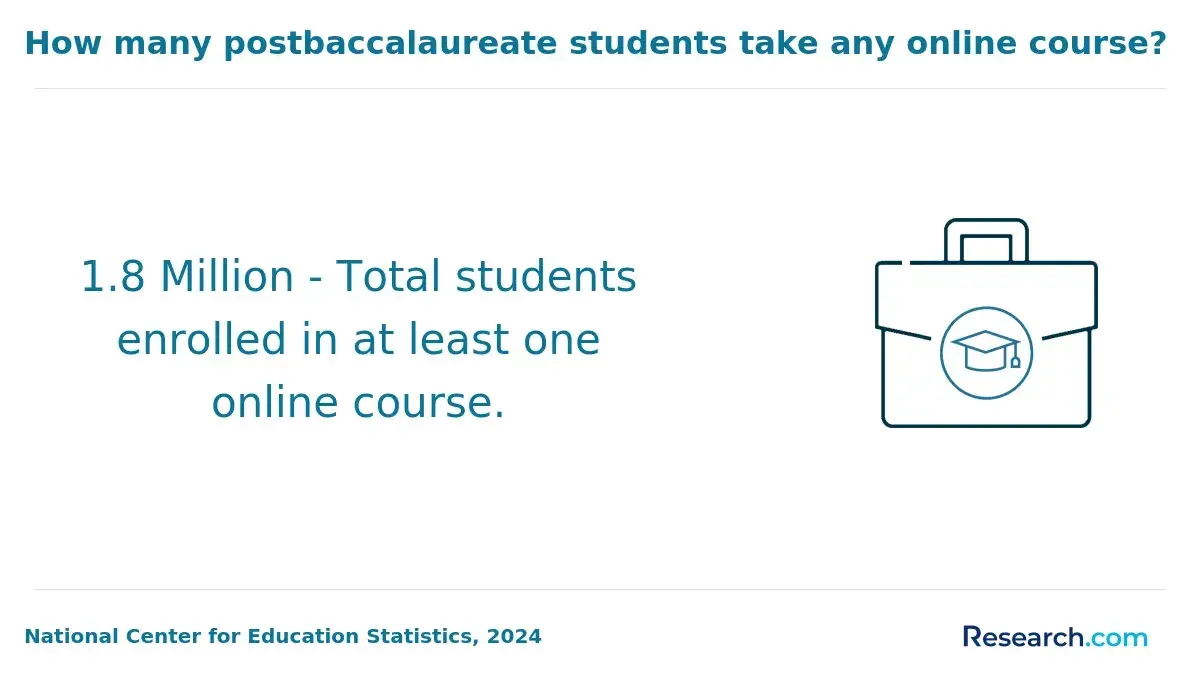
According to the National Center for Education Statistics, distance education remains a mainstream part of U.S. higher education in its latest post-pandemic reporting. For students comparing online associate options, that means online learning is no longer an unusual backup route; it is a standard delivery model, but it still requires careful review of lab, externship, and state authorization rules.
What are the best online Pharmacy Technology associate programs without testing requirements?
The best program is not simply the one with the lowest tuition or the broadest test-optional policy. For Pharmacy Technology, the strongest online associate programs are those that combine accessible admission with pharmacy-specific coursework, credible externship preparation, certification readiness, and clear state compliance guidance.
Named "best" lists can become outdated quickly because colleges change admissions rules, online delivery formats, and clinical placement policies. Use the comparison below to identify the type of program that fits your situation, then confirm the current catalog, tuition, and admissions policy directly with the school before applying.
| Program type | Why it may be a strong choice | Possible limitation | Who should prioritize it |
| Public community college with online Pharmacy Technology AAS | Often has lower in-state tuition, open or test-optional admission, and regional employer connections. | Externship sites may be limited to the college's service area or state. | Students who want affordability and a local path to pharmacy technician employment. |
| Career-focused online college with associate-level pharmacy technician training | May offer frequent start dates, structured online courses, and adult-learner support. | Total cost can be higher, and transfer options vary by accreditation and agreements. | Working adults who need predictable scheduling and centralized online support. |
| Hybrid Pharmacy Technology associate program | Combines online lecture courses with in-person labs, simulations, or local experiential training. | Not fully online; travel may be required. | Students who want online flexibility but benefit from hands-on practice. |
| Associate degree with embedded pharmacy technician certificate | Allows students to earn a shorter credential on the way to the associate degree. | Students must confirm whether the certificate alone meets state or employer expectations. | Applicants who want an earlier employment milestone while continuing toward the degree. |
Students considering long-term advancement should also distinguish pharmacy technician education from pharmacist education. An associate degree can support entry-level pharmacy technician preparation, while an online pharmacy school pathway for pharmacists typically leads to a Doctor of Pharmacy and has much more demanding admission, science prerequisite, and licensure requirements.
Before you shortlist any program, ask admissions three direct questions. These questions help you avoid applying to a school that is "test-optional" in name but not actually practical for your goals.
- Does the Pharmacy Technology associate program require SAT or ACT scores for admission, placement, scholarships, or course eligibility?
- Is the program fully online, hybrid, or online with a required local externship?
- Does the curriculum prepare students for national certification exams such as the PTCB or ExCPT, and does it meet requirements in my state?
How do colleges handle no-test-score admission for Pharmacy Technology associate programs?
Colleges usually separate general admission from program readiness. You may be admitted to the college without SAT or ACT scores, but the Pharmacy Technology department may still require proof that you can succeed in math, science, and professional practice courses.
The most common no-test-score review materials are listed below. These are not always "extra hurdles"; they are often used to place you into the right first courses so you do not start in a class that is too advanced or too basic.
| Requirement | Why the school asks for it | How it affects your application |
| High school transcript or GED | Confirms secondary completion and shows grades in math, science, and English. | May determine direct entry, conditional admission, or placement testing needs. |
| Prior college transcript | Shows whether you already completed English, algebra, biology, or medical terminology. | Can reduce course load and sometimes replace placement testing. |
| Placement assessment | Measures current skills in reading, writing, and math. | May determine whether you start in college-level or developmental courses. |
| Program application | Collects pharmacy-specific information beyond general college admission. | May include prerequisite checks, background questions, and clinical eligibility steps. |
| Background check and drug screening | Helps determine eligibility for pharmacy externships and employer-hosted training sites. | May be required before clinical placement rather than at initial admission. |
| Immunization or health documentation | Protects patients, students, and clinical partners. | Often required before externship or lab participation. |
For the reader, the key takeaway is that "no SAT or ACT" does not mean "no academic review." It means the college is likely using more relevant evidence, such as your coursework and placement level, to decide where you should begin.
Yes. Placement tests are one of the most common alternatives to SAT or ACT scores in associate-level programs. They are not usually admissions tests in the traditional sense; they are course-placement tools that help colleges decide whether you are ready for college algebra, quantitative reasoning, English composition, or reading-intensive healthcare coursework.
This matters in Pharmacy Technology because medication dosage calculations, unit conversions, prescription interpretation, and inventory tasks require practical math accuracy. A placement test can identify whether you are ready for those courses now or should complete a refresher first.
Placement testing can be helpful, but it has trade-offs. The comparison below shows how to interpret the result.
| Placement outcome | What it can mean | Decision impact |
| College-level placement | You are likely ready to begin required English or math courses. | You may be able to start the Pharmacy Technology sequence sooner. |
| Developmental or co-requisite placement | You need additional support while building college-level skills. | Your program timeline may be longer, but support can reduce the risk of failing core courses. |
| Placement waived by prior coursework | Your transcript already demonstrates readiness. | You may avoid testing if you earned qualifying grades in high school or college courses. |
| Retest allowed after review | The school gives students a second chance after preparation. | You may improve placement by studying before retesting, but policies vary. |
If you have not taken the SAT or ACT, do not rush into a placement exam cold. Ask the college for sample questions, review medication math basics, and check whether high school algebra or previous college credits can waive the requirement.
Work experience can strengthen your application, but it usually does not fully replace academic readiness requirements. A student who has worked as a pharmacy clerk, cashier in a retail pharmacy, medical assistant, military medic, or healthcare customer service employee may show strong motivation and familiarity with patient-facing environments. However, colleges still need evidence that the applicant can complete college-level coursework.
Work experience is most useful when a program uses holistic review or offers credit for prior learning. It may also help during advising because you can explain why the Pharmacy Technology associate degree fits your career plan.
Use the following items to document work experience in a way that helps rather than distracts from your academic application.
- Prepare a short resume that lists healthcare, customer service, inventory, insurance, billing, or medication-related responsibilities.
- Ask a supervisor for a recommendation that comments on accuracy, professionalism, attendance, patient privacy, and reliability.
- Collect proof of employer training, such as HIPAA modules, CPR certification, workplace safety training, or pharmacy software exposure.
- Ask whether the college evaluates prior learning for elective credit, but do not assume it will replace required pharmacy courses.
If your long-term goal is to become a pharmacist rather than a pharmacy technician, work experience can still be valuable, but the education path is different. Reading about how to become a pharmacist can help you decide whether an associate degree is your endpoint, a stepping stone, or not the right path for your intended career.
Sometimes. Open-admission colleges may not require a competitive GPA for general admission, but selective Pharmacy Technology programs can set minimum grades for prerequisite courses or require a minimum cumulative GPA for program entry. The most important grades are usually in math, science, English, and any prior healthcare coursework.
Because GPA rules vary widely, applicants should think less in terms of one universal cutoff and more in terms of academic risk. A low GPA does not automatically end your options, but it may change your best strategy.
The table below can help you interpret your transcript before applying without test scores.
| Transcript profile | What it suggests | Best application strategy |
| Strong grades in math and science | You may not need SAT or ACT scores to show readiness. | Apply directly and ask whether placement can be waived. |
| Overall GPA is modest but recent grades improved | The school may see academic momentum. | Highlight recent performance and consider starting with general education courses. |
| Weak math record | Medication calculation courses may be challenging without preparation. | Complete a math refresher or placement prep before enrollment. |
| Old transcript from several years ago | Past grades may not reflect current readiness. | Ask about adult-learner placement, advising, or conditional entry. |
| Prior college withdrawals or failures | The school may require advising before program acceptance. | Explain the pattern honestly and show a realistic course-load plan. |
A common mistake is applying as soon as you find a test-optional program without checking whether your transcript meets pharmacy-specific prerequisites. If your grades are uneven, it may be smarter to complete one or two foundational courses first and enter the program with stronger evidence of readiness.
Most online Pharmacy Technology associate programs do not require a formal admissions interview, especially if they are housed at open-admission community colleges. However, many programs require an advising appointment, orientation, information session, or program readiness meeting before enrollment.
These meetings are not always competitive interviews. They often exist to make sure students understand online learning expectations, externship rules, state pharmacy technician registration, background check requirements, and certification pathways.
If a program does require an interview or advising meeting, prepare for practical questions. The school is usually trying to determine whether you understand the responsibilities of pharmacy technician work, not whether you can give polished admissions-test-style answers.
- Be ready to explain why you want pharmacy technology rather than a general healthcare program.
- Describe how you will manage online coursework, deadlines, and any required in-person externship hours.
- Ask how the program supports students who need help with dosage calculations or science courses.
- Be honest about schedule limits, transportation issues, prior academic struggles, or background-check concerns before they become enrollment barriers.
An advising conversation can be a positive sign. It gives you a chance to identify hidden requirements before paying tuition or committing to a course sequence that does not fit your life.
Look beyond the phrase "no SAT or ACT required." A good test-optional online Pharmacy Technology associate program should still provide credible training, transparent costs, certification preparation, and realistic externship support. The right program should fit both your current application profile and your long-term career goal.
The most important quality checks are summarized below. Use them to compare programs before you submit applications or financial aid forms.
| Selection factor | Why it matters | Red flag to avoid |
| Accreditation and recognition | Regional institutional accreditation supports transferability and financial aid eligibility; pharmacy-specific recognition may matter for employers and certification preparation. | The school cannot clearly explain its accreditation status or how the program aligns with certification requirements. |
| State authorization | Online programs may not be authorized to enroll students in every state. | The school accepts your application without confirming your state eligibility. |
| Certification exam preparation | Many employers prefer or require national certification, depending on role and state. | The curriculum does not address PTCB, ExCPT, pharmacy law, or medication safety. |
| Externship support | Hands-on experience can be important for employment readiness and may be required by the program. | The school expects you to find a site alone without clear guidance. |
| Total cost | Tuition is only part of the investment; fees, textbooks, background checks, uniforms, and certification exams can add costs. | The school advertises tuition but does not disclose program fees or out-of-pocket requirements. |
| Transfer and advancement options | Some students later move into healthcare management, pre-pharmacy, or science programs. | Credits do not transfer well, or the school cannot identify articulation agreements. |
Students who are using the associate degree as a stepping stone toward pharmacy school should compare options carefully. Some learners eventually explore accelerated pharmacy programs, but those programs typically require stronger science prerequisites and a different admissions strategy than an associate-level Pharmacy Technology program.
Before committing, ask each school for a written program plan. The plan should show course sequence, online and in-person requirements, estimated total cost, certification alignment, and whether SAT or ACT scores are used anywhere after admission.
Deadlines vary because Pharmacy Technology associate programs may follow semester, quarter, monthly, or rolling starts. Online programs often advertise flexible starts, but health-related programs can still have fixed deadlines for cohorts, background checks, immunizations, orientation, and externship placement.
The timeline below summarizes common application windows. It is not a substitute for a school's academic calendar, but it can help you plan backward from your desired start term.
| Program calendar type | Typical deadline pattern | What applicants without test scores should watch |
| Traditional semester start | Fall and spring entry, sometimes with summer general education options. | Placement testing and transcript review may need to be completed weeks before classes begin. |
| Rolling admission | Applications reviewed continuously until seats are filled. | Applying early can matter if externship capacity or online course seats are limited. |
| Cohort-based health program | One or more fixed program-entry dates each year. | Program application deadlines may be earlier than general college admission deadlines. |
| Career-college monthly starts | Frequent start dates with structured course blocks. | Financial aid, transfer credit review, and technology setup can still delay enrollment. |
Do not wait until the published class start date to apply. Applicants without SAT or ACT scores may need extra time for transcript evaluation, placement testing, advising, and prerequisite review.
A practical application sequence can keep you from missing a cohort deadline.
- Request official high school, GED, and college transcripts before choosing a start date.
- Ask admissions whether SAT or ACT scores are required for any part of the process, including placement or scholarships.
- Complete placement testing or waiver review as soon as the school allows it.
- Submit program-specific health, background check, or immunization documents before the clinical deadline.
- Confirm online orientation, technology requirements, textbooks, fees, and externship expectations before the add/drop period.
How can you prepare to apply for Pharmacy Technology associate programs if you don't have SAT/ACT scores?
You can apply successfully without SAT or ACT scores by replacing them with stronger, more relevant evidence of readiness. The goal is to show that you can handle online college work, pharmacy calculations, healthcare professionalism, and any required experiential training.
Start with the steps below. They are especially useful if your test scores are missing, old, or weaker than your transcript.
- Collect all transcripts early, including high school, GED, dual enrollment, community college, military, or prior career-college records.
- Review your math readiness before placement testing, focusing on fractions, decimals, percentages, ratios, unit conversions, and basic algebra.
- Take an online learning self-check to confirm that you can manage deadlines, discussion boards, proctored exams, and independent study time.
- Compare at least three programs using total cost, accreditation, state authorization, certification preparation, and externship support.
- Contact admissions and ask for written confirmation of the no-SAT/ACT policy for both college admission and Pharmacy Technology program entry.
- Prepare a simple explanation for any academic gaps, withdrawals, or weak grades, then describe what has changed since then.
- Ask whether the program offers tutoring in dosage calculations, writing, science, or medical terminology before you need help.
You should also decide whether retaking the SAT or ACT is worth your time. For many associate-level Pharmacy Technology programs, it is not necessary if the school offers placement testing or transcript-based placement. Retaking a standardized test may make sense only if a scholarship, selective pathway, or future transfer plan specifically rewards higher scores.
If your ultimate goal is pharmacist licensure, compare your current plan with the requirements of an online pharmacy school or campus-based PharmD program. That comparison can help you decide whether to begin with Pharmacy Technology, complete science prerequisites first, or pursue a different healthcare pathway.
Other Things You Should Know About Pharmacy Technology
Employers generally focus on your completed credential, certification eligibility, work experience, professionalism, and state registration status. They typically do not ask whether SAT or ACT scores were used in your college admission.
It depends on your state. Some states require pharmacy technician registration, certification, training hours, background checks, or employer sponsorship. Always check your state board of pharmacy before enrolling.
Some credits may transfer, especially general education courses from a regionally accredited college. Pharmacy-specific technical credits may transfer more narrowly, so ask about articulation agreements before enrolling.
A certificate may be faster for entry-level employment, while an associate degree can provide broader general education and advancement flexibility. The better choice depends on your budget, timeline, state rules, and long-term career plans.
- How to Create a NHA CPhT Certified Pharmacy Technician Curriculum https://www.icevonline.com/blog/how-to-create-pharmacy-technician-curriculum-nha-cpht
- CPhT Training https://rxtechexam.com/online-pharmacy-technician-training/
- Certified Pharmacy Technician Program - Appalachian College of Pharmacy https://www.acp.edu/cpht/
- Free & Cheapest Pharmacy Technician Certification Programs https://www.stepful.com/post/cheapest-pharmacy-technician-programs
- Do You Need to Go to School to Become a Pharmacy Technician? https://pharmacytechacademy.com/blog/become-pharmacy-tech-without-going-to-school
- Pharmacy Technician Program Surrey BC | Stenberg College https://stenbergcollege.com/programs/pharmacy-technician
- Internationally Educated Pharmacy Technician Applicant - OCP website https://ocpinfo.com/applicants/register-as-a-pharmacy-technician/internationally-educated-pharmacy-technician-applicant/
- Online Pharmacy Technician Programs Boston, MA https://v-tecs.org/online-pharmacy-technician-programs-boston-ma.htm
- Pharmacy Technician Training Program | Job Training Programs https://www.cincinnatichildrens.org/careers/job-training/pharmacy-tech
- Guide To Online Pharmacy Tech Programs https://www.accreditedschoolsonline.org/healthcare/pharmacy-technician/