2027 Online Pediatric Nurse Practitioner Degree Programs With University Scholarships: Awards, Eligibility, and Net Cost

Co-Founder and Chief Data Scientist
Choosing an online Pediatric Nurse Practitioner (PNP) program means comparing far more than per-credit tuition. Institutional scholarships can reduce what you pay, but eligibility, enrollment rules, renewal terms, and clinical-placement costs can change the final result. The College Board reported average graduate tuition and fees of $12,596 at public institutions and $29,931 at private nonprofit institutions for 2024-25.
This guide helps registered nurses compare university-funded awards, calculate net cost, and identify the scholarship offer that best fits their academic profile, financial need, and program schedule.
Key Things You Should Know
- Online PNP students may be eligible for university scholarships, but many awards require degree-seeking status, a minimum GPA, a completed admission file, and at least half-time enrollment; post-master's certificate students can face different rules.
- An advertised scholarship is not your net cost: subtract grants and scholarships from tuition and required fees, then add clinical travel, books, technology, residency, certification, and living expenses.
- For context, the 2024 median annual wage for nurse practitioners was $129,210 according to the U.S. Bureau of Labor Statistics, but career value should be weighed against borrowing, state licensure requirements, and the total cost of completing the PNP pathway.
Which Online Pediatric Nurse Practitioner Degree Programs Offer University Scholarships?
University scholarships are funds awarded by the institution rather than a federal agency or private organization. For online PNP students, availability varies substantially because many nursing schools reserve certain awards for campus-based students, full-time students, or students in a degree program rather than a certificate track.
Look first at universities that make graduate nursing scholarships available to distance learners and confirm that the specific PNP pathway is eligible. A school may offer online coursework while requiring clinical placements near the student's home, occasional intensives, or separate fees that scholarship money does not cover.
| Program or institutional aid category | How it commonly works for online PNP students | What to verify before applying |
| Graduate nursing school scholarships | May be funded by a nursing college, alumni group, donor fund, or clinical partner | Whether online MSN, DNP, and post-master's PNP students are eligible |
| University-wide graduate scholarships | Often considers academic record, leadership, service, or financial need | Separate application deadline, enrollment minimum, and award duration |
| Employer-partnership tuition benefits | May provide a tuition reduction or sponsored scholarship through an affiliated health system | Employer participation, work commitment, taxable-benefit treatment, and stacking rules |
| Military and veteran education awards | May supplement VA education benefits or provide institution-specific support | Service documentation, residency rules, and whether the benefit applies to graduate clinical courses |
Programs should also be evaluated for educational fit. The PNP role generally requires advanced assessment, diagnosis, pharmacology, pediatric primary or acute care preparation, supervised clinical hours, national certification eligibility, and state advanced-practice licensure. Nurses considering an earlier entry point can also compare fast-track LPN programs online, although an LPN pathway is not a substitute for RN preparation and graduate PNP education.
A practical shortlist includes only schools that provide written answers to these questions: Is the online PNP concentration eligible? Is the award institutional gift aid rather than a loan? Is it available to part-time graduate students? Does it apply to every term? If the school cannot confirm these points in writing, do not include the award in your affordability calculation.
How Much Scholarship Money Can Online Pediatric Nurse Practitioner Degree Students Receive?
There is no standard scholarship amount for online PNP programs. University awards can range from modest one-time book or professional-development awards to tuition awards that apply across multiple terms. The amount depends on the institution's endowment, nursing-school priorities, donor restrictions, applicant pool, enrollment status, and whether the student receives other institutional aid.
Rather than treating a large headline award as automatically better, use the award's total usable value: the amount that can actually be applied to required tuition and fees during the time you expect to be enrolled.
| Scholarship feature | Why it changes value | Better comparison method |
| One-time award | Can reduce one term's bill but may not lower total program borrowing much | Subtract it once from the full program budget |
| Per-term award | Value can depend on the number of enrolled terms and minimum credits | Multiply only by terms for which you meet written eligibility |
| Tuition-only award | May not cover course fees, clinical expenses, travel, or supplies | Add non-tuition expenses separately |
| Last-dollar award | May be reduced after other grants or employer benefits are applied | Ask how outside aid affects the disbursement |
| Renewable award | Can have a larger cumulative value but may require GPA or progression standards | Model a conservative scenario if renewal is uncertain |
For comparison context, the College Board's 2024-25 graduate tuition-and-fee averages show why the institution's published cost structure matters as much as the award itself. A smaller scholarship at a lower-priced public university can produce a lower net cost than a larger award at a higher-priced private institution.
Ask financial aid to identify the award by name, annual amount, disbursement schedule, whether it is taxable, and whether it is guaranteed or competitive. Do not count an award until it appears in an official financial-aid offer or written scholarship notice.
What Are the Eligibility Requirements for Online Pediatric Nurse Practitioner Degree Scholarships?
Eligibility requirements are the conditions a student must meet to receive an award. They can be set by the university, nursing school, donor, employer partner, or government program. Online delivery alone does not establish eligibility; the controlling factor is usually the student's program classification and enrollment status.
Most institutions review a combination of academic standing, admission status, financial need, and professional background. The following requirements are common, but each scholarship has its own written terms.
- Admission as a degree-seeking graduate nursing student, rather than a nondegree or visiting student.
- A qualifying cumulative GPA, which may be based on prior nursing coursework, the most recent degree, or graduate coursework.
- Enrollment at a stated credit load, commonly full-time or at least half-time, during the disbursement term.
- Completion of the FAFSA when the scholarship considers financial need or requires a federal aid record.
- A current unencumbered RN license and, for some awards, professional nursing experience or pediatric practice experience.
- Evidence of leadership, community service, work with underserved populations, membership in a nursing organization, or a stated career goal.
- U.S. citizenship, eligible noncitizen status, state residency, military affiliation, or other donor-specific criteria when applicable.
Students should pay close attention to the distinction between an online MSN or DNP and a post-master's PNP certificate. Certificate students may already hold a graduate degree and may not qualify for scholarships intended for students pursuing their first graduate nursing degree. Verify accreditation as well: the graduate nursing program should hold appropriate nursing accreditation, and the PNP curriculum should support eligibility for the intended national certification examination and state licensure pathway.
Academic preparation remains important. PNP applicants typically need a BSN or qualifying graduate nursing degree, RN licensure, transcripts, recommendations, and clinical prerequisites, although exact admissions rules vary. Nurses interested in adjacent prevention or wellness careers may also explore an nutritional science degree online; it leads to a different educational and professional pathway than PNP preparation.
How Do You Apply for University Scholarships for an Online Pediatric Nurse Practitioner Degree?
Scholarship applications often run on a different timeline from graduate nursing admission. Some universities automatically consider admitted students, while others require a separate portal application, FAFSA submission, essay, recommendation, or proof of service. Applying for admission early gives you more time to meet both sets of deadlines.
Use this sequence to avoid missing awards that are available only before enrollment.
- Request the program's complete cost-of-attendance estimate, including tuition, mandatory fees, clinical expenses, campus intensives, technology, books, and estimated travel.
- Ask the nursing school which institutional scholarships specifically permit online PNP, DNP, MSN, or certificate students to apply.
- Submit admission materials early enough for scholarship review, including transcripts, RN license documentation, résumé, and any required recommendations.
- Complete the FAFSA if eligible, even when you expect merit aid, because some university awards use FAFSA information to determine eligibility.
- Prepare a concise statement connecting pediatric nursing experience, career goals, service, and financial circumstances to the scholarship's stated purpose.
- Save copies of award notices and ask for written clarification of amount, disbursement, renewal, and aid-stacking conditions before accepting.
A strong application is specific rather than generic. Explain the patient population you plan to serve, your relevant clinical preparation, and how PNP education supports that work. Do not overstate financial need or assume that a scholarship committee knows the added cost of clinical travel, reduced work hours, or child-care needs unless the application invites that information.
For nurses comparing graduate study with administrative career advancement, a healthcare administration bachelor's degree represents a separate route with different admissions, scholarship, and licensure considerations. Compare programs within the same career goal rather than using one credential's tuition as a proxy for another's value.
Are Scholarships for Online Pediatric Nurse Practitioner Degree Programs Renewable Every Year?
Some scholarships renew, but renewal is never automatic unless the written award terms say so. Renewable aid is scholarship funding that continues beyond the initial award period when the recipient meets stated conditions. For graduate nursing students, the relevant period may be an academic year, a set number of semesters, or the normal length of the program.
Common renewal conditions include satisfactory academic progress, a minimum cumulative GPA, continuous enrollment, a minimum number of credits, good professional conduct, and continued eligibility for the underlying program. A student who reduces enrollment to manage work or clinical obligations may lose an award that requires full-time status.
| Renewal term to review | Potential impact on an online PNP student | Question to ask |
| Minimum GPA | A grade below the threshold can affect future funding | Is GPA reviewed each term or annually, and is there an appeal process? |
| Continuous enrollment | Leave, course failure, or schedule change can interrupt eligibility | Does an approved leave preserve the scholarship? |
| Credit-load minimum | Part-time enrollment can reduce or eliminate an award | How many credits are required in summer and clinical terms? |
| Maximum award period | Funding may end before clinical progression is complete | Does the limit match the published plan of study? |
| Annual reapplication | Continuation may depend on a new competitive review | Must I submit FAFSA, an essay, or references again? |
The safest budgeting approach is to treat first-year aid as confirmed only for the first year and treat future aid as conditional until renewal terms are met. If an award is crucial to enrollment, request the renewal policy before paying a deposit and retain the written response.
Can You Combine an Online Pediatric Nurse Practitioner Scholarship With FAFSA and Other Financial Aid?
In many cases, yes. FAFSA is the application used to determine eligibility for federal student aid and is also used by many institutions to assess need-based aid. Scholarships may be combined with federal loans, employer tuition assistance, veterans' benefits, state aid, and private scholarships, but the school must apply its packaging rules and cannot exceed the student's cost of attendance.
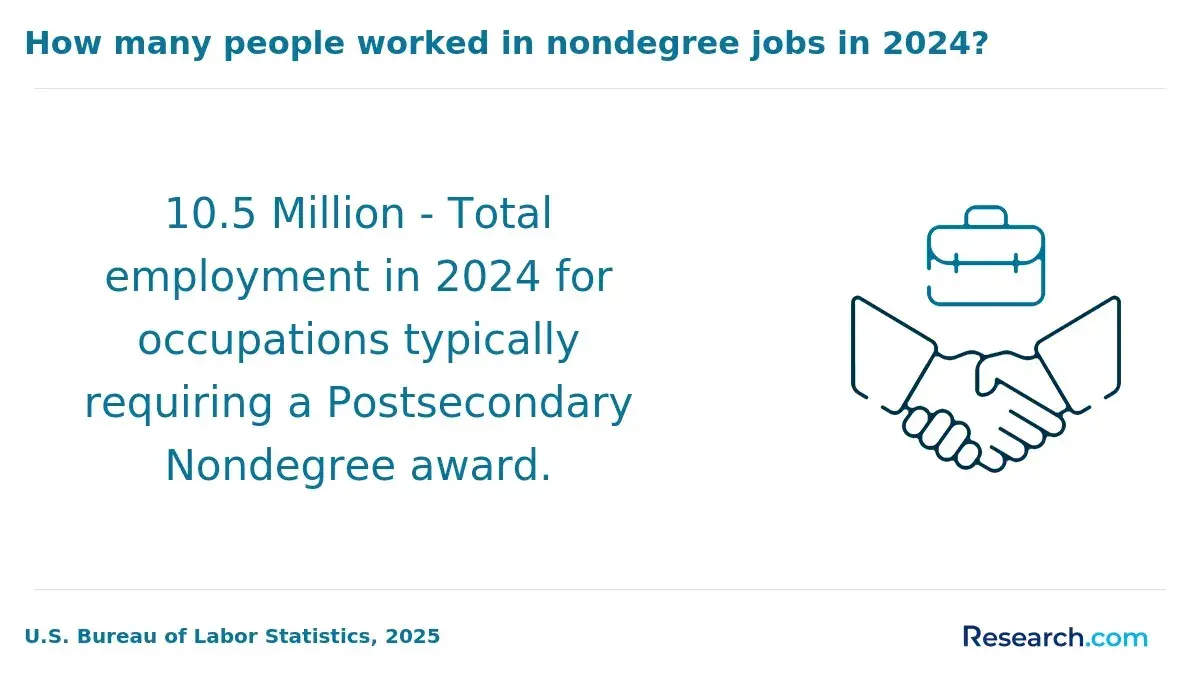
For eligible graduate students, federal aid commonly relies on Direct Unsubsidized Loans and, when additional eligibility conditions are met, Direct PLUS Loans. Graduate students are generally not eligible for Federal Pell Grants, which are primarily for eligible undergraduate students. Scholarship funds can reduce the amount you need to borrow, but they may also change the school's financial-aid package.
Before accepting combined aid, confirm the following points with financial aid.
- Whether the institutional scholarship is reduced when employer tuition assistance, VA education benefits, or outside scholarships are reported.
- Whether the award applies before or after other gift aid and whether it can be used for mandatory fees.
- Whether the combined aid exceeds the school's cost of attendance and forces a loan reduction.
- Whether an outside scholarship must be sent directly to the university and how quickly it will post to your account.
- Whether a refund from aid is intended for education-related living costs and how it affects your borrowing plan.
Submitting FAFSA can be worthwhile even for students who expect to pay from savings or employer benefits, because an institutional scholarship may require demonstrated financial need. However, FAFSA submission does not guarantee university scholarship eligibility or an award amount.
Students pursuing different health-professions options can compare cost structures across credentials, including PharmD online programs. Pharmacy education, PNP education, licensure, and clinical training requirements differ, so financial-aid offers should be compared only after accounting for each pathway's total required credits and professional outcomes.
How Much Does an Online Pediatric Nurse Practitioner Degree Cost After Scholarships and Financial Aid?
Net cost is the amount remaining after grants and scholarships are subtracted from the school's direct charges, plus the education-related expenses you must still pay. It is not the same as tuition, and it is not necessarily the same as the amount financed with loans. Loans reduce the immediate bill but must generally be repaid with interest.
Use a program-specific calculation rather than an advertised tuition figure. The table shows the framework to apply to each official offer; the amounts are placeholders, not typical prices or promised awards.
| Net-cost component | How to calculate it | Why it matters |
| Direct educational charges | Tuition + mandatory university and program fees | This is the amount billed by the institution |
| Minus gift aid | Institutional scholarships + grants + eligible outside scholarships | Gift aid does not ordinarily require repayment |
| Equals direct net price | Direct educational charges − gift aid | This is the bill still needing payment or financing |
| Plus indirect program costs | Books + supplies + clinical travel + background checks + technology + residency travel | These costs may not appear on the tuition bill |
| Plus living and work-impact costs | Housing, food, child care, and any income reduction during clinical terms | These shape the real affordability of the program |
| Equals estimated total out-of-pocket cost | Direct net price + indirect and living costs − nonloan resources | Use this figure to compare schools and borrowing needs |
Clinical education is a major variable in online advanced-practice nursing. A program may help identify clinical placements, require students to secure their own preceptors, or use a hybrid model. Ask whether there are clinical coordination fees, required travel, preceptor costs, background checks, immunizations, simulation costs, and on-campus intensives. These can materially change the value of a scholarship that covers tuition only.
PNP education can support advanced-practice nursing roles, but the financial decision should remain grounded in state authorization, certification eligibility, clinical quality, and debt. The U.S. Bureau of Labor Statistics reported a 2024 median annual wage of $129,210 for nurse practitioners; that occupation-wide figure is not a starting salary, is not specific to pediatric practice, and should not be used as a repayment guarantee.
Are There Scholarships for Transfer, Adult, Military, and Other Online Pediatric Nurse Practitioner Students?
Yes, but eligibility depends on student classification. Graduate PNP students are frequently working adults, RNs returning to school, military-connected learners, or students entering with prior graduate credits. Universities may offer targeted awards for these groups, although a scholarship advertised to "transfer students" may apply mainly to undergraduate transfers and not to graduate nursing students.
These student groups should seek written confirmation of eligibility before relying on an award.
- Adult and returning students should ask whether age, gap in enrollment, part-time study, and online status affect institutional scholarship eligibility.
- Military service members, veterans, and dependents should ask the veterans or military education office how institutional awards interact with VA benefits and tuition assistance.
- Students transferring graduate credits should ask whether scholarship duration is shortened when fewer credits remain in the program.
- Rural, underserved, bilingual, and community-service applicants should look for donor awards tied to workforce or population-health goals.
- Students who already hold an MSN should ask separately about post-master's certificate eligibility, because many general graduate awards exclude certificate-only enrollment.
Transfer credit can lower total cost even when it does not increase scholarship funding. However, advanced-practice nursing programs commonly limit the number, age, and equivalency of credits that may transfer. Request an official transfer evaluation and revised plan of study before comparing total cost.
Applicants exploring movement, rehabilitation, or exercise-related careers rather than pediatric advanced practice can review an online kinesiology degree. That degree has different professional outcomes and does not itself qualify a graduate to practice as a nurse practitioner.
What Is the Difference Between Merit-Based and Need-Based Scholarships for Online Pediatric Nurse Practitioner Degrees?
Merit-based scholarships recognize qualifications such as academic performance, leadership, professional achievement, clinical experience, service, or a compelling application. Need-based scholarships consider a student's financial circumstances, often using FAFSA information and institutional methodology. Some university awards combine both factors.
| Scholarship type | Typical selection factors | Best use in a PNP funding plan |
| Merit-based | GPA, academic achievement, nursing leadership, service, recommendations, and career goals | Apply even if you do not expect need-based aid; awards may not require FAFSA |
| Need-based | Financial need, FAFSA information, enrollment status, and satisfactory academic progress | File FAFSA early and provide requested verification documents promptly |
| Service- or mission-based | Commitment to pediatrics, underserved communities, rural care, diversity initiatives, or workforce needs | Connect documented experience and goals to the donor's stated purpose |
| Employer-sponsored | Employment with a participating organization and possible service commitment | Compare the benefit with any required work period or repayment obligation |
Neither type is inherently better. A merit award may be more predictable for a strong applicant with limited demonstrated need, while a need-based award can be especially valuable for a student whose financial circumstances make graduate study difficult. The best offer is the combination that produces the lowest sustainable net cost without imposing terms you cannot meet.
Read the award letter for conditions that could convert an apparent benefit into a risk. A service commitment, employment requirement, enrollment minimum, or rule that displaces other aid may be reasonable, but it should be understood before enrollment.
How Should You Compare Scholarship Offers From Online Pediatric Nurse Practitioner Degree Programs?
Compare official financial-aid offers side by side using the same assumptions: the same enrollment pace, the same estimate of clinical travel, and the same treatment of loans. Do not compare a renewable award from one school with a one-term award from another as if both are guaranteed for the full program.
A useful comparison focuses on total program cost and the certainty of the funding, not on the largest scholarship label.
| Comparison question | Why it is decision-critical | Red flag |
| What is the full cost through graduation? | Shows whether lower per-credit tuition is offset by fees or more required credits | Only first-term tuition is provided |
| How much gift aid is confirmed? | Separates scholarships and grants from loans | Loans are presented as "aid" without clear labeling |
| Can the award renew? | Determines its likely cumulative value | Renewal language is absent or described only verbally |
| What enrollment level is required? | Online nurses may need part-time schedules during clinical training | Full-time requirement conflicts with your plan of study |
| What clinical and travel costs remain? | Captures expenses a tuition award may exclude | No written estimate of clinical-related expenses |
| Does the program support your state and certification goal? | Affordability has limited value if the pathway does not meet licensure needs | State authorization or clinical placement support is unclear |
After building the comparison, ask each school for a revised estimate if your circumstances differ from the standard budget. For example, working nurses may have unusual commuting, child-care, or clinical-placement expenses. Financial-aid staff may not be able to increase institutional awards, but they can explain allowable cost-of-attendance adjustments and how those adjustments affect borrowing options.
Common mistakes include accepting the first award without comparing total costs, assuming online students receive the same aid as campus students, overlooking scholarship renewal requirements, and counting loans as scholarships. A sound choice is the program that combines credible PNP preparation, manageable clinical logistics, appropriate authorization for your location, and the lowest realistic cost after confirmed gift aid.
Other Things You Should Know About Pediatric Nurse Practitioner
A Pediatric Nurse Practitioner is an advanced practice registered nurse who provides care to infants, children, adolescents, and, depending on the specialty and practice setting, young adults. Duties may include assessment, diagnosis, treatment planning, prescribing within state law, family education, and coordination with physicians and other health professionals. Scope of practice varies by state and employer.
Length depends on the entry credential, transfer credits, specialty, enrollment pace, and required clinical hours. BSN-to-MSN and BSN-to-DNP programs generally take longer than post-master's PNP certificate programs. Online coursework can offer scheduling flexibility, but clinical courses and required campus experiences can limit how quickly a student progresses.
Policies vary. Some programs arrange placements, some provide partial support, and others require students to identify qualified preceptors in their communities. Ask for the clinical-placement policy in writing, including who approves sites, whether placement is guaranteed, and what happens if a placement is delayed.
No. National certification verifies that a candidate has met an organization's examination and eligibility requirements for a PNP population focus. State advanced-practice licensure or authorization determines whether and how the nurse may practice in a particular state. Students should confirm their intended state's requirements before enrolling.
References
- 2025 Most Affordable Online Nurse Practitioner Programs https://www.onlineu.com/most-affordable-colleges/nurse-practitioner-masters-degrees
- Online Pediatric Nurse Practitioner (PNP) Programs https://nursinglicensemap.com/nursing-degrees/online-nurse-practitioner-programs/pediatric-nurse-practioner-pnp-programs/
- Inside Pediatric Nurse Practitioner Online Programs https://www.edumed.org/online-schools/nurse-practitioner-programs/pediatric-nursing/
- 2024 AANP Grants and Scholarships Program Funding Cycle Announced https://www.aanp.org/news-feed/2024-aanp-grants-and-scholarships-program-funding-cycle-announced
- Scholarships https://www.fannp.org/_pages24/scholar.html
- Top Scholarships & Grants for NP and APRN Students https://www.preceptorlink.com/blog-posts/scholarships-and-grants-for-np-and-aprn-students
- Scholarship Guide for Nurse Practitioner Schools - Rewards & Eligiblity https://www.npschools.com/blog/scholarships-for-np-students
- Scholarships & Financial Aid https://www.aacnnursing.org/students/scholarships-financial-aid
- Grants & Scholarships https://www.napnapfoundation.org/grantsscholarships/grantsscholarships
- How Much Does It Cost to Become a Nurse Practitioner? | ThriveAP https://provider.thriveap.com/blog/how-much-does-it-cost-become-nurse-practitioner