2027 Online Pediatric Nurse Practitioner Doctorate Programs with Practicum, Internship, Clinical, or Fieldwork Requirements

Co-Founder and Chief Data Scientist
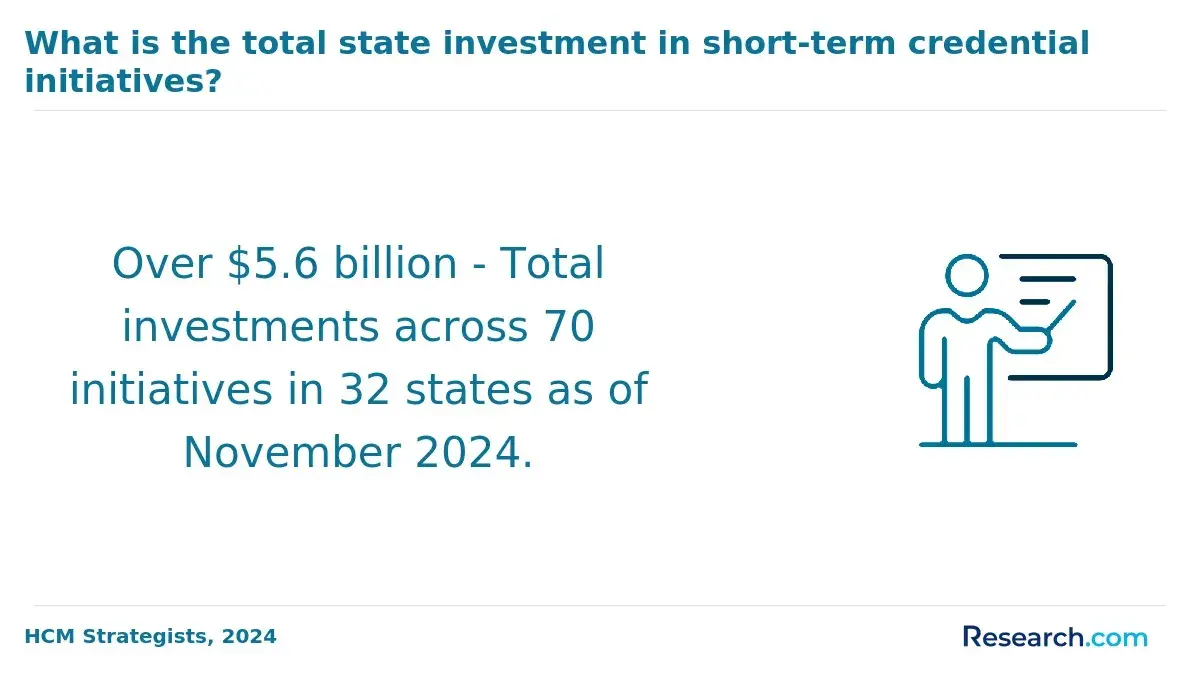
Choosing an online pediatric nurse practitioner doctorate is really a placement decision: Can you complete the required hands-on training while working, meeting family obligations, and staying eligible for certification? The stakes are high because BLS employment projections published in 2024 show nurse practitioner jobs growing 46% from 2023 to 2033.
This guide is for registered nurses comparing online PNP-focused doctoral options. You'll learn how practicum, clinical, internship, and fieldwork requirements affect location, cost, licensure, timeline, and career value before you enroll.
Key Things You Should Know
- Most online pediatric nurse practitioner doctorates are not fully remote. DNP standards commonly require at least 1,000 post-baccalaureate practice hours, and PNP certification pathways usually include supervised pediatric clinical experiences.
- Placement policy matters as much as tuition. Some schools coordinate clinical sites, while others require students to find preceptors, which can affect travel costs, work schedules, and graduation timing.
- Use 2024 federal labor data carefully. Strong NP job growth supports demand, but salary, scope of practice, and pediatric opportunities still vary by state, employer, certification, and local healthcare market.
Which Online Pediatric Nurse Practitioner Doctorate Programs Require Practicum, Internship, Clinical, or Fieldwork Experience?
Online pediatric nurse practitioner doctorate programs that prepare students for advanced clinical practice almost always require in-person experience. The "online" part typically refers to didactic coursework, advising, simulation preparation, seminars, and project work; pediatric clinical care must still be completed with approved patients, sites, and supervisors.
The table below summarizes the main doctoral pathways prospective PNP students encounter and how experiential requirements usually appear in each one. It is designed to help you identify whether a program is practice-focused, certification-focused, leadership-focused, or research-focused before comparing individual schools.
| Program type | Who it is usually for | Common experiential requirement | Best fit |
| BSN-to-DNP Pediatric Nurse Practitioner | RNs with a BSN seeking first-time PNP preparation | Extensive pediatric clinical rotations plus DNP practicum or project hours | Nurses who want direct pediatric advanced practice preparation |
| MSN-to-DNP Pediatric Nurse Practitioner | Certified or MSN-prepared NPs adding doctoral practice preparation | DNP practice hours, quality improvement project work, and sometimes additional pediatric hours if changing population focus | Working PNPs seeking leadership, systems, or doctoral-level practice roles |
| Post-master's DNP with PNP concentration | APRNs who need pediatric specialization or doctoral completion | Gap-analysis-based hours, clinical experiences, and a scholarly practice project | APRNs whose prior graduate hours can be evaluated toward DNP requirements |
| Dual PNP primary care and acute care DNP | Nurses seeking broader pediatric population preparation | Higher clinical intensity across primary and acute pediatric settings | Students who want flexibility across outpatient, specialty, and hospital-based pediatric care |
| PhD in nursing with pediatric research focus | Nurses focused on research, teaching, or policy scholarship | Research practica, dissertation work, or teaching experiences rather than PNP clinical preparation | Students who want research careers rather than nurse practitioner certification |
If your goal is clinical pediatric practice, focus on DNP or other practice-based doctoral pathways that clearly state the PNP population focus. Students still comparing broader online nurse practitioner programs should verify that the track is specifically pediatric and not only family, adult-gerontology, or general advanced practice nursing.
A common mistake is assuming that any doctoral nursing program with pediatric coursework leads to PNP eligibility. In reality, the program must align with pediatric population preparation, supervised clinical training, accreditation expectations, certification exam eligibility, and state authorization rules.
What Are the Practicum, Internship, Clinical, and Fieldwork Requirements for Online Pediatric Nurse Practitioner Doctorates?
Practicum, internship, clinical, and fieldwork are related terms, but they are not interchangeable. In PNP doctorate programs, the most important distinction is whether the experience involves direct pediatric patient care, indirect systems-level practice, scholarly project implementation, or professional role development.
The table below explains the differences you are likely to see in program catalogs. Use it to decode whether a requirement supports certification preparation, DNP completion, leadership development, or applied scholarship.
| Requirement term | What it usually means in a PNP doctorate | Typical setting | Why it matters |
| Clinical placement | Supervised advanced practice care for infants, children, adolescents, or young adults, depending on the program scope | Pediatric primary care, specialty clinics, hospitals, urgent care, school-based health, or community pediatrics | Often central to population-focused PNP preparation and certification readiness |
| Practicum | Applied doctoral practice experience tied to competencies, leadership, quality improvement, population health, or advanced clinical practice | Healthcare organizations, pediatric practices, public health agencies, or quality improvement settings | Helps satisfy DNP practice expectations and connect coursework to measurable practice outcomes |
| Internship | A structured professional experience, sometimes used for leadership, administration, education, or specialty practice exposure | Varies by program and concentration | May broaden role preparation but may not replace required direct clinical hours |
| Fieldwork | Supervised work in a real practice environment, often used as a broader term for community, population health, or project-based experiences | Community agencies, healthcare systems, schools, clinics, or advocacy organizations | Can support pediatric population health, policy, or systems-focused DNP outcomes |
Doctor of Nursing Practice programs commonly require at least 1,000 post-baccalaureate practice hours, although schools differ in how they count prior MSN hours, direct patient care, project implementation, simulation, and leadership activities. That distinction matters because a student entering after a BSN may face a much heavier clinical schedule than a certified PNP entering after an MSN.
Before applying, compare each program's experiential requirements in writing. This process is especially important for students mapping out how to become a nurse practitioner because the shortest academic route is not always the easiest route to complete if clinical sites are scarce.
- Confirm the total number of required practice hours and how many must be direct pediatric patient care hours.
- Ask whether prior MSN clinical hours can be transferred, audited, or applied through a formal gap analysis.
- Verify whether simulation hours count toward any requirement and whether they count differently from in-person clinical hours.
- Request examples of approved pediatric sites used by recent students in your state or region.
- Ask which credentials preceptors must hold, such as PNP, physician, APRN, or specialty pediatric provider qualifications.
How Do Online Pediatric Nurse Practitioner Doctorate Programs Arrange Practicum and Clinical Placements?
Clinical placement can be school-arranged, student-arranged, or shared between the student and the university. This policy is one of the most important differences among online PNP doctorate programs because it determines how much responsibility you carry for finding a pediatric site and preceptor.
The table below compares common placement models. It helps you understand whether a program's online flexibility is backed by real placement support or depends heavily on your personal network.
| Placement model | How it works | Student advantage | Potential drawback |
| School-coordinated placement | The university identifies or contracts with approved sites and preceptors | More structure and less site-search burden | May be limited to certain states, regions, or partner systems |
| Student-secured placement | The student proposes a site and preceptor for school approval | Can allow local completion if the student has strong pediatric contacts | Can delay progression if sites decline, paperwork stalls, or preceptors are unavailable |
| Shared placement support | The student searches locally while the school provides approval standards, forms, and backup guidance | Balances flexibility with institutional oversight | Support quality varies widely by advisor, region, and specialty demand |
| Employer-based placement | The student completes some hours through a current workplace if role boundaries and supervision rules are met | Can reduce travel and scheduling friction | May be disallowed if the experience duplicates paid duties or lacks objective supervision |
Strong programs are transparent about placement timelines, affiliation agreements, preceptor qualifications, documentation deadlines, and state authorization limits. Weak programs may advertise convenience while leaving students to solve the hardest part of the degree after they enroll.
When you speak with admissions or clinical placement staff, ask targeted questions rather than broad ones. These questions can reveal whether the school has real capacity in your area.
- Who is ultimately responsible for finding my pediatric clinical site: the school, the student, or both?
- How many terms before a rotation must a site be approved?
- What happens if my proposed preceptor withdraws or a site loses availability?
- Does the university already have affiliation agreements in my state, health system, or county?
- Are there pediatric specialty areas that are difficult to place, such as acute care, neonatal-adjacent services, or subspecialty clinics?
- Can I speak with a current student or recent graduate who completed placements in my region?
Many students can complete online PNP doctorate fieldwork near home, but it is not automatic. Local completion depends on state authorization, pediatric site availability, preceptor credentials, affiliation agreements, background checks, immunization requirements, malpractice coverage, and whether your school approves the setting for the required competencies.
Location becomes especially important in rural areas, highly competitive metro markets, and states with fewer pediatric specialty providers. A program may be excellent academically but still be impractical if it cannot approve sites within a reasonable commute.
Use the table below to assess local-placement feasibility before enrolling. It highlights factors that can make a nearby placement easy, difficult, or impossible.
| Local placement factor | Why it affects completion | What to verify |
| State authorization | Online nursing programs may not be authorized to place students in every state | Whether the school can enroll and place students where you live |
| Pediatric provider supply | PNP placements require appropriate pediatric patients and qualified supervisors | Recent successful placements in your region |
| Affiliation agreement requirements | Sites often require legal agreements before a student can begin | How long agreements take and whether the site has worked with the school before |
| Workplace use | Using an employer can reduce commuting but may create conflicts of interest | Whether paid duties, supervisor relationships, and student objectives can be separated |
| Specialty match | Primary care, acute care, and specialty pediatrics may require different sites | Whether each required rotation can be completed locally |
The biggest red flag is vague language such as "students are responsible for arranging clinicals" without detailed approval criteria. If a school cannot explain what happens when a local site falls through, build that risk into your decision.
Clinical and fieldwork requirements can increase both the visible and hidden cost of an online PNP doctorate.
Tuition is only part of the investment; students may also pay for background checks, health screenings, drug testing, malpractice coverage, travel, parking, lodging, professional attire, certification preparation, and reduced work hours during intensive clinical terms.
NCES graduate tuition data released in 2024 showed average graduate tuition and required fees of about $12,596 at public institutions and about $29,931 at private nonprofit institutions for the 2022-23 academic year. Those figures are not PNP-specific, but they show why students should compare total cost of attendance rather than relying on the online label as a proxy for affordability.
The table below breaks down the cost and timeline effects that are most likely to surprise working nurses. Use it to build a realistic budget before committing to a program.
| Factor | How it can affect cost | How it can affect timeline |
| Clinical-site distance | Commuting, parking, tolls, lodging, or temporary relocation may be needed | Long commutes can limit the number of hours completed each week |
| Placement delays | Extra terms may add tuition, fees, and living expenses | Graduation can be delayed if approval deadlines are missed |
| Unpaid clinical hours | Students may reduce shifts or use paid time off | Part-time enrollment may become necessary during intensive rotations |
| Residency or campus visits | Travel, lodging, meals, and childcare can add costs | Required visits may cluster around key milestones |
| Certification and compliance | Exam fees, licensure fees, health records, and onboarding costs may apply | Missing documentation can delay clinical start dates |
Federal Direct Unsubsidized Loans for graduate students are capped at $20,500 per academic year, with Graduate PLUS Loans potentially covering additional approved cost of attendance. That loan structure matters because fieldwork-related costs may arrive during terms when your work income is lower.
Students considering shorter or more intensive options should compare speed with clinical feasibility. Some accelerated nurse practitioner programs can reduce calendar time, but compressed schedules may make pediatric placement, work coverage, and family logistics harder to manage.
Online PNP doctorate programs vary widely in flexibility. Coursework may be asynchronous, but clinical hours usually follow the schedule of children, families, clinics, hospitals, preceptors, and school approval deadlines.
The table below shows where flexibility is commonly available and where students should expect firm requirements. It helps working nurses separate true online convenience from unavoidable in-person obligations.
| Program element | Often flexible | Often less flexible |
| Didactic coursework | Recorded lectures, discussion boards, online exams, and evening study time | Live seminars, proctored exams, group projects, or synchronous case conferences |
| Clinical hours | Some choice of approved site or preceptor if available | Clinic operating hours, hospital shifts, patient volume, and preceptor availability |
| DNP project | May align with workplace quality improvement or pediatric population health interests | Must meet faculty approval, evidence-based practice standards, and measurable outcome expectations |
| Residency requirements | Some programs offer short intensives or virtual components | Mandatory campus visits, simulation days, or objective structured clinical examinations |
| Enrollment pace | Part-time plans may be available | Clinical course sequencing may prevent skipping or rearranging terms |
Working nurses should ask for a term-by-term plan, not just the total program length. The most manageable program is often the one that clearly shows when clinical hours begin, how many weekly hours are expected, and which terms are hardest to combine with full-time employment.
These planning steps can help you avoid overcommitting during the most demanding parts of the degree.
- Map each required clinical term against your work schedule, childcare needs, commuting time, and peak family obligations.
- Ask whether clinical hours can be completed on evenings or weekends, and verify whether pediatric sites in your area actually offer those schedules.
- Confirm whether part-time progression is allowed once clinical courses begin.
- Ask whether leaves of absence, delayed placements, or course withdrawals affect your standing in the cohort.
- Review whether your employer offers schedule flexibility, tuition assistance, or approved education leave during practicum terms.
Experiential requirements are closely tied to accreditation, certification eligibility, and state licensure. For PNP students, the safest choice is a program that is institutionally accredited, nursing-program accredited, state-authorized for your location, and clearly aligned with the pediatric certification route you plan to pursue.
Accreditation bodies such as CCNE and ACEN evaluate whether nursing programs meet recognized quality standards, including curriculum, faculty, outcomes, and practice learning expectations. Certification organizations and state boards then use program completion, population focus, clinical preparation, and licensure documentation to determine whether graduates can move forward.
The table below summarizes what to verify before enrolling. It is not a substitute for state board guidance, but it can help you organize the questions that affect eligibility.
| Requirement area | Why it matters | What students should confirm |
| Institutional accreditation | Can affect financial aid, credit transfer, and employer recognition | The university holds recognized institutional accreditation |
| Nursing program accreditation | Supports program quality and may be required by employers, certifiers, or state boards | The DNP or graduate nursing program is accredited by a recognized nursing accreditor |
| State authorization | Controls whether the school can enroll or place students in a state | The program is authorized for online education and clinical placement where you live |
| PNP population focus | Determines whether preparation matches pediatric certification expectations | The track prepares students for pediatric primary care, acute care, or another stated pediatric pathway |
| Clinical documentation | Boards and certifiers may require proof of supervised hours and competencies | The school tracks hours, preceptor credentials, evaluations, and course outcomes |
A common mistake is assuming that fieldwork hours automatically satisfy every state requirement. Licensure rules, scope of practice, collaborative practice requirements, and prescriptive authority vary by state, so students should check their board of nursing before they enroll and again before graduation.
Support during practicum and fieldwork can determine whether an online PNP doctorate feels organized or overwhelming. Strong support systems begin before the first clinical course and continue through site approval, onboarding, evaluation, documentation, and troubleshooting.
The table below outlines the support features that are most useful for online doctoral students. These are especially important for nurses completing placements far from campus.
| Support feature | What it should include | Why it helps |
| Clinical placement office | Clear site-search guidance, affiliation agreement support, deadlines, and escalation contacts | Reduces delays and confusion before rotations begin |
| Faculty advisor | Academic planning, competency review, and project guidance | Keeps clinical work aligned with degree outcomes |
| Preceptor orientation | Expectations, evaluation tools, student objectives, and communication procedures | Improves consistency across sites |
| Technology platform | Hour tracking, document uploads, evaluations, and compliance alerts | Helps students avoid missing paperwork that can delay progression |
| Student services | Library access, writing support, disability accommodations, financial aid counseling, and mental health resources | Supports persistence during demanding clinical terms |
When comparing programs, look for evidence of proactive support rather than promises of general advising. A school that can explain deadlines, backup processes, site approval criteria, and preceptor onboarding is usually easier to evaluate than one that answers placement questions with vague reassurance.
These red flags deserve follow-up before you submit a deposit.
- The program will not say whether students in your state have recently completed pediatric placements.
- Admissions staff cannot explain who approves preceptors or how long site agreements take.
- The catalog lists clinical hours but does not distinguish direct patient care from project or practicum hours.
- The program advertises online convenience but requires campus visits without publishing timing or estimated travel expectations.
- Current students report repeated placement delays, inconsistent advising, or last-minute site changes.
Practicum and clinical experiences can strengthen career readiness because they connect doctoral coursework to pediatric assessment, diagnosis, treatment planning, family education, interprofessional collaboration, quality improvement, and systems leadership.
For students moving into advanced pediatric practice, supervised clinical work is not just a graduation hurdle; it is where academic preparation becomes professional competence.
BLS wage data published in 2024 reported a median annual wage of $126,260 for nurse practitioners in May 2023. That figure is not pediatric-specific, but it gives prospective PNP students a national benchmark for comparing the opportunity cost of doctoral study, reduced work hours, and potential advancement.
Career outcomes still depend on local pediatric demand, certification, experience, state scope-of-practice rules, and employer needs. Graduates may pursue roles in pediatric primary care, pediatric urgent care, specialty clinics, hospital-based services, school-based health, community pediatrics, care coordination, quality improvement, nursing education, or clinical leadership.
Students comparing specialties should evaluate compensation and demand by role rather than assuming all NP paths produce the same return. For example, reviewing psychiatric nurse practitioner salary data can help show how specialty, state, and employer type may influence earning potential differently from pediatric practice.
The strongest career value usually comes from programs that combine credible pediatric clinical exposure with a DNP project connected to real healthcare outcomes. A well-chosen practicum can help students build references, demonstrate measurable quality improvement experience, and enter interviews with examples that go beyond coursework.
How Should Students Choose an Online Pediatric Nurse Practitioner Doctorate With Experiential Requirements?
The right online pediatric nurse practitioner doctorate is the one you can realistically complete and use. A highly ranked or fast program may not be the best choice if it cannot support your state, your schedule, your pediatric placement needs, or your certification goal.
Use the following decision process before applying or enrolling. It is designed to help you compare programs based on feasibility, not just marketing language.
- Define your goal first: pediatric primary care, pediatric acute care, specialty practice, leadership, education, policy, or research.
- Confirm the degree type: choose a practice-focused DNP for advanced pediatric practice preparation and a PhD-style pathway for research-focused goals.
- Verify accreditation, state authorization, and pediatric population focus directly with the school and the relevant board of nursing.
- Request a written clinical-hour breakdown that separates direct care, practicum, project, simulation, and transferred hours.
- Ask for the placement policy in writing, including who finds sites, who approves preceptors, and what happens if a site falls through.
- Calculate total cost, including tuition, fees, travel, compliance costs, reduced work hours, and possible extra terms.
- Compare the program calendar with your work and family schedule, especially during clinical-heavy terms.
- Speak with current students or alumni from your region before submitting a deposit.
Students who benefit most from these programs are experienced RNs who want pediatric advanced practice, can commit to supervised clinical hours, and have access to eligible pediatric sites.
Students who should be cautious include those who need a fully remote doctorate, live in a state where the school lacks authorization, cannot reduce work hours during clinical terms, or have no realistic access to pediatric preceptors.
The best final question is practical: if your preferred site says no, does the program have a workable backup plan? If the answer is unclear, keep comparing schools before you commit.
Other Things You Should Know About Pediatric Nurse Practitioner Programs
No. Pediatric nurse practitioners may care for infants, children, adolescents, and sometimes young adults, depending on the setting, state rules, employer policy, and certification focus. Primary care PNPs often emphasize ongoing wellness and common pediatric conditions, while acute care PNPs focus more on complex or urgent health needs.
A DNP is not universally required for PNP licensure or certification in every state. Many PNPs enter practice with an MSN, while others choose a DNP for doctoral-level practice preparation, leadership, quality improvement, or long-term career mobility. Requirements can change, so check your state board and intended certification organization.
Some programs consider applicants without extensive pediatric RN experience, but competitive applicants usually benefit from pediatric, family, emergency, neonatal, school health, or community health exposure. Programs may also require a BSN, active RN license, prerequisite coursework, recommendations, essays, and interviews.
A pediatric nurse practitioner focuses on pediatric populations, while a family nurse practitioner is prepared across the lifespan. If your long-term goal is exclusively pediatric care, a PNP track may provide more targeted preparation. If you want broader age-range flexibility, an FNP pathway may be more appropriate.
- Top Online Pediatric NP Programs (2026 PNP Rankings) https://www.npschools.com/rankings/all-online-pnp-programs
- Inside Pediatric Nurse Practitioner Online Programs https://www.edumed.org/online-schools/nurse-practitioner-programs/pediatric-nursing/
- Online Doctor of Nursing Practice - MSMU https://www.msmu.edu/departments/nursing/doctor-of-nursing-practice/
- Why You Should Get an Online DNP: Search PhD in Nursing Programs https://www.gograd.org/online-phd-programs/nursing/
- BSN to DNP-PNP Online Program | Maryville University https://nursing.maryville.edu/pathways/bsn-to-dnp-pnp
- Do DNP Programs Include an Internship? https://www.doctorofnursingpracticednp.org/do-dnp-programs-include-an-internship/
- Doctor of Nursing Practice: FAQ https://www.elms.edu/school-of-nursing/doctor-nursing-practice/frequently-asked-questions-dnp/
- Nursing Career Paths: 5 Job Opportunities for DNP Graduates https://onlinedegrees.bradley.edu/blog/nursing-career-paths-for-dnp-graduates
- What Is a DNP Degree? - Doctor of Nursing Practice https://nursinglicensemap.com/nursing-degrees/dnp-degree-programs/what-is-a-dnp-degree/
- Are You Considering a Career as a Pediatric Nurse Practitioner? https://www.aanp.org/news-feed/are-you-considering-a-career-as-a-pediatric-nurse-practitioner