
2027 Online Nurse Education Doctorate Programs with No Dissertation Requirement

Co-Founder and Chief Data Scientist
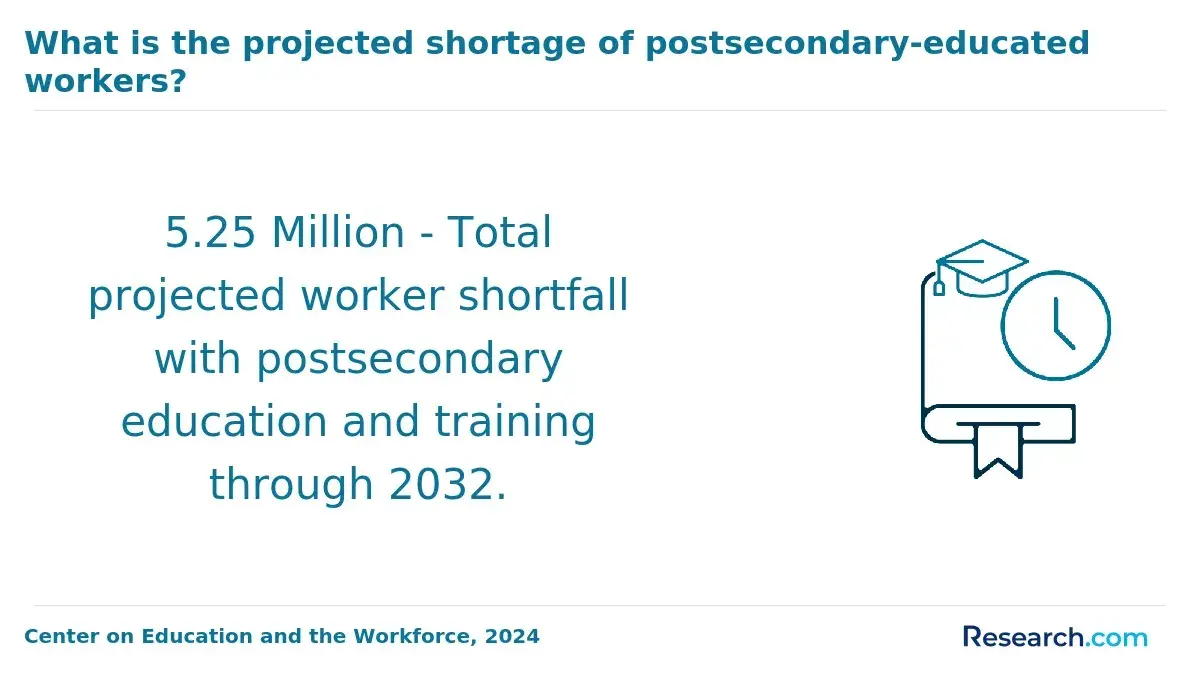
Choosing a nurse education doctorate is often a choice between traditional scholarship and applied leadership work. That decision matters as nursing schools continue to face faculty shortages: the American Association of Colleges of Nursing reported 1,977 full-time faculty vacancies in a 2024 survey of U. S. nursing schools.
This guide is for working nurses, educators, and MSN-prepared professionals comparing online doctorates without a traditional dissertation. You will learn what replaces the dissertation, how to verify quality, what timelines and costs to expect, and when a dissertation-free route supports your goals.
Key Things You Should Know
- Yes, you can earn an online nurse education doctorate without a traditional dissertation, but legitimate programs usually replace it with a DNP scholarly project, applied capstone, portfolio, or dissertation-in-practice rather than eliminating doctoral-level writing.
- The most common dissertation-free route is a Doctor of Nursing Practice with an education, academic leadership, or nurse educator focus; traditional nursing PhD programs usually still require a dissertation.
- For career context, the U.S. Bureau of Labor Statistics reported a May 2024 median annual wage of $86,530 for postsecondary nursing instructors and teachers, but pay and degree expectations vary by employer, rank, state, and teaching setting.
Which Online Nurse Education Doctorate Programs Do Not Require a Dissertation?
Most online nurse education doctorates with no traditional dissertation are professional doctorates, especially DNP programs with a nurse educator, nursing education, academic nursing leadership, or educational leadership concentration. These programs are designed to improve practice, teaching, curriculum, simulation, leadership, or patient-care systems rather than produce an original theory-building dissertation.
The table below shows the main doctorate pathways students usually encounter when searching for an online nurse education doctorate without a dissertation. It is more reliable to compare the completion requirement listed in the school catalog than to rely on marketing language alone.
| Doctorate pathway | Typical online availability | Traditional dissertation? | Common final requirement | Best fit |
| DNP with nurse educator or education concentration | Common | Usually no | DNP scholarly project, capstone, practicum portfolio, or quality-improvement project | MSN-prepared nurses who want applied teaching, leadership, or clinical education roles |
| DNP with academic leadership or systems leadership focus | Common | Usually no | Applied project focused on education systems, outcomes, policy, or practice improvement | Nurses moving into faculty leadership, program coordination, or clinical education administration |
| EdD in nursing education or health professions education | Moderate | Sometimes no traditional dissertation | Dissertation-in-practice, action research project, or applied doctoral project | Nurse educators focused on curriculum, pedagogy, assessment, and institutional leadership |
| PhD in nursing education or nursing science | Less common fully online | Usually yes | Traditional dissertation based on original research | Students pursuing tenure-track research, funded research, or academic scholarship roles |
A practical shortcut is to search for the exact words "DNP project," "doctoral project," "scholarly project," "capstone," "portfolio," or "dissertation-in-practice" in the catalog. If a program is labeled PhD, assume a dissertation is required unless the official curriculum says otherwise. Students comparing research-focused options by affordability may also want to review cheapest online nursing PhD programs to understand how the dissertation-based path differs.
Common mistake: do not assume "no dissertation" means no final project. In nursing education doctorates, the alternative project can still require institutional review, data collection, stakeholder approval, extensive writing, and a formal defense or presentation.
What Replaces the Dissertation in an Online Nurse Education Doctorate?
In legitimate dissertation-free nurse education doctorates, the dissertation is replaced by a structured form of applied doctoral work. The goal is usually to solve a real education or practice problem, such as improving clinical judgment assessment, redesigning simulation learning, reducing medication-error risks through staff education, or evaluating a preceptor training model.
The table below compares the most common alternatives. This matters because two programs can both say "no dissertation" while requiring very different levels of research design, writing, faculty review, and fieldwork.
| Completion requirement | What it usually involves | How it differs from a dissertation | What students should verify |
| DNP scholarly project | Evidence-based practice, quality improvement, or systems-change project connected to a clinical or educational problem | Applies existing evidence rather than creating broad original research theory | Project site requirements, practice-hour rules, faculty mentor process, and final presentation format |
| Applied capstone | Program evaluation, curriculum improvement, instructional design, simulation initiative, or policy project | Usually narrower and more practice-facing than a traditional dissertation | Whether the capstone includes data analysis, IRB review, or implementation at a workplace site |
| Dissertation-in-practice | Problem-of-practice inquiry common in EdD programs | May still look dissertation-like but focuses on local improvement rather than generalizable research | Whether the school still calls it a dissertation for graduation, defense, or library publication purposes |
| Portfolio-based doctoral synthesis | Collection of major papers, practicum products, competency artifacts, and reflective analysis | Assesses cumulative competency instead of one long research manuscript | Required artifacts, assessment rubrics, revision limits, and final oral review expectations |
For nurse education students, the strongest projects usually connect teaching practice to measurable outcomes. For example, a student might evaluate whether a new simulation debriefing model improves learner confidence, clinical reasoning, or faculty consistency. That is still scholarly work, but it is designed for direct professional use.
Before enrolling, ask the school for examples of recent project titles, not just a description of the requirement. This helps you see whether the work matches your interests, workplace access, and comfort with data analysis.
Are Online Nurse Education Doctorate Programs Without Dissertations Legitimate and Accredited?
Yes, a dissertation-free online nurse education doctorate can be legitimate if the institution is properly accredited and the nursing program has appropriate professional approval. The absence of a traditional dissertation is not the issue; the issue is whether the program meets recognized academic, nursing, state authorization, and employer expectations.
Students should verify accreditation in layers because each layer serves a different purpose. Institutional accreditation affects transferability, federal financial aid eligibility, and general academic recognition. Nursing program accreditation helps show that the curriculum has been reviewed against professional nursing education standards.
Use this checklist before applying or paying a deposit:
- Confirm that the college or university holds institutional accreditation recognized by the U.S. Department of Education or the Council for Higher Education Accreditation.
- Check whether the nursing program is accredited by a recognized nursing accreditor, commonly CCNE or ACEN, when applicable to the degree level and program type.
- Verify that the school is authorized to enroll online students in your state, especially if you will complete practicum, project, or fieldwork hours where you live.
- Ask whether the final requirement is called a DNP project, capstone, dissertation-in-practice, or another term in the official catalog.
- Confirm whether the program meets your employer's requirements for faculty rank, promotion, tuition reimbursement, or doctoral credential recognition.
Also remember that a doctorate in nurse education is not the same as a new nursing license. If you are already an RN or APRN, your state board rules, national certification requirements, and employer policies still apply. A DNP or EdD may strengthen your qualifications for teaching and leadership, but it does not automatically expand your clinical scope of practice.
Are No-Dissertation Online Nurse Education Doctorate Programs Easier to Complete?
No-dissertation programs are not automatically easier. They may be more practical for working nurses because the final project is usually applied to a real education or practice setting, but the workload can still be intense. Students often complete advanced courses in evidence-based practice, curriculum design, assessment, leadership, informatics, policy, epidemiology, and scholarly writing.
The key difference is the type of difficulty. A traditional dissertation often requires an original research question, literature review, methodology chapter, data collection, analysis, committee revisions, and defense. A DNP project or applied capstone typically requires identifying a real problem, reviewing evidence, designing an intervention, implementing or evaluating it, measuring outcomes, and presenting results to faculty or stakeholders.
These programs may feel more manageable if you prefer structured milestones and workplace-based problem solving. They may feel harder if you lack access to a project site, struggle with statistics, or underestimate the amount of writing involved.
Watch for these red flags when a program advertises "no dissertation" too aggressively:
- The school cannot clearly explain what replaces the dissertation in the official curriculum.
- The catalog does not identify practicum, project, scholarly writing, or doctoral synthesis requirements.
- The admissions team promises unusually fast completion without discussing transfer credits, practice hours, or project approval.
- The program lacks recognized institutional accreditation or is unclear about nursing program accreditation.
- The final project requirement depends entirely on vague "life experience" rather than assessed doctoral competencies.
A better way to think about these programs is "different doctoral work," not "less doctoral work." For many nurse educators, that difference is valuable because it produces a project they can use in a classroom, simulation lab, clinical education department, or academic leadership setting.
How Long Does It Take to Complete an Online Nurse Education Doctorate Without a Dissertation?
Completion time depends on entry point, transfer credits, enrollment pace, practicum requirements, and how quickly the student completes the final project. Post-MSN DNP routes are usually shorter than BSN-to-DNP routes because the student has already completed graduate nursing coursework.
The table below summarizes typical timeline patterns. Use it as a planning tool, then confirm the exact credit load, calendar model, and project sequence with each school.
| Entry point | Common doctorate route | Typical completion range | What can extend the timeline |
| MSN-prepared RN or APRN | Post-MSN DNP with education focus | About 18 months to 3 years | Project-site delays, part-time enrollment, additional practice hours, or limited course availability |
| BSN-prepared RN | BSN-to-DNP with education or leadership focus | About 3 to 5 years | Graduate core sequence, advanced role coursework, practicum hours, and longer clinical or leadership progression |
| MSN-prepared nurse educator | EdD in nursing or health professions education | About 2 to 4 years | Dissertation-in-practice revisions, research design approval, cohort pacing, or institutional research review |
A major timeline factor is practice-hour accounting. DNP programs commonly expect students to meet a post-baccalaureate practice-hour standard, so MSN-prepared students should ask how many prior graduate hours can be credited toward the requirement. Nurses comparing post-master's pathways can use MSN to DNP programs as a starting point for understanding how schools structure credits, time-to-completion, and applied project requirements.
To avoid delays, ask admissions advisors when the project begins. Programs that introduce the project early may help students avoid a last-semester bottleneck, while programs that wait until the end can be riskier for students who need employer or site approval.
How Much Do Online Nurse Education Doctorate Programs Without Dissertations Cost?
Costs vary widely because online nurse education doctorates may be offered by public, private nonprofit, and private for-profit institutions, and tuition can be charged per credit, per term, or through a competency-based model. The most useful estimate is total program cost, not tuition per credit alone.
The table below shows the cost categories students should compare. A lower sticker price can become less attractive if the program requires extra semesters, travel, repeated project enrollment, or fees that are not included in advertised tuition.
| Cost category | Why it matters | Questions to ask |
| Tuition | Usually the largest cost and often tied to credits or subscription terms | How many credits are required after transfer review, and is tuition locked for enrolled students? |
| Program and technology fees | Online programs may charge platform, practicum, assessment, graduation, or course fees | Which fees are mandatory, and are they included in the published cost estimate? |
| Residency or intensive costs | Some "online" programs require campus visits, project presentations, or immersion experiences | Are travel, lodging, background checks, and clinical compliance costs required? |
| Project expenses | Applied projects may require software, survey tools, printing, simulation materials, or site resources | Does the school or project site cover any implementation costs? |
| Financing costs | Interest can significantly affect the real cost of a doctorate if loans are used | What amount will you borrow, and how does repayment fit your expected career path? |
For federal borrowing context, graduate Direct Unsubsidized Loans for 2025-2026 carry a 7.94% fixed interest rate, while Grad PLUS Loans carry an 8.94% fixed interest rate. That does not mean students should avoid borrowing, but it does mean the cheapest program on paper is not always the best value if it has weak support, unclear project expectations, or poor fit with your career plan.
When estimating return on investment, include opportunity cost. A flexible no-dissertation doctorate may allow you to keep working full time, which can matter as much as tuition. However, if your target employer requires a PhD or dissertation-based scholarship for tenure-track research roles, a cheaper DNP may not deliver the career alignment you need.
Who Benefits Most From an Online Nurse Education Doctorate Without a Dissertation?
A dissertation-free online nurse education doctorate is usually strongest for nurses who want to apply evidence to teaching, leadership, curriculum, simulation, faculty development, or clinical education systems. It is especially attractive to working nurses who need a doctoral pathway that connects directly to practice rather than a long independent research agenda.
This pathway often fits the following students:
- MSN-prepared nurse educators who teach in academic, hospital, community college, simulation, or staff-development settings and want doctoral preparation for advancement.
- Clinical nurse specialists, nurse practitioners, or nurse leaders who train staff, precept learners, design education programs, or lead quality-improvement initiatives.
- Nurses who want a terminal practice doctorate but do not plan to become full-time nurse scientists or pursue grant-funded research careers.
- Working professionals who prefer structured applied projects, online coursework, and part-time pacing over a traditional dissertation process.
It may not be the best fit for everyone. If your goal is tenure-track research at a research-intensive university, a PhD with a dissertation may carry more direct alignment. If your goal is advanced clinical diagnosis and treatment, you may need to compare specialty-focused online nurse practitioner programs rather than an education-focused doctorate.
Students should also consider their preferred daily work. Nurse education doctorates can support roles involving lesson planning, clinical teaching, curriculum mapping, accreditation reports, assessment design, simulation, faculty mentoring, program evaluation, and leadership meetings. If those tasks sound more appealing than laboratory research or full-time clinical practice, an applied doctoral structure may be a good match.
How Does a No-Dissertation Online Nurse Education Doctorate Affect Career Opportunities?
A no-dissertation doctorate can support career advancement when employers value applied doctoral preparation, teaching expertise, leadership, and evidence-based practice. It is most relevant for nurse educators, clinical education leaders, academic coordinators, simulation directors, professional development specialists, curriculum specialists, and some nursing administration roles.
For salary context, the U.S. Bureau of Labor Statistics reported a May 2024 median annual wage of $86,530 for postsecondary nursing instructors and teachers. That figure is not a promised outcome; it reflects a national median across employers and regions. Doctoral degree type, teaching rank, union contracts, clinical specialty, location, and whether the role is full time can all affect compensation.
The career value of a dissertation-free doctorate usually depends on how the credential is used. A DNP with an education focus may be highly relevant for leading simulation redesign, improving new-graduate nurse onboarding, developing competency-based curricula, or coordinating clinical education partnerships. An EdD may be especially useful for broader education leadership, assessment, policy, and institutional change.
Technology is also changing nurse education work. Online learning platforms, virtual simulation, adaptive testing, AI-supported tutoring, and learning analytics are becoming more common in nursing education. Doctoral programs that include informatics, evaluation methods, and ethical use of educational technology may better prepare graduates for current faculty and clinical education expectations.
Ask prospective employers how they classify doctorates. Some colleges accept DNP, EdD, or PhD credentials for faculty roles, while research-intensive universities may prefer or require a PhD for tenure-track research appointments. Hospitals and health systems may care more about project leadership, outcomes improvement, teaching ability, and certification than dissertation format.
How Do No-Dissertation Online Nurse Education Doctorates Compare With Traditional Doctorates?
The best doctorate format depends on whether your primary goal is applied nursing education leadership or original research scholarship. No-dissertation programs are not inferior by default, but they are built for different outcomes than dissertation-based PhD programs.
The table below compares the main trade-offs. Use it to clarify which pathway aligns with your work style, career goals, and preferred contribution to the nursing profession.
| Feature | No-dissertation DNP or applied EdD | Traditional dissertation-based PhD |
| Primary purpose | Apply evidence to improve practice, teaching, systems, or educational outcomes | Create original research and contribute to nursing science |
| Final requirement | DNP project, capstone, portfolio, action research, or dissertation-in-practice | Traditional dissertation with original research question and defense |
| Typical student profile | Working nurse educator, APRN, clinical leader, or academic practice leader | Aspiring nurse scientist, research faculty member, or scholar |
| Career alignment | Clinical education, faculty practice, curriculum leadership, simulation, quality improvement, academic administration | Research-intensive faculty roles, funded studies, scientific publication, doctoral research supervision |
| Research intensity | Moderate to high, usually applied and evidence-based | High, usually theory-driven and original |
| Flexibility for working nurses | Often designed with online and part-time formats | Varies; some programs require more intensive research mentoring or campus engagement |
A traditional dissertation-based doctorate may make more sense if you want to publish original studies, lead funded research, supervise PhD students, or compete for research-track academic roles. A no-dissertation doctorate may make more sense if you want to improve education practice, lead curriculum change, evaluate outcomes, or advance in teaching and professional development roles.
The smartest comparison is not "easy versus hard." It is "applied doctoral contribution versus original research contribution." Both can be rigorous, but they prepare students for different types of influence.
How Should Students Choose an Online Nurse Education Doctorate Without a Dissertation?
Choosing well means looking beyond the phrase "no dissertation." The right program should match your career goal, state authorization needs, accreditation expectations, schedule, project access, and budget. It should also be transparent about the final doctoral requirement before you apply.
Use the following steps to compare programs in a practical order:
- Define your target role first, such as academic faculty, simulation director, clinical educator, professional development specialist, curriculum leader, or nursing education administrator.
- Choose the degree type that fits that role: DNP for applied nursing practice and systems leadership, EdD for education leadership, or PhD for original research and research-intensive faculty work.
- Read the official catalog and identify the exact final requirement, including whether it is a DNP project, capstone, dissertation-in-practice, portfolio, or traditional dissertation.
- Verify institutional accreditation, nursing program accreditation where applicable, state authorization, and any practicum or project-site rules for your location.
- Ask how many credits and practice hours you will actually need after transcript review, not just the advertised minimum.
- Request details about project mentoring, faculty availability, project-site approval, data collection expectations, and final defense or presentation requirements.
- Calculate total cost, including tuition, fees, travel, repeated project credits, financing costs, and lost income if the program affects your work schedule.
- Compare employer recognition by asking your current or target employer whether the degree type supports faculty rank, promotion, salary lanes, or leadership eligibility.
Students who are still exploring the broader nursing education landscape may also want to compare affordable online nursing programs to see how doctoral pathways fit within RN, BSN, MSN, NP, DNP, and PhD progression options.
The biggest mistake is choosing the fastest-sounding program without checking whether its project structure matches your professional reality. If you do not have access to a project site, supportive leadership, data sources, or a feasible education problem to study, even a dissertation-free doctorate can stall.
A strong program should be able to answer these questions clearly: What exactly replaces the dissertation? When does the project begin? Who mentors it? What happens if my project site changes? Are there required residencies? How are practice hours documented? What support exists for writing, statistics, and IRB or ethics review? If the answers are vague, keep comparing.
Other Things You Should Know About Nurse Education
Not always. Many clinical educator and community college roles accept an MSN, while universities and graduate nursing programs often prefer or require a doctorate. Requirements vary by employer, rank, state, and accreditation expectations.
Sometimes. Schools may accept prior graduate credits, MSN coursework, or documented practice hours, but limits vary. Always request a transcript evaluation before assuming the advertised completion time applies to you.
Usually no, but certification can help. Credentials such as Certified Nurse Educator may strengthen a teaching profile, depending on the role. Eligibility rules are set by the certifying organization and may change.
Often, yes, but approval is not automatic. The school and workplace may need to approve the project scope, mentor, data access, ethics review, and separation between your job duties and doctoral requirements.
References
- What Can You Do With a Doctorate in Nursing? https://credenzahealth.com/career-advice/what-can-you-do-with-a-doctorate-in-nursing
- Best Online Ph.D. Nursing Programs for 2026 | Ranked https://www.nurseeducator.com/degrees/phd/
- 2025 Most Affordable Online Doctorates in Education https://www.onlineu.com/most-affordable-colleges/education-doctoral-degrees
- 25 Cheapest Online EdD Programs of 2025 https://www.eddprograms.org/schools/affordable-online-doctor-of-education-programs/
- Career Goals https://doctorsofnursingpractice.org/forums/topic/career-goals/
- How a Nursing Doctorate Can Transform Your Career and Open Doors to Leadership Roles https://skillmeter.com/blog/how-a-nursing-doctorate-can-transform-your-career-and-open-doors-to-leadership-roles
- Online Ed.D. in Healthcare Leadership | No Dissertation https://blog.methodistcollege.edu/doctorate-degree-online-no-dissertation
- What Is a Non-Dissertation Doctorate, and Is It Right for You? https://www.snu.edu/blog/what-is-a-non-dissertation-doctorate-and-is-it-right-for-you
- Online vs Traditional PhD Programs: 2026 Comparison Guide https://streamlinedai.app/blog/online-schools-phd
- PhD Education https://www.aacnnursing.org/students/nursing-education-pathways/phd-education


