2027 Accelerated Online Nurse Education Doctorate Programs: Faster Timelines, Credit Transfers, and Completion Paths

Co-Founder and Chief Data Scientist
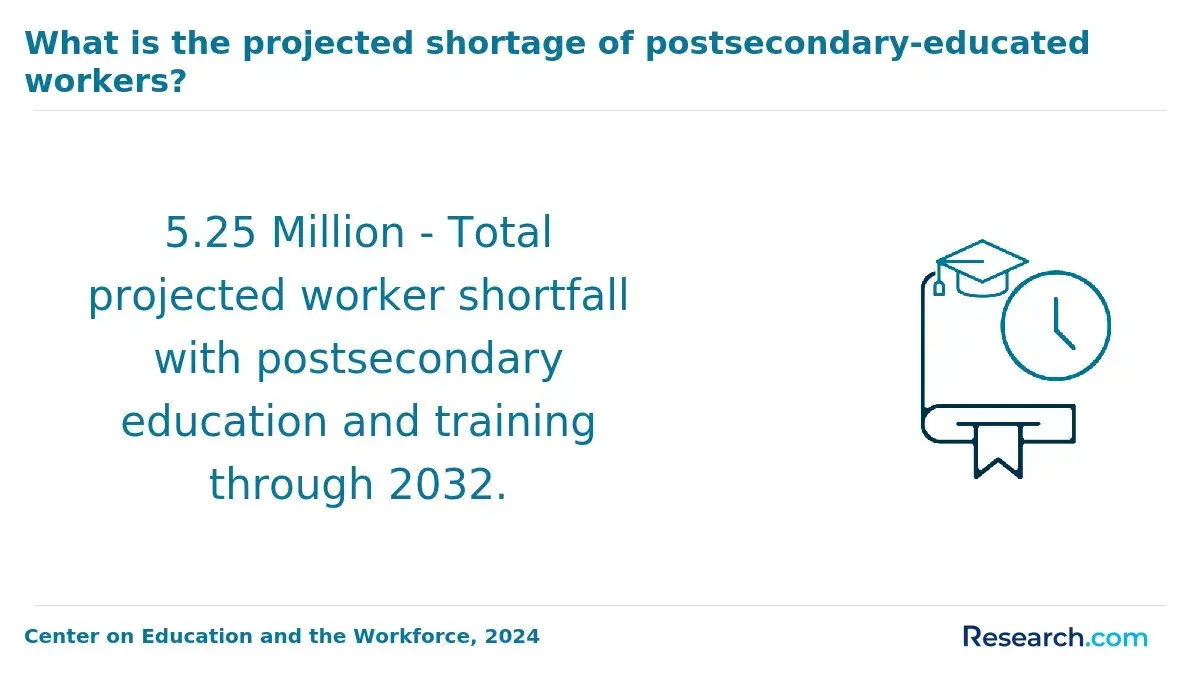
Choosing an accelerated online nurse education doctorate is really a timeline decision: how fast can you finish without weakening the degree's value? The need is urgent; the American Association of Colleges of Nursing reported that U.S. nursing schools turned away 65,766 qualified applications in 2023, with faculty shortages among the contributing factors.
This guide is for MSN-prepared nurses, educators, clinical leaders, and advanced practice nurses comparing faster doctoral routes. You'll learn how program type, transfer credits, capstone requirements, residencies, and workload affect time to graduation and long-term return.
Key Things You Should Know
- The fastest realistic online nurse education doctorate is usually a post-master's DNP, EdD, or PhD completion pathway with a focused education concentration, prior graduate credits, and a capstone or dissertation structure that is already aligned with the student's workplace.
- Transfer credit can shorten the timeline, but schools commonly limit transferability by credit age, grade, accreditation, course match, and whether credits were already applied to another completed degree.
- Speed should be weighed against quality signals such as regional institutional accreditation, nursing program accreditation where applicable, clear practicum expectations, faculty access, and documented average completion times rather than advertised minimums.
Which Online Nurse Education Doctorate Programs Offer the Fastest Accelerated Pathways?
The fastest accelerated online nurse education doctorate programs are not always the ones with the shortest marketing claim. The quickest path usually depends on your entry point: MSN-prepared nurses often have a shorter route than BSN-prepared students because they have already completed graduate-level nursing theory, research, leadership, and specialty coursework.
An online nurse education doctorate may be structured as a Doctor of Nursing Practice with a nurse educator focus, a PhD in nursing with an education-related research focus, or an EdD designed for health professions or nursing education leadership. Students still comparing broader distance-learning options may want to review affordable online nursing programs before narrowing their search to doctoral education tracks.
The table below compares common accelerated doctorate structures by typical student profile and time-saving potential. Use it to identify which pathway is likely to be fastest before requesting a formal transcript evaluation.
| Program structure | Best fit | Why it can be faster | Main timeline risk |
| Post-master's DNP with nurse educator concentration | MSN-prepared nurses seeking applied leadership, curriculum, teaching, or practice-improvement roles | Prior MSN coursework may satisfy advanced nursing core requirements, and the final project is often practice-based | Project approvals, practicum hours, and site permissions can slow completion |
| EdD in nursing education or health professions education | Nurses targeting academic leadership, curriculum design, faculty development, or instructional administration | Some programs use cohort pacing and dissertation-in-practice models tied to workplace problems | Dissertation milestones may require more time than coursework |
| PhD in nursing with education research focus | Nurses aiming for research-intensive faculty roles, grant-funded scholarship, or academic tenure tracks | Strong transfer alignment and a pre-developed research agenda can shorten the research phase | Traditional dissertation research, data collection, and committee review often extend the timeline |
| BSN-to-doctorate with education focus | BSN-prepared nurses who want a single continuous path to a doctorate | Combines graduate and doctoral work without requiring a separate MSN stop-out | Longer total credit load makes it less "accelerated" than post-master's options |
For most working nurses who already hold an MSN, the fastest option is typically the post-master's DNP or EdD route, especially when the program accepts relevant graduate credits and allows the final project to address a problem in the student's current teaching or clinical education setting. A PhD can still be the right choice, but it is usually fastest only for students who already have a defined research question, access to data, and strong faculty alignment.
Which Completion Pathways Help Students Finish an Online Nurse Education Doctorate Sooner?
Completion pathway matters because the final doctoral requirement often determines the real finish date. Two programs may advertise similar credit counts, but a capstone, dissertation-in-practice, or traditional dissertation can create very different timelines once proposal review, institutional approvals, data collection, and revisions begin.
The following table explains how common completion models affect pace. It is especially useful for students deciding whether speed, scholarship depth, or applied workplace impact should drive the program choice.
| Completion pathway | Typical final product | Fastest for | Speed advantage | Potential drawback |
| DNP scholarly project or capstone | Practice-improvement, quality, curriculum, simulation, or education delivery project | Students with access to a clinical, academic, or staff-development site | Project can often be tied to an existing workplace need | Requires site support, measurable outcomes, and faculty approval |
| Dissertation-in-practice | Applied research on a real education or organizational problem | Educators focused on curriculum, learner outcomes, or institutional change | Often more workplace-connected than a traditional research dissertation | Still requires rigorous design, committee review, and revision |
| Traditional dissertation | Original research contributing to nursing science or nursing education scholarship | Future researchers and tenure-track faculty candidates | Best aligned with research-intensive academic careers | Can take longer if recruitment, data access, or committee feedback is delayed |
| Doctoral completion or ABD-style pathway | Structured route for students with prior doctoral coursework | Students who completed coursework elsewhere but did not finish the doctorate | May reduce repeated coursework if credits are accepted | Transfer approval is often restrictive and case-specific |
Students who want the fastest applied route should usually prioritize a capstone-style DNP or practice-oriented EdD if those degrees match their career goals. Students who want research-intensive faculty roles should not choose a faster capstone program solely for speed if employers in their target setting prefer a PhD or a dissertation-based doctorate.
How Do Transfer Credits Affect Completion Time for an Online Nurse Education Doctorate?
Transfer credits can reduce completion time, but they are not automatic. A school may accept graduate credits only if they come from an accredited institution, match the doctoral curriculum, meet minimum grade requirements, and fall within a time limit set by the program.
Students comparing doctoral options should distinguish between "eligible for review" and "accepted toward the degree." If affordability is part of the decision, comparing transfer policies alongside the cheapest online nursing PhD programs can reveal whether a low tuition rate or a generous transfer policy creates better total value.
The table below summarizes the transfer-credit questions that most directly affect time to graduation. These are policy areas to confirm in writing before enrolling.
| Transfer policy factor | What to verify | How it affects completion time |
| Maximum transferable credits | The highest number of credits the program will apply to the doctorate | A higher cap may reduce coursework, but only if your courses match required content |
| Credit age limit | Whether courses expire after a set number of years | Older MSN or doctoral credits may not count, even if they appear relevant |
| Course equivalency | Whether prior courses replace specific required courses or only count as electives | Elective-only transfer may not shorten the critical path to graduation |
| Prior degree restrictions | Whether credits already used for an MSN can also apply to the doctorate | Some schools limit double-counting, which can reduce expected savings |
| Portfolio or competency review | Whether professional learning, certifications, or prior doctoral work can be evaluated | May help advanced students, but review timelines can delay admission planning |
To maximize transfer credit without creating delays, take a structured approach before committing to a program. The goal is to get a realistic degree plan, not just a verbal estimate.
- Request an unofficial transcript review before applying if the school offers one.
- Ask which courses would satisfy specific doctorate requirements, not just how many credits may transfer.
- Confirm whether transferred credits reduce tuition, shorten terms, or simply lighten individual semesters.
- Ask for the average completion time of students with a background similar to yours.
- Keep syllabi, course descriptions, practicum documentation, and accreditation information from prior graduate study.
The biggest mistake is assuming a large MSN transcript will automatically translate into a shorter doctorate. A smaller number of credits that replace required doctoral courses can save more time than a larger number of credits accepted only as electives.
What Program Features Help Students Complete an Online Nurse Education Doctorate Faster?
The best accelerated programs reduce friction. They do not simply compress classes; they organize admissions, advising, research planning, practicum placement, and final-project milestones so students can move continuously from one requirement to the next.
The table below highlights program features that often make a faster timeline more realistic. These features are especially important for nurses balancing coursework with employment, teaching, clinical practice, or family responsibilities.
| Program feature | Why it helps students finish faster | What to ask admissions |
| Multiple start dates | Reduces waiting time if you miss one application deadline | How many start dates are available each year? |
| Short, sequential course terms | Allows students to complete more courses across the year | Are courses offered every term or only once per year? |
| Embedded project planning | Begins capstone or dissertation work before the final semester | When do students choose a topic and committee? |
| Dedicated doctoral advising | Prevents sequencing mistakes that can add extra terms | Will I receive a term-by-term plan before enrollment? |
| Online residency alternatives | Limits travel time and scheduling conflicts | Are any campus visits, intensives, or synchronous events required? |
| Approved practicum or project-site support | Helps students secure permissions earlier | Can I use my workplace as a practicum or project site? |
Technology is also changing what "online" means. Many nursing education doctorates now use learning management systems, virtual simulation, video assessment, digital portfolios, and analytics-supported feedback. These tools can help students progress efficiently, but they do not replace faculty mentoring, ethical project review, or valid evaluation of teaching outcomes.
A strong accelerated program should make the path transparent. If a school cannot explain when project approval occurs, how practicum placement works, or what happens if a course is missed, the advertised timeline may be too optimistic.
What Factors Most Commonly Delay Graduation From an Accelerated Online Nurse Education Doctorate?
Graduation delays usually come from bottlenecks outside ordinary coursework. In accelerated programs, small problems can compound quickly because students have fewer breaks between terms and less room to recover from missed milestones.
The most common delay factors are predictable, which means students can often reduce risk before enrolling. Watch for these issues when reviewing program documents and speaking with advisors.
- Unclear residency requirements that require travel, synchronous attendance, or intensive sessions during work obligations.
- Capstone or dissertation topics that depend on hard-to-access sites, protected data, or lengthy institutional approvals.
- Course rotations that make a missed prerequisite available only once per year.
- Transfer-credit assumptions that are not confirmed in a written degree plan.
- Practicum placements that require external contracts, supervisor approval, or background checks not completed early.
- Accelerated course loads that exceed what the student can sustain while working full time.
- Hidden graduation requirements such as portfolios, comprehensive exams, publication expectations, or final oral defenses.
Financing can also slow progress. For the 2024-2025 award year, the federal Direct Unsubsidized Loan annual limit for most graduate and professional students is $20,500, which means students in higher-cost programs may need savings, employer support, payment plans, or Grad PLUS borrowing to stay continuously enrolled. If financing is uncertain, a slightly slower program with predictable billing may be more realistic than an aggressive plan that risks stop-outs.
The safest strategy is to ask each school for a sample accelerated plan and then identify every point where a delay would add another term. A program is only truly fast if the schedule still works when life, work, and project approvals become complicated.
Which Accelerated Online Nurse Education Doctorate Programs Are Best for Working Professionals?
The best accelerated online nurse education doctorate for working professionals is usually one that combines predictable pacing with flexible weekly scheduling. "Fast" does not always mean full-time; for many nurses, the better choice is a year-round part-time plan that avoids breaks but keeps the workload manageable.
MSN-prepared nurses often have the strongest accelerated options because they can enter post-master's doctoral pathways. Those comparing practice-focused routes may find that MSN to DNP programs offer a practical balance of applied doctoral work, leadership preparation, and potential nurse educator concentration options.
The table below compares enrollment models from the perspective of a working nurse. It focuses on schedule fit rather than assuming one format is best for everyone.
| Enrollment model | Best for | Why it works | Trade-off |
| Full-time accelerated | Students with flexible work hours, strong support systems, and protected study time | Moves quickly through coursework and keeps momentum high | Higher weekly workload and less flexibility during clinical, teaching, or family demands |
| Year-round part-time | Full-time nurses, faculty, managers, and parents | Maintains continuous progress without overloading each term | May take longer than the advertised fastest route |
| Cohort-based online | Students who benefit from structure and peer accountability | Clear sequence reduces planning errors | Less flexibility if you need to pause or change pace |
| Self-paced or competency-supported | Highly independent students with strong writing and project-management skills | Can move faster through familiar material where allowed | Requires discipline and may offer less real-time structure |
| Hybrid low-residency | Students who value face-to-face networking and can travel occasionally | May strengthen faculty relationships and project development | Travel and scheduling can create delays for shift-based workers |
Working professionals should calculate time in weekly hours, not just months to completion. A two-year plan may be unrealistic if it requires constant evening coursework, weekend project work, synchronous sessions, and practicum documentation during peak work periods.
Does Accelerating an Online Nurse Education Doctorate Affect Cost or Academic Quality?
Accelerating a doctorate can reduce total cost if it lowers the number of terms, technology fees, residency trips, and semesters of enrollment. It can also increase short-term financial pressure because students may take more credits at once and have less time to spread payments across years.
Loan cost is part of the quality-and-value calculation. Federal Student Aid set the 2024-2025 interest rate for Direct Unsubsidized Loans for graduate students at 8.08%, so finishing sooner may reduce the time a student relies on borrowing, but only if the accelerated pace does not lead to withdrawal, repeated courses, or delayed project completion.
The table below separates cost and quality considerations that students sometimes confuse. A faster program can be rigorous and reputable, but only when acceleration comes from efficient design rather than reduced expectations.
| Decision factor | How acceleration can help | Quality risk to avoid |
| Tuition structure | Fewer terms may reduce semester-based fees | High per-credit tuition can outweigh time savings |
| Course compression | Short terms can help motivated students keep momentum | Overly compressed courses may reduce time for doctoral writing and feedback |
| Final project design | Early milestone planning can shorten the end phase | Weak project support can delay students even after coursework is done |
| Accreditation | Accredited institutions and recognized nursing programs support credibility | Speed should never substitute for institutional and program quality checks |
| Residency model | Online or limited residencies can reduce travel costs | Unclear in-person requirements can add expense and scheduling problems |
Academic quality should be judged by accreditation, faculty qualifications, doctoral mentoring, student support, curriculum depth, and transparent outcomes. The right accelerated program saves time by removing avoidable delays, not by cutting essential doctoral competencies.
Which Careers Benefit Most From Completing an Accelerated Online Nurse Education Doctorate?
An accelerated online nurse education doctorate is most valuable when it supports a role where doctoral preparation strengthens credibility, advancement potential, or eligibility for leadership. The degree is especially relevant for nurses moving into faculty, curriculum, simulation, staff development, academic administration, or education-focused health system leadership.
Career direction should guide program choice. Nurses who want advanced clinical practice roles may also compare online nurse practitioner programs, because an education doctorate and an NP preparation program lead to different responsibilities, credentials, and employer expectations.
The table below connects common career goals with the doctoral pathway that may fit best. It also shows why the fastest degree is not always the most strategic degree.
| Career goal | Relevant doctorate path | Why acceleration helps | Important consideration |
| Nursing faculty member | PhD, EdD, or DNP with education focus depending on institution type and role | Earlier completion may help meet faculty qualification expectations sooner | Research-intensive universities may prefer PhD preparation |
| Director of nursing education or curriculum | EdD or DNP with education leadership coursework | Applied projects can align with curriculum redesign or accreditation preparation | Look for coursework in assessment, program evaluation, and instructional design |
| Clinical educator or professional development leader | DNP or EdD with teaching, simulation, or practice-improvement focus | Capstone work can address staff training, onboarding, or competency gaps | Workplace project support is essential |
| Simulation or learning innovation specialist | EdD, DNP, or PhD with education technology or simulation focus | Accelerated applied projects can build a portfolio of measurable education outcomes | Confirm access to simulation tools, learners, and evaluation data |
| Academic administrator | EdD, PhD, or DNP depending on institution and scope | Doctoral completion may strengthen candidacy for program leadership | Leadership experience usually matters alongside the doctorate |
BLS Occupational Employment and Wage Statistics reported a May 2024 median annual wage of $86,530 for nursing instructors and teachers, postsecondary. That figure is a national median, not a promise of earnings; salary varies by institution type, region, rank, teaching load, and whether the role is full-time, tenure-track, clinical-track, or adjunct.
Which Students Are Most Likely to Succeed in an Accelerated Online Nurse Education Doctorate?
Students most likely to succeed in an accelerated online nurse education doctorate are not simply the students with the strongest résumés. They are the students whose background, schedule, writing readiness, project access, and career goals match the program's structure.
Before choosing the fastest option, evaluate whether your circumstances support accelerated doctoral work. The following characteristics often predict a better fit.
- You already hold an MSN or significant graduate nursing coursework that aligns with the doctorate.
- You have a clear career goal, such as faculty work, education leadership, curriculum design, or staff development.
- You can protect regular weekly study and writing time throughout the year.
- You have access to a workplace, academic setting, or education site where a capstone or dissertation-in-practice could be completed.
- You are comfortable with online learning tools, video meetings, digital library research, and independent project management.
- You can accept intensive feedback on scholarly writing, data interpretation, teaching evaluation, and project design.
Some students should consider a standard-paced doctorate instead. If your work schedule changes frequently, your research interests are still broad, your employer cannot support a practicum or project, or you have major family obligations during the next year, a slower but steadier plan may lead to faster actual completion.
The key question is not "Can I handle acceleration for one term?" It is "Can I sustain this pace through coursework, revisions, approvals, practicum documentation, and the final defense or presentation?"
How Should Students Compare Accelerated Online Nurse Education Doctorate Programs?
Comparing accelerated online nurse education doctorate programs requires more than checking tuition and advertised length. The best comparison looks at total time, total cost, academic fit, accreditation, final-project structure, transfer policy, and support for working professionals.
Use the following process to compare programs in a way that reveals the real completion path. This helps prevent choosing a program that looks fast online but becomes slow once requirements are sequenced.
- Confirm institutional accreditation and, where relevant, nursing program accreditation or recognition tied to the degree type.
- Identify the exact doctoral pathway: DNP, PhD, EdD, post-master's, BSN-to-doctorate, bridge, or completion route.
- Request a written transfer-credit review and ask how accepted credits change the term-by-term plan.
- Compare final requirements, including capstone, dissertation, defense, practicum, portfolio, comprehensive exams, and residency expectations.
- Ask for average completion time for students with your entry credential, not just the shortest possible completion time.
- Calculate total cost using tuition, fees, books, travel, technology fees, graduation fees, and potential lost work hours.
- Evaluate faculty alignment by reviewing nurse education, simulation, curriculum, leadership, or research expertise.
- Ask what happens if you need to pause, fail a course, change projects, or miss a required sequence.
The table below can help narrow your final choice by matching common student priorities with the program feature that deserves the most scrutiny.
| If your top priority is... | Prioritize programs with... | Be cautious about... |
| Fastest completion | Post-master's entry, generous transfer review, year-round terms, early project planning | Programs that advertise speed but do not publish sequencing details |
| Lowest total cost | Transparent per-credit tuition, low fees, accepted transfer credits, limited travel | Low tuition programs with extra residency, technology, or continuation fees |
| Faculty career preparation | Teaching practicum, curriculum design, assessment, simulation, and scholarship support | Programs with minimal education-specific coursework |
| Research-intensive pathway | Strong dissertation mentoring, faculty research match, and methodological support | Choosing a capstone route if your target employer expects a PhD |
| Working-professional flexibility | Asynchronous courses, part-time year-round pacing, predictable deadlines | Hidden synchronous meetings or in-person intensives |
The best program is the one that shortens the path you can actually complete. A realistic accelerated plan should align your prior education, work schedule, project access, finances, and career target into one coherent route to graduation.
Other Things You Should Know About Nurse Education
Most nursing doctorate programs require an active, unencumbered RN license, and some require a license in the state where practicum or project work occurs. Requirements vary by school and state, so confirm this before applying.
Often, yes, but state authorization, practicum rules, and professional licensing requirements can limit enrollment. Ask whether the school is authorized to serve students in your state and whether any project-site restrictions apply.
Employers are more likely to focus on accreditation, degree type, school reputation, relevant experience, and fit for the role than on whether courses were online. Avoid unaccredited programs or programs that cannot clearly explain doctoral outcomes.
Students should be comfortable with video conferencing, online discussion, scholarly databases, citation tools, digital presentations, learning management systems, and basic data or evaluation software. Strong online communication skills are also important.
References
- 2 Year Online EdD Programs: Accelerated Doctor of Education Programs https://www.onlineeddprograms.com/faqs/two-year-online-edd-programs
- Best Online Ph.D. Nursing Programs for 2026 | Ranked https://www.nurseeducator.com/degrees/phd/
- How Long Does It Take to Get an EdD? Full Online Timeline Guide https://edd.alverno.edu/articles/how-many-years-is-a-doctorate-in-education/
- Accelerated Nursing Programs https://www.allnursingschools.com/articles/accelerated-nursing-programs/
- Shortest EdD Programs Online: How to Fast-Track Your Doctorate https://www.phds.me/online-programs/education-doctorate-edd/fastest/
- Ed.D. in Nursing Education | ACE https://ace.edu/degree-programs/doctoral-degrees/doctoral-nursing/doctor-of-education-in-nursing-education/
- CCNE Accredited Programs https://www.aacnnursing.org/ccne-accreditation/find-accredited-programs
- 30 Most Affordable Online Nurse Educator Programs https://www.bestmasterofscienceinnursing.com/best/affordable-online-nurse-educator-programs/
- Online Doctor of Nursing Practice DNP Degree Programs https://teach.com/online-ed/healthcare-degrees/online-doctor-of-nursing-practice-programs/
- Top Institutes For Nursing Education https://hospitalcareers.com/blog/top-institutes-for-nursing-education/