2027 Online Nurse Education Doctorate Programs with Capstone or Applied Project Options

Co-Founder and Chief Data Scientist
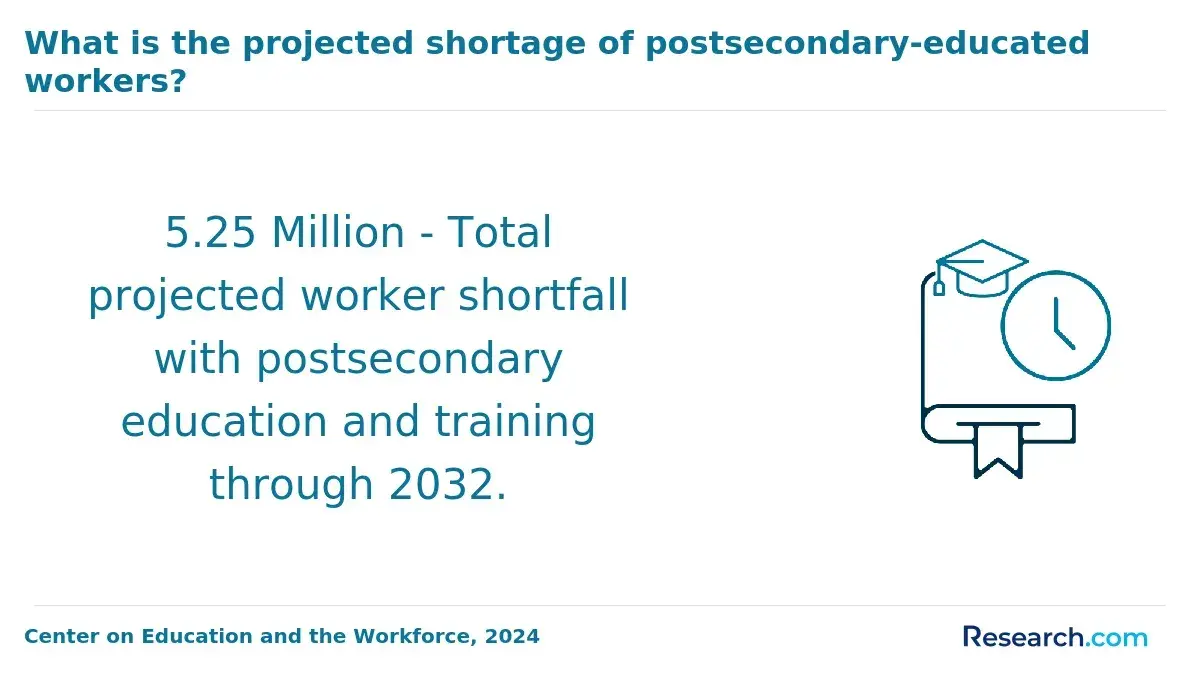
Choosing an online nurse education doctorate often comes down to one question: do you want to complete a traditional dissertation or solve a real practice problem through a capstone or applied project? The decision matters because nursing schools need qualified educators; AACN reported that U.S. nursing schools turned away 65,766 qualified applications in a recent annual survey, with faculty shortages among the key constraints.
This guide is for MSN-prepared nurses, educators, and leaders comparing doctoral formats, costs, timelines, accreditation, and career value.
Key Things You Should Know
- Most online nurse education doctorates with capstone or applied project options are DNP or applied EdD pathways; PhD programs usually require a dissertation and are better suited to research-intensive academic careers.
- A capstone is not a shortcut: students typically complete evidence appraisal, project design, implementation or evaluation, faculty review, and a formal scholarly product before graduation.
- Cost and ROI vary widely; NCES graduate tuition benchmarks published in 2024 show average annual graduate tuition and required fees of $12,596 at public institutions and $29,931 at private nonprofit institutions, before program-specific fees and travel.
Which Online Nurse Education Doctorate Programs Offer Capstone or Applied Project Options?
Online nurse education doctorate programs with capstone or applied project options are usually designed for registered nurses who already hold an MSN and want to move into faculty, curriculum, simulation, clinical education, staff development, or academic leadership roles. The most common applied pathway is the Doctor of Nursing Practice, where the final requirement is often called a DNP project, scholarly project, quality improvement project, direct practice improvement project, or evidence-based practice project.
Students who are still comparing broader nursing pathways may want to review online nursing programs first, especially if they are not yet sure whether they need a doctoral degree or a graduate-level teaching credential. For doctorate seekers, the key is to look past the marketing label and confirm what the final scholarly requirement actually involves.
The table below summarizes the main online doctorate formats that may include nurse education content and how their final projects usually work. This comparison helps you identify which program type is most likely to match your academic and career goals.
| Doctoral pathway | Common online availability | Typical nurse education connection | Final scholarly requirement | Best fit |
| DNP with nursing education concentration | Common | Coursework may cover curriculum design, teaching strategies, assessment, simulation, and academic leadership | DNP project, capstone, or evidence-based practice project | Nurses who want applied leadership, clinical education, or teaching roles grounded in practice improvement |
| DNP with educational leadership or healthcare leadership focus | Common | May support educator roles through leadership, systems change, and professional development coursework | Applied DNP project or direct practice improvement project | Nurse educators, staff development leaders, and academic administrators focused on organizational change |
| EdD in nursing education or health professions education | Moderate | Usually emphasizes adult learning, pedagogy, curriculum, program evaluation, and educational leadership | Applied dissertation, capstone, dissertation-in-practice, or traditional dissertation, depending on the school | Nurses focused on teaching, educational systems, curriculum leadership, and student outcomes |
| PhD in nursing with education research focus | Available but less often fully applied | May allow research on nursing education, faculty development, or student learning | Traditional dissertation | Nurses aiming for tenure-track research faculty roles, funded research, or theory development |
Specific schools change concentrations, catalogs, and project terminology, so the safest approach is to verify the current academic catalog rather than relying only on a program landing page. Look for phrases such as "DNP scholarly project," "capstone project," "applied dissertation," "dissertation in practice," "project implementation," and "final oral defense."
Common examples of online or mostly online program categories to investigate include:
- MSN-to-DNP programs with a nursing education, academic nursing education, educational leadership, or nurse educator concentration.
- Post-master's DNP programs that allow practicing nurse educators to design a project around curriculum, simulation, faculty development, clinical teaching, or quality improvement in education settings.
- EdD programs in nursing education or health professions education that use an applied dissertation or dissertation-in-practice rather than a traditional research dissertation.
- Executive or leadership DNP programs that do not carry a nurse education concentration but may permit an education-focused applied project if the topic fits faculty expertise and site approval rules.
A major red flag is a program that advertises "no dissertation" but does not clearly explain what replaces it. A credible applied doctorate should still require doctoral-level inquiry, writing, faculty supervision, evidence use, and a defensible final product.
What Does a Capstone or Applied Project Involve in an Online Nurse Education Doctorate?
A capstone or applied project is a supervised doctoral project that addresses a real problem in nursing education, clinical teaching, academic systems, workforce development, or healthcare learning environments. Unlike a dissertation, which usually focuses on generating original research, an applied project typically uses existing evidence to design, implement, evaluate, or improve a practice or education process.
In a nurse education doctorate, project topics often connect directly to teaching and learning outcomes. Examples include improving medication calculation instruction, redesigning simulation debriefing, evaluating a clinical onboarding curriculum, strengthening preceptor training, reducing student attrition risk, or improving competency-based assessment.
Most credible capstone or applied project sequences include several stages. These steps matter because they show whether the program offers a genuine doctoral experience rather than a lightly supervised final paper.
- Problem identification: The student defines a specific educational, clinical learning, or organizational problem that is narrow enough to evaluate.
- Evidence review: The student analyzes scholarly literature, practice guidelines, learning theory, quality improvement models, or educational research relevant to the problem.
- Project proposal: The student writes a formal plan that includes purpose, setting, stakeholders, methods, timeline, evaluation measures, and ethical considerations.
- Site or stakeholder approval: Many projects require approval from a clinical site, academic department, simulation center, employer, or institutional review process.
- Implementation or evaluation: Depending on the program, the student may pilot an intervention, evaluate an existing process, create a curriculum product, or assess educational outcomes.
- Final scholarly product: The student completes a manuscript, portfolio, presentation, defense, poster, or publishable paper that demonstrates doctoral-level synthesis.
The most important distinction is that "applied" does not mean "less rigorous." A strong project should demonstrate mastery of evidence-based practice, educational design, leadership, ethical decision-making, data interpretation, and scholarly communication.
Students should ask whether the project must be implemented in a real site or whether a proposal, simulation, curriculum design, or evaluation plan can satisfy the requirement. Implementation requirements can affect timeline, employer coordination, travel, and graduation risk.
How Do Capstone-Based and Dissertation-Based Online Nurse Education Doctorates Compare?
The best doctoral pathway depends on what you want the degree to do for you. A capstone-based doctorate usually fits nurses who want to apply evidence in education or practice settings, while a dissertation-based doctorate is often better for those who want to build a research agenda, compete for tenure-track roles, or pursue funded scholarship.
If your main concern is affordability across research-focused options, comparing cheapest online nursing PhD programs can help you see how dissertation-based pathways differ from applied DNP or EdD options in cost, structure, and expected outcomes.
The table below compares capstone, applied project, applied dissertation, and traditional dissertation formats. Use it to match the doctoral requirement with the type of work you actually want to do after graduation.
| Feature | Capstone or DNP project | Applied dissertation or dissertation-in-practice | Traditional dissertation |
| Main purpose | Improve practice, education, systems, or outcomes using evidence | Solve a practical educational or organizational problem through systematic inquiry | Generate original research that contributes to scholarly knowledge |
| Common degree types | DNP | EdD and some applied professional doctorates | PhD and some EdD programs |
| Typical nurse education use | Curriculum improvement, simulation evaluation, competency assessment, faculty development, quality improvement | Program evaluation, student success interventions, instructional design research, leadership problems | Theory testing, education research, workforce studies, policy research, or empirical scholarship |
| Data expectations | Usually uses practice data, outcome measures, stakeholder feedback, or quality indicators | May use qualitative, quantitative, mixed, or evaluation methods | Often requires formal research design, original data collection or analysis, and advanced methodology |
| Career alignment | Practice leadership, academic nursing education, staff development, clinical education, program improvement | Educational leadership, faculty development, curriculum administration, higher education leadership | Research faculty, scientist roles, grant-funded research, policy scholarship, doctoral supervision |
| Common misconception | That it is easy because it is not a dissertation | That "applied" means it avoids research methods | That it is always required for teaching roles |
A capstone-based pathway may be the better choice if your goal is to become a stronger educator-practitioner who can improve learning systems. A dissertation-based pathway may make more sense if you want a long-term academic research career where peer-reviewed publications, research methods expertise, and independent scholarship are central expectations.
One common mistake is choosing a capstone program only because it sounds faster. A poorly scoped applied project can stall just like a dissertation if the student lacks site access, faculty alignment, data permissions, or a realistic timeline.
Are Online Nurse Education Doctorate Capstone Programs Accredited and Respected?
Online nurse education doctorate capstone programs can be accredited and respected, but legitimacy depends on the institution, the nursing program's accreditation status, state authorization, faculty qualifications, and the rigor of the final project. The online format alone does not determine quality; accreditation and outcomes matter more.
For nursing doctorates, students should check institutional accreditation first, then programmatic nursing accreditation where applicable. DNP programs are commonly accredited by the Commission on Collegiate Nursing Education or the Accreditation Commission for Education in Nursing. EdD programs may not always carry nursing programmatic accreditation because they are often housed in education colleges, so students should evaluate institutional accreditation and whether the curriculum meets their professional goals.
Use the following checks before enrolling because accreditation affects employer recognition, financial aid eligibility, transferability, and sometimes faculty hiring requirements.
- Confirm the university is institutionally accredited by an accreditor recognized by the U.S. Department of Education.
- For DNP programs, verify current CCNE or ACEN accreditation directly through the accreditor or the school's official accreditation page.
- Ask whether the nurse education concentration is included within the accredited nursing program or is an optional specialization attached to the degree.
- Check whether the program is authorized to enroll students in your state, especially if you will complete practica or project work outside the school's home state.
- Ask employers, academic departments, or promotion committees whether they recognize the degree type for the role you want.
Respect also depends on the doctoral standard behind the capstone. Employers and academic search committees are more likely to value a project that shows measurable educational improvement, strong evidence use, stakeholder engagement, and professional dissemination.
Be cautious with programs that provide vague project descriptions, no clear faculty mentoring structure, unclear accreditation language, or promises that sound like guaranteed career advancement. A legitimate applied doctorate should be transparent about admissions standards, project expectations, practicum hours, assessment rubrics, and graduation requirements.
How Long Do Online Nurse Education Doctorate Capstone and Applied Projects Take?
Most online nurse education doctorate programs take roughly two to four years after the MSN, depending on enrollment intensity, transfer credits, practicum requirements, project scope, and whether the student attends full time or part time. Capstone-based programs may feel more predictable than dissertation programs, but they are not automatically quick.
The table below shows typical timeline patterns by doctoral structure. Actual completion time can change if your project requires site approval, institutional review, data access, stakeholder scheduling, or revisions after faculty review.
| Program structure | Typical pace | When the project usually begins | Timeline risk factors |
| Post-master's DNP with nurse education focus | Often 2 to 3 years part time | Project planning may start after foundational evidence-based practice or leadership courses | Practicum hour documentation, site approval, faculty availability, project implementation delays |
| MSN-to-DNP with education or leadership concentration | Often 2.5 to 4 years | Project may be integrated across multiple semesters | Balancing advanced coursework, practicum hours, employment, and project milestones |
| EdD with applied dissertation or capstone | Often 3 to 4 years | Problem of practice may be developed early and refined through research methods coursework | Methodology approval, data collection permissions, writing revisions, committee scheduling |
| PhD with dissertation | Often longer and more research-intensive | Dissertation usually begins after coursework, exams, and proposal approval | Research design complexity, data collection, committee review, publication expectations |
Students can reduce timeline risk by choosing a project topic that is feasible within their work setting or an approved partner site. A project that requires major institutional change, large sample sizes, or complex data-sharing agreements may be valuable but harder to complete on schedule.
Before enrolling, ask schools these timeline-specific questions:
- When do students select a capstone or applied project topic?
- Are project milestones embedded in required courses, or is the project completed separately after coursework?
- Does the program require project implementation, or can students complete a proposal, evaluation, or curriculum product?
- What happens if a project site withdraws support or data access becomes unavailable?
- How many terms of continuous enrollment are required if the project is not finished on time?
A realistic timeline should include writing, revision, ethics review, project approval, and final presentation time. Students who work full time should be especially careful with accelerated formats that assume heavy weekly availability.
How Do Online Nurse Education Doctorate Programs Support Students During Capstone Projects?
Capstone support can make the difference between steady progress and a delayed graduation. Strong online programs do not simply assign a project at the end; they build project planning, evidence appraisal, methods, writing, and faculty feedback into the curriculum.
Support structures vary by school, but the most useful programs usually provide several layers of guidance. These features are worth asking about before you apply because they affect both project quality and completion confidence.
- Faculty mentor or project chair: A doctoral faculty member helps the student narrow the problem, align methods, and meet academic standards.
- Project committee or reviewer: Some programs use multiple reviewers to strengthen methodological rigor and reduce bias.
- Practice-site liaison: A preceptor, administrator, educator, or stakeholder at the project site helps confirm feasibility and access.
- Writing and research support: Library specialists, writing centers, methodology coaches, and evidence-based practice resources help students produce doctoral-level work.
- Milestone courses: Sequential courses require students to complete the problem statement, evidence review, proposal, implementation plan, evaluation, and final product in stages.
- Peer cohort feedback: Online discussion, project seminars, and synchronous sessions can help students troubleshoot common barriers.
The quality of support is especially important for students who have not recently completed graduate research or scholarly writing. A nurse educator may have strong teaching experience but still need structured help with literature synthesis, outcome measurement, data interpretation, and scholarly dissemination.
Common red flags include unclear mentor assignment, no published project handbook, limited faculty expertise in nurse education, inconsistent practicum rules, and vague statements such as "students complete a final project" without defining expectations. If the school cannot explain how students are supervised from idea to final defense, keep looking or ask for a sample project timeline.
How Do Capstone Projects in Online Nurse Education Doctorates Build Career-Ready Skills?
A well-designed capstone can function like a doctoral-level professional portfolio. Instead of writing only about a topic, students demonstrate that they can identify an education problem, interpret evidence, lead stakeholders, evaluate outcomes, and communicate results to academic or clinical audiences.
This matters in the labor market because nurse educator roles require both teaching ability and systems thinking. The U.S. Bureau of Labor Statistics projects much faster-than-average growth for postsecondary nursing instructors and teachers over the 2023 to 2033 period, reflecting continued demand for faculty who can prepare the nursing workforce. For readers, the takeaway is not that a doctorate guarantees a faculty job, but that doctoral preparation can strengthen competitiveness for roles where graduate teaching, curriculum work, and leadership are expected.
Capstone projects can build career-ready skills in several ways:
- Curriculum design: Students may create or revise learning modules, clinical evaluation tools, simulation scenarios, or competency-based assessment plans.
- Evidence-based teaching: Projects require students to connect learning problems to research, standards, theory, and measurable outcomes.
- Data-informed decision-making: Students practice selecting indicators, interpreting results, and explaining limitations without overstating findings.
- Leadership and change management: Many projects require buy-in from faculty, administrators, clinical partners, preceptors, or learners.
- Professional communication: Final presentations, manuscripts, posters, and executive summaries help students translate project results for different audiences.
- Ethical and regulatory awareness: Students learn to distinguish quality improvement, program evaluation, and human subjects research requirements.
The strongest career value comes from choosing a project that aligns with the role you want next. For example, an aspiring simulation director might evaluate debriefing consistency, while a future academic program director might study curriculum mapping or student progression barriers.
Students should avoid selecting a topic only because it seems easy to complete. A narrow but strategically chosen project can become evidence of expertise during faculty interviews, promotion reviews, staff development leadership searches, or academic leadership applications.
How Much Do Online Nurse Education Doctorate Programs With Capstone Options Cost?
The cost of an online nurse education doctorate depends on tuition per credit, total credits, transfer policy, practicum fees, technology fees, residency travel, books, project expenses, and whether the student pays public in-state, public out-of-state, private nonprofit, or private for-profit tuition. Because doctoral nursing programs vary in length, the lowest per-credit rate is not always the lowest total cost.
Students comparing applied DNP pathways can use affordability lists for MSN to DNP programs as a starting point, then verify whether each program includes nurse education coursework and a capstone or applied project aligned with their goals.
Recent NCES graduate tuition benchmarks published in 2024 are useful because they show the broader U.S. cost environment for graduate study. These are not program-specific prices, but they help students judge whether a quoted doctorate cost is relatively low, typical, or high.
- Public institutions: $12,596 average annual graduate tuition and required fees.
- Private nonprofit institutions: $29,931 average annual graduate tuition and required fees.
- Private for-profit institutions: $14,161 average annual graduate tuition and required fees.
Capstone requirements can also affect cost indirectly. A project that extends beyond the planned term may require continuation credits, additional fees, or another semester of enrollment. Travel for intensives, residencies, conference presentations, or project-site activities can also change the real price of an "online" degree.
When estimating total cost, students should calculate more than tuition. A practical cost review should include:
- Total credits required after transfer or gap analysis.
- Per-credit tuition and whether tuition differs by residency status.
- Required fees for technology, clinical placement, graduation, background checks, or compliance documentation.
- Residency, immersion, or campus visit costs, including travel and missed work.
- Project-related costs such as survey tools, transcription, printing, simulation materials, software, or conference dissemination.
- Continuation tuition if the capstone, applied project, or final defense is delayed.
- Employer tuition assistance, military benefits, scholarships, assistantships, and federal financial aid eligibility.
The ROI question should be tied to your intended role. A doctorate may be financially easier to justify if it helps you qualify for faculty leadership, program director, advanced clinical education, professional development, or promotion opportunities that require or strongly prefer doctoral preparation. It may be harder to justify if your target role accepts an MSN and does not reward doctoral credentials through pay, responsibility, or advancement.
Who Benefits Most From an Online Nurse Education Doctorate With an Applied Project?
An online nurse education doctorate with an applied project is usually best for experienced nurses who want to apply scholarship directly to teaching, curriculum, workforce development, clinical education, or organizational learning. It is especially useful for working professionals who want doctoral study connected to problems they already see in classrooms, simulation labs, clinical units, or academic programs.
Applicants who are still deciding between advanced clinical practice and education leadership may also compare online nurse practitioner programs, since NP pathways prepare students for a different scope of practice and licensure direction than nurse education doctorates.
The applied project route may be a strong fit for several types of students. These profiles can help you decide whether the degree matches your goals.
- MSN-prepared nurse educators who want to move into full-time faculty, program coordination, curriculum leadership, or academic administration.
- Clinical educators and professional development specialists who want to improve onboarding, competency validation, simulation, preceptor training, or continuing education systems.
- Nurse leaders who want to solve education-related quality, safety, workforce, or practice transition problems.
- Faculty members at institutions where a doctorate is required or preferred for promotion, accreditation support, or long-term academic appointment.
- Working nurses who want a doctoral project connected to their current organization rather than a purely theoretical research agenda.
A dissertation-based PhD or research-intensive doctorate may be a better fit for students who want to become nurse scientists, conduct funded research, supervise doctoral dissertations, or build a tenure-track research portfolio. Some universities also prefer or require a PhD for certain research faculty appointments, although requirements vary by institution and discipline.
Applicants should also consider licensure. A nurse education doctorate generally does not create nurse practitioner licensure, clinical nurse specialist licensure, or another advanced practice scope unless the program explicitly includes that preparation and meets state board requirements. If your goal is direct advanced clinical practice, verify licensure alignment before choosing a nurse education-focused doctorate.
How Should Students Choose an Online Nurse Education Doctorate With a Capstone or Applied Project?
The best program is not simply the fastest or least expensive one. It is the program whose degree type, accreditation, faculty expertise, project model, online format, and cost structure align with your career goal and available time.
Use the following step-by-step process to compare programs carefully and avoid common mistakes:
- Define your target role first: Decide whether you are aiming for faculty teaching, simulation leadership, clinical education, staff development, academic administration, or research faculty work.
- Choose the right degree type: Select a DNP for applied nursing practice and systems improvement, an EdD for education leadership and problems of practice, or a PhD for original research and academic scholarship.
- Verify accreditation: Confirm institutional accreditation and, for nursing practice doctorates, current programmatic nursing accreditation where applicable.
- Read the project handbook: Ask for details about proposal approval, implementation expectations, project committee structure, rubrics, defense requirements, and dissemination standards.
- Confirm faculty fit: Look for faculty with expertise in nursing education, simulation, curriculum, assessment, academic leadership, or your intended project area.
- Evaluate online requirements: Check whether the program is fully online, hybrid, or requires residencies, immersions, campus visits, or synchronous sessions.
- Assess practicum and site rules: Ask whether you must arrange your own project site, whether your employer can serve as the site, and what happens if permissions change.
- Compare total cost: Include tuition, fees, travel, continuation credits, books, project expenses, and lost income from required campus or site activities.
- Review admissions fit: Confirm requirements for MSN preparation, RN licensure, GPA, statistics coursework, writing samples, interviews, references, and professional experience.
- Ask about outcomes: Request examples of recent capstone topics, graduate roles, faculty placements, publication or presentation opportunities, and time-to-completion patterns.
Strong questions to ask admissions advisors or faculty include:
- What exactly replaces the dissertation in this program?
- Is the final project implemented, evaluated, defended, published, or presented?
- Can the capstone focus specifically on nursing education, simulation, curriculum, or faculty development?
- How are project chairs assigned, and can students request faculty based on topic fit?
- What percentage of students need extra terms to finish the project?
- Are there required campus visits, synchronous intensives, or in-person project activities?
- Does the program meet the expectations of employers or academic institutions where graduates typically work?
The biggest mistake is assuming that all "no dissertation" doctorates are equivalent. A high-quality capstone or applied project should still require doctoral-level thinking, ethical practice, evidence synthesis, measurable outcomes, and clear communication. If a program cannot show how those standards are met, the credential may not offer the professional value you expect.
Other Things You Should Know About Nurse Education
Yes, many nursing instructors teach with an MSN, especially in clinical, adjunct, community college, and skills-lab roles. However, universities, graduate programs, leadership positions, and some full-time faculty tracks may require or prefer a doctorate.
A doctorate may help you prepare for nurse educator certification, but certification requirements are separate from degree completion. Review the current eligibility rules for the specific credential you want, such as academic nurse educator or professional development certification.
Often, yes, but only if the school approves the site and the employer allows the project. You may need written permission, a preceptor or site mentor, data access approval, and an ethics or institutional review process.
Yes. Graduates may use the degree in hospital education departments, simulation centers, professional development offices, healthcare systems, accreditation support, curriculum consulting, and workforce training roles, depending on experience and employer needs.
References
- How Long Does It Take to Earn a PhD or Applied Doctorate? https://www.calsouthern.edu/articles/how-long-does-it-take-to-earn-a-phd
- Online EdD Programs in Healthcare Professions & Nursing Education (Health Administration) https://www.onlineeddprograms.com/specializations/healthcare-professions
- DNP Capstone Project Guide | Final Project Ideas and Examples https://www.doctorofnursingpracticednp.org/capstone-project-guide/
- 25 Best Online EdD Programs of 2025 https://www.eddprograms.org/schools/best-online-doctor-of-education-programs/
- How Long a Doctorate Degree Takes: Fast and Slow Doctoral Programs https://www.phds.me/ask-the-expert/how-many-years-is-a-doctorate-degree/
- Capstone vs Dissertation? 5 Things to Consider Before Making a Decision - Dissertation Success https://dissertationsuccess.com/blog/capstone-vs-dissertation/
- Academia - Practice Partnership: Integration of QI Capstone Projects in a Clinical Setting https://www.qsen.org/strategies-submission/academia---practice-partnership%3A-integration-of-qi-capstone-projects-in-a-clinical-setting
- Best Ed.D. Nursing Education Programs (2026 Rankings) https://www.nurseeducator.com/degrees/edd/