2027 Online Nurse Education Doctorate Programs for Experienced Professionals Without Research Backgrounds

Co-Founder and Chief Data Scientist
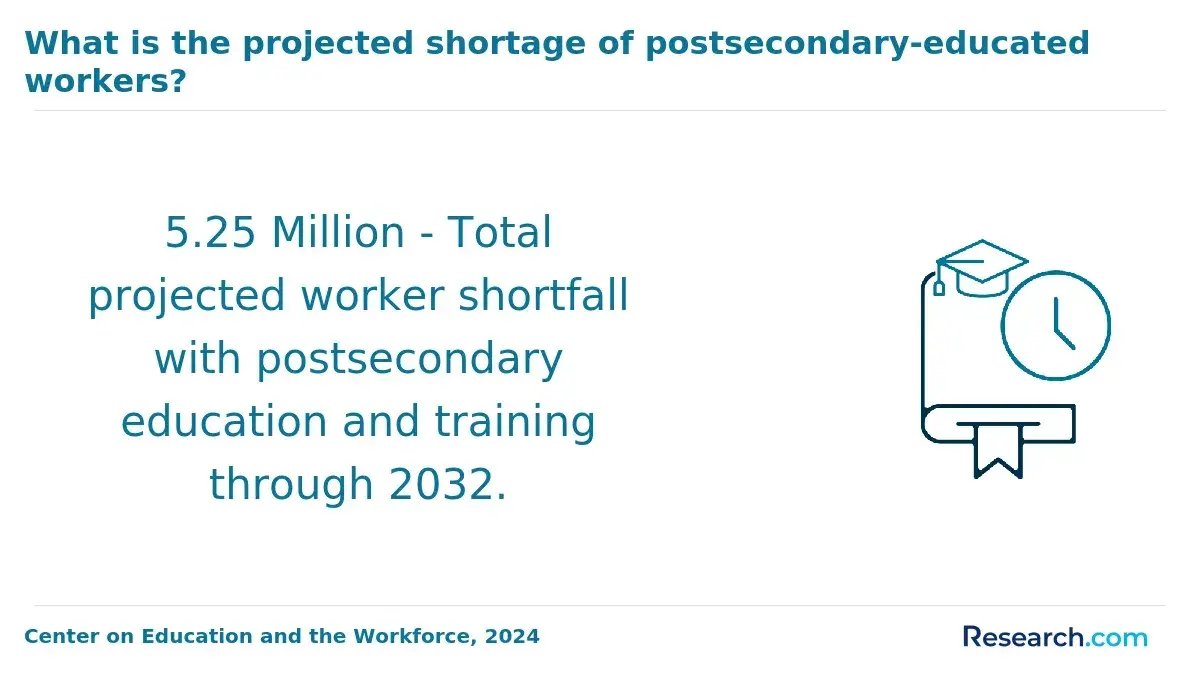
If you are an experienced nurse, educator, clinician, or healthcare professional with little formal research experience, an online Nurse Education doctorate can still be realistic. Many programs now teach research methods inside the degree and emphasize applied improvement projects over traditional lab-based research. The need is timely: AACN reported in 2024 that U. S. nursing schools turned away 65,766 qualified applications in 2023, with faculty shortages among the cited reasons.
This guide explains admissions, program types, curriculum, research expectations, workload, costs, and selection criteria so you can decide whether this doctorate fits your career goals.
Key Things to Know About Nurse Education Doctorates for Professionals with No Research Background
- You can be admitted without formal research experience if you bring strong clinical, teaching, leadership, or graduate-level nursing experience and choose a program that teaches research design, evidence appraisal, and scholarly writing early.
- Work experience can strengthen your application, but it usually does not eliminate the need to complete a doctoral scholarly project, applied capstone, dissertation-in-practice, or traditional dissertation.
- The career case is strongest for applicants aiming at nursing faculty, academic leadership, curriculum design, or healthcare education roles; BLS reported a May 2024 median wage of $86,530 for postsecondary nursing instructors and projected 18% employment growth for this occupation from 2023 to 2033.
Can you get into Nurse Education doctorate programs without a research background?
Yes, many online Nurse Education doctorate programs admit applicants who have not conducted formal research. The key distinction is that "no research background" usually means you have not designed studies, published papers, or completed a thesis-not that you have never used evidence in practice. If you have evaluated patient outcomes, taught staff, implemented protocols, precepted students, reviewed literature for practice change, or led quality improvement, you may already have relevant preparation.
Admissions committees usually look for evidence that you can succeed in doctoral-level writing, statistics, evidence-based practice, and independent project work. They may weigh your professional record, graduate GPA, RN or APRN licensure, statement of purpose, recommendations, teaching experience, and fit with faculty expertise.
The table below summarizes how common admissions requirements are interpreted for applicants who lack formal research experience.
| Admissions factor | How programs may evaluate non-research applicants | Why it matters |
| Master's degree | Most programs expect an MSN or a related graduate degree; some BSN-to-doctorate routes exist but require a longer curriculum. | Graduate coursework shows readiness for advanced writing, theory, and evidence-based practice. |
| Professional experience | Clinical leadership, nursing education, precepting, simulation, staff development, or program coordination can offset limited research exposure. | Doctoral nurse education projects often start with real instructional or healthcare practice problems. |
| Academic writing sample | Some schools request a paper, capstone, publication, or professional report instead of a research thesis. | This helps faculty judge whether you can build scholarly writing skills with support. |
| Purpose statement | Applicants should explain why nurse education, why doctoral study, and what problem they hope to address. | A focused goal can matter more than having a prior publication record. |
| Research methods prerequisite | Some programs require prior statistics or research coursework; others embed it in the first year. | This is a major program-fit issue for beginners. |
For a non-research applicant, the best admissions strategy is to translate experience into doctoral readiness. Instead of saying you have "no research," describe how you have used evidence, measured outcomes, improved instruction, evaluated learners, or solved practice problems. That framing helps schools see you as a practitioner-scholar in development rather than as an applicant with a deficit.
Can you substitute work experience for research experience in Nurse Education doctorate admissions?
Work experience can partially substitute for research experience in Nurse Education doctorate admissions, especially in EdD, DNP, and practice-focused nursing education tracks. It usually carries less weight in traditional PhD admissions, where the goal is often to prepare independent nurse scientists and academic researchers.
The most persuasive experience is not simply the number of years you have worked. Admissions committees want evidence that your work required analysis, teaching judgment, leadership, and measurable improvement.
| Type of experience | Admissions value | Best-fit doctorate pathway |
| Precepting, clinical instruction, adjunct teaching, or simulation facilitation | Shows direct connection to nurse education and learner development. | EdD in Nursing Education, DNP with education focus |
| Quality improvement, evidence-based practice, or protocol implementation | Shows comfort with data, outcomes, and practice change. | DNP, applied doctorate, dissertation-in-practice program |
| Academic advising, curriculum work, accreditation preparation, or faculty committee service | Shows understanding of nursing education systems. | EdD, nursing education leadership doctorate |
| Publication, poster presentation, thesis, or formal research assistantship | Provides direct research evidence. | PhD, research-intensive doctorate, faculty research pathway |
| Years of bedside or advanced practice experience without teaching or project leadership | Helpful but may need stronger explanation in the application. | DNP or education doctorate if paired with a clear education goal |
Do not assume experience automatically replaces research preparation. A strong application connects your experience to a problem you want to study or improve. For example, a nurse who has onboarded new graduates can propose studying transition-to-practice teaching strategies; a unit educator can focus on competency assessment; an APRN can examine curriculum gaps in clinical reasoning.
If your experience is strong but your research exposure is thin, consider taking these steps before applying:
- Identify one education or practice problem from your workplace that could become a doctoral project topic.
- Gather evidence of analytical work, such as outcome reports, teaching evaluations, curriculum materials, staff education modules, or quality improvement summaries.
- Ask recommenders to describe your ability to use evidence, lead change, teach learners, and complete complex projects.
- Choose programs that explicitly mention evidence-based practice, applied inquiry, dissertation-in-practice, or scholarly project support.
What are the best online Nurse Education doctorate programs for professionals without research experience?
The best online Nurse Education doctorate program for a professional without research experience is usually the one with the right research support model, not simply the most recognizable name. Applicants should compare EdD, DNP, and PhD options carefully because they lead to different kinds of scholarship and career outcomes.
If your goal is to become a nurse educator, program director, simulation leader, curriculum specialist, or academic administrator, an EdD or DNP with a nurse education concentration may be more approachable than a research-heavy PhD. If your goal is tenure-track research, grant-funded science, or theory-building, a PhD may still be appropriate, but you should expect a steeper research learning curve. Cost-sensitive applicants comparing research-focused routes may also want to review cheapest online nursing PhD programs alongside applied doctorate options.
The table below compares the major online doctorate pathways through the lens of a student who has professional expertise but limited formal research preparation.
| Program type | Best for | Research intensity | Fit for beginners in research | Typical final project |
| EdD in Nursing Education or Health Professions Education | Nurse faculty, curriculum leaders, academic administrators, instructional designers | Moderate to high, usually applied to education problems | Often strong if the program has structured methods courses and cohort support | Dissertation-in-practice or applied education research project |
| DNP with Nurse Education or Academic Leadership focus | Practice leaders who want to teach, lead clinical education, or improve systems | Moderate, usually evidence-based practice and quality improvement oriented | Often strong for clinicians because projects are practice-based | DNP scholarly project or practice improvement project |
| PhD in Nursing with education-related research focus | Future nurse scientists, tenure-track faculty, researchers, policy scholars | High, with deeper emphasis on theory, methods, and original research | Possible but more demanding without prior research preparation | Traditional dissertation |
| Post-master's certificate plus doctorate later | Applicants who need teaching credentials or research confidence before doctoral admission | Low to moderate before the doctorate | Useful bridge for applicants unsure about immediate doctoral study | Certificate project or portfolio, then later doctoral project |
When evaluating "best," focus on support features that reduce risk for non-researchers. Look for early research bootcamps, statistics refreshers, writing centers with doctoral specialists, faculty mentors assigned before the project phase, library research consultations, cohort-based sequencing, and transparent milestone timelines. A program that leaves students to "find a topic" with little guidance can be difficult for an applicant who has never built a research proposal.
What does the curriculum look like for an online Nurse Education doctorate?
An online Nurse Education doctorate curriculum usually combines advanced nursing education theory, curriculum design, assessment, leadership, policy, evidence-based practice, and research methods. Even when the program is practice-oriented, you should expect sustained reading, scholarly writing, data interpretation, and project design.
Curricula vary by degree type, but most programs for nurse educators include the following components.
| Curriculum area | What you study | Why it matters for non-researchers |
| Nursing education theory | Adult learning, clinical judgment, pedagogy, simulation, competency-based education | Connects your teaching experience to established educational frameworks. |
| Curriculum and assessment | Course design, program outcomes, accreditation standards, evaluation methods | Helps you move from informal teaching to evidence-informed program design. |
| Research methods | Qualitative, quantitative, mixed methods, sampling, ethics, data collection | Builds the foundation you may not have received in prior training. |
| Statistics and data literacy | Descriptive statistics, inferential concepts, outcome measurement, data visualization | Prepares you to interpret education and practice outcomes without overclaiming results. |
| Evidence-based practice | Literature appraisal, implementation science, quality improvement, translation of evidence | Allows experienced clinicians to convert practice knowledge into scholarly inquiry. |
| Leadership and policy | Academic leadership, healthcare systems, ethics, regulation, organizational change | Supports roles beyond classroom teaching, including program and department leadership. |
| Doctoral project sequence | Topic development, proposal, approval, implementation, analysis, defense or presentation | Turns coursework into a structured scholarly product with faculty supervision. |
For students without research experience, the most important curriculum detail is sequencing. A beginner-friendly program teaches literature review, research design, and data analysis before asking you to finalize a doctoral project. If the project starts immediately in the first term, ask how topic selection and methods support are handled.
Common formats include fully asynchronous courses, synchronous evening seminars, short virtual intensives, and occasional campus residencies. Online learning can work well for working professionals, but it requires disciplined reading and writing time. The online format does not make the doctorate academically lighter; it mainly changes how and when you access instruction.
How much research will you need to do in an online Nurse Education doctorate program?
You will need to do research-related work in any credible online Nurse Education doctorate, but the type and depth vary. A DNP project may focus on evidence-based practice implementation, an EdD may focus on an educational problem of practice, and a PhD usually requires a more traditional dissertation that contributes new knowledge to nursing science.
A helpful way to think about the research burden is to compare the degree's main purpose. The table below shows how much research a non-researcher should expect by pathway.
| Degree pathway | Research expectation | What it may feel like for a beginner | Primary risk |
| DNP with education focus | Use evidence to design, implement, and evaluate a practice or education improvement project. | Manageable if you are comfortable with workplace data and quality improvement. | Underestimating project approval, stakeholder access, and data collection timelines. |
| EdD in Nurse Education | Study an applied education problem using scholarly inquiry and education research methods. | Challenging but accessible with strong faculty coaching and cohort milestones. | Choosing a topic that is too broad or not feasible in your setting. |
| PhD in Nursing | Conduct original research grounded in theory and rigorous methodology. | Most demanding for applicants without prior research or statistics experience. | Entering without a clear match to faculty research expertise. |
Research does not always mean laboratory work or large-scale clinical trials. In nurse education, projects may examine simulation debriefing, learner remediation, clinical reasoning assessment, faculty development, online teaching strategies, or transition-to-practice education. However, every credible doctoral project must still use appropriate literature, ethical review when required, a defensible method, and careful interpretation of findings.
Avoid a common mistake: choosing the least research-intensive option simply because it sounds easier. The better question is whether the project format matches your career goal. If you want to teach and lead curriculum change, applied education research may be ideal. If you want a research-intensive academic appointment, a traditional dissertation may be worth the added rigor.
Can applied research projects replace traditional dissertations in Nurse Education doctorates?
Yes, applied research projects can replace traditional dissertations in many Nurse Education doctorates, especially EdD and DNP programs. The replacement is not a shortcut. It is a different scholarly model designed to solve real education or practice problems using evidence, structured inquiry, and evaluation.
The distinction matters because applicants without research experience often do better when their doctoral work is connected to a problem they already understand. The table below compares applied projects and traditional dissertations for decision-making purposes.
| Feature | Applied doctoral project | Traditional dissertation |
| Main purpose | Improve or evaluate a real education, practice, or organizational problem. | Generate original scholarly knowledge, often with broader theoretical implications. |
| Common in | DNP programs, EdD programs, dissertation-in-practice models | PhD programs and some research-intensive EdD programs |
| Best fit | Experienced professionals who want to apply evidence in academic or clinical education settings. | Students aiming for research careers, tenure-track research roles, or doctoral-level scholarship production. |
| Typical evidence | Needs assessments, learner outcomes, program data, stakeholder feedback, quality indicators | Original datasets, interviews, surveys, experiments, secondary data analysis, theoretical analysis |
| Risk for non-researchers | Assuming an applied project does not require rigorous design or data analysis. | Underestimating the independence, time, and methodological depth required. |
An applied project may be the stronger option if your goal is to become a better educator, solve a curriculum problem, lead faculty development, or improve learner outcomes in your organization. A traditional dissertation may be the better option if you want to publish extensively, compete for research faculty roles, or build a long-term research agenda.
Before choosing, ask programs exactly what the final project requires. Important questions include whether students must obtain Institutional Review Board review, whether a workplace site is required, whether the school helps with site agreements, how many faculty reviewers are involved, and what happens if your project site changes during the program.
How can you gain research skills to prepare for a Nurse Education doctorate?
You do not need to become a researcher before applying, but you should build enough confidence to read studies, understand basic methods, and explain a potential project idea. AI tools, open library tutorials, short statistics refreshers, and online writing support can lower the barrier to learning research skills, but they do not replace human feedback or ethical scholarly judgment.
If you are not ready to commit immediately to a doctorate, you can also strengthen your academic foundation through graduate certificates, research methods courses, or broader online nursing programs that include evidence-based practice and scholarly writing.
Use the following steps to prepare efficiently without delaying your doctorate longer than necessary.
- Review one recent nursing education research article each week and identify the research question, sample, method, findings, and limitations.
- Take a short statistics or evidence-based practice refresher if you have not used research methods since your MSN or BSN program.
- Practice writing a one-page problem statement about an issue you have seen in teaching, orientation, simulation, or clinical education.
- Ask a faculty member, nurse educator, or quality improvement leader to critique your topic idea before you apply.
- Build a small portfolio with teaching materials, evaluation data, staff education outcomes, conference posters, or quality improvement examples.
- Learn how to use citation managers, academic databases, and scholarly search strategies before the first term begins.
The goal is not to master doctoral research in advance. The goal is to remove avoidable friction so that your first year is spent developing higher-level thinking rather than struggling with basic academic tools.
What challenges will non-researchers face in Nurse Education doctorate programs?
Non-researchers can succeed in online Nurse Education doctorates, but they often face predictable challenges. Knowing these issues before enrollment can help you choose a program with the right support and avoid preventable delays.
The most common challenges are practical rather than intellectual. Experienced professionals usually understand real education problems; the harder part is translating that experience into scholarly design, evidence, and defensible conclusions.
- Scholarly writing gap: Professional reports and doctoral papers use different structures, evidence standards, and citation expectations.
- Statistics anxiety: Many students can interpret practice data but feel less confident with terminology, measurement, and significance testing.
- Overly broad project ideas: New doctoral students often want to solve a systemwide problem that is too large for one project.
- Site access problems: Applied projects may depend on employer approval, data access, learner participation, or leadership support.
- Time underestimation: Reading, writing, revising, and committee feedback can take longer than standard weekly coursework.
- Technology and database overload: Online students must become comfortable with learning platforms, library databases, virtual meetings, and research software.
Common red flags include programs that provide vague answers about doctoral project support, advertise speed more heavily than mentorship, do not explain faculty advising, or cannot describe how online students access library and statistical help. A program can be flexible and still be rigorous; flexibility should not mean isolation.
Before enrolling, ask whether students receive a project chair early, whether there are required proposal milestones, how many revisions are typical, and what support exists if a student struggles with methods or writing. Those answers reveal more about fit than a brochure's general promise of "student support."
Is it possible to balance the demands of online Nurse Education doctorates with work responsibilities?
Yes, it is possible to balance an online Nurse Education doctorate with work, but it requires realistic scheduling and employer support. Most online doctoral students are working professionals, and many programs are designed with part-time course loads, asynchronous coursework, and cohort pacing. Still, the project phase can be unpredictable because it depends on approvals, data, revisions, and faculty feedback.
For nurses moving from a master's degree into a practice doctorate, comparing formats among MSN to DNP programs can help clarify workload, clinical or practice-hour expectations, and project timelines before committing.
The table below offers a practical workload comparison for experienced professionals considering different pacing models.
| Format | Typical fit | Strength for working students | Potential drawback |
| Part-time online cohort | Full-time nurses, educators, managers, parents, or caregivers | Predictable sequence and peer support | Less flexibility to accelerate or pause |
| Self-paced or competency-based elements | Students with strong academic discipline and stable schedules | Can move faster through familiar material | May be harder for students who need frequent structure |
| Low-residency online program | Students who want online study plus periodic in-person mentoring | Can strengthen relationships with faculty and peers | Travel costs and time away from work |
| Full-time doctoral load | Students with reduced work hours or strong employer support | Shorter time to completion | Higher burnout risk for full-time workers |
A realistic plan should protect weekly reading and writing blocks, not just time for attending class. Doctoral work often requires deep focus, which is difficult to fit into leftover minutes after a shift.
Before starting, consider these workload safeguards:
- Discuss schedule flexibility with your employer before the first term, especially for residencies, project meetings, or data collection periods.
- Reserve at least one recurring weekly block for writing and one for reading or literature review.
- Choose a project topic connected to your current or accessible professional setting when possible.
- Avoid major job changes during the proposal or implementation phase unless the program confirms your project can adapt.
- Ask current students how workload changes after coursework ends and the doctoral project begins.
How can you select the best Nurse Education doctorate program for your career goals?
Selecting the best Nurse Education doctorate starts with your end goal. A doctorate is a major investment of money, time, and professional energy, so the right program should connect clearly to the role you want next: nurse faculty member, academic leader, clinical education director, simulation coordinator, curriculum expert, DNP-prepared educator, or research-focused professor.
If your long-term plan includes advanced clinical practice in addition to teaching, it may also help to compare doctoral education routes with online nurse practitioner programs, especially if you are deciding between clinical specialization and academic leadership.
Use this selection process to narrow your options.
- Define your target role first, then choose the degree type that aligns with it: DNP for practice leadership, EdD for education leadership, or PhD for research-intensive academic work.
- Confirm accreditation, state authorization, licensure assumptions, and whether the program meets employer expectations for faculty or leadership roles.
- Ask how the program supports students without prior research experience, including statistics help, writing support, project mentoring, and library consultation.
- Compare final project models and reject any program that cannot clearly explain project milestones, approval steps, faculty roles, and expected deliverables.
- Review total cost, not only tuition; include fees, books, technology, residencies, travel, lost work time, and potential tuition reimbursement.
- Check faculty expertise in nursing education, simulation, curriculum, academic leadership, or your intended project area.
- Ask about completion support, leave policies, project continuation after job changes, and access to advisors during the dissertation or capstone phase.
ROI should be evaluated in relation to your specific career path. The May 2024 BLS median wage for postsecondary nursing instructors was $86,530, while some doctorate-prepared nurses pursue higher-paying leadership, advanced practice, or administrative roles depending on credentials, location, employer type, and experience. The degree can improve eligibility for certain positions, but it does not guarantee promotion, tenure, or salary growth.
The best time to start is when your professional goal is clear, your schedule can absorb sustained writing time, and you have identified a program that teaches research rather than assuming you already know it. If those conditions are not in place, a short preparation phase may be wiser than rushing into the first available cohort.
Other Things You Should Know About Nurse Education
Most nursing-focused doctorates require an active, unencumbered RN license, and APRN-focused pathways may require additional credentials. Requirements vary by school and state, so confirm licensure rules before applying.
Online doctorates from accredited institutions are commonly accepted, especially when the program includes rigorous coursework, qualified faculty, and a credible doctoral project. Employers usually care more about accreditation, role fit, experience, and outcomes than delivery format alone.
Sometimes. Schools may accept prior graduate credits, post-master's certificates, or doctoral coursework, but limits vary. Project, residency, and doctoral seminar requirements often must be completed through the degree-granting institution.
Not automatically. Faculty qualifications depend on the institution, program level, accreditation standards, state rules, and specialty needs. A doctorate can strengthen eligibility, but schools may also require clinical expertise, teaching experience, certification, or an active license.
References
- Nursing Degree You Need to Become an RN https://www.allnursingschools.com/registered-nursing/degrees/
- The Research-Focused Doctoral Program in Nursing: Pathways to Excellence https://www.aacnnursing.org/news-data/position-statements-white-papers/research-focused-pathways-to-excellence
- Best Online PhD in Nursing Programs: The Top Student Options https://www.phds.me/online-programs/phd-in-nursing/
- 'The importance of research in undergraduate nurse education' https://www.nursingtimes.net/research-and-innovation/the-importance-of-research-in-undergraduate-nurse-education-08-04-2026/
- Best Online Ph.D. Nursing Programs for 2026 | Ranked https://www.nurseeducator.com/degrees/phd/
- EdD vs DNP: EdD in Nursing Education vs DNP in Nursing Education https://www.onlineeddprograms.com/faqs/edd-nursing-education-vs-dnp-nursing-education
- Exploring the Role of Online Education in Enhancing Nursing Students' Clinical Skills https://apjnr.org/index.php/apjnr/article/view/35
- Your Guide to Online PhD Nursing Programs: What They Are, What to Expect, and How to Choose the Right One – FRESHRN https://www.freshrn.com/online-phd-nursing-programs/
- Career Advancement Pathways for Nurses : Expert RN shares 10+ Professional growth opportunities - MuminMed https://blog.muminmed.com/career-advancement-pathways-for-nurses/
- What Can You Do With a Doctorate in Nursing? https://credenzahealth.com/career-advice/what-can-you-do-with-a-doctorate-in-nursing