2027 Online Journalism Degree Programs With Monthly Tuition Payment Plans

Co-Founder and Chief Data Scientist
Paying one large tuition bill can prevent prospective journalists from enrolling even when an online program fits their career goals. Monthly tuition payment plans divide a term's balance into scheduled installments, usually after financial aid is applied. This guide is for working adults, transfer students, and career changers comparing online journalism degrees.
The National Center for Education Statistics reports that average undergraduate tuition and fees at public four-year institutions were $11,260 in 2022-23, underscoring why payment timing matters. Learn how to compare plans, costs, aid, deposits, and potential fees before choosing a program.
Key Things to Know About Journalism Programs with Monthly Tuition Payments
- Online journalism programs may offer installment plans through the university's billing office, but the schedule is usually tied to a semester or term rather than a single payment arrangement covering the entire degree.
- A $15,000 annual tuition balance would equal about $1,250 per month if divided across 12 months before aid, but many schools use shorter four- to six-month term plans that create larger installments.
- Monthly payments can improve cash-flow management, but they do not normally reduce tuition. Enrollment fees, late charges, course materials, and unpaid balances may still raise the amount you pay.
Which online Journalism degree programs have monthly tuition payment plans?
Some colleges that deliver journalism, digital journalism, communications, or media-related degrees online administer tuition payment plans at the institution level. That means eligibility generally depends on enrollment status, account balance, and the term's billing calendar, not solely on the major.
Because plan availability and installment dates can change, confirm the current option with the school's student accounts office before submitting an enrollment deposit.
The schools below are examples of institutions with online journalism-related study options that prospective students can investigate. A listed plan should be treated as a starting point for verification, especially if you are entering an accelerated session, using employer reimbursement, or taking only one course.
| Institutional option to investigate | Online journalism-related study | What to verify before enrolling |
| University of Florida | Online journalism bachelor's study is available through its distance-learning offerings. | Whether the tuition installment arrangement is available to online students in your specific term and how many payments it permits. |
| Penn State World Campus | Digital journalism and media coursework is available online. | Whether the payment plan applies to your credit load, the plan enrollment deadline, and any installment-plan fee. |
| Liberty University | Online journalism-related bachelor's study is offered within its online academic catalog. | The payment due dates for eight-week courses, whether autopay is required, and the consequence of a missed installment. |
| University of Missouri | Online journalism graduate study is available through its journalism school. | Whether graduate online tuition can be split, whether the balance must be paid within one session, and whether employer billing is available. |
Do not assume that a school advertising "payment options" offers equal monthly payments. Some plans divide tuition into two or three installments, while others allow recurring monthly withdrawals.
Students seeking a faster credential may also compare the pacing and billing structure of the best associate degree in 6 months online options, but should remember that a shorter academic timeline can produce higher payments per month.
When contacting a school, ask for the payment-plan agreement in writing and request a sample schedule based on your expected credit load. The account office should be able to tell you whether the plan is available before classes begin, after add/drop, or only after the first bill posts.
How much do online Journalism degree programs typically cost?
Online journalism degree costs vary substantially by residency, degree level, transfer credit, technology fees, and whether a school charges a flat term rate or per-credit tuition. A monthly plan changes when you pay; it does not establish a standard tuition price across programs.
For broad context, NCES reported average undergraduate tuition and fees of $11,260 at public four-year institutions and $41,540 at private nonprofit four-year institutions for 2022-23. These are institution-wide averages rather than journalism-program prices, so use them to understand the scale of possible annual costs, not to estimate a particular online degree bill.
The examples below show how the same net term balance can lead to very different required installments. They are budgeting illustrations, not published quotes from a specific university.
| Net tuition balance after aid | Payment-plan length | Approximate installment | Budget implication |
| $3,000 | 3 months | $1,000 per month | A short plan may be manageable with savings or employer reimbursement, but it is not a low monthly obligation. |
| $3,000 | 5 months | $600 per month | A longer term reduces each installment if the school offers it. |
| $6,000 | 4 months | $1,500 per month | A payment plan may not be realistic without aid, income, or a lower course load. |
Calculate your own estimate by subtracting confirmed grants, scholarships, employer benefits, and accepted loans from the billed term charges. Divide the remaining balance by the actual number of installments, not by 12 unless the school explicitly allows year-round payments.
Students comparing related information fields can also review MLIS degree cost information to see how per-credit pricing and program length can affect education budgeting.
How common are monthly tuition payment plans among Journalism programs?
Monthly tuition plans are common across higher education billing systems, but their availability is not reported in a national journalism-program database. As a result, applicants should not interpret a university-wide plan as a guarantee that every online journalism student can use it. Schools may exclude short sessions, students with past-due balances, employer-sponsored cohorts, or accounts awaiting documentation.
The increasing use of online and hybrid learning makes payment timing especially relevant for adult learners who pay from regular income. However, schools generally structure plans around academic terms because tuition charges, financial aid disbursements, and enrollment changes occur on a term calendar.
These patterns explain why two programs with similar tuition can feel very different financially.
| Billing arrangement | Typical timing | Best fit | Potential limitation |
| Full payment | Before or near the start of the term | Students with savings, prepaid benefits, or complete aid coverage | Requires the highest upfront cash amount. |
| Term installment plan | Several payments within one semester or session | Students with reliable monthly income and a predictable budget | Installments can be high in accelerated terms. |
| Federal student loan | Funds disburse to the school; repayment generally begins after applicable grace periods | Students who need to spread costs beyond the academic term | Borrowing can add interest and long-term repayment obligations. |
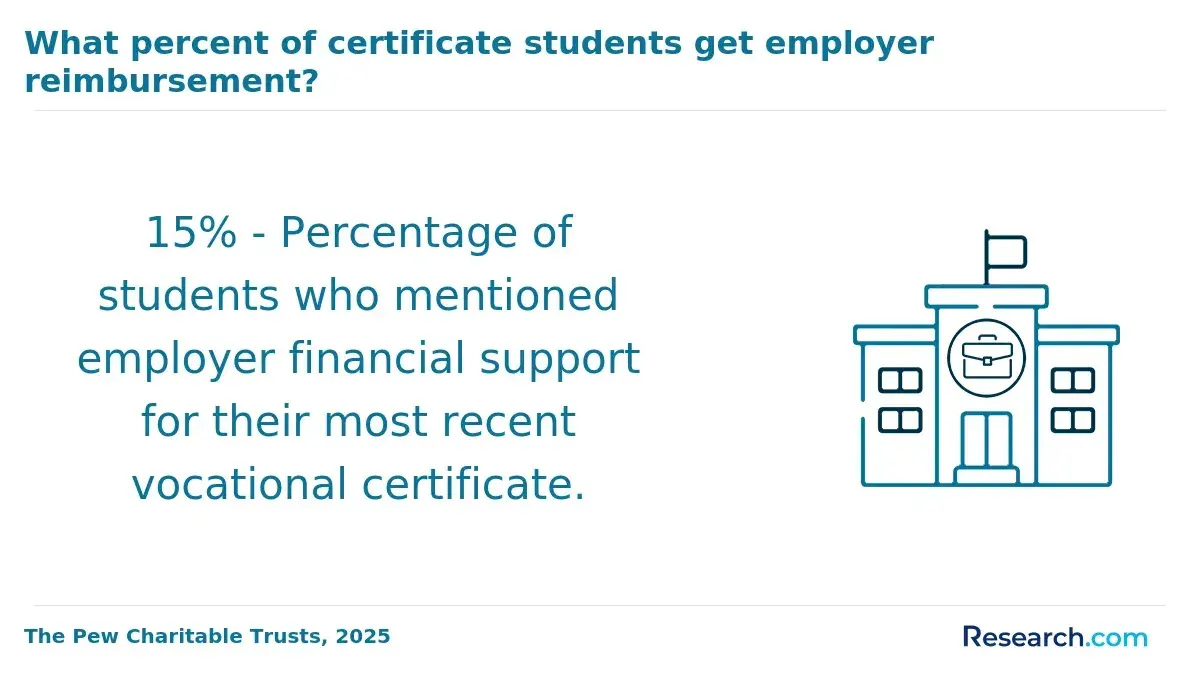
| Employer reimbursement | Often paid after successful course completion | Employees with a confirmed education benefit and enough cash flow to bridge the delay | You may need to pay the school before reimbursement arrives. |
If a payment plan is essential, ask the billing office whether it is available for every term you expect to attend. This is particularly important for programs with six-, seven-, or eight-week courses, where a plan may include fewer installments than a traditional semester plan.
Employer Confidence in Online vs. In-Person Degree Skills, Global 2024

Can monthly tuition plans make paying for Journalism degrees more attainable?
Monthly tuition plans can make an online journalism degree more attainable when the total balance is affordable but the school's due date does not match your pay schedule. They are most useful for students with dependable income, a manageable remaining balance after aid, and enough room in their budget for the largest scheduled installment.
A plan is less suitable when the required payment would force you to miss rent, food, insurance, or other essential obligations. In that situation, reducing the course load, seeking institutional scholarships, using approved employer benefits, or postponing enrollment may be safer than enrolling in a plan you cannot sustain.
Consider the following trade-offs before selecting a payment method:
- Monthly plan: Usually avoids long-term borrowing when the balance can be cleared within the term, but missed payments can trigger fees, registration holds, or removal from the plan.
- Paying upfront: Can be simpler and may avoid plan enrollment fees, but it ties up cash that could be needed for emergencies.
- Federal loans: May make a larger balance manageable over a longer period, but interest and repayment obligations can increase the long-term cost.
- Employer reimbursement: Can reduce out-of-pocket cost, but confirm whether your employer pays directly or reimburses after you have already paid tuition.
Students pursuing management-oriented career changes sometimes compare journalism study with MBA online programs. Regardless of field, compare the total program cost and the timing of each required payment rather than choosing based only on the lowest advertised monthly amount.
Does monthly payment plans have an effect on the overall cost of Journalism degrees?
Monthly payment plans generally do not lower the published tuition rate. Their primary value is cash-flow flexibility. The total cost can be slightly higher if the school charges a nonrefundable enrollment fee, returned-payment fee, late fee, or finance charge. Some institution-sponsored plans are interest-free, but "interest-free" does not necessarily mean fee-free.
Before agreeing, compare the all-in cost of each payment route.
| Cost component | Paying in full | Monthly payment plan | Student loan |
| Published tuition and mandatory institutional charges | Usually the same | Usually the same | Usually the same |
| Plan enrollment or administrative fee | Often none | May apply | Not usually a school payment-plan charge |
| Interest | None | Often none for short institutional plans, but verify the agreement | May accrue under applicable loan rules |
| Consequence of missed payment | Account may become past due | Late fees, plan cancellation, or holds may apply | Loan delinquency rules apply after repayment begins |
Read the agreement for language such as "service fee," "administrative fee," "convenience fee," "returned ACH fee," and "default." A longer installment period is not automatically cheaper: it may simply postpone a balance or add charges. Obtain the total amount scheduled to be withdrawn and compare it with the amount due if you pay the school in full.
Do monthly payment plans affect your financial aid eligibility for Journalism programs?
Enrolling in a monthly payment plan does not usually reduce eligibility for federal student aid. Financial aid eligibility is determined through factors such as the FAFSA, enrollment, satisfactory academic progress, cost of attendance, and program eligibility. The payment plan applies to the balance left after the school posts authorized aid.
For the 2024-25 aid cycle, Federal Student Aid continued to require students to submit FAFSA information for need-based federal aid consideration. A payment arrangement is not a substitute for completing required aid documents, accepting awards, or resolving verification requests. If aid is delayed, the school may still require an initial installment while the account is pending.
Take these steps in the order below to avoid paying more than necessary from your own funds:
- Submit the FAFSA and any institutional aid forms by the school's deadlines.
- Review the financial aid offer and identify grants, scholarships, loans, and any remaining unmet balance.
- Ask when each aid source will disburse and whether it will automatically reduce the payment-plan amount.
- Enroll in the payment plan only after confirming the balance, due dates, and treatment of later aid adjustments.
- Keep funds available for an increased installment if you drop a course, lose eligibility, or an expected scholarship does not post.
Students considering a future academic path can also explore online PhD programs for working professionals, where employer support, aid limits, and payment schedules may differ significantly from undergraduate journalism study.
Is there a deposit required before starting Journalism monthly payment plans?
A deposit is not universal, but some schools require an enrollment deposit, a first installment, or a payment-plan setup fee before a student can activate a plan. The required amount may be separate from an admissions deposit and may not be refundable after the term begins. Other institutions require no down payment beyond the plan fee but set the first scheduled payment shortly after enrollment.
The most important distinction is whether the first charge reduces your tuition balance or is an additional administrative cost. Request a written breakdown before paying anything.
| Upfront charge type | What it usually does | Question to ask |
| Admissions or enrollment deposit | May reserve a place in the program and may or may not be credited toward tuition. | "Is this deposit refundable, and will it appear as a credit on my student account?" |
| First installment | Reduces the unpaid tuition balance. | "Is this payment included in the quoted total plan amount?" |
| Payment-plan enrollment fee | Funds plan administration and commonly does not reduce tuition. | "Is the fee per term, per year, or per payment plan?" |
| Security or authorization hold | May verify a payment method or secure future payments. | "When is the hold released, and can it become a charge?" |
Do not rely on a verbal statement that "nothing is due today." Review the billing portal, agreement, and enrollment confirmation for the exact withdrawal date. If your aid is expected after that date, ask whether the school can adjust the schedule rather than assuming the first payment will be waived.
Are there fees not covered by monthly tuition payment plans for Journalism programs?
Monthly tuition plans usually cover only eligible institutional charges posted to your student account. They may exclude expenses that are billed separately, paid to third parties, or incurred after the plan is established. Journalism students should budget for reporting, production, and technology needs in addition to tuition.
The following expenses are commonly outside a monthly tuition plan or require separate confirmation.
| Possible expense | Often included in installments? | Why it matters for journalism students |
| Application fee and admissions deposit | Often excluded | These may be due before you can register or set up a plan. |
| Books, e-books, and course materials | Often excluded | Reporting, media law, editing, and production courses may require specialized materials. |
| Computer, software, camera, microphone, or internet service | Usually excluded | Online multimedia coursework can require reliable technology and file-upload capacity. |
| Travel, field reporting, internship, or residency costs | Often excluded | Some experiences create costs that do not appear on the initial tuition bill. |
| Late, returned-payment, or plan reinstatement charges | Not covered | These can increase your total expense if a scheduled payment fails. |
Ask for the program's cost-of-attendance estimate and a list of course-specific requirements. Students exploring lower-cost entry routes may also compare available associate degrees, while confirming that any eventual transfer pathway accepts the credits they earn.
What should you look for in payment plan terms for Journalism programs?
Payment-plan terms should be evaluated as carefully as tuition rates. The best agreement is not necessarily the one with the smallest first payment; it is the one you can complete without late charges, unplanned borrowing, or disruption to your enrollment.
Use these questions to compare written terms from two or more schools:
- How many installments are available, and what are the exact due dates?
- Does the quoted payment include the required first installment and every administrative fee?
- Is the plan interest-free, and are there enrollment, convenience, late, returned-payment, or reinstatement fees?
- Will grants, scholarships, veteran benefits, or employer payments automatically reduce future installments?
- What happens if financial aid is revised, a course is dropped, or a refund is issued after the plan begins?
- Will a missed payment create a registration hold, cancel classes, block transcripts, or send the balance to collections?
- Can you change payment methods or pay the balance early without penalty?
Red flags include vague fee language, payment dates that arrive before expected aid disbursement, a plan that extends beyond the school's stated term without clear financing terms, and representatives who will not provide the agreement or total scheduled amount. Save copies of all emails, account statements, and the signed plan agreement.
How do you know if online Journalism degrees with monthly payments are right for you?
An online journalism degree with monthly payments may be a good fit if you need predictable tuition due dates and can cover each installment from income, savings, confirmed aid, or employer support. It can be particularly practical for students working while building skills in reporting, editing, multimedia production, audience analytics, or strategic communication.
It may not be the right choice if your income is irregular, your plan would consume funds needed for essential living expenses, or the school's term is so short that "monthly" payments remain unaffordable. In those cases, compare a lower course load, a less expensive institution, an employer benefit, scholarships, or carefully considered federal borrowing.
Before committing, use this final decision check:
- Confirm that the online program's curriculum, accreditation status where applicable, transfer-credit policy, and career outcomes fit your journalism goals.
- Calculate the full term cost, including tuition, mandatory fees, equipment, materials, and any travel or internship expenses.
- Subtract only financial aid and employer benefits that are confirmed in writing.
- Test whether you can pay the highest installment on time while still meeting essential expenses and maintaining an emergency cushion.
- Compare the payment plan's total fees with the cost and repayment implications of alternative funding options.
- Enroll only after receiving the plan's due dates, cancellation policy, late-payment policy, and refund treatment in writing.
The right decision is based on total educational value and affordable cash flow, not simply whether a school advertises a low monthly figure. A payment plan is a useful billing tool when it supports a realistic budget; it is not a reason to accept a program whose total cost is beyond your means.
Other Things You Should Know About Journalism Programs
Possibly. Many schools permit plans for students with an eligible account balance, but some require a minimum balance or restrict plans for short sessions. Ask the student accounts office whether part-time students and single-course enrollments qualify.
Short-term institutional tuition installment plans often do not use a traditional credit check because the balance must be paid during the term. However, third-party financing or private education loans may have credit requirements.
Yes, accepted transfer credits can reduce the number of credits you need to buy from the new institution, which may lower future term bills. Confirm both the number of credits accepted and whether they satisfy journalism major requirements rather than only electives.
It may. Depending on the curriculum, students may need a computer, reliable internet access, editing software, recording equipment, or a camera. Request a course-by-course technology list before setting your tuition budget.
References
- Online Journalism Schools https://www.affordablecollegesonline.org/degrees/journalism-schools/
- 2025 Most Affordable Online Journalism Degrees https://www.onlineu.com/most-affordable-colleges/journalism-degrees
- What is a Tuition Payment Plan? | University of Phoenix https://www.phoenix.edu/blog/how-to-make-a-college-tuition-payment-plan.html
- Scholarships & Fellowships https://www.rtdna.org/scholarships-and-fellowships
- Monthly Payment Plan https://www.umgc.edu/current-students/finances/payments/monthly-payment-plan
- Journalism Scholarships for Students - Pennsylvania NewsMedia Association https://panewsmedia.org/for-students/student-journalism-scholarships/
- What Is a Tuition Payment Plan and How Can You Benefit from One? | NC Assist Loans https://www.ncassist.org/paying-for-college-101/blog/tuition-payment-plan/
- Do Colleges have Payment Plans? | Ascent Funding https://www.ascentfunding.com/blog/how-to-secure-and-use-a-college-tuition-payment-plan/
- Online Colleges with Tuition Payment Plans https://mycollegeguide.org/online-colleges-with-monthly-payment-plans/
- Tuition Payment Plans for Students - Campus Commerce https://campuscommerce.com/payment-solutions/payment-plans/