2027 Best Online Journalism Degree Programs at Nonprofit Universities

Co-Founder and Chief Data Scientist
Choosing an online journalism degree means weighing cost and flexibility against reporting experience, portfolio development, and career access. U.S. Bureau of Labor Statistics data projects about 4,100 annual openings for news analysts, reporters, and journalists from 2023 to 2033, despite overall employment decline in the occupation. This guide helps prospective students compare nonprofit programs, evaluate degree levels, verify quality, estimate costs, and select an online format that supports their reporting, media, communications, or graduate-school goals.
Key Things You Should Know
- The best nonprofit online journalism program is not automatically the cheapest: compare institutional accreditation, newsroom-quality curriculum, required experiential learning, total price, and career support.
- A bachelor's degree is the usual entry credential for reporting and editing roles; news analysts, reporters, and journalists had a $60,280 median annual wage in May 2024, according to the U.S. Bureau of Labor Statistics.
- Verify whether courses are asynchronous, whether internships or residencies are required, and how many transfer credits apply before treating an online program as a flexible or low-cost option.
What Makes an Online Journalism Degree Program at a Nonprofit University Different?
An online journalism degree at a nonprofit university is a program offered by a public institution or a private institution that reinvests revenue into its educational mission rather than distributing profits to owners or shareholders. Nonprofit status can matter for governance, aid eligibility, and institutional mission, but it does not independently prove that a program is affordable, rigorous, or well connected to employers.
The strongest programs teach students how to gather information, interview sources, verify claims, write accurately under deadline, apply media law and ethics, use public records, and publish for digital audiences. Many also integrate audio, video, social media, audience analytics, newsletters, data reporting, and visual storytelling. This broader skill set matters because journalism jobs increasingly overlap with digital content, communications, and multimedia production.
Program type should match the student's starting point and intended role. The comparison below clarifies common paths.
| Program type | Typical purpose | Best fit | Important trade-off |
| Associate degree | Introduces writing, media, and general education | Students exploring the field or planning to transfer | Usually insufficient alone for many entry-level reporting roles |
| Bachelor's degree | Builds broad reporting, production, and portfolio skills | First-time journalists and career changers seeking foundational preparation | Requires the greatest time and credit commitment |
| Master's degree | Develops advanced reporting, specialization, or leadership skills | Students with a bachelor's degree who want deeper expertise | May not replace the need for clips and practical experience |
| Certificate or concentration | Focuses on a specialty such as digital, sports, or data journalism | Working professionals adding targeted skills | Usually offers less breadth than a full degree |
Public nonprofit universities may offer lower tuition for in-state residents, while private nonprofit universities may use a single tuition rate and provide institutional scholarships. Students should compare actual net price, not institution type. A learner focused on management or media entrepreneurship may also compare journalism study with MBA online programs, but an MBA generally does not provide the reporting practice or editorial portfolio expected in journalism hiring.
How Can Students Verify Accreditation for an Online Journalism Degree at a Nonprofit University?
Accreditation is the first legitimacy check. Institutional accreditation evaluates the university as a whole and is particularly important for federal aid, transfer-credit review, and graduate-school applications. Journalism-specific accreditation, where available, evaluates a journalism or mass communication unit; it is valuable evidence of program quality but is not required for every credible journalism degree.
Students should distinguish accreditation from a school's nonprofit tax status, marketing claims, or ranking position. A school can be nonprofit and still offer a program that is a poor academic or financial fit.
Use these steps before applying or paying an enrollment deposit.
- Confirm the institution's accreditor and accreditation status through the U.S. Department of Education or Council for Higher Education Accreditation directories.
- Ask whether the exact online degree is covered by the institution's accreditation and whether its transcript identifies a different instructional format.
- Check whether the journalism, communication, or media unit holds specialized accreditation and understand that its absence is not automatically disqualifying.
- Request written confirmation of transfer-credit policy, federal-aid eligibility, and any required in-person experience.
- For graduate-school plans, ask prospective graduate programs how they evaluate the undergraduate institution and degree.
Red flags include vague accreditation language, a failure to name the accreditor, pressure to enroll before providing a full curriculum, and claims that a degree guarantees employment. Also ask whether the program is housed in journalism, communication, English, or interdisciplinary studies; each may emphasize different skills.
How Rigorous Are Online Journalism Degree Programs at Nonprofit Universities?
A rigorous online journalism degree should require consistent reporting practice, instructor feedback, research, revision, and ethical decision-making rather than relying only on quizzes or discussion posts. Online delivery changes where learning occurs, not the need to produce publishable work. Strong programs use deadline-based assignments, source-interview exercises, story pitches, fact-checking, multimedia projects, and capstone portfolios.
Coursework commonly covers reporting and writing, editing, media law, ethics, multimedia production, audience engagement, data literacy, and the history of the press. Specialized tracks may focus on investigative, sports, science, political, broadcast, photojournalism, or strategic communication. Generalist programs suit students who want versatility; specialized programs fit learners with a defined beat but can narrow elective choices.
Artificial intelligence is also changing newsroom workflows. Students should seek instruction in verifying AI-generated material, disclosing appropriate AI use, protecting confidential sources, checking manipulated media, and maintaining editorial accountability. A program that treats AI only as a writing shortcut may not adequately prepare students for modern verification standards.
Before enrolling, review sample syllabi and ask how faculty evaluate reporting accuracy, sourcing, attribution, revisions, and ethical judgment. Also determine whether students receive individual feedback on clips, because a portfolio often carries more weight in journalism hiring than a course title alone.
How Much Does an Online Journalism Degree Cost at a Nonprofit University?
Total cost includes more than posted tuition. Students should account for mandatory fees, technology charges, textbooks, software, equipment, travel for optional or required experiences, and lost income if they reduce work hours. Public nonprofit universities often differentiate resident and nonresident tuition, while private nonprofit universities may charge one rate regardless of location.
For context, the College Board reported that average published tuition and fees for in-state students at public four-year institutions were $11,610 for the 2024-25 academic year. That benchmark is not a journalism-program price and does not represent net price after aid, but it illustrates why students should request a program-specific estimate.
This comparison framework helps applicants avoid mistaking a low per-credit rate for a low overall cost.
| Cost factor | What to compare | Why it affects value |
| Tuition rate | Per-credit rate and residency rules | Rates may differ substantially for online, out-of-state, or private students |
| Required credits | Total degree credits and remaining credits after transfer review | More credits can outweigh a lower advertised rate |
| Program fees | Online-learning, graduation, technology, and course fees | Recurring fees can materially change the final bill |
| Experiential costs | Travel, equipment, internships, and residencies | These costs may not appear in tuition estimates |
| Net price | Grants and scholarships subtracted from direct costs | Net price is more useful than sticker price for affordability decisions |
Ask the financial aid office for a written estimate based on your transfer evaluation and enrollment pace. Low-cost programs are often strong choices, but the best value may be a moderately priced program with better transfer acceptance, stronger portfolio support, and fewer excess credits. Students interested in adjacent information careers can separately compare MLIS degree cost options, particularly if their goal is research, archives, information management, or libraries rather than reporting.
What Financial Aid Is Available for an Online Journalism Degree at a Nonprofit University?
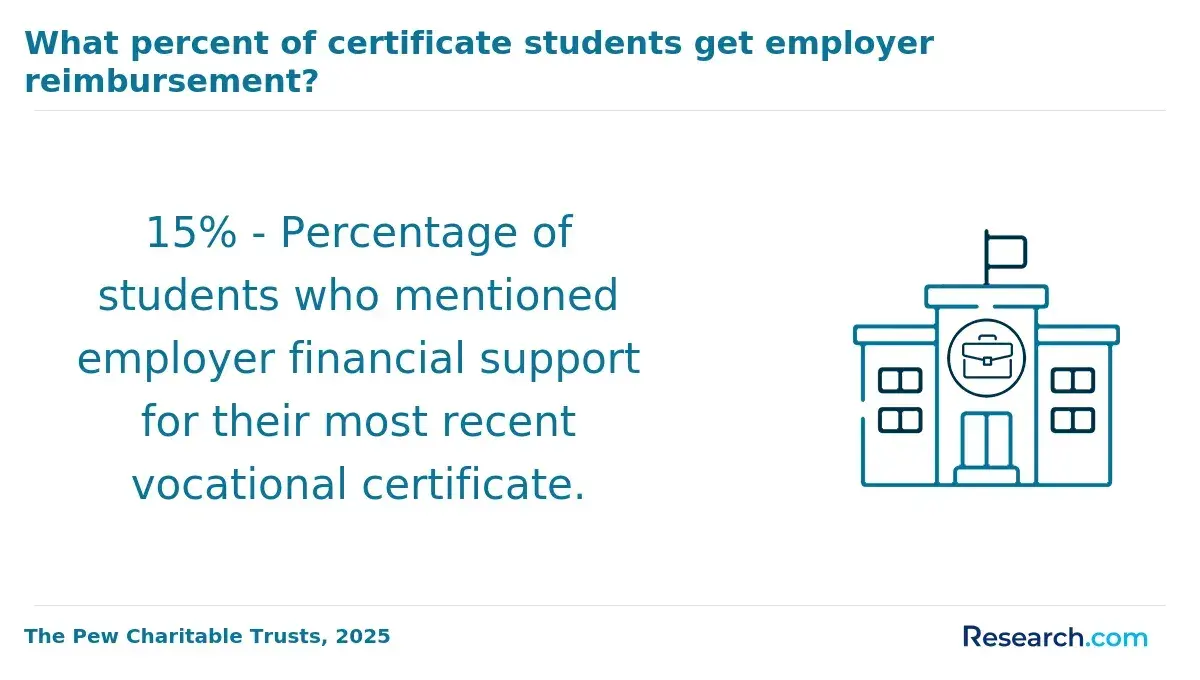
Eligible online students at accredited nonprofit universities may qualify for federal grants, federal Direct Loans, work-study opportunities where available, state aid, institutional grants, employer tuition assistance, and private scholarships. Eligibility depends on citizenship or eligible noncitizen status, enrollment level, satisfactory academic progress, program eligibility, and other individual circumstances.
Completing the Free Application for Federal Student Aid is usually the starting point. File early, then compare each school's aid offer by separating grants and scholarships from loans. A larger award is not automatically better if it includes more borrowing or assumes an unrealistic enrollment pace.
Students should review these aid questions with each institution.
- Which grants and scholarships are available to fully online journalism students?
- Is institutional aid renewable, and what GPA or enrollment conditions apply?
- Does part-time enrollment reduce grant eligibility or delay degree completion?
- Can employer tuition assistance be combined with institutional scholarships?
- What is the estimated loan amount needed after grants, scholarships, and expected employer support?
Be cautious of schools that emphasize monthly payment amounts instead of total borrowing. Also avoid assuming that every online learner can access campus jobs or work-study. If borrowing is necessary, compare repayment implications with likely early-career earnings and keep a written record of annual borrowing.
How Flexible Are Online Journalism Degree Programs at Nonprofit Universities?
Online programs vary widely in flexibility. Asynchronous courses let students complete weekly work on their own schedule before deadlines, while synchronous courses require live attendance at scheduled times. Hybrid programs combine online study with campus meetings, and some otherwise online degrees require short residencies, local internships, or proctored assessments.
Working adults often benefit from asynchronous formats, but journalism courses may still require timely interviews, group production meetings, source outreach, and deadline-driven reporting. Students with unpredictable work schedules should ask for the expected weekly workload and the number of live sessions before choosing an accelerated option.
The format comparison below can help students choose a structure that matches their availability.
| Format | Schedule pattern | Best for | Watch for |
| Fully asynchronous | Weekly deadlines without regular live class meetings | Students needing maximum scheduling control | Group projects and reporting deadlines may still occur at fixed times |
| Synchronous online | Live virtual meetings at set times | Students who value real-time discussion and instructor access | Time-zone conflicts and work obligations |
| Hybrid | Online courses plus campus or regional meetings | Students who want some in-person production experience | Travel and scheduling costs |
| Accelerated | Shorter terms with concentrated coursework | Students with strong time-management skills | Fast pace can limit time for extensive reporting projects |
A transfer-friendly bachelor's program can reduce time to completion when it accepts applicable general education and journalism credits. Students beginning college may explore associate degrees as a lower-commitment starting point, but should obtain a written articulation or transfer evaluation before assuming credits will apply to a future journalism bachelor's degree.
What Student Support Services Do Nonprofit Universities Provide for Online Journalism Degree Students?
Online journalism students need more than technical help. Because professional development depends on clips, feedback, and networking, useful support includes academic advising, library access, writing assistance, career coaching, portfolio review, accessibility services, tutoring, and responsive faculty office hours.
Support quality is especially important for students returning to school, transferring credits, or balancing employment and caregiving. Ask whether services are available during evenings or weekends and whether online learners can access the same career and alumni resources as campus students.
These services are particularly valuable when evaluating whether an online program can support career-ready work.
- Academic advising: Help with degree maps, transfer evaluation, registration, and graduation requirements.
- Library and research support: Access to databases, citation help, public-records guidance, and research librarians.
- Career services: Resume review, internship referrals, interview preparation, networking events, and job-search coaching.
- Portfolio support: Editorial feedback on clips, websites, reels, podcasts, and capstone work.
- Technology support: Training and troubleshooting for learning platforms, editing tools, accessibility software, and remote production.
Do not rely on a generic statement that "online students are supported." Request examples of journalism-specific internships, student publications open to distance learners, and faculty mentoring opportunities. The availability of a virtual student newspaper, magazine, radio station, or collaborative newsroom can be a meaningful advantage.
Do Online Journalism Degree Programs at Nonprofit Universities Prepare Graduates for In-Demand Careers?
An online journalism degree can prepare graduates for reporting, editing, audience engagement, content production, communications, social media, research, and multimedia roles when it combines strong writing with a credible portfolio. Career results depend on a student's clips, internships, location, network, beat expertise, technical abilities, and the health of local and national media markets; no degree guarantees a job.
The U.S. Bureau of Labor Statistics reported a $60,280 median annual wage for news analysts, reporters, and journalists in May 2024. The occupation is projected to decline from 2023 to 2033, but replacement needs are expected to create annual openings. Students should treat this as labor-market context, not as a predicted personal salary or hiring outcome.
Journalism skills can transfer beyond traditional newsrooms. The following roles show why reviewing curriculum matters.
| Career direction | Relevant journalism skills | Helpful curriculum evidence |
| Reporter or correspondent | Interviewing, sourcing, verification, deadline writing | Reporting courses, published clips, internship experience |
| Editor or producer | Copy editing, story development, ethical judgment, workflow management | Editing, multimedia production, leadership assignments |
| Audience or newsletter specialist | Analytics, headline testing, community engagement, digital publishing | Audience strategy, analytics, email or social media projects |
| Communications specialist | Clear writing, research, messaging, multimedia storytelling | Public relations, content strategy, organizational communication electives |
| Research or information role | Document analysis, fact-checking, public records, data interpretation | Investigative reporting, data journalism, research methods |
Prioritize programs that require a portfolio and provide opportunities to report on real communities. Ask where recent students interned, whether distance learners can participate in publications, and how faculty help students translate coursework into job-ready samples. Students wanting a rapid initial credential before transferring should review the trade-offs in a best associate degree in 6 months online pathway; speed can be useful, but it does not replace the sustained reporting practice of a journalism bachelor's degree.
Can an Online Journalism Degree From a Nonprofit University Prepare Students for Graduate School?
Yes, an accredited online journalism bachelor's degree can prepare students for graduate study if it includes substantial writing, research, analytical work, faculty evaluation, and a strong academic record. Graduate admissions policies vary, so applicants should confirm prerequisites directly with target programs rather than assuming any journalism degree meets every requirement.
A master's degree may make sense for students seeking advanced reporting, investigative methods, data journalism, media management, teaching preparation, or a career pivot. It may be less necessary for students who already have a strong undergraduate portfolio and need professional experience more than another credential. Many journalism employers evaluate clips and demonstrated skills alongside formal education.
Doctoral study is most appropriate for research, higher education, media scholarship, or advanced policy-oriented careers, not typically for entry-level newsroom work. Professionals considering advanced academic study can explore online PhD programs for working professionals, while verifying whether a particular doctoral program aligns with journalism, communication, media studies, or a related research field.
Students planning ahead should preserve course descriptions, major assignments, and faculty contacts. Graduate programs may ask for writing samples, a statement of purpose, recommendations, transcripts, and evidence of research or professional work.
How Should Students Compare the Best Online Journalism Degree Programs at Nonprofit Universities?
The best program is the one that meets your career target without creating avoidable debt, scheduling barriers, or gaps in portfolio preparation. Build a short list of accredited nonprofit institutions, then compare the exact online degree rather than the university's overall reputation.
Use this sequence to make a decision based on evidence rather than marketing.
- Define the intended outcome: newsroom reporting, multimedia production, communications, a transfer pathway, or graduate school.
- Confirm institutional accreditation and identify whether the program has relevant specialized accreditation or external quality indicators.
- Request a degree plan showing required credits, transfer credits, projected completion date, and every mandatory fee.
- Compare curriculum for reporting, editing, media law, ethics, multimedia, data skills, and portfolio-building opportunities.
- Verify format details, including live classes, group work, internships, residencies, time-zone expectations, and accelerated-term workload.
- Ask how online students access advising, faculty, publications, internships, career services, and alumni networks.
- Compare net price after grants and scholarships, then estimate borrowing under realistic enrollment assumptions.
- Review outcome evidence carefully, including completion data, internship examples, portfolios, and job-placement information when the school provides methodology.
Common mistakes include assuming nonprofit status equals quality, selecting solely by tuition, overlooking transfer limits, and ignoring required synchronous activities. Another frequent error is choosing a communications-heavy program when the goal is investigative reporting, or choosing a theory-heavy program when the goal is immediate portfolio development.
For most students, the strongest overall value comes from an accredited program that accepts applicable transfer credit, fits their weekly schedule, teaches current digital reporting skills, provides individualized portfolio feedback, and keeps total borrowing manageable. A higher-priced program can be worthwhile only when its added mentorship, internship access, curriculum, or support clearly advances the student's specific goals.
Other Things You Should Know About Journalism
No. Some employers hire candidates with degrees in English, political science, science, business, or other fields when they have strong reporting clips and relevant subject expertise. A journalism degree is useful when it provides structured reporting practice, editing feedback, ethics training, and a portfolio.
A beginning portfolio should show accurate, clearly sourced work in more than one format where possible. Include reported articles, feature stories, multimedia work, editing samples, newsletters, data projects, or audio and video pieces that demonstrate your intended career direction.
Often, yes. Many programs allow students to complete approved internships with local newsrooms, nonprofit organizations, communications teams, or remote media outlets. Confirm whether the school arranges placements, requires students to find their own site, and awards academic credit.
It can be, especially when students pair journalism coursework with a subject-area minor, elective cluster, or prior professional knowledge. Beat expertise can help a candidate report with greater context, but journalists still need core skills in sourcing, verification, media law, and clear writing.
References
- 2025 Most Affordable Online Journalism Degrees https://www.onlineu.com/most-affordable-colleges/journalism-degrees
- Journalism https://communications.howard.edu/journalism
- Best Bachelor's in Journalism Degrees https://www.mastersincommunications.org/bachelors/journalism/
- Scholarships & Fellowships https://www.rtdna.org/scholarships-and-fellowships
- The State of American Journalism Education https://knightfoundation.org/features/je-the-state-of-american-journalism-education/
- Online Journalism Schools https://www.affordablecollegesonline.org/degrees/journalism-schools/