2027 Online Health Informatics Doctorate Programs for Working Professionals: Flexible, Part-Time, and Self-Paced Options

Co-Founder and Chief Data Scientist
Choosing an online health informatics doctorate while working full time is really a scheduling, cost, and career-fit decision. The field is expanding as healthcare systems rely more on data, AI, interoperability, cybersecurity, and electronic health records; the U.S. Bureau of Labor Statistics lists the May 2024 median pay for medical and health services managers at $117,960. This guide explains how flexible, part-time, asynchronous, and self-paced doctoral formats differ so you can compare workload, residency expectations, dissertation pacing, and return on investment before enrolling.
Key Things You Should Know
- Most online health informatics doctorates for employed students take about 3 to 7 years, depending on transfer credits, dissertation or capstone pace, enrollment intensity, and whether the program permits true part-time study.
- Working professionals should expect roughly 10 to 20 hours per week for one doctoral course, with heavier weeks during statistics, research methods, practicum, qualifying exam, or dissertation milestones.
- Total costs vary widely, so compare tuition, technology fees, dissertation continuation fees, residency travel, and financial aid; federal graduate Direct Unsubsidized Loans are capped at $20,500 per academic year for eligible students.
Is an Online Health Informatics Doctorate Worth It for Working Professionals?
An online health informatics doctorate can be worth it when it directly supports a leadership, research, consulting, academic, or executive goal that a master's degree alone may not fully satisfy. It is usually not the best investment if you only need entry-level informatics skills, a promotion that does not require doctoral training, or a faster credential for hands-on technical work.
The degree is most relevant for professionals who want to lead data-driven healthcare transformation. Health informatics sits at the intersection of clinical workflows, health information systems, analytics, privacy, interoperability, quality improvement, and organizational change. Doctoral study adds advanced research, systems thinking, evidence evaluation, and leadership preparation.
The return on investment depends less on the word "online" and more on whether the program fits your professional target. A director of clinical informatics, chief health information officer, university faculty member, implementation consultant, or health data strategy leader may benefit from doctoral-level credibility and applied research training. A medical coder, billing specialist, or early-career analyst may get a better near-term return from a bachelor's, master's, graduate certificate, or professional certification first.
Use the doctorate as a strategic credential, not just an academic milestone. Before applying, working professionals should be able to connect the program to at least one concrete outcome:
- Moving from operational management into executive informatics, digital health, analytics, or health IT governance leadership.
- Developing expertise in AI governance, clinical decision support, population health analytics, interoperability, or informatics implementation science.
- Qualifying for university teaching, applied research, policy, consulting, or senior advisory roles where a doctorate strengthens credibility.
- Completing a dissertation or doctoral project that solves a workplace problem and can become a publishable, presentable, or portfolio-worthy achievement.
A useful self-test is simple: if the program's dissertation, practicum, and concentration options map to problems you already see in your organization, the degree may be professionally useful. If you are choosing a doctorate mainly because it is flexible, but the curriculum does not match your goals, the flexibility will not solve the ROI problem.
Which Type of Online Health Informatics Doctorate Best Fits Your Career Goals?
Online health informatics doctoral options are not all designed for the same professional path. Some emphasize applied healthcare leadership, while others focus on research, academic preparation, analytics, information systems, or health information management.
The table below summarizes common doctorate types and how they typically fit working professionals. Use it to narrow your search before comparing tuition or delivery format.
| Doctorate type | Best fit | Typical focus | Work-professional fit |
| Doctor of Health Informatics or DHSc with informatics concentration | Healthcare leaders, clinicians, analysts, IT managers | Applied informatics leadership, analytics, systems improvement, policy, implementation | Often strong if coursework and doctoral projects are practice-based |
| PhD in Health Informatics or Biomedical Informatics | Researchers, faculty candidates, informatics scientists | Theory, research design, statistical methods, original dissertation research | Manageable part time only if research expectations and faculty availability fit your schedule |
| Doctor of Business Administration with healthcare or information systems focus | Executives, consultants, administrators | Strategy, organizational leadership, technology management, applied business research | Good for professionals targeting executive or consulting roles rather than technical informatics research |
| Doctor of Health Administration with informatics electives | Healthcare administrators and service-line leaders | Healthcare operations, quality, policy, finance, digital transformation | Useful if informatics is part of a broader healthcare leadership pathway |
| Doctorate in Health Information Management or related field | HIM leaders, compliance professionals, data governance specialists | Health data governance, privacy, coding systems, revenue cycle, records strategy | Best for professionals building on HIM education and experience |
If you are earlier in the health information pathway, compare doctoral programs only after confirming whether a lower-level credential would meet your goal. For example, a health information management degree online may be a more practical step for professionals who still need the undergraduate or graduate foundation required for advanced HIM or informatics leadership.
The key distinction is academic purpose. A PhD is usually the better fit for people who want to produce original research or teach in research-focused settings. A professional doctorate is usually better for people who want to apply evidence to improve systems, lead teams, manage digital transformation, and solve workplace problems.
How Do Flexible, Part-Time, Asynchronous, and Self-Paced Health Informatics Doctorate Programs Differ?
Flexible, part-time, asynchronous, and self-paced are often used together in marketing, but they are not the same. Understanding the differences prevents one of the most common mistakes working professionals make: assuming an online doctorate will automatically fit around any work schedule.
The table below compares the major scheduling terms you will see when reviewing online doctoral programs. These distinctions matter because they determine when you attend class, how quickly you progress, and how much control you have during demanding work or family periods.
| Format term | What it usually means | Best for | Main trade-off |
| Flexible | The program may offer multiple start dates, evening sessions, optional attendance formats, or adaptable assignment windows | Professionals with changing work schedules | Flexibility varies by course, instructor, and milestone |
| Part time | You take fewer credits per term, often one course at a time | Full-time employees, caregivers, and leaders with travel demands | Lower weekly workload but longer completion time |
| Asynchronous | You complete weekly modules without required live class meetings | Professionals in clinical shifts, IT support rotations, consulting, or multiple time zones | You still have deadlines, group work, and discussion requirements |
| Synchronous online | You attend live virtual sessions at scheduled times | Learners who want structure, faculty interaction, and cohort accountability | Less convenient for irregular schedules |
| Self-paced | You may move through some material faster or slower within set limits | Disciplined learners with variable availability | Doctoral milestones, research approvals, and faculty reviews are rarely fully self-paced |
| Cohort-based | You progress with the same group of students on a fixed sequence | Learners who value peer support and predictable course rotation | Harder to pause, accelerate, or customize pacing |
For many working professionals, the most manageable format is part-time asynchronous study with predictable weekly deadlines. Fully self-paced doctoral programs are less common than self-paced certificates because doctoral learning depends on faculty feedback, research supervision, ethics review, dissertation committees, and institutional milestone approvals.
When comparing programs, ask admissions advisors for operational details rather than broad claims. Strong questions include:
- Are live sessions required, optional, or recorded?
- Can students take one course at a time every term?
- What happens if work travel or a clinical schedule conflicts with a required residency?
- Are dissertation courses billed continuously after coursework ends?
- How often do dissertation chairs meet with part-time students?
- Can students pause enrollment without losing catalog rights, financial aid eligibility, or faculty supervision?
The right format is the one you can sustain during your hardest months, not just your best months. If your job includes unpredictable call, implementation go-lives, budget season, audits, or leadership travel, favor programs with asynchronous coursework, generous leave policies, and clear part-time pathways.
What Are the Admission Requirements for Online Health Informatics Doctorate Programs?
Admissions requirements vary by institution and doctorate type, but most online health informatics doctorates look for evidence that you can handle advanced graduate work and connect informatics study to a professional problem. Programs may admit applicants from healthcare, IT, public health, nursing, administration, data analytics, computer science, or health information management backgrounds.
Common requirements usually include several academic and professional components. Review them early because missing prerequisites can affect your timeline more than the application itself.
- A master's degree from an accredited institution, often in health informatics, healthcare administration, nursing, public health, computer science, information systems, data analytics, or a related field.
- Graduate GPA minimums, commonly with stronger expectations for research-focused PhD programs.
- Professional experience in healthcare, health IT, analytics, clinical practice, administration, public health, HIM, or a related setting.
- A resume or curriculum vitae showing leadership, project work, technical experience, publications, presentations, or applied informatics exposure.
- Statement of purpose explaining career goals, research interests, and why the program's format fits your schedule.
- Letters of recommendation from supervisors, faculty, or professional colleagues who can speak to doctoral readiness.
- Writing sample, interview, or research concept paper, especially for dissertation-heavy programs.
- Official transcripts and, for some programs, prerequisite coursework in statistics, research methods, health data systems, or programming.
Some students come from health information management rather than broader informatics. If your background is HIM, it can help to understand CAHIIM-accredited academic pathways before pursuing doctoral study; the best online CAHIIM accredited health information management degree programs can provide context for foundational program quality at earlier degree levels.
Working professionals should also ask whether prior graduate credits can transfer. Transfer policies are school-specific, and doctoral programs often limit how many credits can be applied. Even when transfer credits are accepted, they may not shorten dissertation, residency, or candidacy requirements.
A red flag is an admissions process that does not ask about your research interests, professional goals, or readiness for doctoral writing. Convenient enrollment is helpful, but doctoral success depends on fit among your background, faculty expertise, program expectations, and available time.
How Long Does It Take to Complete an Online Health Informatics Doctorate Part Time?
Part-time online health informatics doctorates commonly take about 4 to 7 years, though some accelerated professional doctorates may be structured closer to 3 years for students who move continuously and finish the doctoral project on schedule. PhD programs can take longer if dissertation research, data access, publication expectations, or committee review extends the timeline.
The table below shows how different pacing models can affect completion. Use it as a planning tool, not a guarantee, because actual timelines depend on school policy, course availability, research progress, and your work schedule.
| Enrollment pattern | Typical course load | Common completion range | Best fit |
| Accelerated full time | Two or more courses per term plus continuous dissertation progress | About 3 to 4 years | Professionals with lighter work demands, strong support, or employer-approved study time |
| Standard part time | One course per term or 6 credits in selected terms | About 4 to 6 years | Full-time employees who need a sustainable weekly workload |
| Extended part time | Reduced course load, occasional stop-outs, slower dissertation progress | About 6 to 7 years or more where permitted | Caregivers, executives, clinicians, or professionals with unpredictable schedules |
| Dissertation extension phase | No regular courses, but ongoing research, writing, and committee meetings | Varies significantly | Students whose topic requires approvals, site access, data collection, or revisions |
One practical way to estimate your timeline is to map coursework and dissertation work separately. Coursework may be predictable, but dissertation or doctoral project progress often depends on topic approval, institutional review board processes, data availability, committee feedback, and your ability to write consistently.
Before enrolling, complete these planning steps:
- Ask for the official part-time course sequence, not just the full-time plan.
- Confirm the maximum time allowed to complete the degree.
- Ask whether dissertation credits begin before or after all coursework is completed.
- Identify terms when your job is busiest and avoid stacking difficult courses during those periods.
- Build a realistic weekly writing habit before the dissertation phase begins.
The biggest timeline mistake is assuming that taking fewer courses automatically makes the degree easier. Part-time study lowers the weekly course load, but it also extends the period during which you must maintain motivation, funding, faculty relationships, and research momentum.
What Curriculum, Dissertation, Residency, or Practicum Requirements Do Online Health Informatics Doctorate Programs Include?
Online health informatics doctoral curricula typically combine advanced informatics content, research training, leadership preparation, and a culminating dissertation or applied doctoral project. The exact structure depends on whether the program is a PhD, professional doctorate, health administration doctorate, or information systems-focused doctorate.
Most programs include a mix of technical, organizational, and research-oriented requirements. These elements are important because they affect both career fit and weekly workload.
- Core informatics courses covering electronic health records, clinical decision support, interoperability, health data standards, data governance, privacy, cybersecurity, and analytics.
- Research methods and statistics courses focused on quantitative, qualitative, mixed-methods, or applied evaluation designs.
- Leadership and policy courses addressing healthcare strategy, change management, digital transformation, ethics, quality improvement, and regulatory environments.
- Specialization or elective courses in areas such as AI in healthcare, population health analytics, consumer health informatics, telehealth, biomedical informatics, or health information management.
- Residency, immersion, or seminar requirements, which may be virtual, in person, weekend-based, or scheduled at key dissertation milestones.
- Practicum, internship, or applied project experiences that allow students to study an informatics problem in a healthcare organization.
- Comprehensive exams, qualifying papers, portfolio assessments, proposal defenses, dissertation defenses, or doctoral project presentations.
The dissertation or doctoral project is often the most important format difference. A PhD dissertation usually requires original research that contributes to scholarly knowledge. A professional doctorate project may focus on applying evidence to solve a practical problem, such as improving data quality, evaluating clinical decision support adoption, strengthening privacy workflows, or implementing analytics for population health management.
Residency requirements deserve careful review. Even "online" programs may require campus visits, synchronous intensives, virtual residencies, or conference-style sessions. These can be valuable for networking and dissertation support, but they also add travel costs, time off work, and family-care planning needs.
AI and automation are also changing curriculum expectations. Strong programs increasingly help students evaluate algorithmic bias, data quality, clinical workflow integration, AI governance, cybersecurity, and ethical implementation rather than treating technology as a purely technical tool.
How Much Weekly Work Should Full-Time Professionals Expect in an Online Health Informatics Doctorate Program?
A realistic estimate for full-time professionals is 10 to 20 hours per week for one doctoral course, with more time during research design, statistics, group projects, residency preparation, comprehensive exams, and dissertation writing. Some weeks may be lighter, but doctoral programs require sustained reading, writing, analysis, and revision.
The table below breaks down typical workload patterns by program phase. Use it to test whether the format matches your job and personal responsibilities.
| Program phase | Typical weekly demand | What the time is spent on | Scheduling risk for working adults |
| Regular coursework | About 10 to 15 hours per course | Readings, lectures, discussion posts, papers, data exercises, group work | Moderate if deadlines are predictable |
| Statistics or research methods | About 12 to 20 hours per course | Software practice, study design, analysis, methods papers, problem sets | High during heavy work weeks |
| Residency or intensive | Concentrated blocks | Live sessions, presentations, proposal work, faculty meetings | High if travel or daytime attendance is required |
| Comprehensive exam or candidacy | Variable but often intense | Exam preparation, literature synthesis, written responses, oral defense | High without planned time off |
| Dissertation or doctoral project | About 8 to 15 hours, often self-managed | Literature review, proposal, data collection, analysis, writing, revisions | High because structure decreases while expectations increase |
Professionals with demanding jobs should design a weekly study system before classes begin. The goal is to protect deep work time rather than relying on leftover hours.
- Reserve at least two recurring blocks for reading and writing, ideally before work, after predictable workdays, or on protected weekend mornings.
- Use shorter weekday sessions for discussion posts, article annotation, reference management, and data-cleaning tasks.
- Tell your supervisor early about residency dates, major deadlines, and possible research needs if your workplace may become a project site.
- Avoid taking statistics, research methods, or dissertation proposal courses during major work implementations, audits, or leadership transitions.
- Choose asynchronous programs if your schedule includes night shifts, rotating clinical hours, on-call duties, consulting travel, or unpredictable meetings.
The most common workload mistake is underestimating doctoral writing. Even experienced healthcare leaders may need time to adjust to scholarly synthesis, citation standards, research design, and committee feedback. A flexible format helps, but it does not remove the need for consistent weekly progress.
How Much Does an Online Health Informatics Doctorate Cost, and What Financial Aid Is Available?
The cost of an online health informatics doctorate can range from relatively affordable public university tuition to six-figure private university totals. The advertised per-credit price is only part of the calculation; working professionals should also include fees, dissertation continuation charges, travel, technology, textbooks, and the cost of reducing work hours if needed.
When comparing programs, gather every cost line in writing. Common cost categories include:
- Per-credit tuition for doctoral coursework.
- University, online learning, technology, library, or student services fees.
- Residency, immersion, or campus visit travel costs.
- Dissertation, doctoral project, or continuation credits after coursework.
- Books, software, statistical tools, transcription, data access, or professional memberships.
- Graduation, application, transcript, and payment-plan fees.
For eligible U.S. graduate students, federal Direct Unsubsidized Loans allow borrowing up to $20,500 per academic year, while Grad PLUS Loans may cover remaining approved cost of attendance after other aid. That does not mean borrowing the maximum is wise; it means you should model total debt against your current income, expected career path, employer support, and time to completion.
The table below shows major funding sources and the limitations working professionals should consider. It can help you avoid focusing only on tuition while missing realistic cash-flow issues.
| Funding source | How it can help | Limitations to check |
| Employer tuition assistance | Can reduce out-of-pocket cost for job-related study | Annual caps, grade requirements, repayment clauses, approved-school lists |
| Federal loans | Can spread cost over time for eligible students | Interest, origination fees, borrowing limits, long-term debt burden |
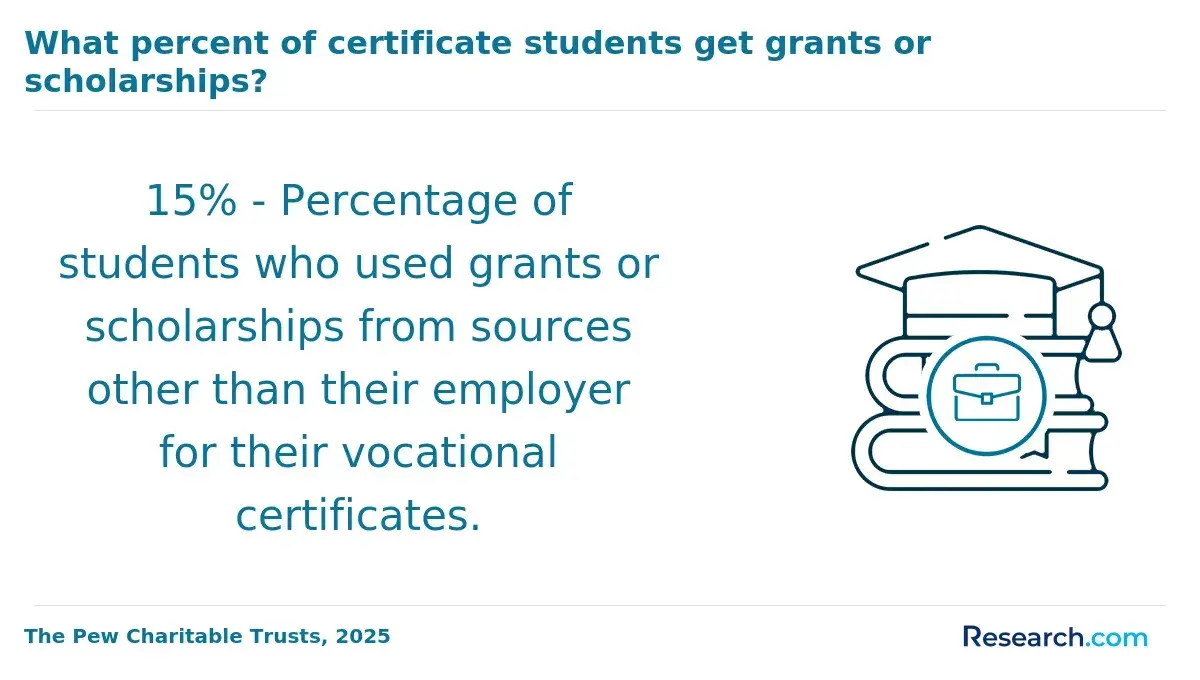
| Scholarships or institutional grants | Can lower net tuition without repayment | Limited availability at the doctoral level, deadlines, renewal rules |
| Assistantships or fellowships | May provide tuition support or stipend | Less common in fully online professional doctorates and may require time commitments |
| Military or veteran education benefits | May cover a significant portion of approved education expenses | Benefit eligibility, school participation, housing rules, remaining entitlement |
| Payment plans | Can help manage term-by-term cash flow | Does not reduce total cost and may include fees |
Professionals comparing health information careers should also separate doctorate-level ROI from entry- and mid-level credential ROI. If your near-term goal is coding, revenue cycle, or records work, reviewing medical coding salary context can help determine whether a doctorate is necessary for the role you actually want.
Avoid choosing the lowest tuition program automatically. A less expensive program can become costly if it lacks dissertation support, has unclear continuation fees, requires multiple trips, or does not align with your career goal. The better financial question is: what is the lowest total net cost for a reputable program you can realistically finish?
How Can You Verify the Accreditation and Quality of an Online Health Informatics Doctorate Program?
Accreditation is one of the first quality checks for any online doctorate. At minimum, the institution should hold recognized institutional accreditation from an accreditor accepted by the U.S. Department of Education or the Council for Higher Education Accreditation. Programmatic accreditation is less standardized at the doctoral informatics level than it is in some clinical or undergraduate HIM programs, so you may need to evaluate quality through multiple signals.
Use a structured review process before applying. These steps help working professionals avoid programs that are convenient but weak, poorly supported, or misaligned with employer expectations.
- Confirm institutional accreditation directly through recognized accreditation databases or the university's official accreditation page.
- Check whether the degree name, school, and transcript language match your career goal, especially if you need a health informatics, health administration, HIM, or information systems credential.
- Review faculty profiles for active expertise in informatics, analytics, AI governance, health IT, clinical systems, data standards, or implementation research.
- Ask for dissertation or doctoral project examples, recent student topics, completion support structures, and typical committee response times.
- Verify residency requirements, synchronous attendance rules, practicum expectations, and whether online students receive equal access to faculty and library resources.
- Ask employers, professional mentors, or hiring managers whether they recognize the institution and degree type for your target role.
- Review student outcomes carefully, including completion data where available, but avoid overinterpreting marketing claims that are not independently verifiable.
Quality is not determined by online delivery alone. A strong online doctorate should have rigorous admissions, clear milestones, accessible faculty, transparent cost information, research support, ethical review processes, career relevance, and policies that fit adult learners without lowering academic standards.
Be cautious if a school makes unrealistic promises, avoids accreditation questions, pressures you to enroll immediately, provides vague dissertation information, or implies that a doctorate will automatically lead to a specific title or salary. A credible program will help you understand both opportunity and risk.
What Career Outcomes and Professional Benefits Can an Online Health Informatics Doctorate Provide?
An online health informatics doctorate can support advancement into leadership, research, teaching, consulting, policy, and high-level informatics strategy roles. It is not a license, and it does not guarantee promotion, but it can help experienced professionals demonstrate advanced expertise in healthcare data, systems improvement, evidence-based decision-making, and organizational change.
Labor market data shows why informatics leadership remains relevant. The U.S. Bureau of Labor Statistics reports a May 2024 median annual wage of $171,200 for computer and information systems managers, a category that can include senior technology leadership roles across industries. Healthcare-specific informatics roles vary by employer, credentials, and responsibilities, but the figure shows the broader premium placed on advanced technology leadership.
The table below connects doctoral preparation to possible career directions. Titles vary by organization, so focus on responsibilities rather than job title alone.
| Career direction | Typical responsibilities | How a doctorate may help |
| Director or executive in health informatics | Lead EHR strategy, analytics governance, interoperability, informatics teams, and digital health initiatives | Strengthens leadership credibility and applied research skills |
| Clinical informatics leader | Improve clinical workflows, decision support, provider adoption, and patient safety systems | Supports evidence-based implementation and change management |
| Health data governance or analytics leader | Oversee data quality, reporting, privacy, population health analytics, and enterprise data strategy | Builds advanced evaluation and systems-thinking capacity |
| Consultant or advisor | Guide healthcare organizations through technology selection, implementation, compliance, and optimization | Adds credibility for complex engagements and thought leadership |
| Faculty or academic program leader | Teach informatics, mentor students, develop curriculum, conduct or supervise research | May meet doctoral qualification expectations, depending on institution type |
| Policy, quality, or research role | Evaluate programs, study outcomes, develop standards, support digital health policy | Provides research design, analysis, and evidence translation skills |
Some professionals may pair informatics leadership with certifications or narrower technical credentials. For example, those working near coding, compliance, or revenue cycle may compare CPC certification with other credentials before deciding whether doctoral study is the right next step.
The professional benefits are strongest when students use the program to build a visible portfolio. A dissertation, doctoral project, conference presentation, internal implementation report, peer-reviewed article, or analytics governance framework can make the degree more tangible to employers.
The doctorate may be a poor fit if you want rapid job entry, dislike long-form research and writing, cannot protect weekly study time, or do not need the credential for your target role. In those cases, a graduate certificate, master's degree, project management credential, analytics certificate, or health IT certification may provide a faster and more affordable path.
Other Things You Should Know About Health Informatics
Sometimes. Many programs allow leaves of absence, but policies vary by school, financial aid status, dissertation stage, and maximum completion time. Ask whether pausing affects tuition rates, catalog requirements, faculty supervision, or access to online systems.
Usually yes if the project involves organizational data, employees, patients, systems, or internal documents. You may need employer approval, data-use agreements, de-identification procedures, and institutional review board clearance before collecting or analyzing information.
You typically need a reliable computer, high-speed internet, webcam, headset, productivity software, access to statistical or qualitative analysis tools when required, and comfort using learning management systems, library databases, citation managers, and secure file-sharing platforms.
Not always. Some coursework may allow faster progress, but doctoral milestones depend on faculty review, research approvals, committee schedules, data collection, and dissertation revisions. Ask for actual completion ranges for students who work full time.
References
- Best Online PhD Programs With Flexible Learning Options 2026 - GTR Blogs | Career Guidance Articles https://gtracademy.org/blog/online-phd-programs-with-flexible-learning/
- Health Informatics Programs Offered by Accredited Universities https://www.usfhealthonline.com/resources/career/usf-among-accredited-universities-offering-online-health-informatics-programs/
- Specialized Professional Programs in Saudi Arabia https://openpublichealthjournal.com/VOLUME/18/ELOCATOR/e18749445409640/PDF/
- 100 Percent Online Master's in Health Informatics - MSHI Degrees https://www.mhaonline.com/faq/fully-online-ms-health-informatics-programs
- Aligning the Healthcare Administration Curriculum With Industry Needs: An Action Research Approach - OJDLA https://ojdla.com/articles/aligning-the-healthcare-administration-curriculum-with-industry-needs-an-action-research-approach
- Top 30 Best Online Master’s in Healthcare Informatics Degree Programs 2020 - Healthcare Administration Degree Programs https://www.healthcare-administration-degree.net/best/online-masters-healthcare-informatics-programs/
- 2025 Most Affordable Online Healthcare Informatics Degrees https://www.onlineu.com/most-affordable-colleges/healthcare-informatics-degrees
- Enhancing Clinical Education: Evidence-Based Strategies - European Society of Medicine https://esmed.org/enhancing-clinical-education-evidence-based-strategies/
- School of Medicine Division of Informatics, Clinical Epidemiology and Translational Data Science https://www.ohsu.edu/school-of-medicine/medical-informatics-and-clinical-epidemiology/program-costs-and-financial-aid