2027 Low-Cost Online Health Informatics Doctorate Programs with Financial Aid: Scholarships, Grants, and Employer Tuition Support

Co-Founder and Chief Data Scientist
An online health informatics doctorate can open doors in clinical data strategy, digital health leadership, research, and academic roles, but the cost can vary widely once fees, dissertation time, and funding are included. The decision matters because BLS data shows medical and health services managers had a May 2024 median wage of $117,960, reflecting strong demand for leaders who can connect healthcare operations and information systems. This guide helps working professionals, clinicians, analysts, and HIM leaders compare affordable programs, financial aid, scholarships, employer support, and cost-saving strategies before committing.
Key Things You Should Know
- The lowest-cost online health informatics doctorate is usually not the program with the lowest per-credit tuition; total credits, residency fees, dissertation continuation charges, and transfer-credit policies can change the final cost.
- Federal graduate aid can help with access but not affordability: eligible doctoral students may borrow up to $20,500 per year in Direct Unsubsidized Loans before considering Grad PLUS Loans.
- Employer tuition assistance is often the most valuable non-loan funding source for working students because up to $5,250 per year can generally be provided tax-free under current IRS educational assistance rules.
Which Online Health Informatics Doctorate Programs Offer the Lowest Total Cost?
The lowest total cost usually comes from public universities, programs with fewer required credits, flat or reduced online tuition, and clear dissertation timelines. Because health informatics doctorates are a narrow market, students should compare Doctor of Health Informatics, PhD, professional doctorate, and informatics-focused DNP options rather than searching only for one exact degree title.
The table below shows program types that commonly produce lower net costs and the situations where each may be the best value. Published tuition changes frequently, so students should confirm current tuition, fees, and residency requirements directly with each institution before applying.
| Program type or example | Why it may be lower cost | Best fit | Cost caution |
| Public university Doctor of Health Informatics, such as UTHealth Houston's DHI pathway | Public pricing and applied professional curriculum may create a more direct path for working informatics leaders | Clinical informatics managers, EHR leaders, analytics directors, and healthcare IT professionals | Confirm whether online students pay resident, nonresident, or distance-learning rates |
| Public online PhD in information systems with a healthcare or analytics specialization, such as Dakota State University | Technology-focused public programs can be less expensive than private professional doctorates | Students focused on data systems, security, analytics, and healthcare technology strategy | The degree title may not say "health informatics," so verify that the curriculum supports your career goal |
| Online or hybrid DNP with nursing informatics concentration | Can be efficient for licensed nurses who already hold an MSN and want doctoral-level informatics leadership | RNs, nurse informaticists, clinical workflow leaders, and nursing technology directors | Usually requires nursing licensure and may not fit non-nurse informatics professionals |
| Private nonprofit Doctor of Health Informatics programs | May offer strong advising, online flexibility, and institutional scholarships | Working professionals who receive employer tuition support or institutional grants | Higher sticker prices can still produce reasonable net cost only if aid is strong |
A good low-cost shortlist should include at least one public program, one employer-friendly professional doctorate, and one program with strong transfer-credit or prior graduate coursework policies. This gives students a realistic comparison between low tuition and higher tuition offset by funding.
What Financial Aid Is Available for Online Health Informatics Doctorate Students?
Online doctoral students may qualify for many of the same federal aid options as campus-based graduate students if the school is accredited, participates in federal aid programs, and the student meets enrollment requirements. The key is to separate aid that reduces cost from aid that only delays payment.
The main aid categories differ sharply in repayment obligation and competitiveness. This comparison helps students prioritize funding sources before borrowing.
| Funding source | Does it reduce the bill? | Typical use | What to check first |
| Institutional grants | Yes | Merit, need-based, alumni, or program-specific awards | Whether online doctoral students are eligible |
| Scholarships | Yes | Professional association, employer, community, or school awards | Deadlines, renewal rules, and required membership |
| Federal Direct Unsubsidized Loans | No | Base graduate borrowing for eligible students | Annual limit, interest accrual, and repayment plan options |
| Grad PLUS Loans | No | Costs beyond Direct Unsubsidized Loan eligibility | Credit check, higher borrowing risk, and total debt at graduation |
| Employer tuition assistance | Yes, if it replaces personal payment | Course-by-course reimbursement or upfront tuition payment | Grade requirements, annual caps, and repayment obligations |
Students coming from health information management backgrounds should also compare doctoral costs with earlier credential investments. For example, those still building their foundation may benefit from reviewing affordable health information management degree online options before moving into doctoral study.
The most common mistake is accepting the maximum loan amount before asking whether the school offers doctoral grants, payment plans, tuition discounts, or professional association scholarships. Loans can make enrollment possible, but grants, scholarships, and employer support are what lower the true cost.
Which Scholarships Help Reduce the Cost of an Online Health Informatics Doctorate?
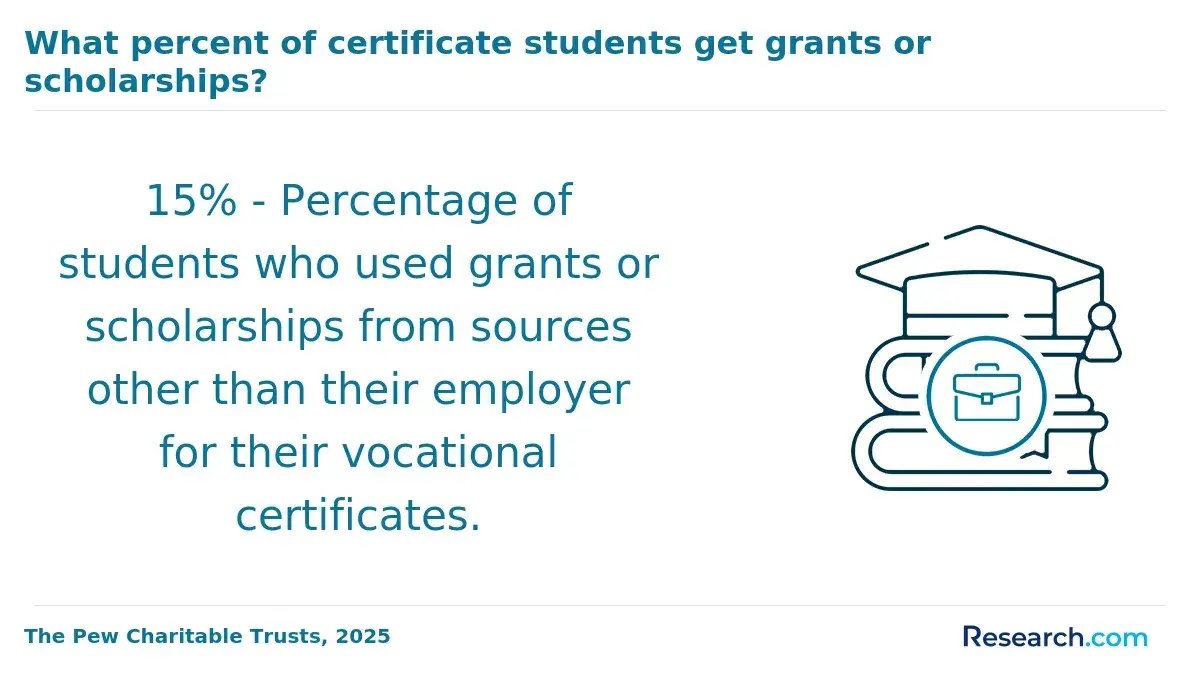
Scholarships for health informatics doctoral students are often offered through professional associations, university departments, healthcare employers, foundations, and regional health organizations. Awards may be smaller than undergraduate scholarships, but several smaller awards can meaningfully reduce borrowing over a multi-year doctorate.
The table below summarizes scholarship sources worth checking because they align with health informatics, health information management, biomedical informatics, healthcare analytics, or digital health leadership.
| Scholarship source | Best fit | Why it matters | Common eligibility factors |
| AHIMA Foundation and HIM-related awards | Health information management and informatics students | Strong alignment with HIM, coding, data governance, privacy, and information integrity | Membership, accredited program status, academic record, and professional goals |
| HIMSS Foundation and digital health scholarships | Healthcare technology, informatics, and digital transformation students | Useful for students focused on health IT leadership and implementation | Field of study, leadership potential, essay, and professional involvement |
| AMIA-related awards and informatics opportunities | Biomedical and clinical informatics students | Relevant for students pursuing research, analytics, decision support, and informatics scholarship | Research interest, academic standing, conference participation, or membership |
| University graduate scholarships | Students enrolled in a specific doctoral program | Often easier to apply for because they are limited to admitted students | Admission status, GPA, financial need, faculty nomination, or application deadline |
| Hospital system and healthcare foundation awards | Employees or regional healthcare professionals | Can support workforce development in health IT, quality, analytics, and informatics | Employment status, service commitment, location, or manager approval |
Scholarship searches work best when students treat them as a recurring task rather than a one-time application. Many awards open annually, and doctoral students can often apply again in later years if they remain in good academic standing.
Use this sequence to avoid missing awards that are not advertised broadly:
- Ask the program director which doctoral students received scholarships in the last two award cycles.
- Search professional associations tied to your background, such as HIM, nursing informatics, public health informatics, data analytics, or health IT.
- Ask your employer's HR or workforce development office whether internal scholarships are separate from tuition reimbursement.
- Check whether your state hospital association, public health association, or regional health foundation funds graduate study.
- Create a renewal calendar so you do not lose aid because of missed deadlines or GPA requirements.
How Can Employer Tuition Assistance Help Pay for an Online Health Informatics Doctorate?
Employer tuition assistance can be especially valuable for health informatics students because many applicants already work in hospitals, insurance organizations, health systems, consulting firms, EHR vendors, or public health agencies. For working students, employer support can sometimes save more than choosing the cheapest sticker price.
Under current IRS educational assistance rules, employers can generally provide up to $5,250 per year in tax-free education benefits. For doctoral students, that amount may not cover the full program, but it can reduce annual borrowing and make part-time enrollment financially easier.
Employer policies vary widely, so students should read the plan document before enrolling. These are the clauses that matter most:
- Annual cap: Some employers limit assistance to a fixed yearly amount, while others provide higher support for degrees tied to hard-to-fill roles.
- Payment timing: Reimbursement after grades are posted can create cash-flow pressure, while direct billing reduces out-of-pocket payment.
- Grade requirement: Many employers reimburse only courses completed with a minimum grade.
- Service obligation: Some policies require employees to stay for a set period after reimbursement or repay part of the benefit.
- Program approval: The degree may need to connect directly to your current role or an approved internal career path.
Employer support makes the most sense when the doctorate clearly supports the organization's needs, such as EHR optimization, analytics leadership, interoperability, quality reporting, cybersecurity, informatics education, or clinical workflow redesign. It is less attractive when the repayment clause would trap you in a role you are trying to leave.
How Do Assistantships, Fellowships, and Research Funding Work for Online Health Informatics Doctorate Students?
Assistantships and fellowships are common in some campus-based PhD programs but less predictable for online professional doctorates. Online students should not assume funding is unavailable, but they should ask direct questions because eligibility often depends on enrollment status, residency, research fit, and faculty funding.
Health informatics research funding may be connected to clinical decision support, patient safety, health data standards, population health analytics, AI implementation, privacy, interoperability, or learning health systems. These areas matter because informatics faculty may have funded projects that need doctoral-level research, data management, or evaluation support.
Before choosing a program, ask these funding questions in writing:
- Are online doctoral students eligible for graduate assistantships, teaching assistantships, or research assistantships?
- Are tuition waivers available, or are assistantships paid only as hourly work or stipends?
- Can part-time students receive funding, or is it limited to full-time enrollment?
- Do dissertation-stage students pay reduced tuition, continuation fees, or full tuition?
- Which faculty currently have funded informatics research projects that include doctoral students?
- Are travel funds available for required residencies, conferences, dissertation defense, or research presentation?
The biggest red flag is vague funding language such as "opportunities may be available" without details on eligibility, award amounts, timing, and past online-student participation. If assistantship funding is important to your affordability plan, ask how many online doctoral students actually received it in the most recent academic year.
Which Program Features Have the Biggest Impact on the Total Cost of an Online Health Informatics Doctorate?
Tuition is only one part of total cost. In doctoral programs, the largest cost differences often come from credit requirements, dissertation structure, online fees, transfer policies, and how long students remain enrolled after coursework.
The table below shows the features that most often change the final price. Use it to compare programs after you collect current tuition and fee sheets.
| Cost factor | Why it affects total cost | What to ask |
| Required credits | A lower per-credit rate can still cost more if the program requires many additional credits | How many credits are required after my transfer review? |
| Dissertation or capstone model | Extended dissertation enrollment can add multiple terms of tuition or continuation fees | What is the median time to completion for online students? |
| Residency requirements | Travel, lodging, missed work, and campus fees can raise the real cost | How many in-person visits are required, and when? |
| Technology and online fees | Mandatory fees can make a low tuition rate less affordable | What fees are charged every term? |
| Transfer credits | Accepted graduate credits can reduce both cost and time | How many credits may transfer, and which courses are excluded? |
| Accreditation and field alignment | A cheaper program can be a poor investment if it lacks recognition for your career path | Is the institution regionally accredited, and does the curriculum match my professional goal? |
Students with HIM backgrounds should also understand accreditation expectations at earlier degree levels. Comparing the best online CAHIIM accredited health information management degree programs can help clarify how accreditation affects health information career pathways, even though doctoral informatics programs may follow different accreditation patterns.
A common mistake is assuming a fully online program has no extra costs. Required residencies, software, research tools, proctoring, clinical site requirements, and dissertation extension fees can all affect affordability.
How Can Students Reduce Borrowing While Earning an Online Health Informatics Doctorate?
Reducing borrowing usually requires planning before enrollment, not after the first tuition bill arrives. The goal is to lower the amount financed each term and avoid paying for credits, fees, or delays that do not move you closer to completion.
Use this practical sequence before accepting loans:
- Calculate total program cost by multiplying required credits by tuition, then adding mandatory fees, residency costs, books, software, and dissertation continuation charges.
- Ask each school for a written estimate of net cost after institutional grants, transfer credits, employer billing, and expected fees.
- Apply for scholarships before and after admission because some awards require proof of enrollment.
- Use employer tuition assistance strategically by spreading courses across benefit years if doing so does not delay graduation too much.
- Consider part-time enrollment if it lets you cash-flow tuition, but compare it against extra fees and opportunity cost from a longer timeline.
- Choose dissertation or capstone topics connected to your current job when possible so employer support, data access, and faculty mentoring align.
- Borrow only the amount needed for the term instead of automatically accepting the full aid package.
Part-time study is often the better financial choice for students with stable jobs and employer support. Full-time study may make sense when the student has strong funding, a clear dissertation plan, or a career move that requires finishing quickly.
The biggest borrowing mistake is treating Grad PLUS Loans as the default solution for every gap. They can be useful, but students should first exhaust grants, scholarships, employer benefits, payment plans, and lower-cost scheduling options.
Does Paying Less for an Online Health Informatics Doctorate Affect Career Outcomes?
Paying less does not automatically weaken career outcomes if the program is accredited, academically credible, aligned with the student's goal, and supported by relevant experience. In health informatics, employers often care about a combination of degree level, technical fluency, healthcare knowledge, leadership experience, analytics ability, and proof that the candidate can improve systems or outcomes.
BLS data for May 2024 reports a median annual wage of $117,960 for medical and health services managers, a category that includes many healthcare leadership roles. This figure should not be read as a doctorate-specific salary promise, but it shows why informatics leadership can justify graduate investment when the degree supports advancement into management, analytics, digital health, or academic roles.
Career value depends on the role you are targeting. A doctorate may be more useful for chief informatics officers, clinical informatics directors, research leaders, faculty, health IT executives, and senior analytics strategists than for entry-level coding or records roles. Students exploring earlier health information roles may want to compare education costs against medical coding salary expectations before deciding whether a doctorate is the next logical step.
A lower-cost program is usually a strong choice when it offers the curriculum, faculty expertise, research or capstone support, and professional network you need. A higher-cost program may be worth considering when it provides unusually strong employer partnerships, research funding, specialized informatics faculty, or career access that directly supports your goal.
Which Online Health Informatics Doctorate Programs Offer the Best Combination of Cost, Financial Aid, and Flexibility?
The best-value program depends on the student's background, career goal, employer support, and tolerance for dissertation or research work. Instead of ranking only by tuition, compare programs by net cost, academic fit, flexibility, and likelihood of completion.
The table below groups common student profiles with the program features that usually create the strongest value.
| Student profile | Best-value program features | Why this combination works | Potential downside |
| Working healthcare IT or analytics manager | Professional doctorate, asynchronous courses, employer billing, applied capstone | Supports career advancement without leaving full-time work | May offer less research funding than a traditional PhD |
| Future faculty or researcher | PhD structure, faculty research match, dissertation support, possible assistantship | Better alignment with academic publishing, research design, and teaching roles | May require more time and fewer fully online options |
| Nurse informaticist | DNP with nursing informatics focus, clinical leadership coursework, online format | Builds on licensure and nursing workflow expertise | Not designed for non-nurses |
| HIM leader moving into enterprise data governance | Health informatics or health information doctorate with privacy, interoperability, and data quality focus | Connects HIM expertise to strategic informatics leadership | Must verify that curriculum goes beyond general healthcare administration |
| Student with limited employer support | Public university, lower required credits, strong transfer policy, modest residency requirements | Reduces debt exposure before scholarships or grants are added | May have fewer start dates or less concierge-style support |
The best combination is rarely the cheapest program in isolation. It is the program that lets you finish with manageable debt, relevant expertise, credible credentials, and enough flexibility to stay employed while studying.
How Should Students Compare Low-Cost Online Health Informatics Doctorate Programs?
A strong comparison process should move from eligibility to total cost to career fit. This prevents students from choosing a program that looks affordable but lacks the structure, support, or recognition needed for their goals.
Use this step-by-step comparison method before applying:
- Confirm institutional accreditation and verify that the degree title, curriculum, and faculty expertise match your target role.
- Request a personalized cost estimate that includes tuition, fees, residency costs, transfer credits, and dissertation-stage charges.
- Ask whether online doctoral students receive scholarships, grants, assistantships, or tuition discounts, not just whether such aid exists generally.
- Compare employer tuition rules with the program calendar to see whether course pacing can maximize annual benefits.
- Review completion support, including dissertation advising, research methods preparation, writing support, and faculty availability.
- Ask for career outcome context, such as common roles for graduates, employer types, and whether alumni work in leadership, academia, consulting, or research.
- Calculate a conservative borrowing plan based only on confirmed aid, not hoped-for scholarships or future raises.
Students coming from coding, revenue cycle, or HIM operations should also map how credentials fit together. For example, understanding CPC certification and related coding credentials can help clarify whether the next best investment is a doctorate, a master's-level informatics program, or a targeted professional certification.
Red flags include unclear tuition pages, no written fee estimate, weak dissertation support, no evidence that online students receive aid, and program claims that sound like guaranteed promotions or salaries. A trustworthy program should be able to explain cost, funding, format, requirements, and outcomes without pressuring you to enroll quickly.
Other Things You Should Know About Health Informatics
No. Health information management focuses heavily on health data integrity, records, privacy, coding, compliance, and information governance. Health informatics focuses more on how healthcare data, technology, workflows, analytics, and systems are designed and used to improve care and operations.
Not always. Some programs welcome applicants from IT, analytics, public health, HIM, administration, or research backgrounds. However, nursing informatics or clinically focused tracks may require an active RN license or other healthcare credentials.
Many online programs are designed for working professionals, but the workload can still be demanding. Students should ask about weekly time expectations, synchronous meetings, residency dates, dissertation milestones, and whether part-time pacing is available.
Useful preparation includes healthcare data literacy, statistics, database concepts, workflow analysis, privacy and security basics, project management, research writing, and familiarity with EHR or analytics systems. Applicants without technical experience may benefit from prerequisite coursework or certificates before doctoral study.
References
- 25 Public Health Scholarships and Tips to Apply https://www.publichealthdegrees.org/resources/scholarships/
- Guide to Employers Who Subsidize Online Education https://www.onlineeducation.com/features/employers-who-subsidize-higher-ed
- Tuition Reimbursement for MHA Programs https://www.mhaonline.com/blog/mha-tuition-reimbursement
- Tuition Reimbursement Programs [A Guide for HR and Employers] https://compt.io/blog/employee-tuition-reimbursement/
- Most Affordable Online PhD In Health Informatics | Grad School Hub https://www.gradschoolhub.com/affordable/online/doctorate/health-informatics/
- 30+ Healthcare Scholarships for Online Master's Students https://www.onlinemastersdegrees.org/student-resources/healthcare/
- Companies That Pay for Your Degree | ComputerScience.org https://www.computerscience.org/resources/companies-that-pay-for-college/
- Health Science Degrees Online with Financial Aid https://www.edumed.org/online-schools/health-informatics-degrees/financial-aid/
- Employer Tuition Assistance Program / Employee Tuition Reimbursement - Finance | Learn & Work Ecosystem Library https://learnworkecosystemlibrary.com/topics/employer-tuition-assistance-program-employee-tuition-reimbursement-finance/
- 2025 Most Affordable Online Healthcare Informatics Degrees https://www.onlineu.com/most-affordable-colleges/healthcare-informatics-degrees