2027 Cheapest Online Health Informatics Doctorate Programs That Pay Well: Tuition, Duration, and Career Outcomes

Co-Founder and Chief Data Scientist
Lower-cost online Health Informatics doctorates are drawing more working clinicians, IT managers, and health data professionals who want executive mobility without leaving their jobs. Graduate tuition has continued to pressure budgets, while the U. S. Bureau of Labor Statistics reports strong demand for medical and health services managers, with much faster-than-average projected growth.
This guide explains estimated tuition, program length, accredited low-cost options, financial aid, and high-paying outcomes so you can compare affordability, reduce out-of-pocket costs, and decide whether an online doctorate in Health Informatics can produce a realistic long-term return.
Key Things About the Cheapest Online Health Informatics Doctorate Programs That Pay Well
- The cheapest credible online Health Informatics doctorate options usually fall around $35,000 to $85,000 in tuition before fees, depending on credit requirements, residency rules, transfer credits, and whether the program is a DHI, Ph.D., DHA, DSc, or related applied doctorate.
- Online doctoral candidates can lower net cost through FAFSA-based federal loans, institutional scholarships, employer tuition assistance, military education benefits, dissertation grants, and, in some research-heavy Ph.D. tracks, assistantships or stipends.
- The best ROI usually comes from roles tied to health data strategy, clinical informatics leadership, digital health operations, analytics governance, or executive healthcare administration; BLS-published 2024 data lists median pay of $110,680 for medical and health services managers and $169,510 for computer and information systems managers.
What is the estimated cost of completing an online doctorate in Health Informatics?
The estimated total cost of an online doctorate in Health Informatics usually depends more on credit load and institutional pricing than on whether the school is public, private nonprofit, or private for-profit. A low advertised per-credit rate can still become expensive if the program requires many credits, multiple dissertation continuation terms, or mandatory campus residencies.
For planning purposes, students should budget for tuition first, then add technology fees, course fees, books, dissertation expenses, travel, and loan interest. NCES-published 2024 graduate tuition data shows that public institutions remain less expensive on average than private nonprofit institutions, but online doctoral pricing can vary widely by program and residency classification.
| Cost category | Common online doctorate range | What it means for Health Informatics students |
| Lower-cost public or public-affiliated option | $35,000 to $55,000 | Most realistic when the school charges moderate graduate tuition, accepts transfer credits, and does not add extensive residency travel. |
| Moderate-cost private nonprofit option | $55,000 to $85,000 | Can be worthwhile if the program has strong health systems partnerships, flexible pacing, or employer-recognized applied doctoral training. |
| Higher-cost specialized doctorate | $85,000 to $120,000+ | Requires a clearer salary strategy, stronger employer funding, or a specific executive career reason to justify the cost. |
| Hidden and indirect costs | $2,000 to $12,000+ | Includes technology fees, graduation fees, travel, research software, books, transcript fees, and dissertation continuation charges. |
When comparing programs, do not stop at the published tuition rate. Ask the school to calculate the full cost for your expected credit load and pace, including the exact number of dissertation or capstone terms you are likely to pay for.
A practical budget should separate fixed costs from avoidable costs. The biggest savings usually come from the following areas:
- Choosing a regionally accredited university with a lower per-credit doctoral tuition rate instead of paying for brand name alone.
- Transferring eligible post-master's credits when the program allows it.
- Finishing dissertation or applied project milestones on schedule to avoid extra continuation semesters.
- Using employer tuition assistance before borrowing through Grad PLUS loans.
- Avoiding programs with required travel unless the residency experience clearly supports your career goal.
How long does it take to complete the cheapest online Health Informatics doctorate program?
Most online Health Informatics doctorate programs take about three to six years, with the shortest timelines usually available to students who already hold a relevant master's degree and can maintain steady enrollment. The cheapest path is not always the fastest path: part-time study can preserve income, but extra semesters can increase fees and delay the career payoff.
Credit requirements commonly range from 45 to 72 credits after the master's degree. Applied doctorates often move faster because they focus on practice-based projects, while Ph.D. programs may take longer because of research methods, dissertation expectations, and faculty-supervised scholarship.
| Doctorate format | Typical completion time | Best fit | Budget consideration |
| Doctor of Health Informatics or applied doctorate | 3 to 4 years | Working professionals seeking leadership, consulting, health IT strategy, or operational roles. | Often better for ROI when the goal is promotion rather than a tenure-track academic job. |
| Ph.D. in Health Informatics, Biomedical Informatics, or Information Systems with a healthcare focus | 4 to 6+ years | Students who want research, faculty, grant-funded, or advanced analytics leadership roles. | May offer stronger funding in some cases, but online fully funded options are limited. |
| Doctor of Health Administration or DSc with informatics concentration | 3 to 5 years | Healthcare managers who want executive health system roles with informatics expertise. | Can be a good compromise if the curriculum includes data governance, interoperability, AI, and health systems strategy. |
Students who want the lowest total cost should ask whether the program has a maximum transfer-credit policy, a fixed dissertation fee, and a clear course rotation. Slow course availability can quietly extend a degree even when the official curriculum looks short.
Use this sequence before choosing a full-time or part-time pace:
- Confirm the exact number of credits you must complete after transfer review.
- Map every course term through the dissertation or capstone phase.
- Ask whether missed courses are offered every term or only once per year.
- Estimate your lost promotion income if you choose a slower path.
- Compare that lost income with the risk of burnout from an accelerated schedule.
Which accredited universities offer the lowest tuition for an online Health Informatics doctorate?
Fully online doctorates specifically titled "Health Informatics" are still relatively uncommon, so cost-conscious students often compare direct Health Informatics doctorates with closely aligned doctorates in health information management, biomedical informatics, health administration, data science, or information systems with a healthcare focus. Accreditation should be the first filter: at minimum, the university should hold recognized institutional accreditation, and students interested in HIM pathways should also understand how CAHIIM relates to non-doctoral programs such as the best online CAHIIM accredited health information management degree programs.
The table below summarizes examples of accredited U.S. universities that prospective students commonly review when looking for lower-cost online or mostly online doctoral pathways connected to Health Informatics. Tuition changes frequently, so use these as comparison categories and verify the latest program quote directly with the university.
| University | Relevant doctoral pathway | Online availability | Affordability note | Best-fit student |
| University of Texas Health Science Center at Houston | Doctorate in Health Informatics | Online-oriented professional doctorate | Often one of the stronger public-university options to review, especially for students who qualify for favorable tuition classification. | Health IT professionals seeking a doctorate explicitly focused on informatics leadership. |
| Dakota State University | Ph.D. in Information Systems with health-related specialization options | Online-friendly | Public university pricing can make it competitive, though students should confirm whether the healthcare focus is deep enough for their goals. | Analytics, cybersecurity, information systems, or health data professionals who want research training. |
| University of Findlay | Doctor of Health Informatics | Online | Worth comparing for students seeking an applied informatics doctorate from a private nonprofit institution. | Working professionals who want a practice-focused doctorate rather than a traditional Ph.D. |
| Capitol Technology University | Ph.D. in Healthcare Informatics or closely related technology doctorate | Online | May appeal to students who want a technology-intensive doctoral structure with flexible online research supervision. | Health data, digital health, and IT professionals focused on applied research or technical leadership. |
| Rutgers University | Doctor of Health Informatics | Hybrid or online-supported depending on current format | May not be the cheapest, but it is a major public research university option to benchmark against lower-cost programs. | Students prioritizing institutional reputation, healthcare network access, and informatics depth. |
To identify the true lowest-tuition program, request a written cost worksheet from each school. The most useful worksheet includes tuition by credit, all mandatory fees, transfer-credit decisions, residency costs, and expected dissertation continuation charges.
Applicants should avoid three common selection mistakes:
- Choosing an unaccredited or weakly accredited online doctorate because the tuition looks unusually low.
- Comparing only per-credit tuition instead of total credits required to graduate.
- Assuming that a general healthcare doctorate will produce the same career value as a curriculum with strong informatics, analytics, interoperability, privacy, and data governance content.
What hidden fees should you expect in an online Health Informatics doctorate program?
Hidden fees matter because doctoral programs often last several years, and small recurring charges can become meaningful by graduation. The most expensive surprises usually appear during the dissertation, applied project, or residency phase rather than during the first semester.
Before enrolling, ask the bursar and program coordinator to list every mandatory charge in writing. Pay special attention to fees tied to online delivery, research compliance, graduation, and continuation enrollment.
- Technology or online learning fees charged each term or each credit.
- Mandatory student services, library, portfolio, or assessment fees.
- Residency, intensive weekend, or on-campus orientation expenses, including travel and lodging.
- Dissertation, doctoral project, or capstone continuation fees after coursework ends.
- Research software, statistical tools, transcription, survey platforms, or data access costs.
- Graduation, regalia, transcript, and degree audit fees.
- Professional membership, certification exam, or conference costs if required by the curriculum.
The safest strategy is to build a "doctoral buffer" into your budget. A buffer of several thousand dollars can prevent you from relying on high-interest borrowing when you reach the research phase and cannot easily pause without delaying completion.
| Common mistake | Why it becomes expensive | Budget-friendly alternative |
| Ignoring dissertation continuation charges | One or two extra terms can add thousands in tuition and fees. | Ask for average completion time after coursework, not just the catalog minimum. |
| Missing residency requirements | Travel, lodging, meals, and unpaid time off can raise total cost. | Choose a fully online program or confirm whether virtual attendance is allowed. |
| Borrowing before applying for employer support | Loan interest can continue long after graduation. | Exhaust reimbursement, sponsorship, and scholarships before using Grad PLUS loans. |
| Taking too many credits while working full-time | Burnout can lead to course withdrawals or repeated terms. | Use a realistic pace that protects job performance and continuous enrollment. |
What financial aid options and federal grants are available for online Health Informatics doctoral candidates?
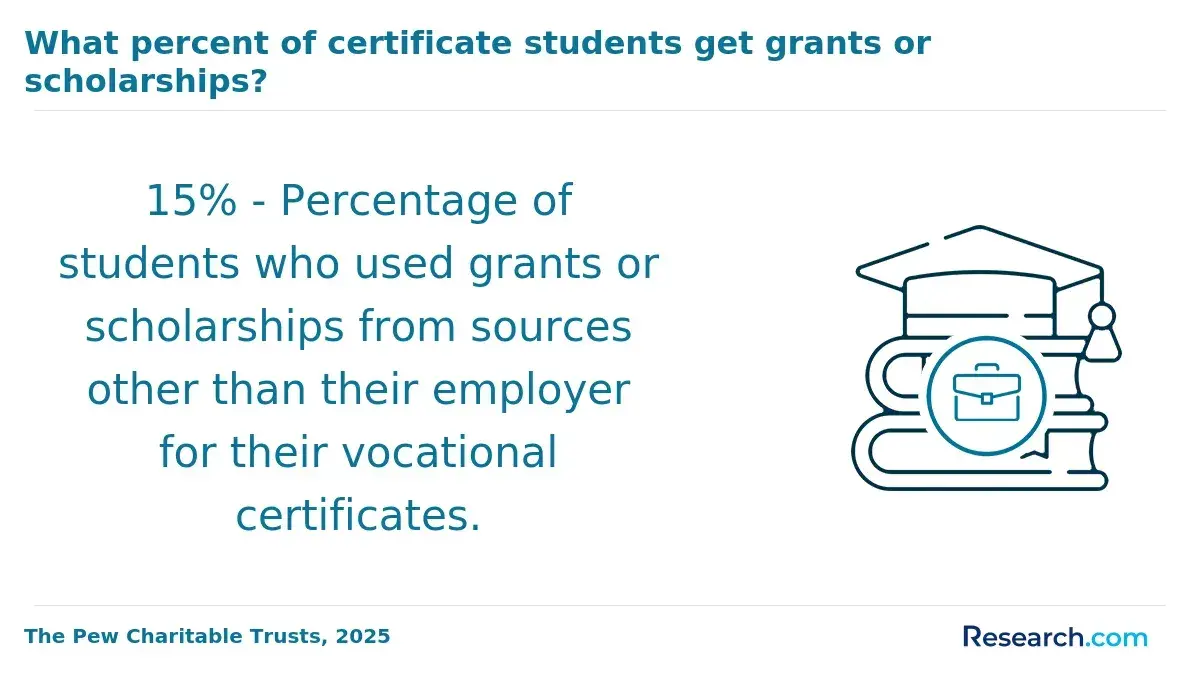
Online doctoral students at eligible accredited universities can usually submit the FAFSA for federal student aid consideration, but graduate students should understand that most federal support comes through loans rather than need-based grants. Federal Pell Grants generally do not apply to graduate doctoral study, so the best affordability plan combines institutional aid, employer support, and careful borrowing.
Students who are still deciding whether a doctorate is necessary may first compare lower-cost feeder pathways such as a health information management degree online, especially if they need prerequisites, RHIA-aligned preparation, or a less expensive route into health data leadership before doctoral study.
| Funding option | Typical availability for online doctoral students | How it reduces cost |
| Federal Direct Unsubsidized Loan | Available to eligible graduate students who file the FAFSA. | Can cover part of tuition, but interest should be included in ROI calculations. |
| Federal Grad PLUS Loan | Available to eligible graduate students after credit review. | Can cover remaining cost of attendance, but it is usually a more expensive borrowing source. |
| Institutional scholarships | Varies widely by university and program. | Directly reduces tuition and may be renewable if academic progress is maintained. |
| Employer tuition assistance | Common in hospitals, insurers, health IT vendors, and consulting firms. | Can lower out-of-pocket cost while preserving full-time income. |
| Military and veteran education benefits | Available to eligible service members, veterans, and dependents. | Can significantly reduce tuition and fee exposure at approved institutions. |
| Dissertation or research grants | Competitive and often tied to research topic, faculty mentor, or institution. | Can offset project costs, conference presentation, software, or data collection. |
Before accepting loans, complete a funding checklist. This keeps you from paying out of pocket for costs that might be covered by your employer, department, or university.
- File the FAFSA as soon as the aid cycle opens for your enrollment term.
- Ask the financial aid office whether online doctoral students qualify for the same scholarships as campus students.
- Request a total cost of attendance worksheet before accepting loans.
- Ask your employer whether tuition assistance covers doctoral coursework, dissertation credits, books, and fees.
- Check whether your organization requires a service commitment after reimbursement.
- Borrow only after subtracting scholarships, employer support, veteran benefits, and cash-flow contributions.
How can fellowships and research stipends offset the cost of an online Health Informatics doctorate?
Fellowships and research stipends can reduce the net price of a doctorate, but they are more common in full-time research Ph.D. environments than in online professional doctorates designed for working adults. That distinction matters: a funded Ph.D. may cost less in tuition, but it can require more time, more research obligations, and sometimes less schedule flexibility.
For Health Informatics doctoral candidates, funding is most likely when the student's research aligns with a faculty grant, health system data project, AI governance initiative, interoperability study, public health informatics project, or patient safety analytics agenda. The strongest applications show that the student can contribute practical expertise, not just receive funding.
Use these steps to uncover funding that is not obvious on the tuition page:
- Search faculty profiles for funded projects in clinical informatics, health data quality, AI in healthcare, EHR optimization, privacy, or population health analytics.
- Email the doctoral program director with a one-paragraph research interest statement and ask whether funded assistantship roles are available to online students.
- Ask whether remote research assistant work is allowed for literature reviews, data cleaning, dashboard development, grant writing, or manuscript support.
- Contact the graduate school, not only the department, because university-wide fellowships may be administered centrally.
- Ask your employer whether an internal quality improvement or informatics project can become your doctoral project with paid work time.
Students should also weigh opportunity cost. A small stipend may not beat full-time professional income, but a stipend tied to high-value research can strengthen your portfolio for future director, chief informatics officer, faculty, or consulting roles.
What is the average starting salary and long-term earnings potential for Health Informatics doctorate graduates?
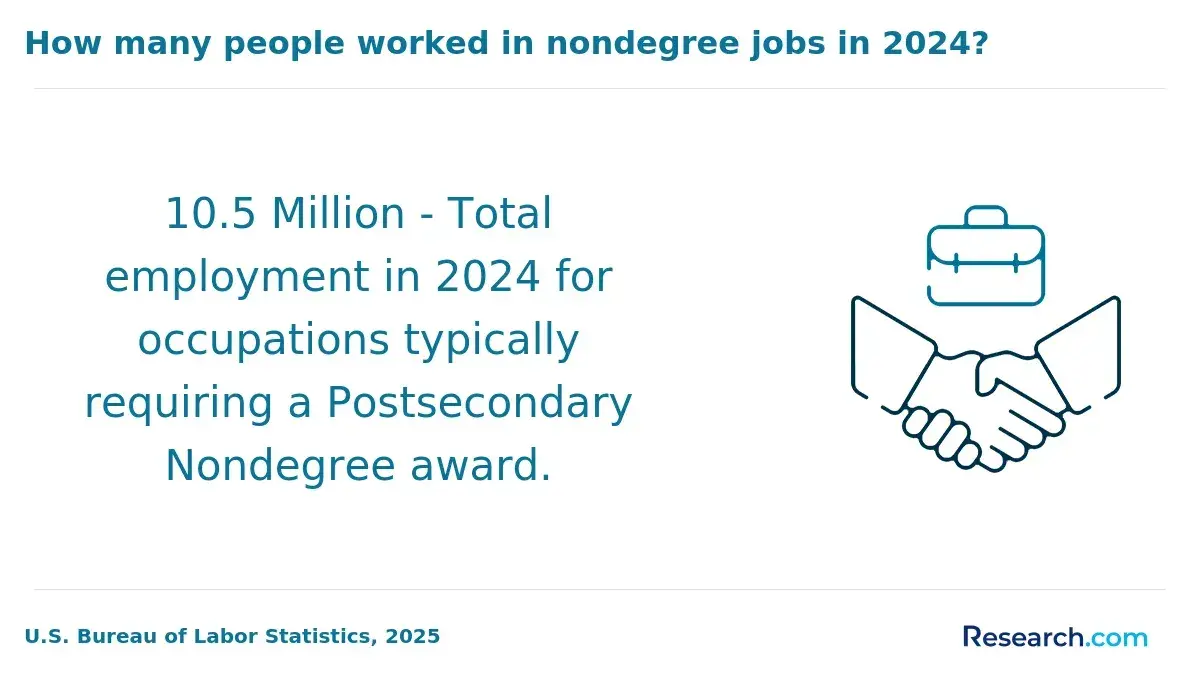
There is no single national salary statistic that isolates only online Health Informatics doctorate graduates, so the most reliable way to estimate earnings is to look at target occupations. BLS-published 2024 data reports median pay of $110,680 for medical and health services managers and $169,510 for computer and information systems managers, which helps show why informatics doctorates can make financial sense for professionals moving into leadership-heavy roles.
Doctoral graduates usually see the strongest salary upside when they combine the credential with substantial healthcare, analytics, compliance, revenue cycle, clinical operations, or IT leadership experience. By contrast, a doctorate alone may not create a high salary if the student has limited work history or remains in entry-level health information roles; readers comparing earlier career stages may find a medical coding salary pathway useful as a lower-cost benchmark.
| Career target | Relevant national salary benchmark | Doctorate value |
| Medical and health services manager | BLS median pay: $110,680 | Supports advancement into informatics operations, analytics governance, EHR optimization, and executive administration. |
| Computer and information systems manager | BLS median pay: $169,510 | Can be valuable when the role connects enterprise IT leadership with healthcare data, security, interoperability, and digital transformation. |
| Postsecondary health informatics educator | BLS postsecondary teaching benchmarks vary by discipline and institution. | A doctorate is often expected for full-time faculty roles, especially in research or doctoral-granting institutions. |
| Healthcare consultant or informatics strategist | Compensation varies by employer, clients, and specialization. | Can strengthen credibility for advisory work in AI governance, quality measurement, health data strategy, and system implementation. |
A realistic starting range for doctorate completers depends heavily on prior experience. Experienced managers may use the degree to compete for senior roles soon after graduation, while students moving from analyst roles may need several years to translate the doctorate into director-level compensation.
What high-paying career paths justify the cost of an online doctorate in Health Informatics?
An online doctorate in Health Informatics is most likely to justify its cost when it helps you reach roles where strategic authority, research literacy, advanced analytics, and cross-functional healthcare leadership are required. It is less likely to pay off quickly if your target job is primarily technical support, entry-level coding, or routine data entry; in those cases, a focused credential such as CPC certification may be a more cost-effective step before considering doctoral study.
The table below shows career paths where a doctorate can make sense because the work involves enterprise-level decisions, complex healthcare data systems, or advanced organizational leadership.
| Career path | Why it can pay well | When the doctorate makes sense |
| Chief health informatics officer or senior informatics executive | Connects clinical strategy, EHR governance, quality metrics, and technology investment. | Best for experienced clinicians, IT leaders, or HIM managers pursuing executive authority. |
| Director of clinical informatics or digital health | Oversees workflow redesign, adoption, analytics, and patient care technology initiatives. | Strong fit when your current role already touches clinical systems or transformation projects. |
| Healthcare data analytics director | Leads teams responsible for population health, quality reporting, value-based care, and predictive analytics. | Best when paired with strong analytics, SQL, BI, statistics, or data governance skills. |
| Health IT consultant or implementation strategist | Consulting compensation can rise with specialized expertise and client-facing leadership. | Works well for professionals with a portfolio of EHR, interoperability, cybersecurity, or AI governance projects. |
| Professor or doctoral faculty member | Universities often require or strongly prefer terminal credentials for full-time faculty work. | Most appropriate if you enjoy research, teaching, publishing, and academic service. |
The doctorate is not strictly required for every executive job. Some employers will promote master's-prepared professionals with deep experience, strong results, and recognized certifications. The doctorate becomes more compelling when you need research credibility, want to teach at the graduate level, plan to lead enterprise strategy, or face a competitive executive market where terminal credentials help differentiate candidates.
Which high-paying industries actively recruit professionals with an online doctorate in Health Informatics?
Health Informatics doctorate holders are most marketable in industries that depend on secure, interoperable, high-quality health data. Hiring demand is influenced by digital transformation, value-based care, AI governance, cybersecurity, privacy compliance, and the continued need to improve clinical systems without increasing provider burden.
BLS-published 2024 projections show medical and health services manager employment growing much faster than average, which signals broad management demand across health systems and related organizations. For doctoral students, the practical takeaway is to choose a dissertation or applied project that speaks to a real employer problem in one of these industries.
| Recruiting industry | Common high-paying titles | What employers value |
| Hospitals and integrated health systems | Chief informatics officer, director of clinical informatics, EHR optimization leader | Clinical workflow knowledge, change management, quality metrics, patient safety, and governance. |
| Health insurance and managed care | Analytics director, informatics strategy lead, value-based care data executive | Risk adjustment, claims analytics, population health, interoperability, and regulatory reporting. |
| Health technology vendors | Product strategy director, clinical data executive, implementation leader | Product-market fit, client implementation, data standards, usability, and healthcare compliance. |
| Consulting firms | Healthcare technology consultant, digital transformation principal, analytics advisory leader | Client communication, project leadership, technical fluency, and measurable operational outcomes. |
| Government, public health, and research organizations | Public health informatics director, research informatics leader, data modernization manager | Data modernization, privacy, grant writing, surveillance systems, and cross-agency collaboration. |
| Universities and academic medical centers | Faculty member, research scientist, program director | Research methods, teaching, publication record, grants, and interdisciplinary collaboration. |
Students who want faster ROI should align their coursework, doctoral project, and networking with one or two target industries before graduation. A broad "health informatics" identity is useful, but employers respond more strongly to evidence that you can solve a specific problem such as reducing documentation burden, improving data quality, governing AI tools, or integrating systems after a merger.
How quickly can you achieve a positive ROI on an online Health Informatics doctorate?
A positive ROI depends on net program cost, salary growth, time to completion, and whether you keep working while enrolled. The fastest payback usually occurs when a student chooses a low-cost accredited program, receives employer tuition support, graduates without major delays, and moves into a higher-paying director, executive, consulting, or faculty role soon after completion.
Use a simple ROI formula before enrolling: divide your net doctoral cost by the realistic annual salary increase you expect after graduation. This does not predict the future, but it forces you to compare the degree against a measurable career plan.
| ROI scenario | Net doctoral cost after aid | Annual salary increase needed for faster payback | Approximate payback period |
| Strong ROI case | $30,000 | $15,000 | About 2 years |
| Moderate ROI case | $60,000 | $15,000 | About 4 years |
| Slower ROI case | $90,000 | $15,000 | About 6 years |
| High-risk ROI case | $100,000+ | No clear salary increase identified | May not pay off financially without a stronger career strategy. |
To improve your odds of a positive ROI, make the degree part of a deliberate promotion plan rather than a credential you hope will be useful later.
- Identify three target roles before applying and collect current job descriptions for each.
- Confirm whether those roles require, prefer, or merely accept a doctorate.
- Ask your employer what role or pay band the doctorate could help you reach.
- Choose a dissertation or capstone topic tied to measurable business value.
- Keep working if possible, because preserving income can matter as much as reducing tuition.
- Recalculate ROI every year using your remaining tuition balance and updated salary opportunities.
For some students, the best decision is to delay the doctorate. If you lack management experience, have no employer support, or are unsure whether you want research, teaching, consulting, or executive leadership, a certificate, master's specialization, or targeted technical credential may deliver a better near-term return.
Other Things You Should Know About Health Informatics
Most do. Applicants commonly need a master's degree in health informatics, health information management, nursing, public health, healthcare administration, computer science, information systems, or a related field. Some programs may accept strong applicants from other backgrounds if they complete prerequisite coursework.
Usually no. Health Informatics doctorates are academic or professional degrees, not clinical licensure programs. If your target role requires a clinical license, RHIA, nursing license, or other credential, confirm those requirements separately with the employer, state board, or certifying organization.
You do not always need to be a programmer, but you should be comfortable with health data, EHR systems, databases, statistics, privacy rules, analytics tools, and process improvement. Applicants aiming for analytics leadership should strengthen SQL, data visualization, research methods, and governance skills.
Not always. Research Ph.D. programs usually require a dissertation, while applied doctorates may require a doctoral project, capstone, or practice-based research study. Ask whether the final project must use original data, employer data, human subjects review, or publishable research methods.
References
- How Long Does It Take to Obtain a Degree in Health Informatics? https://www.healthinformaticsdegrees.org/faq/how-long-does-it-take-to-obtain-a-degree-in-health-informatics/
- How Long to Get a Doctor of Health Science? | University of Bridgeport https://www.bridgeport.edu/news/doctor-of-health-science-online-length-of-program/
- Average Cost of a Doctorate Degree [2026]: Ph.D., Psy.D. & More https://educationdata.org/average-cost-of-a-doctorate-degree
- Health Informatics Job Description and Salary Information https://www.usfhealthonline.com/resources/health-informatics/health-informatics-jobs-health-informatics-salary/
- 10 Best Value Online Doctorate In Health Informatics Information Technology Management https://www.bestvalueschools.com/rankings/online-doctorate-health-informatics-information-technology-management-degrees/
- 2025 Best Health Informatics Master's Degree Online https://www.onlineu.com/degrees/healthcare-informatics
- Health Informatics Management Concentration https://www.baypath.edu/academics/graduate-programs/health-science-doctorate-dhsc/health-informatics-management-concentration/
- Schools with Health Informatics Degree Programs https://www.medicaltechnologyschools.com/health-informatics
- Masters in Healthcare Informatics Salary Outlook https://www.careersinpublichealth.net/resources/masters-healthcare-informatics-salary-outlook/