2027 Can You Get Into an Online Health Informatics Doctorate Program with a Low GPA? Admission Chances and Alternatives

Co-Founder and Chief Data Scientist
A low GPA does not automatically end your path to an online doctorate in health informatics, but it changes how you should apply. Health data, AI-enabled clinical systems, cybersecurity, and interoperability are raising demand for advanced informatics leaders; the U. S. Bureau of Labor Statistics lists the 2024 median pay for medical and health services managers at $117,960. This guide is for applicants worried that older grades may outweigh their experience. You will learn how programs evaluate GPA, which pathways are more flexible, and when to apply now versus strengthen your record first.
Key Things You Should Know
- Admission is possible with a low GPA, especially at practice-focused or holistic-review programs, but many doctoral programs still use minimum GPA screens around 3.0 for regular admission.
- A strong application can offset weaker grades when it shows recent graduate-level success, relevant healthcare or IT leadership, research readiness, and a clear informatics problem you want to solve.
- Cost and aid matter: federal Direct Unsubsidized graduate loans carry a 2025-2026 fixed interest rate of 7.94%, so applicants should avoid enrolling before confirming academic fit, completion support, and realistic return on investment.
Can You Get Into an Online Health Informatics Doctorate Program With a Low GPA?
Yes, you can sometimes get into an online health informatics doctorate program with a low GPA, but your chances depend on how low the GPA is, when it happened, and what evidence you can provide that you are now ready for doctoral work. "Low GPA" usually means below the program's regular admission threshold rather than a universal number. For many doctoral programs, a cumulative or graduate GPA near 3.0 is treated as the standard benchmark; below that, applicants may need a waiver, conditional admission, a stronger graduate GPA, or additional coursework.
Online health informatics doctorates generally fall into two broad categories. A PhD is usually research-focused and may place heavier weight on academic preparation, methodology, publications, and faculty fit. A practice doctorate, such as a Doctor of Health Informatics, Doctor of Health Administration with an informatics focus, or applied health sciences doctorate, may weigh professional leadership and implementation experience more heavily. That distinction matters because an applicant with a 2.8 undergraduate GPA and 10 years of clinical systems leadership may be more competitive for an applied program than for a highly selective research PhD.
The table below shows how admissions committees may interpret GPA ranges. These are practical categories, not universal rules, because each university sets its own policy.
| GPA profile | Typical admission interpretation | Most realistic pathway |
| 3.5 or higher | Generally competitive if other materials are strong | Apply broadly, including selective research-oriented programs |
| 3.0 to 3.49 | Often meets regular minimums, though selectivity still varies | Apply to programs that match your goals and experience |
| 2.75 to 2.99 | May trigger additional review or require a stronger graduate record | Target holistic-review, conditional-admission, or practice-focused programs |
| Below 2.75 | More difficult unless there is substantial recent academic or professional evidence | Consider graduate certificates, nondegree coursework, a second master's, or employer-backed experience first |
A low GPA is most damaging when it is recent, related to core quantitative or writing skills, and unexplained. It is less damaging when it is old, followed by strong graduate grades, or tied to circumstances that have been resolved. Admissions committees are ultimately asking one question: is there enough evidence that you can handle doctoral-level reading, analytics, writing, research, and independent project work?
What Admissions Factors Matter Most Beyond GPA for Online Health Informatics Doctorate Programs?
Beyond GPA, online health informatics doctorate programs usually evaluate whether you can contribute to advanced work in healthcare data, clinical systems, information governance, implementation science, analytics, and leadership. Since health informatics sits between healthcare, technology, policy, and management, applicants can be competitive through several different profiles.
The table below summarizes the non-GPA factors that tend to matter most and how they can compensate for an uneven academic record.
| Admissions factor | Why it matters | How it can offset a low GPA |
| Graduate-level performance | Shows current academic readiness | Recent A or B+ grades in statistics, informatics, research methods, or healthcare analytics can reduce concern about older grades |
| Relevant professional experience | Shows applied understanding of healthcare systems | Leadership in EHR optimization, revenue cycle analytics, privacy, quality improvement, telehealth, or data governance can strengthen an applied doctorate file |
| Statement of purpose | Shows focus and doctoral fit | A specific problem, such as reducing medication errors through decision support, is stronger than a generic interest in healthcare technology |
| Letters of recommendation | Provides third-party evidence of readiness | Supervisors or graduate faculty can directly address your writing, analytics, leadership, and persistence |
| Research or project fit | Shows alignment with faculty or program strengths | Clear alignment can matter more than raw GPA in programs that admit based on mentor or project fit |
| Optional test scores | May provide additional evidence in some programs | Strong GRE, GMAT, or statistics-related evidence may help, but only when the program accepts or values it |
Applicants should not assume professional experience alone will erase a weak GPA. The strongest low-GPA applications connect experience to doctoral capability: leading complex projects, interpreting data, writing reports, managing stakeholders, applying regulations, and improving measurable healthcare processes.
Common red flags include vague goals, weak writing, no explanation for a major academic downturn, and applying to programs whose faculty or curriculum do not match your interests. A polished application should make it easy for reviewers to see why your past grades are not the best predictor of your future doctoral performance.
Which Online Health Informatics Doctorate Programs Offer Flexible Admission Pathways?
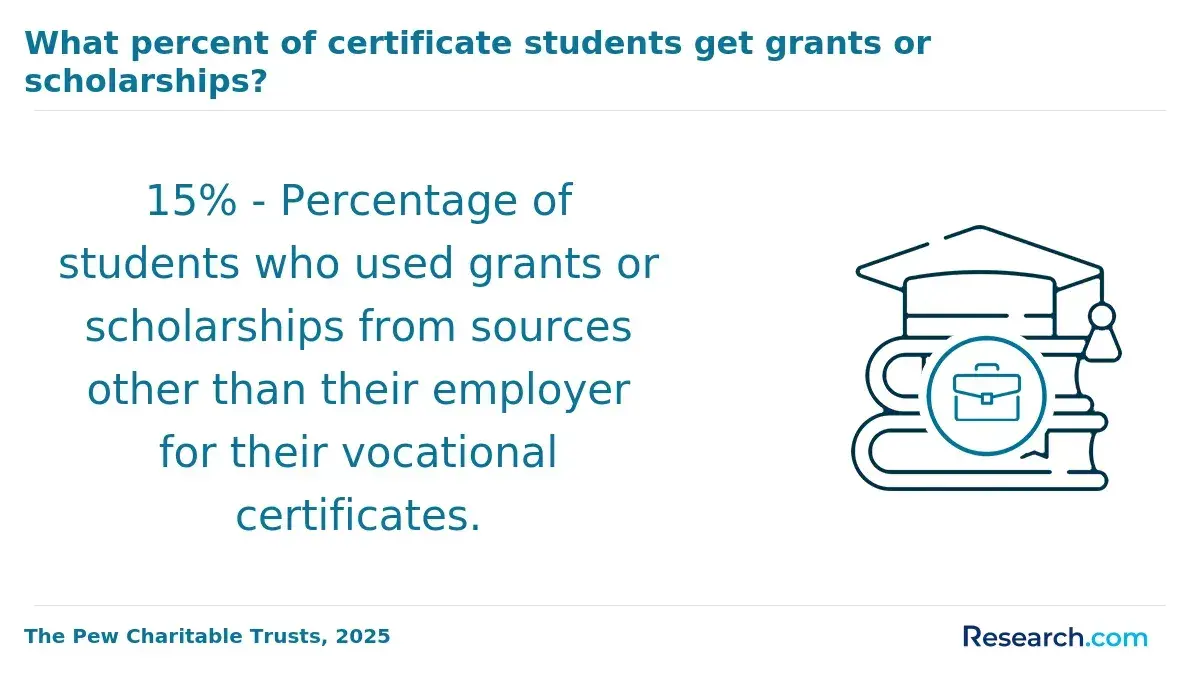
The most flexible online health informatics doctorate pathways are usually programs that use holistic review, accept conditional admission, evaluate graduate GPA separately from undergraduate GPA, or serve working professionals. These programs may still be academically rigorous, but they are more likely to consider the full record rather than reject solely on one number.
Applicants with a low GPA should compare program structure before applying. The table below helps distinguish pathways that may be more flexible from those that are likely to be more GPA-sensitive.
| Program pathway | Flexibility level | Best fit for low-GPA applicants |
| Applied doctorate in health informatics or health administration | Often moderate to high | Experienced professionals with leadership, implementation, analytics, or operations backgrounds |
| Research PhD in biomedical or health informatics | Often lower to moderate | Applicants with strong research methods, publications, faculty fit, and recent academic evidence |
| Doctorate with conditional admission option | High if allowed by policy | Applicants just below GPA minimums who can succeed in first-term doctoral courses |
| Post-master's doctorate | Moderate | Applicants whose master's GPA is stronger than their undergraduate GPA |
| Graduate certificate-to-degree pathway | High as a preparatory route | Applicants who need recent grades before attempting doctoral admission |
If your background is closer to health information management than doctoral research, it can help to review accredited undergraduate or graduate pathways first. For example, students still building foundational credentials may compare the best online CAHIIM accredited health information management degree programs before committing to a doctorate.
When contacting admissions offices, ask direct but professional questions: Is the GPA minimum firm? Are undergraduate and graduate GPAs evaluated separately? Can strong professional experience support an exception? Are conditional admits common? What first-term GPA must conditional students earn? These answers are more useful than guessing from marketing pages.
How Can Applicants Strengthen an Online Health Informatics Doctorate Application With a Low GPA?
A low-GPA applicant needs an application that actively proves readiness. That means you should not simply submit standard materials and hope reviewers overlook the GPA. You need to show recent academic strength, explain context when appropriate, and connect your experience to the program's doctoral expectations.
The steps below are practical ways to strengthen an application before submission. Use the full set only if it fits your situation; a concise, targeted application is better than a large file with weak evidence.
- Calculate every GPA the school may review, including cumulative undergraduate GPA, last 60 credits, major GPA, and graduate GPA if applicable.
- Identify the program's stated minimum GPA and ask whether exceptions, waivers, or conditional admission are possible.
- Take one or two recent graduate-level courses in statistics, healthcare data analytics, research methods, informatics, or academic writing if your transcript lacks current evidence.
- Write a focused GPA addendum only if there is a meaningful explanation, such as documented illness, military deployment, caregiving responsibilities, or a clear early-career pattern followed by improvement.
- Choose recommenders who can discuss specific doctoral skills, not just your work ethic or personality.
- Build a statement of purpose around a real health informatics problem, the methods or systems you want to study, and why the program's curriculum fits that goal.
- Submit optional GRE or GMAT scores only if the program accepts them and your scores strengthen the academic-readiness argument.
- Prepare a professional resume that quantifies leadership, systems implementation, analytics, compliance, quality improvement, or data governance outcomes when possible.
Applicants coming from revenue cycle, coding, compliance, or health data operations can also use career credentials to support the professional side of the file. For example, understanding CPC certification can help applicants show domain knowledge in coding, documentation, and reimbursement workflows, although certification alone does not replace doctoral academic preparation.
The biggest mistake is treating the personal statement as a place to apologize. A strong statement is forward-looking: it acknowledges weaknesses briefly, then shows what changed, what evidence now supports your readiness, and why the doctorate is necessary for your next professional or scholarly step.
Should Students Complete Additional Coursework Before Applying to an Online Health Informatics Doctorate?
Additional coursework can be one of the best ways to improve your admission chances if your GPA is below the stated minimum or if your transcript lacks recent quantitative, writing, or research preparation. It is especially useful when your low GPA is old and your current professional record is strong, because recent coursework gives admissions committees fresher evidence.
The table below compares common academic repair options. It is not a ranking; the best choice depends on how far your GPA is from the minimum, how much time you have, and whether you need foundational knowledge or doctoral-level proof.
| Option | Best use | Main limitation |
| Single graduate course | Testing readiness in a targeted area such as statistics or health analytics | One course may not be enough if the GPA gap is large |
| Graduate certificate | Building a short record of recent academic success | Credits may not transfer into a doctorate |
| Second master's or post-master's coursework | Creating a stronger graduate GPA and deeper specialization | Higher cost and longer timeline |
| Nondegree doctoral course if allowed | Showing performance in a course similar to the target program | Access may be limited and admission to the degree is not assured |
| Professional analytics or informatics training | Strengthening practical skills for applied programs | May carry less weight than accredited graduate credit |
Additional coursework makes the most sense if you can earn strong grades and choose courses aligned with health informatics doctorate expectations. Good choices include biostatistics, database management, clinical decision support, health data standards, research design, healthcare quality analytics, privacy and security, and population health analytics.
If your academic foundation is still developing, a health information management degree online may be a more appropriate stepping-stone than immediate doctoral enrollment. This route can be especially practical for students who need structured preparation in coding systems, data governance, reimbursement, compliance, and health information operations before moving into doctoral-level informatics.
How Do Conditional Admission and Probationary Admission Work in Online Health Informatics Doctorate Programs?
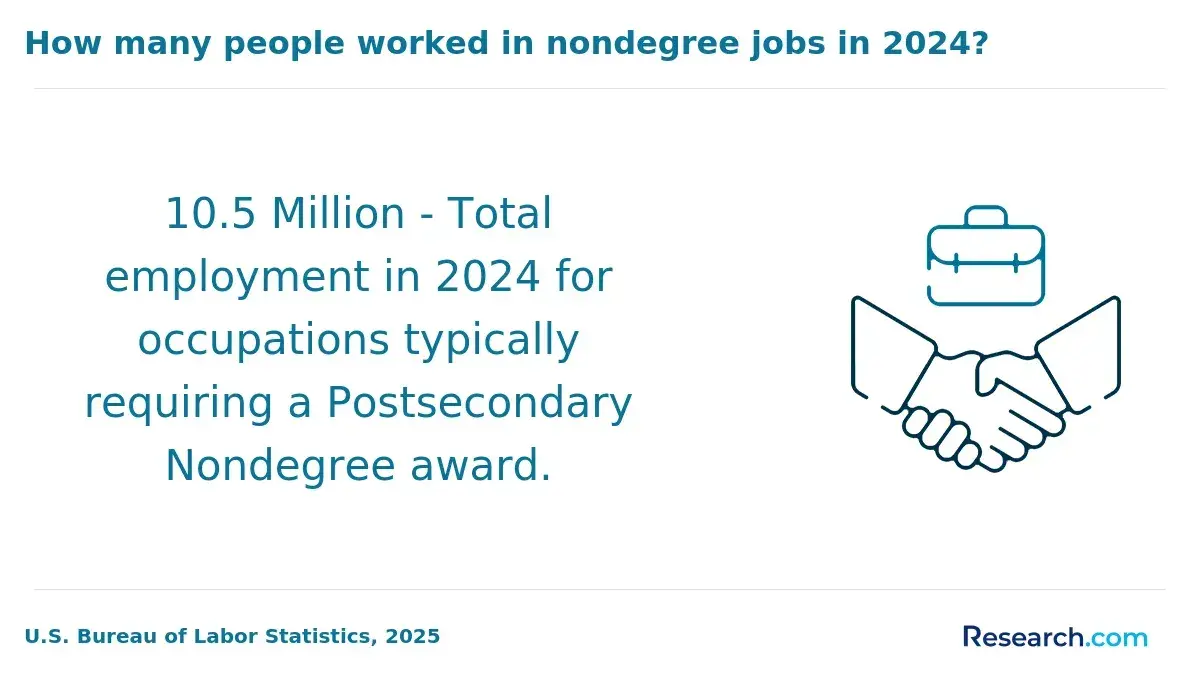
Conditional admission and probationary admission allow some applicants to begin a doctoral program even though they do not meet every standard admission benchmark. These options are school-specific, and not all online health informatics doctorate programs offer them. When available, they are typically designed for applicants who show promise but need to prove academic readiness quickly.
Although terms vary, the difference is usually this: conditional admission means you are admitted only if you satisfy stated conditions, while probationary admission means you are allowed to enroll under closer academic monitoring. Conditions may include earning a minimum GPA in the first term, completing prerequisite courses, limiting course load, or meeting with an advisor.
Before accepting this type of offer, ask for the policy in writing. The most important details are what GPA you must earn, how many credits are covered by the condition, whether financial aid applies, whether failed conditions lead to dismissal, and whether completed credits remain on your transcript. This is not just paperwork; it affects cost, academic risk, and your ability to transfer or reapply elsewhere.
Conditional pathways can be a smart choice for applicants who are academically ready now but held back by older grades. They are less advisable if the low GPA reflects unresolved time-management, writing, quantitative, or workload challenges. In that case, completing outside coursework first may reduce the risk of paying doctoral tuition for a program you cannot continue.
Does a Low GPA Affect Financial Aid or Scholarship Opportunities in Online Health Informatics Doctorate Programs?
A low GPA may affect scholarships, assistantships, employer tuition support, and institutional grants more than it affects basic federal graduate loan eligibility. Federal graduate aid usually depends on admission to an eligible program, citizenship or eligible noncitizen status, satisfactory academic progress, and other federal requirements, not on being a top-GPA applicant at the time of application.
Still, cost risk is real. For the 2025-2026 award year, federal Direct Unsubsidized Loans for graduate students have a fixed interest rate of 7.94%. That rate matters because doctorate programs can take several years, and borrowing before confirming fit can make a low-return or unfinished program expensive.
The table below shows where GPA is most likely to matter financially. Use it to ask better questions before enrollment.
| Funding type | How GPA may matter | What to verify |
| Federal graduate loans | Usually not merit-based at admission, but students must maintain satisfactory academic progress after enrollment | Annual limits, interest rate, fees, and program eligibility |
| Institutional scholarships | Often more competitive and may use GPA cutoffs | Minimum GPA, renewal rules, and whether conditional admits qualify |
| Assistantships or fellowships | May be limited for online or professional doctorate students | Availability for distance learners and GPA expectations |
| Employer tuition assistance | May require admission, minimum course grades, or job relevance | Reimbursement timing, grade rules, and service commitments |
| Private scholarships | May emphasize merit, identity, field, employer, or leadership | Whether recent graduate coursework can satisfy academic criteria |
Low-GPA applicants should build a conservative financial plan. Avoid assuming you will receive merit aid, and compare total program cost, transfer-credit rules, dissertation or capstone fees, technology fees, residency requirements, and time-to-completion policies. The financially safest program is not always the cheapest; it is the one you are most likely to complete with support, fit, and manageable debt.
Does a Low GPA Affect Career Outcomes After Completing an Online Health Informatics Doctorate?
A low GPA usually matters much less after you complete the doctorate, especially if you have strong experience, a relevant dissertation or applied project, and clear technical or leadership skills. Employers in health informatics typically care more about what you can do: improve systems, govern data, lead implementation, translate clinical needs into technology requirements, manage privacy risk, and evaluate outcomes.
Career outcomes depend on the role. Health informatics doctorate graduates may pursue leadership, consulting, academic, analytics, policy, research, vendor, or healthcare administration roles. The BLS reports a 2024 median pay of $117,960 for medical and health services managers, but that figure covers a broad occupation and should not be treated as a doctorate-specific salary. It is useful mainly as a labor-market signal that healthcare management and systems leadership can be financially significant fields.
The table below shows how career direction may influence whether a doctorate is worth pursuing despite a low GPA.
| Career goal | Doctorate value | GPA relevance after graduation |
| Executive informatics leadership | Can support credibility for senior strategy, governance, or transformation roles | Usually low once experience and outcomes are strong |
| Academic faculty or research career | Often important, especially for tenure-track or grant-focused paths | May still matter through transcript review, publications, and research record |
| Healthcare analytics leadership | Can help when paired with strong technical and operational skills | Generally secondary to portfolio, tools, and measurable project results |
| Consulting or vendor leadership | Can differentiate expertise in complex healthcare environments | Usually less important than client impact and subject-matter credibility |
| Entry-level health information roles | Often unnecessary and may be overinvestment | Not the main issue; degree level may exceed job requirements |
If your goal is closer to coding, billing, documentation, or entry-level health data operations, a doctorate may not be the right next step. Reviewing medical coding salary information can help you compare shorter credential pathways with a longer doctoral investment.
Current trends make skills especially important. AI-assisted documentation, predictive analytics, interoperability initiatives, cybersecurity risk, and data governance are changing how healthcare organizations use information. A doctorate can help if it builds advanced problem-solving capacity, but it is not a shortcut around hands-on competence.
Which Students Are Most Likely to Succeed in an Online Health Informatics Doctorate Despite a Low GPA?
Students most likely to succeed despite a low GPA are not simply those with the most impressive resumes. They are applicants who can explain what changed, demonstrate disciplined study habits, and connect doctoral work to a realistic professional or research goal. Online doctorate programs require independence, time management, and persistence because students often balance coursework with full-time healthcare or technology jobs.
The traits below are strong signs that a low-GPA applicant may be ready for doctoral study. They are most persuasive when supported by evidence in transcripts, recommendations, work products, or leadership outcomes.
- Recent academic success in graduate-level courses that require writing, data analysis, research methods, or healthcare technology knowledge.
- Professional experience that involves complex decision-making, not just years in a job title.
- A clear doctoral focus tied to a real health informatics problem, population, workflow, system, or policy issue.
- Strong writing ability, because doctoral work requires literature reviews, proposals, reports, and a dissertation or applied project.
- Realistic time capacity, including protected weekly study hours and employer or family support when possible.
- Comfort with ambiguity, feedback, revision, and long-term projects.
Students at higher risk of struggling are those who choose a doctorate mainly for status, avoid quantitative coursework, have unresolved writing weaknesses, or underestimate the workload of asynchronous online study. If you are already overloaded professionally or personally, delaying admission for one term while building support may be wiser than starting underprepared.
How Should Students Decide Whether to Apply to an Online Health Informatics Doctorate With a Low GPA?
The best decision is not simply "apply" or "do not apply." Low-GPA applicants should choose among three realistic paths: apply now, strengthen the file first, or pursue an alternative credential. The right path depends on how far your GPA is from the minimum, whether you have recent academic evidence, and whether the doctorate is necessary for your goal.
Use the following decision process before spending money on applications. It is designed to prevent the most common mistakes: applying blindly, overestimating experience, ignoring accreditation, and borrowing for a poor-fit program.
- List your target roles and determine whether they truly require or strongly prefer a doctorate.
- Separate programs into three groups: clearly eligible, possible with holistic or conditional review, and unlikely because of firm GPA rules.
- Ask each admissions office whether the GPA minimum is absolute and whether graduate GPA, last-60-credit GPA, or professional experience can influence review.
- Compare accreditation, curriculum, faculty expertise, student support, dissertation or capstone structure, residency requirements, and total cost.
- Decide whether one term of additional coursework would materially improve your application.
- Apply only when your file gives reviewers a clear reason to believe your future performance will exceed your older GPA.
Apply now if your GPA is near the minimum, your graduate grades or work record are strong, and the program confirms holistic or conditional review. Strengthen first if your GPA is far below the minimum, you lack recent coursework, or your writing and quantitative preparation are weak. Consider an alternative if your career goal can be reached through a master's degree, graduate certificate, professional certification, or targeted analytics training.
The bottom line: a low GPA can reduce admission chances, but it does not define them. Your strongest strategy is to match the right program type with credible evidence of readiness, a focused career goal, and a financial plan that makes sense even if admission is conditional.
Other Things You Should Know About Health Informatics
Doctoral programs should come from institutionally accredited colleges or universities. Programmatic accreditation is less common at the doctoral level than in some undergraduate health information programs, so applicants should verify institutional accreditation, curriculum quality, faculty expertise, and employer recognition.
Many online health informatics doctorates take about three to five years, depending on transfer credits, part-time versus full-time enrollment, dissertation or capstone pace, and whether the student pauses for work or personal obligations.
Not always. Research-focused PhD programs usually require a dissertation, while some applied doctorates use a dissertation-in-practice, doctoral project, capstone, or applied research portfolio. Applicants should compare final project requirements before enrolling.
Some online programs are fully online, while others require short residencies, intensives, orientations, dissertation defenses, or practicum-related meetings. Students should confirm travel requirements, frequency, and added costs before applying.
References
- Admissions to MD-PhD programs: how well do application metrics predict short- or long-term physician-scientist outcomes? https://insight.jci.org/articles/view/184493
- 50 Easiest Grad Schools to Get into by Acceptance Rate https://www.onlinemastersdegrees.org/features/grad-schools-acceptance-rates/
- 14 Ways to Improve Your Medical School Application https://www.trinityschoolofmedicine.org/about/resources/blog/8-ways-to-improve-your-medical-school-application
- 50 Most Affordable Master's in Health Informatics Programs 2018 - Healthcare Administration Degree Programs https://www.healthcare-administration-degree.net/best/affordable-masters-health-informatics-degree/
- What PhD Programs Look for in Applicants: What Actually Matters | Ya'el Courtney — Ya'el Courtney https://www.yaelcourtney.com/resources-and-guides/what-phd-programs-look-for-in-applicants-what-actually-matters
- 100 Percent Online Master's in Health Informatics - MSHI Degrees https://www.mhaonline.com/faq/fully-online-ms-health-informatics-programs
- Medical School Acceptance Rates MCAT/GPA, Major, and Race (2026 – 2027) https://mededits.com/mededits-resources/medical-school-admissions/statistics/acceptance-rates/
- 10 Ways to Increase Your Chances of Getting into Graduate School https://paloaltou.edu/resources/business-of-practice-blog/getting-into-graduate-school
- Apply to USF's Health Informatics Program https://www.usfhealthonline.com/resources/career/6-tips-for-applying-to-usf-healths-online-graduate-informatics-program/
- Overcoming a Low GPA for Grad School Success https://www.ivywise.com/ivywise-knowledgebase/overcoming-a-low-gpa-for-grad-school-success/