2027 Best Online Health Informatics Doctorate Programs for Mid-Career Professionals

Co-Founder and Chief Data Scientist
Mid-career health informatics professionals often reach a point where technical experience is not enough for executive, research, or policy-level roles. The U. S. Bureau of Labor Statistics projects 23% growth for medical and health services managers from 2024 to 2034, reflecting continued demand for leaders who can connect healthcare operations, data, privacy, and technology.
This guide is for working professionals comparing online doctorate options. It explains program formats, costs, admissions, specializations, and career trade-offs so you can decide whether a doctorate fits your next move.
Key Things to Know About Online Health Informatics Doctorate Programs for Mid-Career Professionals
- An online health informatics doctorate is usually best for experienced professionals targeting leadership, applied research, teaching, analytics strategy, clinical systems governance, or health IT executive roles rather than entry-level informatics jobs.
- Most working students should expect a 3- to 7-year commitment, with professional doctorates often shorter and more applied than research PhD programs; part-time pacing is usually the safer choice for full-time employees.
- BLS reported a $117,960 median annual wage for medical and health services managers in May 2024, but a doctorate should be evaluated as a strategic credential, not a guaranteed salary increase.
Is earning an online Health Informatics doctorate worth it for mid-career professionals?
An online health informatics doctorate can be worth it when it helps you move from implementation or departmental work into organization-wide decision-making. Health informatics sits at the intersection of healthcare delivery, information systems, data governance, analytics, privacy, clinical workflow, and patient outcomes. A doctorate signals that you can evaluate complex systems, lead evidence-based change, and produce original or applied research.
For mid-career professionals, the value depends less on the letters after your name and more on whether the program matches a specific career goal. The BLS median annual wage for medical and health services managers was $117,960 in May 2024, but that figure includes many roles that do not require a doctorate. Use it as market context, not as an earnings promise.
The table below summarizes when a doctorate is likely to be a strong investment and when a shorter or less expensive credential may be more practical.
| Professional goal | Doctorate fit | Better alternative if the goal is narrower |
| Lead enterprise health IT, clinical informatics, data governance, or digital health strategy | Strong fit, especially if the curriculum includes leadership, research methods, interoperability, and implementation science | Executive certificate if you already have a senior role and only need targeted upskilling |
| Move into university teaching or research | Strong fit for PhD programs and research-intensive doctorates | Master's degree plus teaching experience may be enough for some adjunct roles |
| Advance from analyst or manager to director-level informatics leadership | Good fit if your employer values doctoral preparation for promotion | Graduate certificate or second master's if leadership experience is the main gap |
| Switch into health informatics from a non-healthcare field | Possible but risky without healthcare experience | Master's degree, certificate, or applied HIM coursework before doctoral study |
| Qualify for entry-level coding, records, or EHR support roles | Usually not necessary | Certificate, associate degree, bachelor's degree, or professional certification |
The best time to pursue the degree is when you have enough professional experience to turn workplace problems into doctoral research. If you are still building foundational informatics knowledge, a graduate certificate, health information management program, analytics credential, or employer-sponsored training may produce a faster return.
Which online Health Informatics doctorate programs are the best for mid-career professionals?
The best online health informatics doctorate for a mid-career professional is not always the most famous school. It is the program whose format, research support, faculty expertise, cost, and dissertation model fit your job schedule and career direction. Because fully online doctorates specifically titled "health informatics" are still limited, strong options may include applied health informatics doctorates, healthcare informatics PhD programs, and information systems doctorates with health IT specializations.
The comparison below focuses on U.S. programs and program types that are commonly relevant to working health informatics professionals. Always verify current delivery format, tuition, faculty availability, and accreditation directly with the school before applying.
| Program or program type | Best fit for mid-career professionals | Format considerations | What to verify before applying |
| UTHealth Houston Doctorate in Health Informatics | Professionals seeking an applied doctorate focused directly on health informatics practice, leadership, and systems improvement | Designed for advanced study in biomedical and health informatics; online and on-campus requirements may vary by course or cohort | Residency expectations, dissertation or practice project structure, faculty match, and current tuition |
| Capitol Technology University PhD in Healthcare Informatics | Professionals who want a flexible online, research-oriented doctorate connected to healthcare data, systems, and information management | Often marketed toward working adults and dissertation-focused study | Research supervision model, institutional accreditation, faculty depth in healthcare informatics, and publication expectations |
| Dakota State University PhD in Information Systems with healthcare-focused study options | Health IT professionals who want a technology-heavy doctorate with information systems depth | Online-friendly structure may include specific research or seminar expectations | Whether available electives and faculty can support your health informatics dissertation topic |
| Online PhD in information technology, data science, or information systems with health analytics emphasis | Professionals targeting AI, predictive analytics, cybersecurity, interoperability, or enterprise data architecture in healthcare | May be fully online, hybrid, or low-residency depending on the institution | Whether healthcare context is central or merely an elective option |
| Hybrid PhD in biomedical informatics or health services research | Professionals who want deeper research training and can travel for intensives, labs, or committee meetings | Often stronger for academic careers but harder for full-time employees | On-campus frequency, funding model, publication expectations, and time-to-degree norms |
Program reputation matters, but it should not outweigh fit. If you need foundational health information management preparation before doctoral study, comparing the best online CAHIIM accredited health information management degree programs can help you understand the undergraduate and master's-level pathways that often feed into informatics leadership.
For working professionals, the strongest shortlist usually includes three types of schools: a public university with lower tuition and strong research infrastructure, a private nonprofit university with flexible online support, and a specialized technology-focused institution with faculty who understand healthcare data environments. Comparing all three helps you avoid choosing by ranking alone.
What specializations are available in Health Informatics doctorate programs?
Health informatics doctorate specializations vary widely because the field connects healthcare operations, clinical care, information systems, data science, and public policy. Mid-career professionals should choose a specialization based on the problems they want to solve, not only on what sounds current.
The table below explains common specialization areas and the professional profiles they tend to serve best.
| Specialization | What it focuses on | Best for professionals aiming for |
| Clinical informatics | Clinical workflows, EHR optimization, decision support, usability, and care-team technology adoption | Clinical informatics leadership, CMIO-adjacent roles, clinical systems strategy |
| Health data analytics | Data modeling, predictive analytics, population health metrics, quality measurement, and reporting | Analytics director, population health strategist, health data science leadership |
| Artificial intelligence in healthcare | Responsible AI, algorithm evaluation, clinical decision support, bias, governance, and implementation | AI governance, digital transformation, analytics innovation roles |
| Health information management | Data integrity, coding systems, compliance, records governance, privacy, and revenue-cycle information quality | HIM executive leadership, data governance, compliance strategy |
| Public health informatics | Disease surveillance, public health data exchange, registries, emergency response data, and population interventions | Government, nonprofit, public health analytics, and surveillance leadership |
| Interoperability and health IT architecture | Standards, health information exchange, APIs, data integration, and system design | Enterprise architecture, health information exchange, vendor or consulting leadership |
| Cybersecurity and privacy in healthcare | Risk management, privacy law, secure systems, breach prevention, and governance | Security leadership in hospitals, payers, health tech, and consulting |
AI is reshaping specialization choices. Many organizations now need leaders who can evaluate whether models are safe, explainable, equitable, and operationally useful. A doctorate with research methods, ethics, governance, and implementation coursework can be more valuable than one that only teaches tools.
If your background is in records, compliance, revenue cycle, or data quality, an affordable health information management degree online may also be worth comparing before committing to doctoral study, especially if you need a stronger HIM foundation.
What admission requirements should professionals prepare for Health Informatics doctorate programs?
Admissions requirements for online health informatics doctorate programs usually reflect the expectation that applicants already understand healthcare, technology, research, or leadership. Mid-career applicants can be competitive, but they should show a clear connection between their work history and doctoral goals.
Most programs ask for a combination of academic preparation, professional experience, and evidence that you can complete independent research. Requirements vary by school, but applicants should be ready to prepare the following materials.
- Graduate degree or strong graduate-level preparation in health informatics, health information management, nursing informatics, public health, healthcare administration, computer science, data analytics, information systems, or a related field.
- Official transcripts showing graduate GPA strength and readiness for advanced research, statistics, informatics, or systems coursework.
- Professional resume showing healthcare, health IT, analytics, HIM, clinical, leadership, consulting, vendor, payer, public health, or research experience.
- Statement of purpose explaining the problem you want to study, why doctoral training is necessary, and how the program's faculty or curriculum fits your goals.
- Writing sample, scholarly paper, project report, publication, or applied analytics example that demonstrates doctoral-level communication potential.
- Letters of recommendation from supervisors, faculty, research mentors, or senior leaders who can speak to your analytical ability, persistence, and leadership readiness.
- Interview or faculty conversation, especially for programs that require a dissertation chair or research match before admission.
One common mistake is applying with a vague goal such as "I want to advance in healthcare technology." A stronger application identifies a specific problem, such as reducing EHR documentation burden, improving data quality for value-based care, evaluating AI decision support, or strengthening interoperability across care settings.
Professionals from revenue cycle or coding backgrounds should also show how they have moved beyond task-level work into systems thinking. For example, experience with audit trends, documentation quality, compliance analytics, or payer data can become a strong informatics research direction, particularly when paired with credentials such as CPC certification.
How much does an online Health Informatics doctorate program cost?
Online health informatics doctorate costs vary widely by institution type, credit requirement, residency expectations, technology fees, and dissertation length. Public universities may be less expensive for in-state students, but some online programs charge a flat distance-learning rate. Private nonprofit and specialized technology institutions may cost more per credit but offer more flexible pacing.
Recent NCES graduate tuition data published in 2024 shows why institution type matters when estimating cost, even though program-specific tuition is the number you should use before enrolling.
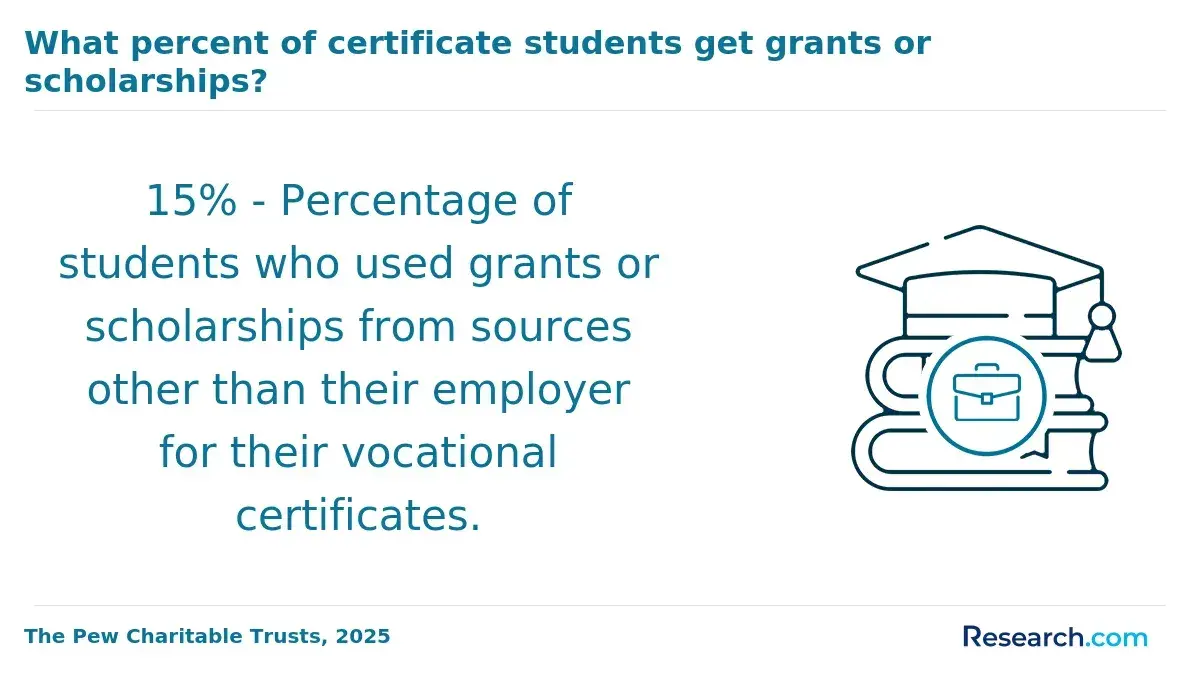
- Public institution benchmark: average graduate tuition and required fees were about $12,596 for an academic year in the most recently summarized NCES data.
- Private nonprofit institution benchmark: average graduate tuition and required fees were about $30,953 for an academic year in the same NCES summary.
Those figures are broad averages, not health informatics doctorate prices. Your actual total cost may be higher or lower depending on credits, dissertation continuation fees, travel, books, software, and whether your employer helps pay tuition.
The table below outlines the main cost drivers to compare before you commit to a program.
| Cost factor | Why it matters | How it affects working professionals |
| Credits required | Doctorates with more coursework usually cost more before dissertation begins | More credits can mean deeper preparation but a longer part-time schedule |
| Tuition model | Per-credit, per-term, cohort, and dissertation-continuation models produce different total costs | A low per-credit rate may not stay affordable if dissertation fees continue for several terms |
| Residency or campus visits | Travel, lodging, and unpaid time away from work can add meaningful expense | Hybrid programs may be worth it for mentoring but harder for caregivers and shift workers |
| Employer tuition assistance | Many healthcare employers offer education benefits, but annual caps and repayment rules vary | Employer support can reduce out-of-pocket cost but may limit job mobility temporarily |
| Dissertation timeline | Extra dissertation terms can increase tuition and fees | Strong advising and early topic development can reduce cost uncertainty |
Before self-funding the full degree, ask HR whether tuition assistance applies to doctoral coursework, whether the program must be job-related, whether grades affect reimbursement, and whether you must remain employed after receiving assistance. Also ask the school for a written total-cost estimate based on your intended pace.
What is the typical timeline for online Health Informatics doctorate programs?
The typical timeline for an online health informatics doctorate depends on degree type, transfer credit, research design, dissertation progress, and weekly availability. A professional doctorate may be structured around applied projects and leadership coursework, while a PhD usually emphasizes research methods, theory, publication, and dissertation originality.
The table below gives realistic planning ranges for working adults. These are common planning estimates, not guaranteed completion times.
| Study pace | Common timeline | Best fit | Main risk |
| Full-time online or hybrid study | About 3 to 5 years | Professionals with reduced work hours, strong funding, or flexible consulting schedules | Work disruption and burnout if employment remains demanding |
| Part-time professional doctorate | About 4 to 6 years | Managers, analysts, clinicians, HIM leaders, and health IT professionals working full-time | Slow dissertation progress if the topic is not defined early |
| Part-time research PhD | About 5 to 7 years or longer | Professionals targeting research-intensive academic, policy, or advanced analytics roles | Faculty fit, research scope, and publication expectations can extend the timeline |
| Low-residency hybrid doctorate | About 4 to 6 years | Students who value in-person mentoring but cannot relocate | Travel logistics and intensive-session scheduling conflicts |
Mid-career students should treat the dissertation as a project-management challenge. The most successful approach is to connect your topic to a real workplace problem while still protecting confidentiality, avoiding employer conflicts of interest, and meeting institutional review board requirements.
A practical timeline plan should include when you will complete core coursework, choose a topic, secure a chair, finish methods courses, collect data, write chapters, and defend. If a program cannot clearly explain how online students receive dissertation support, consider that a red flag.
What skills can professionals learn from online Health Informatics doctorate programs?
An online health informatics doctorate should build more than technical knowledge. For mid-career professionals, the strongest programs develop the ability to lead change, evaluate evidence, govern data, and translate analytics into safer and more efficient healthcare decisions.
The skills below are especially important because employers increasingly expect informatics leaders to understand both operational realities and advanced data environments.
- Research design and evidence appraisal, including qualitative, quantitative, mixed-methods, and implementation-focused approaches.
- Health data governance, including data quality, stewardship, privacy, security, ethics, and lifecycle management.
- Clinical workflow analysis, including usability, documentation burden, decision support, and technology adoption.
- Interoperability and standards literacy, including health information exchange, terminology systems, APIs, and data integration.
- Analytics leadership, including dashboard strategy, predictive model evaluation, population health measurement, and performance improvement.
- AI governance, including bias assessment, explainability, model monitoring, stakeholder communication, and responsible deployment.
- Executive communication, including translating technical findings for clinicians, boards, vendors, regulators, and finance leaders.
- Change management, including stakeholder engagement, training strategy, evaluation planning, and post-implementation improvement.
One important trend is the shift from "data reporting" to "data accountability." Healthcare organizations do not only need professionals who can produce dashboards; they need leaders who can explain whether the data is valid, whether an intervention worked, and whether technology improved care without creating new risks.
What career opportunities open up for online Health Informatics doctorate degree holders?
Online health informatics doctorate holders may pursue leadership, research, teaching, consulting, analytics, policy, and health technology roles. The degree is most useful when paired with prior experience in healthcare delivery, IT, data, HIM, nursing, public health, administration, or clinical operations.
The career paths below show how the doctorate can support different professional directions, though job titles and requirements vary by employer.
| Career direction | Typical role examples | How the doctorate may help |
| Health informatics leadership | Director of clinical informatics, health IT strategy leader, informatics program director | Supports enterprise-level decision-making, systems evaluation, and cross-functional leadership |
| Health data and analytics leadership | Director of analytics, population health analytics leader, data governance executive | Strengthens research methods, data interpretation, and governance credibility |
| Academic and teaching roles | Faculty member, program director, dissertation mentor, curriculum leader | Provides doctoral credential often expected for full-time higher education roles |
| Applied research and evaluation | Health services researcher, implementation scientist, digital health evaluator | Builds capacity to design studies and evaluate interventions |
| Consulting and vendor leadership | Healthcare technology consultant, product strategy leader, interoperability advisor | Helps communicate with executives, clinicians, and technical teams using evidence-based recommendations |
| Policy and public health informatics | Public health informatics leader, registry strategist, health data policy advisor | Supports work involving surveillance systems, data exchange, and population-level interventions |
Salary outcomes depend on role, region, employer type, technical depth, management responsibility, and prior experience. For comparison, BLS reported a May 2024 median annual wage of $171,200 for computer and information systems managers, a category that includes some senior technology leadership roles but is broader than healthcare informatics. Professionals moving from coding or records work into informatics leadership can also review medical coding salary context to understand how compensation differs across health information career stages.
A doctorate may improve competitiveness for senior roles, but it does not replace leadership results. Employers usually look for evidence that you have led implementations, improved data quality, managed teams, influenced clinicians, handled compliance, or translated analytics into measurable operational decisions.
How can Health Informatics doctorate students balance their time between studies and work?
Balancing doctoral study with full-time work requires more than motivation. Health informatics doctorates involve reading, research design, writing, statistics, group discussions, faculty meetings, and long-term dissertation planning. A realistic schedule is one of the strongest predictors of whether the degree remains manageable.
The steps below can help working professionals plan before the first term begins.
- Estimate weekly study time honestly by reviewing syllabi, dissertation expectations, and course load; do not assume online means self-paced or light.
- Choose part-time study if your job involves call coverage, leadership responsibilities, clinical shifts, travel, caregiving, or unpredictable deadlines.
- Block recurring calendar time for reading, writing, and faculty communication before work demands fill the week.
- Use your workplace experience strategically by shaping assignments around real informatics problems while protecting patient privacy and employer confidentiality.
- Discuss workload with your supervisor if you plan to use employer tuition assistance, internal data, flexible scheduling, or professional development time.
- Develop a dissertation idea early, then narrow it based on available data, faculty expertise, ethics review requirements, and your realistic time window.
- Create a support system that includes family, peers, faculty, writing groups, and professional mentors who understand long doctoral timelines.
The biggest mistake is treating the dissertation as something to start after coursework. Mid-career students often have excellent real-world problems to study, but those ideas still need researchable questions, manageable data sources, and faculty alignment.
Online versus hybrid format is also a lifestyle decision. Fully online programs reduce travel and make scheduling easier, while hybrid programs may provide stronger in-person networking and faculty connection. The better choice is the one you can sustain for several years without sacrificing job performance, health, or family stability.
What should professionals evaluate when choosing an online Health Informatics doctorate program?
Choosing an online health informatics doctorate requires more due diligence than comparing tuition and rankings. The wrong program can leave you with weak faculty support, poor research fit, unexpected travel, or a dissertation topic that no one is prepared to supervise.
Use the checklist below to evaluate programs before applying or enrolling.
- Verify institutional accreditation through recognized U.S. accreditation channels and confirm whether any program-specific accreditation is relevant to your field or employer.
- Ask whether the program is fully online, hybrid, low-residency, synchronous, asynchronous, cohort-based, or self-paced.
- Request a written explanation of dissertation, capstone, practice project, publication, or defense requirements.
- Review faculty biographies to confirm active expertise in your intended area, such as AI governance, clinical informatics, interoperability, HIM, analytics, public health informatics, or cybersecurity.
- Ask how online doctoral students are matched with advisors and what happens if a faculty member leaves.
- Compare total program cost, not just tuition per credit, including fees, dissertation continuation costs, books, software, and travel.
- Confirm whether part-time students receive the same research support, library access, writing support, and career services as full-time students.
- Ask for typical completion patterns for working adults, including how many students finish within the advertised timeline.
- Review graduate outcomes carefully and avoid assuming that a doctorate automatically leads to promotion, tenure, or executive pay.
- Check whether the curriculum includes current health informatics issues such as interoperability, privacy, AI, health equity, usability, and implementation science.
The table below summarizes common red flags and how to respond to them during your search.
| Red flag | Why it matters | What to do |
| No clear dissertation support model | Doctoral students need sustained mentoring, not only coursework | Ask how chairs are assigned, how often students meet advisors, and what support exists for stalled dissertations |
| Healthcare content is minimal | A general IT doctorate may not prepare you for healthcare-specific governance, privacy, workflow, or policy issues | Review syllabi and faculty publications before assuming the program fits health informatics |
| Unclear online requirements | Unexpected residencies can disrupt work schedules and add cost | Request the full residency calendar and travel expectations in writing |
| Vague career claims | No degree can guarantee promotion or salary growth | Ask for role examples, alumni paths, and employer partnerships without relying on marketing language |
| Poor fit between your topic and faculty expertise | A mismatch can delay approval, data collection, and defense | Contact potential faculty mentors before applying whenever possible |
Finally, compare doctorate, certificate, and master's options side by side. If your goal is a targeted skill such as SQL, clinical documentation improvement, privacy compliance, or project management, a doctorate may be excessive. If your goal is to shape enterprise strategy, lead research, teach, or build evidence for complex health technology decisions, a doctorate may be the right long-term investment.
Other Things You Should Know About Health Informatics
Yes, some programs accept applicants from IT, analytics, public health, HIM, administration, or data science backgrounds. However, you may need to show healthcare experience, prerequisite coursework, or a clear plan for studying healthcare-specific problems.
Many do, especially PhD programs. Some professional doctorates may use an applied dissertation, capstone, or practice-based project. Always confirm the final project format before enrolling because it affects time, cost, and faculty support needs.
Employers generally focus on institutional accreditation, program reputation, relevance of the curriculum, and your professional results. An online format is less of a concern when the school is accredited and the program provides rigorous research and applied learning.
A PhD is usually better for research-intensive academic or scientific roles. A professional doctorate is often better for experienced practitioners who want to lead applied change in healthcare organizations, consulting, health IT, or data governance.
References
- Flexible Schedules with Online School | Sora https://soraschools.com/blog/flexible-online-learning-customizing-schedules-personalized-growth
- Top 30 Best Online Master’s in Healthcare Informatics Degree Programs 2020 - Healthcare Administration Degree Programs https://www.healthcare-administration-degree.net/best/online-masters-healthcare-informatics-programs/
- Online, Hybrid, and More: Flexible Learning Options in College - ReUp Education https://reupeducation.com/blog/online-hybrid-and-more-flexible-learning-options-in-college/
- For Career-Driven Master's Students, a Flexible Program is Essential https://paloaltou.edu/resources/blog/career-driven-masters-students-flexible-program-essential
- Why Pursue a Master’s in Health Informatics? | 23% Job Growth Outlook https://www.usfhealthonline.com/resources/health-informatics/why-pursue-a-masters-in-health-informatics/
- 2025 Best Health Informatics Master's Degree Online https://www.onlineu.com/degrees/healthcare-informatics
- Online Healthcare Informatics Master's Degrees - Part-Time Programs https://www.mhaonline.com/faq/part-time-healthcare-informatics-programs