2027 Online Game Art & Design Bachelor's Degree Completion Programs for Working Adults

Co-Founder and Chief Data Scientist
Many working adults with partial college credit struggle to find flexible options that allow them to complete a bachelor's in game art & design without pausing their careers. Time constraints and rigid program structures often cause delays, despite the growing demand for skilled professionals in the interactive entertainment industry. According to the National Center for Education Statistics, nearly 40% of online undergraduates pursue degree completion programs to fit education into their busy lives.
This article explores key factors such as program design, credit transfers, accreditation, and cost, helping readers select the best online game art & design degree completion program for their unique needs.
Key Benefits of Online Game Art & Design Bachelor's Degree Completion Programs for Working Adults
- Programs offer flexible scheduling tailored for working professionals, allowing study during evenings and weekends without disrupting full-time employment.
- Fully asynchronous coursework enables learners to progress at their own pace, balancing demanding job responsibilities without income loss.
- Degree completion timelines are accelerated, often reducing graduation time by up to two years compared to starting a traditional four-year game art & design degree.
What Are Online Game Art & Design Bachelor's Degree Completion Programs, and Who Are They Designed For?
Degree completion programs in online game art & design offer a focused pathway for working adults who have accumulated some college credits but have not yet earned a bachelor's degree. Unlike traditional four-year bachelor's programs that start from zero, these programs build on prior coursework to help students efficiently finish their studies. According to the National Center for Education Statistics (NCES), nearly 36 million Americans have some college credits but no degree, representing a large demographic served by these specialized programs. Ideal for transfer students, military veterans, and mid-career professionals, the best accredited online game art & design degree completion programs offer flexible scheduling and curricula designed around adult learners' unique needs.
These programs are distinguished by several key features:
- Accelerated Format: Students complete remaining credits faster than in typical degree timelines, enabling quicker graduation while managing work and life commitments.
- High Transfer Credit Acceptance: Programs accept substantial transfer credits, reducing redundant coursework and allowing focus on advanced game art & design topics.
- Flexible Delivery: Offerings range from fully online to hybrid models that accommodate different learning preferences and geographic constraints.
- Growing Demand: As employers increasingly require bachelor's degrees even for roles once available without them, these programs help adults upgrade their credentials without sacrificing current employment.
How Do Online Game Art & Design Degree Completion Programs Differ From Traditional Four-Year Game Art & Design Bachelor's Degrees?
Online game art & design degree completion programs cater specifically to working adults who have already earned at least 60 college credits, offering a streamlined path compared to traditional four-year bachelor's degrees. These programs emphasize upper-level specialty courses while reducing or waiving many general education requirements through prior learning assessments or competency-based credits. In contrast, traditional degrees start with a full slate of general education, electives, and foundational courses before progressing to advanced game art & design topics.
- Credit Requirements: Completion programs generally require around 60 to 70 credits focused mostly on major coursework, as students transfer liberal arts credits earned elsewhere. Traditional bachelor's degrees usually demand 120 to 130 total credits, incorporating extensive general education and electives.
- Curriculum Sequencing: Completion programs map curriculum flexibly for adult learners, often delivering asynchronous courses that emphasize career-focused projects. This replaces or shortens the traditional sequence of semester-based general education plus intermediate and advanced classes.
- Time to Completion: With transfer credits, completion programs typically enable degree completion in two years or less, depending on pacing. Traditional pathways designed for full-time freshmen commonly take around four years to finish.
- Cost Considerations: According to IPEDS data, the cost per credit hour for completion programs may be slightly higher than for traditional degrees at the same institution. However, because fewer total credits are required, the overall tuition cost tends to be lower. Many programs also offer adult learner-friendly tuition models such as flat rates or subscription plans.
Comparing online game art & design degree completion programs advantages with the differences between online and traditional game art & design degrees reveals practical trade-offs for adult learners balancing work and study. Flexible delivery and recognition of prior learning can accelerate your path, but consider pacing and tuition models carefully. For those interested in leadership roles in academia or industry, exploring options like a PhD leadership online can be a next step after completing such degrees.
2026 Update: Portfolio and Production Tool Readiness
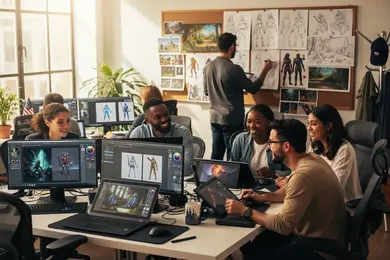
For 2026, this section was added to help working adults judge whether an online game art and design completion program will support a job-ready portfolio, not just award remaining degree credits.
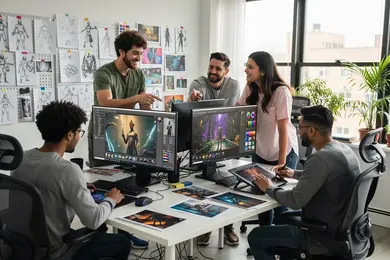
- Whether courses require finished portfolio pieces such as character art, environments, UI assets, animation reels, or playable prototypes.
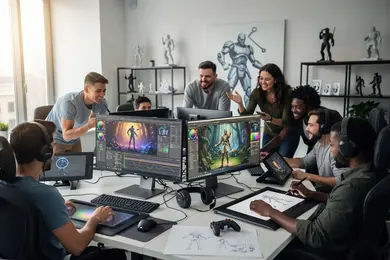
- Which industry tools, game engines, and creative software students are expected to use, and whether access is included or extra.
- Minimum computer, graphics tablet, storage, and internet requirements for completing production-heavy assignments from home.
- How often students receive faculty critique, peer review, or recorded feedback on visual and technical work.
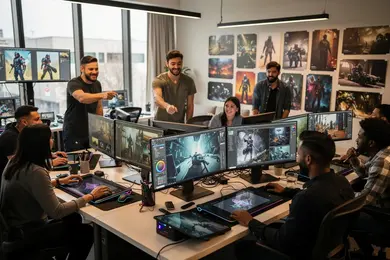
- Whether team-based projects reflect real production workflows with roles, deadlines, version control, and asset handoff.
- Who owns student-created work and whether it can be publicly displayed in a professional portfolio.
Checking these details helps students choose a program that fits their schedule while also producing work they can confidently show employers or clients.
Which Accredited Universities Offer the Most Affordable Online Game Art & Design Bachelor's Degree Completion Programs?
The most affordable programs stand out for their flat online tuition fees regardless of residency, reducing financial complexity, especially for out-of-state students. These schools hold robust regional accreditation and emphasize transfer credit acceptance and prior learning assessments, including military experience credit. In contrast, mid-tier options typically charge higher, differentiated tuition rates and often have more restrictive transfer policies, which can extend time and cost to degree completion.
Eastern New Mexico University: ENMU offers a Bachelor of Applied Arts and Sciences with a digital media focus at a consistent $215 per credit hour for all online students, no matter their residency. It holds regional accreditation from the Higher Learning Commission (HLC). This program is ideal for degree completion, accepting up to 90 transfer credits and simplifying budgeting with its flat tuition model.
Fort Hays State University: With a statewide flat rate of $218 per credit hour, Fort Hays provides a Bachelor of Science in Digital Media Arts concentrated on 3D modeling and animation for game art. Accredited by HLC, it supports working adults by recognizing prior military training and offering flexible transfer policies.
University of North Texas: Charging $235 per credit hour regardless of where students live, UNT's Bachelor of Fine Arts in Studio Art emphasizes advanced digital art skills geared toward game art. Accredited by the Southern Association of Colleges and Schools, it facilitates accelerated completion through substantial transfer credit acceptance and prior learning assessments.
Southern New Hampshire University: SNHU features a Bachelor of Arts in Game Art at a flat $320 per credit hour online tuition rate. Accredited by the New England Commission of Higher Education (NECHE), their program allows for competency-based credits and prior learning recognition, enabling adult learners to finish more quickly.
Kennesaw State University: KSU offers in-state tuition at $302 and out-of-state at $611 per credit hour for its Bachelor of Science in Digital Animation and Game Design. The program's accreditation comes from the Southern Association of Colleges and Schools Commission on Colleges (SACSCOC), and it emphasizes industry-aligned instruction with transfer-friendly options for working adults.
When asked about his experience, a professional who pursued an online game art & design bachelor's degree completion program shared that juggling work and studies was initially overwhelming. He explained, "I had many credits but wasn't sure how they'd transfer or if I'd have to retake courses." The program's clear credit transfer policies and acceptance of prior knowledge proved critical, allowing him to advance efficiently and stay motivated. He also highlighted the benefit of flexible schedules that adapted to his working hours. "It wasn't easy, but the ability to apply what I already knew and progress without starting over completely made all the difference in launching my career."
How Many Transfer Credits Can Working Adults Apply Toward an Online Game Art & Design Degree Completion Program?
Transfer credit policies in online game art & design bachelor's degree completion programs generally allow working adults to bring in 60 to 90 semester hours, reflecting two to three years of prior coursework. Programs often impose caps to ensure students finish a substantial portion of credits at the awarding school, aligning with accreditation standards.
- Credit Caps: The majority of programs limit how many credits can transfer, typically between 60 and 90 semester hours, to maintain academic integrity and degree quality.
- Credit Equivalency Evaluation: Institutions carefully review transcripts to determine how previous courses correspond with their curriculum, which can influence the number of accepted credits, especially in specialized game art & design topics.
- Articulation Agreements: Many universities partner with community colleges through formal agreements that guarantee certain credits will transfer smoothly, easing the degree completion path for transfer students.
- Transfer Credit Loss: Data from the U.S. Department of Education's transfer summit reveals that students typically forfeit roughly 40% of their previously earned credits when transferring. Choosing programs with structured pathways minimizes such losses.
- Military and Professional Credits: Some schools accept ACE-endorsed military training and professional certifications, benefiting veterans and professionals seeking credit for prior learning.
- Official Transcript Evaluation: Prospective students should request a formal transcript review before enrolling to understand their credit standing and avoid surprises during the program.
Those looking to complete an online degree in game art & design should prioritize transfer-friendly programs, including those with clear articulation agreements. For working adults balancing commitments, evaluating tuition and credit policies alongside program flexibility is key. For additional insights on cost-effective options, consider exploring the construction management degree online landscape, which offers similar transfer credit frameworks applicable across disciplines.
What Are the Typical Admission Requirements for Online Game Art & Design Bachelor's Degree Completion Programs?
Most online game art & design degree completion programs ask for 24 to 60 transferable credit hours from accredited colleges. These credits usually cover general education and foundational subjects necessary for advancing in the major.
GPA Expectations: Applicants often must meet a minimum GPA ranging from 2.0 to 2.5, though top-tier programs might demand higher. This ensures students are academically prepared to tackle advanced coursework.
Required Documentation: Official transcripts are mandatory along with proof of prior relevant coursework. Many programs also request a portfolio to demonstrate artistic and design skills, especially where creativity is a core focus.
Prerequisite Coursework: Foundational classes in art, digital design, or introductory game art & design help candidates qualify and compete. Completing these courses beforehand, often via community colleges, strengthens applications significantly.
Admissions Selectivity: Some programs operate with open admission policies, easing entry but providing less academic guidance. In contrast, selective programs impose stricter entry standards yet often deliver more mentoring and industry networking opportunities, enhancing credential value.
Conditional Admission Options: Several schools offer provisional acceptance to students who slightly miss criteria, permitting them to take remedial courses while enrolled to meet full requirements.
A professional who completed an online game art & design bachelor's degree described her admission experience as a balancing act between confidence and preparation. She recounted submitting multiple transcripts from community colleges and crafting a detailed portfolio to showcase her evolving skills. Despite some initial anxiety about meeting the GPA benchmarks, conditional acceptance allowed her to begin the program while addressing minor gaps in her coursework. She emphasized how this flexibility, combined with proactive prerequisite completion, made the process manageable and underscored the importance of perseverance and planning when applying as a working adult.
How Long Does It Take to Complete an Online Game Art & Design Bachelor's Degree Completion Program as a Working Adult?
Completion timelines for an online Game Art & Design bachelor's degree vary notably based on previously earned credits, how many courses are taken each term, and the program's format. Transfer students holding 90 credits often finish in roughly one year with full-time study, while those with 30 credits may need two to three years under part-time schedules.
- Impact of Prior Credits: The fewer remaining credit hours, the quicker degree completion becomes. Institutions generally require around 120 credits, so transferring more credits shortens the path significantly.
- Enrollment Pace: Part-time students usually take 6 credits per semester, which fits working adults but lengthens completion time. Full-time or accelerated enrollment of 12 or more credits speeds progress but demands greater time investment.
- Accelerated Course Terms: Programs using eight-week terms enable students to tackle multiple shorter courses each semester, reducing the overall duration compared to traditional 16-week semesters.
- Summer Term Enrollment: Adding summer coursework can cut total degree time by several months, providing extra flexibility to accommodate busy schedules.
- Competency-Based Models: Some schools allow advancement by demonstrating mastery rather than seat time, which can notably shorten both time and expenses.
- Realistic Scenario: A working professional enrolled part-time at two courses (6 credits) per semester typically completes the degree within two to three years, depending on transfer credits and course availability.
- Life and Employer Factors: Balancing family, job responsibilities, and gaining employer support can significantly affect the pace and success of degree completion.
A 2023 report from the National Student Clearinghouse Research Center found that more than 45% of degree completers aged 25 and older were enrolled part-time during their final two years, emphasizing the need for flexible online programs tailored to working adults.
What Financial Aid, Grants, and Employer Tuition Assistance Options Are Available for Online Game Art & Design Completion Students?
Working adults pursuing an online game art & design bachelor's degree completion program can tap into multiple financial aid resources tailored for non-traditional students. Eligible learners should take advantage of federal Pell Grants and Federal Direct Loans by submitting the FAFSA early, which evaluates both financial need and credit status. Many states also provide grants specifically for adult learners returning to school, helping to ease tuition costs significantly.
Colleges and universities frequently offer scholarships and fellowships designed for students completing specialized degrees such as game art & design. These awards often consider prior coursework, professional experience, or military service, making them an important option for financing your education.
Employer tuition assistance programs remain a vital funding resource for working students. Under IRS Section 127, employers can provide up to $5,250 annually in tax-free benefits for undergraduate studies. Coordinating with your HR or benefits office to confirm program eligibility and obtain a tuition assistance agreement is essential to utilizing this benefit.
Before you enroll, following these key steps can maximize your financial aid opportunities:
- File the FAFSA: Submit the Free Application for Federal Student Aid promptly to qualify for federal grants and loans based on your eligibility.
- Research State Grants: Explore grants offered by your state's education department targeting adult learners returning to complete their degrees.
- Apply for Scholarships: Seek out scholarships and fellowships specifically aimed at adults completing a game art & design degree, which can alleviate out-of-pocket expenses.
- Request Employer Benefit: Contact your employer's human resources department to verify tuition assistance programs and secure the necessary paperwork to apply these benefits.
How Does Per-Credit-Hour Tuition for Online Game Art & Design Completion Programs Compare Across Accredited Institutions?
The national average tuition for online game art & design bachelor's degree completion programs typically ranges between $350 and $450 per credit hour, based on NCES and IPEDS data. This benchmark allows students to compare tuition costs across accredited institutions offering flexible curricula suited for working adults. At the standard transfer levels of 60 and 90 credit hours, total tuition costs can range widely depending on per-credit charges and program credit requirements.
Some schools charge as low as $300 per credit hour, resulting in tuition totals of about $18,000 to $27,000 for 60 to 90 credit hours, respectively. Conversely, programs with tuition rates exceeding $500 per credit may have total costs approaching $30,000 to $45,000. However, lower per-credit tuition does not always lead to lower overall expenses; programs with more required credit hours or added fees can increase the actual cost significantly. This underscores the importance of examining full program cost estimates beyond just per-credit-hour rates.
- Ancillary Fees Impact: Technology fees, graduation fees, proctoring charges, textbooks, and specialized software can add substantial costs that vary by institution and may significantly increase the final price beyond tuition.
- Credit Hour Requirements: Degree completion programs typically require 120 total credit hours, though some demand additional credits for advanced coursework or portfolio development, affecting total expenses.
- Transfer Credit Policies: Institutions with generous transfer credit acceptance can reduce the number of payable credits, lowering total costs even if per-credit rates are higher.
- Comparative Costs: Accredited online programs vary in pricing structures and resource accessibility, so students should analyze the full financial picture rather than focusing solely on per-credit-hour charges.
Working adults can also explore prior learning options and transfer policies to accelerate degree completion and reduce costs. Whether a community college transfer student, military veteran, or mid-career professional, evaluating credit costs alongside program structure is essential.
For those interested in related fields, reviewing degrees in social media may offer complementary career pathways.
What Prior Learning Assessment and Credit-by-Exam Options Exist in Online Game Art & Design Degree Completion Programs?
Prior learning assessment (PLA) options offer working adults the opportunity to transform their existing knowledge and skills into academic credits, significantly accelerating the completion of an online game art & design degree. Many programs accept credit-by-exam options such as CLEP and DSST, allowing students to test out of foundational courses. Additionally, portfolio assessments enable students to showcase professional work or projects as evidence of learning, which institutions carefully evaluate for academic credit.
Credit for military training and experience is increasingly recognized through the American Council on Education (ACE) credit recommendation system. This framework evaluates military and corporate training programs to provide transferable college credit, making it especially relevant for veterans pursuing degree completion. Institutions with the most expansive PLA policies often accept upward of 30 to 60 credits, combining exam scores, portfolio submissions, and ACE-evaluated military work.
Maximum Credits Accepted: Some online game art & design completion programs award up to 60 prior learning credits, reducing time to graduation by up to two years. Clarify institutional limits early to maximize credit transfer potential.
Portfolio Assessment: Detailed submission guidelines require clear documentation of competencies and prior work. High-quality digital portfolios may include visual art samples, design workflows, or project case studies to demonstrate relevant skills.
ACE Credit Recommendations: Military service members benefit from ACE's standardized evaluation of military training, enabling seamless credit awards for service-based learning, which complements credit-by-exam policies in bachelor's degree completion programs for working adults.
Credit-by-Exam Policies: CLEP and DSST exams allow students to bypass introductory courses, earning credit through standardized testing that aligns with undergraduate curricula.
Documentation and Submission: Success depends on meticulous documentation including transcripts, certificates, and portfolio narratives. Students should work closely with advisors to prepare and submit prior learning evidence for institutional review.
For those seeking flexibility in admission, online graduate schools with low GPA requirements often maintain generous PLA policies, emphasizing inclusivity for working adults with varied academic backgrounds.
How Do Asynchronous Schedules in Online Game Art & Design Programs Accommodate Full-Time Working Professionals?
Online game art & design completion programs often allow students to complete coursework on their own schedule without live sessions. Assignments, discussions, and exams are posted in advance, enabling learners to work across any time zone and balance education with work or family commitments.
Comparison of Formats: Asynchronous-only programs maximize flexibility, ideal for shift workers, travelers, and caregivers. Synchronous programs require attendance at set times, which can be restrictive but offer real-time interaction. Hybrid models blend scheduled classes with flexible assignments but may still challenge those with unpredictable schedules.
Eight-Week Terms: Shorter course terms let students concentrate on fewer classes at once, easing workload management. Institutions utilizing eight-week sessions support balancing professional responsibilities with academics, fostering deeper focus and quicker progress.
Time Management Strategies: Successful learners emphasize creating weekly schedules, setting priorities, and breaking projects into manageable steps. Consistent planning reduces last-minute stress and improves retention of complex game art & design concepts.
Digital Tools: Students often rely on calendar apps, task managers, and collaboration platforms like Slack or Teams. These tools help track deadlines, enable peer communication, and organize project files effectively throughout the program.
What Concentrations and Career Tracks Are Available Within Online Game Art & Design Degree Completion Programs?
Online game art & design bachelor's completion programs typically include several key concentrations that prepare students for distinct career paths. Most tracks fit within the standard 120-credit degree framework, allowing students to graduate on time without extra coursework. Some specialties offer optional certifications that may require additional credits but enhance job prospects in specialized areas.
- 3D Modeling and Animation: Focuses on creating realistic characters and environments. Graduates become 3D artists, character animators, or environment designers, with the U.S. Bureau of Labor Statistics (BLS) reporting a median annual wage near $80,000 and strong demand in gaming and film industries.
- Concept Art and Illustration: Emphasizes visual storytelling and ideation skills. Graduates often work in early game development phases as concept artists or storyboard designers, frequently securing freelance or contract roles.
- Game Design and Development: Integrates art with game mechanics and user experience. This path suits aspiring game designers, UX/UI artists, or interactive media specialists, reflecting growing demand for user-focused game development.
- Visual Effects (VFX): Centers on creating immersive effects for games and cinematic sequences. Some programs prepare students for certifications in tools like Autodesk or Adobe, leading to roles in motion graphics or effects animation.
- Technical Art: Bridges artistic creativity and programming skills. Graduates become technical artists who optimize workflows and assist asset integration, a niche increasingly valued by studios seeking multi-skilled professionals.
Selecting a concentration should balance personal interest with labor market viability. While embedded tracks facilitate quicker degree completion, those offering certifications may extend study but improve employability in specialized roles.
What Graduates Say About Online Game Art & Design Bachelor's Degree Completion Programs for Working Adults
- Fisher: "The structured layout of the program made it easy to navigate through the remaining credits I needed to graduate. I appreciated the clear accreditation standards which assured me the degree held real value in the industry. Plus, the transfer credit policy saved me both time and money, which is a huge advantage when balancing work and study."
- Corinne: "Looking back, what stood out most was how the program valued my prior learning and work experience, allowing me to earn credits and accelerate completion. The tuition model was transparent and affordable, which kept the financial stress manageable. Completing the bachelor's in game art & design truly enhanced my career opportunities and boosted my confidence in a competitive job market."
- Austin: "I found the program's emphasis on accreditation reassuring, as it reassured employers of my degree's legitimacy. The ability to transfer previous college credits seamlessly was critical to finishing without unnecessary coursework. This degree also equipped me with practical skills and connections that significantly improved my professional trajectory within game art & design."
Other Things You Should Know About Game Art & Design Degrees
Completing a game art & design bachelor's degree online in 2027 can offer a substantial return on investment. Graduates typically access higher-paying roles, career advancement opportunities, and broader employment prospects compared to those with incomplete degrees. These benefits often outweigh the costs of the program over time.
In 2027, online game art & design bachelor's degree completion programs offer various support services for working adults, including academic advising, career counseling, technical support, and access to online learning resources. These services are tailored to accommodate the flexible schedules of working professionals.
Some programs offer flat-rate or subscription-based tuition models to accommodate working adults who prefer predictable costs. These plans allow students to take an unlimited number of courses per term for a fixed fee, speeding up degree completion without added fees per credit hour. This approach can make budgeting easier and potentially lower total tuition expenses for motivated learners.
References
- Would love advise on picking between 2 Game Art degree courses https://discussions.unity.com/t/would-love-advise-on-picking-between-2-game-art-degree-courses/652527
- Online Game Art Degree | Rocky Mountain College of Art + Design https://www.rmcad.edu/academics/program/online/game-art/
- PLA Programme https://online-degrees.org/uni/prior-learning-assessment/programme
- How long does it take to complete a degree program? - ArtCenter College of Design https://www.artcenter.edu/about/get-to-know-art-center/frequently-asked-questions/details/how-long-does-it-take-to-complete-a-degree-program.html
- Bachelor Of Arts In Game Design & Production | Online | SAE Institute https://www.sae.edu.za/courses/games/bachelor-of-arts-in-game-design-and-production-online/
- What methods of Prior Learning Assessment (PLA) qualify for additional credits? https://online.wpunj.edu/faq/what-methods-of-prior-learning-assessment-pla-qualify-for-additional-credits/
- Game Design & Development, Bachelor https://www.studyinpoland.pl/en/programme
- Online Game Art and Development Degree https://www.snhu.edu/online-degrees/bachelors/ba-in-game-art-and-development
- Most Affordable Game Design Degrees - Online Schools Report https://www.onlineschoolsreport.com/most-affordable-bachelors-in-game-design/
- Game Schools Ranking | by GAMEducation https://www.gameschools.com/