2027 Online Fine Arts Master's Curriculum Breakdown: Core Courses & Specializations

Co-Founder and Chief Data Scientist
The evolving dynamics of creative industries increasingly demand precision in the alignment between fine arts curricula and professional expectations. Curriculum design in online fine arts master's programs directly impacts employability by shaping specialization depth and certification relevance, influencing how graduates position themselves in competitive markets.
Choices around core courses and electives determine workload intensity and opportunity access but pose risks such as overspecialization or misalignment with evolving industry skills. Hiring patterns in 2024 reveal a premium on adaptable competencies that integrate artistic practice with emerging digital and interdisciplinary methods. This article assesses how curriculum pathways and specialization options concretely affect career readiness and long-term workforce adaptability.
Key Things to Know About Online Fine Arts Master's Curriculum
- Core courses often balance studio practice with theory, forcing a tradeoff between hands-on skill-building and critical analysis, which shapes graduates' adaptability across diverse creative roles.
- Employers increasingly value specialization in digital media or interdisciplinary collaboration, reflecting shifting market demand that prioritizes technical fluency and teamwork over broad traditional fine arts knowledge.
- The growing prevalence of asynchronous formats reduces geographic constraints but may extend total program duration; this tradeoff impacts working professionals' time management and cumulative cost considerations.
What Core Courses Are Included in an Online Fine Arts Master's Program?
Core courses in online fine arts master's programs reveal how institutions balance foundational skill-building with the practical demands of creative professions. Rather than simply ticking academic boxes, these essential core courses outline the development of competencies that employers and industry standards call for, such as critical analysis, technical mastery, and professional versatility.
This curriculum design often requires students to manage rigorous workloads and sequencing that prepare them not only for specialization but also for cross-disciplinary adaptability in an evolving arts landscape.
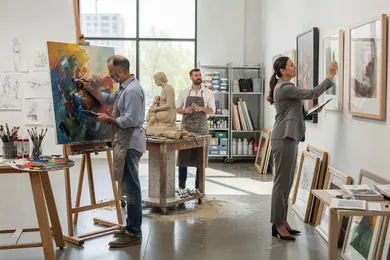
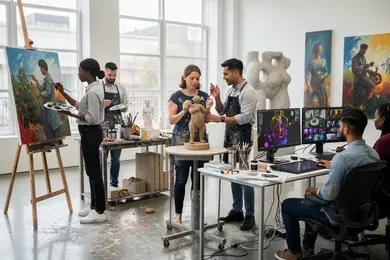
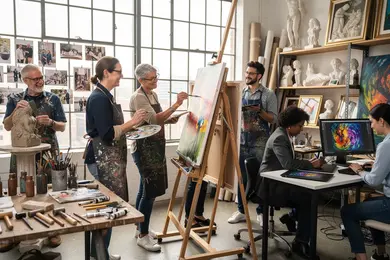
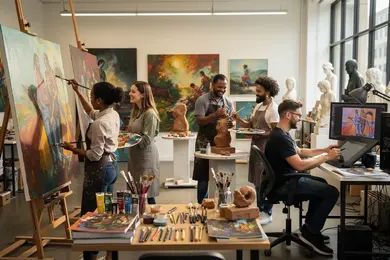
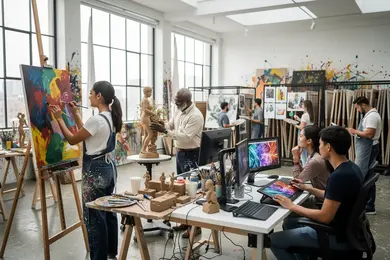
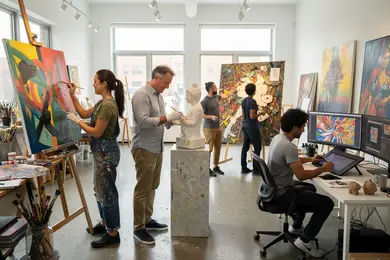
- Advanced Studio Practice: Serving as a central pillar, this course immerses students in hands-on creation across various media, including painting, sculpture, and digital formats. It pushes learners to develop a distinctive artistic voice while sharpening technical skills under expert mentorship, which is crucial for standing out in both gallery and commercial contexts.
- Art Theory and Criticism: This course challenges students to engage deeply with historical and contemporary art movements through critical frameworks. Beyond art appreciation, the emphasis on analysis and contextualization prepares graduates to articulate concepts that resonate with curators, educators, and cultural institutions.
- Research Methodologies: Designed to build rigorous inquiry skills, this coursework trains students in scholarly research and information synthesis, vital for those pursuing academic paths or curating exhibitions. It also strengthens the ability to navigate complex art historical data and market trends-competencies increasingly demanded by arts organizations.
- Professional Development for Artists: Addressing the practical side of sustaining an arts career, this course covers grant writing, portfolio curation, and market navigation. It equips students with real-world tools and strategic insights that are essential for transitioning projects from concept to funded realities within diverse media environments.
According to a 2024 report from the National Center for Education Statistics, approximately 73% of fine arts master's programs nationally emphasize a balanced curriculum integrating studio practice with theoretical coursework. This structure benefits specialized learners and working professionals by offering foundational training that aligns with diverse career trajectories.
Integration of these core elements ensures graduates understand both the artistic and managerial dimensions of their field, a necessity underscored by many employers who expect versatility in creative problem-solving and communication.
For students assessing program value relative to career outcomes, it is worthwhile to consider how the core curriculum lays groundwork for specialization tracks without overburdening learners with disjointed requirements. The careful sequencing of essential core courses fosters continuous skill development and supports manageable workloads, a key factor for career changers and professionals balancing education with work commitments.
Pragmatically, this foundational coursework often precedes or runs alongside advanced concentrations, allowing learners to tailor their expertise while maintaining a consistent baseline of critical competencies.
Those considering the financial implications of graduate credentials may also compare these programs with broader labor market trends, such as those detailed in analyses of highest paying jobs, where interdisciplinary skills and project management capability-nurtured in core courses-can improve employability and income prospects over time.
What Specializations Are Available in Online Fine Arts Master's Programs?
Selecting a specialization within an online fine arts master's program is a strategic decision that shapes both skill acquisition and market positioning. Specialization choice directly affects employability by aligning expertise with industry demands, but it may also influence program rigor, time commitment, and career flexibility.
For instance, more technical concentrations often require significant self-directed learning, while interdisciplinary tracks may impose licensure or practicum mandates that extend program duration.
- Painting and Sculpture: These traditional disciplines prioritize hands-on studio practice and portfolio development. Graduates are typically prepared for roles in galleries, museums, and academia, where demonstrated mastery of craft and originality remain paramount. While offering foundational artistic skills, these specializations may limit career versatility outside established art sectors.
- Graphic Design: Focusing on visual communication and branding, this specialization develops technical proficiency with industry-standard software and concepts like user experience. Employers often expect tangible project outcomes and adaptability to commercial workflows, making this track well-suited for roles in advertising, publishing, and digital marketing.
- Digital Media: Emphasizing multimedia production and interactive design, this area responds to growing demand for digital content creators. It requires strong technical aptitude and continuous updating of skills to handle evolving technologies, preparing graduates for fast-paced commercial arts environments but imposing a steeper learning curve.
- Photography: This specialization balances creative composition with technical control of equipment and editing tools. Career paths often include freelance work, commercial assignments, or educational roles, though competition is high and income can be irregular without diversification of skills.
- Interdisciplinary Tracks (Art Therapy, Arts Administration, Arts Education): These fields integrate art practice with therapeutic, managerial, or pedagogical applications and often include supervised internships or clinical practicums. A 2024 survey by the National Association of Schools of Art and Design found that 68% of online fine arts master's programs incorporate such experiential learning, reflecting employer preference for practical experience. These options tend to extend time to completion but can provide more stable employment prospects within public and private institutions.
Can Students Choose Electives Outside Their Specialization?
Elective selection in online fine arts master's programs is generally structured to maintain a clear focus on a student's primary concentration, limiting courses outside the specialization to a fraction of total credits, often near 20% to 30%. Institutional policies frequently impose prerequisite chains, requiring students to complete foundational courses before accessing electives beyond their main track, and many programs mandate advisor approval for such cross-specialization enrollment.
This layered approval process alongside limited seat availability in certain popular electives can delay progress or compress course sequencing. A 2024 National Center for Education Statistics report found that about 62% of graduate fine arts programs allow at least two electives outside core concentrations, but the scope of this flexibility is uneven and typically constrained by credit requirements and program design.
Choosing electives outside one's specialization may broaden artistic skill sets and interdisciplinary perspectives, but it comes with tradeoffs that affect employability and completion timelines. For example, stretching across multiple specializations might dilute the depth of mentorship and portfolio development that employers in specialized fields prioritize, potentially weakening a graduate's competitive edge.
Additionally, navigating administrative approvals and prerequisite hurdles can extend time-to-degree or complicate financial aid eligibility. In real-world terms, an online student blending digital media electives with traditional art studio courses may enrich their creative versatility but risks falling short in demonstrating mastery critical to certain fine arts careers where specialization signals expertise.
One graduate recalled delaying an elective choice until the rolling admissions window narrowed, feeling uncertain if out-of-area courses would fit her schedule or advisors' approval. She hesitated between a digital arts elective and an advanced studio workshop, aware that finalizing her decision affected how soon she could register and meet graduation deadlines.
This cautious timing reflected her need to balance exploration with pragmatic course planning, highlighting how elective flexibility often involves strategic navigation of institutional constraints rather than unfettered academic freedom.
How Are Online Fine Arts Master's Courses Delivered?
Online fine arts master's programs primarily use a hybrid instructional delivery model combining asynchronous content with synchronous sessions. This structure typically involves recorded lectures, multimedia presentations, and virtual forums for flexible engagement alongside scheduled live critiques or workshops that simulate face-to-face studio environments.
A growing share of programs emphasize flexible online fine arts master's course structure to accommodate diverse student schedules, especially those balancing professional and personal commitments. According to the National Center for Education Statistics (2024), over 70% of arts graduate students favor asynchronous learning, highlighting its role in enabling in-depth theoretical study without fixed time constraints.
The blend of asynchronous and synchronous formats shapes workload management and student-faculty interaction distinctly. For working professionals or career changers, maintaining consistent participation in real-time sessions can pose challenges, potentially affecting collaboration and feedback opportunities critical to artistic development.
Time management is further complicated by the need to engage deeply with both conceptual coursework and practical studio projects, which may require specialized software or one-on-one mentorship. This hybrid delivery demands careful self-discipline to avoid uneven progress, especially because immediate instructor guidance is less frequent than in traditional settings.
Tradeoffs inherent to these delivery methods influence skill acquisition and degree completion outcomes. While asynchronous study allows for adaptability, the lack of physical studio access or ongoing synchronous engagement may limit hands-on experimentation or immediate artistic critique. Consequently, many students benefit from local residencies or partnerships to supplement online instruction.
Prospective students should weigh how these structural elements align with their creative goals and workplace demands to ensure their chosen program supports both the theoretical rigor and tangible skills necessary for employment in evolving creative industries, similar to considerations seen in fields such as construction management degrees online.
Which Core Classes Are Considered the Most Challenging?
Within online Fine Arts master's curricula, the courses presenting the greatest challenges typically involve advanced art theory, studio practice, and research methodology. These classes require not only extensive intellectual rigor but also a high level of technical proficiency and time commitment. Advanced art theory demands that students engage critically with abstract and often complex conceptual frameworks, necessitating strong analytical and written communication skills.
Studio practice intensifies the workload through its emphasis on original, hands-on creation under tight deadlines, which can severely strain students juggling full-time jobs or family responsibilities. Research methodology presents a distinct challenge by enforcing academic discipline and methodological precision, often stretching students who lack prior experience in formal research settings.
The difficulty in these core subjects directly influences academic progression and specialization readiness, as mastery in both conceptual understanding and practical application is vital for competitive positioning within creative industries. For example, a student balancing a professional career may find that the time-intensive demands of studio work require strategic prioritization or even postponing elective courses to maintain academic standing.
According to a 2024 survey by the National Association of Graduate Art Programs, 68% of respondents identified studio and theory courses as the most taxing areas, reflecting their critical role in shaping both creative versatility and professional resilience. Failing to adequately manage these demanding courses can delay graduation and limit options for focused specializations that align with targeted career paths.
One student recalled the uncertainty faced during rolling admissions, describing how a delayed acceptance decision intensified pressure to quickly prepare for core theory and studio classes. They hesitated to begin coursework without official confirmation, recognizing that these demanding classes would require early and sustained effort.
Once admitted, they found that starting studio practice without sufficient preparation led to an overwhelming initial workload, prompting them to adjust their schedule proactively. This experience highlighted how timing and early planning play crucial roles in managing the inherent challenges of advanced core coursework in an online Fine Arts master's program.
Do Online Fine Arts Master's Programs Require Internships or Practicums?
Online fine arts master's programs demonstrate considerable variation in their expectations for internships or practicums, with some requiring these experiential components as graduation prerequisites and others offering them as optional or integrated project-based coursework. In many cases, requirements depend on program design, accreditation standards, and specialization focus, with hands-on internships often replaced by virtual practicums or portfolio-driven projects in fully remote formats.
According to a 2024 report by the National Center for Education Statistics, about 30% of online fine arts programs require hands-on internships, which contrasts with approximately 45% across all graduate fine arts offerings. This conditional framework affects how students gain practical experience, emphasizing the importance of investigating specific program curricula to understand the scope and format of experiential learning components within online fine arts master's programs internships requirements.
From a practical standpoint, mandatory internships or practicums present real challenges for working professionals or career changers balancing time constraints and geographic limitations. Placement availability may vary widely, and the need for in-person commitments can extend time-to-degree completion or complicate scheduling, impacting student progression. Programs lacking mandated internships often expect students to independently secure practical experience to enhance job readiness and professional networks, which many employers view as critical in creative fields.
Those offering adaptable or virtual experiential learning pathways can better accommodate diverse students but may also face scrutiny regarding their equivalency in industry recognition. Prospective students should weigh these factors carefully; for those exploring alternatives to traditional graduate business pathways, resources like the MBA without GMAT or GRE illustrate how flexibility in program requirements can influence professional outcomes across disciplines while reflecting broader trends in graduate education modalities.
Which Courses Are Required for Professional Certification Exams?
Online fine arts master's curricula are frequently designed to align coursework with the competencies tested in professional certification exams, ensuring students meet eligibility requirements established by recognized bodies such as the National Art Education Association or the American Alliance of Museums.
Core subjects like art history, studio practice, and digital arts are systematically mapped to foundational exam domains, while specialized courses in curriculum design, conservation, or gallery management focus on domain-specific skills critical for certification in targeted career tracks. This structured alignment reflects a deliberate integration of accreditation standards and professional benchmarks within program pathways, enabling clear competency development that corresponds to exam frameworks rather than merely fulfilling elective credits.
Deviations from required course selections can have tangible consequences for prospective certificants. Omitting or substituting key specialization courses may delay exam eligibility or necessitate additional coursework, particularly in applied areas such as conservation ethics or assessment strategies, which are often mandatory for licensure or credential recognition.
For example, a candidate who foregoes curriculum planning classes may find themselves underprepared for the pedagogical components of art educator certification, resulting in extended timelines or lower pass rates on certification exams. A 2024 report from the Council for Higher Education Accreditation suggests that programs with closely aligned course structures report markedly higher success rates in certification attainment within the first year, highlighting the practical importance of curriculum decisions in shaping professional readiness and workforce outcomes.
Do Specialization Requirements Extend Graduation Timelines?
Specialization requirements in online fine arts master's programs are often designed as additional layers beyond the foundational core curriculum, typically involving targeted coursework, studio practice, or project components in areas such as digital media or art education. These requirements influence program duration through structured sequencing rules, prerequisite chains, and credit distribution mandates that extend beyond generalist pathways.
Depending on how electives and specialization courses are scheduled-whether offered in accelerated formats or only at certain intervals-students may complete their degrees within the standard timeframe or face extended study periods. Student pacing choices, including the decision to enroll part-time to balance work commitments, further modulate the potential for timely graduation within these specialization tracks.
Practical implications emerge from limited elective substitution flexibility and bottlenecks in course availability tied to specialization tracks, which can delay access to required classes and prolong degree completion. For instance, a working artist pursuing a concentration in museum studies might encounter sequencing constraints if core practicum hours and capstone exhibitions must be taken consecutively rather than concurrently, increasing total time on campus or online
. According to the National Center for Education Statistics in 2024, students concentrating in specialized arts fields often take 6 to 12 months longer to graduate than their peers in more generalist fine arts programs. This extension impacts their career entry timing and workload balance, creating a tradeoff between in-depth expertise and the opportunity cost of additional time and tuition. Prospective students should rigorously assess how specialization structures align with their professional and personal capacities to avoid unintended delays in completing their degree and entering the workforce.
How Do Fine Arts Specializations Affect Career Opportunities?
Specializations within an online fine arts master's program act as clear signals to employers, communicating targeted expertise through focused coursework, applied projects, and developed technical competencies. Recruiters evaluate candidates not only by degree titles but by how well their concentrations align with role-specific demands, often prioritizing demonstrated proficiency in niche areas such as digital media or curatorial studies.
The 2024 report from the National Center for Education Statistics underscores this, showing that 62% of fine arts graduates with specialized training secure employment in their field within a year, highlighting the practical impact of articulating technical depth and industry alignment. For prospective and current students navigating fine arts master's degree specializations and career impact, understanding these hiring dynamics is essential to positioning oneself effectively in competitive labor markets.
However, specialization carries tradeoffs that affect both immediate job opportunities and longer-term career pathways. Focusing narrowly may limit eligibility for generalist entry-level roles or complicate transitions across arts-related sectors, while broader fine arts studies enhance adaptability but may require entrepreneurial initiative to establish a clear niche. For example, a student concentrating in traditional painting might pursue exhibition-based careers, which often develop more slowly and depend heavily on regional art markets, whereas a specialization in animation might unlock access to technology-driven industries with faster placement rates.
Such distinctions emphasize why working professionals, career changers, and specialization-focused learners must weigh how their chosen track influences networking and job pipelines in fields distinct from related areas like jobs for environmental science majors, where interdisciplinary fluency often plays a different role.
Prospective students evaluating these dynamics, especially working professionals and career changers, benefit from reviewing curricula and outcomes from established programs, including those listed among reputable non profit online universities, to ensure alignment with their career goals and market realities.
How Should Students Compare Online Fine Arts Master's Curriculum?
Evaluating online fine arts master's curricula requires a structured approach that goes beyond surface-level preferences, focusing on how design and sequencing affect practical outcomes such as job readiness and time-to-completion. Curriculum differences often reflect tradeoffs between depth of skill development, workload distribution, and alignment with professional standards or certifications, which directly shape students' career trajectories.
- Core Course Composition: Assess whether core courses balance artistic theory, history, and technical skills to provide a comprehensive foundation. Programs overly weighted toward theoretical study may limit development of applicable studio or digital competencies demanded by employers.
- Specialization Depth and Relevance: Examine how specialized tracks offer immersive training in areas like digital media, studio arts, or art therapy. Depth here matters-programs with hands-on projects and capstone work simulate professional settings more effectively, boosting employability.
- Elective Flexibility and Interdisciplinary Options: Consider how electives allow integration of professional development topics such as grant writing or gallery management, widening career pathways within creative industries.
- Delivery Format and Scheduling Structure: Review the balance between synchronous and asynchronous learning. Flexible formats can accommodate working professionals but may reduce real-time interaction essential for mentorship and critique.
- Practicum, Internship, or Portfolio Requirements: Prioritize curricula requiring projects culminating in portfolios or exhibitions. As a 2024 National Association of Schools of Art and Design survey highlights, employers distinctly favor demonstrable, project-based skills over traditional lectures.
- Certification and Professional Alignment: Check if coursework supports alignment with relevant certifications or credentials, which can accelerate career entry and clarify expected competencies.
- Progression Sequencing and Time-to-Completion: Analyze if prerequisite chains or modular flexibility impact pace, considering whether part-time enrollment or accelerated options (similar to what is found in certain shortest online MBA programs) fit your personal and professional demands.
Making these nuanced comparisons lets prospective and current learners weigh curriculum tradeoffs critically, ensuring alignment with individualized goals, especially for those focusing on the best specialization options for online fine arts master's programs.
What Graduates Say About Online Fine Arts Master's Curriculum
- Azrael: "Completing the online Master's in fine arts program pushed me to think critically about what employers truly value. While the degree provided a solid conceptual foundation, I noticed most hiring managers prioritized my portfolio and real-world freelance projects over my academic credentials. Navigating job offers, I realized internships and certifications in digital media had a stronger pull than licensure in the field."
- Alvaro: "The flexibility of the online fine arts specialization was key to managing my full-time job while advancing my skills. Post-graduation, I found remote contract opportunities that allowed me to transition gradually, though salary growth plateaued without additional licensure. It's a practical track-valuable for those balancing commitments but be ready to pivot towards portfolio development for long-term advancement."
- Robert: "After earning my fine arts master's, I initially thought the credential alone would accelerate my career, but the competitive landscape quickly taught me otherwise. Many roles demanded established experience over academic background, especially in prestigious studios. This led me to pursue targeted internships and diversify my skill set to stay relevant and secure positions aligned with my goals."
Other Things You Should Know About Fine Arts Degrees
An Online Fine Arts Master's program in 2027 typically includes core courses focusing on advanced art theory, contemporary art practices, and visual culture studies. These foundational courses aim to enhance critical thinking and provide a solid basis for specialization, tailored to develop both conceptual understanding and technical skills.
A narrowly focused specialization can sharpen specific skill sets and appeal to niche employers or artistic communities, but it also risks limiting versatility if career goals change. Conversely, broader specializations expose students to diverse media and techniques, potentially increasing adaptability but diluting deep expertise. Students whose careers depend on highly specialized portfolios should prioritize depth, while those valuing flexibility and interdisciplinary opportunities may benefit more from broader options.
Employers often weigh technical proficiency and a strong portfolio more heavily than abstract theory or conceptual courses. Online programs that integrate rigorous studio practice and technical skill-building within core and specialization courses better prepare graduates for applied roles. Programs skewed toward theory without commensurate practical work may produce candidates who struggle to demonstrate market-ready abilities, potentially limiting job prospects in competitive creative industries.
Specializations in online fine arts frequently differ widely in workload intensity and project scope, with areas like animation or sculpture demanding complex, time-intensive outputs compared to more conceptual or research-driven tracks. Students should evaluate these differences relative to their available time and resources, as taking on a high-intensity specialization without adequate support can lead to burnout and extended completion times. Prioritizing a specialization aligned with realistic workload expectations improves completion success and end-product quality.
References
- Top Online MFA (Master of Fine Arts) Programs for 2025 https://www.onlinemastersdegrees.org/best-programs/fine-arts-mfa/
- Why a Master’s in Fine Arts Is Worth It in Today’s Creator Economy https://snu.edu.in/blogs/from-canvas-to-cinema-how-a-masters-in-fine-arts-expands-the-boundaries-of-expression/
- Standards & Guidelines » CAA Guidelines https://www.collegeart.org/standards-and-guidelines/guidelines/mfa
- Master in Fine Arts: Subjects, Specializations, Scope & Career 2026 https://www.cguonline.edu.ge/blog/master-in-fine-arts-subjects-specializations-scope-career/
- Most Popular Master of Fine Arts Online 2025 https://www.onlineu.com/degrees/mfa
- Studio Arts: Master's of Fine Art Degree Program (MFA) | Graduate Admissions - Apply Here - Concordia University https://www.concordia.ca/academics/graduate/studio-arts-mfa.html
- Faculty of Graduate and Postdoctoral Studies | University of Manitoba - Fine Art (MFA) https://umanitoba.ca/graduate-studies/admissions/programs-of-study/fine-art-mfa
- MFA (Master of Fine Art) - Blended Delivery | West Dean https://www.westdean.ac.uk/degrees-and-diplomas/mfa-master-of-fine-art-blended
- Master of Fine Arts (MFA) Online Degree — European Center for Accreditation https://www.ecaonline.eu/landingmastersmfa
- Master of Fine Arts (MFA) Course: Fees, Eligibility, Admission 2026 https://www.lpu.in/programmes/master-of-fine-arts-mfa