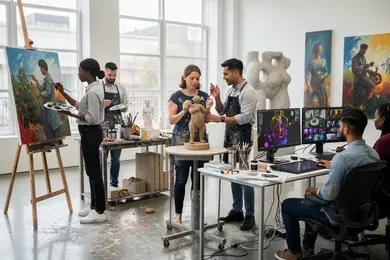
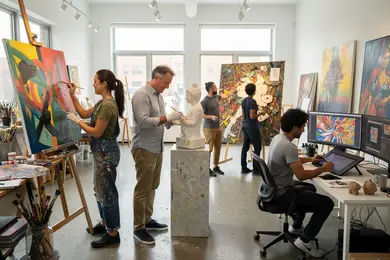
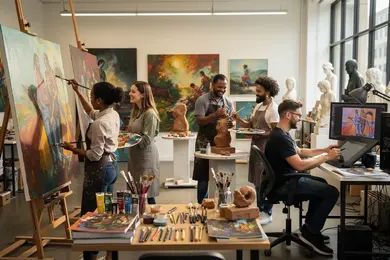
2027 Top Universities Offering Online Fine Arts Master's Degrees

Co-Founder and Chief Data Scientist
Online fine arts master's programs increasingly reflect divergent approaches in curriculum design, pedagogical delivery, and alignment with evolving workforce demands. Employers now prioritize candidates with demonstrated practical skills and relevant specialization over generalized artistic credentials, prompting universities to tailor programs accordingly.
Faculty expertise and practicum integration profoundly influence the professional readiness of graduates, while accreditation status affects eligibility for certain certifications and institutional recognition. Variations in scheduling flexibility and networking opportunities further shape the suitability of programs for working professionals.
This analysis compares top universities offering online fine arts master's degrees based on these substantive academic and career-linked criteria affecting long-term outcomes.
Key Benefits of Top Universities Offering Online Fine Arts Master's Degrees
- Programs emphasize specialized studio and critique methodologies, yet limited synchronous sessions may reduce immediate feedback, impacting skill refinement speed compared to in-person counterparts.
- Recent 2024 surveys indicate 42% of arts employers value diverse digital portfolios over institutional prestige, underscoring practical skill application over brand-centric hiring biases.
- Extended program durations common in online settings reflect pacing accommodations but increase cumulative costs and delay entry into evolving creative sectors, influencing career trajectory timing.
Which Universities Offer the Best Online Fine Arts Master's Degrees?
Higher-quality online fine arts master's programs typically emerge from institutions that combine rigorous curriculum depth with well-structured specialization options tailored to the evolving creative industries.
These institutions tend to employ faculty with substantial industry experience and academic credentials, ensuring mentorship that bridges traditional studio practice and digital innovation.
Programs that embed applied learning, such as portfolio development, virtual exhibitions, and synchronous critiques, offer richer experiential components essential for artistic growth. Such design frameworks prioritize not just theoretical knowledge but also the development of practical skills that reflect current and emerging professional standards in fine arts.
When comparing these degrees, prospective students frequently find that accredited universities with strong fine arts departments deliver better career outcomes, including higher employability and skill readiness.
According to the Council of Graduate Schools, nearly 67% of graduates from well-aligned online fine arts programs report employment or advancement in related fields within a year and a half after graduation.
The balance of synchronous and asynchronous formats supports working professionals by accommodating flexible schedules yet demanding sufficient engagement to build robust portfolios and industry-relevant competencies.
Choosing from the top accredited online fine arts master's programs for working professionals involves weighing how certification and curriculum rigor translate into tangible professional credibility and opportunities.
The tradeoffs inherent in these programs reflect tensions between flexibility and depth: courses offering high specialization and intensive feedback often require greater time commitments that may challenge full-time workers, whereas more accessible scheduling can dilute experiential intensity and peer interaction.
Additionally, students must consider how institutions integrate interdisciplinary components like arts management or technology, which can expand career pathways but sometimes at the expense of concentrated studio focus.
Understanding these structural distinctions is crucial for applicants seeking an online fine arts master's degree aligned with their professional goals and life circumstances, much like those evaluating colleges with accelerated psychology programs carefully weigh curricular and scheduling nuances in their field.
Why Does Accreditation Matter for Online Fine Arts Master's Programs?
Accreditation serves as a critical benchmark for academic legitimacy and structural quality in online fine arts master's programs. It enforces oversight that ensures curriculum rigor, faculty qualifications, and institutional resources meet established standards, which directly affects the depth and coherence of the educational experience.
This scrutiny helps maintain consistency across programs, supporting credit recognition and transferability while discouraging institutions from adopting arbitrarily loose guidelines that compromise educational integrity. As a result, accreditation functions less as a mere label and more as a practical filter that shapes the substantive educational framework accessible to students.
From a professional standpoint, accreditation significantly influences employer recognition, certification eligibility, and long-term career trajectories.
Over 78% of employers surveyed in 2024 by the National Association of Colleges and Employers express a preference for candidates with degrees from accredited programs, reflecting concerns about standardized skill verification even in creative industries.
Choosing a non-accredited program can hinder credit transfer, restrict access to financial aid, and disqualify graduates from certain residencies or competitive grants. For example, an artist pursuing competitive fellowship opportunities may find their eligibility limited without a degree from an accredited institution, thereby narrowing professional avenues despite comparable talent.
Understanding these downstream effects is essential for prospective students evaluating their options beyond branding, focusing on tangible career and educational outcomes influenced by accreditation status.
Which Universities Offer the Most Flexible Online Fine Arts Master's Programs?
Flexibility in online fine arts master's programs hinges largely on how courses are structured rather than the reputation of the institution offering them. Critical components include the availability of fully asynchronous coursework, which a 2024 National Center for Education Statistics report shows is provided by approximately 68% of graduate fine arts programs with online options.
Equally important are part-time enrollment possibilities and self-paced or portfolio-driven models that shift away from rigid cohort schedules, enabling students to align their studies with personal and professional demands.
Freedom in elective selection and reduced or eliminated residency requirements further define flexibility, allowing students to customize both pacing and learning modalities without forfeiting academic rigor.
The real-world effects of such flexibility reflect a balance of benefits and challenges. For working professionals, the ability to extend program duration through part-time study or pause between projects can ease workload management and increase completion likelihood.
However, greater autonomy may lead to inconsistent academic momentum or diminished peer interaction, impacting both skill development and networking opportunities. For instance, a student juggling freelance commissions might opt for asynchronous classes to manage timing but could struggle with limited immediate feedback and fewer chances for collaborative critique.
Access to internships or hands-on practicums can also be constrained by flexible formats, requiring careful planning to integrate practical experience with self-directed study schedules.
One graduate recalled initially hesitating between programs due to concerns about balancing her art commissions and coursework. She valued a program's portfolio-based pacing that let her choose asynchronous modules while still requiring minimal on-site residencies twice a year.
This approach offered her critical mentorship and feedback sessions without derailing her professional projects. The flexibility to adjust deadlines within reason turned out to be essential—not just for completing assignments but for sustaining her creative practice alongside academic responsibilities during a particularly demanding season.
Which Universities Are Best for Working Professionals Earning a Fine Arts Master's Online?
Online fine arts master's programs that best serve working professionals typically provide asynchronous coursework and flexible enrollment options, enabling students to integrate study with full-time employment. These programs often feature curricula aligned with current industry practices, ensuring skill development directly applicable to evolving creative fields.
Accessibility of faculty through virtual offices and mentorship opportunities further supports learners balancing their professional and academic demands. Such flexibility is essential for adults who require a manageable pace without compromising academic rigor or career relevance, positioning these programs as viable for sustained professional growth.
In practice, the asynchronous design allows working students to manage workloads around job responsibilities, reducing conflicts between academic deadlines and professional demands. This model fosters consistent engagement despite irregular schedules, which is crucial as graduate-level fine arts programs expect high-quality, conceptually rich outputs.
However, fewer synchronous interactions can limit cohort cohesion, meaning students must proactively seek networking channels. The emphasis on flexible fine arts master's degrees for career advancement reflects these tradeoffs, acknowledging that while progress might be slower, the integration of work and study promotes practical application and sustained skill acquisition over time.
Balancing slower completion rates with reduced opportunities for in-person internships or collaborative studio experiences remains a notable challenge in these programs.
Many employers in creative industries prioritize portfolio strength and demonstrable expertise over institutional prestige, making program support services and career pathway clarity more valuable than brand recognition alone.
For those comparing educational options, it is worth considering comprehensive program features rather than relying solely on reputation. For parallel context in degree selection focusing on affordability and flexibility, prospective students might explore the cheapest criminal justice degree online as an example of how program design impacts working adult learners across fields.
How Much Do Top Online Fine Arts Master's Programs Cost?
Top-tier online fine arts master's programs in 2024 typically fall within a tuition range of approximately $20,000 to $50,000 for the full degree. This variation largely depends on whether the institution is public or private, residency status, credit requirements, and the extent of specialized resources provided, such as dedicated studio access or proprietary software licenses.
Public universities often offer lower in-state tuition, sometimes under $25,000, while private schools tend to situate costs at the higher end, reflecting investment in faculty, technology, and curricular depth.
Additionally, program length and delivery format—such as part-time versus accelerated schedules—also influence overall price, complicating direct comparisons based only on sticker tuition.
Reliable datasets from 2024 confirm that institutions embedding more hands-on or intensive experiences usually command higher fees, underscoring the link between cost and program design rather than brand prestige alone.
Financially, students must weigh cost alongside potential return on investment and program flexibility. High tuition programs may correlate with robust career services and industry connections, but for working professionals, the value of schedule adaptability or employer tuition reimbursement can outweigh sticker price differences.
Conversely, less expensive online degrees might omit critical experiential components, leading to longer-term professional tradeoffs despite lower upfront costs. Consider a candidate balancing full-time employment who opts for a more expensive but flexible program to avoid income disruption instead of a cheaper, rigid alternative that demands fixed, in-person residencies.
Such decisions highlight how tuition figures intersect with debt management, opportunity costs, and postgraduate outcomes rather than existing in isolation.
One recent graduate recalled hesitating mid-application because the rolling admissions timeline left uncertainty about whether she could secure funding in time for the upcoming semester. After several weeks of waiting, she finally received her acceptance with a detailed fee breakdown, prompting a last-minute scramble to align her employer's tuition assistance paperwork.
This experience underscored the importance of timing and preparation, as delays affected not only cost planning but also enrollment readiness in a competitive online fine arts master's environment.
Which Online Fine Arts Master's Programs Are Hardest to Get Into?
Online fine arts master's programs with the most competitive admissions typically share specific institutional and program-level characteristics that contribute to lower acceptance rates. These include limited cohort sizes driven by resource constraints, stringent academic and professional prerequisites, and portfolio requirements emphasizing technical and conceptual excellence.
Selectivity here often reflects workforce alignment and competency expectations rather than institutional brand alone. Programs embedded within research-intensive universities or those emphasizing emerging digital media and experimental art forms tend to admit fewer applicants due to intense faculty-to-student ratios and specialized curriculum demands, not simply prestige.
For applicants targeting the hardest online fine arts master's degrees to get accepted into, the heightened competition translates into concrete preparation demands. Candidates must strategically plan for prerequisite coursework, accumulate relevant professional experience, and assemble portfolios demonstrating clear career trajectories.
Timing of applications becomes critical, as these programs often have limited admission cycles and seek individuals whose academic and creative records align with rigorous program goals. This dynamic creates a distinct divide between traditional academic applicants and working professionals, where the latter must balance portfolio development with ongoing employment demands.
Tradeoffs between selectivity and accessibility shape both peer quality and educational experience in these programs. More competitive admissions often correlate with cohesive, cohort-based instruction and intensive mentoring, which can foster higher levels of professional readiness but reduce scheduling flexibility.
Conversely, less selective programs may offer greater accessibility but not the same level of concentrated artistic engagement or network depth. Prospective students should weigh these factors carefully, as admissions competitiveness directly influences long-term career implications in creative industries.
For those comparing educational options, understanding how these dynamics parallel choices in other fields-such as opting for a shortest MBA program-can provide useful context for balancing speed, selectivity, and professional outcomes.
Which Universities Are More Transfer-Friendly for Graduate Students?
Graduate programs in fine arts often vary in how they handle transfer credits, with public universities and regionally accredited institutions generally offering the most transfer-friendly policies.
These schools typically have established systems for evaluating prior learning, including formal articulation agreements and flexible credit recognition frameworks tailored to adult learners and working professionals.
Online programs embedded within larger university systems or designed with competency-based or portfolio review models further enhance transfer acceptance by aligning coursework more directly to program requirements.
Nationally accredited or highly specialized institutions tend to limit transfer credits due to rigid curriculum structures and accreditation standards focused on specific learning outcomes, which restricts flexibility in integrating prior coursework.
Transfer-friendly policies can significantly reduce time-to-degree completion and associated tuition costs for graduate students, particularly for those who have completed partial graduate coursework or possess relevant certificates.
However, this convenience often comes with tradeoffs, including stricter demands for curricular alignment and less opportunity for elective customization that nurtures personal artistic development.
For instance, a working professional returning to complete a fine arts master's may swiftly apply transferable credits from a related program, saving time but potentially encountering constraints if they seek to diverge into more specialized areas.
According to a 2024 report from the National Center for Education Statistics, about 60% of public universities permit the transfer of more than 12 graduate credits, highlighting the institutional inclination toward transfer facilitation while underscoring varying degrees of policy restrictiveness across sectors.
Students must weigh these factors carefully, balancing reduced academic load against the possibility of narrowed curricular breadth or missed interdisciplinary exposure that some employers value in creative professions.
Which Online Fine Arts Master's Programs Help Students Secure Internships?
Online master's programs in fine arts that most effectively facilitate internships tend to incorporate institutional features such as strong employer partnerships, dedicated internship coordinators, and embedded experiential learning within their curricula.
Programs with established networks spanning galleries, museums, design firms, and creative agencies provide clear pathways for students to engage in applied projects or practicum courses connected to industry needs.
Cohort-based models and regional industry affiliations further enhance placement opportunities by fostering targeted alumni connections and localized support, which can be crucial for navigating internship markets that often rely on personal referrals and existing professional relationships.
In practical terms, these support structures significantly influence the quality and availability of internships for remote students, who might otherwise struggle without local networks.
When programs include coordinated placement services and flexible internship formats—including virtual or hybrid options—students benefit from more consistent access to meaningful professional experiences that align with employer expectations.
Research from the National Center for Education Statistics indicates that around 65% of online graduate fine arts programs incorporate internships or applied learning collaborations, illustrating the growing prioritization of these elements.
Importantly, internships arranged through program channels often enhance workforce readiness and broaden alumni networks, factors that substantially improve graduates' employment prospects in competitive creative fields.
Nonetheless, there are tradeoffs worth noting. Students enrolling in programs without dedicated internship support frequently need to invest additional time and resources to independently secure placements, a challenge that can impact study-life balance and career momentum.
Geographic constraints may also limit access to certain opportunities, despite virtual options, affecting students in less-connected regions.
Graduates who leverage strong institutional internship frameworks not only report higher job satisfaction but also gain early exposure to project scopes and remuneration realities, critical for setting realistic professional expectations within fine arts careers.
Which Online Fine Arts Master's Programs Have the Best Job Placement Rates?
Programs with the best job placement rates in online fine arts master's offerings typically exhibit a curriculum closely aligned with industry needs, emphasizing experiential learning such as internships, client-based projects, or capstone portfolios.
Strong employer engagement through partnerships or advisory boards also enhances graduate readiness by embedding practical skills and professional networks into the educational experience. These institutional characteristics foster pipeline connections to creative sectors, increasing the likelihood that graduates secure relevant roles shortly after program completion.
According to 2024 workforce analyses, programs embedding interdisciplinary coursework and exposure to evolving technologies tend to achieve better placement outcomes, a critical factor for prospective students evaluating online fine arts master's programs with highest job placement rates.
Differences in placement data reliability and specialization also impact how graduates experience career outcomes.
For instance, tracks focused on digital media or multimedia design often report higher employment due to broader market demand, while traditional studio arts may encounter more niche, competitive job landscapes requiring additional credentials or entrepreneurial skills.
Working professionals returning for an online fine arts master's might leverage existing networks differently than recent undergraduates, affecting reported success rates.
Prospective students should weigh these tradeoffs alongside career support and applied experience integration when assessing online fine arts master's programs with the highest job placement rates, keeping in mind that institutional prestige alone offers less predictive power than curriculum relevance and career services quality.
Placement metrics themselves have limitations: the timing of post-graduation employment measurement varies, and self-reported data can introduce bias. Labor market conditions, which fluctuate regionally, may further distort placement statistics for fine arts graduates.
This complexity highlights the need for careful scrutiny of reported outcomes beyond headline percentages.
For students balancing artistic ambitions with practical employability, resources such as the math degree online listings offer useful comparative frameworks on program efficacy that extend beyond fine arts, illustrating how analytic rigor applies across disciplines.
What Factors Matter Most When Comparing Graduate Schools?
Choosing between graduate programs in fine arts is a high-stakes decision with complex tradeoffs in cost, curriculum design, specialization, flexibility, hands-on learning, and career positioning. Differences in program structure-not just institutional reputation-substantially shape employability, skill acquisition, and long-term professional trajectories in fine arts fields.
- Curriculum Structure and Rigor: Programs that integrate both theoretical frameworks and practical skills, such as digital techniques and portfolio development, better prepare graduates for diverse career demands. Overly theoretical or outdated curricula can leave students skill-ready gaps, undermining immediate job prospects.
- Accreditation and Academic Credibility: Accreditation signals adherence to quality standards and affects financial aid access and employer recognition. According to a 2024 National Center for Education Statistics report, about 85% of employers favor candidates with credentials from accredited institutions, emphasizing this factor's hiring impact.
- Specialization Depth: Fine arts covers broad domains; choosing programs with concentrated tracks aligned to professional goals ensures focused skill-building rather than generalized knowledge, which risks diluting expertise for competitive roles.
- Experiential Learning Integration: Inclusion of internships, exhibition opportunities, or real-world projects directly enhances employability by providing concrete outcomes and industry connections. Absence of such elements can limit career-ready proof of competence.
- Delivery Format and Flexibility: Asynchronous coursework and pacing flexibility often make a difference for working professionals or career changers managing time constraints. The 2024 Learning House report finds flexible students are 30% more likely to complete on schedule, underscoring practical outcomes of this factor.
- Cost and Financial Tradeoffs: Beyond sticker price, students must weigh total expenses including materials, technology, and potential income loss, balancing affordability with program quality and career payoff.
- Internship or Practicum Availability: Direct engagement in professional settings often distinguishes fine arts graduates in hiring pools, embedding relevant networks and tangible experiences that classroom study alone lacks.
- Faculty Industry Experience: Instructors with active professional portfolios bring current market insights and networking opportunities, mitigating the disconnect between academia and evolving artistic industries.
- Employer Alignment and Job Placement Outcomes: Transparent data on graduate employment rates and relevant career trajectories help gauge real-world program effectiveness. Poor alignment may necessitate supplementary skill acquisition post-graduation.
- Transfer Credit and Prior Learning Policies: Recognition of previous coursework or professional experience can significantly shorten time-to-degree and reduce costs, a vital consideration especially for adult learners and those switching careers.
Evaluating programs with these criteria in mind enables prospective students to discern meaningful differences beyond superficial branding or rankings like those seen in many online fine arts master's program rankings.
For those seeking the best accredited fine arts graduate schools, these operational factors often determine whether the degree translates into lasting career advantage or merely credential inflation.
Prospective students aware of these dimensions may also consult resources addressing comparable accreditation issues in related fields, such as the accredited online masters degree in human resource management, to understand cross-disciplinary standards and employer expectations.
What Graduates Say About Top Universities Offering Online Fine Arts Master's Degrees
- Azrael: "Completing my online master's in fine arts offered flexibility that was essential while working part-time, but I quickly realized employers often emphasized portfolio quality and internships over the degree itself. Navigating the hiring process meant investing additional effort into freelance projects and certifications to stand out in a crowded market. While the degree opened doors, ongoing practical experience proved equally critical for securing roles with meaningful responsibilities."
- Alvaro: "The program helped me pivot from a purely academic path to blending creative practice with digital media, which employers favored given the increasing demand for remote collaboration. Salary growth was modest initially, especially without traditional licensure, but the access to diverse internships improved my network and eventually led to stable, location-independent roles. The process underscored how adaptability and skill versatility sometimes outweigh formal credentials."
- Robert: "After graduation, I recognized that fine arts positions requiring licensure or strict certification remained limited, so I focused on building a hybrid career involving art education and gallery curation. The challenges in landing roles that matched my degree's full scope prompted me to seek additional certifications and embrace pragmatic compromises. My takeaway: an online master's enhances knowledge but advancing demands continuous upskilling aligned with industry expectations."
Other Things You Should Know About Fine Arts Degrees
Programs vary in their emphasis on studio work versus critical theory, and this balance has significant implications for professional readiness. Students seeking careers focused on creating art professionally should prioritize programs with substantial studio components and portfolio development opportunities. Conversely, those aiming for academic or curatorial roles might benefit from programs with stronger theoretical and research elements. Understanding a program's curriculum focus helps avoid gaps in skills that employers or graduate study committees expect, shaping how marketable graduates are in their chosen paths.
Online delivery can limit spontaneous peer interaction and direct faculty mentorship, which are critical in fine arts for feedback and career connections. Prospective students should assess how a program facilitates meaningful engagement through virtual critiques, one-on-one mentorship, and industry partnerships. Programs that offer structured synchronous sessions or promote alumni networks tend to provide more practical networking opportunities, which directly affect access to exhibitions, commissions, and collaborative projects post-graduation.
The intensity of studio assignments combined with academic requirements can create significant time burdens, especially for those balancing jobs or personal commitments. Students should prioritize programs that clearly outline expected weekly hours and provide flexible deadlines without sacrificing rigor. Managing workload effectively is crucial to maintaining artistic growth without burnout, and programs that misrepresent or underestimate this balance risk delays in completion or compromised work quality.
Top universities in 2027 enhance online fine arts master’s programs with virtual studios, live interactive workshops, and access to extensive digital art libraries. Students benefit from advanced software tools, personalized critique sessions, and global networking opportunities, mirroring the advantages of an on-campus education.
References
- Top Online MFA (Master of Fine Arts) Programs for 2025 https://www.onlinemastersdegrees.org/best-programs/fine-arts-mfa/
- The MFA program: 5 things to consider when choosing a fine arts degree https://www.cca.edu/newsroom/five-reasons-why-choosing-mfa-program/
- Master of Fine Arts (MFA) Online Degree — European Center for Accreditation https://www.ecaonline.eu/landingmastersmfa
- Standards & Guidelines » CAA Guidelines https://www.collegeart.org/standards-and-guidelines/guidelines/mfa
- Fine Art MA (Online) https://www.falmouth.ac.uk/study/online/postgraduate/fine-art
- Main navigation https://www.mcad.edu/academics/graduate/master-fine-arts