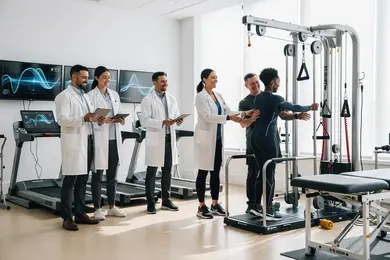
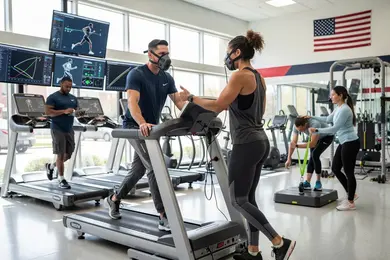
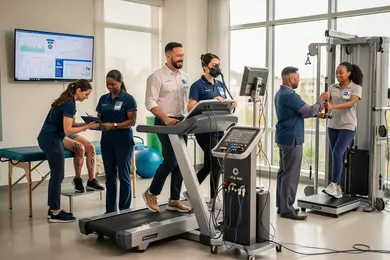
2027 Online Exercise Science Master's Curriculum Breakdown: Core Courses & Specializations

Co-Founder and Chief Data Scientist
Choosing an online exercise science master's program is not just a question of convenience. The bigger decision is whether the curriculum will prepare you for the roles, certifications, and applied work you actually want after graduation. Two programs with similar names can differ sharply in physiology depth, practicum expectations, specialization options, research requirements, and certification alignment.
This guide explains how core courses and specializations shape career readiness in online exercise science master's programs. It is designed for working professionals, career changers, coaches, wellness practitioners, and students comparing graduate options who need to understand what they will study, how demanding the coursework may be, and how each curriculum choice can affect credentialing, job mobility, and time to completion.
Key Things to Know About Online Exercise Science Master's Curriculum
- Core courses often prioritize biomechanics and physiology, but this focus can limit exposure to emerging tech like AI-driven fitness analytics, requiring students to pursue additional certifications to meet evolving employer demands.
- A 2024 industry report found 68% of employers prefer candidates with specialization in clinical exercise physiology, highlighting how focused concentrations significantly influence job market competitiveness.
- Online formats improve access but may extend program duration due to part-time pacing, impacting cost and delaying workforce re-entry, a critical factor for working professionals balancing education with employment.
What core courses are included in an online exercise science master's program?
Core courses in an online exercise science master's program usually build the scientific and applied foundation needed for assessment, program design, performance improvement, health promotion, and evidence-based practice. A strong curriculum should not simply repeat undergraduate kinesiology content. It should deepen the student's ability to interpret human movement, evaluate physiological responses, use research, and design safe interventions for different populations.
Students comparing graduate options should look closely at course sequencing. Some classes depend heavily on prior anatomy, physiology, statistics, or biomechanics knowledge. Others support certification exam preparation or practicum readiness. For students still building an academic pathway into the field, comparing related undergraduate routes such as a sports science bachelor degree online can also clarify which graduate prerequisites and competencies may matter later. Students considering adjacent fields may also review sports degrees online to understand how exercise science differs from sport administration, coaching, and management-focused study.
- Advanced Human Physiology and Anatomy: This course examines the musculoskeletal, cardiovascular, respiratory, nervous, and endocrine systems in greater depth than introductory coursework. It is especially important for students pursuing clinical exercise physiology, rehabilitation, strength and conditioning, or research roles because it explains how body systems respond to stress, disease, training, and recovery.
- Exercise Physiology: Exercise physiology focuses on acute and chronic responses to physical activity, including energy systems, cardiovascular adaptation, thermoregulation, fatigue, and performance capacity. In applied settings, this knowledge helps practitioners select appropriate testing protocols, interpret client or patient data, and adjust exercise prescriptions based on measurable outcomes.
- Biomechanics: Biomechanics applies physics and mechanical principles to human movement. Students learn to evaluate force, joint motion, posture, gait, lifting mechanics, and sport-specific movement patterns. This course is valuable for injury prevention, performance analysis, ergonomics, rehabilitation support, and movement screening.
- Nutrition for Physical Activity: Nutrition coursework connects metabolism, macronutrient use, hydration, supplementation, body composition, and recovery. It is most useful when taught with attention to scope of practice, since exercise science graduates may use nutrition knowledge to support programming but may need additional credentials for medical nutrition therapy or advanced dietetics practice.
- Research Methods and Statistics: Research training helps students evaluate scientific literature, understand study design, interpret data, and apply evidence rather than relying on trends or anecdotal methods. Given that more than 60% of employers in allied health and fitness prioritize data literacy and evidence-based practice (National Consortium for Physical Education and Exercise Science, 2024), this course is central to professional credibility.
- Exercise Prescription and Program Design: This applied course connects physiology, assessment, biomechanics, and behavior change. Students learn to create individualized programs for healthy adults, athletes, older adults, and clinical populations, depending on the program's scope. It often supports preparation for certification exams and field-based work.
The strongest programs connect these courses through projects, case studies, labs, simulations, or practicum preparation. A weaker curriculum may list the same course titles but offer limited applied assessment, little feedback, or poor alignment with professional standards.
What specializations are available in online exercise science master's programs?
Specializations allow students to shape a general exercise science degree around a specific career direction. The right concentration can strengthen a resume, support certification goals, and help students build a coherent portfolio of projects or field experience. The wrong choice can create scheduling problems, limit flexibility, or leave gaps for the roles a student later wants.
- Clinical Exercise Physiology: This specialization prepares students to work with people managing chronic conditions such as cardiovascular disease, diabetes, pulmonary disease, or metabolic disorders. It is typically more assessment-heavy and may involve practicum expectations, clinical case work, or preparation for medically oriented certification pathways.
- Sports Performance and Conditioning: This track focuses on athlete development, strength and conditioning, speed and agility, recovery, testing, periodization, and performance monitoring. It is best suited for students targeting coaching, collegiate athletics, tactical strength and conditioning, private performance facilities, or sport science support roles.
- Rehabilitation Sciences: Rehabilitation-focused coursework emphasizes corrective exercise, injury risk reduction, therapeutic exercise principles, movement restoration, and collaboration with rehabilitation professionals. It can be useful for students planning to work in return-to-play, wellness, or pre-professional health pathways, though it does not replace licensure in physical therapy, occupational therapy, or other regulated professions.
- Health Promotion and Wellness: This concentration is often broader and less clinically intensive. It may cover behavior change, public health, workplace wellness, chronic disease prevention, program evaluation, and community interventions. It can suit students who want roles in corporate wellness, community health, population health, or program management.
- Technology and Data Analytics in Exercise Science: This newer specialization reflects a 2024 trend in wearable technology, health informatics, performance dashboards, remote monitoring, and data-guided exercise programming. It may appeal to students who want to work with fitness technology companies, sport science teams, research groups, or organizations using biometric data.
Students should compare specializations by asking four practical questions: Does the track support the certification I want? Does it require local field placement? Are the required courses offered every term? Will the specialization keep me employable if I later change settings? A highly focused track may improve fit for one role but make a later pivot harder without added coursework or credentials.

Can students choose electives outside their specialization?
Many online exercise science master's programs allow some elective flexibility, but that flexibility is rarely unlimited. Programs often design concentration plans around accreditation expectations, certification preparation, faculty availability, and course sequencing. As a result, students may be able to take around 20% of their coursework outside their specialization, but approval commonly depends on prerequisites, degree audit rules, and advisor review.
Electives outside a specialization can be useful when they add a skill the core curriculum does not fully cover. For example, a student in sports performance might choose a psychology course to better understand motivation and behavior change. A student in health promotion might choose data analytics to strengthen program evaluation skills. A clinical exercise physiology student might consider coursework in chronic disease management, research design, or health communication.
The tradeoff is depth. Employers hiring for specialized roles may look for a consistent pattern of coursework, applied projects, practicum experience, and certification preparation. Too many unrelated electives can make a transcript look unfocused, especially in clinical, rehabilitation, or performance settings where technical competence matters.
Before selecting outside electives, students should confirm three details with an advisor: whether the course counts toward degree completion, whether it affects eligibility for certification exams, and whether taking it will delay a required course that is offered only once per year. Limited course availability and prerequisite chains can turn a seemingly harmless elective choice into an extra term of enrollment.
One graduate described delaying enrollment decisions during rolling admissions because approval for certain electives had not yet been confirmed. The waiting period created stress around degree deadlines, but it also prevented the student from missing licensure-related classes. The lesson is straightforward: elective freedom is valuable only when it supports, rather than disrupts, the student's credentialing and graduation plan.
How are online exercise science master's courses delivered?
Online exercise science master's courses are commonly delivered through a mix of asynchronous and synchronous learning. Asynchronous work may include recorded lectures, readings, discussion boards, quizzes, case analyses, lab reports, and independent projects. Synchronous components may include live class meetings, faculty Q&A sessions, group presentations, virtual labs, or case discussions.
This blended structure gives working students flexibility while preserving some real-time interaction. The benefit is control over weekly study time. The challenge is that graduate exercise science coursework can be cumulative and technical, so falling behind in physiology, biomechanics, or statistics can quickly affect later assignments.
Students should examine more than whether a program is “online.” They should ask how often live attendance is required, whether sessions are recorded, how exams are proctored, whether group work crosses time zones, and how labs or assessments are completed. A program with weekly evening meetings may work well for a traditional work schedule but may be difficult for students with rotating shifts, caregiving responsibilities, or travel-heavy jobs.
This balance between flexibility and structure helps explain why 78% of online health sciences graduate students in a 2024 National Institute of Education Statistics survey reported satisfaction with blended formats. Satisfaction, however, does not mean every format fits every learner. Students who need high independence may prefer mostly asynchronous coursework, while students who learn best through discussion may benefit from regular live sessions.
Applied courses may use simulations, video movement analysis, local testing assignments, virtual labs, or approved practicums. Students interested in research-driven healthcare pathways might also compare advanced flexible degrees such as PhD nursing programs online, which also require careful evaluation of online delivery, research expectations, and hands-on components.
Which core classes are considered the most challenging?
The most challenging core classes in online exercise science master's programs are usually advanced physiology, biomechanics, and research methods or statistics. These courses require students to connect theory with interpretation, calculation, assessment, and decision-making. They are difficult not because the topics are obscure, but because students must apply concepts accurately to human performance, health risk, movement, and program design.
Advanced physiology can be demanding because it requires understanding multiple body systems at once. Cardiopulmonary physiology is often especially difficult due to the density of cardiovascular and respiratory content and its importance in both clinical and athletic contexts.
Biomechanics challenges students who are less comfortable with physics, math, or three-dimensional movement analysis. Students may need to interpret force, torque, joint angles, gait mechanics, and movement efficiency rather than simply memorize terminology.
Research methods and statistics can be difficult for students who have been away from quantitative coursework. A 2024 survey by the National Association of Kinesiology in Higher Education found that 68% of graduate exercise science students rated statistics among the most difficult courses, highlighting abstract reasoning as a persistent barrier.
These courses matter beyond grades. Physiology supports safe exercise prescription. Biomechanics supports movement assessment and injury risk reduction. Statistics supports evidence-based practice and the ability to evaluate claims made by products, programs, and research studies. Weakness in any of these areas can affect certification preparation, practicum performance, and job readiness.
Students can reduce risk by reviewing anatomy, basic exercise physiology, algebra, research terminology, and introductory biomechanics before the first term. One student recalled entering through rolling admissions with uncertainty about whether prior science courses were enough for a physics-intensive biomechanics class. Extra preparation before the semester helped the student manage early coursework and improved confidence in later applied assignments.
Do online exercise science master's programs require internships or practicums?
Some online exercise science master's programs require internships or practicums, while others make them optional or replace them with capstones, research projects, simulations, or portfolio work. The requirement usually depends on the program's mission, specialization, accreditation considerations, and intended career outcomes.
Clinical, rehabilitation, and performance-oriented tracks are more likely to include supervised fieldwork. These experiences may range from several hundred hours to integrated practicum courses. Research, health promotion, policy, or education-focused programs may place more emphasis on project work, data analysis, program evaluation, or a thesis.
Practicums can be valuable because they help students apply assessment skills, build professional references, document experience, and test whether a career setting is a good fit. Employer data shows candidates with completed internships achieve 15-20% higher initial job placement rates, which illustrates why field experience can matter in competitive hiring.
The tradeoff is logistics. Online students may need to find an approved local site, complete background checks, meet health or liability requirements, coordinate supervision, and fit field hours around employment. Limited local placement options can extend time-to-completion or force students to adjust work schedules.
Before enrolling, students should ask who secures practicum sites, whether the program has placement partners, what qualifications supervisors must hold, whether hours can be completed near the student's home, and whether paid work can count if it meets program requirements. Students comparing healthcare career options may also find it useful to review regional compensation resources such as PMHNP salary data to understand how location, credentials, and role type can influence long-term planning.
Which courses are required for professional certification exams?
Courses required for professional certification exams vary by credential, but online exercise science master's programs commonly align key coursework with certification domains for credentials such as CSCS, EP-C, or ACSM-CEP. Students should never assume that holding the degree automatically satisfies every exam or employment requirement. Certification bodies may consider degree level, coursework, field experience, CPR or emergency care credentials, and other eligibility rules.
The courses most often relevant to certification preparation include advanced human anatomy, exercise physiology, biomechanics, exercise testing and prescription, strength and conditioning, nutrition, clinical exercise physiology, research methods, and program design. Clinical certifications may place more emphasis on risk stratification, chronic disease, electrocardiography, medications, patient assessment, and supervised clinical experience. Performance-focused credentials may emphasize training theory, testing, periodization, and athlete monitoring.
Curriculum alignment matters because missing or substituting a key course can delay exam readiness. For example, a student without formal clinical exercise physiology coursework may need extra preparation or additional coursework before pursuing a certification focused on chronic disease management or therapeutic exercise. Specialized courses in rehabilitation, wellness coaching, or clinical practice may also support credential-specific requirements.
A 2024 National Commission for Certifying Agencies report indicates that programs tightly mirroring certification content demonstrate notably higher first-attempt pass rates. Students should ask each program for a certification mapping document or advising sheet showing how required courses correspond to the exam they plan to take. The best time to verify this is before enrollment, not during the final semester.
Do specialization requirements extend graduation timelines?
Specialization requirements can extend graduation timelines, especially when the concentration includes strict prerequisites, limited course rotations, practicums, lab components, or additional applied projects. Some tracks fit within a standard two-year full-time completion plan. Others can take longer if required courses are not available every term or if field placement approval takes time.
Clinical exercise physiology, rehabilitation, and some performance tracks are more likely to create scheduling constraints because they may require supervised experience, specialized assessment courses, or sequential enrollment. By contrast, health promotion or wellness tracks may offer more flexible electives and fewer site-based requirements, although this varies by institution.
The most common causes of delay include missed prerequisite windows, part-time enrollment, practicum site shortages, courses offered only once per year, and conflicts between live class meetings and work schedules. Programs with asynchronous coursework, multiple start dates, summer offerings, and advisor-supported degree planning can reduce these risks.
Research from the National Center for Education Statistics shows that specialized master's tracks extend time-to-degree by an average of 6 to 12 months compared to generalist paths. That extension can be worthwhile if the specialization improves certification readiness or career fit, but students should calculate the cost of additional tuition, delayed earnings, and workload pressure before committing.
A practical approach is to request a term-by-term plan for the exact specialization, including practicum timing if applicable. Students should also ask what happens if they pause enrollment, fail to secure a placement, or need to switch from full-time to part-time study.
How do exercise science specializations affect career opportunities?
Exercise science specializations affect career opportunities by signaling a graduate's technical focus to employers. A master's degree shows advanced study, but the specialization, applied projects, certifications, fieldwork, and portfolio often determine whether a candidate looks ready for a specific role.
A clinical exercise physiology specialization may support opportunities in cardiac rehabilitation, chronic disease management, medically integrated fitness, wellness clinics, or hospital-affiliated programs, depending on credentialing and employer requirements. A sports performance track may align with strength and conditioning, athlete monitoring, coaching support, private performance facilities, or collegiate environments. A health promotion track may fit corporate wellness, community health, public health programming, and prevention-focused roles. A technology and analytics track may help students target roles involving wearable data, performance dashboards, remote monitoring, or exercise technology.
Specialization can be an advantage in fast-growing areas. Certain fields, such as physical therapy and health promotion, are experiencing job growth exceeding 15% annually according to the 2024 U.S. Bureau of Labor Statistics. However, students should interpret this carefully: related field growth does not guarantee eligibility for every role, especially when licensure, supervised hours, or a separate professional degree is required.
The main tradeoff is mobility. A biomechanics-heavy program may strengthen research or movement analysis options but offer less preparation for wellness leadership. A strength and conditioning focus may support sports settings but may not be enough for clinical rehabilitation roles without additional certification or training. A broad curriculum may preserve flexibility but can make it harder to prove depth for specialized jobs.
Students planning interdisciplinary healthcare moves should evaluate how exercise science credentials interact with licensure-based pathways. For example, professionals studying advanced nursing transitions may need to understand requirements such as acute care NP certification, which operate under different credentialing rules than exercise science roles.
How should students compare online exercise science master's curriculum?
Students should compare online exercise science master's curricula by looking at outcomes, not just course lists. A strong program should connect scientific depth, applied learning, certification alignment, specialization relevance, and realistic scheduling. The best curriculum is the one that matches the student's target role while remaining feasible to complete.
- Core Course Composition: Review whether the program includes advanced physiology, biomechanics, exercise testing, research methods, statistics, nutrition, and exercise prescription. Course titles matter less than depth, assignments, labs, and applied assessment.
- Specialization Depth and Relevance: Compare concentrations against your intended career setting. A clinical track, performance track, wellness track, and data-focused track can lead to very different portfolios and employer signals.
- Elective Flexibility and Sequencing: Ask how many electives are available, how often they run, whether outside electives require approval, and whether substitutions affect certification preparation or graduation timing.
- Delivery Format and Scheduling: Check the balance of asynchronous and synchronous work. Working professionals should confirm live meeting times, exam requirements, group project expectations, and whether courses are offered during summer terms.
- Internships and Experiential Learning: Determine whether the program requires practicums, local placements, virtual labs, capstones, or research projects. Applied experience can improve readiness, but it can also create scheduling and placement challenges.
- Alignment with Professional Certifications: Ask for documentation showing how courses map to recognized certification pathways. This can reduce additional exam preparation time and help prevent eligibility surprises.
- Faculty and Applied Support: Look for faculty expertise that matches your goals, especially if you want research mentoring, clinical preparation, performance coaching experience, or technology-focused projects.
- Student Support and Advising: Strong advising is especially important in online programs because course sequencing, practicum approval, and certification planning can affect both cost and completion time.
Graduate students focused on employment outcomes should note the National Center for Education Statistics 2024 report indicating that programs with specialized concentrations see up to 25% higher employment rates in related industries. Students comparing broader healthcare or behavioral health graduate options may also review PsyD online programs APA accredited to understand how accreditation, licensure, and curriculum structure differ across fields.
Ultimately, the strongest curriculum is not always the most specialized or the fastest. It is the program that gives students the right scientific foundation, credible applied experience, realistic scheduling, and a clear path toward the roles or certifications they plan to pursue.
What Graduates Say About Online Exercise Science Master's Curriculum
- Shmuel: "After completing the core courses and specialization, I found that many employers valued a robust portfolio and hands-on internships more than just licensure. Navigating the hiring process, I realized that supplementing my degree with certifications and real-world experience was essential to advance. The program gave me foundational knowledge, but the real-world challenges meant I had to be proactive about gaining practical skills to stay competitive."
- Shlomo: "One unexpected benefit of finishing my online Exercise Science master's was the flexibility it offered in balancing remote work and further certifications. While the salary growth pace is slower without licensure, the ability to work with diverse populations and pivot into related fields helped me stay engaged. I ultimately saw it as a stepping stone that allowed me quicker access to the workforce, though I remain mindful about planning longer-term career moves involving additional credentials."
- Santiago: "My career path shifted significantly after graduation when I encountered a competitive job market where many candidates had licensure. The specialization courses deepened my expertise, but I learned that without official credentials, advancing into senior roles was challenging. This experience pushed me to pursue extra certifications and networking within the field, making the transition from theory to practice a crucial part of my growth and decision-making process."
Other Things You Should Know About Exercise Science Degrees
In a 2027 online exercise science master's program, the pacing and workload are designed to accommodate working professionals with flexible schedules and asynchronous learning. This allows for balancing work commitments while focusing on completing rigorous core courses at a manageable pace.
Specialized courses in online exercise science master's programs vary widely between programs: some prioritize applied skills like biomechanics testing or exercise prescription techniques, while others lean toward research methods or theoretical frameworks. Prioritizing programs with specialization tracks that emphasize hands-on skills or data analysis tools can offer more direct value for job readiness, particularly for roles requiring clinical or fitness assessment competencies. Conversely, if your goal is to enter research or academic settings, theoretical rigor in specializations could be more pertinent despite a longer-term payoff.
Broad specializations in exercise science often cultivate versatile skills applicable across various sectors but might result in lower initial job specificity, which some employers could perceive as less immediately useful. Highly focused specializations, such as sports performance or rehabilitation, tend to align closely with niche job roles, improving employability in specialized environments but potentially limiting flexibility if you wish to pivot careers later. Carefully consider your career timeline and the labor market in your area-specialized tracks may be advantageous early in your trajectory but restricting if you seek lateral moves or broader leadership roles.
Faculty expertise and access to mentorship profoundly influence the quality of learning and professional networking opportunities in online exercise science programs. Programs with instructors actively engaged in current industry practices or research can deliver richer, up-to-date knowledge and pragmatic insights. When evaluating programs, prioritize those offering scheduled mentorship, capstone advising, or live consultations, as these foster deeper understanding and smoother application of complex concepts, ultimately enhancing your readiness for real-world challenges.
References
- Kinesiology Online Master's: See & Compare Top Programs https://www.edumed.org/online-schools/kinesiology-degrees/masters/
- Exercise Physiologist https://acsm.org/certification/get-certified/exercise-physiologist/
- 20 Best Online Masters in Exercise Science and Kinesiology 2022 - Sports Management Degree Guide https://www.sports-management-degrees.com/best-online-masters-kinesiology-exercise-science/
- Online Master of Science in Applied Physiology of Exercise https://catalog.ashland.edu/graduate-programs/ms-aes
- Online Master's in Exercise Science and Health Promotion https://online.pennwest.edu/programs/exercise-science-health-promotion/index.php
- Top 20 Careers With a Master’s in Exercise Science | PLNU https://www.pointloma.edu/resources/health-sciences/top-20-careers-masters-exercise-science
- M.S. in Exercise Science Online Degree - Aurora University https://online.aurora.edu/online-degrees/ms-masters-in-exercise-science/
- Master of Science (MS) in Exercise Science | Calvin University https://calvin.edu/majors-programs/ms-exercise-science
- Master of Science (M.S.) Major in Exercise Science (Non-thesis Option) https://mycatalog.txstate.edu/graduate/education/health-human-performance/exercise-science-ms/