2027 Cybersecurity Master's Degree vs Graduate Certificate: Which Is Better?

Co-Founder and Chief Data Scientist
Choosing between a cybersecurity master's degree and a graduate certificate can pose a significant dilemma-especially when balancing cost, time-to-completion, and career aspirations. A master's degree often demands a larger financial investment and longer commitment but may offer broader recognition and higher salary potential.
In contrast, graduate certificates provide faster completion with lower upfront costs but sometimes less impact on long-term career growth. According to 2024 data, cybersecurity master's graduates report a 20% salary increase over certificate holders, highlighting tangible ROI differences.
This article explores these distinctions-comparing admission criteria, employer value, and career utility-guiding readers toward the credential that best fits their professional goals.
Key Things to Know About Which Is Better: A Cybersecurity Master's Degree or a Cybersecurity Graduate Certificate
- Master's degrees usually demand greater financial investment-often costing two to three times more than graduate certificates-impacting affordability for many candidates.
- Graduate certificates typically require less than a year to complete, offering a faster route to credentialing compared to the 18-24 months for master's programs.
- Employers often recognize master's degrees more strongly, correlating with a reported 15% higher average salary-but certificates remain valuable for targeted skill enhancement and entry-level roles.
What Is the Difference Between a Cybersecurity Master's Degree and a Cybersecurity Graduate Certificate?
A cybersecurity master's degree is a comprehensive graduate program requiring 30 to 45 credit hours, offering a broad and deep understanding of cybersecurity principles, technologies, and management. Its curriculum covers core topics such as network security, cryptography, risk management, and policy development, blending theoretical foundations with practical skills. This degree targets academic mastery and research competence, preparing graduates for advanced roles or doctoral studies.
In contrast, a cybersecurity graduate certificate typically involves 12 to 18 credit hours with a shorter, more specialized focus-often on specific skills like incident response or ethical hacking. It aims to enhance practical expertise rather than provide the extensive academic scope of a master's program. These certificates appeal to professionals seeking targeted upskilling, career changers desiring quicker entry into the field, or those aiming to supplement their qualifications.
- Academic Standing: The master's degree is a full graduate degree recognized as a major educational milestone; graduate certificates are supplementary credentials that do not confer a degree.
- Curriculum Scope: Master's programs offer multidisciplinary coverage including research methods; certificates focus on concentrated skill sets and practical knowledge.
- Duration and Credit Hours: Master's degrees generally require about two years of full-time study, while certificates can often be completed in less than one year.
- Intended Audience: Master's candidates often include recent undergraduates and mid-career professionals targeting leadership roles; certificates attract working adults needing specific skills or foundational knowledge.
- Stackability: Many institutions allow graduate certificates to stack into master's degrees-credits earned can sometimes be applied toward the larger credential, complicating simple comparisons.
Common misconceptions suggest cybersecurity graduate certificates are merely abbreviated master's degrees, but their academic depth, objectives, and professional value differ notably. Prospective students should weigh these factors carefully-considering time and cost comparison of cybersecurity master's degree and graduate certificate programs, admission standards, employer recognition, salary impact, and career utility.
The credentials' distinctions are essential to align educational investment with career goals and individual circumstances. For those interested in the top paying degrees, understanding these differences supports smarter decision-making regarding the next step in cybersecurity education.
What Are the Typical Admission Requirements for a Cybersecurity Master's Program Compared to a Cybersecurity Graduate Certificate?
Admission requirements for Cybersecurity master's programs are generally more rigorous than those for graduate certificates, reflecting the greater depth and commitment involved. Typical admission standards for Cybersecurity master's programs emphasize several key factors that applicants must meet to be competitive.
- Undergraduate GPA: Master's programs often require a minimum GPA of around 3.0 on a 4.0 scale to indicate academic readiness. Graduate certificate admission criteria for Cybersecurity studies usually offer more flexibility and may not enforce strict GPA cutoffs.
- Prerequisite Coursework: Applicants to master's programs typically need foundational knowledge in computer science, information technology, or related areas-demonstrated by transcripts showing coursework in programming, networking, or mathematics. Graduate certificates tend to accept students with less extensive prior technical background, easing entry for career changers.
- Standardized Tests: Many master's programs request GRE or other standardized test scores, although some waive this requirement based on experience or prior studies. Graduate certificates rarely require GRE results, streamlining the application process.
- Letters of Recommendation: Master's applicants usually submit two or three strong letters highlighting academic potential. In contrast, graduate certificate programs may require fewer or no recommendations, placing more emphasis on professional experience and personal statements.
- Personal Statement or Statement of Purpose: Both credentials require written statements, but master's programs expect comprehensive essays detailing career goals, research interests, and academic preparation. Certificates typically ask for shorter statements focused on motivation and relevant experience.
These differences matter because graduate certificates serve as an important academic on-ramp-enabling candidates who do not yet meet master's admission standards to strengthen their technical foundation and build a more competitive profile. For recent graduates and working professionals, certificate programs provide a faster, less burdensome pathway into the cybersecurity field without sacrificing credibility.
Prospective students weighing their next credential step should consider how these admission distinctions impact their options today and their career trajectory tomorrow. For those exploring further graduate education, reviewing best online MSW programs can also offer insight into tailored admissions approaches in related fields.
What Is the Minimum GPA Requirement for a Cybersecurity Master's Program?
Minimum GPA expectations for a cybersecurity master's program vary depending on institutional standards and program focus. Regionally accredited universities generally require a GPA around 3.0 on a 4.0 scale as a baseline for admission. However, this is more an eligibility cutoff than a true reflection of the applicant pool's competitiveness.
Programs with high selectivity often publish minimum GPA requirements near 3.0 but typically admit students with higher academic achievements. Admissions committees balance GPA with experience, test results, and personal statements. In contrast, open-enrollment or career-oriented programs tend to accept candidates with GPAs closer to their stated minimums, aiming to accommodate professionals upgrading skills or transitioning fields.
- Range: GPA minimums usually fall between 2.75 and 3.3, shaped by program difficulty and institutional criteria.
- Competitiveness: A low minimum GPA doesn't guarantee easy acceptance; enrolled cohorts often exceed published thresholds significantly.
- Conditional Admission: Some institutions grant provisional acceptance to students slightly below the GPA cutoff, requiring completion of remediation courses or performance benchmarks.
- Remediation: Conditional admits may need to prove academic improvement early in the program to continue.
- Advisory: Applicants should consider minimum GPA figures as floors-aiming higher improves chances and preparedness.
A professional who earned a cybersecurity master's shared his experience: "I fell just below the official GPA requirement but was offered provisional admission contingent on completing extra coursework during the first semester. It was stressful balancing remediation with advanced classes, but it pushed me to build solid foundational skills. Reflecting back, the condition motivated me and proved valuable once I progressed. The program's support made a big difference."
How Long Does It Take to Complete a Cybersecurity Master's Degree Versus a Cybersecurity Graduate Certificate?
The cybersecurity master's degree completion time comparison shows full-time programs usually last 18 to 24 months, extending to three or four years for part-time learners. Accelerated formats may reduce this to 12-18 months but often require intense commitment. Graduate certificates focus on quicker completion, typically within six months to one year full-time or up to 18 months part-time.
- Structure: Master's degrees demand 30 to 36 credit hours, often including thesis or capstone projects and comprehensive exams-features that lengthen completion time but deepen expertise. Graduate certificates require only 12 to 15 credit hours, concentrating narrowly on technical skills without extensive research or final exams, fostering rapid upskilling.
- Career Considerations: Professionals balancing work and family often choose certificates due to shorter paths and targeted skill gains. Master's degrees, while more time-intensive, provide wider career advancement opportunities, especially for leadership roles or research-driven positions.
- Personal Factors: Employment status, caregiver responsibilities, and financial situations heavily influence credential choice-certificates fit those needing a faster finish, whereas master's programs suit individuals with longer educational timelines aiming for salary growth and credentials.
Prospective students evaluating program duration and outcomes can benefit from reputable resources such as the Council of Graduate Schools and data from institutions offering cybersecurity graduate credentials. For those navigating options between certificates and master's degrees across fields, including related disciplines, exploring the best art therapy masters programs may offer insights into structuring advanced education and time commitments.
How Much Does a Cybersecurity Master's Degree Cost Compared to a Cybersecurity Graduate Certificate?
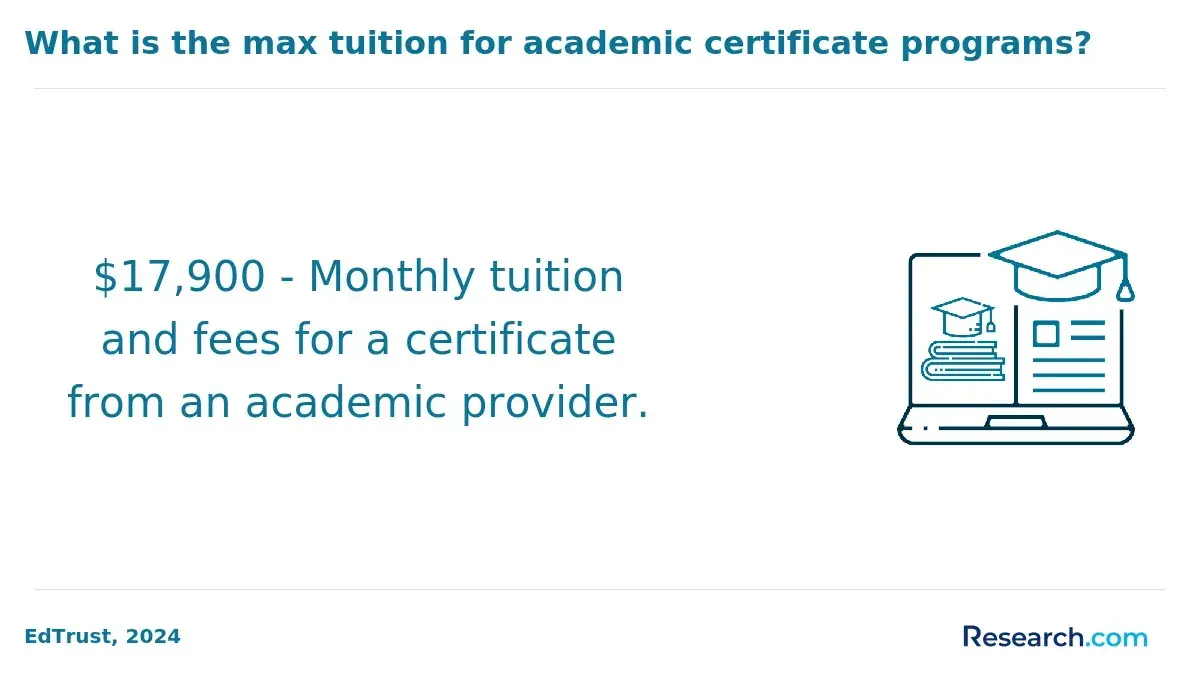
Tuition for a cybersecurity master's degree generally sits between $20,000 and $60,000 in total. Public in-state programs range from approximately $20,000 to $35,000, public out-of-state programs can exceed $40,000, and private institutions often charge between $40,000 and $60,000. Graduate certificates in cybersecurity typically cost between $5,000 and $15,000, with public in-state options usually below $7,000 and out-of-state or private programs leaning toward the higher end of that spectrum.
Price Premium Drivers: The added expense of a master's degree largely stems from the greater number of credit hours required-usually 30 to 36 credits versus 12 to 18 for certificates-and the longer time commitment, often 18 to 24 months compared to 6 to 12 months for certificates. Increased institutional resources such as faculty involvement, research opportunities, and student support also contribute to higher costs.
Financial Aid: Master's students tend to access more extensive financial support, including teaching assistantships, fellowships, and stipends. Employer tuition assistance and loan deferment programs are also more commonly available to them, reflecting their formal degree status and longer enrollment durations. By contrast, certificate learners often have fewer financial aid options and less institutional backing.
Hidden Costs: Pursuing a master's degree often entails opportunity costs like reduced income due to time spent studying and postponed career advancement. Certificates, while less costly upfront, demand less time and allow for quicker skill acquisition and workforce reentry, potentially minimizing these indirect costs.
Return on Investment: Rather than focusing solely on sticker price, it's crucial to consider net cost after aid and weigh it against potential salary improvements, program duration, and personal circumstances. Various free online tools exist to help prospective students estimate ROI and make well-informed decisions.
A professional who advanced her career through a cybersecurity master's program shared, "Balancing coursework with work and personal life was challenging, especially managing the longer program length and financial pressure. However, the teaching assistantship I received alleviated some costs and offered valuable experience. After graduation, I noticed a tangible boost in both job opportunities and salary. The investment felt worthwhile, despite the sacrifices during the study period."
How Does Earning a Cybersecurity Master's Degree Affect Salary Compared to a Cybersecurity Graduate Certificate?
Data from the Bureau of Labor Statistics and Georgetown University's Center on Education and the Workforce reveals that professionals holding a cybersecurity master's degree generally earn 15-25% more than those with only a graduate certificate. This reflects the industry's premium on advanced education and research experience.
Industry Variation: The financial, defense, and technology sectors show the greatest salary boosts for master's degree holders, especially within large corporations and government agencies. These employers tend to offer higher pay for advanced qualifications, particularly in leadership and senior technical positions.
Career Track Differences: Some cybersecurity paths-such as policy, compliance, or penetration testing-may see comparable earnings from a focused graduate certificate combined with experience. Organizations emphasizing specialized skills can sometimes value certificates as highly as master's degrees in these roles.
Return on Investment: Although master's degrees provide higher average salaries, they require more time and money to complete. Graduate certificates often take less than a year and cost less, enabling quicker workforce entry and faster salary improvement. Candidates should weigh the trade-offs according to their financial situation and career ambitions.
Employer Recognition: Employers frequently view a master's degree as evidence of deep expertise that unlocks managerial or strategic opportunities. Certificates, conversely, are well-suited for professionals seeking targeted skill development or career shifts-often enhanced by credentials like CISSP for marketability.
Current Trend: According to 2024 occupational wage surveys, the demand for cybersecurity professionals with master's degrees remains strong, with a steady annual wage growth rate around 4%, outpacing many other tech fields.
Which Cybersecurity Career Paths Favor a Master's Degree Over a Graduate Certificate?
Certain cybersecurity career paths distinctly favor a master's degree over a graduate certificate due to the comprehensive knowledge, formal education, and academic rigor it provides. Employers, professional organizations, and licensure boards frequently require a master's degree for advanced roles that demand deep theoretical expertise and leadership skills. According to a Bureau of Labor Statistics report from 2024, senior cybersecurity job postings rose by 15%, with more than 60% explicitly requesting or requiring a master's credential-highlighting this growing demand.
- Leadership Roles: Positions like Chief Information Security Officer (CISO) and cybersecurity directors generally mandate a master's degree. These jobs require advanced understanding of strategy, risk management, and policy development that extends beyond technical know-how.
- Research and Development: Cybersecurity researchers and analysts focused on areas such as cryptography, AI security, or threat intelligence depend on the theoretical and methodological training available only through master's programs-training typically absent in certificate courses.
- Licensure and Certification Requirements: Certain government and defense cybersecurity roles require a master's degree to meet baseline clearance eligibility or formal credentialing standards.
- Career Advancement: Numerous organizations use a master's degree as a formal prerequisite for promotions to senior or specialized positions, making it an essential milestone for upward mobility.
- Academic and Teaching Positions: For cybersecurity educators and academic researchers, a master's degree is often the minimum required credential.
The expanded learning experience of a master's degree equips graduates not only for current roles but also for emerging challenges and leadership demands. Individuals pursuing advanced or specialized cybersecurity careers should consider these structural factors-especially licensure, certification, and promotion policies-when deciding whether to pursue a master's degree versus a graduate certificate.
Which Cybersecurity Career Paths Favor a Graduate Certificate Over a Master's Degree?
Certain cybersecurity career paths clearly favor a graduate certificate over a master's degree due to the nature of required skills and employer hiring preferences. Employers in fast-paced, technical roles often prioritize demonstrated applied competency rather than broad academic credentials. For example, penetration testers, incident responders, and cybersecurity analysts frequently value hands-on expertise that specialized certificates provide.
Technical Focus: Many job listings emphasize proficiency with specific tools and techniques over broad theoretical knowledge. Graduate certificates offer targeted coursework that efficiently bridges skills gaps, enabling professionals to quickly update or deepen practical abilities-a significant advantage for those assessing cybersecurity graduate certificate career advantages.
Time Sensitivity: Professionals seeking rapid entry or advancement typically select certificates. This option suits career changers or IT workers wanting to add cybersecurity qualifications without the time and expense commitment of a master's program. This agility plays a key role in employment outcomes where quicker credentialing impacts opportunities.
Employer Preference: Surveys and workforce analytics show hiring managers in certain cybersecurity fields treat graduate certificates as equivalent to or sometimes preferable over master's degrees when certificates focus on relevant, up-to-date technologies or compliance standards.
Existing Qualifications: Those holding a bachelor's or master's degree in related fields-such as computer science or information technology-often maximize return on investment by closing specific competency gaps through certificates rather than pursuing redundant graduate degrees.
Career Agility: Certificates allow cybersecurity professionals to remain agile-quickly acquiring expertise in emerging areas like cloud security or threat hunting without the broad commitment required by master's degrees. This makes certificates ideal for targeted skills upgrades versus a full credential pivot.
For comprehensive insights on what masters degrees are worth it in technology and related areas, readers can explore the most useful masters degrees.
Is a Cybersecurity Graduate Certificate Stackable Toward a Master's Degree?
The concept of stackable credentials allows students to apply completed graduate certificate coursework toward a master's degree in the same or a related cybersecurity field. This pathway can offer a more efficient route to earning a full master's degree without duplicating prior efforts. Various accredited universities provide this option, although it depends on specific institutional policies rather than being a universal standard. Prospective students exploring cybersecurity graduate certificate credits transferable to master's degree programs should carefully examine these policies before enrolling.
Key considerations include:
- Institutional Policy: Whether graduate certificate courses count toward a master's degree varies by institution. Some explicitly allow stacking, while others maintain certificates and degrees as separate credentials.
- Grade Requirements: Institutions often require a minimum grade-commonly a B or better-in certificate coursework to qualify for transfer credit in the master's curriculum.
- Time Limits: Only recent credits-typically within five to seven years-may be eligible for stacking into a degree program.
- Program Matching: The graduate certificate must align closely with the master's focus-stacking a cybersecurity certificate usually applies only within cybersecurity or a closely related graduate program.
- Lower-Risk Entry: This stackable certificate pathway offers a way for students to assess the academic environment, workload, and financial commitment before pursuing the full master's degree.
- Verification: It is essential to confirm stackability directly with the graduate admissions office, as policies vary significantly across similar programs.
This stackable credential approach combines flexibility and financial prudence-allowing students to build toward an advanced degree incrementally while maintaining clarity about academic and institutional requirements. For those interested in complementary creative fields, exploring options such as online MFA programs might also be beneficial.
How Do Employers in the Cybersecurity Field Perceive a Master's Degree Versus a Graduate Certificate?
Hiring managers' views on cybersecurity master's degrees versus graduate certificates differ widely across sectors. Tech firms and consulting agencies often prioritize certificates for their targeted, current skill training, focusing more on practical capabilities than broad academic backgrounds. Conversely, regulated industries such as finance, defense, and government typically favor master's degrees for their comprehensive and rigorous preparation.
Role Type: Technical and analyst positions may value the specialized expertise provided by certificates, sometimes preferring them for quicker, skill-specific readiness. Meanwhile, leadership, research, and policy roles-especially those tied to regulation or academia-usually require the deeper, theoretical knowledge that master's programs deliver.
Institution Reputation: The credibility of the issuing school plays a critical role. A graduate certificate from a highly reputable, accredited institution can carry more weight than a master's degree from a lesser-known school. Employers often use this as a quality gauge when assessing applicants.
Realistic Expectations: Candidates should align their credential choice with career aims and industry norms. Master's degrees tend to open doors in traditional and academic careers, while certificates may accelerate entry and advancement within dynamic tech environments. Evaluating employer research data reveals that both credentials have distinct advantages-understanding these nuances enables informed decisions based on role, sector, and institutional standing.
Can a Cybersecurity Graduate Certificate Help Someone Transition Into the Field From a Different Background?
For professionals shifting into Cybersecurity from unrelated sectors, a targeted graduate certificate offers a streamlined, affordable route to gain essential expertise and demonstrate commitment rapidly-without the lengthy investment of a master's degree. Workforce development studies show many certificates are tailored for career changers, featuring accelerated timelines and cost-effective structures that allow quick entry into the field.
- Speed: Graduate certificates typically take one year or less, enabling faster workforce reentry compared to master's programs.
- Affordability: These programs tend to be more accessible financially, appealing to those balancing other responsibilities or testing new career paths.
- Applied Learning: Curricula focus on practical skills and current technologies, helping students build project portfolios that bolster hiring prospects.
- Stackability: Some certificates provide credits applicable toward a full master's degree, allowing smooth academic progression if desired.
Limitations include less recognition by employers for senior or specialized roles that demand a broader, theoretical foundation found in master's degrees. Certificates alone may not fully support long-term advancement without complementary experience or higher qualifications.
Experts recommend coupling certificate programs with demonstrable achievements such as independent projects, internships, or volunteer work to improve marketability. In this way, a graduate certificate serves as an effective stepping stone-quickly establishing credibility while leaving open pathways for further education and career growth.
What Graduates Say About Which Is Better: A Cybersecurity Master's Degree or a Cybersecurity Graduate Certificate
- Khai: "Choosing between a cybersecurity master's degree and a graduate certificate really came down to cost for me-while the master's program was more expensive, it offered a comprehensive curriculum that felt worth the investment. The time-to-completion was longer than the certificate, but it allowed me to deeply understand the field and connect with industry professionals. I now see that the master's degree has stronger employer recognition, which has definitely helped boost my career opportunities."
- Julio: "Reflecting on my journey, I appreciate how the graduate certificate's shorter duration aligned perfectly with my need for a quick career pivot. Admission requirements for the certificate were more straightforward-making it accessible without extensive prerequisites. Although the salary impact might be less pronounced than with a master's degree, the certificate gave me practical skills that translated immediately to my job."
- Jayden: "From a professional standpoint, I found the master's degree to provide unmatched career utility-employers clearly value the in-depth education and research experience it represents. However, the graduate certificate was appealing due to its lower cost and faster completion time. When it comes down to salary impact, I've noticed that master's degree holders tend to command higher salaries, but the certificate is a solid stepping stone for building foundational knowledge."
Other Things You Should Know About Cybersecurity Degrees
Online cybersecurity master's programs typically offer a broader and deeper curriculum, covering both technical and managerial topics, which employers often recognize as more comprehensive. Graduate certificates, while focused and shorter, provide specialized skills that may be viewed as less rigorous but still valuable for skill enhancement. The quality depends largely on the institution's reputation and accreditation rather than the format, but master's degrees generally carry stronger weight in career advancement.
Accreditation is critical for both master's degrees and graduate certificates-it ensures that the program meets established educational standards. Regional accreditation of the institution and program-specific accreditation, such as from ABET or CAE, impact employer trust and transferability of credits. Without proper accreditation, neither credential will be as respected or likely to influence salary or promotion opportunities.
Prospective students seeking comprehensive knowledge, long-term career growth, or entry into leadership roles are better suited for a cybersecurity master's degree. Working professionals looking to quickly update or deepen specific skills without committing to a full degree may prefer a graduate certificate. Career changers new to the field should consider the master's program for a more structured and recognized qualification, while certificate holders may use the credential as a bridge to a master's degree.
References
- Top affordable online cybersecurity master degree programs https://cybersecurityguide.org/rankings/most-affordable-online-masters/
- How to Get Into Cybersecurity from a General IT Career https://www.cyberdegrees.org/resources/transitioning-from-general-it/
- The Latest Info on Cybersecurity Graduate Certificate Programs https://programs.com/programs/cybersecurity-graduate-certificate/
- Master’s Degree or a Cybersecurity Certificate: Which is More Valuable? https://www.sacredheart.edu/news-room/news-listing/masters-degree-or-a-cybersecurity-certificate-which-is-more-valuable/
- Cybersecurity Graduate Certificate Requirements: Advanced Software Security - Rosemont College https://rosemont.edu/college/academics/professional-studies/graduate/cybersecurity-software-security-graduate-certificate/requirements/
- Do you need a master’s degree in cybersecurity? | Infosec https://www.infosecinstitute.com/resources/professional-development/do-you-need-a-masters-degree-in-cybersecurity/
- Cyber Security Degree vs Certification: Which One Should You Choose? https://www.niit.com/india/blog/cyber-security-degree-vs-certification-which-one-should-you-choose
- Best Cybersecurity Programs https://magoosh.com/gre/best-cybersecurity-programs/
- Cybersecurity Certificates, Certifications and Degrees: How to Choose | CompTIA Blog https://www.comptia.org/en-us/blog/cybersecurity-certificates-certifications-and-degrees-how-to-choose/