2027 Online Christian Counseling Doctorate Programs That Give Credit for Prior Graduate Work

Co-Founder and Chief Data Scientist
Students with a counseling, ministry, theology, psychology, or marriage and family therapy master's often face the same question: will an online Christian Counseling doctorate make them repeat graduate work they have already completed? It matters because BLS data places the 2024 median pay for substance abuse, behavioral disorder, and mental health counselors at $59,190, while doctoral tuition can rise quickly.
This guide explains how prior graduate credits are reviewed, what may transfer, and how accepted credits can affect cost, residency, dissertation work, and time to completion.
Key Things You Should Know
- Prior graduate work may transfer only when it is graduate-level, relevant to the doctorate, earned from an acceptable institution, and approved through a formal credit evaluation; many schools use a minimum grade such as B or 3.0.
- Transfer limits vary widely, but online counseling-related doctorates commonly protect a required institutional-residency portion, so dissertation, doctoral research sequence, practicum, and capstone credits often must be completed at the awarding school.
- Accepted credits can reduce tuition and completion time, but advertised maximums are not the same as credits actually applied; credit age rules of about 5-10 years and course-equivalency reviews can sharply reduce the final award.
Can Prior Graduate Credits Be Applied to an Online Christian Counseling Doctorate?
Yes, prior graduate credits can sometimes be applied to an online Christian Counseling doctorate, but they do not transfer automatically. Schools usually treat transfer credit as an academic judgment, not an admissions promise. The receiving institution decides whether previous coursework is equivalent in level, content, rigor, credit hours, and fit with the doctoral curriculum.
In this context, prior graduate work usually means completed master's-level or doctoral-level courses taken before enrollment. Transfer credit means those courses replace required credits in the new doctorate. Advanced standing is broader: it may reduce the required curriculum because the student already holds a related graduate degree, even if each course is not individually transferred. Credit evaluation is the school's process for reviewing transcripts, syllabi, course descriptions, grades, accreditation, and program requirements.
Online Christian Counseling doctorates may include PhD, Doctor of Counseling, Doctor of Christian Counseling, Doctor of Ministry with counseling concentration, or related pastoral counseling doctorates. These degrees differ in purpose. Some emphasize research and teaching, some focus on ministry leadership, and others support advanced counseling practice in faith-based settings. Students who still need a master's pathway before doctoral admission may want to compare online masters programs for counseling before assuming a doctorate is the next best step.
The table below shows how transfer-credit decisions differ from general admission decisions. This distinction matters because a school can admit a student with strong prior graduate work while still declining to apply many of those credits toward the degree.
| Decision area | What the school is checking | Why it matters |
| Admission | Whether the applicant is prepared for doctoral study | A student may be admitted even if few credits transfer |
| Transfer credit | Whether specific prior courses match doctoral requirements | Only approved courses reduce the remaining credit load |
| Advanced standing | Whether a prior graduate degree satisfies part of the academic foundation | May shorten the program without a course-by-course replacement for every class |
| Residency requirement | How many credits must be completed at the new school | Can limit how much transfer credit actually helps |
| Dissertation or capstone review | Whether research milestones must be completed in-house | These requirements are rarely waived through transfer credit |
What Types of Prior Graduate Work Can Count Toward an Online Christian Counseling Doctorate?
The most transferable work is usually graduate coursework that closely matches the Christian Counseling doctoral curriculum. Courses in counseling theory, pastoral care, human development, ethics, research methods, theology, trauma, family systems, and assessment may be considered if they meet the school's standards.
Because Christian Counseling sits at the intersection of counseling, theology, ministry, and behavioral health, programs may evaluate several kinds of prior graduate study. The table below summarizes common examples and how schools often treat them.
| Prior graduate work | Possible transfer value | Common limitation |
| Master's in counseling | May satisfy counseling foundations, ethics, human development, or helping-skills coursework | Doctoral research, integration, and dissertation courses usually remain required |
| Master's in marriage and family therapy | May apply to family systems, couples counseling, relational assessment, or pastoral family care | May not cover required theology or Christian integration courses |
| Master of Divinity or theology degree | May apply to biblical studies, pastoral care, chaplaincy, or theology requirements | May not satisfy clinical counseling or research-methods requirements |
| Graduate psychology coursework | May count toward psychopathology, lifespan development, assessment, or research foundations | Faith-integration and pastoral counseling requirements may still be needed |
| Unfinished counseling doctorate | May be considered for doctoral-level equivalency | Older credits, nonmatching seminars, and dissertation-stage work may be excluded |
| Continuing education or ministry certificates | Usually helps demonstrate background knowledge | Often not transcripted as graduate credit and therefore not transferable |
Students with a marriage and family therapy background should pay particular attention to whether a Christian Counseling doctorate accepts systemic therapy courses as counseling electives or requires pastoral counseling equivalents. If the earlier degree was MFT-focused, comparing best online MFT programs can also help clarify how closely prior coursework aligns with counseling-related doctoral expectations.
Before applying, gather evidence that proves academic equivalency. Schools may ask for more than a transcript, especially when a course title is broad or ministry-oriented. Useful documentation often includes:
- Official graduate transcripts showing institution, course level, credit hours, grades, and completion dates.
- Course descriptions from the catalog used during the term the course was completed.
- Full syllabi listing textbooks, assignments, learning outcomes, and assessment methods.
- Evidence of supervised fieldwork, practicum, internship, or ministry placement if a course is practice-based.
- Accreditation information for the prior institution and, where relevant, the previous program.
How Many Credits Can You Transfer Into an Online Christian Counseling Doctorate Program?
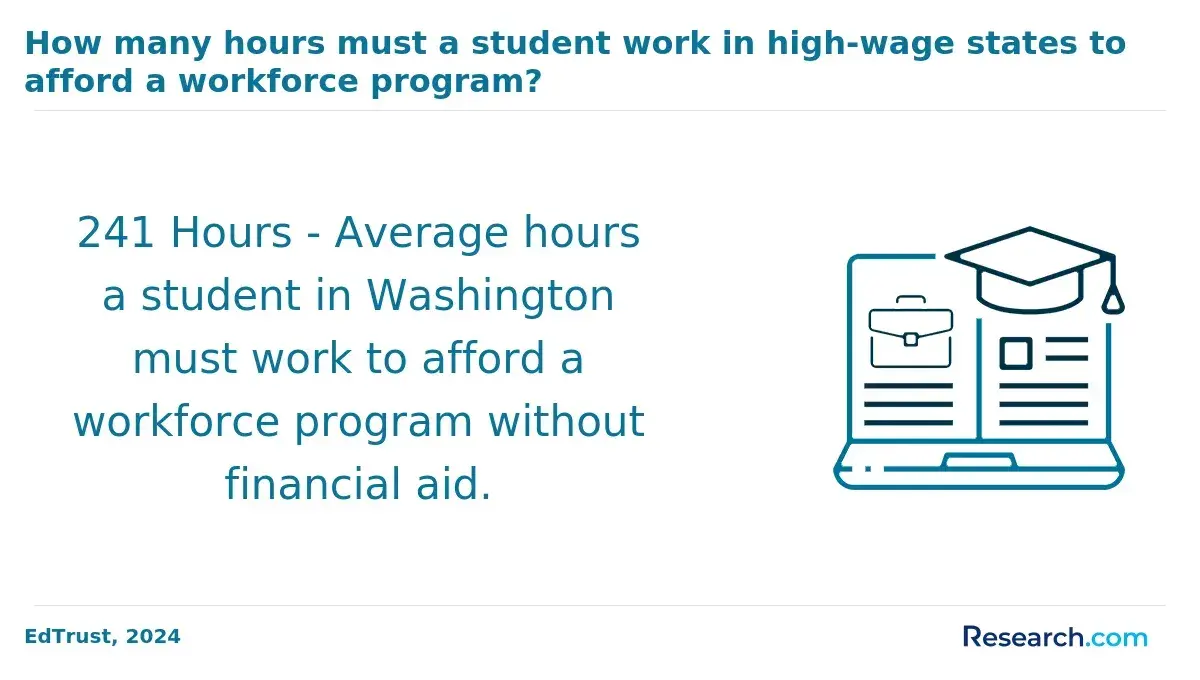
There is no single transfer-credit limit for online Christian Counseling doctorates. A school may advertise a maximum number of transferable credits, but the actual award depends on course fit, age, grade, institutional policy, and the number of credits that must be completed through the doctoral program itself.
Many doctoral programs protect an institutional-residency requirement, meaning the student must complete a minimum portion of the doctorate at the degree-granting school. This is why a high transfer limit may not shorten the program as much as expected. For students whose primary goal is affordability, comparing transfer rules alongside total tuition is more useful than looking only for the cheapest online PhD in counseling.
The table below shows how different transfer-credit models can affect planning. These are policy patterns students may encounter, not universal rules.
| Transfer model | How it works | Best fit | Risk to watch |
| Course-by-course transfer | Each prior class is matched to a specific doctoral requirement or elective | Students with detailed syllabi and highly relevant coursework | Some courses may be rejected because the content does not align closely enough |
| Advanced standing for related master's | The school reduces the required curriculum because the student already completed a qualifying graduate degree | Students with a completed counseling, theology, or ministry master's | The reduction may be smaller than the total credits earned in the master's degree |
| Block transfer from prior doctorate | A set of doctoral credits is accepted from an unfinished or completed doctoral program | Students changing schools after completing doctoral seminars | Dissertation and research-sequence credits may not transfer |
| Limited elective transfer | Prior coursework counts only toward elective space | Students with related but not identical graduate study | Core Christian Counseling requirements remain unchanged |
A practical way to interpret transfer limits is to separate three numbers: the maximum allowed, the number that matches your transcript, and the number that actually reduces remaining tuition. The third number is the one that matters most for cost and time.
What Grades, Course Matches, and Credit-Age Rules Apply to an Online Christian Counseling Doctorate?
Transfer-credit rules usually focus on three questions: Did the student earn a strong enough grade, does the course match the doctoral curriculum, and is the coursework recent enough to remain academically valid? Christian Counseling programs may be flexible about ministry experience, but they tend to be stricter when credits replace counseling, ethics, research, or dissertation-preparation requirements.
The following criteria are commonly used in graduate transfer reviews. Students should confirm each item in writing because policies vary by institution and degree type.
- Minimum grade: Many programs require a B, 3.0, or equivalent grade for transferred graduate coursework.
- Graduate level: Undergraduate courses usually do not count toward doctoral requirements, even if the subject is relevant.
- Course equivalency: Prior coursework must substantially match the content, rigor, learning outcomes, and credit hours of the required doctoral course.
- Credit age: Some schools restrict older coursework, often applying closer review to credits more than 5-10 years old.
- Institutional status: Credits are more likely to be accepted when the prior school held recognized accreditation or academic standing at the time the course was taken.
- Duplicate content: A student usually cannot receive credit twice for the same academic content across multiple degrees.
- Program exclusions: Dissertation, doctoral project, candidacy, residency, and some practicum courses are often nontransferable.
Course age is especially important in counseling-related fields because ethical standards, telehealth practice, trauma-informed care, documentation norms, and state licensure expectations continue to change. Even if a course was excellent when completed, a doctoral program may require updated training when the content affects current practice or research quality.
Students can reduce the chance of rejection by mapping each prior course to a current doctoral requirement before applying. This does not replace the school's evaluation, but it helps reveal where the transcript is strong and where gaps remain.
How Does the Transfer-Credit Evaluation Process Work for an Online Christian Counseling Doctorate?
The transfer-credit evaluation process usually begins before enrollment, but the most binding decision may come only after official transcripts and syllabi are reviewed. Students should avoid relying on informal admissions comments such as "you should get plenty of credit." A written evaluation is far safer.
The steps below show a practical sequence for getting prior graduate work reviewed. Following them helps applicants compare programs on actual transfer value rather than marketing claims.
- Identify the exact doctoral degree and concentration, because transfer rules may differ between Christian Counseling, pastoral counseling, counselor education, psychology, and ministry doctorates.
- Request the school's graduate transfer-credit policy, including maximum credits, minimum grades, credit-age rules, residency requirements, and excluded courses.
- Order official transcripts from every graduate institution attended, including unfinished programs.
- Collect syllabi, catalog descriptions, reading lists, and fieldwork documentation for courses you want reviewed.
- Create a course-mapping worksheet that pairs each prior course with a required course or elective in the new doctorate.
- Ask for a preliminary credit evaluation before committing to enrollment or paying nonrefundable fees.
- Request the final evaluation in writing, including the number of accepted credits, the requirements they satisfy, and the remaining courses needed for graduation.
- Recalculate total tuition, fees, expected terms, residency travel, and dissertation costs using the final accepted-credit number.
A strong transfer evaluation should identify not only how many credits were accepted, but also where they apply. Ten credits applied to electives may be less valuable than six credits that replace required doctoral seminars scheduled early in the curriculum.
Students who still need prerequisite counseling foundations before doctoral study should compare master's-level options carefully. In some cases, completing missing coursework through accelerated mental health counseling programs online may be more efficient than entering a doctorate that requires extensive leveling work.
How Do Accreditation and Academic Recognition Affect Christian Counseling Doctoral Transfer Credits?
Accreditation affects transfer credit because it signals that prior coursework was completed under recognized academic quality controls. Most schools are more likely to evaluate credits from institutions accredited by agencies recognized by the U.S. Department of Education or the Council for Higher Education Accreditation. However, acceptance is still not automatic.
Christian Counseling creates an extra layer of complexity because programs may be housed in seminaries, faith-based universities, private religious institutions, or counseling departments. Some are academically accredited but not designed for state counseling licensure. Others may use religious exemptions, ministry credentials, or ecclesiastical recognition that do not carry the same meaning as institutional accreditation.
The table below explains common recognition categories and how they can affect transfer-credit review. This matters because a program that accepts credits may still not support a student's licensure, teaching, or employment goals.
| Recognition type | What it may indicate | Transfer-credit implication |
| Institutional accreditation | The school has met recognized academic standards at the institutional level | Often the baseline for graduate transfer consideration |
| Programmatic counseling accreditation | A specific counseling program meets field-specific standards | May matter for licensure-oriented counseling pathways, but many Christian Counseling doctorates are not licensure programs |
| Seminary or theological accreditation | The institution or program meets faith-based academic standards | May support transfer into ministry, theology, or pastoral counseling coursework |
| Religious approval or ministry credentialing | A church, ministry body, or religious organization recognizes the training | May not be accepted as graduate academic credit by universities |
| Unaccredited institution | The school lacks recognized institutional accreditation | Credits may be rejected or reviewed under stricter exceptions |
Licensure is a separate issue from transfer credit. A doctorate in Christian Counseling may deepen ministry counseling, pastoral care, teaching, or leadership preparation, but it may not qualify a student for professional counselor licensure if the required master's-level supervised clinical curriculum is missing. Students should check their state board before assuming any doctorate will expand licensed scope of practice.
How Do Transfer Credits Affect the Curriculum, Residency, and Dissertation Requirements of an Online Christian Counseling Doctorate?
Transfer credits can reduce the number of courses a student must take, but they rarely eliminate the defining parts of a doctorate. Online Christian Counseling doctorates often still require doctoral seminars, research design, theological integration, residency or intensive experiences, comprehensive assessment, and a dissertation or doctoral project.
This distinction is important because a student may transfer credits and still need several years to finish if the remaining curriculum is sequenced slowly or if dissertation milestones take longer than expected. BLS projects employment for substance abuse, behavioral disorder, and mental health counselors to grow much faster than the average for all occupations in its current outlook, but that labor-market trend does not remove the need to verify whether a Christian Counseling doctorate fits a specific professional role.
The table below summarizes requirements that are commonly affected differently by transfer credit. Students should use it to ask more precise questions during admissions conversations.
| Requirement | Can transfer credit reduce it? | What to verify |
| Foundational counseling or theology courses | Often possible when prior coursework closely matches | Whether the course must be faith-integrated or clinically focused |
| Doctoral research methods | Sometimes, especially if prior doctoral research coursework exists | Whether the school requires its own dissertation-preparation sequence |
| Electives | Often the most flexible transfer area | Whether elective transfer actually shortens the schedule |
| Residency or intensive sessions | Usually limited | Whether online students must attend virtual, campus, or hybrid residencies |
| Practicum or supervised ministry work | Varies by program and documentation | Whether prior fieldwork met supervision and hour requirements |
| Dissertation or doctoral project | Rarely waived | Whether prior doctoral research can inform the new project without replacing required credits |
The main trade-off is depth versus speed. A transfer-friendly program may help avoid repetition, but students who skip too much foundational work may feel less prepared for doctoral research, teaching, supervision, or advanced faith-based counseling leadership.
How Much Time and Tuition Can Transfer Credits Save in an Online Christian Counseling Doctorate?
Transfer credits can lower tuition when the school charges by the credit and the accepted credits replace billable coursework. They can also shorten completion time if they remove courses that would otherwise be taken in required sequence. However, the savings are not always proportional because students may still pay technology fees, dissertation continuation fees, residency fees, graduation fees, or flat-rate tuition for a term.
A simple way to estimate savings is to multiply accepted credits by tuition per credit, then subtract any added evaluation, residency, or continuation costs. For example, if a school charges $900 per credit and accepts 12 credits that directly reduce the required curriculum, the gross tuition reduction would be $10,800 before fees. That figure should be treated as an estimate, not a final price.
The table below shows how credit transfer can affect cost and time under different scenarios. It is designed to help students compare programs using the same logic.
| Accepted transfer credits | Potential tuition effect at $900 per credit | Likely time effect | Planning caution |
| 6 credits | $5,400 gross reduction | May remove one or two courses | May not shorten the program if remaining courses are sequential |
| 12 credits | $10,800 gross reduction | May reduce one term in some formats | Fees and residency requirements may remain unchanged |
| 18 credits | $16,200 gross reduction | Could shorten coursework substantially if credits apply to required courses | Dissertation timeline may still drive total completion time |
| 24 credits | $21,600 gross reduction | Most useful when the program allows advanced standing | Institutional-residency minimums may prevent full use |
The financial value of transfer credit is strongest when three things are true: the program charges per credit, the accepted credits replace required courses, and the remaining curriculum is offered frequently enough for the student to move faster. If courses are available only once per year, accepted credits may reduce tuition but not the calendar time to graduation.
Students should also consider opportunity cost. A shorter program may help them reach teaching, ministry leadership, supervision, or consulting goals sooner, but rushing into a weakly aligned doctorate can be more expensive than taking a slightly longer program with stronger accreditation, mentoring, and dissertation support.
Can Students Transfer Credits From Another Field, an International University, or an Unfinished Christian Counseling Doctorate?
Students may be able to transfer credits from another field, an international university, or an unfinished doctorate, but these cases usually receive closer review. The more different the prior coursework is from the Christian Counseling curriculum, the more likely it will count only as elective credit or be declined.
Related-field transfer can make sense when the student's previous work supports the new doctoral goals. For example, graduate theology courses may help in a pastoral counseling doctorate, while graduate psychology courses may help in a Christian Counseling research track. But a business, education, or leadership course may transfer only if the doctorate includes leadership, administration, or organizational ministry electives.
International credits require extra documentation. Schools may request a credential evaluation from an approved evaluator, translated transcripts, credit-hour equivalency, and proof that the foreign institution was recognized in its own country. Even then, the receiving school decides whether the coursework fits the doctorate.
Unfinished doctoral credits can be valuable, especially when they include doctoral seminars in counseling, ministry, research methods, or theology. The challenge is that schools often protect their own research sequence, candidacy process, and dissertation supervision. A student may transfer coursework but still need to restart the dissertation process under the new faculty committee.
Students in unusual transfer situations should prepare for a more detailed review. The strongest applications typically include:
- A clear explanation of why the previous coursework supports the new Christian Counseling doctoral concentration.
- Official transcripts from every graduate institution, even if no degree was completed.
- Independent credential evaluation for international coursework when required by the school.
- Detailed syllabi showing doctoral-level readings, assignments, research expectations, and contact hours.
- Written confirmation of which credits apply to required courses, electives, or advanced standing.
If a large share of prior credits is unrelated, starting with a more aligned program may be better than trying to force a transfer. The right question is not "How many credits will the school accept?" but "Will the credits that transfer move me toward the outcome I actually need?"
How Should Students Compare Online Christian Counseling Doctorate Programs That Accept Prior Graduate Work?
The best online Christian Counseling doctorate for a student with prior graduate work is not necessarily the one with the largest advertised transfer limit. It is the program that applies the most relevant credits, protects academic quality, supports the student's career or ministry goal, and provides a realistic path to completion.
Students should compare programs using both academic and financial criteria. The table below highlights decision factors that often separate a truly transfer-friendly doctorate from one that only sounds flexible.
| Comparison factor | What to look for | Red flag |
| Written transfer policy | Clear rules for maximum credits, grades, age, accreditation, and exclusions | Only verbal estimates from admissions staff |
| Preliminary evaluation | Review before enrollment using transcripts and syllabi | No evaluation until after tuition deposit or registration |
| Credit application | Credits apply to required courses, not only electives | Accepted credits do not reduce the actual course sequence |
| Accreditation and recognition | Institutional status aligns with transfer, employment, teaching, or ministry goals | Vague claims of accreditation or only internal religious recognition |
| Residency and dissertation support | Clear expectations for intensives, research milestones, faculty advising, and continuation fees | Little detail about dissertation completion process |
| Licensure relevance | Transparent statement about whether the degree is or is not licensure-oriented | Marketing language that implies clinical licensure without state-board alignment |
| Total cost after transfer | Updated cost estimate based on accepted credits, fees, and remaining terms | Focus on per-credit tuition without program-length calculation |
Before choosing a program, ask targeted questions that force the school to explain how prior graduate work will affect the actual degree plan. These questions are especially useful when comparing two programs with similar tuition but different transfer-credit policies.
- How many of my prior graduate credits are eligible for review, and how many can actually apply to this specific doctorate?
- Which accepted credits replace required courses, and which apply only as electives?
- What is the minimum grade for transfer, and are older credits reviewed differently?
- Are dissertation, doctoral project, research sequence, practicum, or residency credits excluded from transfer?
- How many credits must I complete at your institution to graduate?
- Will accepted transfer credits reduce tuition, calendar time, or both?
- Can I receive a written degree plan and cost estimate before enrolling?
- Does the program support my intended goal, such as teaching, pastoral counseling, ministry leadership, supervision, or further research?
Common mistakes include assuming every master's credit will transfer, choosing a school because of a generous maximum without checking course fit, overlooking dissertation fees, and ignoring state licensure rules. A better approach is to compare final degree plans side by side: remaining credits, total cost, required residencies, dissertation expectations, accreditation, and career relevance.
Students should consider starting without transferred credits only when the prior coursework is outdated, weakly related, unaccredited, or inconsistent with the doctorate's research and faith-integration model. In those cases, a full curriculum may provide a stronger foundation than a faster but fragmented path.
Other Things You Should Know About Christian Counseling
Usually not by itself. Professional counselor licensure is typically based on a state-approved master's degree, supervised clinical hours, exams, and state board rules. A Christian Counseling doctorate may support ministry, teaching, leadership, or advanced study, but students should verify licensure requirements directly with their state board.
No. A PhD usually emphasizes research, scholarship, and sometimes teaching. A Doctor of Ministry often emphasizes advanced ministry practice, pastoral leadership, and applied theological work. Both may include counseling content, but their outcomes and transfer-credit rules can differ.
Some are fully online, while others require short residencies, intensives, dissertation defenses, or ministry-based field experiences. Students should ask whether any in-person requirements involve travel, lodging, separate fees, or fixed dates.
It can. Churches, ministries, colleges, counseling centers, and employers may evaluate degrees differently. Institutional accreditation is often important for academic employment and transferability, while ministry settings may also value denominational fit, theological tradition, and supervised pastoral experience.
References
- Bachelor of Arts in Psychology - Christian Counseling | Houston Christian University https://hc.edu/online-learning/degrees/ba-psychology-christian-counseling/
- Doctor of Christian Psychology and Counseling Online https://cornerstonechristianuniversity.com/programs/christian-psychology-and-counseling/doctor-of-christian-psychology-and-counseling/
- Indiana Wesleyan University Catalog https://catalog.indwes.edu/academicpolicies/academicpolicies/transferofcreditpolicy
- What is TC Studies? https://en.wbst.edu.pl/tcstudies/what-is-tcstudies/
- Transfer Credits to Westminster https://info.wts.edu/article/306-transfer-credits-to-westminster
- Can You Transfer Credits from a Non-Accredited Christian College? https://anchoru.com/can-you-transfer-credits-from-a-non-accredited-christian-college/
- Doctor of Philosophy (Ph.D.) in Christian Education and Counseling https://eldermont.com/course/doctor-of-philosophy-ph-d-in-christian-education-and-counseling/
- Service Center https://cutsedu.org/doctor-of-philosophy-in-christian-counseling-ph-d-c-c/
- Advance Your Ministry: Doctorate in Christian Counseling! https://andersonvilleseminary.com/gradulate/doctor-of-ministry-christian-counseling/
- Online Doctorate in Professional Counseling, D.P.C. https://www.mc.edu/academics/departments/counseling/graduate-programs/professional-counseling-dpc