2027 Online BA in Psychology - Mental Health After CLEP Human Growth and Development Credit: Compare Transfer Credit and Remaining Coursework

Co-Founder and Chief Data Scientist
Passing CLEP Human Growth and Development may put you closer to an online psychology BA, but accepted credit does not always replace a required course. For transfer and returning students interested in mental health, that distinction affects the courses, cost, and time still ahead.
This guide shows where the exam may fit in a degree audit, what psychology and mental health coursework usually remains, and which questions to resolve with a school before enrolling. It also explains what the completed degree can - and cannot - prepare you to do.
Key Things You Should Know
- College Board recommends 3 semester credits for CLEP Human Growth and Development at its recommended credit-granting score of 50; each college decides whether to award credit and where it applies.
- Developmental psychology credit may satisfy a major requirement, an elective, or only part of a transfer-credit allowance. An approved degree audit - not an admissions estimate - shows what remains.
- Even when the exam replaces a course, statistics, research methods, upper-level psychology, mental health electives, and residency requirements may remain. A psychology BA does not itself qualify you to provide therapy or diagnose conditions.
What Is an Online BA in Psychology After CLEP Human Growth and Development Credit?
It is a psychology bachelor's program in which a college has evaluated your CLEP exam for possible undergraduate credit. Human Growth and Development covers development across the lifespan; its subject matter may resemble a developmental psychology course, but the receiving college decides whether the exam is equivalent to that course.
"Mental health" may describe an official concentration, a set of electives, or simply your career interest. Check the catalog for the exact degree and concentration name before assuming it will appear on your academic record. If you are comparing a psychology major with a more occupation-specific route, substance abuse counseling bachelor's program value comparisons can help frame that separate choice; neither degree title alone establishes counseling eligibility.
How Does CLEP Human Growth and Development Credit Transfer to Online Psychology Programs?
The receiving institution sets its minimum score, credit limit, course equivalency, and rules for exam credit. College Board's recommendation is not a transfer guarantee. The table shows why two schools can accept the same exam yet leave you with different graduation plans.
| School's evaluation | Possible degree-audit result | What to confirm |
| Equivalent to required developmental psychology | May replace that requirement | Whether the major accepts exam credit for the course |
| Accepted as general psychology elective | Adds credits but may leave developmental psychology required | Whether elective space remains in the degree |
| Accepted as general education or free elective | May help meet total credits without advancing the major | Which requirement, if any, it fills |
| Not accepted or duplicates prior credit | May add no usable credit | Score policy, duplicate-credit rule, and appeal process |
Send an official CLEP score report and transcripts for previous college work, then request a written equivalency and degree audit from the registrar or transfer-credit office and confirmation from the psychology department if major substitution requires its approval. Ask whether exam credits count toward a transfer maximum or residency rule. If an evaluation looks inconsistent with a published policy, ask how to appeal it. The same distinction between accepted and applicable credit matters when using previous coursework toward a psychology degree.
What Coursework Remains After Applying CLEP Credit to a Psychology BA?
Start with the school's degree audit, not the number of credits on your score report. A useful audit separates total credits from general education, psychology-major requirements, electives, and credits that must be completed at the institution. If CLEP fills developmental psychology, it generally does not also fill an unrelated requirement.
Pay particular attention to introductory psychology, statistics, research methods, upper-level psychology, writing or general education, and any required capstone. A mental health focus may add courses on psychopathology, health, addiction, or community services; some have prerequisites or limited term availability. Ask an advisor to identify every unmet requirement and the earliest term each required course is offered. When comparing remaining-credit costs, request tuition and mandatory fees for your actual audit rather than pricing a full degree you will not take.
If you are considering a substance-use-focused alternative, compare its remaining requirements separately and investigate scholarships for undergraduate substance use counseling. Aid availability depends on the school, program, and your eligibility; it should not be assumed to cover a CLEP exam or an otherwise unnecessary course.
One exam's potential 3 semester credits rarely determines the completion date by itself. Your timeline depends on the credits the audit applies, course prerequisites, term schedules, enrollment pace, and any minimum credits required at the degree-granting school. A developmental psychology requirement offered infrequently could make its replacement valuable; a free elective in an already-full elective category may save no time.
Build a term-by-term plan with an advisor before choosing a start date. Confirm when statistics, research methods, mental health electives, and the capstone are offered, and whether summer or shorter terms actually include the courses you need. Options for speeding up an online psychology degree are useful only if their sequencing, workload, and transfer policies fit your audit. Taking more courses at once can also affect work commitments and aid eligibility.
A psychology BA commonly combines broad disciplinary study with statistics and research methods. Depending on the school, required or elective subjects may include developmental, social, cognitive, biological, and abnormal psychology. Writing, a research project, or a capstone may test your ability to interpret evidence rather than merely recall theories.
For a mental health interest, compare the remaining curriculum at each school: Does CLEP replace developmental psychology, leaving room for an upper-level mental health elective? Can you take addiction or community mental health courses after meeting their prerequisites? Is an internship available, required, or subject to separate site approval? Studying disorders or treatment approaches is academic preparation, not authorization to assess or treat clients. If your goal is a credentialed substance-use role, compare the BA curriculum with addiction counseling programs and education requirements and the rules in your state.
Online and campus programs can award the same type of bachelor's degree, but their practical demands differ. An asynchronous class may let you study around work; it may still impose weekly deadlines and group projects. A campus program may make in-person research or networking easier, while an online program may offer remote faculty collaboration or locally arranged experience. Neither format guarantees an internship.
For each school, ask about live sessions, campus visits, exam arrangements, research access, and whether an applied placement must occur at an approved local site. Do not mistake an online BA's flexibility for the structure of a professional counseling degree: accelerated clinical counseling program formats may include supervised, in-person training obligations that an undergraduate psychology program does not provide.
Verify that the degree-granting institution holds recognized institutional accreditation and that the accreditation covers the school awarding your degree. This matters when evaluating transfer prospects, eligibility for federal student aid, and recognition by future schools or employers. Check the accreditor and institutional status in official records rather than relying only on a program's advertising.
The American Psychological Association does not accredit general psychology bachelor's programs. Institutional accreditation also does not certify that a mental health concentration meets a state's clinical licensing rules. Apply the same distinction if considering accredited online pathways in forensic psychology: a specialization's name does not confer professional authority.
Schools may request a high school credential or prior college transcripts, an application, and official records from every institution attended. Transfer applicants can face different admission rules from first-time students, and admission to a university does not necessarily confirm admission to a psychology major or acceptance of CLEP for a particular requirement.
Before applying, ask whether the major has its own entry requirements, when official CLEP scores must arrive, and whether your prior statistics or psychology courses meet prerequisites. Request the transfer evaluation early enough to compare schools before committing. If a substance-use-focused degree is an alternative, weigh its entry requirements and remaining tuition against the psychology BA rather than assuming the more specialized title is a better fit; substance abuse counseling bachelor's program value comparisons are one starting point, not a substitute for an individual audit.
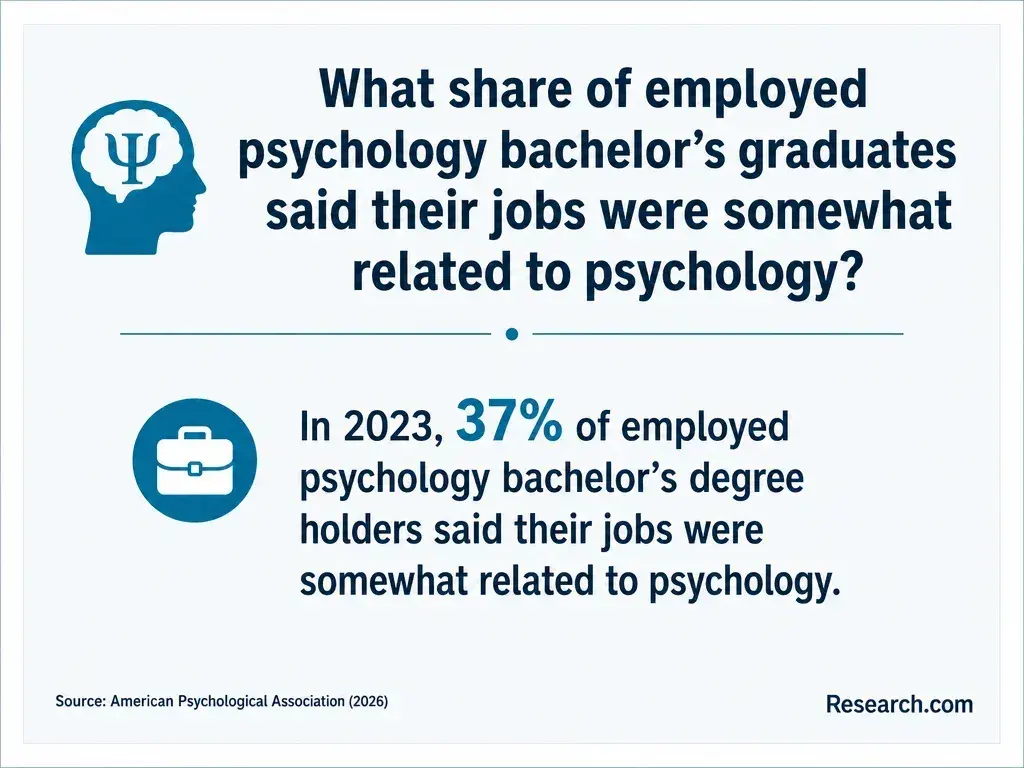
A psychology BA can support applications for nonclinical roles such as behavioral-health program assistant, intake or referral coordinator, community-services worker, or research support staff. Duties may involve scheduling, documentation, connecting people with resources, collecting permitted program data, or assisting a supervised team. Employers may also require experience, training, background checks, or a specific credential.
Choose electives and experience around a target job, not just a concentration label. For example, a recovery organization may value knowledge of referral pathways, respectful communication, and clear professional boundaries alongside the degree. Professional pathways in recovery organizations vary by role and state; peer-support and addiction-counselor positions can have requirements beyond a psychology BA. An approved nonclinical internship or existing community-service experience may strengthen an application, but neither authorizes therapy.
Does a Psychology Bachelor's Degree Qualify You for Licensure and What Can You Earn?
A psychology BA, including one with a mental health focus, does not by itself qualify you to practice independently as a psychologist, diagnose conditions, or provide psychotherapy. Licensure paths differ: counseling, social work, psychology, and addiction counseling have distinct educational and supervised-experience requirements set by the relevant state authorities. If therapy is your goal, check that pathway before choosing electives or assuming undergraduate coursework will shorten professional training. For one possible next step, compare online mental health counseling master's timelines with the licensing board's educational and supervised-practice rules.
There is no single reliable salary for "a psychology BA in mental health." Pay depends on the occupation, employer, location, experience, and any required credential. To estimate earnings, identify the job title and duties you could qualify for, then compare local postings with the latest U.S. Bureau of Labor Statistics Occupational Outlook Handbook entry for the closest occupation - for example, social and human service assistants. Its occupation-wide median is not a starting salary or a promised outcome for psychology graduates.
Other Things You Should Know About Psychology
Possibly. Ask your school first whether it accepts post-enrollment CLEP scores and whether a deadline or permission requirement applies. Taking the exam after completing an equivalent course may produce no additional credit.
Exam credit is commonly recorded without a letter grade, but transcript and GPA policies vary. Ask how your school displays CLEP credit and how a future graduate program treats it.
Do not assume so. A graduate program may require a graded developmental psychology course or specify acceptable prerequisite credit. Request its policy before relying on CLEP for that purpose.
The school may treat the CLEP exam as duplicate credit. Submit both records and ask which credit, if either, applies to the degree and whether the course better satisfies a major or graduate-school requirement.
- Bachelor of Arts in Psychology - Texas State's online programs https://online.txst.edu/degrees/undergraduate/ba-psychology/
- College-Level Examination Program (CLEP) | University of Maryland Global Campus https://www.umgc.edu/transfers-and-credits/fast-paths-to-credit/credit-by-exam/clep
- Transfer Credit & Residency Policy | Bay Path University Academic Catalog https://catalog.baypath.edu/academic-policies-and-procedures/transfer-credit/
- 2.1.9 Baccalaureate Degree Programs | Illinois State https://policy.illinoisstate.edu/students/2-1-9/
- What Can You Do with a bachelor's in Psychology? | UMass Global https://www.umassglobal.edu/blog-news/can-you-do-a-bachelors-psychology-top-careers-skills-build-your-future
- Transfer and Nontraditional Credit Policies | La Roche https://laroche.edu/academics/registrar/transfer_and_nontraditional_credit_policies/
- Psychology Degree Requirements | University of Bridgeport https://www.bridgeport.edu/news/psychology-education-requirements/
- Career Pathways in Psychological & Brain Sciences | Information Technology Services https://artsandsciences.louisville.edu/psychological-and-brain-sciences/career-pathways
- Psychology careers guide | apa.org https://www.apa.org/education-career/guide/careers
- College Level Examination Program (CLEP) - Admissions | The University of Iowa https://admissions.uiowa.edu/academics/clep