2027 Online Applied Science Bachelor's Degree Completion Programs for Working Adults

Co-Founder and Chief Data Scientist
Balancing work, family, and education creates significant challenges for adults aiming to complete their online applied science bachelor's degree. Nearly 70% of adult learners cite inflexible schedules as a primary barrier to degree completion. Many face uncertainty about transferring credits, navigating prior learning assessments, or understanding employer outcomes linked to these programs.
Without clear guidance, students risk enrolling in programs misaligned with their career goals or budgets. This article examines key aspects of online applied science bachelor's degree completion programs-like accreditation, credit transfer policies, tuition, and outcomes-to help working adults select the most suitable program for their professional advancement.
Key Benefits of Online Applied Science Bachelor's Degree Completion Programs for Working Adults
- Programs offer flexible schedules and fully asynchronous coursework, allowing working adults to balance professional responsibilities without compromising income or career advancement.
- Students can study at their own pace, accommodating demanding work hours and personal commitments with no fixed class times.
- Degree completion timelines are accelerated, enabling transfer students to graduate faster than enrolling in a traditional four-year program from scratch.
What Are Online Applied Science Bachelor's Degree Completion Programs, and Who Are They Designed For?
Degree completion programs in online applied science bachelor's degrees are tailored for adults who have college credits but need to finish their degree. Unlike traditional four-year bachelor's programs that begin fully at the freshman level, these programs emphasize transfer credit acceptance and focus on the remaining coursework needed for graduation. Millions of Americans, according to the National Center for Education Statistics (NCES), hold some college credits but no credential, highlighting the importance of these options. Designed specifically for working adults, online applied science bachelor's degree completion programs for working adults offer accelerated pacing and flexible learning formats-either fully online or hybrid-to fit around professional and personal commitments.
The growing demand for such programs reflects shifting employer expectations, where a bachelor's degree is increasingly necessary for jobs that previously required only an associate degree or certificate. The best online applied science degree completion options for adult learners show key features:
- Target Audience: Adults with prior college credits, including community college transfer students, military veterans, and mid-career professionals seeking to balance education, work, and life.
- Accelerated Format: Shortened, intensive courses help reduce time to graduation without compromising academic quality.
- High Transfer Credit Acceptance: Programs acknowledge previous academic and professional learning to minimize redundant coursework.
- Flexible Delivery: Online and hybrid models provide adaptable scheduling, accommodating the busy lives of adult learners.
How Do Online Applied Science Degree Completion Programs Differ From Traditional Four-Year Applied Science Bachelor's Degrees?
Online applied science degree completion programs are designed primarily for students who have accumulated at least 60 college credits, providing a distinct alternative to traditional four-year bachelor's degrees. These programs focus on advanced, major-specific coursework rather than repeating foundational courses, tailoring the curriculum to meet the needs of working adults with prior academic experience.
- Credit Requirements: Completion programs require fewer total credits by allowing transfer credit policies in online applied science bachelor's degree completion programs to substitute general education courses with prior learning assessments or professional experience credits, helping to accelerate degree completion.
- Curriculum Sequencing: Unlike traditional bachelor's degrees that start with two years of general education, these programs emphasize upper-division applied science courses from the outset, often offering flexible start terms and asynchronous delivery to accommodate busy schedules.
- Time to Completion: IPEDS data indicates students transferring in 60 or more credits can finish these programs in two years or less, compared to a standard four-year timeline for traditional paths. This shorter timeframe suits adults balancing jobs or family responsibilities.
- Cost Structure: Completion-focused programs typically have lower per-credit-hour tuition or flat-rate models, reducing overall cost due to fewer required credits and streamlined curricula.
- Adult Learner Adaptation: These programs award credit for life experiences and workplace skills, replacing some general education requirements with competency-based modules. Project-based assessments and flexible deadlines support experiential learning over traditional theory-oriented coursework.
Prospective students, whether military veterans, community college transfers, or mid-career professionals, should weigh these trade-offs carefully. Balancing academic breadth with credit transfer policies and flexible structures helps identify programs best aligned with individual goals and schedules. Those interested in nursing pathways without traditional entry barriers might explore specialized options like nursing colleges that don't require SAT.
2026 Update: Verifying Accreditation and Employer Recognition Before Enrolling
For the 2026 update, this section adds a practical quality check for working adults comparing online applied science completion programs, especially when career advancement, promotion eligibility, or graduate study may depend on institutional credibility.
- Confirm the university holds recognized institutional accreditation, not only program-level endorsements.
- Check whether your employer accepts the degree for tuition reimbursement, raises, or internal advancement.
- Ask admissions how the degree title appears on transcripts and diplomas for online completion students.
- Review whether the program supports licensure, certification, or industry requirements tied to your field.
- Look for clear academic advising, transfer evaluation, and career support services for adult learners.
- Verify whether credits will be accepted if you later pursue a master’s degree or another credential.
Taking these steps helps students avoid programs that look convenient but may not support their long-term professional or educational goals.
Which Accredited Universities Offer the Most Affordable Online Applied Science Bachelor's Degree Completion Programs?
Kennesaw State University: With in-state tuition at $197.28 per credit and $524.80 for out-of-state students, this Georgia-based public institution offers an online applied science bachelor's degree completion program accredited by the Southern Association of Colleges and Schools Commission on Colleges (SACSCOC). Its curriculum aligns with technology and engineering sciences, maintaining relevant programmatic accreditation in these fields.
Fort Hays State University: Charging a uniform online tuition rate of $226 per credit hour for all students, Fort Hays features a flexible applied science degree completion program designed to accommodate numerous transfer credits and prior learning assessments. The university is regionally accredited by the Higher Learning Commission (HLC), supporting working adults and veterans seeking cost-effective degree pathways.
Wichita State University: Offering $253.90 per credit for in-state learners and $383.34 for out-of-state students, Wichita State's applied science program is recognized by the Higher Learning Commission. It emphasizes strong industry partnerships and accelerated learning options, along with credit recognition for prior experience that benefits nontraditional students.
Colorado State University-Global Campus: This fully online institution applies a flat rate of $350 per credit hour irrespective of residency. Accredited by the Higher Learning Commission, the school allows up to 90 transfer credits and integrates competency-based education, catering specifically to adult learners balancing professional and academic commitments.
University of North Texas: Costs run $285 per credit for in-state and $547 out-of-state students. Accredited by SACSCOC, the program welcomes transfers from regionally accredited colleges and values military credits. Career-focused outcomes anchor its approach to applied science education.
A professional who completed an online applied science bachelor's degree highlighted the importance of program flexibility and credit transferability in his journey. "Juggling work and studies was challenging, but being able to apply my previous credits and experience alleviated much of the pressure," he shared. The prior learning assessments allowed him to focus on new, relevant coursework without redundant classes, which he described as "a game changer for progressing efficiently." Access to faculty who understood adult learners helped him stay motivated, and the online format provided the necessary balance to pursue a career upgrade without sacrificing current job responsibilities.
How Many Transfer Credits Can Working Adults Apply Toward an Online Applied Science Degree Completion Program?
Credit Caps: Most online applied science degree completion programs cap transfer credits between 60 and 90 semester hours, covering general education and lower-division courses. The remaining credits focus on upper-division major coursework that candidates must complete within the degree-granting institution.
Equivalency Review: Schools conduct comprehensive transcript analyses to evaluate course content, credit hours, and grades. This evaluation ensures transfer credits align with program standards and degree requirements, defining how prior learning applies to your chosen program.
Articulation Agreements: Partnerships between community colleges and four-year universities streamline credit transfer. These formal agreements often guarantee credit acceptance for associate degree courses, minimizing credit loss and administrative hurdles during transfer.
Credit Loss Patterns: Data from the U.S. Department of Education's transfer summit indicates students can lose up to 40% of their credits when transferring. Selecting programs with structured transfer pathways or guaranteed credit acceptance can mitigate this loss and accelerate degree completion.
Military and Professional Credits: Leading transfer-friendly applied science programs recognize American Council on Education (ACE)-recommended military training credits and relevant professional certifications. This inclusion broadens pathways for veterans and working adults to apply prior learning toward degree requirements.
Transcript Evaluation: It is advisable to request an official transcript evaluation before enrollment. This step clarifies transferable credits and course requirements, ensuring progress toward degree completion without unexpected setbacks.
Working adults exploring transfer credit policies for online applied science degrees should carefully compare programs and can consult resources like the cheapest online MHA listings for cost-effective options that support transfer students.
What Are the Typical Admission Requirements for Online Applied Science Bachelor's Degree Completion Programs?
- Transfer Credit Hours: Applicants typically need between 24 and 60 transferable college credits from accredited institutions, ensuring they have completed foundational coursework before advancing toward degree completion.
- GPA Requirements: Most programs set a minimum GPA between 2.0 and 2.75 on a 4.0 scale, with more competitive programs demanding higher grades to reflect academic rigor and selectivity.
- Required Documentation: Candidates must submit official transcripts verifying prior academic work and proof of high school completion or equivalency. Some programs may also ask for letters of recommendation or a personal statement outlining educational goals.
- Field-Specific Prerequisites: Completion of introductory courses related to applied science, such as engineering technology fundamentals or basic computer science, is often necessary to prepare students for upper-level coursework.
- Admission Types: Open-admission completion programs accept most qualified students and provide extensive academic support but may carry less prestige. Selective programs admit fewer students with stricter standards, often linked to stronger reputations.
- Conditional Admission: Some institutions offer provisional acceptance when applicants fall short of criteria, requiring remedial coursework or performance benchmarks during the initial term to maintain enrollment.
- Improving Eligibility: Prospective students can bolster their applications by completing prerequisite classes at community colleges or through online study, demonstrating consistent academic ability and relevant skills before applying.
One professional who built her career after graduating from an online applied science bachelor's completion program recalled the admissions experience as particularly daunting at first. She emphasized how gathering transcripts and ensuring her prior credits met transfer requirements demanded careful attention. Despite some initial uncertainty about meeting GPA standards, she found that proactive communication with admissions advisors and completing additional preparatory courses significantly eased the process. Reflecting on her journey, she shared that persistence and thorough preparation were key to turning admission hurdles into milestones that ultimately strengthened her confidence and readiness for her chosen career path.
How Long Does It Take to Complete an Online Applied Science Bachelor's Degree Completion Program as a Working Adult?
Completion timelines for an online applied science bachelor's degree depend heavily on transferred credits, enrollment intensity, and course format. Students entering with 90 transfer credits, often from associate degrees, may need only around 30 more credits, enabling faster graduation. Those with 30 credits face a longer journey, typically requiring most of the program's coursework.
Part-time students who take about six credits each semester usually extend their timeline, but this allows for better work-life balance. Conversely, accelerated full-time learners taking 12 or more credits a term can halve the time to finish, especially when enrolling in compact eight-week sessions. These accelerated terms enable focusing on fewer courses at a time, improving retention and enabling sequential course completion within a single semester.
A realistic pace for full-time professionals is generally two courses per semester, including summer terms. This steady approach often leads to degree completion in about three years for those with moderate transfer credits. Additionally, some programs offer competency-based progression allowing learners to demonstrate prior knowledge through assessments, which can reduce required credits and speed graduation.
Life circumstances such as family commitments and available employer support, including tuition assistance and paid study time, are crucial factors shaping feasible timelines. According to the National Center for Education Statistics, approximately 38% of bachelor's degree recipients in 2023 had some prior college credit, highlighting the importance of degree completion options for working adults.
- Transfer Credit Impact: Greater transfer credits decrease remaining coursework, speeding degree completion.
- Enrollment Pace: Full-time or accelerated schedules reduce program length compared to part-time study.
- Course Term Structure: Eight-week courses allow rapid progression with focused, sequential learning.
- Realistic Scheduling: Two courses per semester balance steady progress with professional obligations.
- Competency-Based Progression: Demonstrated mastery can shorten credit requirements and accelerate graduation.
- Life Circumstances & Support: Family duties and employer aid significantly influence achievable timelines.
- Recent Statistic: Nearly 4 in 10 bachelor's graduates had prior credits in 2023, showing demand for completion programs.
What Financial Aid, Grants, and Employer Tuition Assistance Options Are Available for Online Applied Science Completion Students?
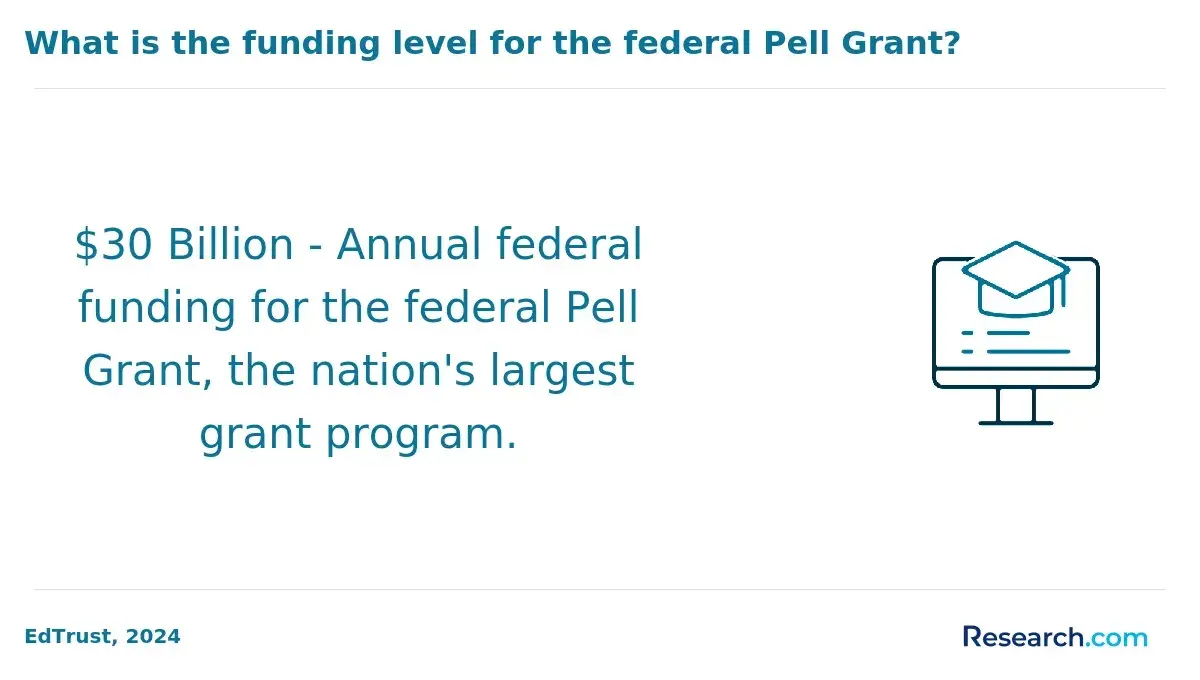
Working adults completing an online applied science bachelor's degree benefit from diverse financial aid options designed to lower educational expenses. Eligible students can access federal Pell Grants and Direct Loans, which remain available to non-traditional learners. Many states provide grants aimed specifically at adult students re-entering higher education to support workforce development and career growth.
Colleges and universities commonly offer institutional scholarships targeted at students with prior college credits or professional experience. Additional scholarships and fellowships exist for adults resuming their education, helping to reduce out-of-pocket costs significantly.
Employer tuition assistance programs are a crucial resource for many. Under IRS Section 127, employers may offer up to $5,250 annually in undergraduate education benefits tax-free. Numerous companies partner with accredited online programs to encourage degree completion through direct payment or reimbursement of coursework related to employees' careers.
Before enrolling, consider these financial aid steps to maximize your funding options:
- File FAFSA: Complete the Free Application for Federal Student Aid to unlock access to federal grants, loans, and many state programs.
- Check State Grants: Investigate state-specific grants designed for adult learners returning to applied science or related fields.
- Explore Scholarships: Apply for scholarships intended for non-traditional students or those focused on applied science degree completion.
- Request Employer Assistance: Speak with your HR department about tuition reimbursement policies and secure any necessary agreements before registering for classes.
How Does Per-Credit-Hour Tuition for Online Applied Science Completion Programs Compare Across Accredited Institutions?
Tuition for online applied science bachelor's degree completion programs can vary widely, with the national average cost per credit hour at about $350, according to NCES and IPEDS data. Programs range from roughly $200 to over $600 per credit hour, which significantly affects the total expense for students transferring in 60 or 90 credits. For example, a 100-credit remainder at $250 per credit totals $25,000, while at $400 per credit it reaches $40,000. These figures highlight critical differences in per credit hour costs for applied science completion programs across institutions.
It is essential to consider programs' total credit requirements because some exceed 120 credits, increasing overall costs regardless of lower tuition rates. Moreover, additional fees such as technology charges, graduation fees, proctoring costs, and textbooks add thousands to the final price, often overlooked in advertised tuition rates.
A program's affordability depends not only on per-credit pricing but also on flexible transfer credit policies or prior learning assessments that can reduce total credits needed. This is especially important for working adults with prior college credits or relevant experience. Such options can make higher per-credit tuition programs more cost-effective overall.
For individuals seeking to complete a degree with financial considerations, researching options like online medical assistant programs that accept financial aid can provide additional pathways and funding solutions.
- National Average Tuition: The typical cost per credit hour for online applied science completion programs sits around $350, but varies widely by institution.
- Total Program Cost: Students' expenses depend heavily on both tuition rates and the total credits needed to graduate, especially for transfer students with 60 or 90 completed credits.
- Additional Fees Impact: Technology, graduation, proctoring, and textbook fees may substantially increase the total cost beyond advertised tuition.
- Credit Requirements Matter: Programs requiring more credits to complete a degree often cost more overall, even if their per-credit tuition is lower.
What Prior Learning Assessment and Credit-by-Exam Options Exist in Online Applied Science Degree Completion Programs?
Prior learning assessment (PLA) options are critical for working adults aiming to complete an online applied science degree efficiently. These programs often accept credit-by-exam opportunities such as CLEP and DSST exams, enabling students to translate their existing knowledge into academic credit and reduce time to graduation. Military veterans and professionals who have completed corporate training can benefit from credit recommendations evaluated through the American Council on Education (ACE), which many institutions recognize.
Flexible PLA policies vary, with some online applied science bachelor's completion degrees accepting up to 90 credits from prior learning. These programs often allow portfolio assessments, where candidates submit documented evidence of their experiential learning, including work projects, certifications, and professional development courses. Preparing a detailed portfolio that aligns with institutional credit evaluation criteria is essential for maximizing awarded credits.
- Credit-By-Exam Options: Online applied science programs commonly accept CLEP and DSST exams, which assess knowledge in general education and specialized subjects. These exams provide an affordable means to earn college credits without retaking courses.
- ACE Military Credit: The ACE credit transfer system evaluates military training and occupational experience, allowing veterans to apply these credits toward degree requirements efficiently, supporting faster degree completion.
- Portfolio Assessment: Many programs support submission of comprehensive portfolios evidencing skills and learning outside traditional classrooms. Effective documentation of work experience and certifications is key to portfolio acceptance.
- Maximum Credit Acceptance: Some institutions permit up to 90 transfer credits from prior learning, facilitating degree completion for community college transfer students, military veterans, and mid-career professionals.
To ensure successful credit awarding, students should carefully document all prior learning evidence, tailor portfolio submissions to institutional guidelines, and consult advisors early in the process. These strategic steps help working adults navigate prior learning assessment options effectively across top-ranked applied science programs.
Working adults interested in specialized fields may also explore psychiatric NP programs, which sometimes offer prior learning pathways to complement nursing education.
How Do Asynchronous Schedules in Online Applied Science Programs Accommodate Full-Time Working Professionals?
- Fully Asynchronous Delivery: Students access lectures, readings, and assignments at any time, allowing completion across various time zones and busy schedules without fixed class meetings.
- Flexible Assignments: Coursework, including discussions and assessments, is designed so deadlines are spread out, letting students plan work around personal and professional commitments.
- Comparison of Formats: Asynchronous programs offer unmatched flexibility for shift workers, travelers, and caregivers, while synchronous classes require attendance at set times, potentially limiting availability. Hybrid programs blend both but may demand occasional live participation, affecting scheduling freedom.
- Eight-Week Terms: Several colleges structure online applied science programs in accelerated eight-week courses, enabling students to concentrate on fewer subjects at once, easing the balance between education and job responsibilities.
- Time Management Tips: Successful learners often use digital calendars, task management apps, and set weekly study routines to stay organized and motivated throughout their program.
- Effective Digital Tools: Technology such as discussion boards, video recordings, and mobile-accessible platforms supports engaging and manageable learning experiences tailored to adult learners' needs.
What Concentrations and Career Tracks Are Available Within Online Applied Science Degree Completion Programs?
Most online applied science bachelor's degree completion programs offer several concentration options that typically fit within the standard 120-credit requirement, helping students graduate on time and control expenses. Some specializations may require a few extra credits, so checking each school's policies is advisable. These tracks align directly with career paths and industry demands, often positioning graduates for relevant certifications to boost employment prospects.
- Health Information Management: Prepares students for roles in medical coding, health data analysis, and regulatory compliance, often leading to RHIA certification eligibility. Median salaries are around $55,000, with steady job growth expected.
- Industrial Technology: Focuses on manufacturing systems, quality assurance, and safety, qualifying graduates for supervisory positions in sectors like aerospace and electronics. Median wages are approximately $60,000, reflecting strong demand.
- Environmental Technology: Emphasizes sustainability, waste management, and regulatory compliance, with career opportunities in government and private firms. Median salaries hover near $50,000, buoyed by environmental policy growth.
- Information Technology Management: Designed for those pursuing IT infrastructure, cybersecurity, and project leadership roles, often aligned with certifications such as CompTIA and PMP. This specialization commands median wages exceeding $80,000.
- Emergency Management: Equips students for disaster response and homeland security careers, with solid government-sector employment prospects and median salaries around $75,000. Additional certifications may be required.
When choosing a concentration, balance your personal interests with labor market demand, certification potential, and program credit requirements to ensure the best return on your educational investment.
What Graduates Say About Online Applied Science Bachelor's Degree Completion Programs for Working Adults
- Marjorie: "Completing my online applied science degree was a game-changer, especially because the program's strong accreditation gave me confidence in the quality of education I received. The clear transfer credit policies made it easy to leverage my previous coursework, saving both time and money. I appreciate how the flexible tuition model allowed me to balance work and study without financial strain."
- Douglas: "Reflecting on my journey, the greatest benefit was the program's recognition of prior learning, which really fast-tracked my progress. I found the program structure straightforward and designed for busy professionals like me. Since graduating, I've seen tangible promotions at work, highlighting how this degree aligns with industry expectations and employer needs."
- Ezra: "As someone returning to complete my applied science degree, I valued the professionalism embedded in the course design and its emphasis on accreditation standards. The generous transfer credit policy allowed me to apply previously earned credits efficiently, reducing redundancy. Most importantly, earning this degree opened up new career opportunities, confirming its relevance to employers in my field."
Other Things You Should Know About Applied Science Degrees
Completing an online applied science degree in 2027 can significantly boost a working adult's earning potential and career advancement. Many industries highly regard this credential, resulting in better job security and higher salaries, outweighing the investment compared to partial college completion.
Online applied science completion programs often include dedicated academic advising tailored for working adults, helping them navigate transfer credits and degree requirements. Many programs provide career services such as resume reviews, interview preparation, and job placement assistance. Additionally, learners can access tutoring, writing support, and technical assistance to help balance education with work commitments. These services enhance student success and smooth the transition into or advancement within professional careers.
Some online applied science bachelor's completion programs offer flat-rate tuition or subscription-based pricing to simplify cost management for students. These models allow learners to pay a single fee for access to a term or a set number of courses, which can be advantageous for those who can accelerate their studies. However, pricing structures vary widely by institution, so it is important for prospective students to review tuition plans carefully. Traditional per-credit fees remain common, but alternative models are growing in popularity to suit working adults' financial planning needs.
References
- Can I get financial aid for an online degree? | edX https://www.edx.org/resources/can-i-get-financial-aid-for-an-online-degree
- View of WORKING PROFESSIONALS AS PART-TIME ONLINE LEARNERS https://olj.onlinelearningconsortium.org/index.php/olj/article/view/1902/733
- Asynchronous Education vs Fixed Schedule Online Classes: Which Works for Working Professionals https://puie.ac/asynchronous-education-vs-fixed-schedule-online-classes-which-works-for-working-professionals/
- The Ultimate Guide to Flexible Online Degrees for Busy Working Adults - Grace Christian University https://gracechristian.edu/blog/the-ultimate-guide-to-flexible-online-degrees-for-busy-working-adults/
- 5 Reasons Why You Should Earn Your Bachelor’s Degree Online https://www.pointloma.edu/resources/accelerated-undergraduate/5-reasons-why-you-should-earn-your-bachelors-degree-online
- Types of Financial Aid for Online Colleges https://www.umassglobal.edu/blog-news/types-financial-aid-online-colleges
- Bachelor's Degree https://lpsonline.sas.upenn.edu/academics/bachelors-degree
- Bachelor of Applied Science 100% Online Degree https://www.etsu.edu/online/undergraduate-degrees/applied-science.php
- Everything You Wanted to Know About Degree Completion Programs for Adults https://explore.neumann.edu/everything-you-wanted-to-know-about-degree-completion-programs-for-adults
- 10 Cheapest Online Bachelor’s Degrees in 2026 | UoPeople https://www.uopeople.edu/blog/10-cheap-online-bachelors-degrees/