2027 Online Applied Science Bachelor's Degree Programs Under $10,000

Co-Founder and Chief Data Scientist
Many working professionals with unrelated undergraduate degrees face a roadblock when seeking to enter the applied science field due to high tuition costs and limited program flexibility. This challenge intensifies for those balancing full-time jobs and personal commitments. Recent data shows that over 60% of prospective students prioritize cost-effective online programs under $10,000 when considering career pivots into applied science. Affordable online applied science bachelor's degree programs provide an accessible pathway without sacrificing accreditation or quality.
This article explores these programs, offering guidance to help readers identify viable options that meet financial and educational needs.
Key Things to Know About Online Applied Science Bachelor's Degree Programs Under $10,000
- Programs under $10,000 significantly reduce student debt, enabling career advancement without the burden of excessive loan repayments.
- Many online applied science degrees offer strong return on investment with average graduate salaries exceeding $60,000 within five years.
- Flexible online formats accommodate working adults and military students, providing transfer credits and prior learning assessments to shorten program length.
What Are the Most Affordable Accredited Online Applied Science Bachelor's Degree Programs Under $10,000?
"Under $10,000 total" in online bachelor's programs means the full tuition cost required to complete the degree-generally 120 to 130 credits-not just per-credit or per-term rates. This total cost is crucial for working adults, first-generation college students, and career changers aiming for affordable, accredited education in applied science fields. Accreditation is essential, with regional bodies like the Higher Learning Commission (HLC), Southern Association of Colleges and Schools Commission on Colleges (SACSCOC), and Middle States Commission on Higher Education (MSCHE) validating academic quality. Though less common, programmatic accreditation can further enhance credibility.
Some verified affordable accredited online applied science bachelor's degrees under 10,000 in the United States include:
- Western Governors University: Flat tuition of about $3,520 per 6-month term; competency-based format allows fast completion of roughly 120 credits; accredited by NWCCU.
- Fort Hays State University: $226.67 per credit hour; requires 120 credits; total around $8,600; accredited by HLC.
- Oklahoma State University-Institute of Technology: Approximately $129 per credit hour for 120 credits; total near $7,800; accredited by HLC.
- Columbia Southern University: $235 per credit hour; 120 credits total roughly $8,900; accredited by SACSCOC.
- Fort Scott Community College: Offers pathways with per-credit costs enabling bachelor's completion under $10,000 via transfer; accredited by HLC.
- Western Technical College: About $90 per credit hour for 120 credits; total near $10,000; accredited by HLC.
- American Public University System: Around $285 per credit hour with frequent discounts; accelerated programs and credit for prior learning enable totals under $10,000; accredited by HLC.
- University of the People: Tuition-free model with only assessment fees; total fees under $10,000; accredited by DEAC.
These low-cost online programs use cost-containment methods like competency-based learning and prior learning assessments, offering flexible pacing suitable for working adults. While regional accreditation ensures federal aid eligibility and credit transferability, they may have fewer campus resources than mid-range-priced programs. This can affect retention and graduate earnings, but such affordable accredited online applied science bachelor's degrees with financial aid options nationwide remain practical choices. For those specifically looking for nursing pathways, options like rn to bsn with no clinical hours highlight similar affordability and flexibility principles applied in healthcare education.
How Do Tuition Costs for Online Applied Science Bachelor's Programs Under $10,000 Compare Across Public and Private Universities?
When comparing tuition costs for online applied science bachelor's degree programs priced under $10,000, notable differences emerge between public and private nonprofit universities. Public institutions often leverage state subsidies to keep tuition low for residents, while private nonprofits may employ alternative strategies to remain competitive in pricing.
- Per-Credit Rates: Public universities typically charge between $150 and $250 per credit for in-state students, with out-of-state rates sometimes doubling. Private nonprofit schools usually have a flat rate for all online learners, commonly ranging from $200 to $400 per credit. However, some private providers keep total tuition below $10,000 by requiring fewer credits or accepting generous transfer credits.
- Total Program Cost: Public universities often cap total credit hours around 40 to 60 for degree completion programs, helping them stay within the $10,000 range. Conversely, private nonprofit institutions may design accelerated or competency-based tracks needing fewer credits to graduate, making their overall cost lower despite higher per-credit prices.
- State Subsidies and Funding: Public institutions benefit from state appropriations that reduce tuition primarily for in-state students. Private nonprofits rely more heavily on tuition and grants but may reinvest surplus funds into scholarships that lower net costs for eligible students.
- Enrollment Size and Economies of Scale: Larger public universities can spread fixed costs across a bigger student body, enabling lower tuition. Smaller private schools offset higher per-student expenses by focusing on specialized programs with targeted offerings.
- Program Delivery Format: Both public and private sectors utilize online platforms to control costs, but private programs sometimes incorporate adaptive learning technologies and self-paced modules that accelerate completion and potentially reduce total costs.
- When Private Is Cheaper: Private institutions may come in under $10,000 when students apply substantial transfer credits or prior learning assessments. These schools often provide more personalized support and flexible curricula compared to many public programs.
Prospective students seeking affordable paths should also explore options like health administration degrees online, which share similar cost structures and offer practical career outcomes.
Grad earnings and program flexibility vary, so comparing accredited online applied science bachelor's tuition comparison public private universities remains crucial for informed decisions.
What Is the Typical Duration of an Online Applied Science Bachelor's Degree Under $10,000, and How Can Students Graduate Faster?
Most online applied science bachelor's degrees require around 120 credits, structured for completion in approximately four years through two standard semesters each year. This setup blends general education and specialized coursework, aligning with accreditation norms. However, programs priced below $10,000 often revise this academic framework to keep tuition affordable.
To shorten time to degree and reduce costs, many affordable institutions adopt accelerated formats featuring eight-week terms instead of the usual 15-week semesters. This allows students to take more classes annually. Year-round enrollment eliminates the traditional long summer break, enabling continuous course completion and further compressing the timeline. Some schools employ competency-based models where students advance by demonstrating mastery instead of adhering to fixed schedules-this self-paced approach can significantly hasten graduation and lower expenses.
- 120-Credit Requirement: Programs demand 120 credits combining foundational and applied courses to satisfy accreditation standards within a typical four-year duration.
- Accelerated Terms: Eight-week class sessions help students complete more courses each year, speeding up academic progress beyond standard semesters.
- Year-Round Learning: Continuous enrollment without extended breaks reduces total study time and associated tuition costs.
- Competency-Based Progress: Mastery-driven advancement lets learners finish according to skill acquisition instead of set terms, enabling quicker completion.
- Example Institutions: Western Governors University uses competency pacing for average completion in about three years, while Fort Hays State University offers eight-week courses year-round, keeping costs below $10,000.
- Financial and Time Savings: Graduating faster decreases total tuition spent and lessens income loss from time away from employment.
A professional who completed an online applied science bachelor's degree under $10,000 shared that managing work and study was initially overwhelming but structured term lengths and flexible pacing helped maintain momentum. "The accelerated schedule forced me to focus and stay organized," he explained. His military background taught discipline, which proved valuable during the competency assessments that allowed him to move quickly through material he already understood. Though challenging, finishing earlier than the traditional four years offered both financial relief and the confidence of entering the workforce sooner with a respected credential.
Which Online Applied Science Bachelor's Programs Under $10,000 Offer the Best Earning Potential After Graduation?
Choosing concentration tracks in best online applied science bachelor's programs under $10,000 that align with strong salary outcomes can significantly boost return on investment. According to the Bureau of Labor Statistics Occupational Outlook Handbook, several specializations stand out for their earning potential and employment prospects.
- Healthcare Technology: This track covers areas like health informatics and medical laboratory sciences. Median annual wages for roles such as diagnostic medical sonographers and health information specialists exceed $60,000. Many graduates secure employment swiftly, with some institutions reporting 80% placement within six months.
- Environmental Science and Technology: Graduates often find opportunities in sustainability and environmental consulting. The BLS lists median wages around $73,000 for environmental scientists and specialists, supported by growing demand in green technology sectors.
- Information Technology and Cybersecurity: This increasingly profitable field features median salaries above $85,000 for network and systems administrators. Affordable online programs frequently offer credit transfer options and recognize prior learning, helping reduce costs and accelerate graduation.
- Industrial and Manufacturing Technology: Focused on production management and quality control, industrial technology roles pay median wages near $57,000. Strong employer partnerships reported by programs enhance career advancement prospects.
Students seeking top affordable online applied science degrees with strong graduate earnings nationwide can maximize benefits by selecting programs with flexible credit transfers and prior learning assessments. Those interested in advancing their careers further might explore related paths such as an online phd nursing to expand opportunities beyond a bachelor's degree.
What Financial Aid and Scholarship Opportunities Can Reduce an Online Applied Science Bachelor's Degree Cost Below $10,000?
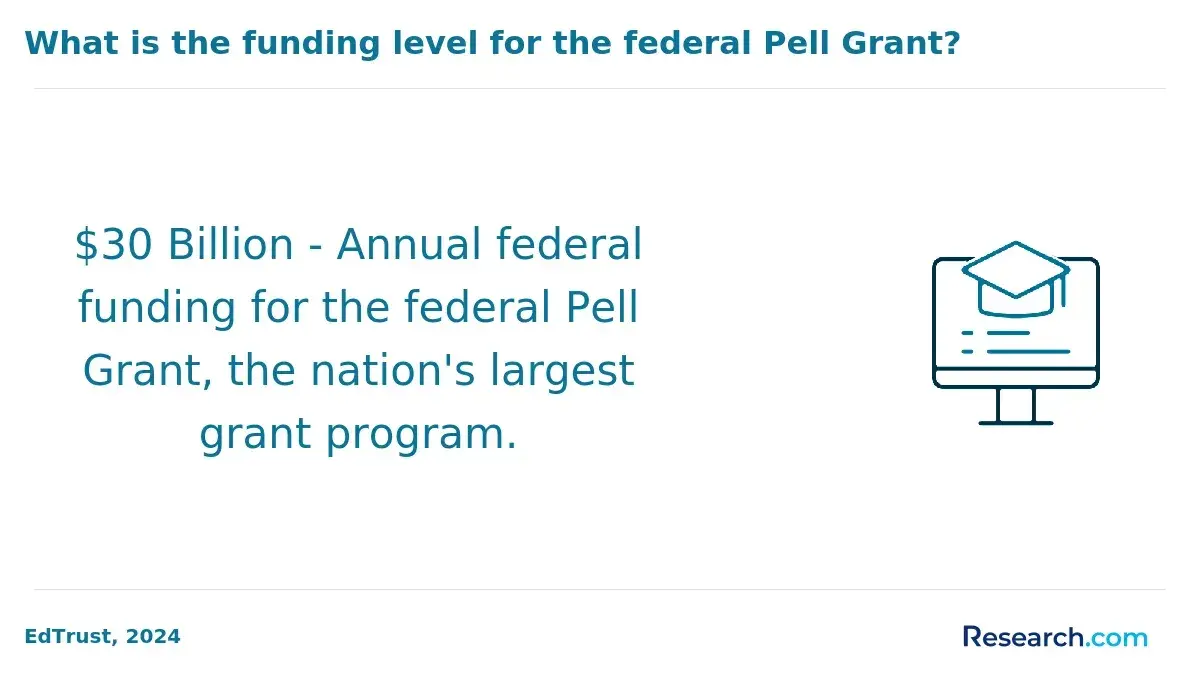
Federal Pell Grants: These grants offer need-based aid that does not require repayment, serving as the cornerstone of financial support for many students with limited income. FAFSA data shows eligible undergraduates can receive up to $7,395 annually, significantly lowering the overall cost of an online applied science degree.
Subsidized Federal Loans: These loans provide low-interest borrowing, with the government covering interest during enrollment. They should be considered only after exhausting grant and scholarship options to limit debt accumulation.
Institutional Scholarships: Many programs grant merit- and need-based scholarships directly to students enrolled in applied science fields. Such awards differ in amount but can meaningfully reduce tuition expenses when paired with federal aid.
State-Based Grants: Available to residents attending qualifying institutions, these grants often decrease tuition by several thousand dollars. Award amounts and eligibility criteria vary by state but remain an important funding source.
The College Board's Trends in Student Aid report underscores that combining grants and scholarships-known as stacking-helps minimize loan dependence and overall education costs. Applied science students can also access scholarships through professional groups and nonprofits focused on STEM disciplines. These targeted awards reward academic achievements and align with career objectives within applied science specialties.
To maximize no-cost funding before resorting to loans, students should complete the FAFSA early to unlock federal and state aid. Next, applying to institutional scholarships via school portals and exploring third-party scholarships focused on applied science will broaden support opportunities.
Reflecting on her journey, a professional who completed an online applied science bachelor's degree for under $10,000 highlighted the challenge of navigating numerous aid applications amid work and family responsibilities. She emphasized that early FAFSA submission was crucial, describing the process as initially overwhelming but ultimately rewarding. By persistently applying to scholarships, including those from specialized associations, she was able to cover nearly all costs without accruing significant debt. Her experience demonstrates how strategic financial planning and patience can make affordable education achievable.
How Many Transfer Credits Do Online Applied Science Bachelor's Programs Under $10,000 Accept, and How Does This Reduce Total Cost?
Generous transfer credit policies significantly lower costs in online applied science bachelor's degree programs priced under $10,000 by allowing students to transfer many previously earned credits. Schools that accept credits from accredited institutions, CLEP and DSST exams, as well as military training, reduce the number of courses students must complete. This lowers overall tuition, shortens time to graduation, and decreases fees.
Many programs allow up to 60 transfer credits-half the typical 120-credit bachelor's degree-meaning students only pay for the remaining half. For a program priced under $10,000 for the full degree, this effectively cuts tuition expenses by 50% or more. Additional savings often come from finishing sooner and entering the workforce earlier.
Some institutions known for highly flexible transfer policies include:
- Thomas Edison State University: Accepts up to 90 transfer credits from various sources such as CLEP, DSST, and military experience, enabling a large portion of prior learning to count toward degree requirements.
- Excelsior College: Allows up to 108 transfer credits, with robust recognition of standardized exams and military training, facilitating faster program completion and reduced costs.
- Charter Oak State College: Offers up to 90 transfer credits, prioritizing military training and credits from other accredited courses and exams, making it ideal for maximizing transfer flexibility.
Prospective students should carefully review their transcripts and evaluate any CLEP or DSST exam results before applying. Knowing which credits a program accepts helps avoid unnecessary coursework and expenses. A thorough credit audit ensures the greatest possible tuition savings and a smoother path to degree completion.
What Accreditation Should an Online Applied Science Bachelor's Program Under $10,000 Have to Ensure Quality and Employer Recognition?
Accreditation plays a vital role in identifying quality online applied science bachelor's degree programs under $10,000-ensuring that your education is recognized by employers and graduate schools. Regional accreditation is considered the gold standard in the United States, providing broader acceptance across professional fields compared to national accreditation.
Key regional accrediting bodies include:
- Higher Learning Commission (HLC): Accredits institutions primarily in the central U.S.
- Southern Association of Colleges and Schools Commission on Colleges (SACSCOC): Covers colleges and universities in the Southern states.
- New England Commission of Higher Education (NECHE): Oversees schools in the New England region.
Many affordable applied science programs also hold programmatic accreditation from specialized bodies relevant to specific career areas-for example, ABET accreditation for engineering technology disciplines. This recognition validates the rigorous quality of specific programs and enhances employer confidence.
Be cautious about programs with only national accreditation or no accreditation. These often face challenges with credit transferability, making it harder to continue education elsewhere, and may be less respected by employers. Even with tight budgets, choosing a non-accredited or nationally accredited-only degree can limit future career and educational opportunities.
Before enrolling, verify accreditation status through the U.S. Department of Education's official database to ensure your investment supports recognized standards. Recent studies show graduates from regionally accredited applied science programs have notably higher employment rates and better salary outcomes, making accreditation a crucial factor for career advancement.
What Are the Admission Requirements for Online Applied Science Bachelor's Programs Priced Under $10,000?
Affordable online applied science bachelor's degree programs under $10,000 generally require a high school diploma or GED as the essential credential for admission. Many programs set a minimum GPA threshold between 2.0 and 2.5, though some schools with open-admission policies do not strictly enforce GPA requirements, making these programs ideal for working adults or first-generation college students seeking flexibility. Standardized tests like the SAT and ACT are frequently waived in such programs to widen access and accommodate non-traditional learners. Prerequisite courses in math, biology, or chemistry may also be required, ensuring students possess foundational knowledge for technical coursework.
Open-admission and rolling-admission policies allow for year-round applications, offering convenient entry points for returning students balancing career and family responsibilities. Selective admissions, on the other hand, demand higher GPAs, recommendation letters, and personal statements, often linked to stronger academic support and greater employer recognition. The choice between selective and open-access programs depends on individual academic standing and long-term career objectives in the applied sciences.
Applicants not initially meeting admission criteria can enhance their qualifications by taking additional courses at community colleges, earning relevant certifications, or gaining practical experience in related fields. Conditional admission policies also provide opportunities for candidates to prove their capabilities once enrolled. These factors make affordable online applied science bachelor's degrees a viable option for career advancement without excessive financial burden.
For those curious about related careers, exploring whether is medical billing and coding a good career may offer additional perspectives on technical fields aligned with applied science disciplines.
- High School Diploma or GED: A foundational requirement ensuring basic academic readiness, with all accredited programs expecting official proof of secondary education completion.
- Minimum GPA Thresholds: Most programs require a minimum GPA around 2.0 to 2.5, though some open-admission schools accept students regardless of GPA.
- Standardized Test Policies: Many online applied science programs waive SAT/ACT scores to increase access, focusing instead on other aspects of the application.
- Prerequisite Coursework: Required to prepare students for technical curricula, prerequisites usually include math and science classes.
- Admission Types: Selective admissions provide enhanced academic support but are more competitive, while open-admission policies offer flexible entry for adult learners.
- Application Strengthening: Additional coursework, certifications, and relevant work experience can improve admission chances for those who do not meet minimum requirements initially.
How Do Online Applied Science Bachelor's Programs Under $10,000 Support Student Success Through Advising and Career Services?
Online applied science bachelor's degree programs priced under $10,000 increasingly emphasize comprehensive student support services to promote success and career readiness. For students navigating online applied science bachelor's degree advising services, these supports help manage coursework, deadlines, and workforce preparation, especially for those balancing education with work or family.
- Personalized Academic Advising: Many affordable programs assign dedicated academic advisors who assist in course planning, degree auditing, and transfer credit evaluation. This tailored advising reduces delays and fosters on-time graduation, which can significantly lower the total cost of the program.
- Accessible Tutoring and Mentorship: Low-cost programs commonly offer tutoring and faculty or peer mentorship to help students with challenging technical subjects. These resources maintain steady academic progress and support confidence building, vital for success in applied science bachelor's degree advising services.
- Mental Health and Wellness Support: Recognizing the stresses of online learning, quality programs provide counseling and stress management workshops. Such wellness resources correlate with higher student persistence and degree completion rates.
- Career Services Emphasizing Practical Outcomes: Even budget-friendly programs feature career coaching, resume feedback, interview preparation, and internship coordination. Active job boards and alumni networks connect students to real employment opportunities, supporting career transitions and advancement.
- Data-Driven Student Satisfaction and Success: According to the National Survey of Student Engagement (NSSE), some affordable applied science programs achieve satisfaction levels comparable to pricier options. Their strong advising and career support systems contribute to timely degree completion and improved workforce placement, maximizing value-an important consideration for those seeking career support for applied science graduates under 10,000. For example, affordable options like reputable rn to bsn programs illustrate how robust support enhances student outcomes despite low tuition.
What Concentrations or Specializations Are Available Within Online Applied Science Bachelor's Programs Under $10,000?
Online applied science bachelor's degrees under $10,000 often offer various specializations designed to meet labor market needs while maintaining affordable tuition. Each concentration connects students with distinct career opportunities and salary prospects based on Bureau of Labor Statistics (BLS) projections.
- Environmental Science: Focuses on natural resource management and environmental consulting. Jobs in this field are expected to grow 8% through 2031, with median salaries near $73,000. Some roles may require state-specific certifications, adding extra costs beyond tuition.
- Health Informatics: Prepares students to manage healthcare data and systems. With a 17% growth rate predicted for medical and health services managers, graduates often earn over $100,000 annually. Additional certification such as RHIA may involve fees after graduation.
- Industrial Technology: Covers manufacturing processes, quality assurance, and safety. Projected job growth is about 4%, and median pay is around $108,000. Voluntary certifications like Six Sigma can enhance employability but cost extra.
- Information Technology: Emphasizes areas like cybersecurity and network administration. This sector expects 15% job growth with median wages near $97,000. Certifications like CompTIA or Cisco credentials usually require separate expenses.
- Construction Management: Prepares students for roles in project oversight and infrastructure development. Construction management positions are forecasted to grow 5%, with median salaries close to $98,000. State licensing requirements may incur additional fees.
Consider your personal interests alongside projected growth and certification costs when choosing a track. Many affordable online programs also accept transfer credits and prior learning assessments, which can reduce time and expenses while ensuring degree completion from accredited institutions.
What Technology and Learning Platforms Do Online Applied Science Bachelor's Programs Under $10,000 Use?
Learning management systems like Canvas, Blackboard, and Moodle form the foundation of affordable online applied science programs. They organize course materials, facilitate communication, and support assessments, significantly shaping the student experience. Even in budget-friendly programs, the ease of navigation and reliability of these platforms directly impact engagement and satisfaction.
Applied science students should anticipate using specialized software tailored to their disciplines, such as CAD for engineering or GIS for environmental studies. Virtual labs and simulation tools often complement coursework, providing practical experience remotely. While some programs include these resources in tuition, others may charge extra, potentially increasing total costs beyond $10,000.
Accessibility is critical for students with limited internet access or older devices. Many programs offer downloadable content and low-bandwidth options to enhance usability. Minimizing dependence on high-speed streaming ensures smoother participation for those with constrained technology.
To succeed, students need a computer with at least 8GB RAM, an updated operating system, and stable internet speeds around 10 Mbps or higher. Headsets with microphones support interaction in virtual labs and discussions, while antivirus software helps protect system security.
- Learning Management Systems: Platforms like Canvas, Blackboard, and Moodle provide centralized access to course materials, assignments, and grades, designed to be user-friendly and accessible.
- Field-Specific Software: Programs often incorporate specialized tools such as CAD and GIS; verify if these are included or require additional payment.
- Virtual Labs and Simulations: Interactive labs replicate real experiments to build practical skills; availability and fees vary.
- Bandwidth Optimization: Many programs include options for low bandwidth and downloadable resources to support students with limited internet.
- Technical Requirements: A modern PC or Mac with 8GB RAM, up-to-date software, and reliable internet are essential for full participation.
What Graduates Say About Their Online Applied Science Bachelor's Degree Programs Under $10,000
- Major: "I chose the online applied science bachelor's degree program under $10,000 because affordability was a top priority for me without sacrificing quality. The program's flexible schedule allowed me to balance work and study effectively, which was a game changer. Completing this degree has opened doors to new job opportunities and strengthened my confidence in the field."
- Douglas: "Reflecting on my experience, the most impressive aspect of the online applied science bachelor's program was how accessible it made higher education without the heavy financial burden. The cost was surprisingly reasonable-well under $10,000-which eased my worries about student debt. Professionally, earning this degree gave me critical skills that have accelerated my career growth and expanded my network."
- Evelyn: "The decision to enroll in the online applied science bachelor's degree under $10,000 was strategic-I needed a respected credential that fit within my budget. The curriculum was robust and practical, providing real-world knowledge I could apply immediately at work. Since graduating, I've noticed a measurable impact on my job performance and career advancement."
Other Things You Should Know About Applied Science Degrees
The cost per credit hour for online applied science programs under $10,000 is significantly lower than the national average. Most affordable programs offer rates between $150 and $250 per credit hour, while the national average can exceed $400 per credit hour. This makes these programs an accessible option for students seeking quality education without excessive financial burden.
Yes, several fully online applied science bachelor's programs under $10,000 do not differentiate between in-state and out-of-state students, charging a flat tuition rate for all. This tuition model benefits students from any state who want to avoid extra fees commonly applied to out-of-state enrollees. Checking a school's tuition policy for online learners is essential to identify these programs.
Using CLEP, DSST, or prior learning assessments allows students to earn college credits without taking certain courses, effectively reducing tuition costs. By bypassing courses, students save on fees and keep their total degree costs under $10,000, making an applied science degree more affordable.
References
- Scholarships for College Students https://accessscholarships.com/blog/50-scholarships-for-college-students/
- Financial Aid For Online Colleges https://www.affordablecollegesonline.org/financial-aid/financial-aid-for-online-colleges/
- Bachelor's Degrees https://www.sjrstate.edu/bachelors10k
- Average Cost of Online College [2025]: Yearly Tuition + Fees https://educationdata.org/average-cost-of-online-college
- 15 Most Affordable Online Bachelor's Degree Programs for 2026 - College Educated https://collegeeducated.com/online-degrees/affordable-online-bachelors-degree-programs/
- [2026] 10,000+ Free Courses from Tech Giants: Learn from Google, Microsoft, Amazon, and More — Class Central https://www.classcentral.com/report/big-tech-free-courses/
- Regionally Accredited Online Colleges: What You Need to Know | Tiffin University https://go.tiffin.edu/blog/regionally-accredited-online-colleges-what-you-need-to-know/
- 15 Best Online Learning Platforms for Professionals, and Lifelong Learners In 2025 https://buddyboss.com/blog/best-online-learning-platforms-for-professionals-and-learners/
- Understanding Academic Accreditation for Online Universities https://www.qahe.org/article/understanding-academic-accreditation-for-online-universities/
- 25 Online Bachelor's Colleges Under $10K Net Price - Affordable Schools https://www.affordableschools.net/online-bachelors-under-ten-thousand-net/