2027 Online Applied Psychology Master's Programs at Accredited U.S. Universities

Co-Founder and Chief Data Scientist
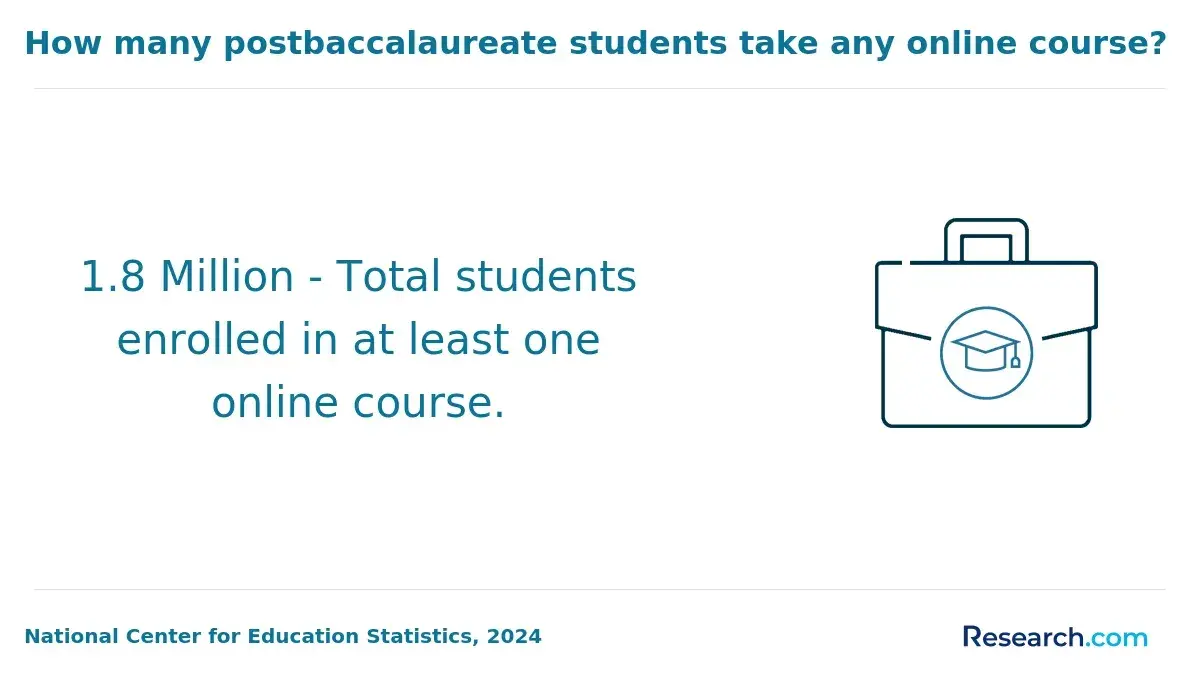
Choosing an online applied psychology master's program involves more than tuition comparisons. Many face decisions about admission flexibility, program delivery, and how accreditation affects licensing eligibility post-graduation. Recent data from the National Center for Education Statistics highlights a 15% uptick in enrollment for online graduate psychology programs in 2024, reflecting growing demand for accessible, career-oriented education.
This trend underscores the need to evaluate program structures that accommodate working professionals' schedules without sacrificing academic rigor. Understanding financial aid nuances, potential hidden fees, and realistic career pathways can determine whether an online program truly aligns with long-term professional goals in applied psychology.
Key Things to Know About Online Applied Psychology Master's Programs at Accredited U.S. Universities
- Admission requirements often prioritize relevant work experience over standardized tests, which may extend program entry timelines but improve workforce alignment by emphasizing practical skills over academic metrics.
- Programs typically offer asynchronous course delivery, enhancing access for place-bound or working adults but limiting synchronous peer interaction, which can affect real-time collaboration skills valued by employers.
- Accreditation by recognized bodies ensures curriculum rigor, yet varied state licensing recognition complicates clinical career paths, requiring students to weigh geographic flexibility against credential utility in licensure-dependent roles.
What Is the Overall Structure and Purpose of Online Applied Psychology Master's Programs at Accredited U.S. Universities?
Online applied psychology master's programs at accredited U.S. universities serve as targeted professional training platforms that balance flexibility with academic rigor, aiming to meet the evolving needs of diverse student populations and labor market demands. These programs differ from purely research-oriented or clinical psychology degrees by concentrating on practical applications of psychological principles in real-world environments like workplaces, schools, and healthcare settings.
The accredited framework ensures these programs maintain standards that support graduate employability and professional licensing, which many employers require for recognized expertise.
- Purpose: These programs prioritize equipping students with skills for solving applied challenges rather than solely focusing on theoretical research, responding to a growing employer preference for candidates who demonstrate immediately transferable competencies.
- Credit Load: Most curricula require between 30 and 45 credit hours, designed for completion over 2 to 3 years, though accelerated options condense this timeline to 12 to 18 months, trading off depth of immersion for speed, a crucial consideration for working professionals.
- Delivery Methods: A hybrid of asynchronous coursework and synchronous sessions enables learners to manage their own schedules while fostering peer interaction and instructor feedback, reflecting the practical need for flexibility among non-traditional students including career changers or first-generation graduate enrollees.
- Program Structure: Core courses commonly cover applied psychological theories, ethics, quantitative methods, and organizational behavior, supplemented by electives tailored to industry trends; experiential components such as capstones or practicums are essential for bridging classroom knowledge with workplace realities.
- Accreditation: Regional and specialized accreditations affirm program quality, ensure eligibility for professional certifications, and enhance credit transferability, critically impacting graduates' ability to pursue licensure or recognized roles in competitive employment sectors.
- Variations from On-Campus: While mirroring traditional program content, online formats shift significant responsibility onto students for time management and practical experience coordination, which can present challenges without structured local partnerships-a key factor for prospective students weighing online against on-campus delivery.
Prospective students must weigh these structural elements against personal constraints and career objectives. For example, a working professional with limited time may value accelerated, asynchronous pathways but should consider potential gaps in hands-on experience that employers in the applied psychology workforce often emphasize.
Meanwhile, recent undergraduates or first-generation students unfamiliar with nuanced program expectations benefit from understanding this clear curriculum framework and accreditations to navigate admission criteria and long-term licensing impacts more judiciously. Consideration of all these variables aligns with a data-informed strategy rather than solely chasing the quickest or cheapest route.
Those researching options must balance financial and time investments critically; tuition differentials and hidden fees can heavily affect net value, making detailed comparisons indispensable. For additional context on evaluating educational tradeoffs across disciplines, including comparable practical-professional pathways, exploring resources like programs listed among the easiest nursing schools to get into can offer insights into institutional selectivity and cost considerations that parallel applied psychology master's admissions.
Which Accrediting Bodies Recognize Online Applied Psychology Master's Programs, and Why Does Accreditation Status Matter?
Choosing an online applied psychology master's program without careful attention to accreditation can result in costly career setbacks, including ineligibility for licensure or limited job prospects. The distinction between regional and programmatic accreditation is critical because each addresses different quality standards that affect long-term professional utility.
Regional accreditation, granted by one of six agencies recognized by the U.S. Department of Education, certifies overall institutional quality and impacts the ease of credit transfer and qualification for federal financial aid. However, for applied psychology, this is often insufficient alone.
Programmatic accreditation from bodies such as the American Psychological Association (APA) or the Council for Accreditation of Counseling and Related Educational Programs (CACREP) confirms that an individual program meets specialized professional standards crucial for licensure and employer recognition, especially in clinical and counseling tracks.
- Regional Accreditation: Validates institutional integrity and academic quality but does not guarantee acceptance by state licensing boards or employers for psychology-specific roles.
- Programmatic Accreditation: Ensures curriculum and clinical training meet industry criteria; absence can block licensure pathways, restricting workforce entry despite completing a regionally accredited degree.
- Licensure and Employment: Many states require graduation from a program with recognized programmatic accreditation for licensure. Employers in healthcare and applied psychology increasingly prioritize credentials from programs with these endorsements.
- Credit Transfer and Financial Aid: Regional accreditation facilitates smoother credit transferability and access to federal loans, but programmatic accreditation dictates professional credential acceptance.
- Verification and Due Diligence: Prospective students should verify accreditation status against state licensing requirements and employer expectations before weighing cost, program delivery format, or convenience.
What Are the Admission Requirements for Online Applied Psychology Master's Programs at Accredited U.S. Universities?
Admission into online applied psychology master's programs at accredited U.S. universities often requires more than merely meeting baseline qualifications, especially given varied institutional standards and the practical demands of the field. For example, a recent graduate evaluating entry criteria for master's degrees in applied psychology delivered online in the United States must weigh a program's selectivity against their own academic record and experience to maximize long-term employability.
- Undergraduate GPA: Competitive programs generally expect a minimum GPA near 3.0, while some public or open-enrollment schools admit students with GPAs as low as 2.5, reflecting differing levels of rigor and peer academic strength.
- Prerequisite Coursework: Foundational knowledge in psychology, statistics, or research methods is commonly required; however, pathways like conditional admission or prerequisite bridge courses accommodate applicants without direct undergraduate preparation.
- Letters of Recommendation: Academic references predominate for highly selective institutions, whereas programs with a focus on applied skills may place greater weight on professional or supervisory endorsements.
- Personal Statement: This essay is a decisive element that conveys an applicant's motivation and alignment with program goals beyond measurable criteria.
- Standardized Tests: Increasingly, programs waive GRE requirements-particularly at public or less selective universities-signaling a shift towards holistic evaluation over standardized scores.
- Professional Experience: Some curricula mandate or prefer relevant work or volunteer experience, enhancing real-world applicability, though many remain accessible to recent graduates lacking this background.
- Institution Type Impact: Public universities often offer broader access and affordability, while private or selective institutions impose stricter admissions reflecting program intensity and potential credential value.
- Competition vs. Minimums: Achieving minimum criteria rarely guarantees acceptance; applicants should investigate median admitted profiles to realistically assess competitiveness.
- Pathways for Non-Traditional Students: Career changers, individuals with lower GPAs, or non-psychology majors can still gain admission through programs emphasizing applied training or conditional acceptance.
Balancing these factors prudently is critical for working professionals considering a transition into applied psychology, recent graduates comparing offers, or place-bound students. Researching program nuances, including costs and licensing recognition, will clarify the true value each institution offers.
For those exploring complementary career options, insights into jobs with a biology degree illustrate the broader strategic decisions involved in aligning academic credentials with labor market opportunities.
What Is the Minimum GPA Requirement for Applied Psychology Master's Program Admission, and How Does Selectivity Correlate With Program Reputation?
Admissions for online applied psychology master's programs often require a minimum undergraduate GPA ranging approximately from 2.5 to 3.5, reflecting considerable variation based on a program's selectivity and institutional standing. While programs with higher GPA minima usually aim to maintain rigorous academic standards and boast stronger licensure exam outcomes, this is not a universal guarantee of superiority.
Some less selective schools admit candidates with lower GPAs yet provide ample practical training enabling comparable professional licensure performance.
Applicants should distinguish between minimally meeting GPA criteria and being truly competitive; these thresholds are often starting points in comprehensive evaluations. Admissions committees typically apply holistic review processes that balance GPA with factors such as relevant professional experience, quality of personal statements, letters of recommendation, and occasionally standardized test scores.
Hence, individuals near or slightly below minimum GPA requirements can strengthen their applications through other admissions components.
- Minimum GPA Range: Generally between 2.5 and 3.5 on a 4.0 scale, with more selective programs expecting 3.0 or higher, while some offer conditional admission or probationary alternatives for lower GPAs.
- Selectivity and Reputation: Higher GPA standards often correlate with better national rankings and alumni outcomes but do not ensure superior licensure pass rates when compared to well-structured less selective programs.
- Holistic Assessment: GPA is one dimension of candidate evaluation; relevant experience and alignment with program philosophy carry significant weight in admissions decisions.
- Alternative Admission Pathways: Options like conditional acceptance, post-baccalaureate certificates, or preparatory coursework provide routes for candidates below standard thresholds to bolster readiness and credentials.
- Career Impact: Employer emphasis favors applied skills, practical internships, and licensure status over GPA alone, especially in client-centered applied psychology roles.
A graduate recalled applying to an online applied psychology master's program amid rolling admissions. Although their GPA was slightly below some stated minima, they delayed submitting final materials to improve their personal statement and gather stronger recommendations.
The wait introduced uncertainty but ultimately paid off when the admissions committee acknowledged professional experience alongside academics, granting conditional acceptance-validating that timing and strategic application refinement can offset initial GPA disadvantages during selection.
How Many Credit Hours Are Required to Complete an Online Applied Psychology Master's Program, and How Does This Affect Total Cost and Time-to-Degree?
Online applied psychology master's programs at accredited U.S. universities typically demand a credit load ranging from approximately 30 to over 60 hours, influenced by accreditation expectations, inclusion of thesis or capstone projects, and practicum or internship components. This range tends to be higher than many other master's degrees due to the program's emphasis on integrating theory with applied research, practical skills, and professional ethics.
The total number of credits directly affects tuition costs, which are usually calculated on a per-credit basis. For instance, a program requiring 36 credits at $600 per credit results in $21,600 tuition, whereas a 60-credit program charging $500 per credit totals $30,000. Despite the lower per-credit rate, the larger credit requirement leads to a greater overall expense, demonstrating why evaluating total credit hours alongside per-credit costs is essential for an accurate financial assessment.
Credit load also impacts the duration of study, particularly for part-time students who must balance coursework with employment or personal obligations. Lengthier programs increase semesters enrolled, which can result in higher living expenses and lost income opportunities during extended study periods. These factors should be carefully weighed against potential career benefits when selecting a program at online colleges.
- Credit Hours: Range widely due to program design choices and accreditation demands, often exceeding 60 credits.
- Cost Impact: Total tuition reflects multiplication of required credits by the per-credit price, which may hide true expense differences.
- Time to Degree: Higher credit requirements extend program length, affecting part-time enrollees most.
- Opportunity Cost: Longer enrollments translate into extra living costs and income forgone during study.
- Recommendation: Prioritize programs with transparent total credit requirements to accurately project cost and timeline.
What Specializations and Concentrations Are Available in Online Applied Psychology Master's Programs at Accredited Universities?
Choosing specializations within online applied psychology master's program specializations accredited US universities significantly shapes both career trajectories and educational investment. For example, a student targeting industrial-organizational psychology, known for its corporate demand and higher median salaries, must weigh costs against future earnings potential.
The availability of concentrations diversifies employability options but also affects tuition and program length, requiring careful consideration beyond mere program existence.
- Common Specializations: Programs frequently offer tracks such as industrial-organizational psychology, health psychology, forensic psychology, human factors, and counseling psychology, each aligning with distinct workforce roles from organizational consulting to clinical support.
- Structure: Concentrations appear as embedded curriculum tracks, elective clusters, or add-on certificates. Embedded tracks integrate without adding credits, while electives or certificates usually raise credit loads and extend time-to-degree, impacting total cost and student scheduling.
- Career Impact: Alignments with labor market demands are critical. Bureau of Labor Statistics data indicate industrial-organizational specialists access broader corporate roles with better pay, whereas counseling tracks require scrutiny of state board licensure eligibility to ensure professional validity.
- Program Cost: Add-on certificates or extended credit requirements can increase tuition. Those balancing tuition investment against career outcomes must analyze these tradeoffs carefully to avoid unforeseen financial burdens.
- Faculty Expertise: The presence of faculty with direct industry experience or professional certifications enhances specialization credibility and practical training valued by employers, differentiating programs beyond curriculum titles.
- Licensing and Recognition: Not all concentrations lead to licensure. Prospective students aiming for clinical or counseling roles need to verify that their chosen concentration qualifies for required certifications and state-level board approvals before enrollment.
For those comparing costs and pathways, insights from dietetics programs highlight similar tradeoffs in specialization-driven budgeting and outcomes across disciplines.
How Do Online Applied Psychology Master's Programs at U.S. Universities Compare in Format-Synchronous, Asynchronous, and Hybrid Delivery?
When choosing an online applied psychology master's program, delivery format fundamentally shapes not only learning dynamics but also logistical and financial outcomes. Deciding between fully asynchronous, synchronous live-online, and hybrid models involves weighing flexibility against real-time engagement and total cost impact.
- Fully Asynchronous: Enables maximal scheduling freedom as students access lectures and assignments on their own time, suiting those balancing irregular work hours or caregiving duties. This often translates to lower tuition due to reduced need for live instruction and platform demands but limits immediate interaction with peers and faculty, potentially affecting collaborative learning and networking.
- Synchronous Live-Online: Demands attendance in scheduled virtual classes, encouraging prompt feedback and richer dialogue akin to traditional classrooms. However, fixed timings can conflict with professionals in varying time zones or unpredictable shifts. These programs may incur higher tuition reflecting the operational load of live technology and faculty involvement.
- Hybrid: Blends online coursework with periodic in-person or synchronous sessions, offering a compromise between flexibility and direct engagement. Beyond tuition, students should factor in travel expenses and time away from work. This format favors those able to commit to occasional on-campus presence for hands-on experiences but can hinder those with mobility or location constraints.
Prospective students must probe beyond generic "online" branding. Essential inquiries include how much synchronous participation is mandatory, the frequency and location of any residencies, and the technology platforms used-critical elements that align with one's learning style, bandwidth capacity, and domestic responsibilities. Given tuition variability tied to delivery type and hidden costs like travel, aligning program format with personal and professional realities is vital to optimizing return on investment.
One graduate recalls their dilemma during admissions: "Although the fully asynchronous option appealed because of work demands, waiting weeks during rolling admissions for confirmation caused uncertainty in scheduling finances and job shifts. The intermittent updates forced them to consider backup plans, underscoring how timing and clarity in program communication become as crucial as format choice itself."
What Is the Average Cost per Credit Hour for Online Applied Psychology Master's Programs, and How Does It Differ Across Institution Types?
Cost per credit hour is a crucial but often misunderstood metric in evaluating online applied psychology master's programs. Tuition varies not only by institution type but also by residency status and additional fees, which directly influence the true financial commitment.
For example, a working professional who relocates may initially qualify for in-state rates at a public university but risk losing those discounts if residency requirements are not maintained, altering long-term affordability and potentially extending time to degree completion.
- Public Universities: Public institutions generally charge $300 to $600 per credit hour for in-state students, making them the lowest-cost option for residents. Out-of-state rates often exceed $800, reflecting state subsidy policies that shape financial access but limit flexibility for place-bound or moving students.
- Private Nonprofit Institutions: Tuition rates typically range from $700 to $1,200 per credit, uniform regardless of residency. These programs may add fees for technology or materials, making sticker prices starting points rather than comprehensive figures.
- Private For-Profit Schools: These schools often have the highest per-credit costs, sometimes above $1,200, with less-transparent fee structures. Such pricing demands careful scrutiny of return on investment, especially as some employers weigh program reputation heavily in hiring decisions.
- Residency Impact: While residency discounts benefit many public university students, private programs rarely differentiate pricing by state, stabilizing costs but often increasing them.
- Program-Level Fees: Additional charges for courses, materials, and administration inflate total expenses beyond base tuition figures.
- Pricing Models: Variations between per-credit billing versus flat-semester rates affect budgeting predictability.
- Interpreting Costs: Per-credit rates serve as initial benchmarks; total costs hinge on credit requirements, optional courses, and financial aid packages.
- Total Cost Consideration: Accurate budgeting requires integrating per-credit costs with program length, fees, and available assistance, reinforcing the need for a holistic view.
Prospective students who evaluate admission offers for online applied psychology master's degrees should prioritize transparent, outcome-focused financial assessments. Moreover, considering emerging workforce patterns, especially in healthcare and human services sectors, can inform timing and program selection.
For those comparing pacing options, programs like the fastest FNP program online reflect a growing trend toward accelerated, intensive graduate education that balances time and tuition tradeoffs effectively.
How Do In-State and Out-of-State Tuition Policies Apply to Online Applied Psychology Master's Programs, and Which Schools Offer Flat Residency-Neutral Rates?
Public universities have traditionally charged higher tuition rates for out-of-state online students pursuing an applied psychology master's degree, reflecting established distinctions rooted in residency status. This differential often creates significant cost barriers for non-resident distance learners, complicating budgeting and potentially limiting access for working professionals relocating or studying from different states.
However, a growing number of institutions recognize these challenges and have adopted flat, residency-neutral rates to create equitable pricing structures regardless of a student's physical location. This shift aligns with employer expectations favoring graduates from accredited programs without penalizing geographic mobility or online delivery format.
For example, Oregon State University and the University of North Dakota now offer uniform per-credit tuition rates for their online applied psychology master's programs, eliminating financial penalties tied to residency. In contrast, schools like the University of Florida and the University of Arkansas maintain traditional differential rates, which may influence prospective students' decisions based on their ability to pay or potential return on investment.
Regional tuition reciprocity agreements provide a middle ground by offering discounted out-of-state tuition to qualifying students at member institutions under compacts such as the Western Interstate Commission for Higher Education (WICHE), the Southern Regional Education Board (SREB), and the Midwest Student Exchange Program.
These programs can shrink the cost gap significantly but require careful verification, as eligibility and participation vary. Prospective students should directly confirm current residency pricing with a program's bursar or financial aid office since tuition policies fluctuate annually and are not always transparently communicated online.
- Uniform Tuition: Universities such as Oregon State University and the University of North Dakota have moved toward flat per-credit pricing for online applied psychology master's degrees, eliminating residency-based cost disparities.
- Differential Rates: Schools like the University of Florida and the University of Arkansas continue to charge higher fees for out-of-state online learners, reflecting traditional public university policies.
- Reciprocity Agreements: Programs participating in regional compacts such as WICHE, SREB, and the Midwest Student Exchange Program offer discounted tuition to qualifying out-of-state students, narrowing the gap with in-state rates.
- Policy Variability: Tuition policies can change between academic years and may not always be fully transparent online; prospective students should confirm current residency pricing directly with the program's bursar or financial aid office to avoid unexpected costs.
When assessing financial commitments against the quality and accessibility of online degrees, especially for place-bound, career-changing, or first-generation graduate students, understanding these tuition structures is critical. This consideration should be part of a broader evaluation of admission requirements, program accreditation, delivery modality, and career outcomes, which you can explore further through comprehensive resources like the APA accredited online programs.
What Mandatory Fees and Hidden Costs Are Added to Tuition for Online Applied Psychology Master's Programs?
Assessing the true cost of an online applied psychology master's program requires scrutiny beyond stated per-credit tuition, as cumulative mandatory fees and hidden expenses frequently raise the final financial burden. For working professionals and recent graduates alike, these costs affect budget planning and may influence which institution or program format is viable, especially when balancing employment earnings with education outlays.
Programs featuring practicum or fieldwork components add complexity, with variable fees linked to licensure and placement requirements. Employers in healthcare, education, and private sectors often expect candidates to hold credentials that reflect this practical training, making these hidden costs a critical consideration in evaluating net return on investment.
- Technology Fees: Annual or per-semester charges of $100-$500 support digital platforms and IT services essential for online learning continuity.
- Program or Course Fees: Specialized applied psychology courses may add several hundred dollars yearly to cover guest lectures and unique instructional materials.
- Student Services Fees: Access to library databases, career counseling, and virtual support can require several hundred dollars each term.
- Graduation and Transcript Fees: One-time fees between $50 and $150 cover official documents and commencement participation.
- Liability Insurance and Background Checks: Practicum mandates professional liability insurance and criminal background reviews, costing $100-$300 prior to field placements.
- Proctoring Fees: Online exam monitoring can add $30-$100 per test, depending on frequency.
- Required Software and Textbooks: Licensing specialized psychological assessment tools and textbooks frequently exceeds $1,000 across the program length.
- Licensing Exam Preparation: Supplemental prep materials and courses for certification, though variable, represent significant additional expenses when aiming for state or national licensure.
Because tuition rates alone rarely capture total attendance costs, prospective students are advised to engage directly with current attendees or alumni to uncover real-world financial obligations. This approach provides a clearer perspective than institutional disclosures alone, mitigating unexpected budget strain that can jeopardize academic progress or diminish workforce readiness amid a competitive job market.
What Graduates Say About Online Applied Psychology Master's Programs at Accredited U.S. Universities
- Eddie: "Balancing a full-time job with the master's in applied psychology was challenging, especially given my family commitments, but the program's flexibility allowed me to pace myself. I chose it mainly for its remote format and practical internships, which ended up being crucial; my internship led directly to a coordinator role where I apply behavioral assessments regularly. That said, I realized post-graduation that without licensure, salary growth is capped unless I pursue further credentials."
- Sage: "Money was tight when I considered transitioning from social work to applied psychology, so I opted for an online master's that emphasized portfolio-building over licensure preparation. This decision meant I could quickly show potential employers practical skills through my project work, leading to a remote position focused on user experience research. Still, I've noticed that some clinical roles remain out of reach without certification, so I'm planning for that next step."
- John: "After working in HR for years, I wanted to deepen my understanding of organizational behavior but couldn't afford to pause my career. The applied psychology master's program I picked offered evening classes and strong connections to local companies for internships. Completing the internship was a turning point-it gave me real-world exposure and helped me land a talent development role, though competing for senior positions remains tough without a doctorate."
Other Things You Should Know About Applied Psychology Degrees
Accreditation plays a crucial role in employer and licensing board recognition, but not all accreditations carry the same weight. Regional accreditation combined with specialized psychology-related accreditation, like APA for clinical psychology tracks, enhances acceptance among employers and boards. While many employers accept these degrees for non-licensing roles, students aiming for clinical licensure should verify whether the online program meets state licensing requirements, as some states still require on-campus or hybrid experiences for eligibility. Choosing a program accredited by recognized bodies reduces the risk of limited job opportunities or licensure barriers after graduation.
Graduates from online applied psychology programs often see varying outcomes influenced by program quality, concentration, and internship components. Degree holders with strong practicum or internship components report higher employment rates and better salaries, particularly when those internships are local and employer-recognized. Programs without clinical licensure focus typically steer graduates toward human resources, organizational development, or research roles, which affect both job prospects and salary scales. Licensure pass rates tend to be lower in programs lacking rigorous clinical training, making it essential to prioritize programs with hands-on experiences if licensure is a primary goal.
Public universities generally offer more affordable tuition rates with comparable academic rigor to private nonprofits, often providing higher value especially for in-state students. Private nonprofits may charge more but sometimes offer specialized curricula and stronger alumni networks that can enhance job placement. For-profit programs often have higher costs and variable outcomes; their job placement rates tend to lag behind nonprofit institutions, and some employers view their credentials with skepticism. Evaluating cost relative to tangible career advancement opportunities and employer acceptance is essential to maximize ROI in this field.
References
- Masters in Psychology | Online Masters in Psychology | University of Phoenix https://www.phoenix.edu/online-psychology-degrees/psych-masters-degree.html
- IMPORTANT LINKS https://www.fmarion.edu/psychology/graduatestudies/
- Fees & Funding https://spot-psychology.eu/spot/finance/program-fees
- Admissions Requirements - The Michigan School of Psychology (MSP) https://msp.edu/admissions-2/requirements/
- Most Affordable Online Master's in Psychology: Find Low-Cost Programs https://www.degreesforgood.org/online-degrees/psychology-programs/masters/most-affordable/
- How Long Does It Take to Complete a Master’s Degree Program? https://www.calsouthern.edu/articles/how-long-is-a-masters-degree
- What to Look For with Accreditation https://mastersinpsychologyguide.com/articles/masters-in-psychology-accreditation-what-to-look-for/
- 2025's Most Affordable Online Master’s Degrees in Psychology https://www.onlinemastersdegrees.org/most-affordable/psychology-programs/
- Applied Psychology M.S. https://www.angelo.edu/academics/programs/psychology-applied-ms/