2027 Cost per Credit for Online Applied Psychology Master's Programs: Tuition Comparison Guide

Co-Founder and Chief Data Scientist
Choosing an online applied psychology master's program often hinges on more than just sticker tuition. Prospective students face a maze of per-credit costs that vary widely by institution type, residency rules, and program delivery methods.
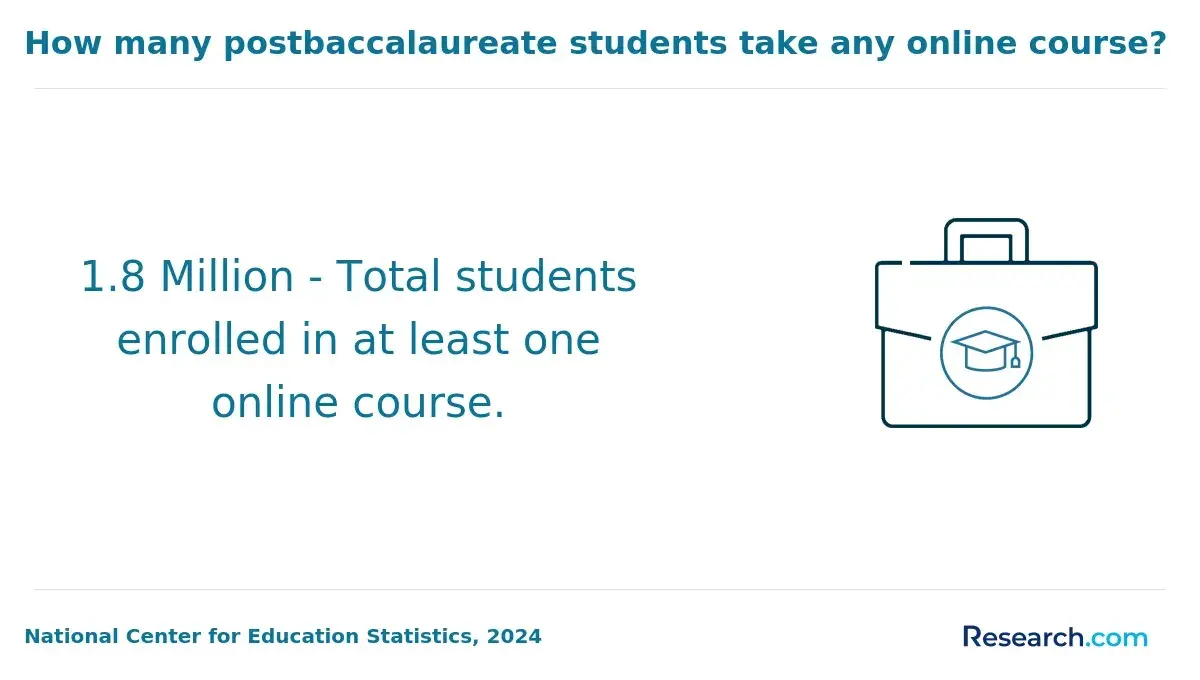
Hidden fees and differences in accreditation can further complicate comparing true educational expenses. With online graduate enrollment projected to grow steadily-according to the National Center for Education Statistics, distance education enrollment rose by 15% in 2023-understanding these factors is critical.
This guide helps decode tuition details combined with financial aid options and licensure prerequisites, enabling informed decisions on the real cost and value of applied psychology master's degrees.
Key Things to Know About the Cost per Credit for Online Applied Psychology Master's Programs
- Per-credit tuition varies widely between public, private nonprofit, and for-profit institutions, requiring nuanced cost-benefit analysis since lower per-credit fees may coincide with hidden expenses or weaker accreditation affecting professional mobility.
- Accreditation and licensure relevance directly impact employer acceptance; degrees lacking recognized accreditation can limit licensing eligibility and reduce workforce competitiveness despite lower sticker prices.
- Residency policies often restrict in-state rates to local students, so out-of-state enrollees face elevated costs, complicating budgeting and access timing for place-bound or transitioning professionals relying on affordable, flexible delivery formats.
What Is the Average Cost per Credit Hour for Online Applied Psychology Master's Programs, and How Does It Compare Across Institution Types?
Cost per credit hour provides a sharper lens for evaluating online applied psychology master's programs than total tuition figures, which can obscure meaningful differences driven by variable program lengths and institutional approaches. For instance, two candidates might see identical total program costs but face vastly different commitments per credit, impacting their ability to manage workload alongside employment or personal responsibilities.
Graduates entering psychology-related fields, especially where licensure hinges on specific coursework, must weigh not only price but credit intensity to forecast both time and financial investment accurately.
Analyzing the average cost per credit hour reveals clear stratification by institution type. Public universities typically present the most accessible pricing-often between $350 and $600 per credit-fueled by state subsidies and in-state residency benefits.
Private nonprofit institutions, balancing smaller class sizes and diversified investment in resources, generally charge from $700 to $1,100 per credit, reflecting a premium for perceived program quality or niche specialization.
Private for-profit schools command the highest per-credit fees, frequently surpassing $1,200, driven by business model dynamics and program delivery strategies tailored toward accelerated or career-switching students. Such variation warns prospective students against relying solely on aggregate tuition when comparing online applied psychology master's degrees by institution type.
Several additional factors obscure the nominal cost per credit hour. Residency status dramatically affects public university pricing, with out-of-state students often facing doubled rates, forcing critical evaluation of the financial tradeoffs between flexibility and expense.
Program-level fees connected to practicum supervision, technology, and licensure preparation-common in applied psychology-inflate the effective cost beyond textbook credit charges. Furthermore, institutions might compress these fees into the sticker price or itemize them separately, complicating straightforward comparison.
We also see that net cost after scholarships diverges significantly from headline per-credit rates, a nontrivial consideration for self-funding students estimating real financial exposure within complex financial aid environments.
This examination will proceed by unpacking cost per credit hour variations systematically: first across institutional categories and residency considerations, followed by mandatory ancillary fees, and culminating in comprehensive net versus sticker price analyses. Understanding these layers helps align cost expectations with program outcomes, licensure viability, and long-term career positioning.
For professionals evaluating pathways that include online options, this holistic approach equips decision-making with a practical, data-informed perspective beyond simplistic cost tallies, akin to how one might approach assessing specialized medical assistant programs accelerated options for precision in outcome-cost alignment.
How Many Credit Hours Are Typically Required to Complete an Online Applied Psychology Master's Program, and How Does That Affect Total Tuition?
Estimating total tuition for an online applied psychology master's program requires looking beyond per-credit costs to the underlying credit hour requirements and associated fees. A program with a lower per-credit rate may still be more expensive overall if it mandates significantly more credits or costly practicum components.
Most online applied psychology master's degrees demand between 30 and 60 credit hours for graduation, although programs with extensive practicum or internship requirements often fall at the higher end of this spectrum. The variation hinges on factors such as accreditation standards, whether a thesis or non-thesis track is chosen, and the inclusion of mandatory fieldwork. Each additional credit hour multiplies the tuition expense, so longer programs weigh heavily on total cost.
Practicum, internship, or fieldwork credits frequently carry fees beyond the standard per-credit tuition, sometimes as separate flat charges or at a premium per-credit rate. These expenses can distort cost comparisons between programs that otherwise appear similarly priced per credit, especially since these experiential elements are vital for gaining licensure eligibility and employer-recognized skills.
For example, a student selecting a program with a $500 per-credit rate paying for 45 credits plus a flat $3,000 practicum fee would spend more than another paying $600 per credit but only 30 credits with no added practicum charges.
- Credit Hour Range: Most online master's in applied psychology require 30 to 60 credit hours; thesis and non-thesis tracks along with practicum obligations affect this range.
- Additional Fees: Practicum or internship credits may include extra per-credit or flat fees, elevating total costs beyond base tuition.
- Tuition Multiplication: Total tuition equals per-credit cost multiplied by total credits, plus any mandatory practicum or internship fees.
- Cost Comparison: A lower per-credit price can be misleading if the total credit requirement is much higher across programs.
- Decision Formula: Total Tuition = (Per Credit Cost × Total Credits) + Practicum/Internship Fees; applying this reveals the all-in investment required for accurate program evaluation.
Evaluating online applied psychology degrees requires building a comprehensive tuition estimate including all mandatory fees and credit requirements. This helps candidates judge the practical financial commitment and long-term return on investment to align academic choices with career and licensure goals.
Which Online Applied Psychology Master's Programs Offer the Lowest Cost per Credit Hour Among Accredited Institutions?
The lowest cost per credit hour for online applied psychology master's programs often comes with conditions affecting accessibility and total expense, which professionals funding their education independently must weigh carefully. For example, Western Governors University's competency-based tuition averages about $3,370 per six-month term rather than per credit, equating roughly to $560 per credit over 36 credits.
While appealing for accelerated learners, continuous enrollment rules could disrupt timelines and affect cost predictability.
Several regionally accredited programs offer per-credit tuition below $400, balancing affordability with recognized quality. The University of Texas Rio Grande Valley charges approximately $370 per credit for its 36-credit curriculum, totaling roughly $13,320, though additional fees may raise this by up to 10%, an important consideration for budgeting students.
Fort Hays State University's program is even more cost-effective at about $288 per credit plus $50 mandatory online fees per credit, pushing actual costs higher despite the low sticker price.
Bemidji State University's 35-credit program is priced near $340 per credit for non-residents within specified distance cohorts, making enrollment contingent on cohort availability.
These enrollment stipulations can limit flexibility for place-bound or first-generation students seeking stable, affordable options. By contrast, Ivy League programs like Columbia University's Teachers College charge a premium, with tuition close to $1,350 per credit and additional mandatory fees, emphasizing reputation over cost efficiency.
Evaluating accredited online applied psychology master's programs with affordable tuition requires detailed cost modeling beyond per-credit rates, including fees, residency policies, and cohort restrictions. Since tuition varies annually, prospective students should verify current rates directly with each institution before committing.
For those weighing access and expense against professional credibility, a resource like universities with no application fee may aid in narrowing choices aligned with their financial and career objectives.
How Do In-State vs. Out-of-State Tuition Rates Apply to Online Applied Psychology Master's Programs, and Which Schools Offer Flat Tuition Regardless of Residency?
While traditional public universities long differentiated tuition based on residency, many continue to charge out-of-state students more for online applied psychology master's programs. This disparity, often substantial, can create real financial barriers for remote learners and influence credit load decisions or even attendance.
Yet a growing subset of public institutions has adopted flat tuition models that charge all online students the same per-credit rate regardless of location, simplifying budgeting and expanding access.
For nonresident students, the financial impact of differential tuition is not merely sticker shock-it can affect long-term affordability and career timing. Regional agreements like WICHE and SREB offer partial relief but usually fall short of eliminating out-of-state premiums.
Variability in these policies demands students verify residency pricing directly with schools' financial offices since posted rates and actual billing practices may shift between academic years or be inconsistently communicated.
- University of North Carolina Wilmington: Implements a uniform per-credit rate for online applied psychology graduate students, neutralizing residency cost differences.
- Missouri State University: Uses flat tuition pricing for its online applied psychology master's program, removing in-state vs. out-of-state disparities.
- University of Central Florida: Charges a consistent tuition rate for all online applied psychology enrollees nationwide.
- Oregon State University: Aligns out-of-state tuition rates with in-state fees for online graduate psychology courses.
- East Carolina University: Maintains a straightforward flat-rate per-credit tuition for its online applied psychology master's students.
In contrast, many other publicly funded programs still impose higher out-of-state tuition, underscoring the importance of a careful total cost analysis. The interplay of residency status, tuition structures, and regional compacts remains a critical factor shaping financial feasibility and must be a key consideration for prospective students.
One recent graduate recalled how residency tuition uncertainty complicated her admissions timing: "During the rolling admissions cycle, I delayed committing while verifying if the flat-rate tuition really applied to me as an out-of-state student. The bursar's office wasn't initially clear, and several weeks passed before I received confirmation."
"That wait was stressful because I needed to budget tightly and decide whether to start immediately or defer enrollment. Knowing the exact per-credit cost upfront would have made choosing schools and arranging finances much easier."
What Mandatory Fees Are Added to Per-Credit Tuition for Online Applied Psychology Master's Programs, and How Much Do They Increase the Real Cost?
True program costs for online applied psychology master's degrees extend well beyond advertised per-credit tuition rates, as mandatory fees can substantially raise the financial burden. For example, a program charging $600 per credit may add more than $2,000 in fees, effectively increasing the per-credit cost by more than 10%.
Ignoring these charges risks underestimating the investment required, which can mislead working professionals budgeting carefully or recent graduates weighing long-term returns.
Common mandatory fees include:
- Technology Fees: These support essential digital infrastructure such as learning platforms and software licenses, often billed per credit and ranging from fifteen to fifty dollars, cumulatively significant over 30-40 credits.
- Program Fees: Charged per semester or credit, they fund specialized curriculum resources and faculty support tailored to applied psychology, sometimes appearing as flat fees of several hundred dollars each term.
- Student Services Fees: Typically semester-based, these mandatory charges cover career counseling, library access, and other support services vital for remote learners.
- Graduation Fees: A one-time payment required for diploma processing and degree conferral, usually between one hundred and three hundred dollars.
- Clinical or Practicum Surcharges: Applied psychology programs with supervised field components often add fees for placement coordination, liability insurance, and specialized evaluations, reflecting workforce realities that favor practical experience.
Institutions usually list these fees separately from tuition, often buried in cost of attendance disclosures. Prospective students should proactively request a full fee schedule to accurately estimate total expenses. Calculating an all-inclusive cost per credit-tuition plus prorated fees-provides a more reliable basis for comparing programs and anticipating financial commitments tied to credential completion and subsequent career opportunities.
How Do Online Applied Psychology Master's Program Costs Compare Between Public and Private Universities?
Evaluating cost differences between public and private universities for online applied psychology master's programs reveals important tradeoffs that extend beyond tuition sticker price. Public institutions typically offer lower per-credit tuition due to state appropriations that subsidize in-state students, legislative tuition caps, and economies of scale supported by larger enrollments.
This means that working professionals or recent graduates who are place-bound or first-generation students may find substantially reduced costs per credit when choosing a public program, provided they qualify for in-state rates. However, out-of-state tuition at public universities often rises sharply, narrowing or even reversing this cost advantage versus private institutions.
- Tuition Differences: Private nonprofit and for-profit universities usually command higher per-credit rates reflecting their reliance on tuition as a primary revenue source rather than state funding. Yet, an increasing number of private nonprofits have introduced more competitive pricing strategies to attract distance learners amid growing market demand, complicating straightforward cost comparisons.
- Value Considerations: Paying a premium at private institutions can yield benefits such as smaller cohort sizes, improved faculty-to-student ratios, enhanced career services, and stronger employer brand recognition-factors that can influence networking quality and professional advancement in applied psychology fields. These qualitative elements can justify higher tuition for some students depending on their career goals and learning preferences.
- Accreditation and Licensure: Importantly, neither cost nor institution type alone guarantees licensure eligibility or program quality. Prospective students should verify accreditation and whether a program meets state licensing requirements, since these factors directly impact employability and long-term career prospects in applied psychology.
- Hidden and Ancillary Costs: Beyond per-credit tuition, students must account for fees like registration, technology, or internship supervision that significantly affect total costs. Financial aid and institutional scholarships also alter net prices, underscoring the need to build a comprehensive cost estimate rather than relying solely on listed tuition.
- Residency and Delivery Format: Public university residency policies create distinct pricing tiers that can lead place-bound learners to favor in-state options. Private programs tend to offer uniform pricing regardless of residence but may require carefully assessing any on-campus or in-person components that affect overall affordability and time commitments.
Adopting this layered approach to tuition comparison helps students maximize value while navigating practical realities of financing an online applied psychology master's degree.
As part of building a broad perspective on healthcare-related credentials, it is also beneficial to explore adjunct fields; for example, professionals may want to compare costs alongside related online BSN programs for non-nurses as a benchmark for evaluating program investment returns.
Are There Online Applied Psychology Master's Programs With Tuition Locked In at Enrollment, and How Does Tuition Lock Affect Long-Term Cost Planning?
Tuition lock policies in online applied psychology master's programs can significantly influence long-term financial planning, especially for part-time students extending their studies over multiple years. By fixing per-credit costs at enrollment, tuition locks shield students from incremental annual rate increases that otherwise inflate their total expense and complicate budgeting.
This protection fosters reliable cost projections-critical when funding out of pocket or balancing education with employment.
However, the terms of these guarantees vary considerably. Some institutions lock tuition rates for an entire admitted cohort, while others apply the lock on a per-academic-year basis or limit it to a fixed number of semesters. Crucially, students typically must maintain continuous enrollment without substantial breaks; interruption often results in losing the locked rate and facing higher subsequent tuition.
This creates an operational tradeoff: the flexibility to pause studies comes at the potential expense of guaranteed pricing.
Prospective students should explicitly inquire about tuition lock policies, demand written confirmation, and clarify forfeiture conditions before relying on them in financial comparisons. Without this due diligence, anticipated savings can evaporate, exposing students to unexpected cost increases that undermine return on investment calculations and debt management strategies.
- Policy Variability: Tuition locks differ by program, applying to cohorts, academic years, or limited semesters.
- Continuous Enrollment: Sustained registration is usually required to keep the locked rate valid.
- Financial Predictability: Locks especially benefit part-time enrollees vulnerable to cumulative tuition hikes.
- Due Diligence: Written guarantees and full understanding of terms are essential before factoring tuition locks into cost decisions.
A recent graduate recalled hesitating to commit immediately after receiving an admission offer from an online applied psychology program with a tuition lock. With rolling admissions and a looming work project deadline, they balanced urgency against the risk of missing the locked rate deadline. Ultimately, securing the guarantee provided reassurance for budgeting, but the experience underscored how timing and enrollment continuity can critically affect financial outcomes within these policies.
What Financial Aid, Scholarships, and Employer Tuition Benefits Are Available to Reduce the Net Cost of an Online Applied Psychology Master's Degree?
Reducing the net cost of an online applied psychology master's degree requires navigating a complex financial aid landscape where tradeoffs and eligibility restrictions shape outcomes. Federal unsubsidized loans remain the most accessible option for many graduate students, offering stable interest rates but increasing long-term debt obligations compared to employer tuition benefits that directly cut out-of-pocket expenses.
For working adults, leveraging employer tuition reimbursement can be a decisive advantage-especially since the IRS excludes up to $5,250 annually of employer-provided educational assistance from taxable income. Negotiating or confirming these benefits before enrollment is crucial in applied psychology fields with strong employer demand, where education investment often aligns with career transitions.
Graduate assistantships typically lower tuition and sometimes provide stipends, but these roles tend to favor on-campus cohorts, limiting online students' access.
Institutional scholarships at the graduate level are more limited than undergraduate aid and vary significantly by program and institution; thus, confirming availability with financial aid offices is essential. Additionally, professional associations connected to psychology offer merit-based awards that can reduce costs without adding debt but usually require active membership and application effort.
Students should be aware that many forms of aid require enrollment status or program accreditation, often with on-site presence restrictions that online learners may not meet. This eligibility gap means that students looking at financial aid options for an online applied psychology master's degree need to diversify funding approaches and seek net cost estimates rather than relying solely on sticker pricing.
Because comparative affordability hinges on true net cost, prospective students should engage early with financial aid offices and carefully assess employer benefits. Schools that provide transparent net cost figures, integrating available aid and fees, enable better-informed decisions. For a detailed look at tuition structures and financial aid across programs including the cheapest psych NP programs online, leveraging such data is essential to maximize return on investment in this field.
How Does the Cost per Credit for Online Applied Psychology Master's Programs Differ by Delivery Format-Synchronous, Asynchronous, or Hybrid?
The cost per credit for online applied psychology master's programs reflects significant structural differences tied to delivery format-fully asynchronous, synchronous live-online, or hybrid-and these differences have practical financial and scheduling implications for prospective students.
Synchronous programs generally incur higher tuition per credit due to the need for advanced live-streaming technology, real-time interaction platforms, and dedicated IT support, which increase institutional expenses. As a result, while a synchronous format might boost engagement, it can also elevate costs, especially when combined with potential opportunity costs from rigid scheduling that may extend time-to-degree for working adults.
- Technology and Infrastructure: Synchronous formats demand substantial investment in robust, reliable platforms and staffing to manage live sessions, pushing tuition higher compared to asynchronous programs.
- Scalability: Asynchronous delivery leverages scalable recorded content, allowing institutions to serve more students at once with lower ongoing instructional costs, often translating into more competitive per-credit tuition.
- Hybrid Format Costs: Hybrid programs typically align tuition per credit with fully online options but add indirect expenses such as travel, lodging, or childcare for on-campus sessions, which may cumulatively surpass nominal tuition savings.
- Opportunity Costs: Scheduling inflexibility in synchronous models can disrupt working professionals' progress, potentially lengthening enrollment and increasing total educational expenditure.
- Fit and Progress Efficiency: Matching delivery format to personal circumstances-work hours, family needs, learning style-affects completion speed and return on tuition investment more than per-credit cost alone.
Evaluating the cost per credit for online applied psychology master's programs by delivery method requires a nuanced approach that goes beyond sticker prices. For many students, particularly those balancing employment or caregiving, the format's influence on time-to-degree and hidden expenses critically shapes long-term affordability and career outcomes.
This understanding is especially important for recent graduates and first-generation students attracted to online flexibility but wary of credential value. Comprehensive assessment should integrate these financial and practical dynamics alongside institutional accreditation and licensure relevance to ensure the degree's workplace recognition aligns with professional goals.
For prospective students considering transitions into roles such as an athletic director, where credentials and practical readiness intertwine, these cost and format tradeoffs shape both educational strategy and workforce positioning.
What Is the Minimum GPA Requirement for Applied Psychology Master's Program Admission, and How Does Selectivity Relate to Per-Credit Cost?
Minimum GPA requirements for admission to online Applied Psychology master's programs function less as strict gates and more as baseline indicators of academic preparedness. The majority of programs set a floor around a 3.0 undergraduate GPA; however, a range exists with some accepting candidates as low as 2.75 when supplemented by relevant professional experience or strong recommendations.
Conversely, highly selective programs may require a GPA of 3.5 or higher, reflecting not just academic rigor but also constrained cohort sizes and competitive applicant pools. This variation is consequential for applicants weighing the practical cost-effectiveness of their choices, especially since meeting the minimum GPA rarely guarantees admission in selective programs, where typical enrollees often exceed stated thresholds.
- GPA Threshold Variation: Most online Applied Psychology master's programs demand undergraduate GPAs between 2.75 and 3.5 based on institutional selectivity and applicant pool strength, impacting admission odds more than simple eligibility.
- Threshold vs. Competitiveness: Minimum GPA is a necessary but insufficient condition; many successful applicants surpass this criterion, especially in programs with lower acceptance rates, underscoring the need for realistic self-assessment.
- Selectivity and Tuition: Contrary to assumptions, higher selectivity does not consistently translate to higher per-credit tuition; some selective programs offer moderate costs, while certain less selective institutions levy premium rates, often due to brand or curricular specialization.
- Admission Strategy: Prospective students near minimum GPA cutoffs improve cost efficiency by targeting moderately selective programs where their profiles are competitive and tuition costs remain comparable, reducing risk of costly application cycles and deferred employment earnings.
- Practical Implications: Aligning selectivity with per-credit cost helps applicants focus on programs balancing academic fit and financial viability, crucial for those self-funding or managing limited post-graduate returns amid a demand-driven labor market for Applied Psychology roles.
Given the ongoing demand across healthcare and social service systems, understanding these tradeoffs enhances decision-making that optimizes both degree affordability and employability prospects. Applicants are best served by identifying at least one program where their academic credentials clearly surpass admission thresholds, allowing accurate tuition budgeting grounded in realistic admission prospects rather than aspirational targets.
What Graduates Say About the Cost per Credit for Online Applied Psychology Master's Programs
- Eddie: "After balancing a full-time job and family responsibilities, I needed a program that offered true flexibility, which is why I chose an online applied psychology master's. The workload was intense, especially juggling deadlines with work, but completing a virtual internship was pivotal. It gave me practical experience that employers valued far more than just the degree, though not having licensure does limit advancement in some clinical roles."
- Sage: "I switched careers late and was concerned about finances and time investment, so I opted for an online applied psychology master's that emphasized skills applicable to organizational settings. While I didn't get a traditional internship, the portfolio I built through project work helped me land a remote position in HR analytics. It's rewarding but made me realize that in this field, certifications and direct experience often weigh heavier than academic credentials alone."
- John: "I had some experience in counseling but hit a ceiling without a formal degree, so I enrolled in an applied psychology master's online. The program was rigorous but accelerated, allowing me to re-enter the workforce faster. However, I faced stiff competition for clinical roles because many employers preferred licensed candidates, so I pivoted toward research roles where my newly developed data analysis skills gave me an edge."
Other Things You Should Know About Applied Psychology Degrees
In 2027, the cost per credit for online applied psychology master's programs typically ranges from $500 to $1,200. These rates vary based on the institution's location, reputation, and level of accreditation. Students should consult individual program websites for precise figures and consider additional fees beyond tuition.
Beyond tuition, costs like technology fees, proctoring services for exams, textbooks, and software licenses for statistical or therapeutic tools can add several thousand dollars to total expenses. Applied psychology programs may also require supervised practicums or internships, sometimes unpaid, involving travel or placement fees.
Accounting for these costs upfront is critical since they can erode the financial benefits of lower per-credit rates and extend time to degree completion if not managed well.
Per-credit costs alone are insufficient for evaluating value; students must consider total credit requirements, mandatory fees, program length, and outcomes like licensure preparedness and graduate employment rates. For example, a cheaper per-credit rate with more required credits or less robust career support might cost more overall and yield poorer employment prospects.
Prioritize programs offering transparency in all fees, strong accreditation, and proven placement in your target applied psychology roles to maximize your tuition investment.
Online programs often have slightly lower per-credit costs than their on-campus equivalents, but this gap has narrowed as institutions increase investment in online delivery quality. However, on-campus students may face additional expenses like commuting, housing, and parking, which can outweigh tuition savings.
Students valuing flexibility should weigh the convenience of online learning against potential differences in networking, practicum access, and employer perceptions specific to applied psychology fields.
References
- Tuition and Fees | The Chicago School https://www.thechicagoschool.edu/admissions/financing-your-education/tuition-fees/
- The Advantages and Disadvantages of Rolling Admissions https://www.petersons.com/blog/the-advantages-and-disadvantages-of-rolling-admissions/
- 10 Basic Masters in Psychology Requirements https://mastersinpsychologyguide.com/articles/10-basic-masters-in-psychology-requirements/
- Scholarships For Psychology Majors (2025) https://www.psychology.org/scholarships/
- Rolling Admissions Guide: What, When, Why? https://www.ivywise.com/blog/what-does-rolling-admissions-mean/
- Online Master’s Degrees in Clinical Psychology: Find Your School https://www.onlinemastersdegrees.org/best-programs/psychology/clinical-psychology/
- How Much Does a Master’s Degree Cost? https://www.snhu.edu/about-us/newsroom/education/how-much-does-a-masters-degree-cost
- Average Cost of a Master's Degree: 2025 Analysis https://educationdata.org/average-cost-of-a-masters-degree
- Shippensburg University - Applied Psychology, MS https://www.ship.edu/programs/applied-psychology-ms/