2027 Nursing Licensure vs Certification vs a Program Certificate: What Each Means
Audited and Verified:
Our Editorial and Data Verification Process
Research.com uses government datasets, official education statistics and primary institutional information to support its career and degree guides. Our review process checks factual accuracy, occupational definitions, source dates and the requirements associated with the credentials discussed.
How This Article Was Fact-Checked
Our editorial team verifies salary estimates, employment projections, education requirements and program information against original data providers and official organizations. Salary figures are checked against the relevant occupational definitions and reporting periods. Information about licensure, accreditation and required in-person training is reviewed separately.
Fact-checked and verified on:

Co-Founder and Chief Data Scientist
A school-issued nursing certificate, a specialty certification, and a nursing license can sound interchangeable on a program page. They are not - and mistaking one for another can mean paying for education that does not qualify you for the work you want. This guide is for prospective students, career changers, and nurses considering additional training.
It explains who awards each credential, which pathways can lead to RN or LPN/LVN licensure, and how to check a program's claims before you enroll.
Key Things You Should Know
- Licensure authorizes nursing practice: A state nursing board - not a school or certifying organization - issues an RN or LPN/LVN license after its requirements are met.
- Certification and certificates serve different purposes: Professional certification validates specified qualifications; a program certificate documents completed education. Neither automatically grants a nursing license.
- Check the exact pathway: Initial RN and LPN/LVN applicants generally take different exams, the NCLEX-RN and NCLEX-PN, after completing education their licensing board accepts.
What is the difference between nursing licensure, certification, and a program certificate?
Nursing licensure is a government-issued authorization to practice in a regulated nursing role. Professional certification is a credential awarded by a certifying organization under its eligibility and assessment rules. A program certificate is an educational award showing that a student completed a defined course of study. The name printed on a document does not tell you whether it confers practice authority.
This comparison identifies the decision-maker behind each credential and what the credential can - and cannot - establish.
| Credential | Who awards it | What it establishes | What it does not establish by itself |
| RN or LPN/LVN license | State nursing regulator | Authorization to practice within the applicable law and license status | Specialty competence or authorization for every advanced role |
| Professional certification | Certifying organization | Meeting that organization's requirements for a named credential | An RN, LPN/LVN, or APRN license |
| Program certificate | School or training provider | Completion of specified education or training | Exam eligibility, certification, or licensure unless separately confirmed |
For example, a psychiatric-mental health nurse practitioner post-graduate certificate may provide required specialty education to an eligible nurse, but graduates must still meet certification and state APRN requirements. When considering psychiatric NP certificate length options, confirm the exact population focus and eligibility outcome rather than relying on the word "certificate."
What are the requirements to become a licensed nurse in the United States?
For an initial US RN or LPN/LVN license, the applicable state board determines whether an applicant's education and other qualifications meet its rules. Graduating, receiving permission to test, passing the exam, and receiving a license are separate events. Requirements vary by jurisdiction and by license type.
Use this sequence to identify which authority must confirm each step before you plan a start date or accept a job offer.
- Choose the state where you intend to seek initial licensure and review that board's education and applicant requirements.
- Complete a nursing program the board accepts for the intended RN or LPN/LVN license, including required supervised clinical preparation.
- Apply through the board's process and meet its identity, background-check, and other applicable conditions.
- Obtain authorization to test, pass the applicable NCLEX-RN or NCLEX-PN, and wait for the board to issue the license before practicing as a licensed nurse.
An RN seeking an NP role faces a different, additional set of education, national certification, and state APRN requirements. A short graduate timeline does not waive them; check the existing-license and specialty prerequisites when reviewing one-year FNP admission requirements.
Does a nursing program certificate qualify you for nursing licensure?
Sometimes a certificate program is part of a licensure pathway, but the certificate itself is never the license. An approved practical nursing certificate program, for example, may provide education accepted toward LPN/LVN exam eligibility. By contrast, a nursing assistant training certificate, RN continuing-education certificate, or post-graduate certificate in a non-APRN subject does not qualify an unlicensed person for initial RN licensure.
Ask the program for the exact license and state its curriculum is designed to prepare students for, then confirm the claim with that state's nursing board. If the program assumes applicants already hold an RN license, it is not an initial RN route. Likewise, a guide to DNP programs without traditional clinicals should not be read as a promise of initial licensure or an exemption from a particular track's required practice experiences.
The appropriate education route depends first on whether you are seeking your first nursing license or advancing from one you already hold. The common pathways below have different entry points and licensing implications.
This comparison shows the usual purpose of each route; the relevant state board must confirm whether a particular program qualifies an applicant.
| Education pathway | Typical entrant | Potential initial license outcome |
| Board-accepted practical nursing certificate or diploma | Person seeking entry to practical nursing | LPN/LVN, after meeting board and NCLEX-PN requirements |
| Board-accepted ADN/ASN or hospital diploma | Person seeking entry to registered nursing | RN, after meeting board and NCLEX-RN requirements |
| Board-accepted prelicensure BSN, including an accelerated option | Person seeking entry to registered nursing; accelerated entrants often have a prior degree | RN, after meeting board and NCLEX-RN requirements |
| RN-to-BSN | Already-licensed RN | Academic advancement, not an initial RN license |
An LPN/LVN may consider an accelerated LPN-to-RN bridge programs, but a shortened or online label does not establish transferable credit, available clinical placements, or RN exam eligibility. Request a written review of the specific program and your prior coursework.
State board approval or acceptance is central to initial licensure eligibility. Institutional accreditation concerns the school as a whole; nursing program accreditation, where applicable, concerns a defined nursing program. Neither should be confused with a board's decision about whether a particular graduate may seek licensure. Requirements can also matter when seeking admission to a later degree or certification pathway.
Before paying a deposit, verify the program's exact name, campus or delivery format, and intended license with the board for your planned jurisdiction. Then check institutional accreditation and any claimed nursing program accreditation against the accreditor's listing.
Ask whether the school can enroll you where you live and arrange required clinical learning there. Those are separate questions: comparing FNP clinical arrangement models may clarify placement support, but placement assistance alone does not establish regulatory eligibility.
Prelicensure education typically develops knowledge of anatomy and physiology, health assessment, pharmacology, patient safety, communication, and clinical judgment. Students apply that knowledge in labs, simulation, and supervised clinical experiences, where faculty evaluate performance against program expectations. Completing a course or simulation does not independently validate readiness for every patient-care assignment.
After licensure, specialty education may address a narrower role or population. An MSN psychiatric-mental health NP track, for example, has a different purpose from an entry-level RN curriculum and must be evaluated against the relevant certification and APRN requirements. If planning a faster MSN-PMHNP pathway, check how supervised experiences fit the schedule rather than judging the program by classroom length alone.
Admission rules depend on the award and whether the program is prelicensure or postlicensure. An applicant to a prelicensure ADN or BSN program may need specified science courses and labs, minimum grades, an entrance assessment, and separate admission to the nursing major. Clinical sites may also require screening or health documentation before a student can participate. A prior non-nursing degree may satisfy some requirements without satisfying all nursing prerequisites.
Postlicensure RN-to-BSN programs generally require an RN license; graduate specialty certificates may additionally require a particular degree, license status, or prior coursework. When exploring nursing schools with attainable requirements, compare the published nursing-track criteria - not just general university admission.
Ask whether prerequisites must be complete at application, how long science credits remain acceptable, and whether admission guarantees a place in the clinical course sequence.
Program length varies with prerequisites, enrollment pace, clinical sequencing, and the credential sought. Practical nursing programs are often shorter than prelicensure ADN or BSN routes, while an accelerated BSN may compress nursing coursework for someone with a prior degree. "Accelerated" does not eliminate required learning or make clinical attendance optional.
Compare total cost to the intended credential, not just advertised tuition. Request a written estimate covering tuition and fees, prerequisites, books and equipment, screenings, travel to clinical sites, exam and license fees, and any income lost while studying.
For an already-licensed RN, additional education may make sense for a defined role or employer requirement; it is not automatically necessary to keep practicing as an RN. The same total-cost approach matters when reviewing online NP tuition and fee considerations, where placement travel and program-specific fees can change the comparison.
An active LPN/LVN license can support practical nursing work within state scope rules; an active RN license can support registered nursing roles across many care settings.
A nursing assistant training certificate may support applications for assistant roles, subject to that state's registry or other requirements, but it does not authorize RN or LPN/LVN practice. A specialty certification can help an already-qualified nurse document expertise, yet employers may still require relevant experience, orientation, and demonstrated competencies.
Match the qualification to the job description before buying more education. If a role requires an NP license or recognition, an RN license plus a general graduate degree is insufficient; the nurse needs appropriate role- and population-focused preparation and must meet certification and state requirements.
Conversely, an RN exploring leadership or quality improvement may not need another clinical license. Even short-format DNP degree programs should be judged against the actual job requirement, not assumed to create a new scope of practice.
How do nursing salaries and job outlooks differ by credential?
Pay data generally track occupations, not the words "certificate," "certified," or "degree" on a résumé.
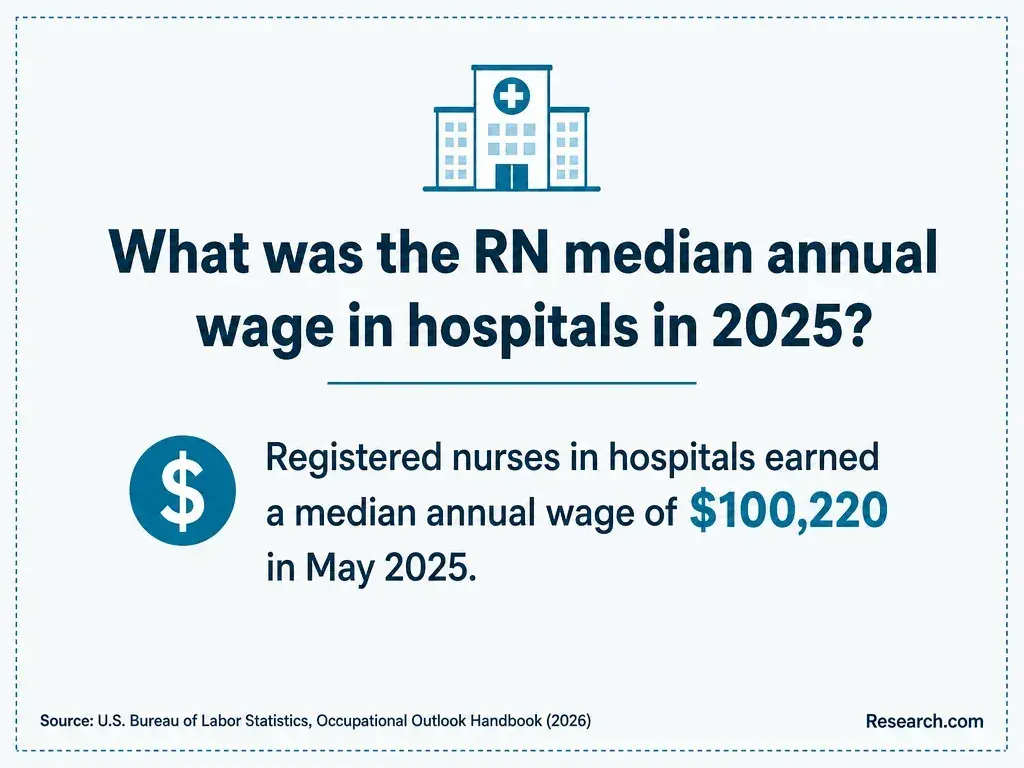
In the US Bureau of Labor Statistics Occupational Outlook Handbook, the May 2024 median annual pay was $93,600 for registered nurses and $62,340 for licensed practical and licensed vocational nurses.
Those are occupation-wide figures - not starting salaries, offers to graduates, or the value of a particular certification. Check the latest BLS release for updated wages and projections before using either figure in a financial plan.
Licensure can open access to a different regulated occupation; certification may affect eligibility for particular positions, but an automatic pay increase should not be assumed. Compare local job postings and employer pay policies with the full cost of the qualification. For example, lower-tuition psychiatric nursing graduate programs may reduce educational expense, but tuition alone cannot predict NP earnings, certification eligibility, or a job offer.
Other Things You Should Know About Nursing
No. Basic Life Support training documents completion of resuscitation training under its provider's rules. It is not an RN or LPN/LVN license or a nursing specialty certification.
Do not assume so. Passing an exam or finishing school is not the same as holding an issued license. Check the applicable state's rules on protected titles and verify your status with its nursing board.
Identify each accurately: state license and status, professional certification and awarding organization, and school-issued certificate with its program name. Do not label course completion as board certification.
No. The certifying organization and state regulator maintain separate renewal requirements. Track both deadlines and any continuing-education obligations independently.
- Nursing Practice Act - StatPearls - NCBI Bookshelf - NIH https://www.ncbi.nlm.nih.gov/books/NBK559012/
- NYS Nursing: RN License Requirements | nysed.gov https://www.op.nysed.gov/professions/registered-professional-nursing/license-requirements
- APRN Practice FAQ - Texas Board of Nursing https://www.bon.texas.gov/faq_practice_aprn.asp.html
- Licensure by Endorsement | ca.gov https://www.rn.ca.gov/applicants/lic-end.shtml
- Nursing Licensure Guide | Department of State https://www.pa.gov/agencies/dos/resources/professional-licensing-resources/licensure-processing-guides-and-timelines/nursing-guide
- Nursing (RN & LPN) | Florida Board of Nursing https://floridasnursing.gov/nurse-rn-lpn/
- What are the different types of nursing certifications? | Capella University https://www.capella.edu/blog/nursing/what-are-the-different-types-of-nursing-certifications/
- NCLEX Exam Requirements: What You Need to Know Before You Test | Rockhurst University https://onlinedegrees.rockhurst.edu/blog/nclex-exam-requirements
- Certification vs Degree: Which Advanced Nursing Route is Right For You? | Norwich University https://online.norwich.edu/online/about/resource-library/certification-vs-degree-which-advanced-nursing-route-right-you
- Nursing Certification: What Is It and Why Get Certified | VERVE COLLEGE https://vervecollege.edu/nursing-certification-what-is-why-get-certified/